Difficulty: 4/5 – Advanced
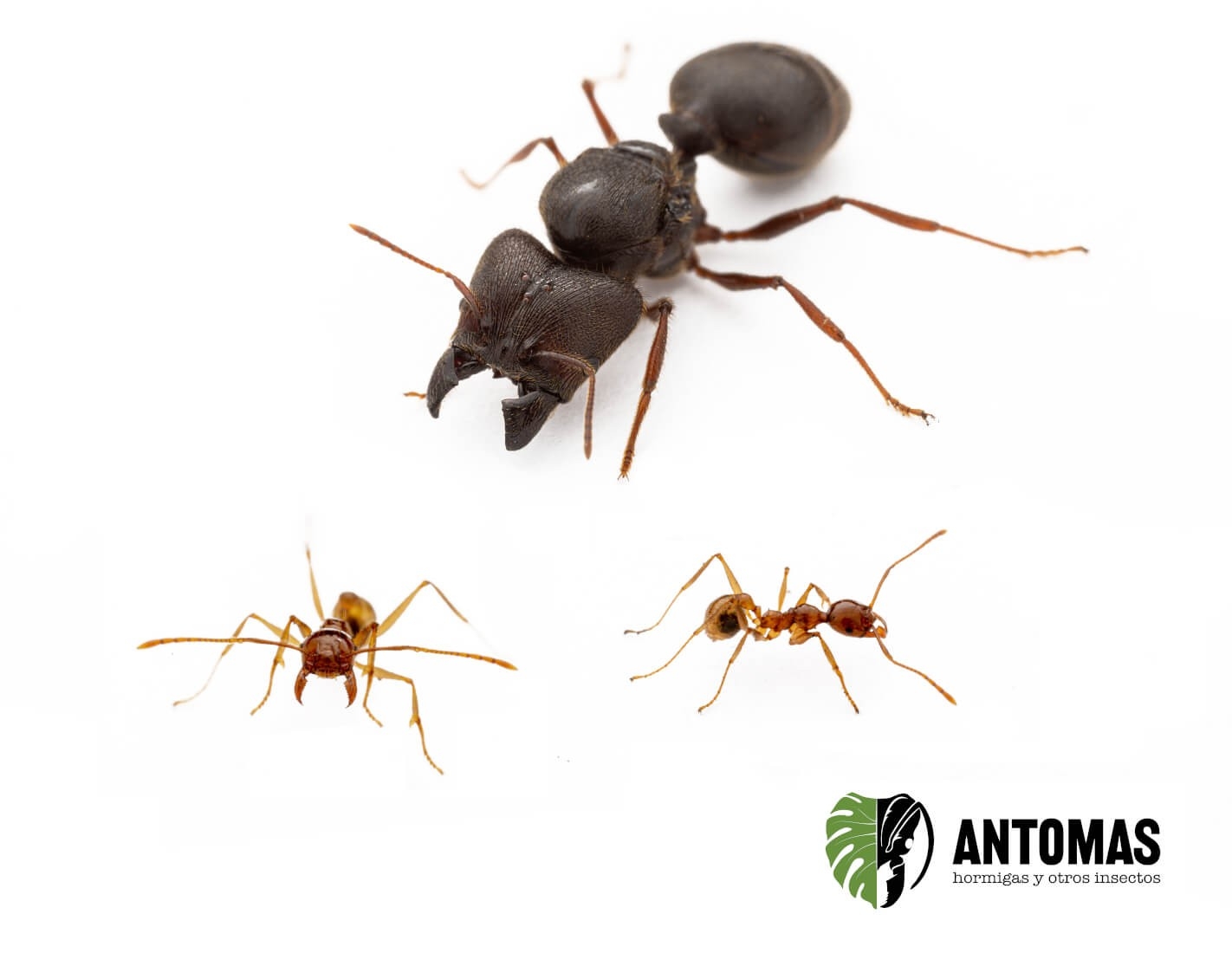
One of the large Pheidole of East Asia, with two worker castes that look as if they belonged to different species: slender, fast minors and huge-headed soldiers. A humid nest at 24–28 °C with a drier area, Blue Sugar Nectar almost daily, plenty of varied protein, seeds as a supplement and a mild diapause of about 2–3 months at 12–15 °C. Moving by tipping the colony out into the new nest, and a single queen per colony. The minors slip through any gap: always use an escape barrier and a lid.
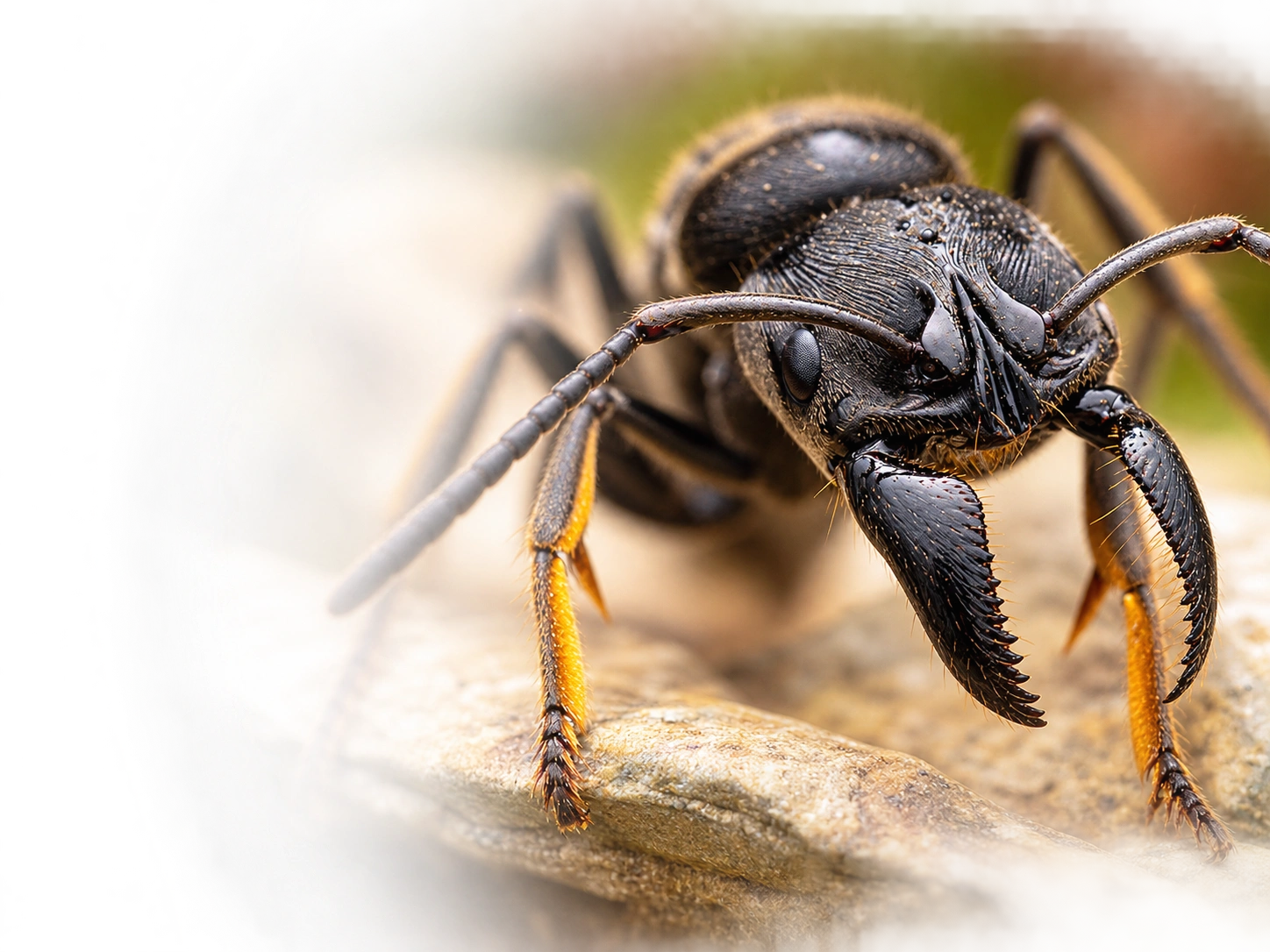
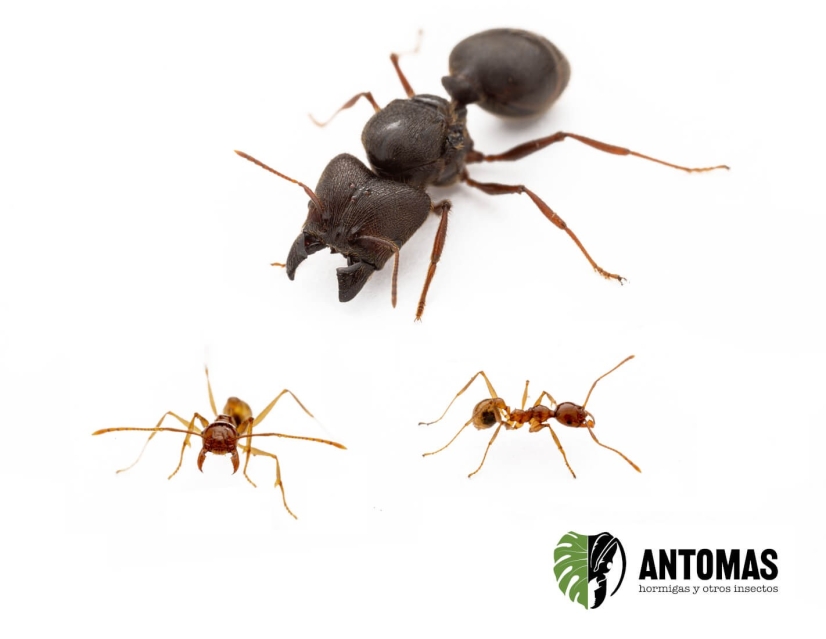
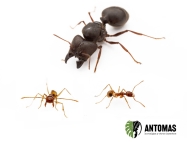
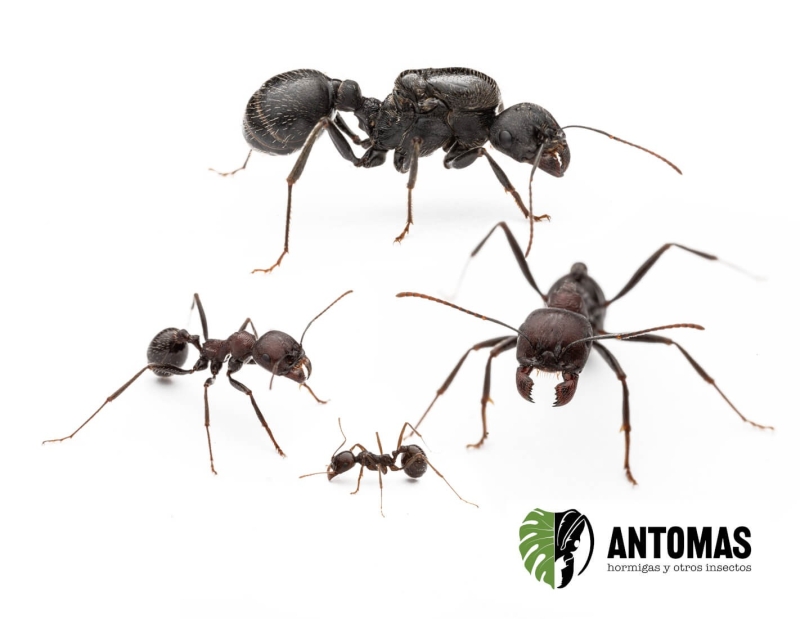
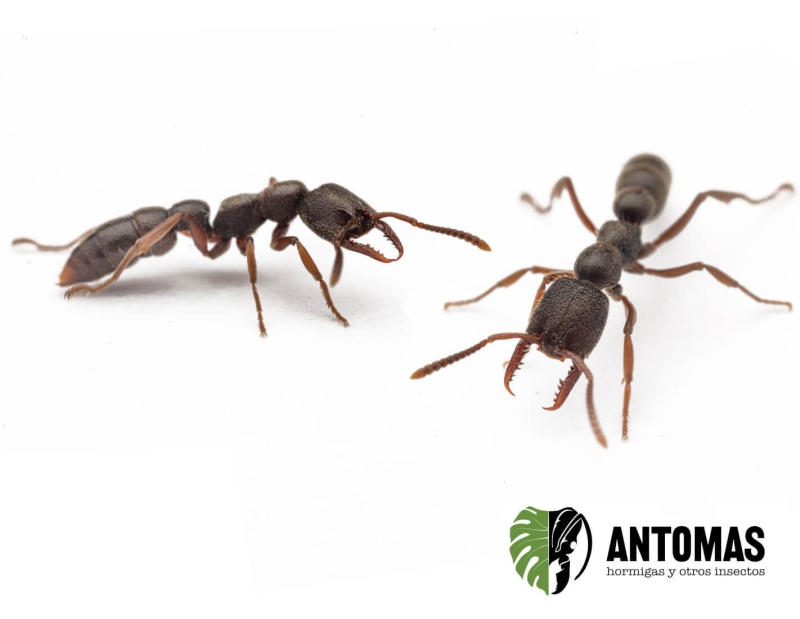
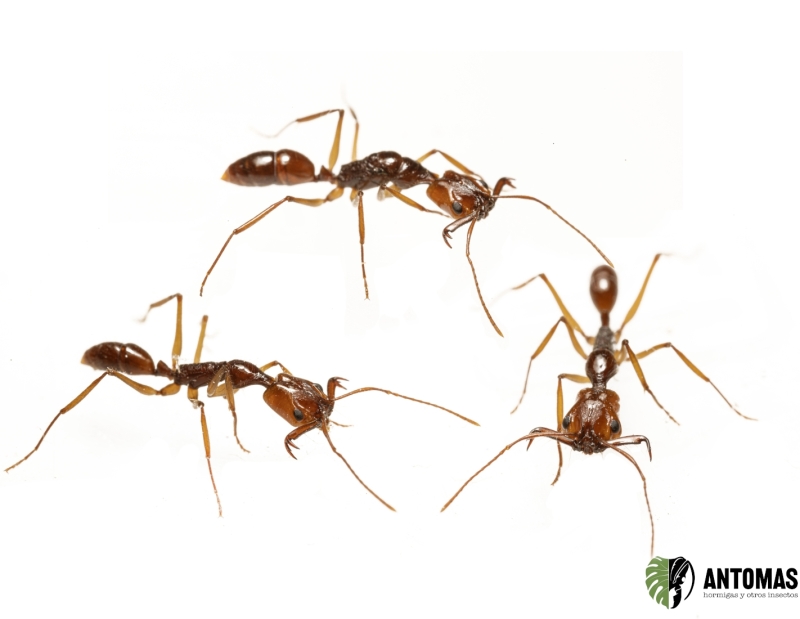
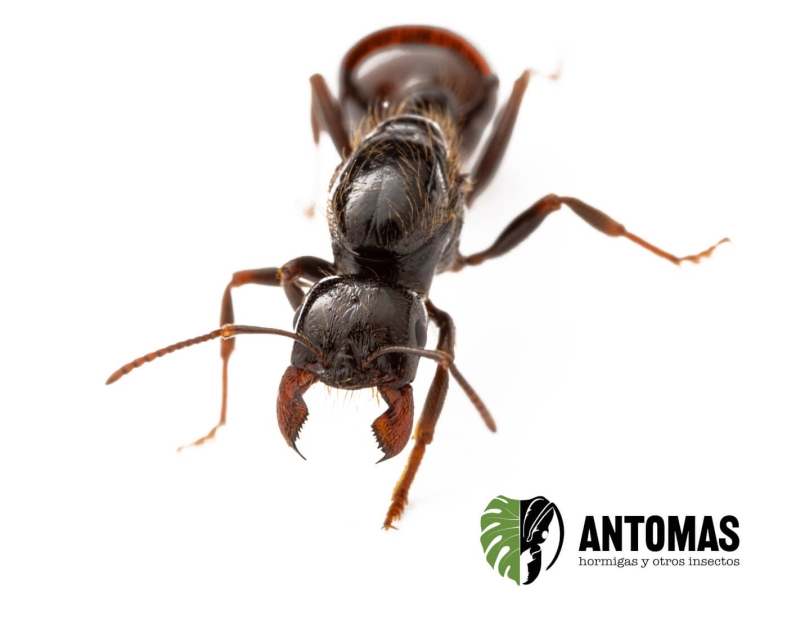
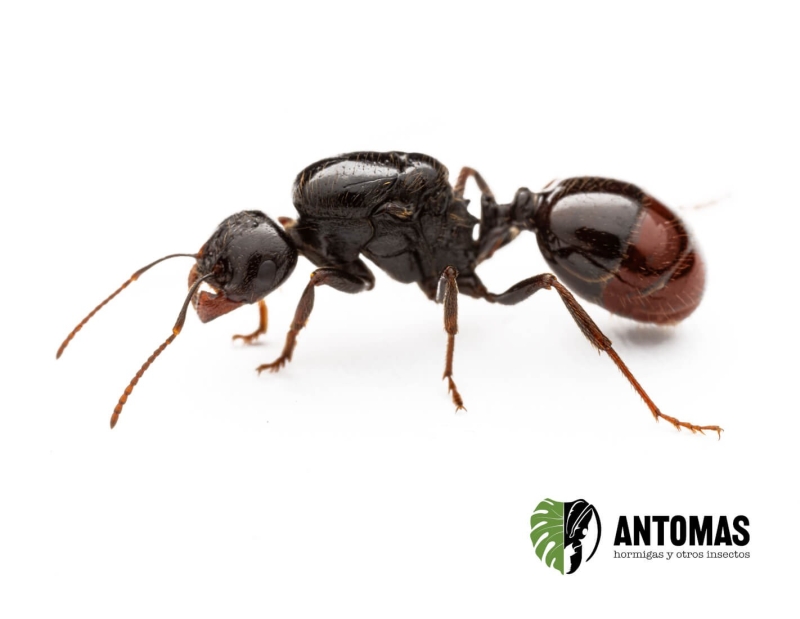
Pheidole sinica (Wu & Wang, 1992) is a large Pheidole from southern China and one of the most striking species of the genus to keep in a formicarium. Two very different types of worker live side by side in the same colony: the minors, small and nimble, which explore, tend the brood and recruit their nestmates; and the soldiers, with an outsized head housing mandibles capable of cutting up prey and cracking seeds.
At the same time, it is a species that has barely been studied. Beyond its original description, science has published nothing on its life in the wild. That is why, in this care sheet, we distinguish between the little that is known about it, what is well studied in other Pheidole, what other keepers report and what we recommend at Antomas.
Biology
Described among the insects of a forest
It was described in 1992 by the Chinese entomologists Wu Jian and Wang Changlu, in a work devoted to the forest insects of a province in southern China, under the name Ceratopheidole sinica. The type specimens were collected in June 1978 and 1979 at two forestry sites: a mountain forest and a tree-seed nursery. Sinica is Latin for “Chinese”.
In 1995, Barry Bolton’s world catalogue transferred it to the genus Pheidole, where it remains a valid species, and Guénard and Dunn’s (2012) checklist of the ants of China retains it. Wu and Wang described only two castes, the soldier and the minor worker. The queen and the male have never been scientifically described, and the only records we have been able to verify are from China: those placing it in other countries have no published support.
A four-segmented club: the hallmark of Ceratopheidole
Almost all Pheidole have antennae ending in a three-segmented club. Ceratopheidole, the name under which this species was described, brought together those with a four-segmented one, and that is the character that separates P. sinica from its neighbour Pheidole ocellata. The Chinese myrmecologist Zhou Shanyi put it in writing in 2001 when describing P. ocellata: it resembles P. sinica in shape, but has a three-segmented club and is a very different lineage.
Ceratopheidole is no longer used as a genus, but the Asian Pheidole with a four-segmented club still form a recognisable group. In Katsuyuki Eguchi’s (2008) revision of the Pheidole of northern Vietnam, only two species have one: P. gatesi and P. smythiesii, two large relatives that we use further down to put figures on the dimorphism. If you have a magnifying glass, count the segments at the tip of the antenna: it is the quickest way to recognise this species.
Two ants in one: minors and soldiers
Pheidole workers do not form a continuous range of sizes, as those of many Camponotus do, but two separate groups with no intermediates. This is what the myrmecologist Edward O. Wilson called complete dimorphism in 1953: if you measure every worker in a colony, you get two peaks, one of minors and one of soldiers, and nothing in between (Holley et al. 2016). To give you an idea of the difference, these are the measurements of its two relatives with a four-segmented club (Eguchi 2008, five specimens of each caste):
- Head width: 2.73–3.08 mm in the soldier of P. gatesi versus 0.89–1.00 mm in its minor; 2.63–3.09 mm versus 0.82–1.03 mm in P. smythiesii. In other words, a head about three times as wide, with roughly nine times the surface area.
- Antennae: in the minor, the scape is longer than the head is wide (scape index 121–144); in the soldier, it barely reaches half that (47–58). The minor “feels” its way through the world with long antennae; the soldier meets it head-on.
- Weight: in the American P. morrisi, the only species for which we have found this figure, a soldier weighs about four times as much as a minor, 0.47 versus 0.12 mg dry weight, and costs at least four times as much to produce (Murdock and Tschinkel 2015).
- Ratio: in the ten species studied by Wilson (1984), there were between 3 and 20 minors per soldier, depending on the species; in P. morrisi, soldiers made up 11% of the workers but 30% of the weight.
For P. sinica there are no published measurements of the minor, so we cannot give its own ratio. The only soldier figure in circulation, attributed to the original description, is a head 2.75 mm wide, right within the range of its two relatives (see “Approximate measurements”).
One of the largest Pheidole?
Many shops present it as “the largest Pheidole in the world”, but no scientific source says so. What is true is that it ranks among the large ones: in most species of the genus, the soldier’s head is less than 2 mm wide, as in the Asian P. nodus, at 1.58–1.82 mm (Eguchi 2008). Above P. sinica there are at least three species with published measurements: its neighbour P. ocellata, with heads about 3 mm wide (Zhou 2001); the Vietnamese P. dugasi, at 3.15–3.40 mm (Eguchi 2008); and the supersoldier of the American Pheidole rhea, at almost 4 mm. P. sinica has no supersoldiers: its soldiers form a single caste.
Different brains for different jobs
The difference is not just one of size. In 2012, Mario Muscedere and James Traniello compared the brains of minors and soldiers in three Pheidole species and found two distinct designs:
- Minors have proportionally larger mushroom bodies, the centres of learning and memory, and antennal lobes, which process odours. This fits their job: they do everything, from tending larvae to following trails.
- Soldiers have a suboesophageal ganglion that is proportionally 28–41% larger; this is the part of the brain that controls the mouthparts and mandibles. A brain built for biting.
Soldiers in reserve
In a normal colony, soldiers do few things: Wilson (1984) counted between 4 and 19 different tasks depending on the species, compared with the vast repertoire of the minors. But in his best-known experiment he removed almost all the minors, leaving fewer than one per soldier, and within an hour the soldiers expanded their repertoire 1.4- to 4.5-fold and increased their activity by a factor of 15–30. They started tending the brood and doing the minors’ work, and ended up covering at least 75% of what the minors had been doing.
So why don’t they always do it? Because they keep out of the way. Wilson himself (1985) observed that, near the brood, soldiers actively avoid minors, and that this aversion is what keeps them away from the larvae when there are enough minors around. In 17 tropical species, Mertl and Traniello (2009) found that soldiers deprived of minors tend the brood up to about 20 times more. They are specialists, but far from useless.
Soldiers as living larders
Some Pheidole use their soldiers as a larder. In Pheidole ryukyuensis, a species from the Japanese islands, Kazuki Tsuji (1990) found soldiers with a greatly swollen gaster and a crop full of food. When starved, minors living with one of these soldiers survived about four times longer than those kept on their own. This has not been studied in P. sinica, but if you ever see a soldier with a swollen, shiny gaster, you will know what it might be.
A trail laid only by the little ones
When a minor finds food, it returns to the nest laying a chemical trail that guides its nestmates. In the Mediterranean Pheidole, Pheidole pallidula, this trail comes from the minors’ venom gland, and one of its components is a pyrazine, 3-ethyl-2,5-dimethylpyrazine. Soldiers do not have it in that gland (Ali et al. 1988).
Nor do soldiers respond to the call in the same way. Detrain and Pasteels (1991) found that they have a higher threshold: they only join in when recruitment is very intense, as with a large prey item or an intruder. You will see it at home: a few minors discover the food, a flood of minors follows and, if the item is large, the soldiers turn up.
More food, more soldiers
The proportion of soldiers is not fixed. In a natural population of Pheidole flavens, providing extra food in the field increased soldier production, even more so when the food was concentrated in a single spot (McGlynn and Owen 2002). A well-fed colony “can afford” soldiers, which are costly to produce. For the keeper, the upshot is practical: with plentiful, regular protein you will see more soldiers (see “Feeding”).
A monsoon climate with a real winter
According to the climate normals for the area, its range has a humid subtropical climate of the monsoon type: long, hot and humid summers, with averages of 27–29 °C; very wet springs; drier autumns; and short, cool winters, with averages of around 6–10 °C in the coldest months and light, occasional frosts. At the depth at which a ground-nesting ant makes its nest, the soil stays at around 10–14 °C in winter, without freezing.
It is not a tropical species, as some shops claim, nor is it an ant of European winters. That short, cool winter is the basis for the mild diapause we recommend for colonies kept at home (see “Diapause”).
What is known about its life in the wild (and what isn’t)
There are no studies at all on its ecology. Everything said about its way of life comes from keepers’ and shops’ care sheets, and they do not always agree. The most frequent claims are that it nests in the soil, often under stones, in forests and along forest edges; that it is omnivorous, taking insects, sugary liquids and seeds; that it is monogynous, with a single queen per colony; and that its colonies reach several thousand workers. They also agree that it is very aggressive towards other ants. All of this fits what is known of other large Asian Pheidole, but nobody has measured it in P. sinica.
Size and morphology
A large Pheidole, with the two worker castes typical of the genus and no intermediate sizes:
- Soldier (major worker). A huge head, roughly as wide as it is long, with strong mandibles and short scapes. There are no supersoldiers.
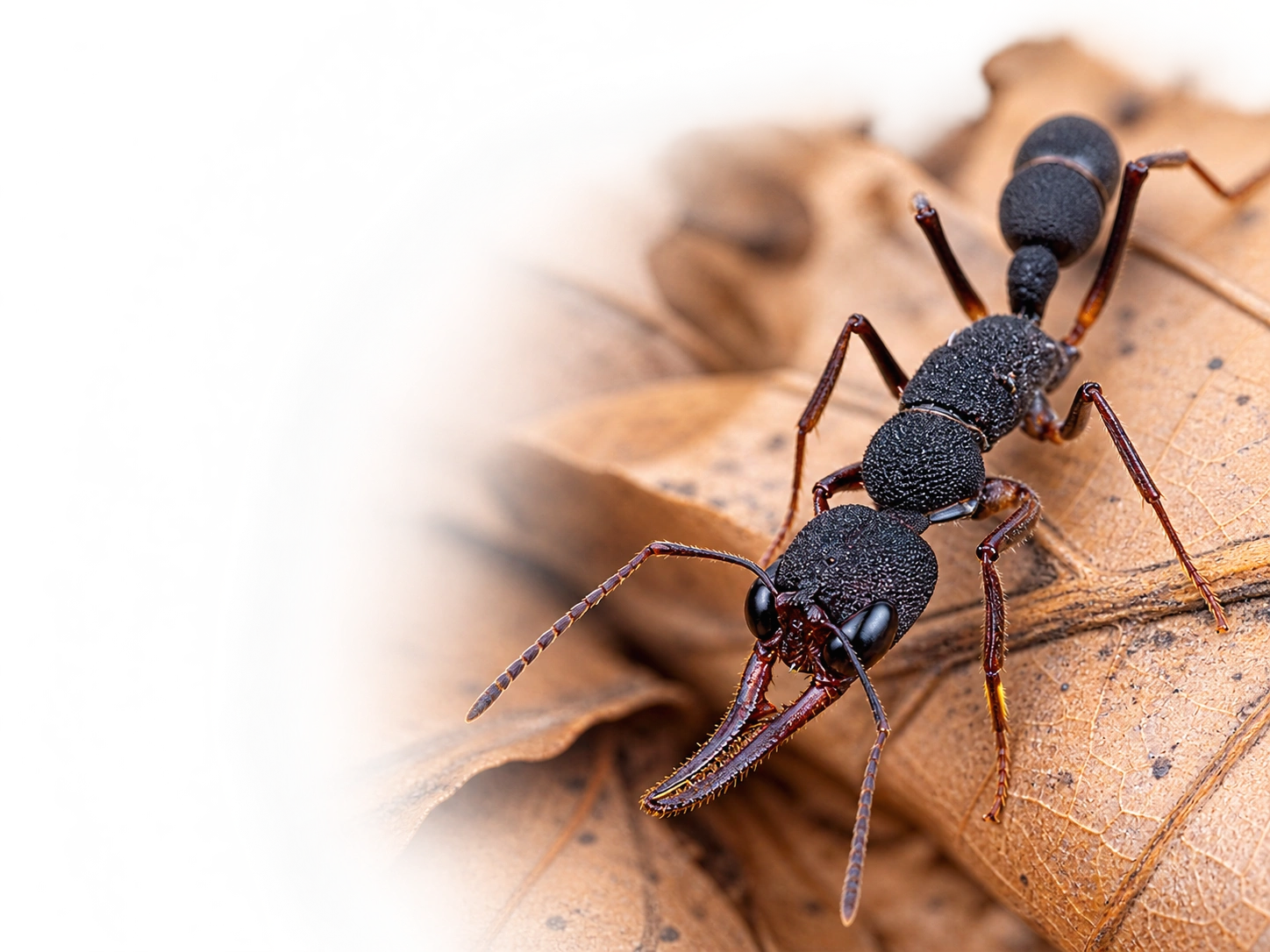
- Minor worker. Much smaller, slender and nimble, with long antennae. This is the one you will see almost all the time in the foraging area.
- Antennae. With a four-segmented club, the character that separates it from P. ocellata, which has a three-segmented one (Zhou 2001). This is inferred from its original genus and from that comparison: we have not been able to read the Chinese description.
- Queen and male. Not scientifically described.
- Colouration. We have not been able to consult the original description. Keepers describe it as reddish brown to dark brown, with the soldier’s head darker.
Approximate measurements
- Soldier: head 2.75 mm wide and 2.67 mm long, according to Wu and Wang’s (1992) original description as cited in a hobbyist compilation; we have not been able to check this against the Chinese text
- Minor worker: no published measurements that we have been able to consult
- Queen and male: no published measurements, as they have not been described
- For comparison, its relatives with a four-segmented club (Eguchi 2008): P. gatesi soldier with a head of 2.73–3.08 × 2.93–3.40 mm (width × length) and minor of 0.89–1.00 × 0.99–1.11 mm; P. smythiesii soldier of 2.63–3.09 × 2.63–3.03 mm and minor of 0.82–1.03 × 0.95–1.19 mm
The body lengths for soldiers, minors and queens given by shops do not come from any published measurements we have been able to verify, so we prefer not to quote them.
Care in captivity
Difficulty: 4/5 – Advanced
At Antomas we rate it as advanced. Day to day it is not complicated: it eats everything, tolerates a wide range of temperatures and grows well with warmth and food. What sets it apart from a beginner species comes down to four things:
- Escapes. The minors are small, fast and inquisitive, and they will find any gap. The barrier and the lid are not optional.
- Humidity. It needs a well-managed humid nest, never waterlogged and free of mould, and with such a carnivorous species food remains have to be removed promptly.
- Diapause. It needs a mild winter, neither tropical nor European.
- Temperament. It is very aggressive towards other ants and, if the nest is disturbed, it pours out en masse; the soldiers nip.
And it is well worth it. Few species show so clearly how a society with two castes works: minors that find food within minutes and recruit in large numbers, and soldiers that turn up when strength is needed. If Pheidole appeal to you, at Antomas we also have P. ocellata, its neighbour with a three-segmented club, and the American P. rhea, with supersoldiers.
Recommended parameters
- Nest temperature: 24–28 °C during the active season, with a slightly warmer area of 28–30 °C on one side, always controlled by a thermostat. At night it can drop to 20–22 °C without any problem. Do not keep it continuously above about 32 °C.
- Why these figures: at the height of summer, the soil in its range is around 28–30 °C at nest depth, and keepers agree on a nest at 24–28 °C.
- Humidity: a humid nest, at around 60–80%, with one part always moist and another slightly drier so that the colony can choose where to place the brood. A drier foraging area, at 40–60%. These are the same figures we recommend for P. ocellata.
- Water: always available, in a test tube with water and cotton wool in the foraging area.
- Light: a dark nest and a lit foraging area, with a normal day–night cycle.
- Diapause: mild, lasting about 2–3 months, from December to February, at 12–15 °C (see “Diapause”).
Recommended formicaria
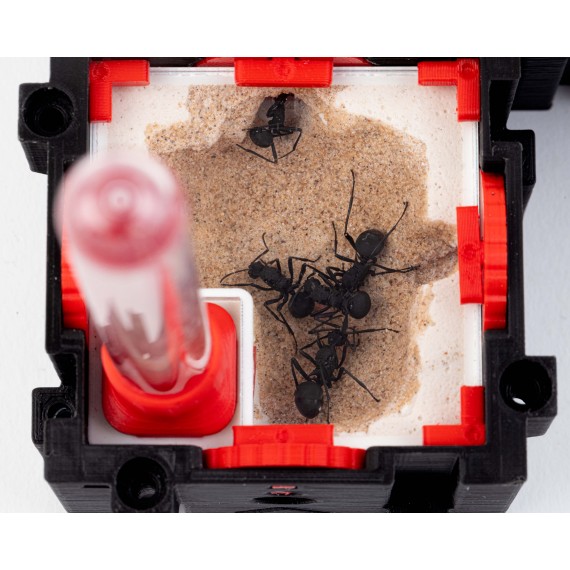
At Antomas we recommend the Qbik Wild range by Anthouse: plaster formicaria that are good at holding the humidity this species needs. For a colony like the ones we sell, with its queen and a few dozen workers, the Qbik Wild One P 1C:
Once the colony fills it, the next step is the Qbik Wild Duo P 2C:
Expand when you see workers standing idle in the foraging area with no room left inside, but do not jump the gun: in a nest that is too big for the colony, the spare chambers end up being used as rubbish dumps and go mouldy. Complete the set-up as follows:
- An escape barrier around the top of the foraging area walls and a well-fitting lid (see “Escapes and barriers”).
- A humid area and a drier one in the nest: moisten only one part, without waterlogging it.
- Water in a test tube with cotton wool, and a feeder for the nectar, never on cotton wool.
- A corner of the foraging area as a rubbish dump: the colony will carry its waste there. Remove it often.
Arrival and moving by tipping the colony out
When the colony arrives, let it rest for a day in a quiet, dark place at 24–26 °C, check that it has water and offer it a drop of nectar and a small prey item. To move it into the formicarium, at Antomas we do it by tipping it out:
- Set up the formicarium beforehand, with the humid area ready, the water in place and, above all, the escape barrier already applied: the minors are very fast.
- Work over a tray, with tweezers and a soft brush, never with your hands.
- Open the container in the foraging area, next to the nest entrance, and gently tip out the queen, the workers and the brood, helping any stragglers along with the brush.
- Close the lid and keep the nest dark. Before long they will have carried the brood inside.
To move it later into a larger module, use the same method.
Growth and the first soldiers
We sell established colonies: a queen with workers and brood. According to keepers it is a monogynous species, and at Antomas we never merge queens or colonies.
- The pace. There are no published counts. The shops that sell it speak of about 4–6 weeks from egg to worker in warm conditions, and of colonies that, over the years, reach several thousand workers.
- Minors first. In a young colony almost all new workers are minors. Soldiers arrive once there is a settled workforce and more than enough food.
- More protein, more soldiers. As in other Pheidole, the colony produces more soldiers when food is plentiful (see “More food, more soldiers”). If no soldiers appear in the middle of the season, check the protein and the temperature.
- A pause in winter. During diapause brood development slows down: this is normal.
Feeding
Sugars. At Antomas we recommend Blue Sugar Nectar by Anthouse 4–5 times a week and another nectar or sugary liquid 1–2 times a week, so as not to offer the same thing all the time. You can also add a little protein to the nectar. Always offer it in a feeder, where the drop stays spread out and accessible, and never on cotton wool, which goes mouldy and spoils the liquid very quickly.
Protein: plentiful and varied. The queen needs it to lay eggs, the larvae to grow and the colony to produce soldiers. In Antomas’s experience, the more protein colonies receive, the faster they grow and the larger they become. If you carry out maintenance often and remove the leftovers, it is better to overdo it than to fall short; if you will not be able to clean up, it is better not to overfeed. Change the type of insect from one week to the next:
Remove leftovers within 24–48 h: in a humid nest they soon go mouldy. Buy your insects from a reliable supplier, because insects treated with insecticides can kill the colony.
Seeds, as a supplement. Small, untreated seeds such as sesame, millet or amaranth, the ones keepers use with this species. The soldiers crack them with their mandibles. Offer them from time to time in the foraging area, but they are not the basis of the diet.
Water: always available, in the test tube with cotton wool, kept separate from the sugar.
Diapause
There are no studies on its diapause, and shops do not agree: some say it does not need one, while others recommend a break from December to March. The climate of its range has a short but real winter, with the soil at nest depth at around 10–14 °C (see “A monsoon climate with a real winter”). That is why, at Antomas, we recommend a mild diapause:
- About 2–3 months, from mid-December to late February, at 12–15 °C. Do not go below about 10 °C.
- Gradual entry in November: remove the warm area and keep the colony at 16–20 °C for 2–3 weeks before lowering the temperature further, while cutting back on protein.
- During diapause: water always available, a little nectar and hardly any protein. Do not let the humid area dry out, and disturb the colony as little as possible.
- Gradual exit in March, passing through 16–20 °C again until you are back at 24–28 °C. Resume protein as soon as you see brood.
- Small colonies, like the one you receive: in the first winter, a shorter and milder diapause is better, of 6–8 weeks at 15–18 °C.
- Where: an unheated room often does not get cold enough; a garage, a cellar or a wine cooler will usually do. Never in a fridge at 4–8 °C, as you would with a northern European species.
Behaviour and observation
Lightning recruitment. As soon as a minor finds food, within a few minutes a column of nestmates arrives following its trail. If the prey is large, the soldiers turn up to cut it into pieces.
Stay-at-home soldiers. They spend almost all their time inside the nest and come out when there is a large prey item, seeds to crack or a threat. If you suddenly see lots of soldiers outside, something has alarmed them.
A bad neighbour. Keepers describe it as very aggressive towards other ants, with raiding tendencies. Do not keep it in mixed set-ups or next to other colonies.
Watch without fear. At Antomas we believe ants are there to be enjoyed, watched and learned from, not kept hidden away. All you need to do is keep the nest dark and the foraging area lit, and observe them gently, intervening as little as possible.
Warning signs:
- No new soldiers after months of active season: not enough protein or warmth.
- Mould in the chambers: too much humidity, or leftover food that has not been removed.
- Workers huddled in one corner: the rest of the nest may be too dry or too cold.
- Lots of workers standing idle in the foraging area, with no room left inside: time to expand.
Escapes and barriers
This is the point that needs the most care. The minors are small, slender and inquisitive, and several shops single the species out for how easily it escapes.
- An escape barrier around the top of the foraging area walls: a thin coat of PTFE (Fluon) or, as an easier-to-find alternative, a strip of mineral oil. Renew it when it collects dust or debris.
- A well-fitting lid and, if it has ventilation, fine mesh over it.
- No gaps: check connections, stoppers and tubes. Any loose fit is a way out.
- Nothing that could act as a bridge across the barrier: no twigs, and no tweezers left leaning against the walls.
- When feeding, open only as much as you need and place the food well away from the walls.
Handling and safety
This is not a dangerous species. The minors can barely be felt, and the soldiers, with their mandibles, can give a sharp nip, but nothing more. Always work with tweezers and a soft brush, over a tray and slowly, so as not to lose or injure any worker, let alone the queen. If you have small children or pets at home, keep the formicarium closed at all times and out of their reach. This is an exotic species: it must never be released into the wild.
What not to do
- Set up the formicarium without a barrier, or rely on an old or dirty one.
- Leave the nest dry or, at the other extreme, waterlogged.
- Leave prey remains in the humid nest for more than 48 h.
- Keep it warm all year round without any rest, or give it a cold diapause in a fridge.
- Always feed the same insect, or skimp on protein when there are larvae.
- Put the nectar on cotton wool.
- Merge queens or colonies, or keep it with other species.
- Move a small colony into a huge formicarium.
Scientific sources
This care sheet has been compiled from the scientific literature on the species and on the genus Pheidole, from the climate normals for its range and from the experience of Antomas and other keepers. Main references:
- Wu, J. & Wang, C. (1992). Hymenoptera: Formicidae. In: Peng, J. & Liu, Y. (eds.), Iconography of forest insects in Hunan, China [in Chinese], pp. 1301–1320. Hunan Scientific and Technical Publishing House. Original description of Ceratopheidole sinica: pp. 1306 and 1318.
- Eguchi, K. (2008). A revision of Northern Vietnamese species of the ant genus Pheidole (Insecta: Hymenoptera: Formicidae: Myrmicinae). Zootaxa 1902: 1–118. doi:10.11646/zootaxa.1902.1.1
- Guénard, B. & Dunn, R. R. (2012). A checklist of the ants of China. Zootaxa 3558: 1–77. doi:10.11646/zootaxa.3558.1.1
- Wilson, E. O. (1953). The origin and evolution of polymorphism in ants. The Quarterly Review of Biology 28: 136–156. doi:10.1086/399512
- Wilson, E. O. (1984). The relation between caste ratios and division of labor in the ant genus Pheidole (Hymenoptera: Formicidae). Behavioral Ecology and Sociobiology 16: 89–98. doi:10.1007/BF00293108
- Wilson, E. O. (1985). Between-caste aversion as a basis for division of labor in the ant Pheidole pubiventris (Hymenoptera: Formicidae). Behavioral Ecology and Sociobiology 17: 35–37. doi:10.1007/BF00299425
- Mertl, A. L. & Traniello, J. F. A. (2009). Behavioral evolution in the major worker subcaste of twig-nesting Pheidole (Hymenoptera: Formicidae): does morphological specialization influence task plasticity? Behavioral Ecology and Sociobiology 63: 1411–1426. doi:10.1007/s00265-009-0797-3
- Muscedere, M. L. & Traniello, J. F. A. (2012). Division of labor in the hyperdiverse ant genus Pheidole is associated with distinct subcaste- and age-related patterns of worker brain organization. PLoS ONE 7: e31618. doi:10.1371/journal.pone.0031618
- Murdock, T. C. & Tschinkel, W. R. (2015). The life history and seasonal cycle of the ant, Pheidole morrisi Forel, as revealed by wax casting. Insectes Sociaux 62: 265–280. doi:10.1007/s00040-015-0403-9
- Holley, J.-A. C., Moreau, C. S., Laird, J. G. & Suarez, A. V. (2016). Subcaste-specific evolution of head size in the ant genus Pheidole. Biological Journal of the Linnean Society 118: 472–485. doi:10.1111/bij.12769
- Tsuji, K. (1990). Nutrient storage in the major workers of Pheidole ryukyuensis (Hymenoptera: Formicidae). Applied Entomology and Zoology 25: 283–287. doi:10.1303/aez.25.283
- Ali, M. F., Morgan, E. D., Detrain, C. & Attygalle, A. B. (1988). Identification of a component of the trail pheromone of the ant Pheidole pallidula (Hymenoptera: Formicidae). Physiological Entomology 13: 257–265. doi:10.1111/j.1365-3032.1988.tb00477.x
- Detrain, C. & Pasteels, J. M. (1991). Caste differences in behavioral thresholds as a basis for polyethism during food recruitment in the ant, Pheidole pallidula (Nyl.). Journal of Insect Behavior 4: 157–176. doi:10.1007/BF01054609
- McGlynn, T. P. & Owen, J. P. (2002). Food supplementation alters caste allocation in a natural population of Pheidole flavens, a dimorphic leaf-litter dwelling ant. Insectes Sociaux 49: 8–14. doi:10.1007/s00040-002-8270-6