Difficulty: 2/5 – Beginner
The easiest weaver ant in the hobby: it builds silk-and-carton nests with its larvae, forms colonies with many queens and grows at great speed. It needs warmth, a dry, well-ventilated environment and room to grow.
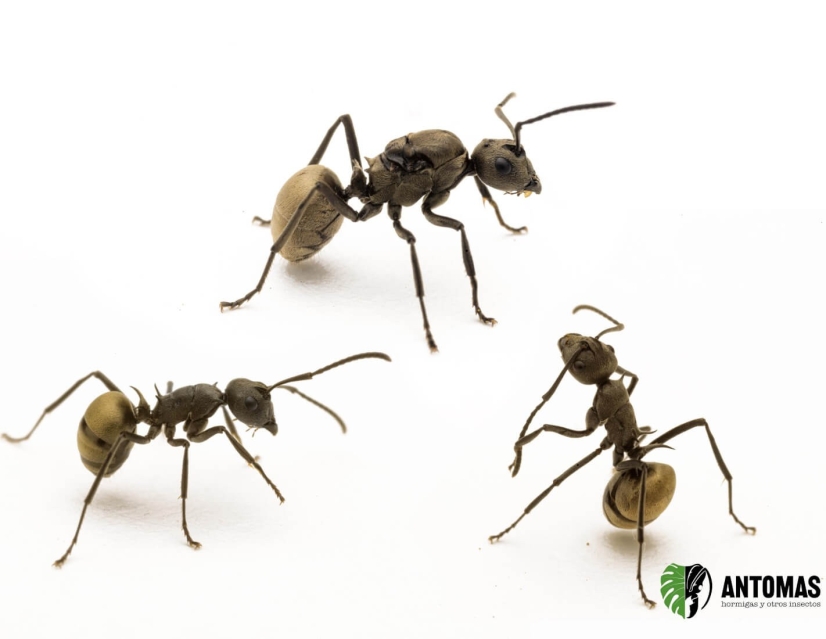
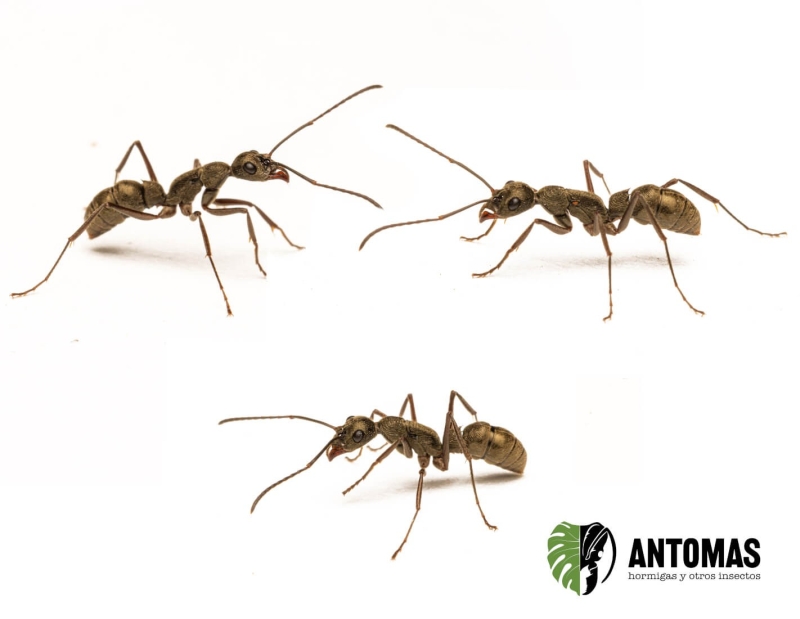
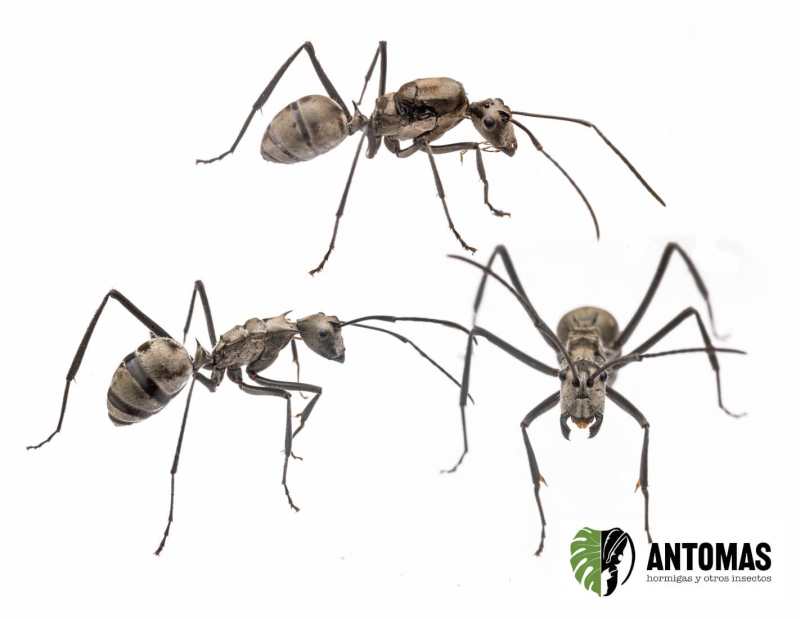
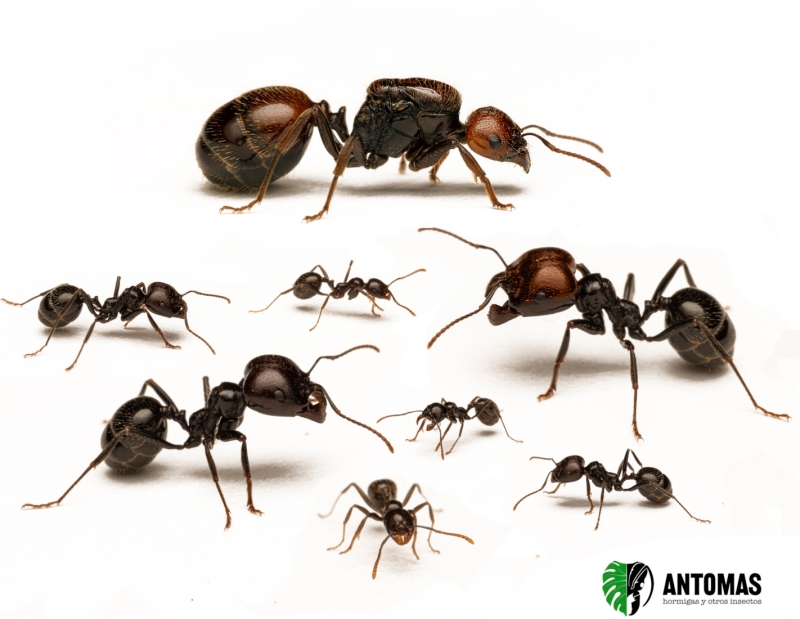
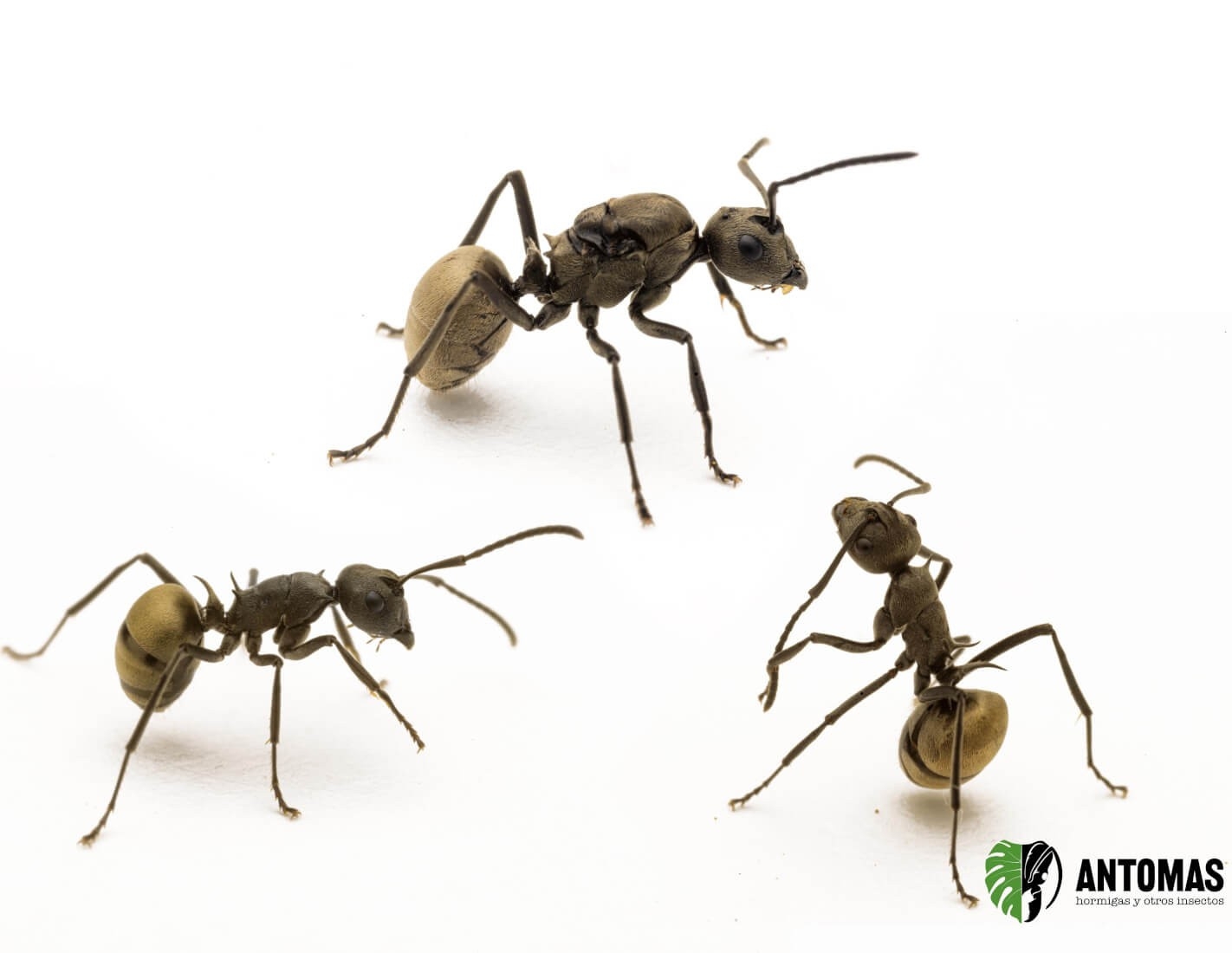
Polyrhachis dives Smith, 1857 is a weaver ant from South-East Asia and the western Pacific: black, covered in fine golden hairs and armed with spines on the thorax and petiole. It belongs to Polyrhachis, one of the most diverse ant genera on the planet, with around 500 described species, and it is probably the easiest weaver ant to keep at home. It builds silk and "carton" nests with the help of its larvae, forms colonies with dozens of queens spread across many nests, fights the dreaded fire ant and, for centuries, has been the "black ant" of traditional Chinese medicine.
Biology
Distribution and habitat
The species was described from specimens collected in Singapore by Alfred Russel Wallace, co-discoverer of natural selection. Today it is known from southern China (Yunnan, Guangxi, Guizhou, Hong Kong and Macau), Taiwan, the southern Ryukyu Islands of Japan (Okinawa), the Philippines, South-East Asia, New Guinea and two isolated populations in northern Australia (Northern Territory and northern Queensland). A 2025 study of the 52 Polyrhachis species of China identifies it as the one with the broadest ecological niche in the country.
It is an ant of open, sunny places: wooded savannas, swampy coastal plains, forest edges, scrub, grassland and, above all, farmland. In Okinawa it is common in rural areas and crops, where it nests in sugarcane fields, in irrigation sprinklers and even inside pineapples in winter; in the Philippines it has been recorded in rice paddies, and in Taiwan it occupies disturbed areas alongside the fire ant. It is native throughout this range and is not known as an invasive species anywhere else.
A weaver halfway there: silk and carton nests
Like the famous Oecophylla, P. dives weaves its nest with the silk of its larvae: workers pick up last-instar larvae in their mandibles, carry them to the spot they want to join and tap their heads with their antennae to make them spin. But the result is different. Instead of sewing living leaves into large green pouches, it builds "carton" nests: a mixture of silk with twigs, bits of bark, dry leaves, soil and plant debris, shaped like a ball or a paper box, hanging among the branches of a shrub, in a tuft of grass or close to the ground. A naturalist who opened them in Java in the early 20th century described them as lined with silk inside, with fragments of wood and leaf embedded, and divided into chambers by semi-transparent silk partitions; when he opened a breach, the workers repaired it holding larvae in their mandibles, "just like Oecophylla".
The big difference lies in the larvae. In Oecophylla they give all their silk to the nest and pupate naked; in P. dives they contribute silk to the nest and still spin their own cocoon to pupate. Evolutionary studies of the genus place these weavers at an intermediate stage between ants that barely use silk and the extreme specialisation of Oecophylla: in Polyrhachis, tree-dwelling and weaving are ancestral traits that have been lost and regained several times, and the loss of the cocoon has arisen independently at least twice. Unlike Oecophylla, they have not been documented forming worker chains to bend leaves.
The practical consequence is the same as in other weavers: no larvae, no building. A young colony, or one in a laying pause, cannot weave, which is why it is best to start with a set-up of the right size and expand it as the colony grows.
Cities of many queens: polygyny, polydomy and supercolonies
A P. dives colony rarely has a single queen. In Okinawa, the classic studies by Yamauchi and colleagues described polycalic colonies spread across many nests and strongly polygynous, with figures of up to about fifty queens per colony cited. In Taiwan, a doctoral thesis found queenless, single-queen and multi-queen colonies in the wild, independent founding and budding in the same habitat, queens mating with one or several males, and true supercolonies organised into four types of unit: central, reproductive, support and reserve.
How do so many queens build up? In China it was observed that, after the nuptial flight, many newly mated females re-enter their own nest or neighbouring nests and shed their wings there. New queens can also found satellite nests near the colony while remaining part of it. That is why this species is so resilient: the colony does not depend on a single queen. However, in Antomas' experience the colony adds its own queens but does not accept queens from outside.
What it eats and when it forages
In the wild, the diet of P. dives is based mainly on sugary liquids: honeydew from scale insects, aphids and other hemipterans, nectar and the juice of ripe fruit. The workers "milk" these sap-sucking insects and protect them in return: in Okinawa they are fed by sugarcane scale insects, and in Taiwan they share with the fire ant the honeydew of an invasive papaya mealybug. In its close relative P. simplex, studied in Israel, honeydew provides between 4 and 9 times the energy the colony needs.
Protein for the larvae comes from small insects, often collected dead or caught when weak: it is not a great hunter but an opportunistic gatherer. Even so, its patrols clear plants of small pests, and in Okinawa researchers highlight its role in crops.
It is a diurnal ant: foraging and reproductive activity are concentrated in daylight hours, with a very marked circadian rhythm in colonies that have a queen. In P. simplex, peak activity falls at midday in the cooler months and shifts to morning and afternoon when the midday heat bites. In captivity, at a stable temperature, many keepers see them moving at night as well.
Guards, territory and chemistry
In the Taiwanese supercolonies a guard caste has been described: workers identical to the others in shape but specialised in defence. The species is highly territorial and attacks other ants; in Taiwan it has been documented attacking and damaging colonies of the fire ant (Solenopsis invicta), one of the world's most harmful invasive species, and it has been proposed as a natural brake on its spread.
It has no sting. Its defence is the bite and, above all, spraying formic acid: it raises the gaster and fires it from the acidopore. Its spines do the rest: a predator trying to swallow a worker finds itself with a tiny hedgehog. In Japan it is considered less aggressive than its relative P. lamellidens, although, according to Okinawan farmers, its bite can be felt.
Hygiene without antibiotics
Almost all ants have a metapleural gland that secretes antimicrobial substances. Polyrhachis dives does not, and yet, in a study with the entomopathogenic fungus Metarhizium, workers in groups resisted infection as well as leafcutter ants, which do have that gland. Their secret? They groom more than the other species in the study, and their venom inhibits the germination of fungal spores. An ant that washes thoroughly and disinfects itself with its own acid.
Enemies straight out of a film
Such an abundant ant has specialised enemies. Parasitoid wasps of the family Eucharitidae (Stilbula polyrhachicida and Stilbuloida doddi) lay their eggs near the nests and their larvae sneak in to parasitise the brood. The fungus Ophiocordyceps unilateralis, the famous "zombie fungus", infects workers and controls their behaviour before killing them. And the caterpillar of a small moth of the genus Batrachedra lives inside the nests feeding on the brood.
The "black ant" of Chinese medicine
In China, the "black ant" (黑蚂蚁) used in traditional medicine is precisely this species, often published under the name Polyrhachis vicina, now a synonym of P. dives. It has traditionally been used for rheumatoid arthritis and other ailments, and "ant liquor" already appears in pharmaceutical texts of the late 17th century. Modern research has studied its extracts in the laboratory and in animals: they contain about 70 % protein and dozens of bioactive compounds, with antioxidant activity, effects on uric acid and the kidney in rats, and some dopamine derivatives (the polyrhadopamines) that stimulate the proliferation of neural stem cells in culture. It is also an edible insect in China and parts of South-East Asia. (Educational information; not a recommendation for consumption.)
Annual cycle and reproduction
In the subtropical populations of eastern China, one generation of adults per year has been described: the colony overwinters with queens, males, workers, eggs and larvae, which barely grow in the cold and speed up in spring; new workers emerge from May to November, males from August to November and winged females in October, with pupae most abundant in August. In warmer Taiwan, virgin queens appear twice a year and males are present all year round.
A name with history
The name dives means "rich" in Latin, perhaps because of the golden sheen of its hairs. The species has received many other names over the years (vicina, euclides, democles, siwiensis…), now all considered synonyms: it is a morphologically very stable ant across its huge range. Specialists place it in the subgenus Myrmhopla, within the so-called dives group.
Size and morphology
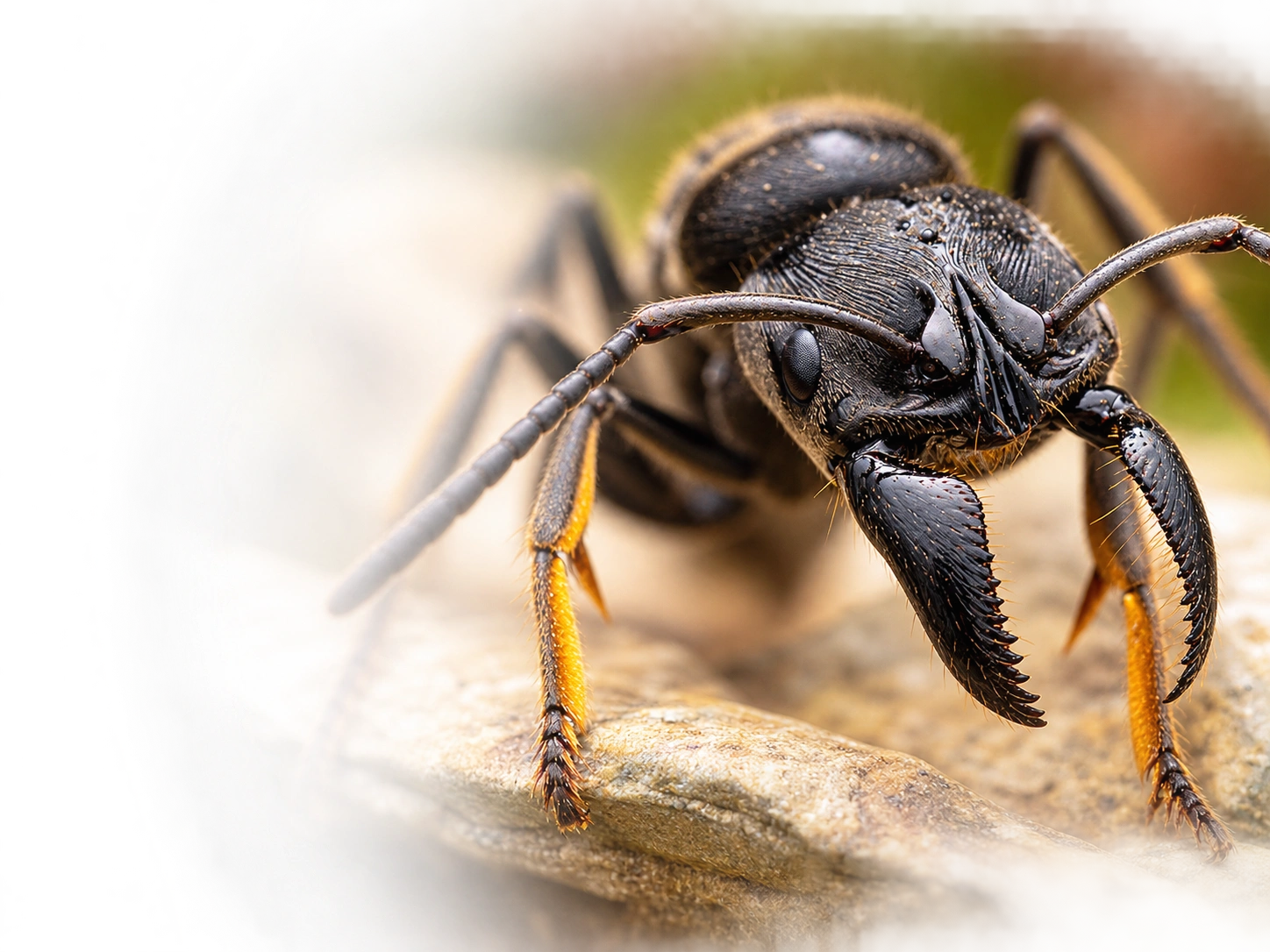
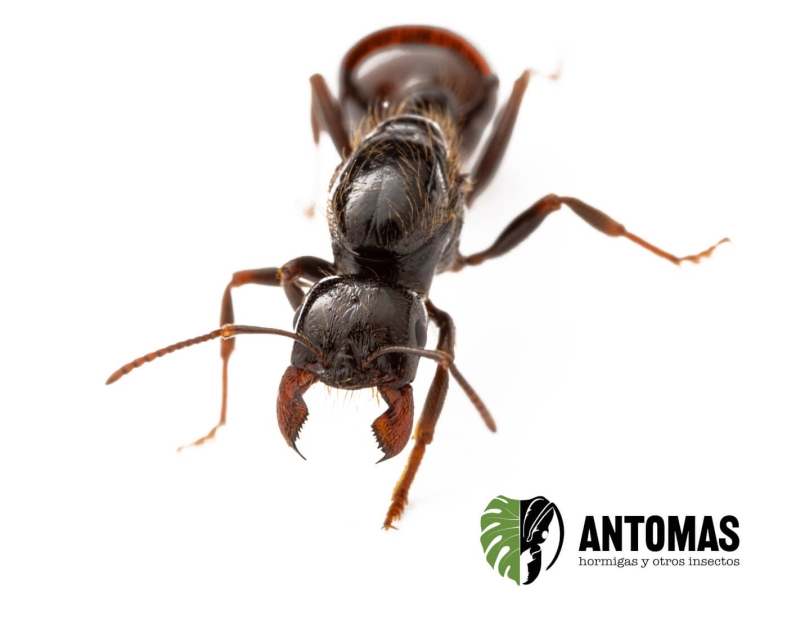
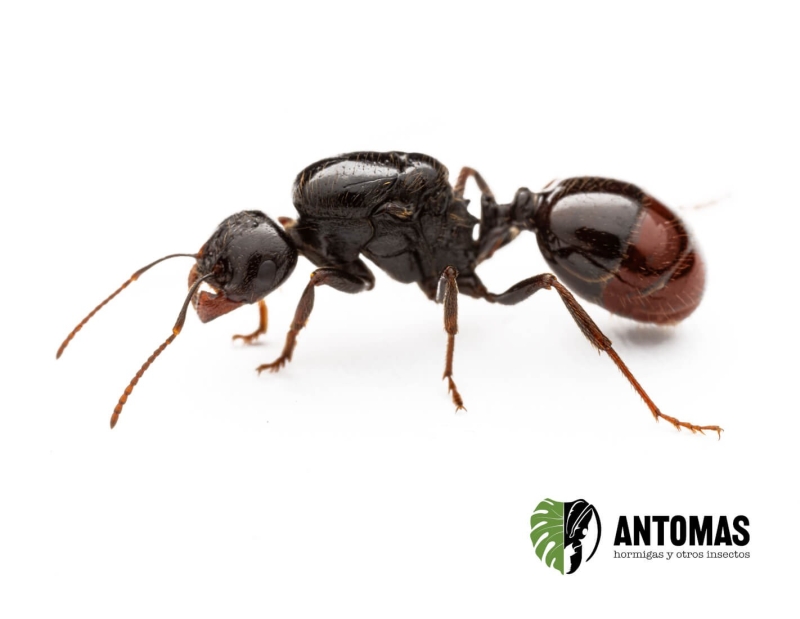
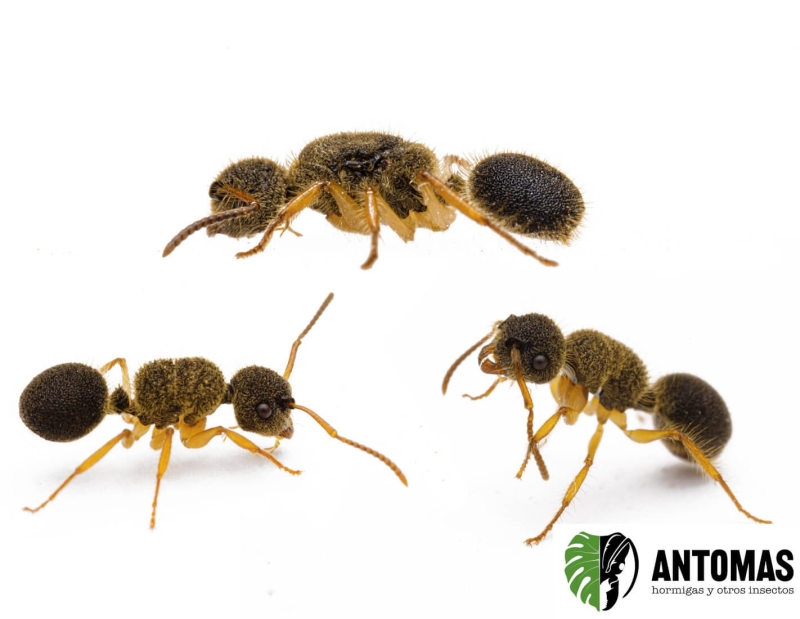
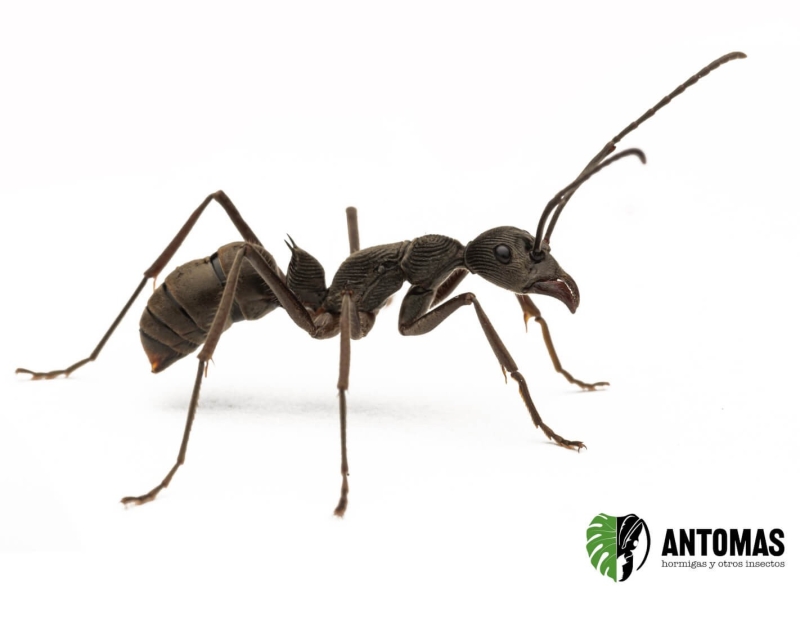
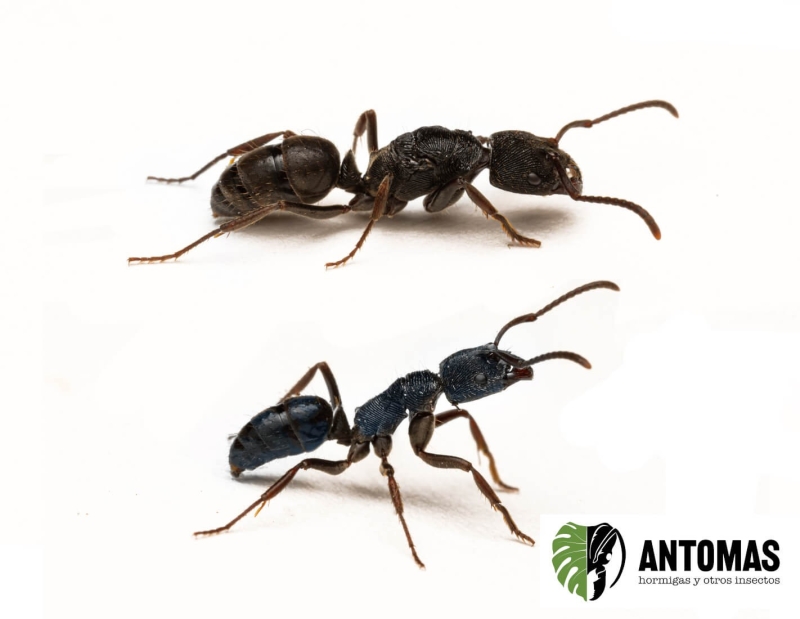
The worker is black and covered in a fine golden pubescence, most visible on the head and gaster, which gives it its characteristic sheen; the base of the mandibles and the tips of the antennae are yellowish brown. The original 1857 description already highlights its spines: two short, curved ones at the front of the thorax (pronotum), two of similar length at the back (propodeum) and two long spines on the petiole, curved backwards, which embrace the gaster. The legs have no spines. It has no ocelli and its eyes are only slightly prominent.
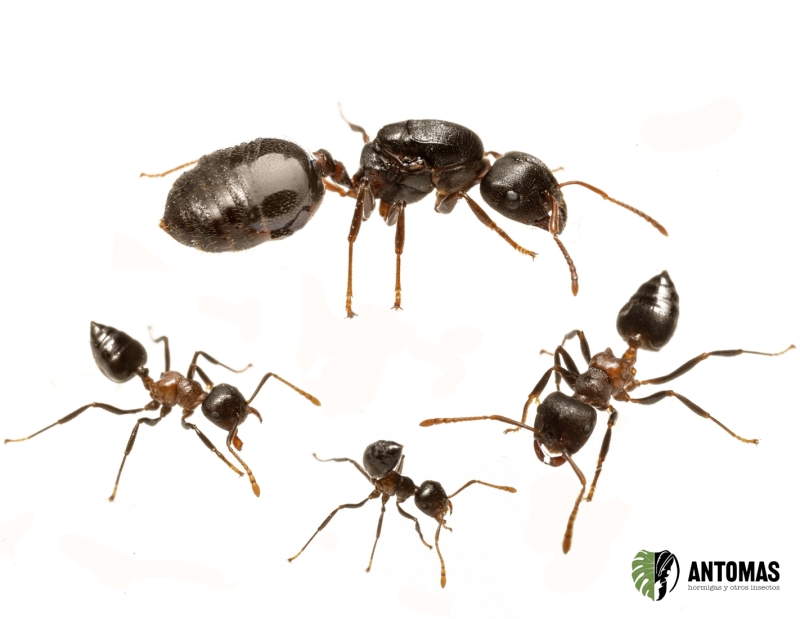
Unlike many ants in the hobby, the workers are monomorphic: they all have practically the same shape, with no majors or soldiers, and only moderate size variation.
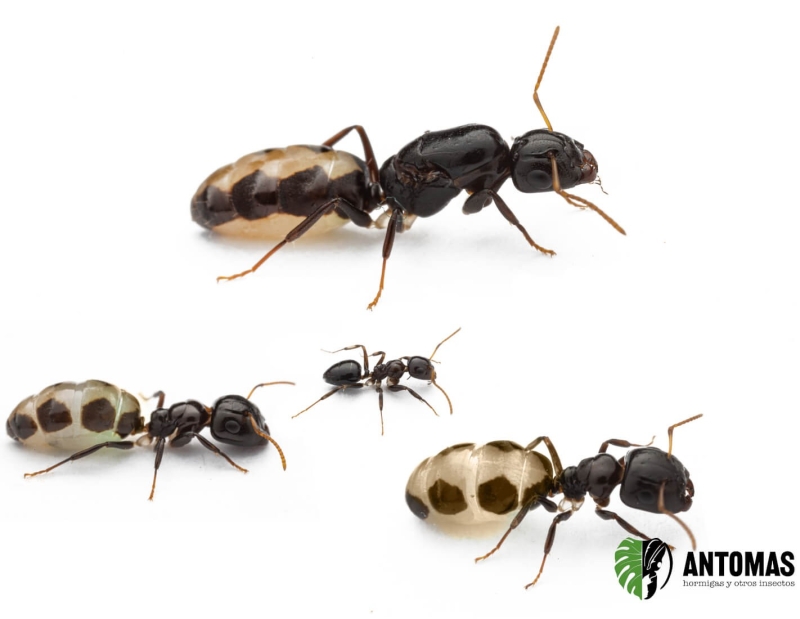
The queen is more robust than the worker but not much longer than the largest workers. She can be recognised by her three ocelli, the thorax of a winged female (or the wing scars), more prominent eyes and greatly reduced spines: those on the pronotum are reduced to small teeth and those on the petiole are short. Her colour, sculpture and hairs are the same as the worker's.
Cocoons. Unlike Oecophylla, the larvae spin their own cocoon to pupate, so in the nest you will see pupae wrapped in pale silk.
Not to be confused with P. lamellidens, which is larger, with a reddish-brown thorax and spines on the mesonotum too, or with P. illaudata, which is noticeably larger and develops more slowly.
Approximate measurements
- Workers: 5.4–7.7 mm
- Queen: 7–9 mm
Workers: measurements of 34 specimens from Kohout's review (2010). Queen: measured from Antomas' lines.
Care in captivity
Difficulty: 2/5 – Beginner
It is the best weaver ant to start with and one of the most rewarding tropical species in the hobby: it tolerates variations in temperature and humidity much better than Oecophylla, eats everything, grows fast, weaves its nest from whatever material you offer and is stopped by almost any escape barrier. It only asks for three things: stable warmth, a dry, well-ventilated environment and a set-up that can grow with it. For keepers moving on from European species, it is the perfect gateway into the world of weaver ants.
Recommended parameters
- Temperature: 26–29 °C during the day; at night it can drop to 23–25 °C.
- Hot spot: 28–30 °C, localised and from the side (heat mat on one side or a lamp), better than from below.
- Minimum: do not keep below 22 °C for long periods.
- Humidity: dry environment. There is no need to mist or moisten the nest, which they weave themselves.
- Water: always available (tube with cotton or a drinker).
- Ventilation: essential; avoid condensation.
- Diapause: none. They stay active all year; in winter it is enough to keep them warm.
At Antomas we recommend dry, well-ventilated environments, and keepers' experience confirms it: the most cited failure in the forums is a colony heated from below, with lots of condensation and poor ventilation, which recovered when the temperature was raised to about 28 °C and ventilation improved.
The set-up: Anthouse GAIA terrariums
P. dives does not need a conventional formicarium: it weaves its own nest inside the foraging area, and plaster, Ytong or acrylic nests rarely work for it. At Antomas we recommend Anthouse GAIA terrariums, specifically the GAIA Explorer (53 × 29 × 29 cm): a tall, well-ventilated enclosure where the colony can climb, weave its silk-and-carton ball in full view and grow without running out of space.
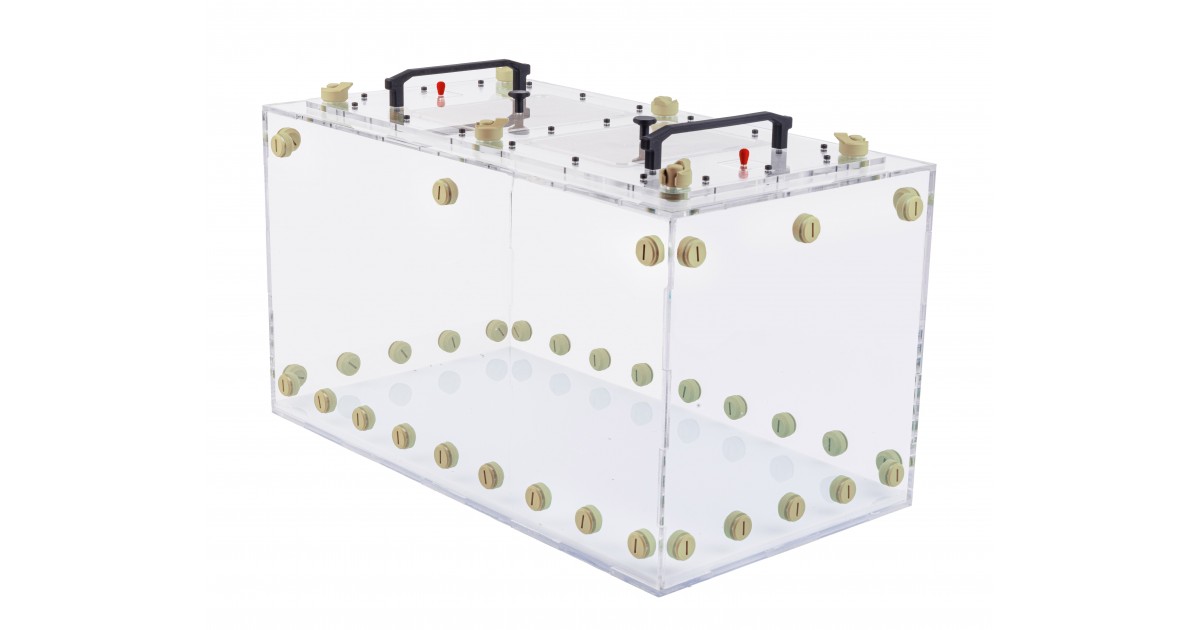
Anthouse GAIA Explorer terrarium
Inside the terrarium, give them weaving material: dry moss or sphagnum, dry grass, leaf litter, twigs, coconut or hemp fibre, bark… With it they will build their nest, often attached to a branch or a high corner. As substrate, sand with a little clay or coconut fibre; avoid very fine, dusty substrates.
For small colonies, a test tube inside a foraging box works perfectly: the larvae will weave inside the glass tube itself. When the colony fills two or three tubes, it is time to move to the terrarium. It is not a good idea to put a very small colony in a huge enclosure: it grows worse.
Watch the connecting tubes: P. dives tends to occupy the tubes connecting modules and seal them with silk and debris, turning them into nest. If you connect several enclosures, use short, wide connections, check them and raise them off the ground.
Hygiene: remove prey remains within 24–48 h and renew the sugar solution before it ferments: a fermented mixture can poison the colony.
Polygynous colonies: why we recommend at least two queens
In nature, P. dives founds colonies both independently and by budding, but founding with a single queen is its most fragile phase. That is why at Antomas we never sell single founding queens, and we recommend buying polygynous colonies with at least two queens: they lay more eggs, the colony grows faster and, if one queen fails, the colony carries on. Queens that arrive together live together without problems.
New queens cannot be adopted. Unlike Oecophylla, whose orphaned colonies accept queens from outside, in our experience a P. dives colony does not accept foreign queens or workers. Do not try to merge colonies or add queens bought separately. Nor is it advisable to have many queens with very few workers: there are cases of colonies with more than ten queens and only a few dozen workers that could not get going.
Rough timing: about 4–6 weeks from egg to worker at 27–28 °C.
Feeding
Carbohydrates. Sugar solution ad libitum: honey or sugar water, or ant nectar, always available and renewed before it ferments; ripe fruit from time to time. It is the basis of their diet, as in the wild, and they consume a lot: a colony of about 270 workers can empty a couple of bottle caps of sugar water every three days.
Protein. Whenever there are larvae. Mainly fresh, freshly killed insects: crickets, small cockroaches, flies, chopped mealworms and other safe feeder insects. They can be given live if the insects are small, such as Drosophila or Thermobia, or if the colony is very large; but at Antomas we recommend always offering them dead, because they are not great hunters: large live prey stresses them and goes to waste. A colony of a few hundred workers can eat an adult cricket or cockroach a day, leaving only the exoskeleton.
Clean water always available, in addition to the sugar solution.
Behaviour in captivity
It is a very active and showy species: it patrols the outworld at all hours, climbs the branches, weaves and enlarges its carton nest, opens satellite nests and moves house easily. When disturbed it raises its gaster and sprays formic acid; if heavily stressed, it may move or even abandon the brood. Growth is fast: the forums cite colonies going from a dozen workers to almost three hundred in eight months, or from a hundred to several thousand in three years. That is why it is such a rewarding species: you will see changes in the colony almost every week.
Escapes and barriers
They are tireless explorers and look for any gap, but they are not like Oecophylla: practically any escape barrier stops them (PTFE or Fluon, paraffin oil, talc), as long as it is kept clean and free of dust and condensation. Complete the barrier with a well-fitting fine-mesh lid.
Handling and safety
It has no sting. It bites, but its bite does not usually break the skin; what bothers is the formic acid, which stings if it gets into a small wound and should be kept away from the eyes. Do not handle with bare hands; use long tweezers. Do not keep it with other ant species: it is very territorial. It is an exotic species: under no circumstances should it be released.
What not to do
- Humid environments with condensation and poor ventilation, or heat only from below.
- Try to add new queens or merge different colonies.
- Offer large live prey: always better dead.
- Let the sugar solution run out or ferment.
- Leave prey remains for more than 48 h.
- Set-ups without height or weaving material, or huge enclosures for a small colony.
- Long, narrow connecting tubes left unchecked: they will turn them into nest.
- Keep it below 22 °C for weeks.
What you receive
Polyrhachis dives colonies with queens, workers and brood, according to the option available at the time. We recommend polygynous colonies with at least two queens; we do not sell single founding queens. We ship to Spain and all of Europe, with thermal packaging when needed; live arrival guaranteed.
Scientific sources
This care sheet was compiled from the scientific literature on the species and from the experience of Antomas and European keepers. Main references:
- Smith, F. (1857). Catalogue of the hymenopterous insects collected at Sarawak, Borneo; Mount Ophir, Malacca; and at Singapore, by A. R. Wallace. Journal of the Proceedings of the Linnean Society of London, Zoology 2: 42–88. doi:10.5281/zenodo.6297610
- Kohout, R.J. (2010). A review of the Australian Polyrhachis ants of the subgenera Myrmhopla Forel and Hirtomyrma subgen. nov. Memoirs of the Queensland Museum – Nature 55: 167–204.
- Robson, S.K.A. & Kohout, R.J. (2007). A review of the nesting habits and socioecology of the ant genus Polyrhachis Fr. Smith. Asian Myrmecology 1: 81–99. researchonline.jcu.edu.au/2602
- Robson, S.K.A., Kohout, R.J., Beckenbach, A.T. & Moreau, C.S. (2015). Evolutionary transitions of complex labile traits: silk weaving and arboreal nesting in Polyrhachis ants. Behavioral Ecology and Sociobiology 69: 449–458. doi:10.1007/s00265-014-1857-x
- Yamauchi, K., Ito, Y., Kinomura, K. & Takamine, H. (1987). Polycalic colonies of the weaver ant Polyrhachis dives. Kontyû 55: 410–420.
- Jong, J.-J. (2008). Models of division of labor and expression of biological clock in the colony of Polyrhachis dives. PhD thesis, National Taiwan University. Abstract
- Chen & Tang (1989). Biology of Polyrhachis vicina (= P. dives) in Zhejiang. Zoological Research 10(1): 57–63. zoores.ac.cn
- Graystock, P. & Hughes, W.O.H. (2011). Disease resistance in a weaver ant, Polyrhachis dives, and the role of antibiotic-producing glands. Behavioral Ecology and Sociobiology 65: 2319–2327. doi:10.1007/s00265-011-1242-y
- Wong, T.L. & Guénard, B. (2020). Review of ants from the genus Polyrhachis in Hong Kong and Macau. Asian Myrmecology 13: e013001. doi:10.20362/am.013001
- Liu, J.-H. et al. (2017). Characterization of mitochondrial genome and phylogenetic implications for Chinese black ant, Polyrhachis dives. Mitochondrial DNA Part B 2(2): 679–680. doi:10.1080/23802359.2017.1383204
- Zhang, Z. et al. (2022). Characterization, antioxidant activities, and pancreatic lipase inhibitory effect of extract from the edible insect Polyrhachis vicina. Frontiers in Nutrition 9: 860174. doi:10.3389/fnut.2022.860174
- Dorow, W.H.O. (1995). Revision of the ant genus Polyrhachis Smith, 1857 on subgenus level with keys, checklist of species and bibliography. Courier Forschungsinstitut Senckenberg 185: 1–113.