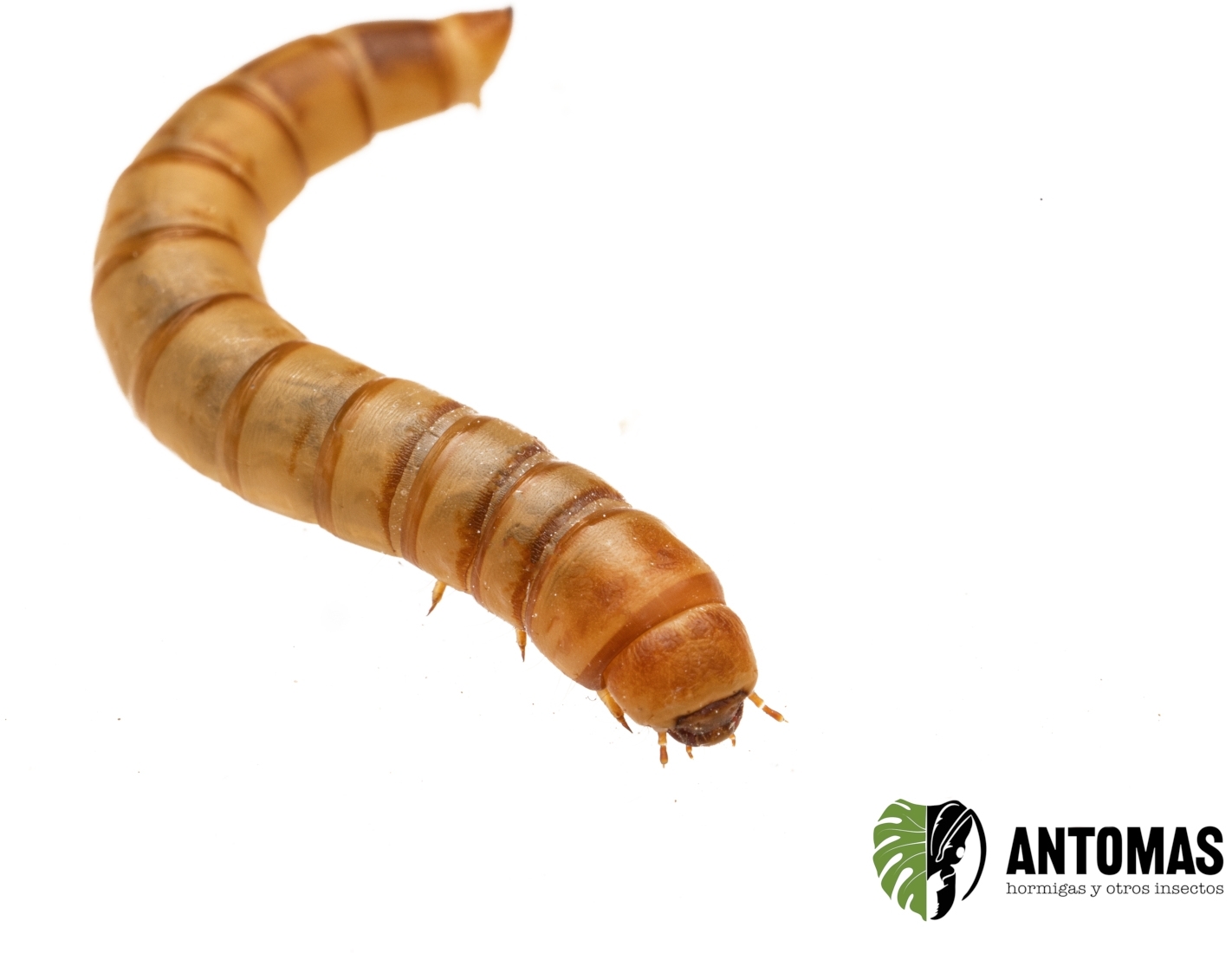
Use: live food for ants and other insectivores
What it is: the larva of the beetle Tenebrio molitor; sold in size S, in tubs of 200. How to keep them: in their bran, in the fridge at 8–10 °C, where they last for weeks with almost no growth; every 2–3 weeks, give them a day at room temperature with a piece of carrot or potato. How to feed them: dead, with the head crushed, or cut into pieces; for small colonies, ideally freshly moulted (white and soft). Can you breed them? Yes, in wheat bran at 25–28 °C: the full life cycle takes 3 to 5 months.
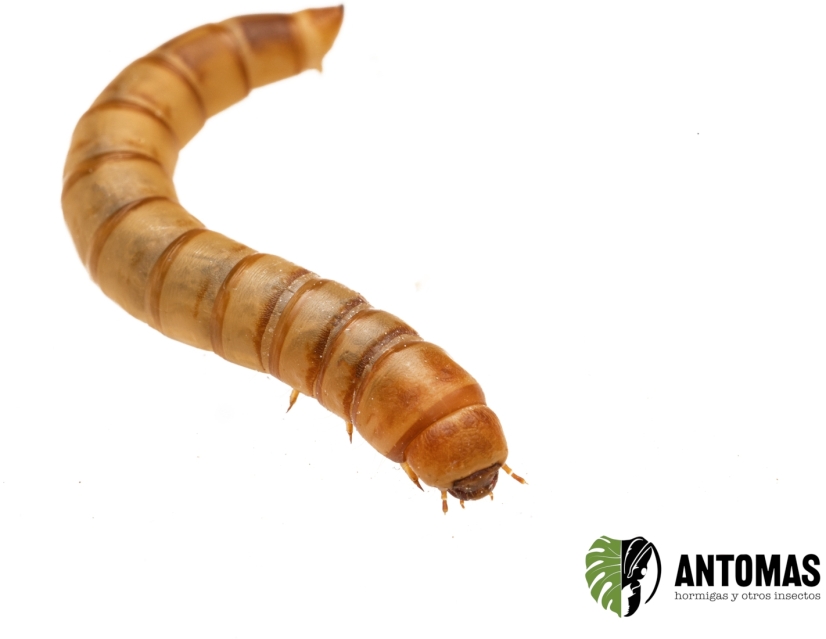
Tenebrio molitor Linnaeus, 1758 is a beetle of the family Tenebrionidae, a classic pest of stored flour and cereals, now spread across almost the whole world through the grain trade. What we sell under the name “mealworm” is its larva: despite the name, it is not a worm (true worms, such as the earthworm, are legless annelids) but the larva of an insect, with a head, three pairs of legs and a chitin exoskeleton. In the rest of this sheet we use “worm” in that trade sense.
It is probably the most widely bred live food in the world: it is produced by the tonne for reptiles, birds and fish, and since 2021 it has been authorised in the European Union as human food. For ants it is a cheap protein, easy to store and available all year round, with a couple of tricks for using it that we explain below.
Why it is a good food for ants
A larder you keep in the fridge
Unlike crickets and cockroaches, the T. molitor larva copes very well with cold. In one study, larvae stored in bran at 10 °C for 120 days lost only 15.8 % in survival, and the adults that emerged afterwards were almost all normal (Errico and colleagues, 2021). With a tub in the fridge you have protein for weeks without having to set up a culture.
Plenty of energy in a small volume
It is a fatty prey. According to Finke’s analyses (2002), the commercial larva contains about 62 % water, 18.7 % crude protein and 13.4 % fat on a fresh-weight basis: on a dry-matter basis, around half is protein and over a third is fat. Fast-growing colonies with plenty of brood make very good use of it.
| Prey | Dry matter | Crude protein* | Crude fat* |
|---|
| Tenebrio molitor, larva | 38.1 % | 49 % | 35 % |
| Tenebrio molitor, adult beetle | 38.8 % | 67.7 % | 17.7 % |
* On a dry-matter basis. Larva: calculated from Finke (2002); adult: Oonincx and Dierenfeld (2012).
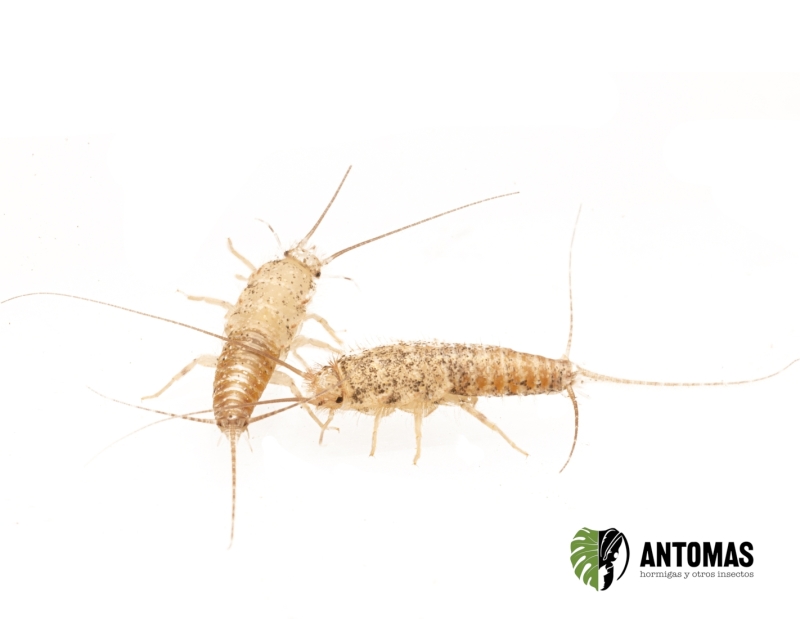
Like all feeder insects, it has very little calcium and a lot of phosphorus (Finke, 2002). That is why it should not be the only protein: at Antomas we recommend alternating it from one week to the next with other prey, such as Thermobia domestica (small and soft, ideal for founding colonies), the cricket or the Dubia Roach.
Three prey in one: larva, pupa and beetle
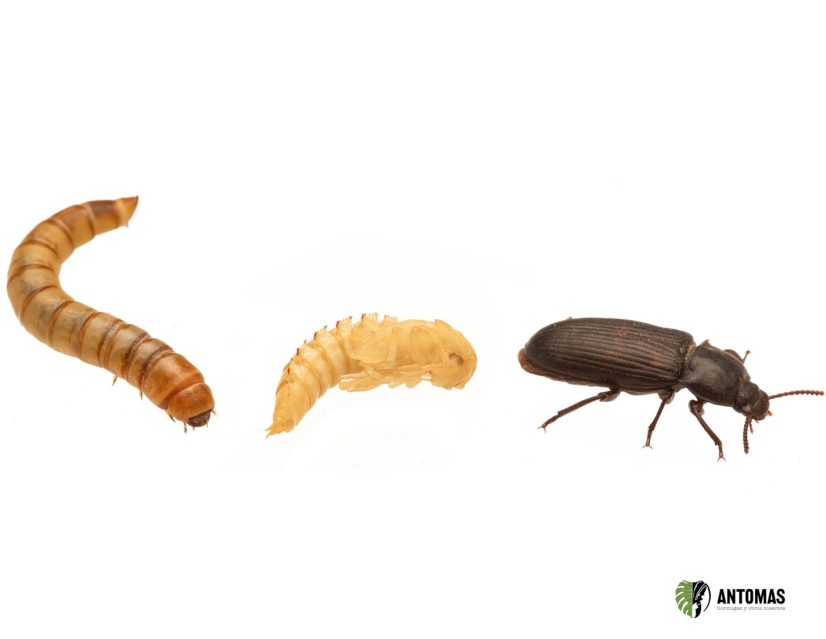
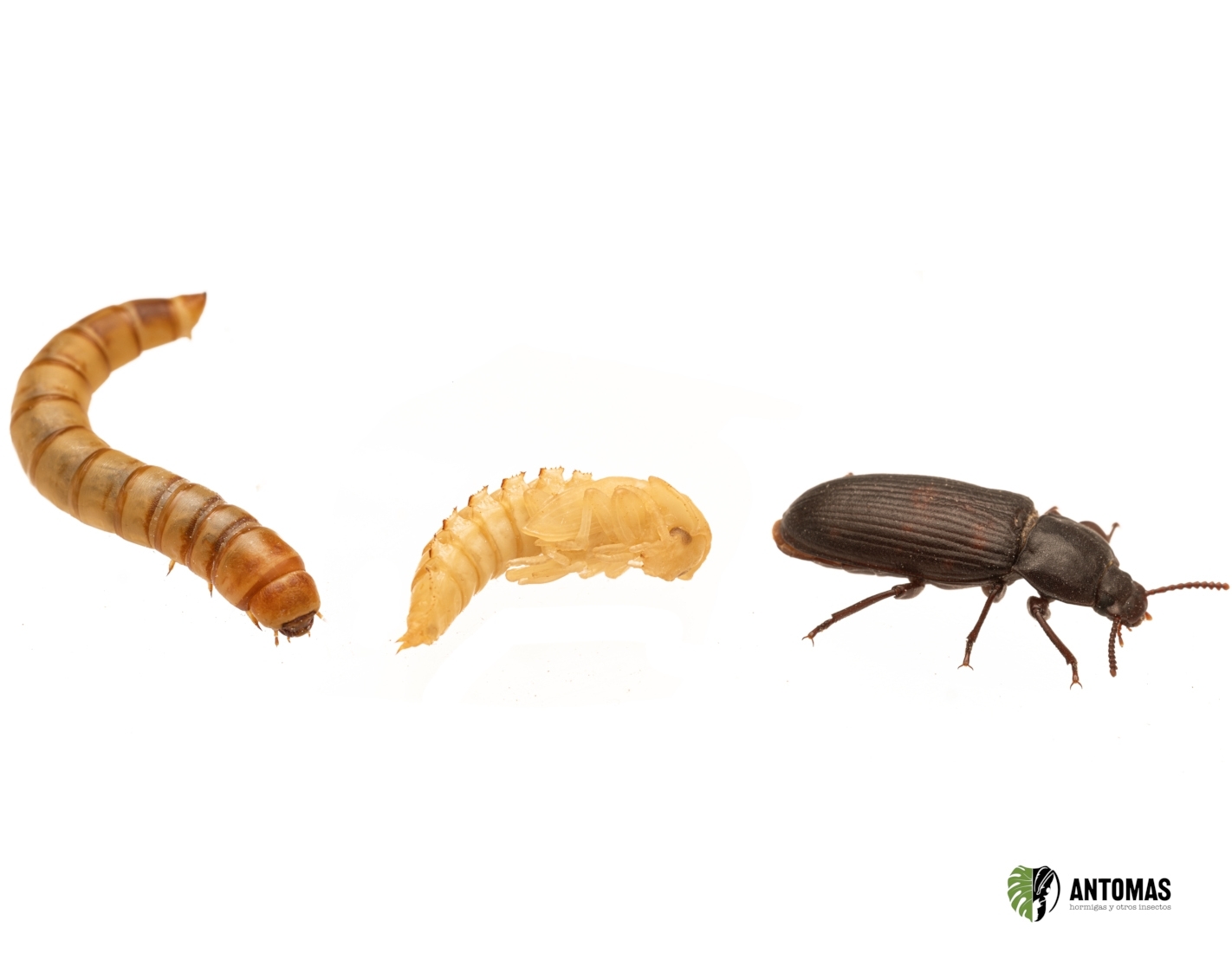
A single culture gives you three kinds of prey. The larva, to cut up; the pupa, white, soft and without legs that move, very easy to dismember and carry, which laboratories use to feed predatory ants; and the adult beetle, tougher, for large colonies.
The freshly moulted larva: the soft morsel
The larvae moult many times. For a few hours after each moult they are white and soft, with the cuticle not yet hardened: this is the best moment to give them to a small colony, which cannot always open a dark, hard larva.
Biology
From 14 to 18 moults: a larva that adapts to its food
The number of larval instars is not fixed. In the laboratory it ranged from 14 to 18, with 15 or 16 being the most common, and the variation appears from the tenth instar onwards (Morales-Ramos and colleagues, 2015). On a better diet (bran with potato or with added protein), the larvae moulted fewer times and reached the pupal stage sooner (Morales-Ramos and colleagues, 2010). Temperature and humidity also change the length of the cycle: cultures do best at 25–28 °C and 60–75 % relative humidity (Ribeiro and colleagues, 2018).
It drinks water from the air through its rectum
It lives in dry flour and bran, and yet it does not dehydrate. Its trick is the cryptonephridial complex: the ends of the Malpighian tubules wrap around the rectum, pump salts and dry the faeces almost completely (Ramsay, 1964). When the air is almost saturated, the larva can even absorb water vapour through its rectum; in one experiment, absorption began at around 93 % relative humidity (Hansen and colleagues, 2004). In a home culture, however, they still get their water from vegetables.
One of the most powerful antifreeze proteins known
The larva produces an antifreeze protein (TmAFP) up to 100 times more active than those of polar fish, able to lower the freezing point of its haemolymph by about 5.5 °C (Graham and colleagues, 1997). Its structure, a beta-helix of exceptional regularity, mimics the surface of ice to stop crystals from growing (Liou and colleagues, 2000). This is part of the reason it copes so well with the fridge.
Pupae with “snares” against cannibalism
Larvae will eat pupae if they can. The pupa defends itself with sudden twists of the abdomen and with “traps” (gin traps) between the segments, which snap shut like pincers when touched. When pupae were paralysed in an experiment, the larvae attacked and killed them within a few days; intact pupae were almost never eaten (Ichikawa and Kurauchi, 2009). Even so, cannibalism does occur in a culture with little food or high density: that is why it is worth separating the pupae.
It eats polystyrene
In 2015 it was shown that the larvae chew and digest expanded polystyrene: they break it down in the gut in less than 24 hours, partly into CO2, and those fed only on polystyrene survived for a month as well as those fed on bran (Yang and colleagues, 2015a). Their gut flora is responsible: with antibiotics, the degradation stops (Yang and colleagues, 2015b). Practical consequence: do not keep them in polystyrene boxes, as they eat through them and end up escaping.
From flour pest to human food
In 2021, the European Food Safety Authority concluded that the dried larva of T. molitor is safe as a novel food, with one warning: it can cause allergies, especially in people already allergic to mites or shellfish (EFSA, 2021). It was the first insect assessed by EFSA, and the European Commission authorised it that same year (Implementing Regulation (EU) 2021/882).
Size and morphology
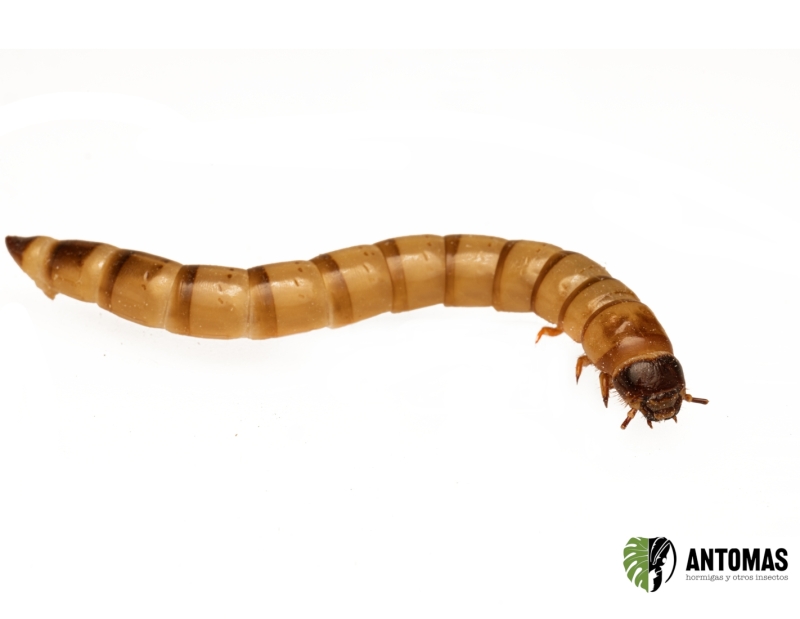
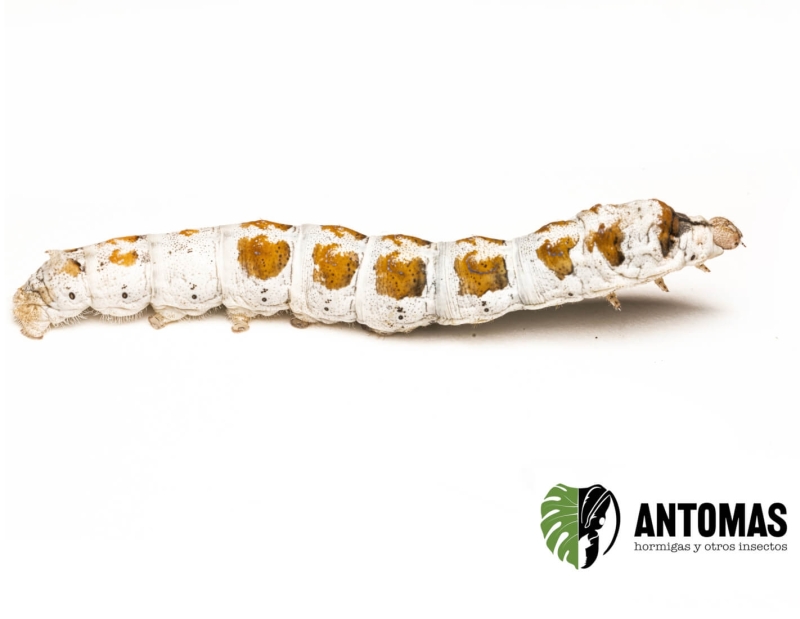
The larva is cylindrical and elongated, golden yellow to light brown, with darker rings between segments. It has a sclerotised head with chewing mandibles, three pairs of short thoracic legs and a hard, shiny cuticle. After each moult it emerges white and darkens within a few hours. The pupa is white or cream, motionless apart from twists of the abdomen. The adult is an elongated beetle, reddish brown when it emerges and glossy black afterwards, with striated elytra and functional wings, although in culture it rarely flies.
Approximate measurements and life cycle
- Final-instar larva: about 25–30 mm (size S in our shop is small larvae)
- Larval instars: 14–18, most often 15–16
- Water content of the larva: about 62 %
- Pupa: about one to two weeks at 25 °C, longer in the cold
- Adult: about 12–18 mm
- Full life cycle at 25–28 °C: 3 to 5 months, depending on diet
Instars: Morales-Ramos and colleagues (2015); water: Finke (2002); temperature and life cycle: Ribeiro and colleagues (2018). Sizes are those given in the general literature and vary with diet.
How to keep them at home for a few days or weeks
- In the fridge, at 8–10 °C. In the cold they barely eat, do not grow and take a long time to pupate. Avoid the coldest part and the door: below about 5 °C their survival drops.
- In their bran, in the same tub or in a smooth plastic container with holes in the lid. No vegetables inside the fridge: they rot and cause condensation.
- Every 2–3 weeks, a day out: at room temperature, with a piece of carrot or potato. They eat and drink, then go back into the fridge. A well-fed larva makes better food for your ants.
- At room temperature they also survive, but they grow and within a few weeks turn into pupae and beetles.
How to breed them
If you use a lot of them, breeding them is simple and cheap. These guidelines summarise the mass-rearing literature and the usual practice of breeders.
- Container: smooth plastic boxes, low and wide, with a mesh-ventilated lid. Neither adults nor larvae can climb smooth plastic. No polystyrene.
- Substrate and food: 3–5 cm of wheat bran, which is both bedding and food, with rolled oats and 5–10 % brewer’s yeast (Ribeiro and colleagues, 2018).
- Water: slices of carrot, potato or apple on top of the bran, removing the leftovers before they go mouldy. Never free-standing water.
- Temperature and humidity: 25–28 °C and 60–75 % relative humidity; above about 30 °C mortality rises (Ribeiro and colleagues, 2018). They also breed at room temperature, but more slowly.
- Pupae apart: collect them every few days and move them to a box with a little bran, so that the larvae do not eat them.
- Adults and egg-laying: the beetles lay hundreds of tiny eggs in the bran over several weeks. For uniform sizes, move the adults to a new box every 1–2 weeks: each box will produce a batch of the same age.
- Harvesting: a kitchen sieve separates the larvae from the bran and the droppings (the fine “dust”). Change the substrate when it is almost all dust.
How to feed them to your ants
The live larva has a hard cuticle, burrows into the substrate and bites with its mandibles. That is why at Antomas we never give it whole and alive to small colonies: always dead and opened up.
- How to kill it: crush its head with tweezers just before feeding, or freeze and thaw it. Dead, it neither hides nor bites.
- Opened up or cut into pieces: many ants struggle to pierce the cuticle. Cut in half, or with a slit that exposes the inside, they make use of it straight away.
- Founding colonies and colonies with few workers: a piece a few millimetres long from a freshly moulted (white) larva, or a cut-up pupa. A small prey such as Thermobia domestica usually works better for them.
- Medium colonies (50–200 workers): 1–3 opened larvae per feed, or one whole pupa.
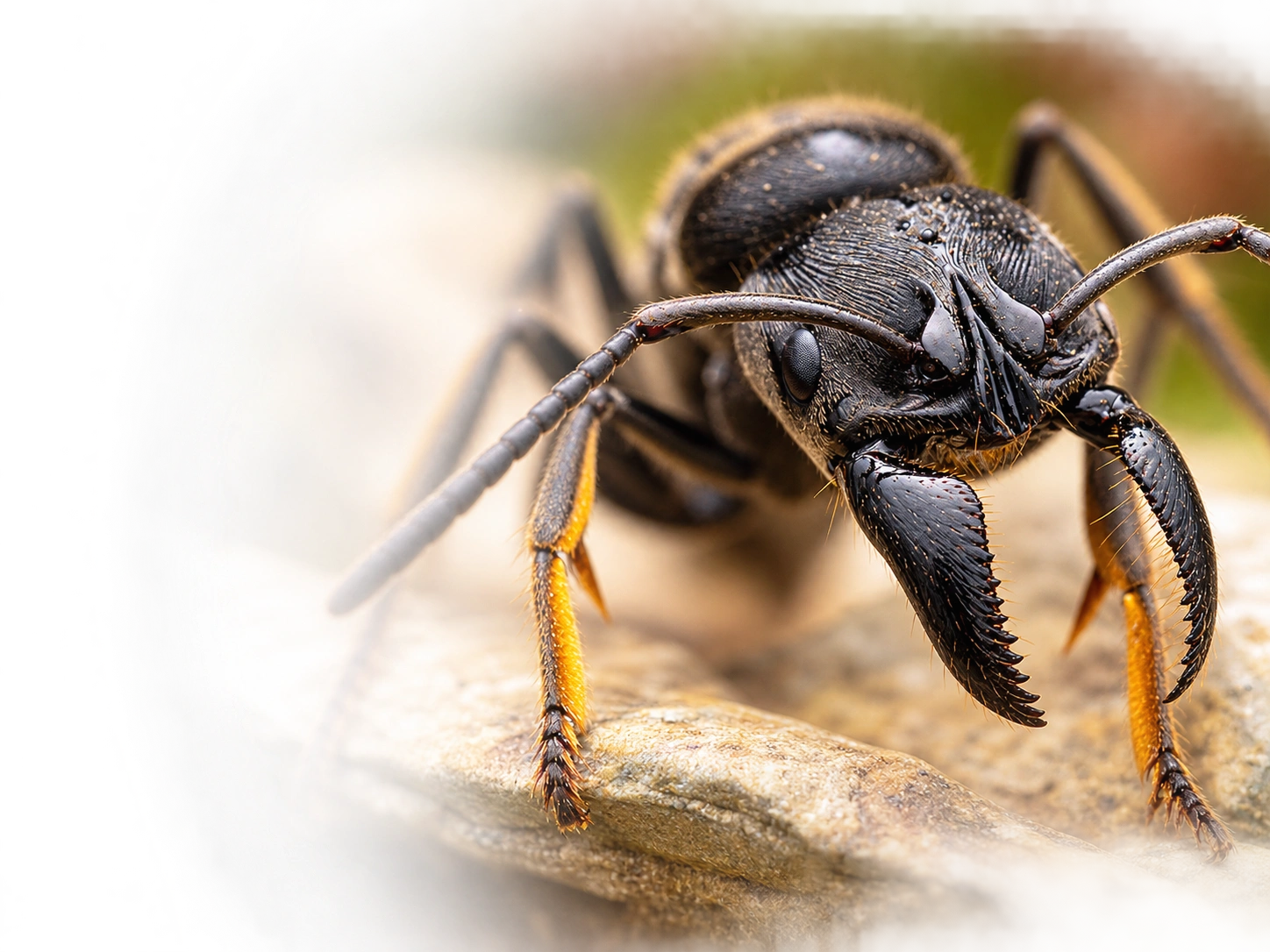
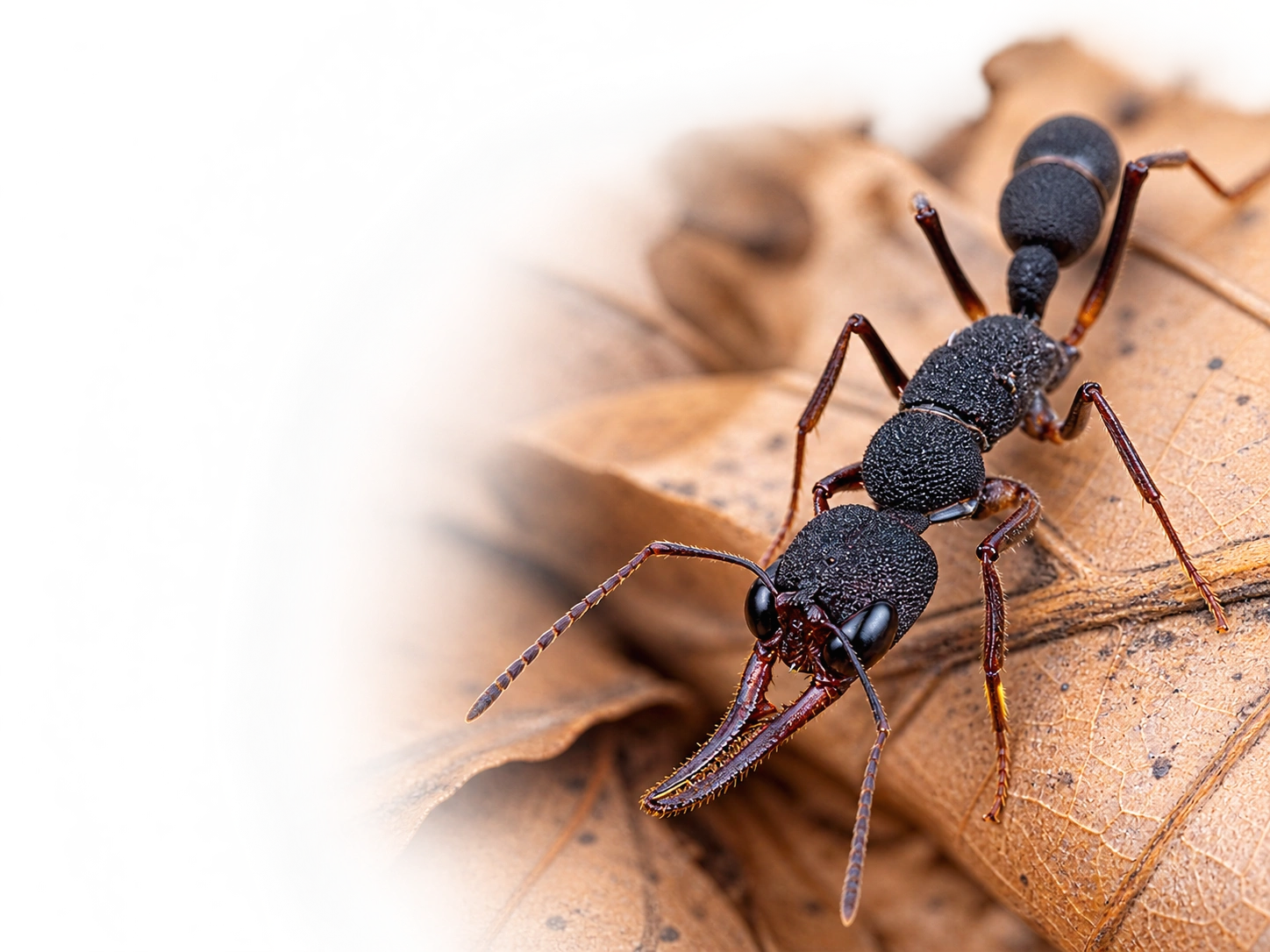
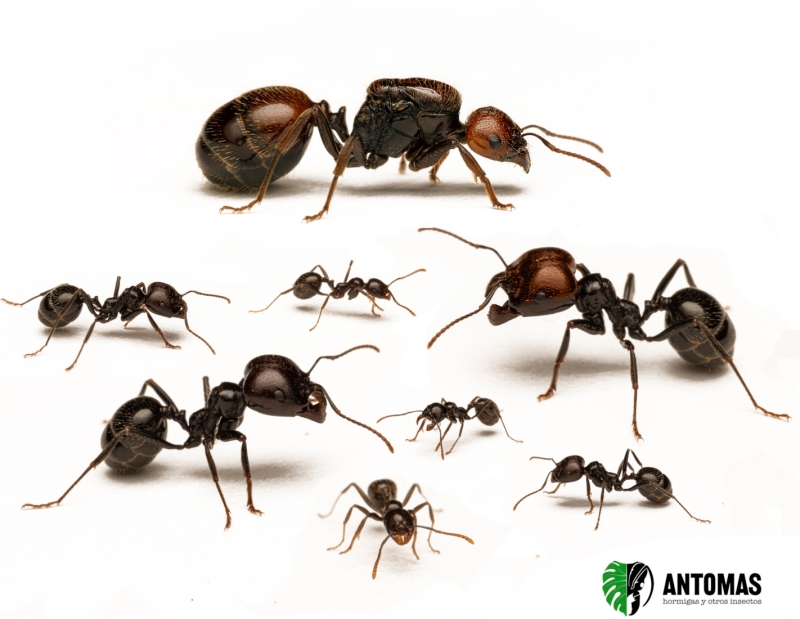
- Large colonies: several larvae, pupae or crushed adult beetles. Good-sized ants, such as Camponotus cruentatus, the harvester Messor barbarus, which also eats protein, or predators such as Odontomachus banksi, take a mealworm apart with no trouble.
- Gut loading: the day before, give them carrot or fresh vegetables. A well-fed larva is better food than one that has been fasting in the fridge for weeks.
- Remove the leftovers: the empty cuticle stays in the foraging area. Remove it within 24–48 hours, like any piece they have not eaten, to prevent mould and mites.
And do not hold back: with daily maintenance and removal of leftovers, it is better to overfeed, because the colony understands that it has resources and grows faster. If you cannot clean often, better not to overdo it. With species that do not take it well, try other prey; if you want a larger larva, there is also the superworm (Zophobas morio), from the same family.
Escapes, hygiene and safety
- Escapes: neither larvae nor adults can climb smooth plastic or glass, but they can climb cardboard and wood, and the larvae bore through polystyrene. The adults have wings: always keep the box covered.
- Larder: it is a stored-product pest. One escaped larva is not a problem, but do not leave cultures open or near flour and animal feed.
- Allergies: its proteins, especially tropomyosin and arginine kinase, cross-react with those of house dust mites and shellfish (Verhoeckx and colleagues, 2014; EFSA, 2021). If you are allergic to either, handle the culture with gloves, do not stir up the bran dust and wash your hands.
- Mites and mould: they appear with excess humidity and rotting vegetables. Remove vegetable leftovers and replace old bran.
- Smell: a dry, well-kept culture barely smells; if it smells of ammonia or mould, there is too much moisture or too high a density.
What not to do
- Give live, whole larvae to a lone queen or a founding colony: they can bite and they burrow.
- Use it as the only protein: it is low in calcium and very fatty. Alternate prey from one week to the next.
- Keep them in the fridge below about 5 °C, or in the freezer, if you want them alive.
- Put carrot or potato in the tub inside the fridge, or too much of it in the culture: mould and mites.
- Use expanded polystyrene boxes: they eat them.
- Leave cuticles and leftovers in the foraging area for more than a couple of days.
- Feed beetles caught in a larder or a warehouse, which may carry insecticides: captive-bred only.
- Release larvae or adults outdoors.
Scientific sources
This sheet is based on the scientific literature on Tenebrio molitor, on Commission Implementing Regulation (EU) 2021/882, which authorises the dried larva as a novel food, and on the experience of Antomas and other breeders. Main references:
- Ribeiro, N., Abelho, M. & Costa, R. (2018). A review of the scientific literature for optimal conditions for mass rearing Tenebrio molitor (Coleoptera: Tenebrionidae). Journal of Entomological Science 53: 434–454. doi:10.18474/JES17-67.1
- Morales-Ramos, J. A., Rojas, M. G., Shapiro-Ilan, D. I. & Tedders, W. L. (2010). Developmental plasticity in Tenebrio molitor (Coleoptera: Tenebrionidae): analysis of instar variation in number and development time under different diets. Journal of Entomological Science 45: 75–90. doi:10.18474/0749-8004-45.2.75
- Morales-Ramos, J. A., Kay, S., Rojas, M. G., Shapiro-Ilan, D. I. & Tedders, W. L. (2015). Morphometric analysis of instar variation in Tenebrio molitor (Coleoptera: Tenebrionidae). Annals of the Entomological Society of America 108: 146–159. doi:10.1093/aesa/sau049
- Errico, S., Dimatteo, S., Moliterni, S. & Baldacchino, F. (2021). Effects of long-lasting cold storage on Tenebrio molitor larvae (Coleoptera: Tenebrionidae). Journal of Insects as Food and Feed 7: 1111–1116. doi:10.3920/JIFF2020.0162
- Finke, M. D. (2002). Complete nutrient composition of commercially raised invertebrates used as food for insectivores. Zoo Biology 21: 269–285. doi:10.1002/zoo.10031
- Oonincx, D. G. A. B. & Dierenfeld, E. S. (2012). An investigation into the chemical composition of alternative invertebrate prey. Zoo Biology 31: 40–54. doi:10.1002/zoo.20382
- Ramsay, J. A. (1964). The rectal complex of the mealworm Tenebrio molitor, L. (Coleoptera, Tenebrionidae). Philosophical Transactions of the Royal Society B 248: 279–314. doi:10.1098/rstb.1964.0013
- Hansen, L. L., Ramløv, H. & Westh, P. (2004). Metabolic activity and water vapour absorption in the mealworm Tenebrio molitor L. (Coleoptera, Tenebrionidae): real-time measurements by two-channel microcalorimetry. Journal of Experimental Biology 207: 545–552. doi:10.1242/jeb.00762
- Graham, L. A., Liou, Y.-C., Walker, V. K. & Davies, P. L. (1997). Hyperactive antifreeze protein from beetles. Nature 388: 727–728. doi:10.1038/41908
- Liou, Y.-C., Tocilj, A., Davies, P. L. & Jia, Z. (2000). Mimicry of ice structure by surface hydroxyls and water of a β-helix antifreeze protein. Nature 406: 322–324. doi:10.1038/35018604
- Ichikawa, T. & Kurauchi, T. (2009). Larval cannibalism and pupal defense against cannibalism in two species of tenebrionid beetles. Zoological Science 26: 525–529. doi:10.2108/zsj.26.525
- Yang, Y., Yang, J., Wu, W.-M., Zhao, J. et al. (2015a). Biodegradation and mineralization of polystyrene by plastic-eating mealworms: Part 1. Chemical and physical characterization and isotopic tests. Environmental Science & Technology 49: 12080–12086. doi:10.1021/acs.est.5b02661
- Yang, Y., Yang, J., Wu, W.-M., Zhao, J. et al. (2015b). Biodegradation and mineralization of polystyrene by plastic-eating mealworms: Part 2. Role of gut microorganisms. Environmental Science & Technology 49: 12087–12093. doi:10.1021/acs.est.5b02663
- Verhoeckx, K. C. M., van Broekhoven, S., den Hartog-Jager, C. F., Gaspari, M. et al. (2014). House dust mite (Der p 10) and crustacean allergic patients may react to food containing yellow mealworm proteins. Food and Chemical Toxicology 65: 364–373. doi:10.1016/j.fct.2013.12.049
- EFSA NDA Panel (Turck, D. et al.) (2021). Safety of dried yellow mealworm (Tenebrio molitor larva) as a novel food pursuant to Regulation (EU) 2015/2283. EFSA Journal 19: e06343. doi:10.2903/j.efsa.2021.6343