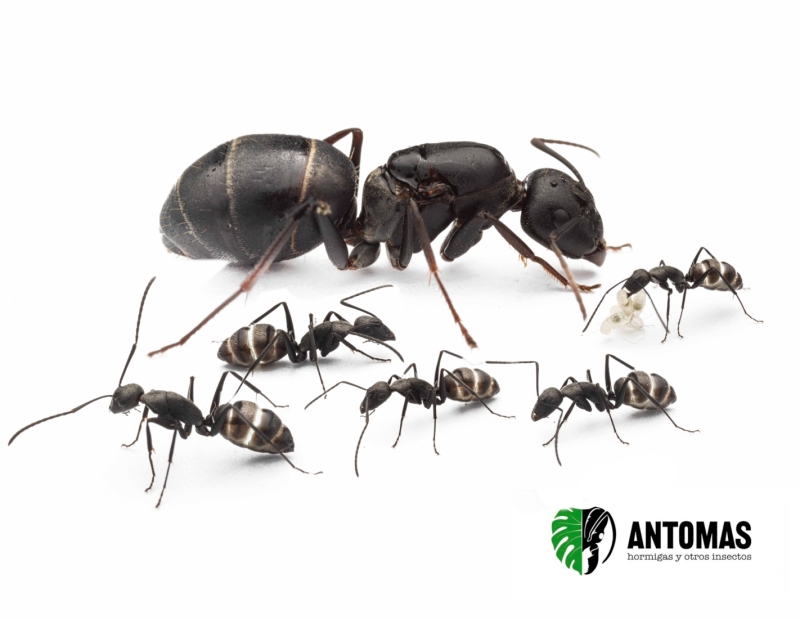
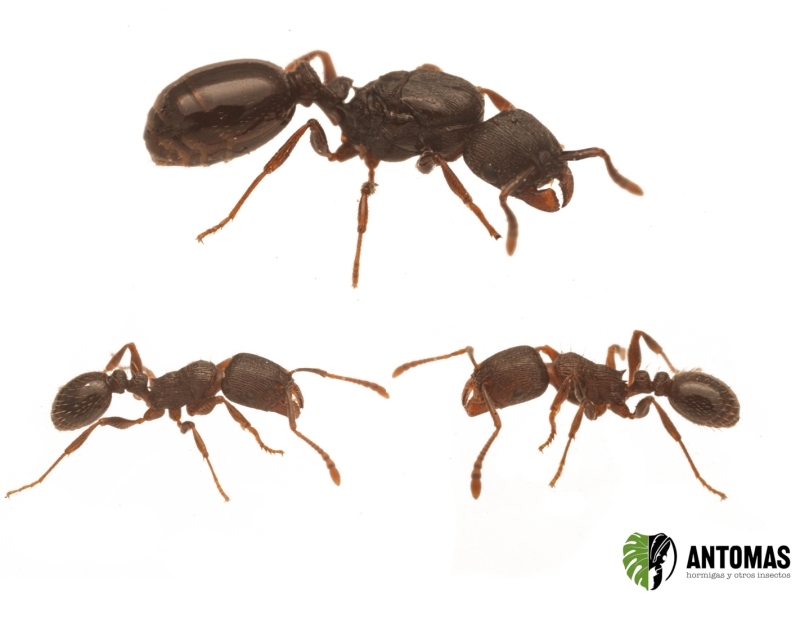
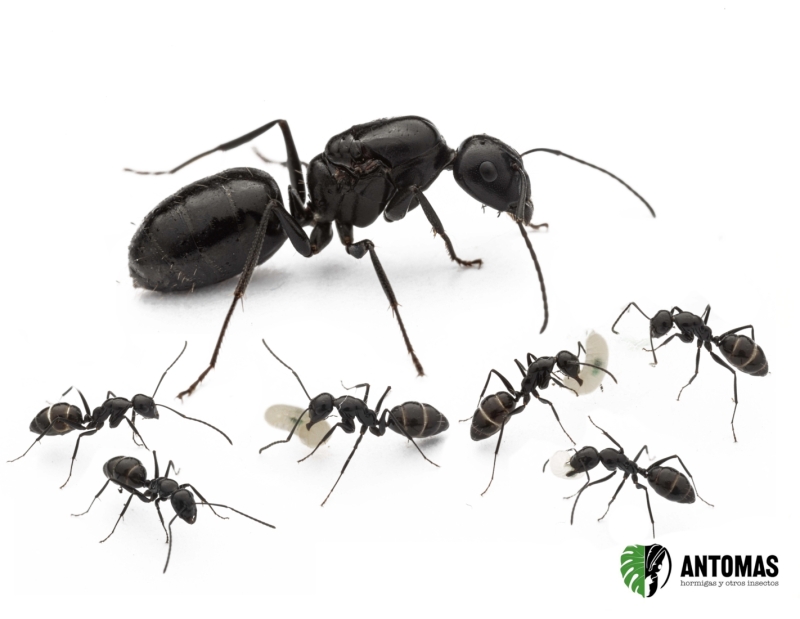
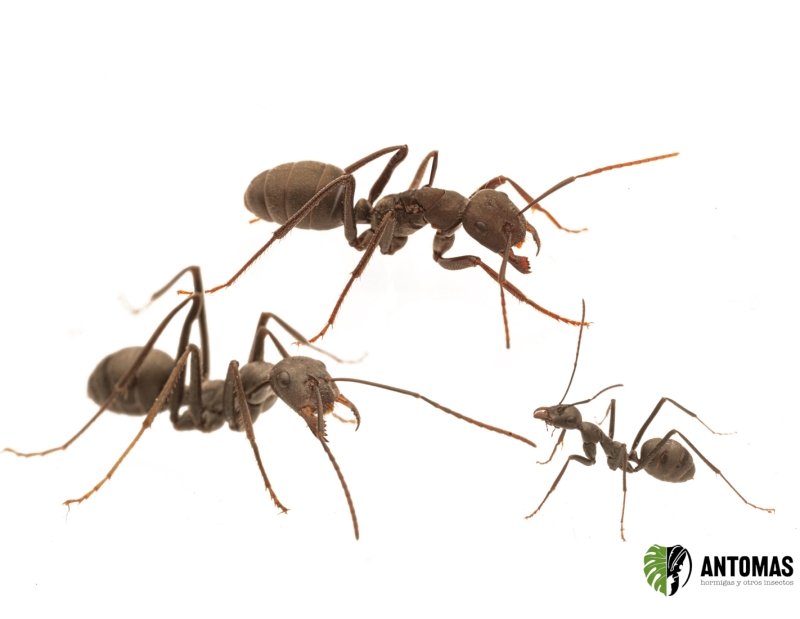
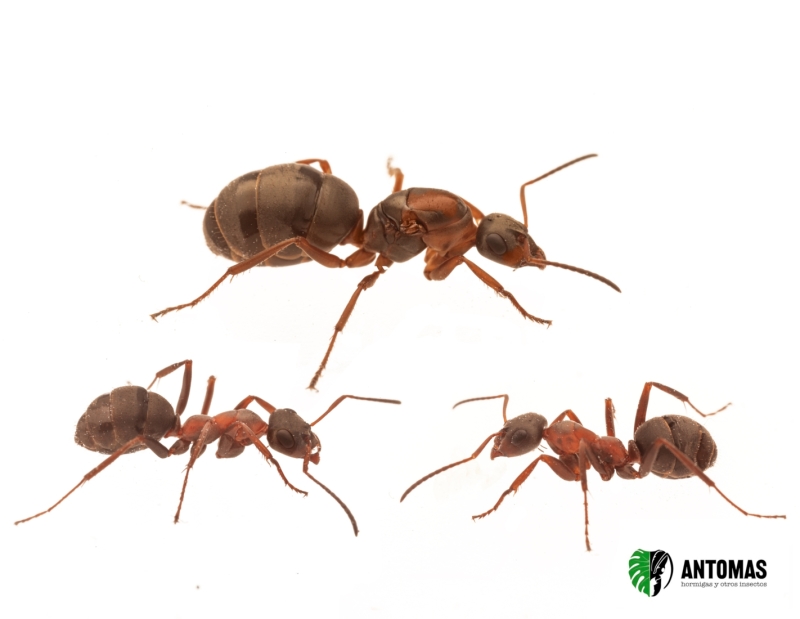
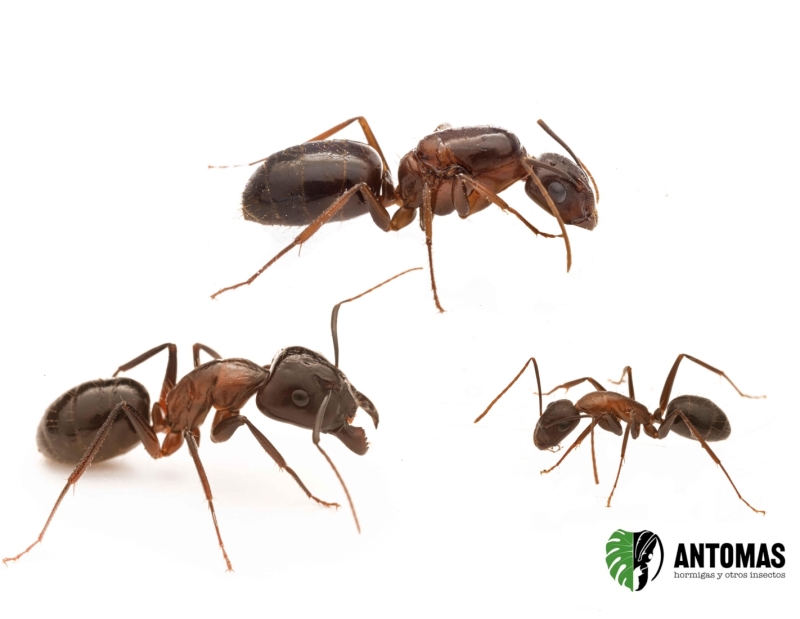
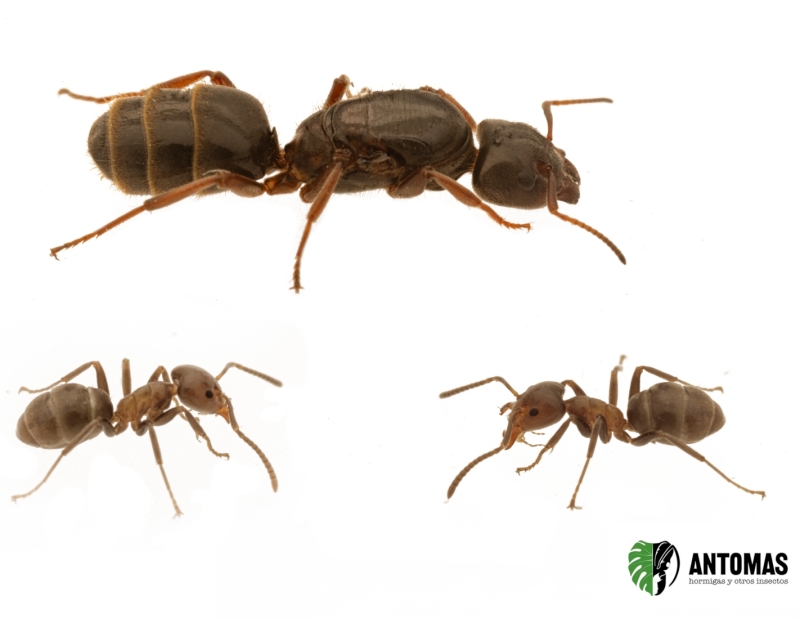
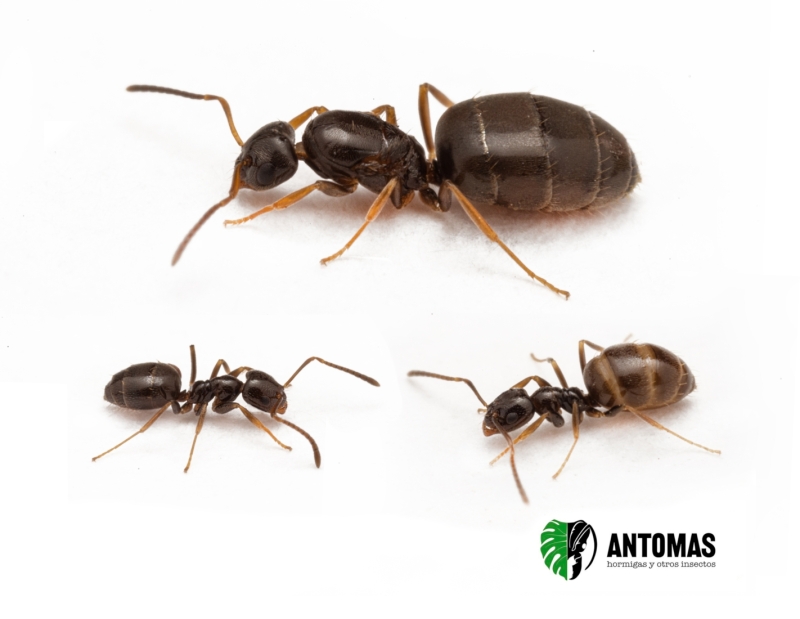
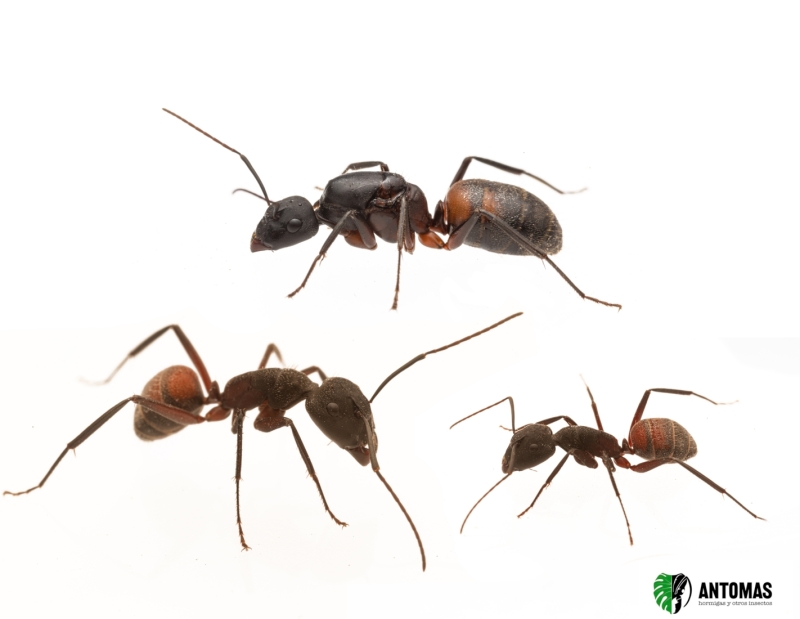
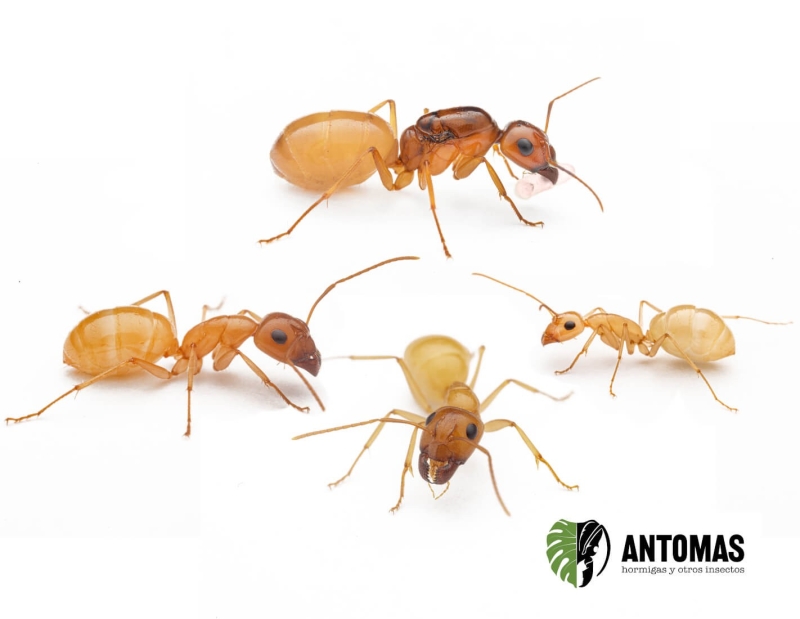
Difficulty: 2/5 – Beginner
The Mediterranean Pheidole: tiny minor workers and big-headed soldiers, one of the most abundant ants in southern Europe and one of the classic models in the science of castes. Colony with queen, workers and brood. Fairly dry plaster nest with one damp corner, 22–28 °C, plenty of protein, a well-kept escape barrier and a 4–5-month diapause in winter.
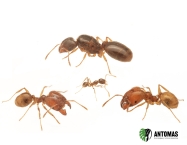
Pheidole pallidula (Nylander, 1849) is one of those species everyone has seen without realising it: columns of small, fast ants that appear on a terrace the moment a crumb falls, in a crack in a wall or under a stone on a sunny bank. Look closely and, among the minor workers, you will now and then spot much sturdier individuals with an oversized head: these are the soldiers, the hallmark of the genus Pheidole.
Behind that ordinary appearance lies one of the best-studied ants in Europe. Teams in Toulouse, Brussels and Lausanne have used it for decades to understand how a colony decides how many soldiers to produce, how two such different castes share the work, why some colonies have one queen and others several, and how an entire nest ‘chooses’ which prey to go after. At home it is a rewarding species, fast and very active, ideal for beginners and for seeing with your own eyes everything those studies describe.
Biology
One species or four? The ant that was hiding its sisters
For almost 150 years it was taken for granted that only one native Pheidole lived in the European Mediterranean and Asia Minor, and that it reached as far as Central Asia. In 2016 the German myrmecologist Bernhard Seifert used a high-resolution microscope to measure 17 characters in 287 soldiers from 112 nests and found that this ‘P. pallidula’ was in fact four cryptic species, almost impossible to tell apart with the naked eye:
- P. pallidula in the strict sense, the one from the western and central Mediterranean, from the Iberian Peninsula to European Turkey and eastern Bulgaria.
- P. balcanica, described in that same paper, from the Balkans and Anatolia.
- P. koshewnikovi, which stretches over more than 4,400 km, from Montenegro to Kazakhstan, and also lives on Crete and Cyprus.
- P. cicatricosa, from North Africa.
According to Seifert, P. pallidula differs from the two eastern species in having a shorter antennal scape and hind femur, a higher petiole and a broader mesosoma; differences of tenths of a millimetre that only show up with multivariate statistics. The proposal is still debated, because the species varies a great deal from one area to another, but it has a practical consequence: the classic studies carried out in France, Italy and the Iberian Peninsula, which are almost all the ones we cite in this care sheet, refer to P. pallidula in the strict sense.
The same revision solved a historical curiosity. In 1964 a supposed parasitic ant, Xenoaphaenogaster inquilina, was described from Sicily on the basis of a single specimen found in an Aphaenogaster nest. The specimen was lost, but the description matches a simple minor worker of P. pallidula, and today that name is a synonym of our species: the ‘mysterious parasite’ was a neighbour that had slipped into someone else’s home.
Distribution and habitat
P. pallidula is a typically Mediterranean ant. It has been recorded in Portugal, Spain (including the Balearic Islands), France, Italy and its islands, Switzerland, the western Balkans, Greece, Bulgaria and European Turkey. It prefers warm, dry places: sunny slopes with sparse vegetation, stony soils, wasteland, roadsides, gardens and also urban settings, where it nests in cracks in walls and under paving slabs. Colonies dig underground and can reach 18,000 individuals, according to the genetic study by Fournier, Aron and Milinkovitch (2002).
Its climate is Mediterranean: long, hot, dry summers and mild winters, but with cool weeks when activity almost stops. That rhythm, with a long breeding season and a winter pause, is the one to imitate at home (see ‘Diapause’).
A traveller that has crossed the Alps
Seifert (2016) reports something unexpected: P. pallidula has established stable populations north of the Alps, in urban areas of south-western Germany, and on Mediterranean islands far from the coast. One of those German populations, studied by Heller (2011), withstood winters with average January temperatures of −2 °C without any apparent harm. For Seifert, these colonisations show an invasive potential linked to its supercolonial organisation, with many queens and connected nests, which makes it easy for a piece of a colony to travel in a flowerpot or a bag of soil and thrive far from home. It is one more reason never to release ants reared at home, not even native species.
Two castes and no middle ground
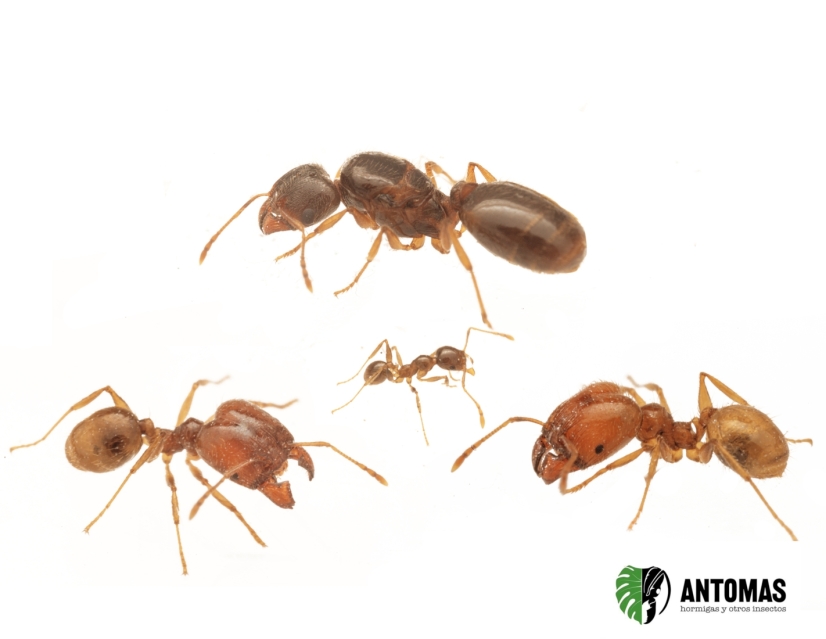
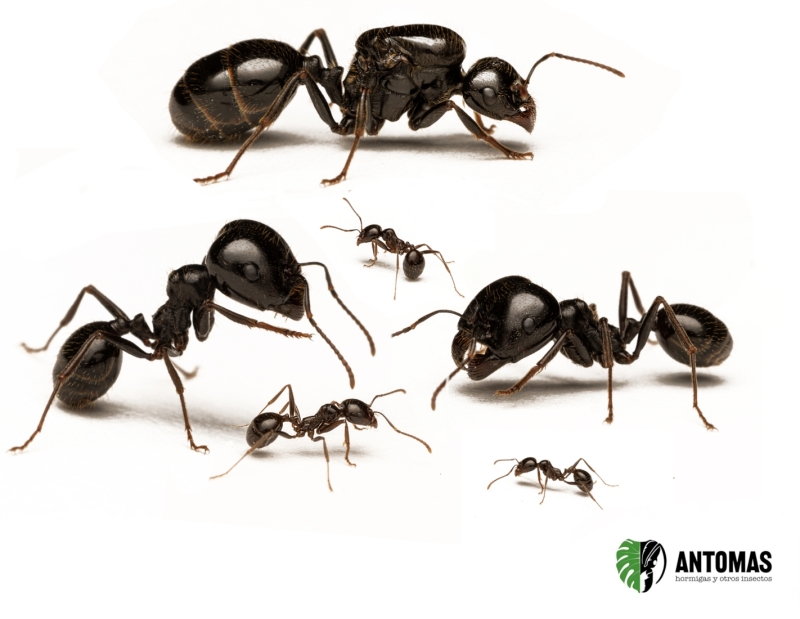
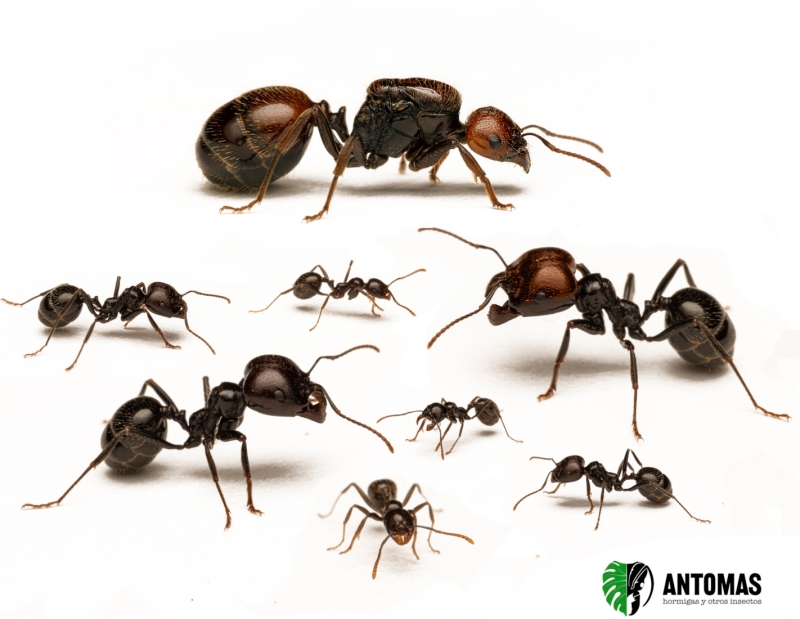
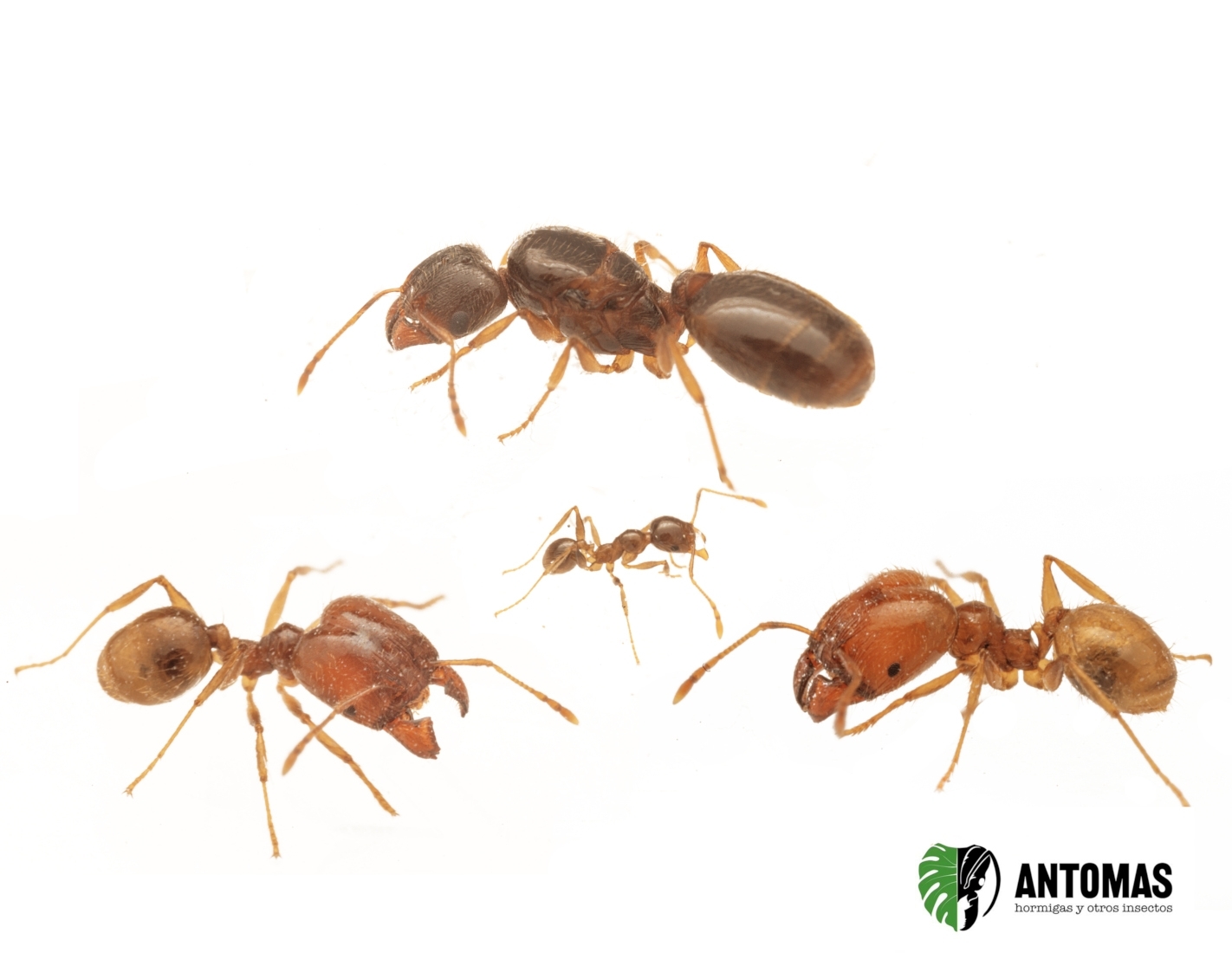
Like almost all Pheidole, our ant has two very different kinds of worker and no intermediate sizes: small, slender, fast minor workers, and soldiers (major workers) with a large, almost square head and strong mandibles. Seifert found no intermediates between the two castes in all the material he studied.
Soldiers are a minority. In two laboratory colonies studied by Detrain and colleagues (1991), majors made up about 10% of the workers: 250 soldiers to 2,000 minors in one colony and 100 to 800 in the other. That proportion is not fixed: the colony adjusts it, as we see in the next section.
The soldier factory: how a colony decides
A Pheidole larva is not born ‘programmed’ to become a soldier or a minor worker. The colony decides, through feeding and hormones. In the late 20th century, Luc Passera’s team in Toulouse showed with P. pallidula that soldier determination depends on juvenile hormone during larval life: if that hormone is added to the colony’s food, more soldiers appear. Shortly before, Wheeler and Nijhout (1981) had shown the same in an American Pheidole, and discovered that adult soldiers curb the production of new soldiers: the proportion regulates itself.
In 2018 an international team found another piece of the mechanism in the genus: larvae destined to become soldiers develop wing rudiments, rudimentary discs that never form wings but help give the soldier its enormous head. And their growth responds to the colony’s social signals (Rajakumar et al., 2018).
The most famous experiment with P. pallidula was published in Nature: Passera, Roncin, Kaufmann and Keller (1996) put colonies in contact with workers from other colonies of the same species and found that the threatened colonies produced more soldiers. It is a defensive response to competition: when there are dangerous neighbours, the colony invests in an army. At home you will have no rival colonies, but you will see the proportion of soldiers change with food and with colony size.
Soldiers that do not sit idle
In some American Pheidole, soldiers were described as a specialised caste that spends almost all its time idle, ‘in reserve’, until there is something to defend or prey to cut up. P. pallidula does not fit that picture. Sempo and Detrain (2004) observed that its soldiers perform 69% of the task repertoire of the minor workers, including brood care, and that many published differences between castes were due to observing few individuals for a short time.
In 2010 the same authors set up colonies with soldier proportions from 10 to 90% and saw that soldiers do not broaden their tasks to make up for a lack of minors, but they keep a steady rate of social activity and are almost totipotent: they can do practically everything. In addition, the brood organises where the castes gather inside the nest: the minors form a large, stable cluster around the eggs and larvae (Sempo, Depickère and Detrain, 2006).
Recruiting to match the prey
One of the loveliest things to watch in P. pallidula is how the colony’s response changes depending on what it finds. Detrain and Pasteels (1991) offered colonies fruit flies, small and easy to carry, and large cockroaches, impossible to move whole. To the flies came only minor workers, with slow, weak recruitment. The cockroaches triggered mass recruitment of minors and soldiers, which cut up the prey on the spot.
The key lies in thresholds: soldiers follow the same chemical trail as the minors, but need a stronger stimulus to set out. Only when many minors mark the path and ‘invite’ the others with antennal contacts do the soldiers join in. The same happens in defence (Detrain and Pasteels, 1992): faced with an intruder, the minors attack it and recruit; if the alarm is intense, the soldiers arrive en masse. Nobody gives orders: the colony decides by adding up thousands of small individual reactions.
Collective exploration: a trail into the unknown
P. pallidula is active by day and by night, has a very varied diet and a very flexible way of foraging. When a new territory opens up, it does not wander through it at random: it explores it as a group. In the study by Detrain, Deneubourg, Goss and Quinet (1991), between 400 and 700 scouts from a large colony formed, in less than an hour, a pheromone trail from the nest to the edge of the explored area; most of the ants leaving and returning were marking the ground. Between 20 and 35% of the whole colony took part, but soldiers made up at most 5% of the scouts: exploring is a job for minors. It is a spectacle that is easy to see at home when you enlarge the formicarium or open up a new foraging area.
One queen or several: facultative polygyny
P. pallidula is a species with facultative polygyny: colonies with a single queen and colonies with several live side by side in the same population. In a population in southern France, Fournier, Aron and Milinkovitch (2002) analysed the workers’ DNA with genetic markers and found that 38% of colonies had 2 to 4 functional queens. Each queen mates with a single male, and the pairs are not related. Neighbouring colonies are genetically more alike than distant ones, which indicates that some colonies arise by budding: a group of workers and a queen or two split off a few metres away and found a daughter nest.
Queens in the same colony do not share the work equally. Fournier, Aron and Keller (2004) found a clear reproductive skew, even greater in male production, and very low queen turnover, below 2%. And the type of colony influences what it rears: single-queen colonies invest mainly in males, while multi-queen colonies produce almost only females (Fournier, Keller, Passera and Aron, 2003). The species is also polydomous: a colony can be split into several sub-nests of a few hundred ants each, connected to one another.
A year in the life of a colony
In the wild, P. pallidula does not overwinter with brood. Queens start laying in early March and carry on until early September. Part of the year’s first eggs gives rise to the sexuals, males and winged queens, which emerge in late June or early July; the rest become workers (Fournier et al., 2002, drawing on Bontpart’s observations). In summer the queens retreat to the deepest part of the nest, away from the heat; on the first sunny days of spring, after cool nights, queens and workers move up to the surface galleries.
The sexuals leave in large nuptial flights. Records from hobbyists in the Iberian Peninsula and France place them mainly in June and July, at dusk, often after hot, humid days. Mated queens tear off their wings and look for a place to seal themselves in and found a colony.
Neighbours with character
Being small does not mean being shy. In their field studies in the Iberian Peninsula, Cerdá and Retana described P. pallidula as an interference species: thanks to its fast recruitment and aggressiveness, it controls a large share of the insect corpses and other food sources around it. Retana, Cerdá and Espadaler (1992) studied how it manages to live alongside another very common omnivorous ant, Tetramorium semilaeve, which shares the same sunny soils: two species competing for the same ground and still coexisting. At home this translates into a colony that is very quick to find food and not at all keen on sharing: do not keep it with other species.
Size and morphology
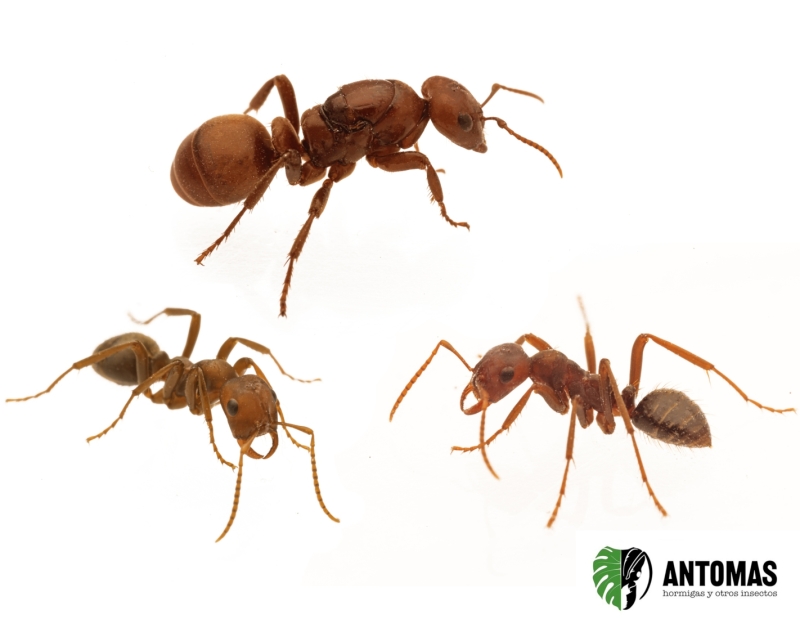
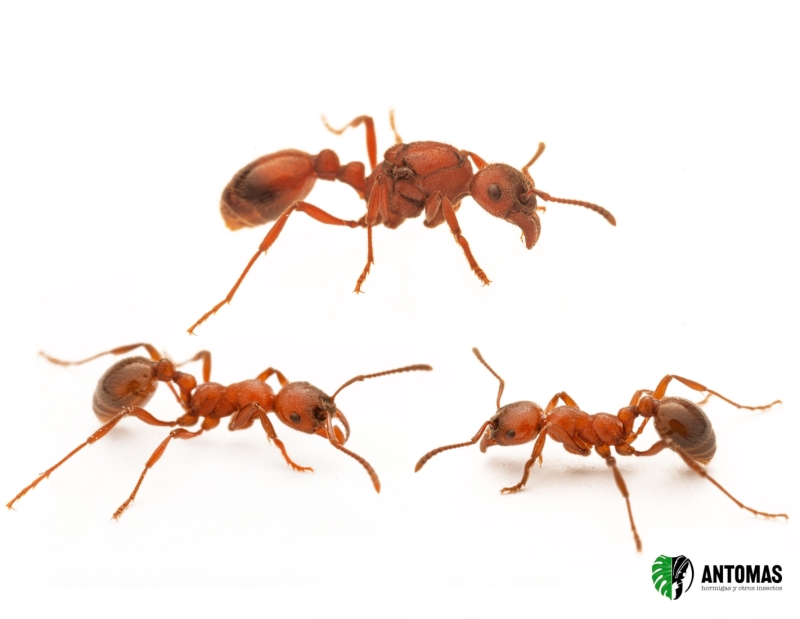
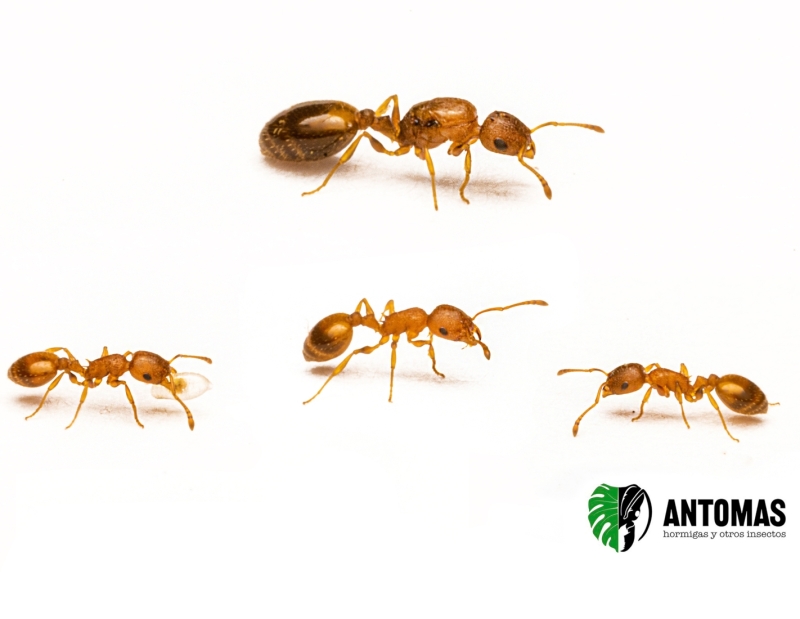
P. pallidula is a small ant, with three clearly distinct forms in the colony:
- Minor worker. Tiny and slender, with relatively long legs and antennae and very fast movements. This is the one you will almost always see in the foraging area.
- Soldier (major worker). Considerably larger and sturdier, with a head that is huge relative to the body, slightly longer than wide and with a deeply notched rear margin. The front half of the head bears 25 to 35 fine parallel longitudinal carinae; the rear part is smooth and shiny. The mandibles are strong, toothless except for a large one at the tip and another at its base. The antennal scape is short and the propodeum bears two short, sharp, almost vertical spines.
- Queen. Much larger than the workers, with the broad thorax typical of queens that once had wings and a voluminous gaster. In multi-queen colonies they can be seen together without fighting.
Colouring. It ranges from light brownish yellow to reddish brown or dark chestnut, depending on population and caste; soldiers usually have a redder head. The name pallidula (‘somewhat pale’) refers to the light-coloured specimens from which it was described.
Approximate measurements
- Soldier: head size (mean of length and width) of 1.24 ± 0.07 mm, with a range of 0.99–1.42 mm, in 89 soldiers from across the species’ range
- Soldier proportions: head length 90–97% of its width; antennal scape about 53–62% of head size
- Minor workers and queen: we have not found measurements published in reliable primary sources, so we prefer not to give figures
The soldier measurements come from Seifert’s (2016) morphometric revision, the most complete one available for the species. The total-length figures circulating in shops and forums do not come from scientific studies and vary widely from one to another.
Care in captivity
Difficulty: 2/5 – Beginner
It is a highly recommended species for beginners. It is hardy, tolerates a wide range of temperatures, eats everything and grows fast: keepers agree that a well-fed colony quickly goes from a few dozen to hundreds of workers. It only asks for a little attention on two points: an escape barrier in good condition, because the minor workers are tiny and keen explorers, and a nest that does not become too small, because it grows faster than many people expect.
And it is well worth it. In a small formicarium you have in view two very different castes, recruitment trails that form in seconds, soldiers turning up to cut up a large prey item and, in spring, a colony that speeds up from one week to the next. It is the simplest way to see at home what European laboratories have studied for decades.
Recommended parameters
- Temperature: 22–28 °C during the active season. Above 25 °C the brood develops faster; at normal room temperature it also grows, somewhat more slowly.
- Nest: fairly dry, with one damp corner. That way the colony chooses where to place the brood as it needs.
- Foraging area: dry.
- Humidity as a guide: keepers work with 40–60% in the nest; there are no scientific measurements for the species. What matters is that there is a gradient and that water is never lacking.
- Water: always available, with a test tube of water and cotton wool in the foraging area.
- Light: nest in dim light or covered; the foraging area can be lit.
- Diapause: yes, 4–5 months at 5–10 °C (see ‘Diapause’).
Recommended formicarium
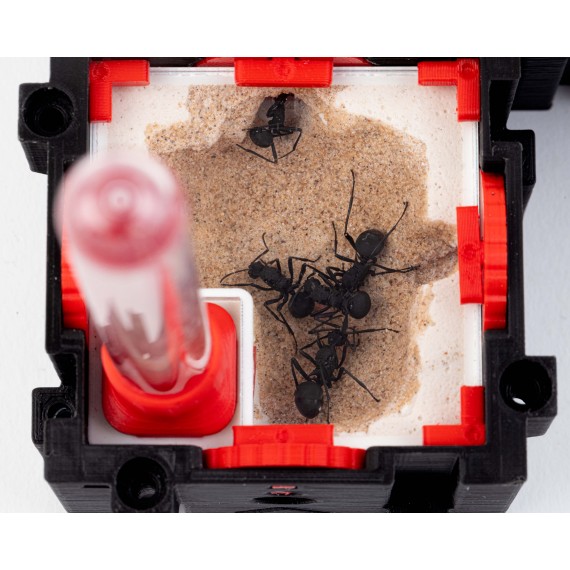
At Antomas we recommend the Qbik Wild range by Anthouse, made of plaster, with small galleries suited to tiny ants like this one. Plaster lets you keep one area moistened and the rest drier. To start with, the Qbik Wild One P 1C; when the colony grows, which comes soon with this species, the Qbik Wild Duo P 2C.
Moisten only part of the plaster and leave the rest dry: plaster that stays soaked for months softens, and these ants are able to dig into it. Nor is a nest of very porous materials or loose soil a good idea, as the workers and brood get lost from view. Plan the expansion before the colony becomes cramped.
Feeding
The basis is a varied diet of sugars and protein, with small seeds as a supplement.
Sugars. Blue Sugar nectar by Anthouse 4–5 times a week, and another nectar or sugary liquid 1–2 times a week, so as not to always offer the same thing. Protein can also be added to the nectar. Always offer it in a feeder, either a traditional or a home-made one, where the drop stays within their reach, and never soaked into cotton wool: it goes mouldy and spoils very quickly.
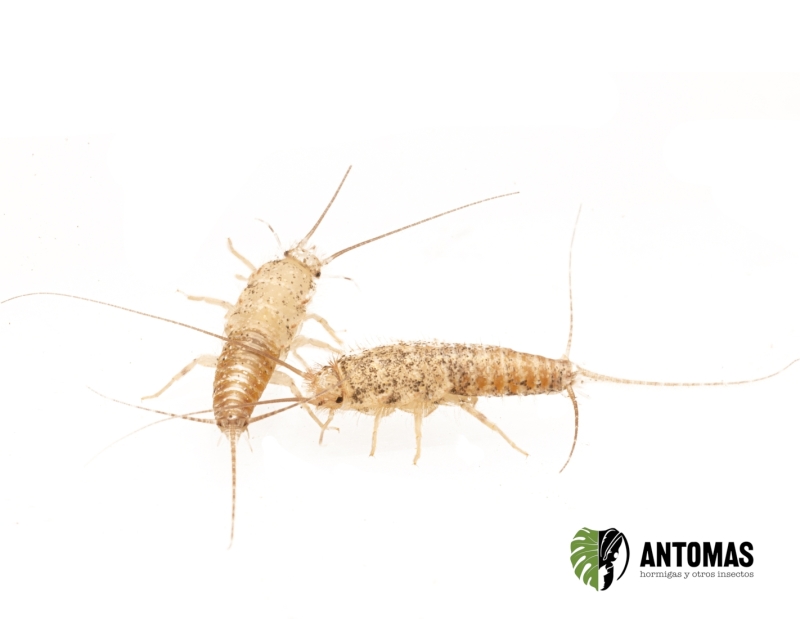
Proteins. Insects, changing the type from one week to the next so that they do not always eat the same thing. For small colonies, Thermobia domestica are perfect, small and easy to handle; with a larger colony, pieces of cricket, red runner roach (Shelfordella lateralis) or mealworm, as well as flies and Drosophila. With large prey you will see the mass recruitment of soldiers described by Detrain and Pasteels.
Feed generously. The more protein it receives, the faster the colony grows and the more brood it raises: if you keep the foraging area up to date, it is better to give too much than too little, because the colony understands that it has resources and produces more. The condition is cleanliness: remove leftovers every day or every other day. If for a while you cannot clean, do not overfeed.
Seeds. As a supplement, small seeds: sesame, millet, amaranth or grass seeds. They collect them and the soldiers crack them, but they are not the basis of the diet. Remove any that become damp or mouldy.
Founding and growth
At Antomas we sell it as a colony with queen, workers and brood: the most delicate part, the founding, is already done. Even so, it is worth knowing how a colony begins. After the nuptial flight, the mated queen tears off her wings and seals herself in a small chamber under a stone or in a crack. Her founding is claustral: she does not go out to look for food and rears her first workers on her own body reserves, above all the flight muscles she no longer needs. The first workers are very small minors; soldiers appear later, once the colony has enough hands to feed the larvae well. In the wild there are also colonies that arise by budding, from a group of workers with a queen that settles near the mother nest.
According to keepers, at 25–28 °C development from egg to minor worker takes about a month, and soldiers take a few days longer. With warmth, plenty of protein and a nest of the right size, the colony grows very fast during spring and summer. At first you will see almost only minors; as the colony grows and eats better, it will produce more soldiers.
On the number of queens: although in the wild there are colonies with several queens, related or not, at home do not combine queens or colonies of different origin. Multi-queen colonies form under very specific conditions, and merging colonies yourself usually ends in fighting.
Observing and checking
Ants are there to be enjoyed: watch your colony often, gently and without fear. Simply keep the nest in dim light and the foraging area lit. Looking at the colony frequently is also the best way to catch in time an empty feeder, a dry water tube, forgotten leftovers, mould or a barrier that is starting to fail. A quick check almost every day does not stress it and saves you trouble.
Diapause
As a Mediterranean species, P. pallidula needs a winter rest: diapause. In the wild it has no brood in winter and the queen starts laying again in March. At Antomas we recommend a diapause of 4–5 months at 5–10 °C, roughly from November to March. It copes well with cold: a population introduced into Germany came through winters with January averages below zero unharmed.
- From October, lower the temperature gradually over 2–3 weeks. The colony will eat less, especially protein, and will stop having pupae.
- During diapause, always keep water and a little sugar available. Protein, hardly any: only if you see that they accept it.
- Keep checking on them often: check the water, look out for mould and make sure the nest does not dry out.
- In March, raise the temperature gradually and return to normal feeding as soon as they become active. The queen will resume laying and the colony will get going with vigour.
Moving house
When the colony needs to go into a new or larger formicarium, at Antomas we do it by tipping it in: the colony, with the queen, workers and brood, is carefully tipped into the foraging area or the entrance of the new nest, and the workers settle in straight away. Have the escape barrier ready before you start.
Escapes and barriers
It is an escape-prone species: the minor workers are tiny, fast, good climbers and slip through any gap. In the foraging area use a PTFE (Fluon) barrier applied in a thin layer, or one of paraffin oil or petroleum jelly, and renew it when it loses effectiveness. Check lids, stoppers, ventilation mesh and, above all, the connections between modules, which are the most common weak point. Keepers agree that escapes are more frequent with the first workers of a young colony and when connecting new modules.
Handling and safety
It is not dangerous to people. Soldiers can give a pinch with their mandibles, nothing more. Work slowly, with soft tweezers or a brush, and never release the colony or any part of it: although it is native to the Mediterranean, outside its range it can establish itself as an introduced species, as has happened north of the Alps.
What not to do
- Skip diapause or change the temperature suddenly.
- Leave them without water, including during diapause.
- Put sugar on cotton wool instead of in a feeder.
- Always give them the same insect or the same sugar.
- Overfeed without removing leftovers.
- Soak all the plaster in the nest.
- Rely on an old barrier or leave connections poorly fitted.
- Combine queens or colonies of different origin, or keep it with other species.
- Wait until the colony is cramped before enlarging the formicarium.
- Leave the colony unchecked for days.
Scientific sources
This care sheet has been compiled from the scientific literature on Pheidole pallidula and the genus Pheidole, from the practice of European keepers and from Antomas’s experience. Main references:
- Seifert, B. (2016). Inconvenient hyperdiversity – the traditional concept of «Pheidole pallidula» includes four cryptic species (Hymenoptera: Formicidae). Soil Organisms 88(1): 1–17.
- Fournier, D., Aron, S. & Milinkovitch, M.C. (2002). Investigation of the population genetic structure and mating system in the ant Pheidole pallidula. Molecular Ecology 11: 1805–1814. doi:10.1046/j.1365-294X.2002.01573.x
- Fournier, D., Keller, L., Passera, L. & Aron, S. (2003). Colony sex ratios vary with breeding system but not relatedness asymmetry in the facultatively polygynous ant Pheidole pallidula. Evolution 57: 1336–1342. doi:10.1554/02-643
- Fournier, D., Aron, S. & Keller, L. (2004). Significant reproductive skew in the facultatively polygynous ant Pheidole pallidula. Molecular Ecology 13: 203–210. doi:10.1046/j.1365-294x.2003.02036.x
- Passera, L., Roncin, E., Kaufmann, B. & Keller, L. (1996). Increased soldier production in ant colonies exposed to intraspecific competition. Nature 379: 630–631. doi:10.1038/379630a0
- Detrain, C. & Pasteels, J.M. (1991). Caste differences in behavioral thresholds as a basis for polyethism during food recruitment in the ant, Pheidole pallidula. Journal of Insect Behavior 4: 157–176. doi:10.1007/BF01054609
- Detrain, C. & Pasteels, J.M. (1992). Caste polyethism and collective defense in the ant, Pheidole pallidula: the outcome of quantitative differences in recruitment. Behavioral Ecology and Sociobiology 29: 405–412. doi:10.1007/BF00170170
- Detrain, C., Deneubourg, J.L., Goss, S. & Quinet, Y. (1991). Dynamics of collective exploration in the ant Pheidole pallidula. Psyche 98: 21–31. doi:10.1155/1991/75196
- Sempo, G. & Detrain, C. (2004). Between-species differences of behavioural repertoire of castes in the ant genus Pheidole: a methodological artefact? Insectes Sociaux 51: 48–54. doi:10.1007/s00040-003-0704-2
- Sempo, G., Depickère, S. & Detrain, C. (2006). How brood influences caste aggregation patterns in the dimorphic ant species Pheidole pallidula. Insectes Sociaux 53: 241–248. doi:10.1007/s00040-006-0864-y
- Sempo, G. & Detrain, C. (2010). Social task regulation in the dimorphic ant, Pheidole pallidula: the influence of caste ratio. Journal of Insect Science 10: 3. doi:10.1673/031.010.0301
- Retana, J., Cerdá, X. & Espadaler, X. (1992). Coexistence of two sympatric ant species, Pheidole pallidula and Tetramorium semilaeve (Hymenoptera: Formicidae). Entomologia Generalis 17: 29–40. doi:10.1127/entom.gen/17/1992/29
- Wheeler, D.E. & Nijhout, H.F. (1981). Soldier determination in ants: new role for juvenile hormone. Science 213: 361–363. doi:10.1126/science.213.4505.361
- Rajakumar, R., Koch, S., Couture, M. et al. (2018). Social regulation of a rudimentary organ generates complex worker-caste systems in ants. Nature 562: 574–577. doi:10.1038/s41586-018-0613-1