This website uses its own and third-party cookies to improve our services and show you advertising related to your preferences by analyzing your browsing habits. To give your consent to its use, press the Accept button.
Cookie preferences
| Cookie | Provider | Purpose | Expiry |
|---|---|---|---|
| PHP_SESSID | antomas.es | The PHPSESSID cookie is native to PHP and allows websites to store serialised status data. On the website it is used to establish a user session and to pass state data through a temporary cookie, which is commonly known as a session cookie. These Cookies will only remain on your computer until you close your browser. | Session |
| PrestaShop-# | antomas.es | This is a cookie used by Prestashop to store information and keep the user's session open. It stores information such as currency, language, customer ID, among other data necessary for the proper functioning of the shop. | 480 hours |
Camponotus fedtschenkoi
Biology
Camponotus fedtschenkoi is a medium-sized species within the genus Camponotus, characterized by the formation of moderately developed colonies and by relatively peaceful behavior compared to other species of the same group. It is not a particularly aggressive or territorial ant, which directly influences its trophic strategy, based more on exploiting easily obtainable resources than on active predation.
Its diet consists mainly of injured or dead insects, acting as an opportunistic scavenger, as well as carbohydrate-rich substances obtained from aphids and scale insects, with which it establishes indirect trophic interactions. This type of feeding reflects an efficient energetic strategy focused on minimizing the energy expenditure associated with active hunting and maximizing the acquisition of sugary resources for sustaining colony metabolism.
From an ecological perspective, it is considered an extremely successful species across wide regions of Asia. Its success lies in its ability to establish numerous colonies relatively close to one another, forming true population networks that dominate extensive areas of territory. This spatial occupation pattern allows continuous exploitation of available resources and rapid recolonization of disturbed areas.
The nuptial flights of Camponotus fedtschenkoi are particularly massive, favoring a high dispersal rate and the effective establishment of new colonies. This elevated production of reproductive individuals constitutes a key trait in its geographical expansion and long-term population stability.
The colonies are always monogynous, meaning they are led by a single functional queen. This characteristic implies a relatively stable social structure, with a controlled and less explosive growth rate than in polygynous species. Even so, the efficiency of the queen and the good survival rate of the workers allow colonies to reach considerable sizes over time.
As a defensive mechanism, the species possesses the ability to spray formic acid. However, the potency of this acid is relatively low when compared to that of other species within the genus or to ants more specialized in chemical defense. This trait reinforces its profile as a species more oriented toward avoidance and tolerance rather than direct confrontation.
Size and Morphology
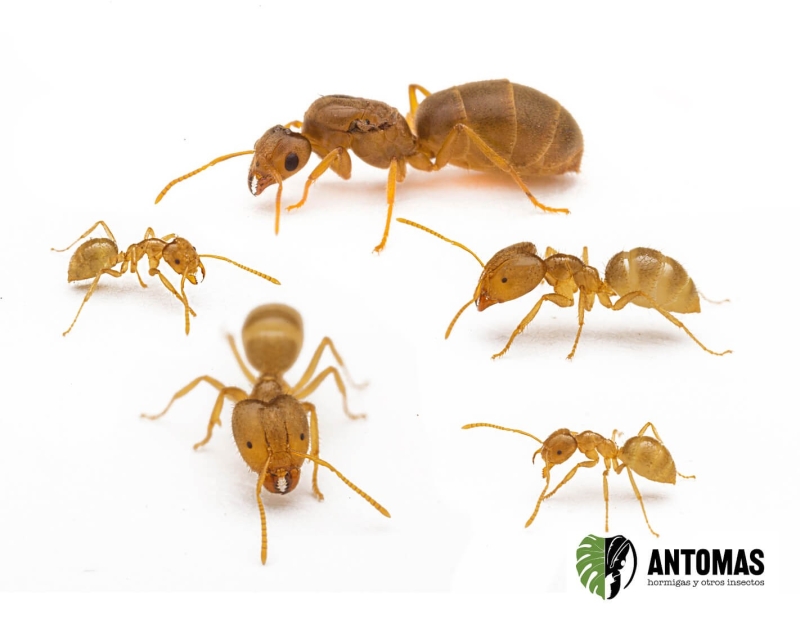
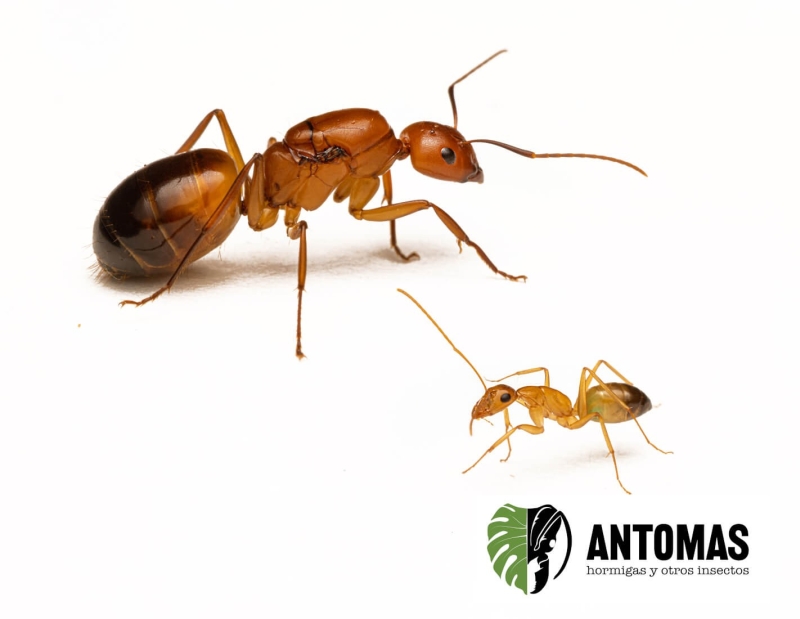
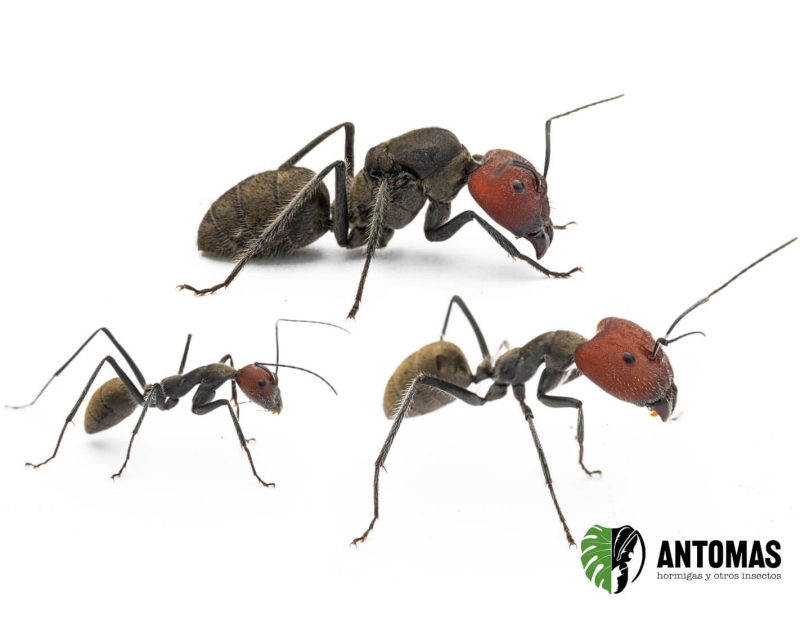
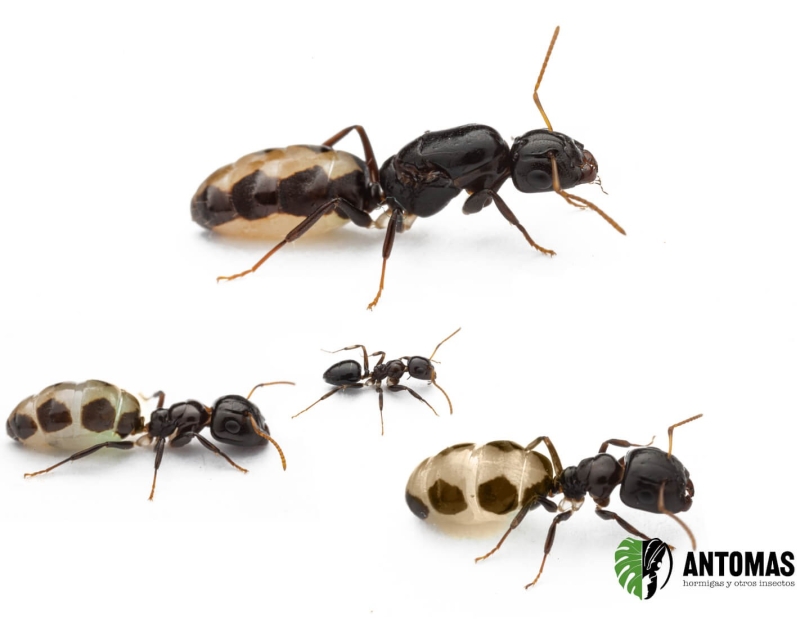
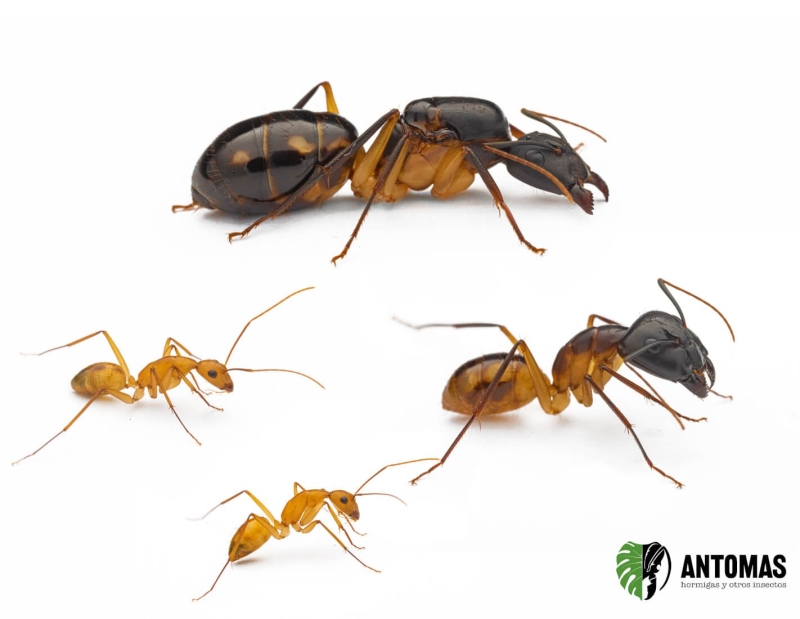
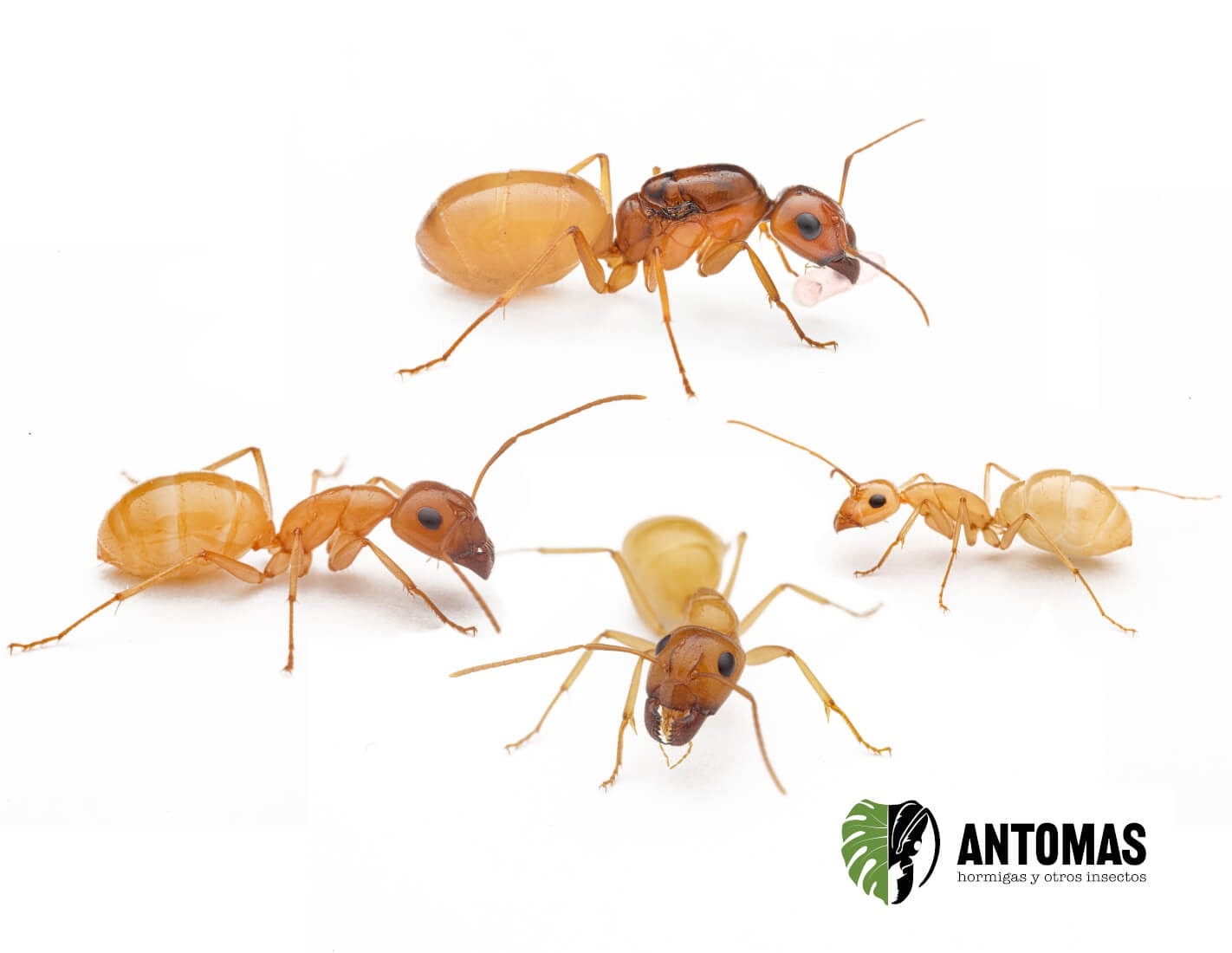
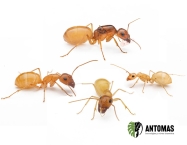
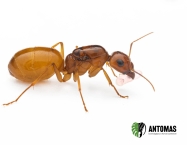
Camponotus fedtschenkoi displays clear polymorphism, with individuals progressively varying in size and function. Within this gradation, soldiers (majors) can be recognized, easily identifiable by their reddish-colored heads, which contrast with the general coloration of the body. These individuals fulfill defensive and food-processing functions, although they do not reach extreme specialization.
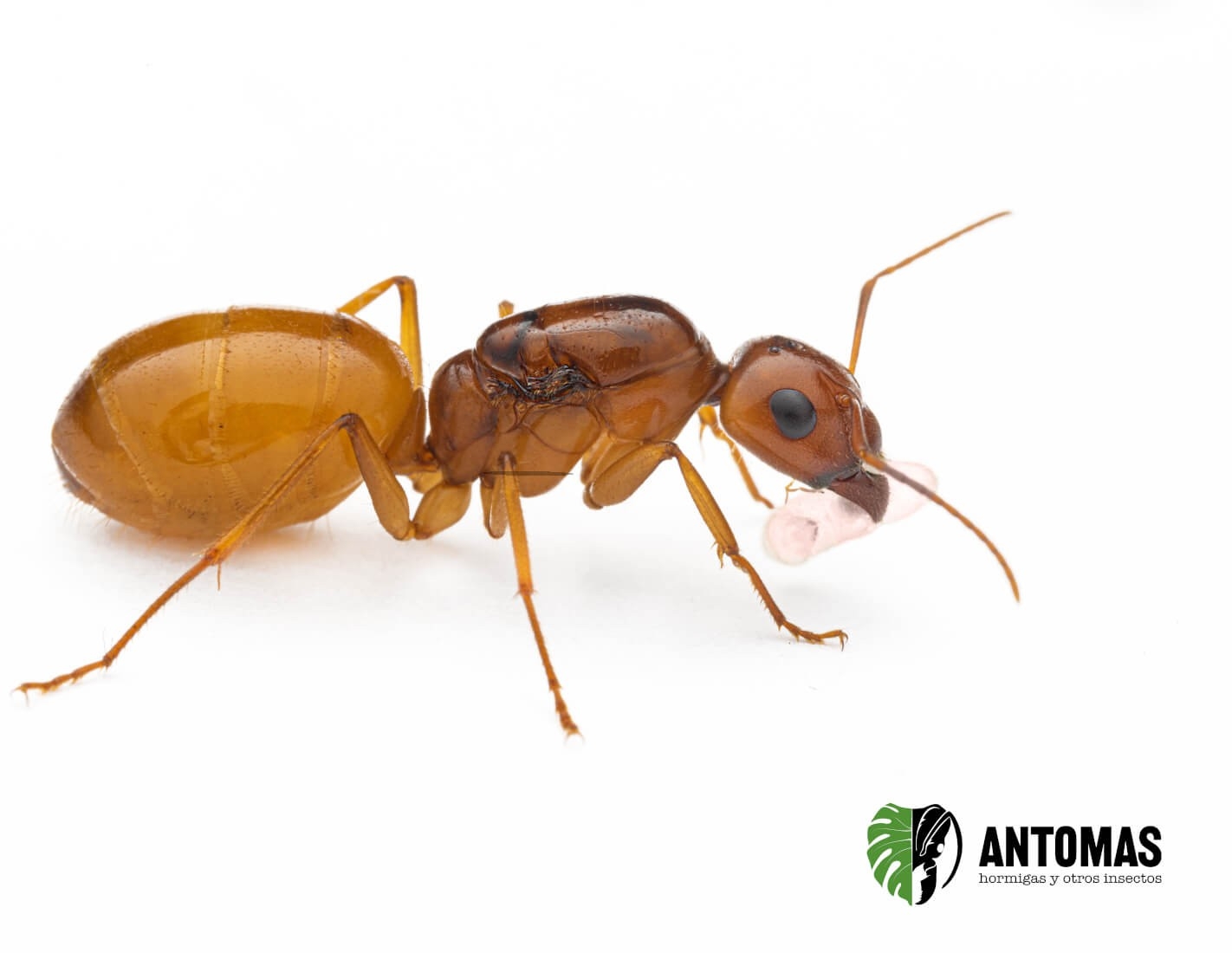
The body coloration shows remarkable chromatic variability, ranging from very pale yellow, almost whitish, to more ochre and saturated tones. This range of colors contributes to its common name, “white ant,” and may show slight differences between colonies or depending on environmental conditions.
The gaster may become noticeably hypertrophied due to the accumulation of liquids, a phenomenon favored by a particularly well-developed social stomach. This adaptation allows workers to store large quantities of sugary solutions for later redistribution through trophallaxis, which is essential for maintaining the colony’s energetic balance.
Approximate measurements
- Workers: 0.3–0.6 cm
- Soldiers: 0.6–1.2 cm
- Queen: ~1 cm
Captive Care
In captivity, Camponotus fedtschenkoi can form numerous colonies within a relatively short period, reaching several thousand workers under suitable conditions. This sustained growth, combined with its non-aggressive temperament, makes it a particularly manageable and stable species in artificial systems.
It is considered one of the most suitable exotic ants for beginners due to its high adaptability to life in artificial nests and its tolerance to minor environmental variations. It does not require extremely specific conditions, which greatly facilitates its maintenance even for keepers with little experience.
The nests should provide good ventilation and low to moderate humidity levels, avoiding excessive saturation that could favor the appearance of pathogens or alter the normal behavior of the colony. It is recommended to provide large foraging areas, where workers can carry out exploratory and collecting activities without restriction.
From a nutritional point of view, the species requires a continuous supply of nectar or other carbohydrate sources, complemented with varied prey in the form of different types of insects. Although its natural tendency is scavenging, in captivity it readily accepts dead or previously killed prey, which greatly facilitates feeding.
The combination of relatively calm biology, attractive morphology, steady growth, and great tolerance to artificial conditions makes Camponotus fedtschenkoi one of the most recommended species for beginners in captive myrmecology. Observing this species allows the clear study of processes such as polymorphism, trophallaxis, and colony growth dynamics without the difficulties associated with excessively aggressive or delicate species.