Difficulty: 3/5 – Advanced
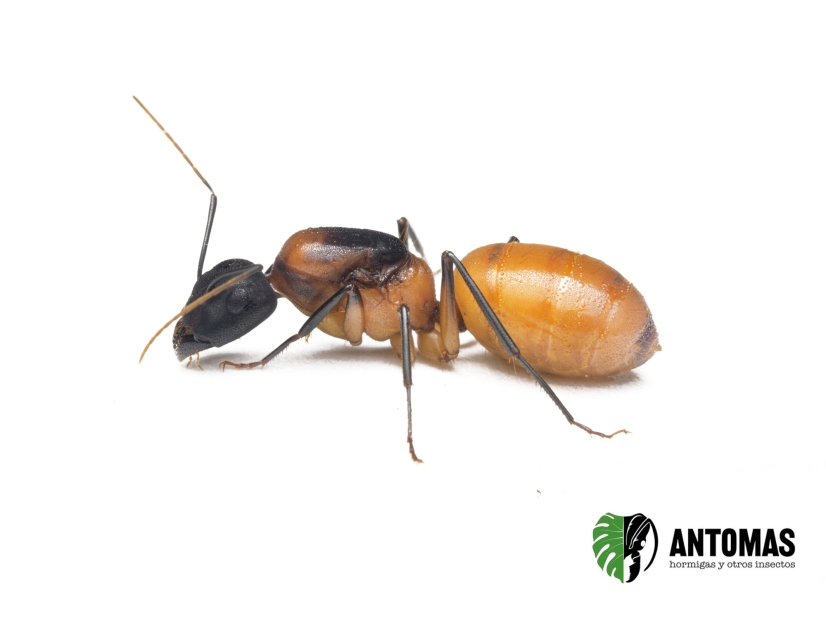
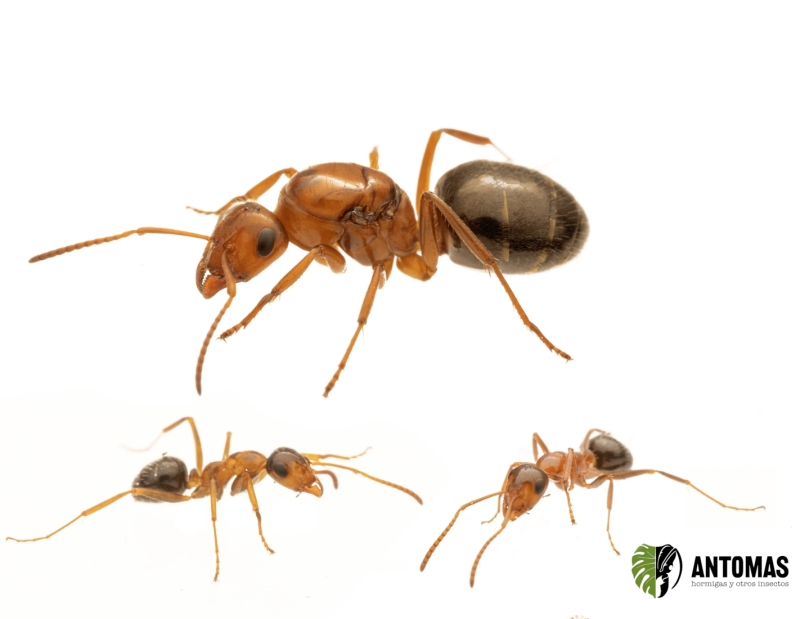
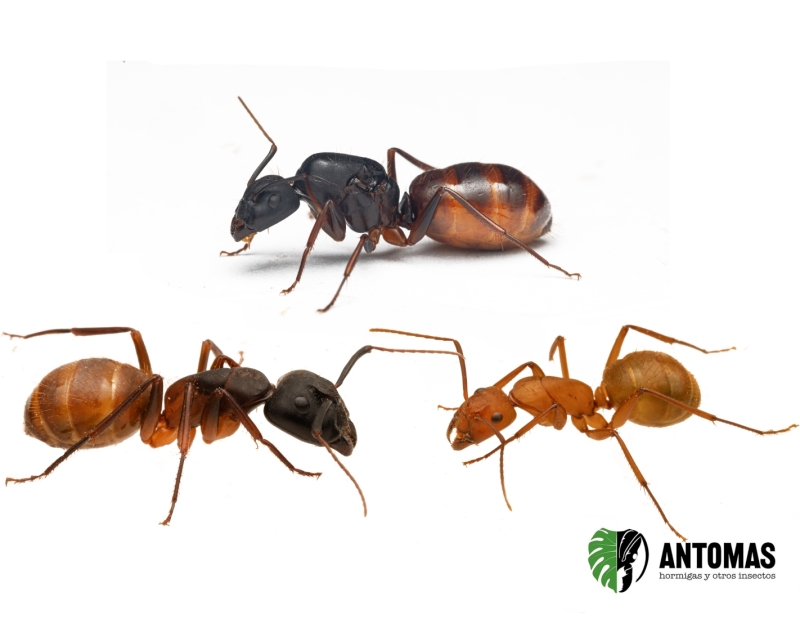
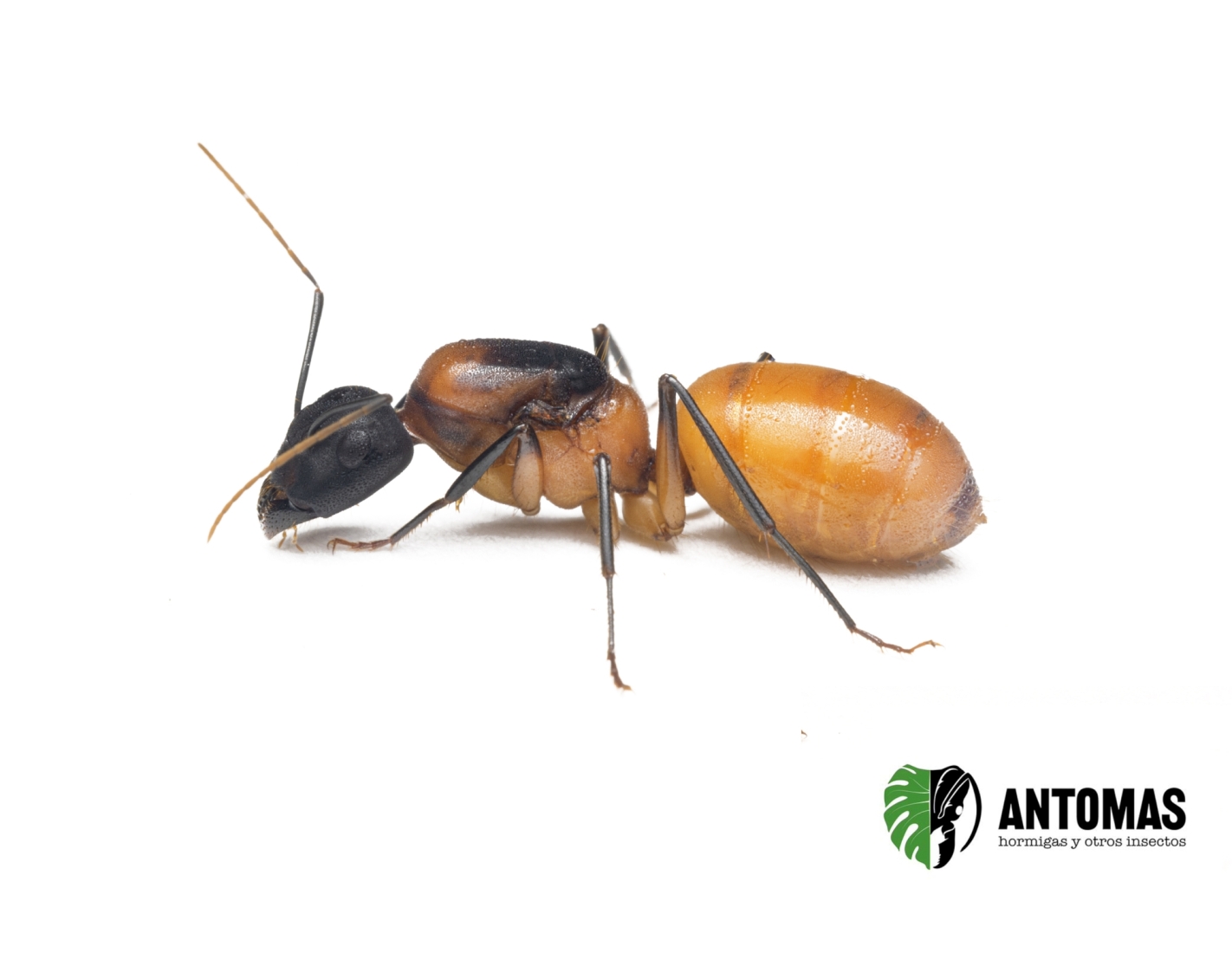
A large, nocturnal Camponotus from the deserts and foothills of south-western North America, with a black head, a clay-yellow to amber body and majors that rank among the largest of their genus in the United States. Founding queens with brood, claustral founding. Qbik Wild One P 1C to start with, then QBIK ONE and DUO with large galleries; nest at 26–30 °C with a warm spot of 30–32 °C, moisture in the test tubes at first and a dry nest later, sugar always available in a feeder and plenty of protein, ideally as opened prey. Mild diapause of about 3 months at 10–15 °C. Young queens often stop laying in autumn: this is normal. They climb: mineral-oil barrier. No sting.
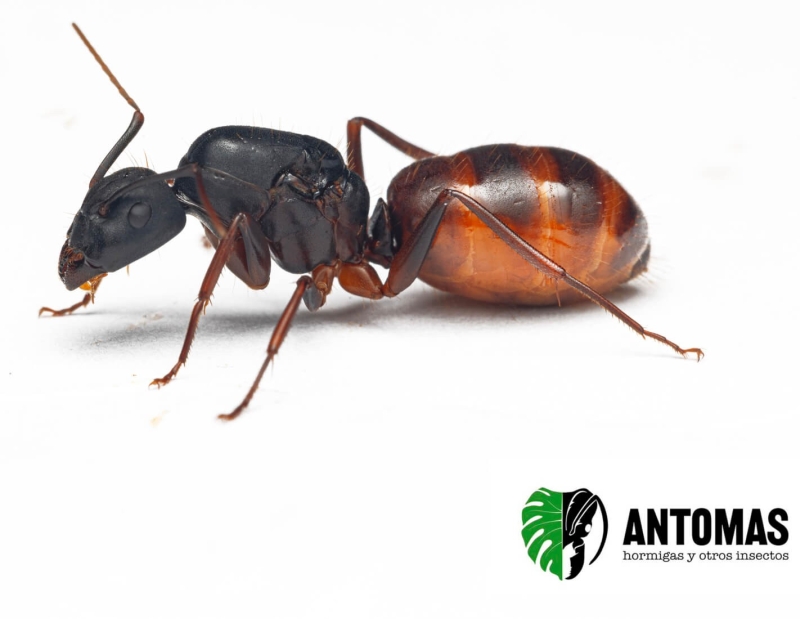
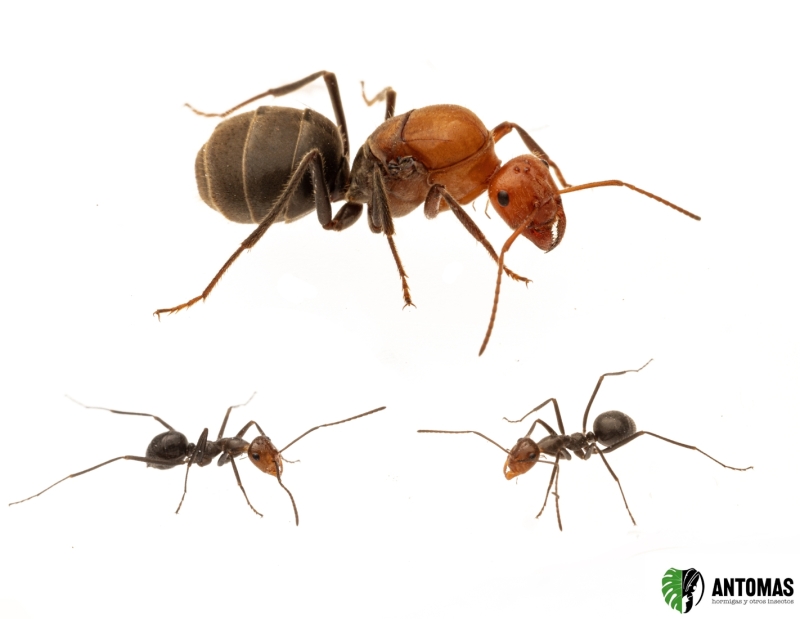
Camponotus ocreatus Emery, 1893 is one of the great carpenter ants of south-western North America: a robust, polymorphic Camponotus with a black head and an ochre-yellow body that lives in the mountain ranges, foothills and oak woodlands surrounding the deserts. It nests under stones, comes out to work at night, and its major workers, which exceed a centimetre, are among the largest of their genus in the United States.
Its name sounds like ochre, and its body is indeed ochre-yellow. But its scientific name tells another story, a much more martial one. It is a rare species in Europe, with very little literature of its own, so, as always, we keep apart what has been published about it, what is known about its relatives, what keepers report and what we recommend at Antomas.
Biology
Greaves and centurions: an ant with a legionary’s name
Despite appearances, ocreatus does not mean “ochre”. In Latin, the ocrea was the greave, the piece of armour that protected the shins of soldiers and hunters, and ocreatus means “wearing greaves”. Ochre is a different word, which comes from the Greek ōchrós, “pale yellow”. The mix-up is so easy to make that William M. Wheeler himself, one of the great myrmecologists of the 20th century, spelt it “ochreatus” in 1910.
Why “wearing greaves”? Emery never explained it, but you only need to read his description: a clay-yellow body with a black head and, on the legs, black knees, tibiae and first tarsal segments. In other words, a pale ant with dark shins, like a soldier with his greaves on. This is our own reading, but it fits beautifully.
The military Latin does not end there. In 1910, Wheeler described some ants from Arizona as Camponotus acutirostris primipilaris, and in Rome a primipilaris was a man who had served as primus pilus, the highest-ranking centurion of a legion. Years later, those ants turned out to be C. ocreatus: the centurion and the soldier in greaves were the same species. And the “ochre” is not so far off after all: in his great 1950 revision, the myrmecologist William S. Creighton described the thorax and gaster as “ochreous yellow”.
Described at the gates of Death Valley
The Italian entomologist Carlo Emery described it in 1893 from just three workers, one large and two medium-sized, collected in the Panamint Mountains, the Californian range that closes off Death Valley to the west. They had been sent to him by the entomologist Theodore Pergande. He did not describe it as a species, but as a subspecies of Camponotus maculatus, the same name borne by the African species we sell as C. maculatus. In the 19th century, maculatus was a huge catch-all into which carpenter ants from half the world were lumped.
It had to wait until 1917 to become a species. Wheeler studied a good series of specimens from Pergande’s collection and concluded that it was a species in its own right. In 1950, Creighton placed it in the subgenus Tanaemyrmex, where it remains, and reduced primipilaris to a synonym: in his view, the two forms were so similar that there was no justification for separating them. Today, the world catalogue of ants lists it as a valid species under the name Camponotus ocreatus Emery, 1893. That said, the subgenera of Camponotus are regarded as a provisional classification: the 2016 revision of the formicines acknowledges that many of them are artificial groupings awaiting a revision of the genus.
A mountain carpenter ant in desert country
Its range covers the south-western United States and north-western Mexico. It is confirmed in California, Nevada, Arizona and New Mexico, with probable records from Utah and Texas, and in Mexico from Baja California, Baja California Sur, Sonora and Chihuahua. Arizona accounts for most of the records. Creighton already described it as an ant with a patchy distribution, tied to the mountains.
It is not an ant of dunes or scorching plains, but of the uplands that surround the deserts. In Nevada it has been found at altitudes of roughly 1,280 to 2,130 m, in the hot desert and in pinyon pine and juniper woodland; in Arizona, at around 1,700–1,800 m. In New Mexico it lives in desert foothills, semi-desert scrub, oak and juniper woodland, pinyon pine forest and canyons with streams, among sycamores, cottonwoods and grasses.
Under a stone, on the cool slope
Being a “carpenter ant” does not mean it lives in wood. C. ocreatus nests in the ground, often under stones, in loamy, stony soils, frequently on north-facing slopes, the coolest ones, and in partial shade at the edge of woodland. Five nests were described in Nevada: one under a stone and four in the open, with the entrance surrounded by excavated soil that sometimes formed a small crater.
In New Mexico, a colony was found sharing its nest with a very different neighbour, the fungus-growing ant Trachymyrmex arizonensis. We have found no measurements of the depth of its nests, but in a well-studied ground-nesting Camponotus, C. socius, the chambers lie between 15 and 66 cm deep, precisely the layer in which desert soil buffers the heat of summer and the cold of winter.
It works at night
According to William and Emma Mackay’s ant fauna of New Mexico, it forages at night. That makes sense in its homeland: in summer, the soil at a depth of 10 cm averages 30–35 °C, with peaks of 37–39 °C, and the surface is hotter still; at 20–50 cm, by contrast, it stays at 26–31 °C. In the sun, the surface is an oven; at night, the air cools and the humidity rises. Other desert carpenter ants of the region, such as C. fragilis, are also described as nocturnal.
Its yearly clock is just as clearly set: in New Mexico, brood has been found in the nests from March to July. The colony rears its young in the warmth of spring and summer and comes to a halt with the cold.
The barrel cactus it has no interest in
In the Sonoran Desert, the barrel cactus Ferocactus wislizeni offers nectar from glands beside its spines, and in return four ant species defend it from the insects that feed on it. In 2009, Joshua Ness, William Morris and Judith Bronstein studied which ants came to it. C. ocreatus appeared among the species that were abundant in the area but rarely or never visited the cactus, alongside Camponotus laevigatus, the forager Novomessor cockerelli (then known as Aphaenogaster cockerelli) and two others. The four guards were much smaller ants: Crematogaster opuntiae, Solenopsis aurea, S. xyloni and Forelius pruinosus.
The authors also analysed the nitrogen isotopes of a sample of C. ocreatus, which show at what level of the food chain an animal feeds, and its value turned out to be similar to that of the cactus itself. They themselves caution that this does not make it a “vegetarian”, and it is a single sample. But it points to an ant that lives largely on sugary liquids of plant origin, such as nectar and honeydew: exactly what you will see at home as soon as you give it a feeder.
Nuptial flights with the monsoon storms
In its range, summer brings the North American monsoon: after a dry, scorching June, the humidity rises and afternoon thunderstorms arrive, which in many areas provide more than half of the year’s rainfall. The ants take advantage of the moist, soft ground for their nuptial flights. In New Mexico, a newly mated queen, already wingless, was found in July, and naturalists and keepers in the region describe the flights of C. ocreatus between late June and August, after heavy rain, at dusk and during the night. In years with a strong monsoon they report mass flights, with thousands of queens running across the ground.
No studies have measured this in the species, so these are field observations. But they fit with everything else: a nocturnal, summer-active ant of soils that soften with the rain.
A queen with her larder inside
After the nuptial flight, the queen tears off her wings, seals herself in a chamber and raises her first workers without going out to feed: this is claustral founding, the strategy of almost all Camponotus. Where does she get the energy from? It has been studied in detail in a relative from the same desert, C. festinatus. Virgin queens build up two storage proteins, the hexamerins, and one of them makes up nearly 70% of the soluble protein in their fat body. During founding, the queen uses them up to feed her larvae, and they disappear roughly a month after the first workers emerge.
This has not been measured in C. ocreatus, but keepers see something that fits a species with real winters: young queens often stop laying in autumn and do not resume until spring, even when kept warm. One keeper reports that their queens, collected in August, produced their first workers in autumn, went through the winter without laying and all started again in May.
Daughters of a single mother and a single father
There is only one study devoted entirely to this species, and it is a genetic one. In 2004, Michael Goodisman and Daniel Hahn analysed the structure of its colonies. According to later compilations, the average relatedness among workers of the same colony was 0.74, measured across 16 colonies. That is almost exactly the 0.75 expected for sisters born to a single queen mated with a single male. Papers citing the study add that the queen normally mates only once and that cases of sibling mating were detected, something rare in the genus.
For the keeper, the lesson is simple: one colony, one queen. At Antomas we never combine queens or colonies.
Blochmannia, the partner it carries inside
All Camponotus carry a bacterium inside them, Blochmannia, which lives in special cells in their gut and in the queen’s ovaries, and passes from mother to daughters through the eggs. It makes essential amino acids that the ant cannot produce, which is why these ants thrive on such sugary diets.
C. ocreatus plays a small part in this story. In 2004, Jennifer Wernegreen’s team included it, together with eight other carpenter ants collected in south-eastern Arizona, in a classic study of how the ant and its bacterium evolve together. They found that the two have evolved in step for millions of years, and that the ribosomal DNA of Blochmannia changes about 14 times faster than that of the aphid bacterium. And where did the partner come from? A 2009 paper proposes that the ancestors of these ants acquired it by tending sap-sucking insects. A story that began with honeydew and continues at every feeder.
That said, the bacterium is no substitute for protein: the larvae need insects to grow (see “Feeding”).
Formic acid against fire ants
Like all formicines, it has no sting. Its chemical weapon is formic acid, which it produces in its venom gland and sprays through the acidopore, a small nozzle at the tip of the gaster. It uses it to defend itself and to attack rivals, and the large workers finish the job with a good bite.
And it has another surprising use. In 2015, a team from the University of Texas showed that formicines use their own acid as an antidote: when a fire ant (Solenopsis) applies its venom to them, they smear themselves with acid from the acidopore, which neutralises the alkaloids in the venom and improves their survival. They observed this in species from all the major groups of formicines. It has not been tested in C. ocreatus, but in its desert it lives alongside two native fire ants, Solenopsis xyloni and S. aurea, so it would certainly come in handy.
Size and morphology
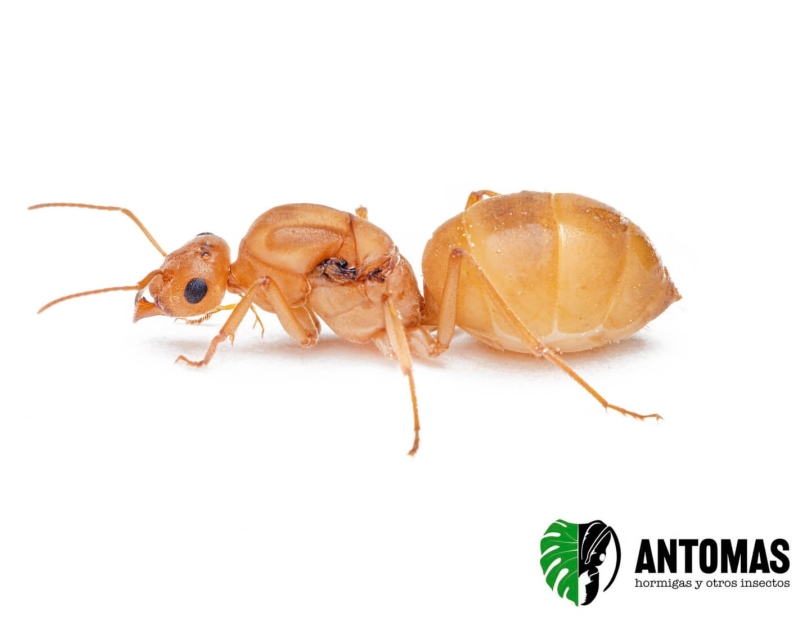
A large, robust, polymorphic Camponotus without a sting, with minor, media and major workers forming a continuous series. There is no separate soldier caste: the so-called “soldiers” are major workers with much larger heads.
- Colouration. In the original description, a clay-yellow body with the head, antennal scapes, knees, tibiae and first tarsal segment black. In major workers, the thorax is darker and the tip of the gaster blackish. Creighton describes it with a black head and an ochreous-yellow thorax and gaster, often clouded with brown, and the Mackays with a black head and the rest brown, while warning that the colour varies.
- Variation between populations. Keepers distinguish colonies with a plain yellow body from others with a black head and a tricoloured gaster, depending on the population. In the key in his own paper, Emery already characterised it as having the gaster, and almost always the thorax, light red and the tibiae brown: the colour variation was evident from the very start.
- Head. Black or blackish brown. In the major worker it is large and narrows in front of the eyes. The cheeks are shiny, with tiny punctures and no erect hairs.
- Antennae. Long, slender scapes that clearly extend beyond the posterior corners of the head and are not flattened at the base. This is the best way to tell it apart from similar species such as C. vicinus or C. sansabeanus, whose major workers have the base of the scape flattened.
- Gaster. Shiny, with fine, sparse pubescence. It ends in the acidopore, through which it sprays formic acid.
- Queen. With a long row of bristles on the inner face of the middle and hind tibiae and cheeks without hairs. In the Arizona form, the wings have a light yellow tint, with brown veins and stigma.
- Male. Not yet described.
Almost white ants? It has been claimed that this species has “almost whitish” individuals. We have not found any scientific description that says so: the palest shade in the literature is clay yellow or ochre. What does happen in any ant is that newly emerged workers are very pale and darken within a few days. A young colony, with many newly emerged workers, can look much paler than it really is.
Approximate sizes
- Major workers: 12 mm in the original description and up to 15 mm in a population from Arizona
- Major worker from the original description: head 3.5 mm long and 3.2 mm wide; scape 3.4 mm; hind femur 4 mm
- Minor workers: 10–11 mm in that same Arizona population; no published measurements for the typical form
- Queen: 14–16 mm, and 16–17 mm in the Arizona population
- Male: no published measurements
The measurements of the major worker from the original description are Emery’s (1893). Those of the Arizona population are from Wheeler (1910), who described it as primipilaris and who, in his own words, found it somewhat larger than the typical form; the queen measurements are also Wheeler’s, based on five queens he attributed to this species. The smaller figures circulating online, such as workers of 5–8 mm or queens of around 13 mm, do not come from published measurements, so we prefer not to give them.
Care in captivity
Difficulty: 3/5 – Advanced
At Antomas we place it at the advanced level, at the more accessible end of it. It is a rewarding Camponotus: it eats everything, has no sting, is content with a dry nest and, from day to day, is calm. What sets it apart from a beginner’s species comes down to four things:
- Heat. It needs a warm nest. Keepers who keep it at room temperature agree that it barely grows.
- Diapause. It needs a mild, properly managed winter. Without one, colonies from high-altitude populations stagnate.
- Patience. Young queens often stop laying in autumn and do not resume until spring, even when kept warm. This is normal, but you need to know about it.
- The majors. They are among the largest Camponotus in the United States and, when they arrive, they need large galleries and plenty of food.
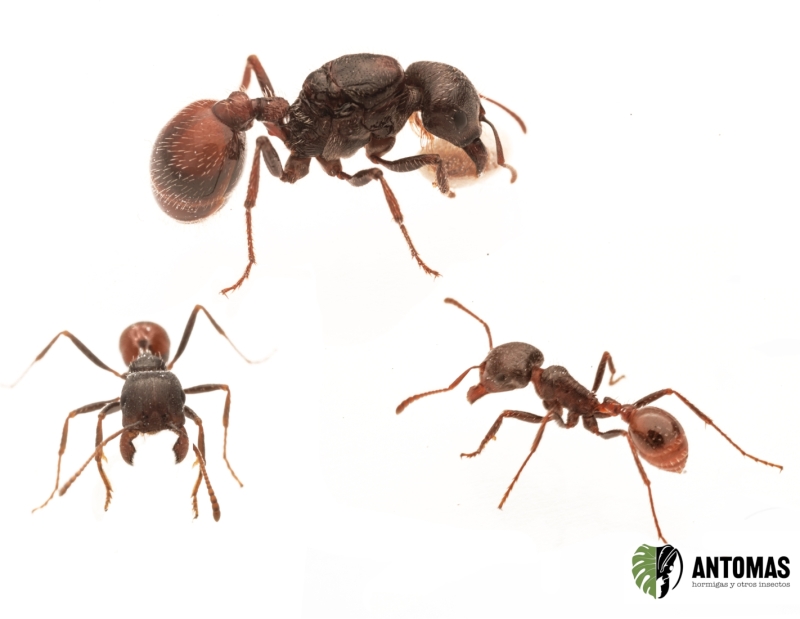
And it is well worth it. It is a carpenter ant rarely seen in Europe, nocturnal, with a black head that contrasts with a yellow or amber body, and impressive majors. If the ants of those deserts appeal to you, at Antomas we also have Camponotus fragilis, another carpenter ant from the south-west, and two neighbours from its habitat: the harvester Pogonomyrmex maricopa and the honeypot ant Myrmecocystus mimicus.
Recommended parameters
- Nest temperature: 26–30 °C during the active season, with a warm spot of 30–32 °C on one side, always with a thermostat, so that the colony can choose. Do not keep it continuously above about 32 °C.
- Why: in its range, the soil at 20–50 cm, where the chambers are, stays at an average of 26–31 °C in summer. Near the surface, at 10 cm, it reaches 35–39 °C on the hottest days, and the colony moves down to avoid it. Keepers in the United States keep it at about 28–32 °C and agree that, at room temperature, it barely grows.
- Foraging area: at room temperature, about 20–25 °C. That way they have somewhere to cool off.
- Humidity: moisture in the test tubes while the colony is small; after that, a dry nest (see “Humidity: tubes at first, dry later”).
- Water: always available, in a test tube with water and cotton wool in the foraging area.
- Light: nest kept dark and foraging area lit, with a normal day–night cycle.
- Diapause: about 3 months, from December to February, at 10–15 °C (see “Diapause: a mild winter”).
Humidity: tubes at first, dry later
This is an ant of stony, well-drained soils, in a land where little rain falls and almost all of it at once, with the summer storms. But, like practically all Camponotus, while the colony is small it needs moisture in the nest:
- At first: the test tubes and the formicarium’s hydration systems, well filled with water. The queen and the first brood need it.
- With about 50–100 workers: you can stop moistening the nest and keep it dry, with water and sugary liquids in feeders in the foraging area. The colony regulates the humidity it needs by itself.
- Never wet: excess water brings condensation, mould and mites. One keeper who founded queens on damp sand lost almost all of them to a white fungus.
Dry does not mean without water: the water tube in the foraging area must never be missing, and rearing logs show that these colonies drink a lot.
Recommended formicaria
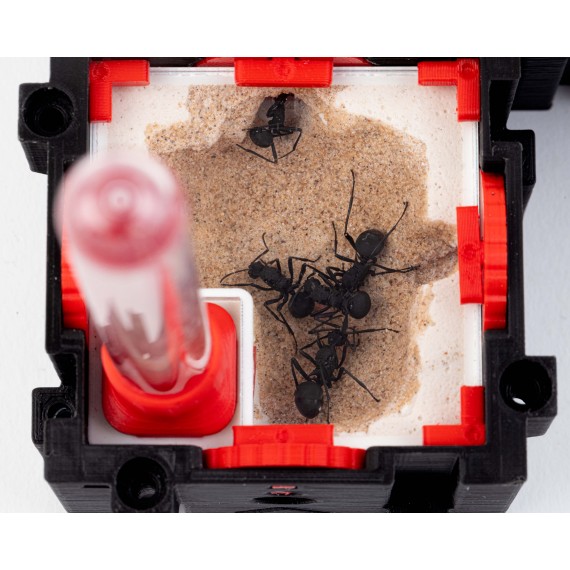
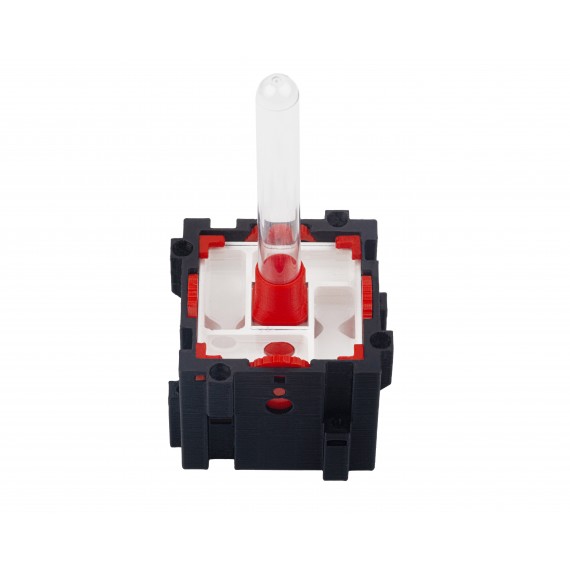
At Antomas we recommend starting with a formicarium from the Anthouse Qbik Wild range, made of plaster, which holds the moisture the founding stage needs well. For a queen with her first brood, the Qbik Wild One P 1C:
When the colony grows, the best option is to move it to the Qbik Alpha range, modular and on the dry side, which suits the dry nest of an established colony and is lighter, something you will appreciate because the colony can grow very large. With this species, large galleries: its majors need them to move around and to carry the brood. First, a QBIK ONE with large galleries:
To expand, the QBIK DUO, also with large galleries. Expand when you see workers standing idle in the corners of the foraging area, with no room inside, but do not jump the gun: in a huge nest for a small colony, the spare chambers end up as rubbish dumps. Complete the set-up as follows:
- Mineral-oil barrier along the top of the foraging-area walls and a well-fitting lid (see “Escapes and barriers”).
- Dry foraging area, with a little sand, a flat stone or two and a twig, with nothing that could act as a bridge to the barrier.
- Water in a test tube with cotton wool, and a feeder for sugar, never on cotton wool.
- Gentle heat on one side of the nest, with a thermostat, away from the feeder.
Founding: queen with brood, step by step
At Antomas we sell founding queens with brood: queens that have already started their colony in a test tube, with eggs, larvae or pupae. Founding is claustral: the queen raises her first workers without going out to feed, using the reserves in her own body (see “A queen with her larder inside”).
- Tube, darkness and warmth. Leave the tube just as it arrives, with its water reservoir behind the cotton wool, in a dark, quiet place free from vibrations, at 26–28 °C. You can cover it with a cloth or a piece of card.
- Moisture in the tube. Check from time to time that the cotton wool is still damp and that there is water left. If it runs out or the tube gets very dirty, move her to a new one by tipping, carefully.
- No disturbance. Take a brief look once a week, not every day. A stressed queen may eat her brood; in one rearing log, a queen ate almost all of hers after being moved.
- An occasional snack. Even though founding is claustral, at Antomas we recommend offering the queen, from time to time, a tiny drop of sugary liquid on a small piece of aluminium foil, never on the cotton wool in the tube, which goes mouldy. Remove any leftovers the next day. Once there are workers, add a small piece of insect once or twice a week.
- Patience. Keepers report about 7–10 weeks from egg to worker, less in warmer conditions. The first workers, the nanitics, are small for the species, although they are already large ants.
The most important warning: if you receive the queen in late summer or autumn, it is normal for her to stop laying until the following spring, even if you keep her warm. Several keepers describe this in their logs (see “A queen with her larder inside”). Do not move her to another tube or disturb her because of it; keep caring for her and respect her winter (see “Diapause: a mild winter”).
When should you move her to the formicarium? With about 5–10 workers, or sooner if the tube becomes too small, gets dirty or runs out of water, always to a nest in proportion to the colony.
Arrival and moving by tipping
When you receive the queen, let her settle in a quiet, dark place at 26–28 °C, and check that the tube has water. Do not move her to another tube or into the nest as soon as she arrives. When the time comes to move her, at Antomas we do it by tipping:
- Set up the formicarium beforehand, with the oil barrier in place and the water where it should be.
- Work over a tray, with a soft brush, in case any worker climbs up the tube or your tools.
- Open the tube in the foraging area, next to the nest entrance, and gently tip out the queen, the workers and the brood, helping any stragglers along with the brush.
- Leave the nest dark and cover the foraging area. Within a few hours they will have carried the brood inside.
Later on, use the same method to move them to a larger module.
Feeding
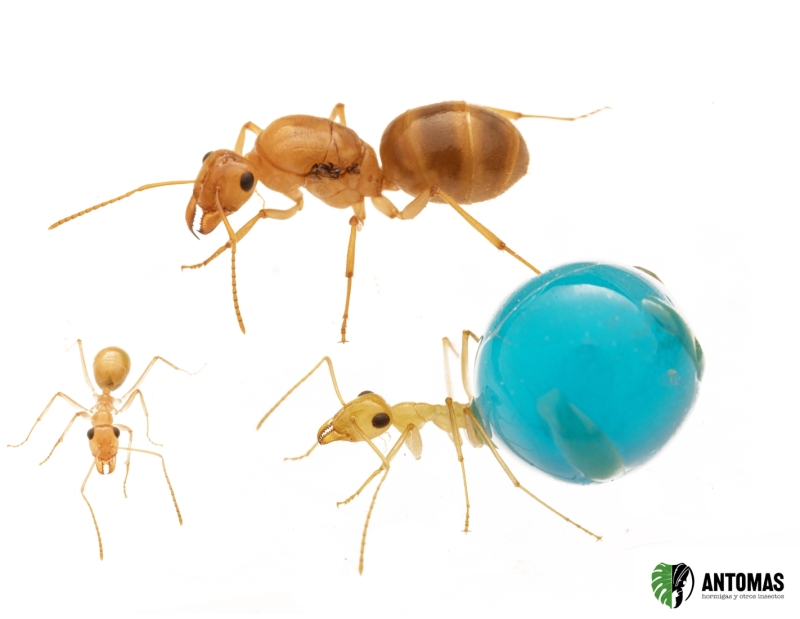
Sugary liquids, always available. This is a heavy sugar consumer: keepers report that their colonies drain the feeders, and one even saw the larvae turn pink from the dyed hummingbird nectar in the feeder. At Antomas we recommend variety: Anthouse’s Blue Sugar nectar 4–5 times a week and another nectar or sugary liquid 1–2 times a week. You can also add a little protein to the nectar. Always offer them in a feeder, either a standard one or home-made, where the drop stays “spread out” and accessible, and never on cotton wool, which goes mouldy and spoils the liquid very quickly. Replace it before it ferments.
Protein: the more, the better. It is the engine of growth, and this is the Antomas philosophy: if you carry out daily maintenance and remove leftovers, it is better to overfeed, because the colony understands that it has more resources and grows faster and larger. If you will not be able to clean often, it is better not to overfeed: uneaten food rots and brings mould and mites. Change the type of insect from one week to the next, so they do not always eat the same thing:
- Thermobia domestica: small, soft prey, perfect for the founding stage and young colonies.
- Cockroaches: the Argentine cockroach, Blaptica dubia, or the red runner, Shelfordella lateralis, freshly killed and opened up.
- Crickets, Acheta domesticus: cut into pieces for small colonies; according to one keeper, a colony of about a hundred workers gets through a whole cricket a day.
- Mealworms, Tenebrio molitor, freshly killed and cut open.
A keepers’ tip: this species makes much better use of opened prey. Several keepers report that their colonies left whole mealworms and fruit flies untouched, and that as soon as they were offered opened cockroaches, the workers started drinking the juices and sharing them mouth to mouth. Always open the prey for them, especially while the colony is small. And since it is nocturnal, put the protein in at dusk and remove the leftovers the following morning. Buy your insects from a trusted supplier: insects treated with insecticides can kill the colony.
Water: always, in the test tube with cotton wool in the foraging area. Even if the nest is dry, drinking water must never be missing.
Diapause: a mild winter
Its diapause can be worked out quite precisely, because there are soil-temperature data from its range. There, the soil at 50 cm, where the nest is, drops from December to February to about 10–14 °C in the low desert and 9–13 °C in the foothills and mid-altitude grassland, where a large share of the populations live, and spends about three months below 15 °C. In the highest areas it drops even further. It is a real winter, albeit a mild one: at a depth of 1 m the soil does not freeze. And the ant itself marks it: in New Mexico, brood has been found in the nests from March to July, and in captivity queens stop laying in autumn.
That is why, at Antomas, we recommend a mild, not cold diapause, like the one we recommend for its neighbour P. maricopa: about 3 months, from December to February, at 10–15 °C, ideally around 12–14 °C.
- Gradual entry. In November, switch off the heat and leave the colony at 15–18 °C for 2–3 weeks before going lower. Those 15–18 °C are the transition step, not the diapause itself.
- During diapause: water at all times, a little sugary liquid and almost no protein. Disturb them as little as possible.
- Gradual exit in March, passing through 15–18 °C again, until you return to the warm nest. Resume protein as soon as you see activity and brood.
- Very small colonies: in their first winter, a shorter diapause of 6–8 weeks, at around 15 °C.
- Where: an unheated room often does not get cold enough; a garage, a cellar or a wine cooler usually works. There is no need to go below about 10 °C, and never put it in a fridge at 4–8 °C, as you would a species from northern Europe.
Some keepers keep it warm all year round. But those who rear colonies from high-altitude populations report that, without a winter, they stagnate and lose their appetite the following year. Diapause is the safe bet.
Behaviour and observation
A night-time ant. In the wild it forages at night, and that is what to expect at home too: activity is concentrated at dusk and through the night, and it is normal to see little movement around midday. If you want to see them hard at work, watch them as evening falls.
Calm, but with character. From day to day, the workers are calm and do not go looking for a fight. If you open or knock the nest, they come out to defend it, and the majors are the first to appear. Founding queens can be very protective of their brood.
Growth. There are no published colony counts for this species. In the most complete rearing log we have found, a queen from a summer flight had about 30 workers after a year and a half and about 100 after two years, by which time the first majors had appeared; another keeper, with less warmth, took four years to reach about 40. The figures of thousands of workers circulating online are estimates, not counts.
Plenty of trophallaxis. Watch how they pass food mouth to mouth: foragers return with their crops full of nectar or prey juices and share them among their nestmates and the larvae.
Observe without fear. At Antomas we believe ants are there to be enjoyed, observed and learnt from, not kept hidden away. Simply keep the nest dark and the foraging area lit, and watch them gently, intervening and stressing them as little as possible. They get used to your presence.
Warning signs:
- A colony that does not grow in the middle of the season: almost always a lack of warmth or protein.
- A queen that does not lay in autumn or winter: this is normal (see “Founding: queen with brood, step by step”).
- Condensation on the walls, mould or mites: too much humidity or forgotten leftovers.
- A listless colony with no appetite after a whole year kept warm: it has missed its winter.
Escapes and barriers
Like almost all Camponotus, it is a good climber, and an ant this size outside the formicarium does not go unnoticed. At Antomas we use mineral oil with them:
- A band of mineral oil along the top of the foraging-area walls, thin and unbroken. Renew it when it collects dust or debris.
- A well-fitting lid, as a second line of defence.
- No gaps: check connections, stoppers and tubes.
- Nothing that could act as a bridge to the barrier: no twigs or stones leaning nearby.
With the barrier in place and everything properly closed, they cause no problems.
Handling and safety
They cannot sting: they simply have no sting. If they feel threatened, they bite, and a major of this size makes itself felt, and they can spray formic acid, which stings on sensitive skin or in a small cut. Nothing to worry about if you work calmly. As with any species, handle them with entomological tools (a soft brush or soft forceps), not with your hands, and work slowly so as not to lose or injure any worker, let alone the queen. Do not combine different queens or colonies, or mix them with other species. This is an exotic species: it must never be released into the wild.
What not to do
- Keeping it at room temperature all year round, without a warm nest: it will barely grow.
- Keeping it continuously above about 32 °C, or heating the whole nest from below without leaving it a cooler area.
- Soaking the whole nest, or continuing to moisten it once the colony regulates its own humidity.
- Skipping diapause, or making it a cold one, in a fridge, as you would for a species from northern Europe.
- Panicking and moving a queen that stops laying in autumn to a new tube.
- Always giving the same insect, or whole, hard prey to a small colony; opened prey is better.
- Putting sugar on cotton wool or letting it run out.
- Leaving food leftovers for more than 24 hours.
- Using small galleries once the majors arrive.
- Combining queens or colonies.
- Handling them with your hands.
Scientific sources
This sheet has been compiled from the scientific literature on Camponotus ocreatus and its relatives, including the regional faunas of New Mexico (Mackay and Mackay, 2002) and Nevada (Wheeler and Wheeler, 1986), from climate and soil-temperature data for its range, and from the experience of Antomas and other keepers. Main references:
- Emery, C. (1893). Beiträge zur Kenntniss der nordamerikanischen Ameisenfauna. Zoologische Jahrbücher, Abtheilung für Systematik, Geographie und Biologie der Thiere 7: 633–682. PDF on ZOBODAT (open access)
- Wheeler, W. M. (1910). The North American ants of the genus Camponotus Mayr. Annals of the New York Academy of Sciences 20: 295–354. doi:10.1111/j.1749-6632.1910.tb55152.x
- Wheeler, W. M. (1917). The mountain ants of western North America. Proceedings of the American Academy of Arts and Sciences 52: 457–569. doi:10.2307/20025695
- Creighton, W. S. (1950). The ants of North America. Bulletin of the Museum of Comparative Zoology 104: 1–585. Full text on Biodiversity Heritage Library (open access)
- Ward, P. S., Blaimer, B. B. & Fisher, B. L. (2016). A revised phylogenetic classification of the ant subfamily Formicinae (Hymenoptera: Formicidae), with resurrection of the genera Colobopsis and Dinomyrmex. Zootaxa 4072: 343–357. doi:10.11646/zootaxa.4072.3.4
- Vásquez-Bolaños, M. (2011). Lista de especies de hormigas (Hymenoptera: Formicidae) para México. Dugesiana 18: 95–133. PDF on Dugesiana (open access)
- Tschinkel, W. R. (2005). The nest architecture of the ant, Camponotus socius. Journal of Insect Science 5: 9. doi:10.1673/031.005.0901
- Ness, J. H., Morris, W. F. & Bronstein, J. L. (2009). For ant-protected plants, the best defense is a hungry offense. Ecology 90: 2823–2831. doi:10.1890/08-1580.1
- Martinez, T. & Wheeler, D. E. (1994). Storage proteins in adult ants (Camponotus festinatus): roles in colony founding by queens and in larval rearing by workers. Journal of Insect Physiology 40: 723–729. doi:10.1016/0022-1910(94)90100-7
- Meadows, B. A., Emad, M., Hruska, J. P., Silva, J., Behrends, G. J., Girón, J. C. & Manthey, J. D. (2023). Relatedness within colonies of three North American species of carpenter ants (subgenus Camponotus) and a comparison with relatedness estimates across Formicinae. Insectes Sociaux 70: 191–202. doi:10.1007/s00040-023-00906-7
- Degnan, P. H., Lazarus, A. B., Brock, C. D. & Wernegreen, J. J. (2004). Host–symbiont stability and fast evolutionary rates in an ant–bacterium association: cospeciation of Camponotus species and their endosymbionts, Candidatus Blochmannia. Systematic Biology 53: 95–110. doi:10.1080/10635150490264842
- Wernegreen, J. J., Kauppinen, S. N., Brady, S. G. & Ward, P. S. (2009). One nutritional symbiosis begat another: phylogenetic evidence that the ant tribe Camponotini acquired Blochmannia by tending sap-feeding insects. BMC Evolutionary Biology 9: 292. doi:10.1186/1471-2148-9-292
- LeBrun, E. G., Diebold, P. J., Orr, M. R. & Gilbert, L. E. (2015). Widespread chemical detoxification of alkaloid venom by formicine ants. Journal of Chemical Ecology 41: 884–895. doi:10.1007/s10886-015-0625-3