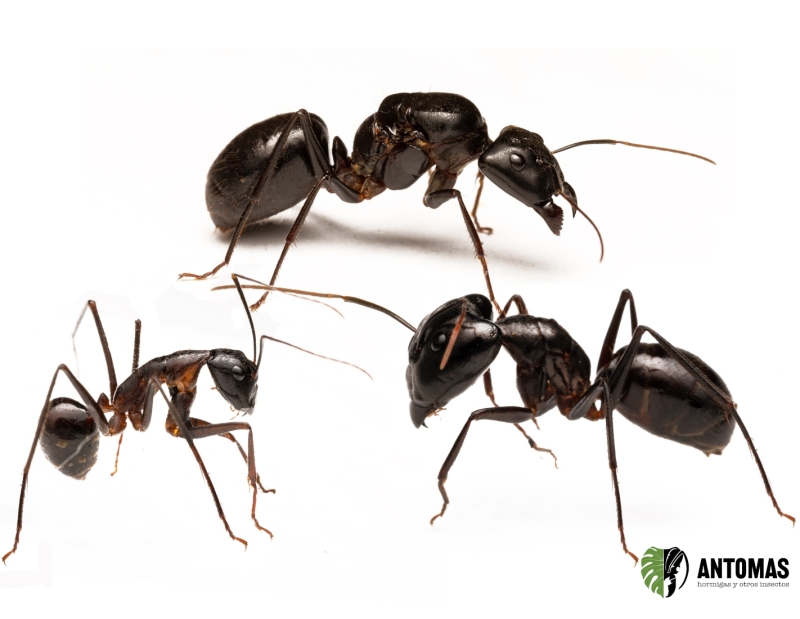
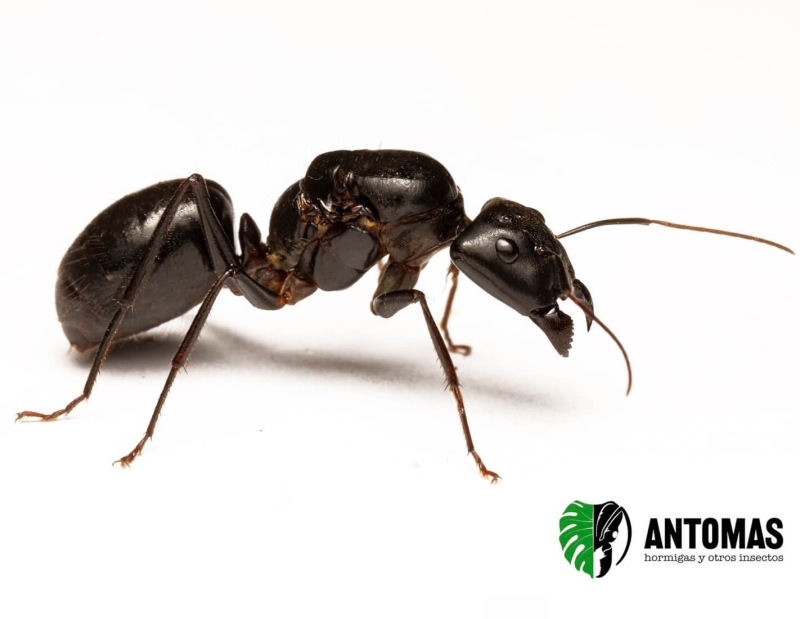
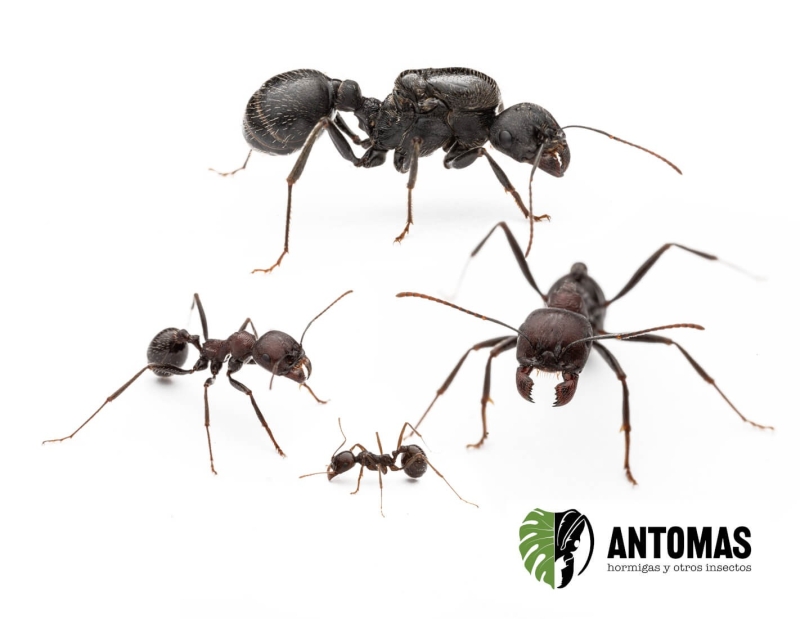
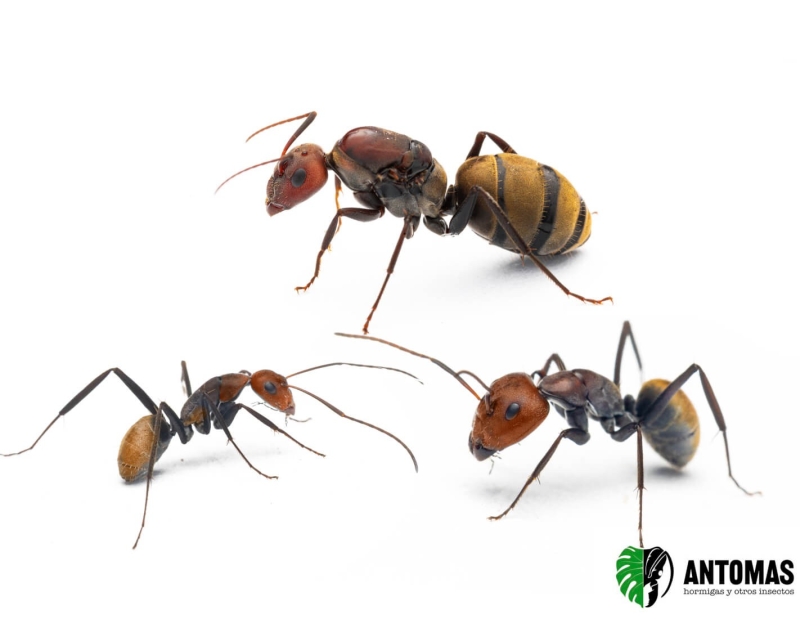
Difficulty: 1/5 – Beginner
A large, polymorphic African Camponotus, crepuscular and nocturnal, and famous since 2025 for a scientific discovery: it amputates its nestmates’ injured legs to save their lives. Sold as a founding queen with brood, with claustral founding. Qbik Wild for founding and Qbik Alpha in the long run, although it adapts to everything. Moisture in the modules at first and a completely dry nest from about 50–100 workers, 24–28 °C, sugar always available and plenty of protein. No diapause needed, although it accepts an optional, very mild one (3–4 months at 15–20 °C) to slow its growth. Climbs acrylic: use a mineral oil barrier.
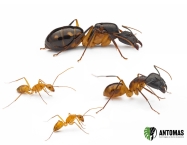
Camponotus maculatus (Fabricius, 1782) is one of Africa’s large carpenter ants and one of the oldest known to science: its name is almost two and a half centuries old. It is big, with nimble minor workers and broad-headed major workers; it lives in the soil of savannas and open woodland, comes out mainly at dusk and feeds on sugars and insects. And since October 2025 it has earned a place of its own in the textbooks: it is the ant in which workers have been shown to amputate preventively the injured leg of a nestmate, before infection sets in.
It is also a species with a long history behind it: for more than a century, dozens of forms from half the world were described under the name C. maculatus, and some still suspect that it hides several species. Throughout this profile we always separate what is documented, what other keepers report and what we have learnt from keeping it at Antomas. And what we have learnt comes down to one idea: it is one of the best large Camponotus to start with.
Biology
The “spotted” ant from the Banks collection
It was described by the Danish entomologist Johan Christian Fabricius in 1782 as Formica maculata, from a single major worker in the collection of the English naturalist Joseph Banks. The label said only “Equatorial Africa”. In 1915, the British entomologist Horace Donisthorpe re-examined that specimen, which is kept at the Natural History Museum in London, and suggested that it probably came from Sierra Leone, on the coast of West Africa. It is a reasonable assumption, not something stated on the label.
The name comes from the Latin macula, “spot”. We have not been able to read Fabricius’s original diagnosis, but the type specimen explains it well: on the first three segments of the gaster it has dark spots in the centre and pale bands at the sides, and in typical populations pale spots can be seen with the naked eye on each side of the gaster. It was moved to the genus Camponotus in 1862 and is now placed in the subgenus Tanaemyrmex.
More than a hundred names for a single ant
Throughout the 19th century and much of the 20th, “maculatus” was a catch-all. Any large, similarly coloured Camponotus from Africa, Asia, Europe, the Americas or Australia ended up described as a subspecies or variety of C. maculatus, and more than a hundred of them piled up. In 1972, the myrmecologist Cesare Baroni Urbani turned 33 of those African names into synonyms of C. maculatus at a stroke; many others have gradually been split off as species in their own right.
An example close to home for us: Camponotus barbaricus, the red-thoraxed carpenter ant of southern Iberia, was described in 1905 as C. maculatus subsp. barbaricus, from specimens collected in Seville and Gibraltar. The same name was once applied to the Mediterranean C. aethiops, the North American C. vicinus and species from South Africa, Madagascar and Australia.
So what is left in the strict sense? Less than it seems. A morphological and genetic study by McArthur and Leys (2006) showed that the African “maculatus group” is not a natural group – that is, it does not descend from a single common ancestor – and pointed out a surprising fact: the minor worker of C. maculatus has never been formally described; the species rests on the type specimen, a major worker. There is still no modern revision of the complex in Africa.
One species or several? Its scent gives it away
Ants recognise one another by scent: a layer of hydrocarbons that coats the cuticle and works like a chemical identity card. A German team analysed that layer in C. maculatus colonies reared from queens caught after the nuptial flight in a West African savanna, and got a surprise: there were two very different chemical profiles, which they called chemotypes (Buellesbach et al. 2023).
In 2026, the same group went a step further (Pohl et al. 2026): workers attack those of the other chemotype and tolerate those of their own, even from a different colony, and DNA barcoding also separates the two groups. The authors interpret this as probable cryptic species: distinct species that look the same to the naked eye. For anyone keeping this ant there is a practical consequence: do not be surprised if colonies sold under this name vary in colour, size or temperament.
From the Sahel to the gallery forest
C. maculatus is an ant of sub-Saharan Africa. There are forest populations on the coast of the Gulf of Guinea, and savanna and Sahel populations which, according to the records compiled by the myrmecologist Brian Taylor in his work The Ants of Africa, range from Senegal to Sudan, Tanzania and South Africa, although some of them may be closely related species. Records from Egypt, Arabia, Madagascar or Asia almost always refer to other species in the complex.
It lives in savannas, wooded grasslands, open woodland and gallery forests, and nests in the ground. For its species group, nests have been described in clay soils, with small, inconspicuous entrances, and in the savannas of East Africa they have been found under stones. A dry nest with roomy chambers and the water kept separate closely resembles what it chooses in the wild.
Night shift on the savanna
There is no study of the daily rhythm of C. maculatus in the strict sense, but everything points to the night. Ants of its group have been described as mainly nocturnal, scattering as soon as a torch is shone on them and dominating honey baits at night (McArthur and Leys 2006). Its Egyptian relative, C. aegyptiacus, once described as a subspecies of C. maculatus, starts foraging at sunset and stops at dawn, with two activity peaks that depend on temperature and humidity (Kaschef and Sheata 1963). And queens are caught at night with light traps, which indicates that nuptial flights are nocturnal or crepuscular.
A herder underground and in the treetops
Like so many Camponotus, it lives largely on sugar supplied by other insects. In a West African savanna in the 1970s, the French ecologist Jean Lévieux found that C. maculatus obtained honeydew from scale insects attached to roots, underground, while a neighbouring species of the same genus, C. acvapimensis, obtained it from whiteflies on grasses (Lévieux 1977): two related species sharing out the larder. The team that studied its amputations also observed workers climbing trees to tend aphids (Fujimoto et al. 2025).
The rest of the diet is protein: insects they hunt or find dead. In the laboratory, researchers rear them on honey water and cockroaches, and in Antomas’s experience they accept even large, whole prey (see “Feeding”).
They amputate a leg to save a life
This is the species’ big headline. In October 2025, a team from the University of Würzburg (Germany) led by Erik Frank reported in Proceedings of the Royal Society B that C. maculatus workers amputate the injured legs of their nestmates (Fujimoto et al. 2025). When a worker returns to the nest with a wound on the femur, the long section of the leg, her nestmates cut the leg off at the joint with the body – “at the shoulder” – by biting through it with their mandibles, and they do so straight away.
It works. In the experiments, the wounds were contaminated with the bacterium Pseudomonas aeruginosa, and amputation significantly reduced mortality: according to the university, it more than doubles the survival of injured workers. Speed is the key: the sooner the leg is removed, the more effective it is, and after a day it no longer helps.
It is not the first “medic” ant. The African termite hunter Megaponera analis rescues nestmates injured in battle and applies antimicrobial secretions to their wounds from a gland on the thorax, the metapleural gland (Frank et al. 2023). The North American Camponotus floridanus was the first ant in which amputation was described (Frank et al. 2024). But Camponotus species such as C. maculatus almost never have a metapleural gland: without a chemical “first-aid kit”, their solution is mechanical.

“La hormiga médica” (The medic ant), a short video by Anthouse featuring C. maculatus.
Better safe than sorry
What is most striking is when and on whom they amputate. C. maculatus workers do not distinguish an infected wound from a clean one, nor a fresh wound from an old one: they amputate almost every time, just in case. And there is a chemical explanation. The scent of a worker with an infected wound only changes about 24 hours after the injury, when amputation no longer helps. If they waited to “smell” the infection, they would be too late.
That is why the authors speak of prophylactic amputation – that is, preventive amputation – and titled their paper “Better safe than sorry”. It is a different strategy from that of Megaponera, which does recognise infected wounds and treats them selectively. If one day you see a five-legged worker in your colony going about her work normally, you will know what has probably happened to her.
They swallow their own venom
Like all formicines, C. maculatus has no sting: its weapon is formic acid, which it produces in the venom gland and sprays from the acidopore, a small nozzle at the tip of the gaster. But that venom has another use. In 2020, a German team showed that formicine ants, C. maculatus among them, swallow their own acid: they bend the gaster, bring its tip to the mouth and take up a few droplets (Tragust et al. 2020).
In this way they keep their crop highly acidic: the “social stomach” where they store food that they later share mouth to mouth with the rest of the colony. In C. floridanus, the crop reaches a pH of around 2. The acid filters out the microbes that come in with the food and slows the spread of disease within the nest: a venom that also disinfects the larder.
Egg police: only the queen lays here
Workers can lay unfertilised eggs, which would develop into males, but in C. maculatus this gets nowhere: the chemotype study found that, in groups of workers separated from the queen, the workers themselves destroy the eggs laid by their sisters and spare those laid by the queen (Buellesbach et al. 2023). This is what biologists call egg policing, and it keeps reproduction in the hands of a single mother. The curious thing is that they do it even in the chemotype in which the queen’s eggs and the workers’ eggs smell almost the same.
Majors on guard and majors on patrol
Not all major workers do the same job. In a laboratory colony, a Polish team compared the majors that stay inside the nest with those that go out to forage, and found that those inside rest more and react less to what is going on around them, although they move, groom and interact with the others just as the outside ones do (Mazurkiewicz et al. 2016). The indoor majors are the nest guard; the outdoor ones are those that deal with large prey. In your formicarium you will see both.
A spider in disguise and a cuckoo caterpillar
It has specialised enemies. The spider Diores poweri, of the family Zodariidae, preys mainly on C. maculatus workers and also resembles them in size, shape, colour and way of moving, a case of mimicry with which it probably deceives its own predators. Spiders of its genus paralyse their prey about 20 times faster than other ant-hunting spiders (Pekár et al. 2026).
The other enemy comes in through the front door. In southern Africa, the caterpillars of several butterflies of the genus Lepidochrysops develop inside nests of ants identified as C. maculatus: the workers themselves carry them into the brood chambers, and there the caterpillar feeds on the colony’s larvae (Heath and Claassens 2003). Like the cuckoo among birds, it gets its victim to raise it.
A laboratory ant
There is indirect proof of how well it does in captivity. When a European team was looking for an ant with which to study the effects of pesticides on social insects, it chose C. maculatus for three reasons: nuptial flights every year, rapid growth and the fact that it does not need diapause (Pohl et al. 2025). Its laboratory colonies, founded by single queens, exceeded 2,000 workers.
The colonies in the chemotype study were kept at 30 °C by day and 25 °C by night, with 12 hours of light, and were fed honey water and cockroaches twice a week (Buellesbach et al. 2023): figures very similar to those we recommend at Antomas.
Size and morphology
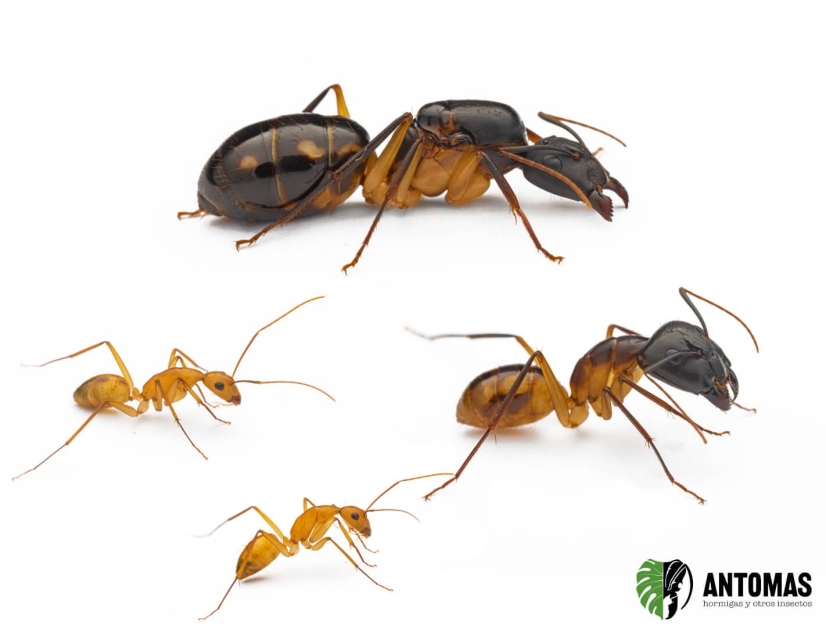
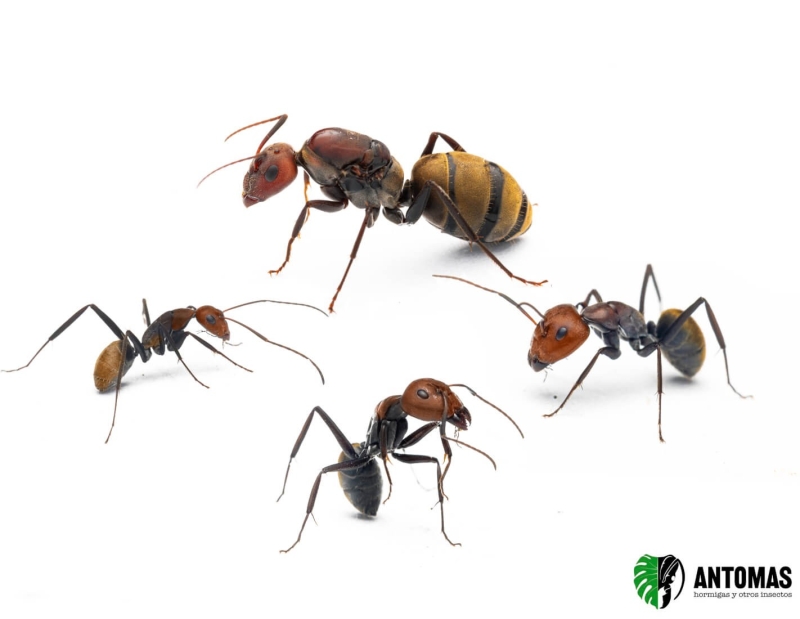
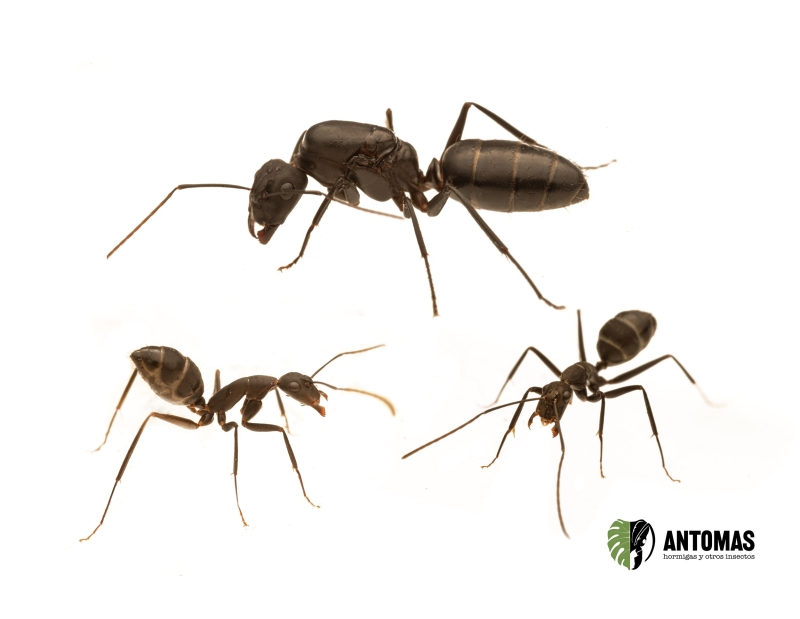
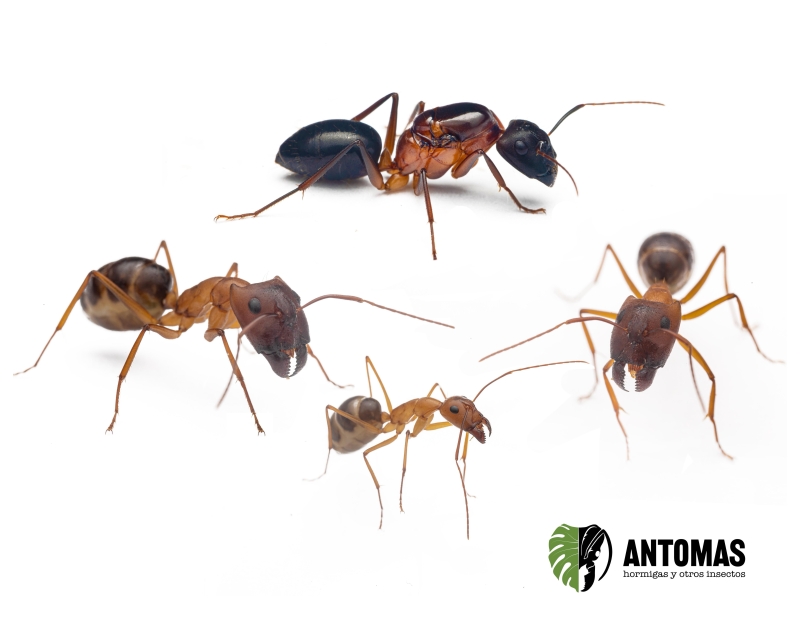
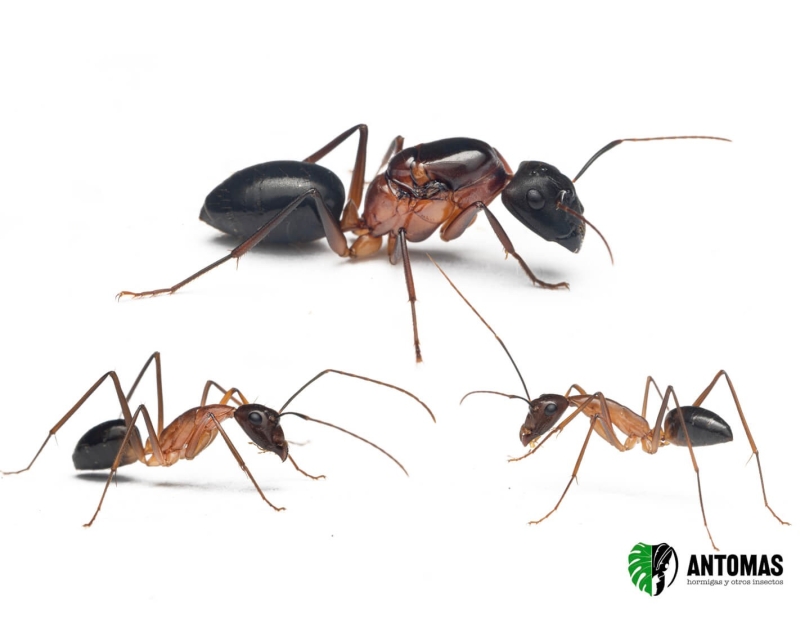
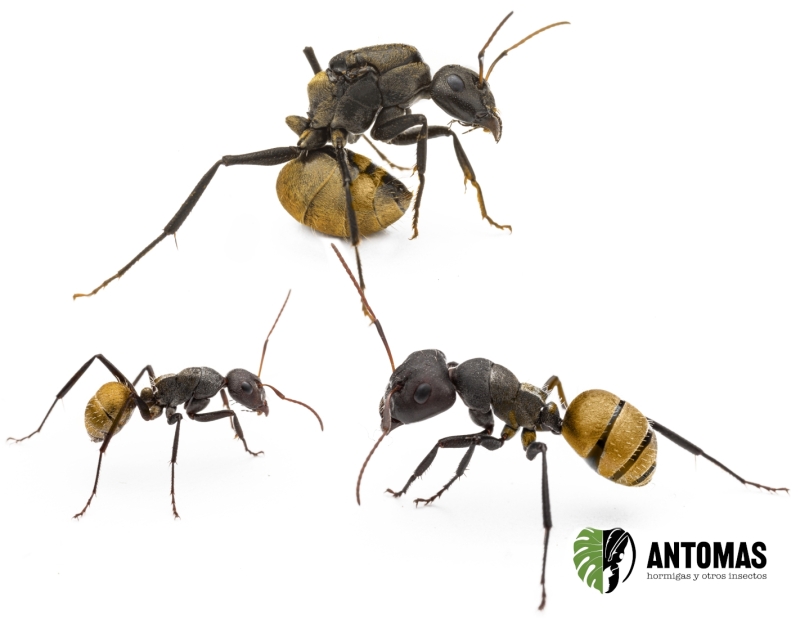
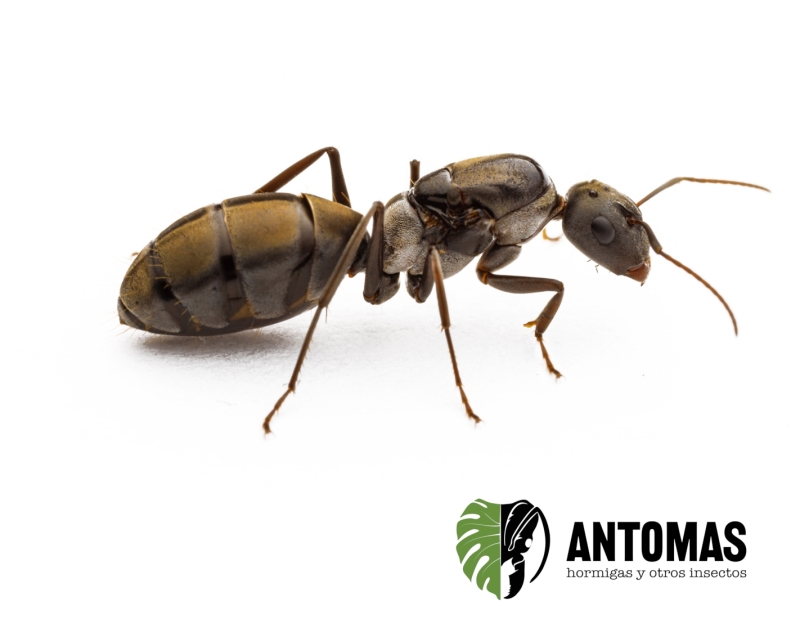
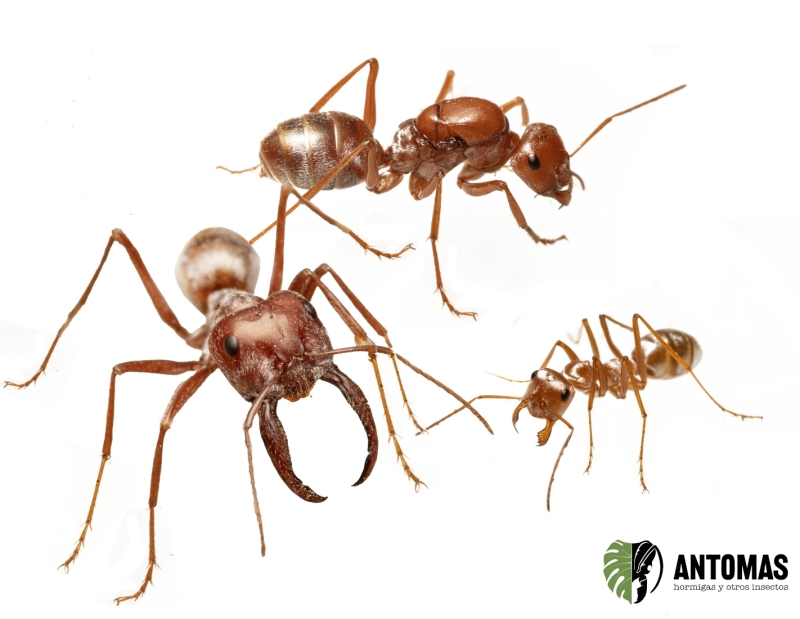
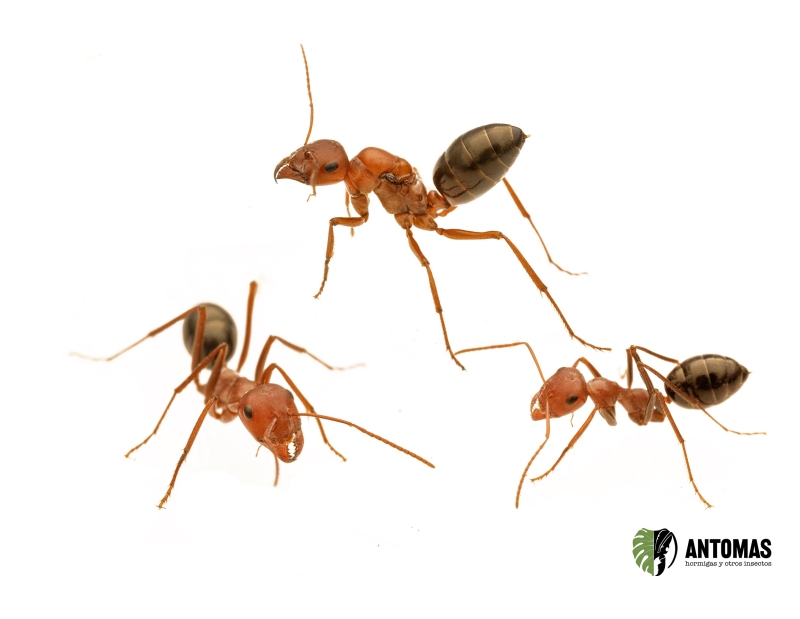
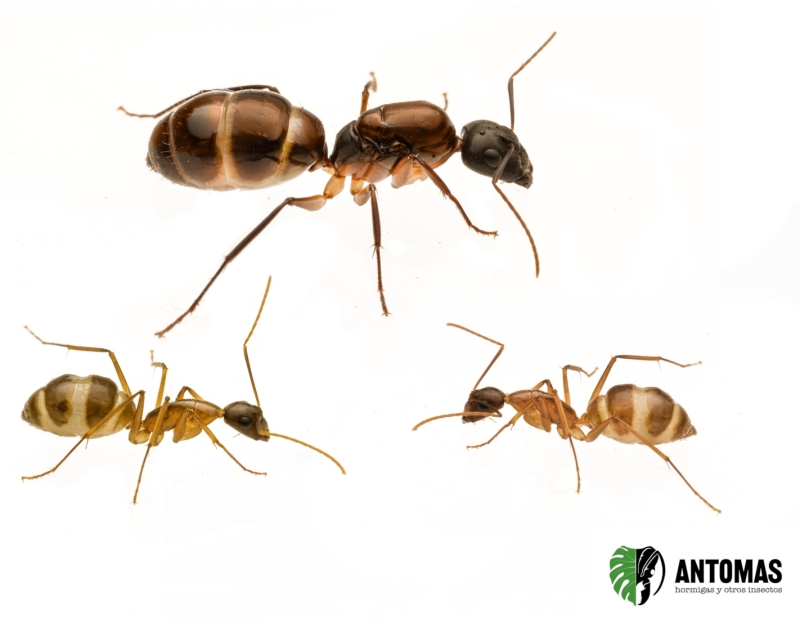
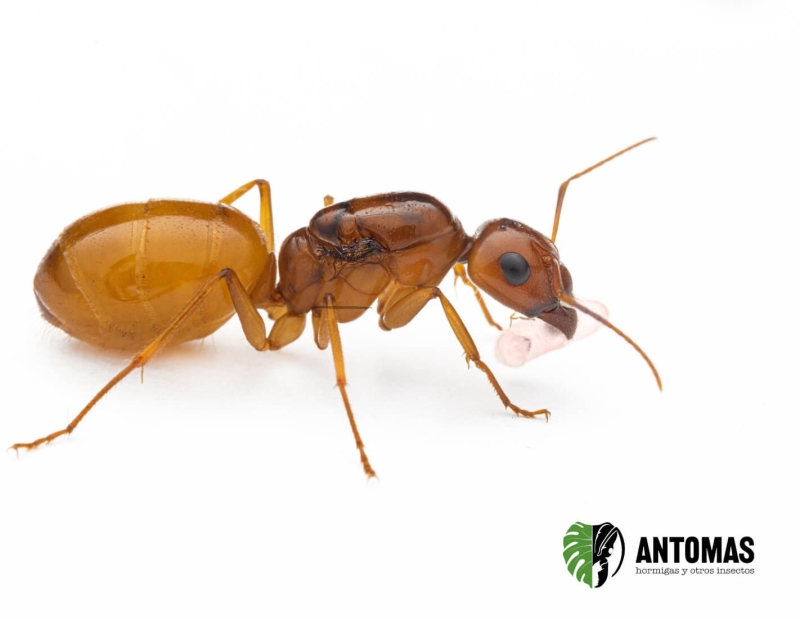
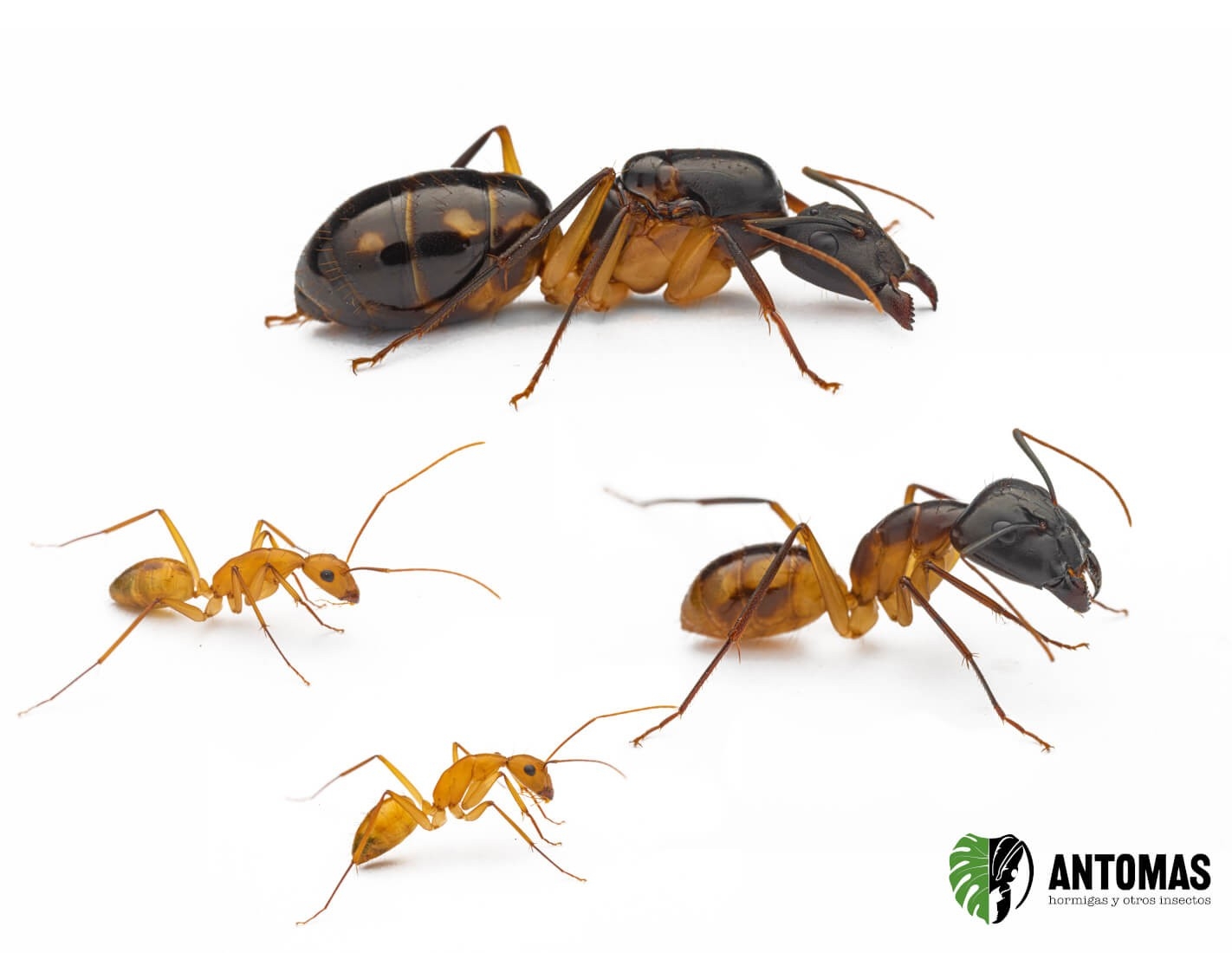
It is a large, robust and highly polymorphic Camponotus, with no sting. Its species group tends towards dimorphism: almost all workers are clearly minors or clearly majors, with few intermediates.
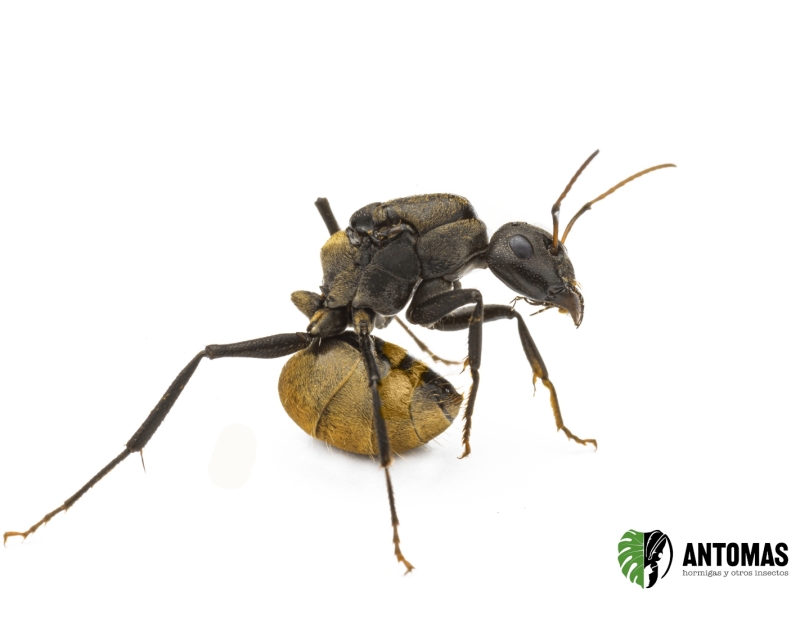
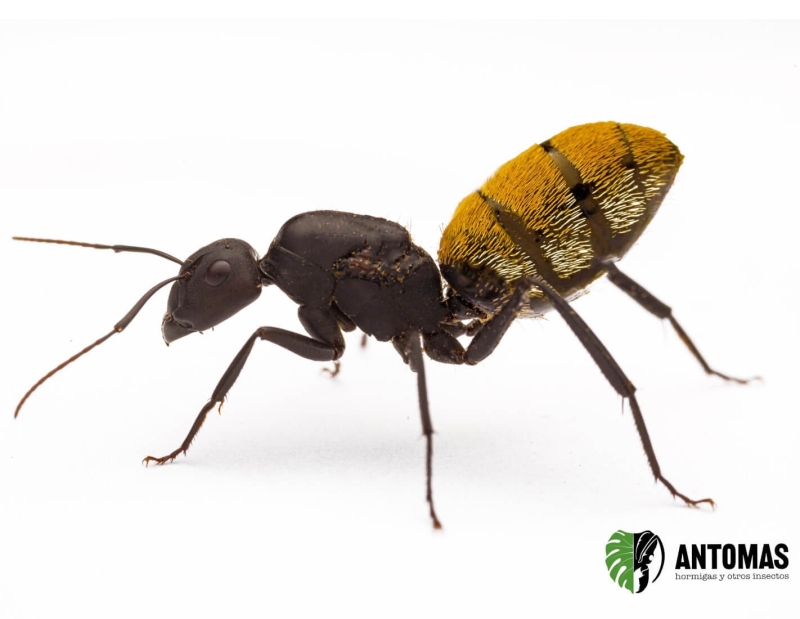
- Major worker. This is the best-known caste, because the type specimen of the species is a major worker. According to Donisthorpe’s redescription (1915), it has a black head, broader behind, with 7-toothed mandibles and a clypeus (the front plate of the head) with a pronounced median keel. The thorax is yellow below and blackish brown above, the legs are yellow with dark tibiae and tarsi, and the first three segments of the gaster bear dark triangular spots in the centre and pale bands at the sides. There are no erect hairs on the underside of the head.
- Minor worker. Much more slender: its head is considerably longer than broad, with almost parallel sides that narrow towards the back, and a pronounced occipital carina that the majors lack. A curious fact: the minor worker of C. maculatus in the strict sense has never been formally described (McArthur and Leys 2006).
- Colour. In the form considered typical, from West Africa, workers range from orange to dark reddish brown, with a darker gaster bearing the characteristic pale spots on the sides of its first three segments, and a shiny surface. Majors vary little in colour from one population to another; minors vary a great deal, especially on the thorax: in the Sahel and the dry savannas they are almost entirely pale. At Antomas we have two lines, a pale one and a dark one: we generally send the pale one first, but you can ask us about the dark one.
- Pilosity. Long, thick but sparse erect hairs, and very little pubescence, which gives it that shiny appearance.
- Gaster. It ends in the acidopore, through which it sprays formic acid; there is no sting.
- Queen. Described by Mayr in 1862, but we have not found any published measurements. She is larger and more robust than the workers, with the broad thorax of winged females.
Approximate sizes
- Minor workers: about 8–9.5 mm
- Major workers: about 12–14 mm in the typical form, with a head about 4 mm wide; across the complex as a whole, up to about 15.5 mm
- Queen: about 14–16 mm in Antomas colonies (no published measurements)
- Males: no published measurements
The worker measurements come from the redescription of the type specimen, from workers of the typical form measured by B. Taylor and from the descriptions of forms now regarded as synonyms. They are only a guide, as they come from different authors and methods. The queen’s figure is our own.
Majors that grow with the colony. In the major worker, the head is almost as broad as it is long; in the minor, it is barely half as broad as it is long, although both have antennae of similar length. The difference lies in the mandibular muscles, which fill the major’s head. In Antomas’s experience, major workers usually appear in the second year; the first ones are modest, and the largest arrive once the colony is populous. What the literature does not support is a third caste of “supermajors” or 20 mm workers: in large colonies, larger majors are simply produced.
Care in captivity
Difficulty: 1/5 – Beginner
At Antomas we consider it one of the best large Camponotus to start with. It eats practically anything, grows quickly when well fed, is content with a dry nest, does not need diapause and forgives the small mistakes every beginner makes. What is more, it is large and easy to handle with tweezers.
It asks for just three things, and it is worth being clear about them from the start:
- Space. A well-fed colony grows a great deal and, over the years, needs large galleries and extensions (see “Recommended formicaria”).
- Plenty of food and cleanliness. It is voracious and produces a lot of waste, which must be removed regularly.
- An escape barrier from day one. It climbs glass and acrylic (see “Escapes and barriers”).
Why it is worth it. Very marked polymorphism, eye-catching foraging at dusk, a voracity that turns every prey item into teamwork, and the first ant in which preventive amputation has been demonstrated. Few Camponotus have so much to teach.
Recommended parameters
- Nest temperature: 24–28 °C during the active season.
- Warm spot: up to about 30 °C at one end of the foraging area, so that the colony can choose. Never strong heat inside the nest.
- Humidity: humidity systems well filled with water while the colony is founding and small; from about 50–100 workers, a completely dry nest (see “Moisture at first, a dry nest later”). The foraging area should be dry.
- Water: always available, in a test tube with water and cotton wool in the foraging area.
- Light: simply leave them a dark area in the nest and a lit foraging area, with a normal day–night cycle.
- Diapause: not needed, but it accepts an optional, very mild one of 3–4 months at 15–20 °C, never below 10 °C (see “Diapause: not needed, but accepted”).
Avoid direct sunlight, radiators and cold draughts: more than an exact figure, what they appreciate is a warm, stable nest.
Moisture at first, a dry nest later
Like practically all Camponotus, it needs moisture at first. The queen and her first brood live in the test tube, with its water reservoir behind the cotton wool, and when they move into the formicarium the tubes and the humidity systems of the modules must be kept well filled with water while the colony is small. Once it passes about 50–100 workers, you can do without them and keep the nest completely dry, with feeders in the foraging area: one for water and another for sugary liquids, which are also mostly water. From then on, the ants regulate the humidity they need themselves.
Dry does not mean without water: the water tube in the foraging area must never be missing. What must be avoided is soaking the whole nest: excess moisture brings condensation, mould and mites, especially in such a voracious species, which accumulates waste.
Recommended formicaria
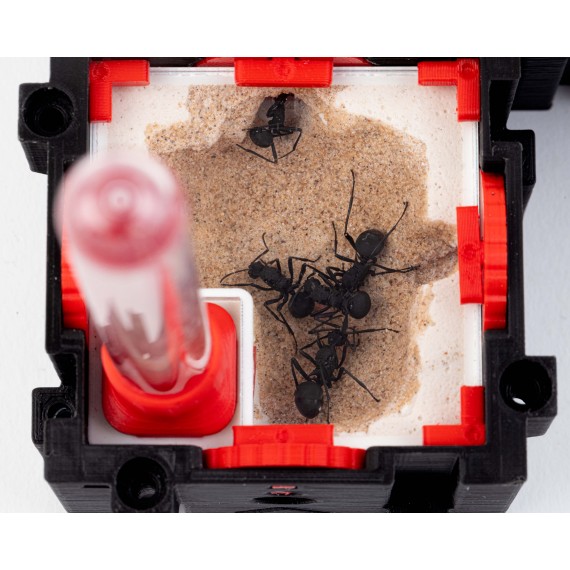
At Antomas we recommend Anthouse formicaria, and with C. maculatus it hardly matters which one you choose: it adapts to everything. For founding, a Qbik Wild is best, as it holds well the moisture a small colony needs:
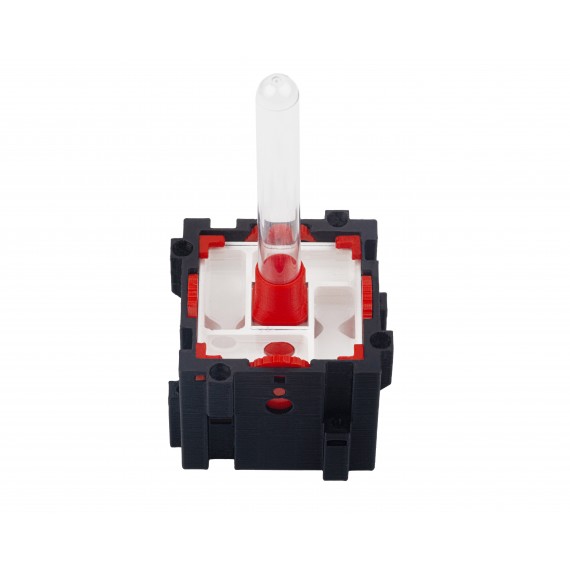
It also does very well in the Qbik Alpha range, which is the best option in the long run: modular, fairly dry and lightweight formicaria, which matters with a species that grows a lot and whose nests would otherwise end up very heavy. Modules from the Qbik range can be combined and swapped without any problem: Wild, Alpha and also the Qbik Wood range, made of natural oak and designed for species that need little moisture. To keep growing, a QBIK ONE with medium galleries:
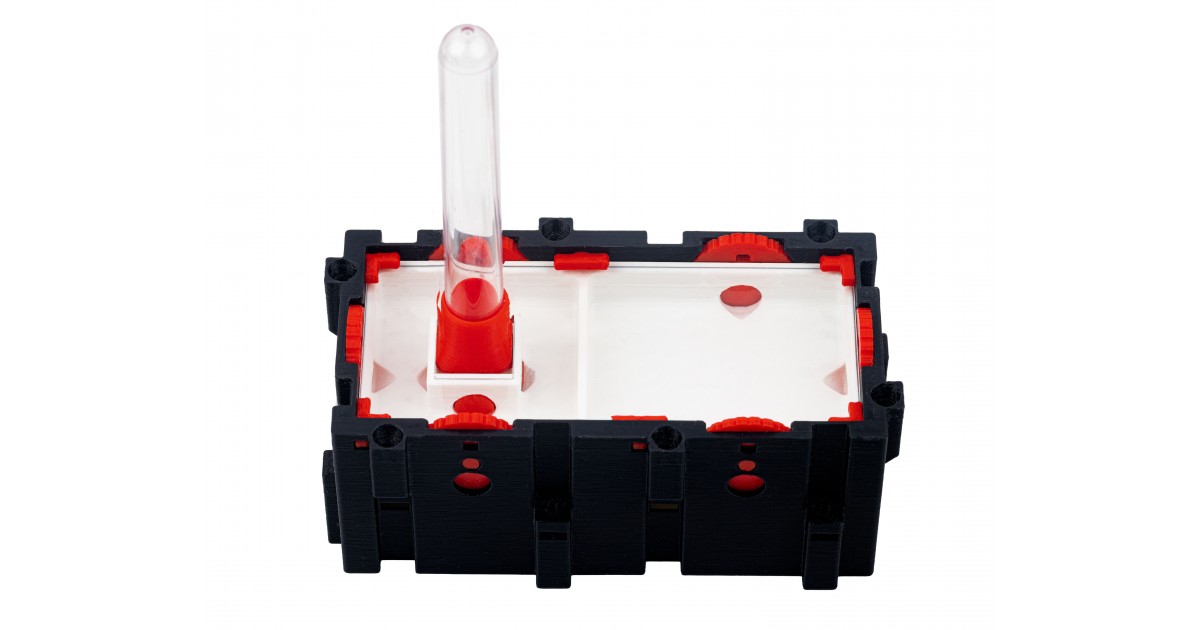
When the major workers appear, switch to large galleries and expand with the QBIK DUO and, later, with the larger formats in the same range:
Expand when the nest becomes too small for them: a clear sign is seeing many workers sitting idle in the corners of the foraging area, with no room inside. But do not jump ahead: in a huge nest for a small colony, the spare chambers end up as rubbish dumps. Complete the set-up with these details:
- Escape barrier: a band of mineral oil on the upper part of the foraging area walls and a tight-fitting lid (see “Escapes and barriers”).
- A large, dry foraging area, with some sand, flat stones and a twig or piece of bark to climb, with nothing that could act as a bridge to the barrier.
- Water always available, in a test tube with water and cotton wool.
- A feeder for sugary liquids, never on cotton wool (see “Feeding”).
- Gentle heat, only if needed, on one side of the nest and away from the feeder, with a thermostat.
Founding: queen with brood, step by step
At Antomas we sell founding queens with brood: queens that have already started their colony in a test tube, with eggs, larvae or pupae. The founding of C. maculatus is claustral: the queen raises her first workers without going out to feed, using the reserves in her own body.
- Tube and darkness. Keep the tube just as it arrives, with its water reservoir behind the cotton wool, in a dark, quiet place free of vibrations, at 25–27 °C. You can cover it with a cloth or a piece of card.
- Moisture in the tube. This is the stage at which it matters most: check from time to time that the cotton wool is still moist and that there is water left in the reservoir. If the water runs out or the tube gets very dirty, move her carefully to a new tube by tipping.
- Do not disturb. Take a brief look once a week, not every day, and do not change her tube unless necessary. Constant disturbance stresses the queen, and a stressed queen may even eat her eggs.
- Food. Although founding is claustral, at Antomas we always recommend offering the queen a snack from time to time, especially after the journey: a tiny drop of sugary liquid, on something that will not soak the cotton wool, such as a small piece of aluminium foil. Never on the cotton wool in the tube: it goes mouldy and spoils the reservoir. If any is left over, remove it the next day. As soon as there are workers, add a small piece of insect once or twice a week and remove the leftovers the next day as well.
When should she be moved to the nest? At Antomas we move them with 5–10 workers, always into a nest suited to their size, and sooner if the tube becomes too small, gets dirty or runs out of water. A nest that is too large makes humidity control and defence harder for a young colony.
Arrival and moving
When your queen arrives, let her settle in a quiet, dark place at 25–27 °C, without changing her tube, and check that she has water. To move her into the formicarium, at Antomas we do it by tipping: we open the tube inside the foraging area, next to the nest entrance, and gently tip out the queen, the workers and the brood, helping any stragglers along with a soft brush. Three tips:
- Prepare everything beforehand: the formicarium assembled, with the escape barrier in place and the water tube connected.
- Work over a tray, in case a worker climbs up the tube or your tools.
- Take your time: after tipping, the workers gather up the brood and carry it into the nest. Keep the nest area dark so that they occupy it straight away.
If you ever need to move the colony to a different formicarium, use the same method: the colony is tipped into the new formicarium, by force if necessary.
Feeding
A varied diet, always. In the wild it combines sugars (honeydew and nectar) with plenty of animal protein, and at home it must be given both.
Sugary liquids, always available. Vary the sugars: at Antomas we recommend Anthouse’s Blue Sugar nectar 4–5 times a week and another sugary liquid or nectar 1–2 times a week. Some protein can also be added to the nectar. Always offer them in a feeder and never on cotton wool, because cotton wool goes mouldy and spoils the liquid very quickly. Use a traditional or home-made feeder in which the drop stays “spread out” and accessible, and replace it before it ferments.
Protein: the more, the better. It is the engine of its growth and it is Antomas’s philosophy: if you do daily maintenance and remove leftovers, it is better to overfeed, because the colony perceives that it has more resources and grows faster and larger. If you will not be able to clean often, it is better not to overfeed: leftover food rots and brings mould and mites. Change the type of insect from one week to the next, so that they do not always eat the same thing:
- For small colonies, the firebrat, Thermobia domestica: a small, soft prey that is perfect for founding colonies, as well as Drosophila.
- For medium and large colonies, crickets, red runner roaches, dubia roaches and mealworms, as well as flies.
- For young colonies, preferably cut up or freshly killed; for large ones, live prey too.
In Antomas’s experience, C. maculatus is especially voracious and accepts even large prey, such as Zophobas or Tenebrio larvae, which is unusual in a genus that tends to prefer small or cut-up prey. Watching several of them working together on a large prey item is one of the best moments for observing them. Buy insects from a trusted supplier: insects treated with insecticides can kill the colony.
A tip: put the protein in late in the afternoon, when they start to become active, and remove the leftovers the next morning. This species leaves a lot of waste (legs, wings, empty cuticles) in a corner of the foraging area: the rubbish dump is normal and helps keep the nest clean, but it should be emptied from time to time.
Water: always, in the test tube with cotton wool in the foraging area. Even though their nest is dry, they must never be without drinking water. Check the water and the feeder every 2–3 days: a keepers’ forum reports the case of a colony that dropped from about 30 workers to 5 when it was only checked every two weeks.
Diapause: not needed, but accepted
In the savannas and tropical dry forests where it lives, there is no cold winter. The seasonal signal is a different one: the dry season, with somewhat cooler nights, hot afternoons, lower humidity and less food. Near the equator, moreover, day length hardly changes throughout the year. That is why C. maculatus does not need diapause, and certainly not a cold diapause like that of European ants.
The Antomas line does not go into diapause: if you want it to grow as much as possible, keep it all year round with the nest at 24–28 °C and food as during the rest of the season. In winter it is enough to make sure the nest does not get cold: if the room drops below about 20 °C, add gentle heat with a thermostat on one side of the nest.
But it accepts a mild diapause without any problem. Although it would not do so in the wild, in captivity, at 15–20 °C, the colony slows down considerably: it eats less, the queen lays less and the brood develops slowly. It is a good option for curbing its growth a little, which can become excessive, and taking a break from it for 3–4 months. At Antomas we are seeing that it causes the colonies no problems at all: they barely notice, even when the pause lasts 4–5 months.
- Lower the temperature gradually, over one or two weeks, and raise it the same way at the end.
- Do not go below 15 °C: this is a very mild diapause, and below about 10 °C you can kill the colony.
- During the pause, water and sugar always available and little protein; offer it again as soon as you see activity and brood.
Growth: patience in the first year
As with so many large Camponotus, founding is slow. According to keepers, development from egg to worker takes about 6–11 weeks, depending on temperature, and in the first year the colony stays at a few dozen workers, almost all of them minors; the major workers usually arrive in the second year. After that, growth speeds up, and considerably, if the colony is well fed: in Antomas’s experience, a colony given plenty of protein and cleaned daily grows faster than most Camponotus. Laboratories confirm it: the colonies used in the chemotype and pesticide studies, founded by single queens, already had more than 1,000 and more than 2,000 workers respectively (Buellesbach et al. 2023; Pohl et al. 2025). Keepers’ care sheets speak of mature colonies of up to about 10,000.
The typical mistake is to grow impatient and start changing things: moves, bigger nests, more heat. If the queen is laying and the brood is developing, all is well.
Behaviour in captivity
Crepuscular and nocturnal. Keepers agree on this (see “Night shift on the savanna”). If you want to see them in full swing, watch them at nightfall; at midday it is normal to see little movement.
Voracious and quick at the table. As soon as a scout finds food, the rest arrive straight away, and a large prey item becomes teamwork: some hold it down, others cut it up and others carry the pieces to the nest.
A visible division of labour. The minor workers do almost all the foraging. The majors spend more time in the nest and appear mainly when there is a disturbance or a large prey item to cut up (see “Majors on guard and majors on patrol”).

“El hormiguero gigante africano” (The giant African ant nest), a short video by Anthouse.
Dominant, but no danger to you. In Antomas’s experience it is a bold ant that defends its nest and its food with bites and formic acid. Keepers’ opinions of its temperament range from “very aggressive” to “shy”, and this is probably due, in part, to the fact that ants from different populations are sold under this name (see “One species or several? Its scent gives it away”).
Watch without fear. At Antomas we believe that ants are there to be enjoyed, observed and learnt from, not kept hidden away. Simply leave them their dark area in the nest and a lit foraging area, and observe them gently, intervening and stressing them as little as possible. They get used to your presence.
Warning signs:
- Brood that stalls or disappears: almost always a lack of protein or warmth.
- Workers that stop coming down to the feeder when the room cools: the nest may be warm, but the foraging area too cold. Heat one end.
- Condensation on the walls or mould: excess moisture or forgotten leftovers.
- A founding queen eating her eggs: too much disturbance.
- Many workers sitting idle in the foraging area, with no room inside: time to expand.
Escapes and barriers
C. maculatus climbs glass and acrylic, and this applies even to the first workers. Like almost all Camponotus, it is a good climber, and with a large colony that is active at night it pays not to be complacent:
- A band of mineral oil on the upper part of the foraging area walls, thin and continuous. Almost any barrier works, but this is the one we use most with this species at Antomas. Renew it when you see it collecting dust or debris.
- A tight-fitting lid, as a second line of defence.
- No gaps: check the connections, stoppers and tubes.
- Nothing that could act as a bridge: no twigs or stones leaning near the barrier.
- Take care when opening: have the food and tweezers ready before opening, open only as much as necessary, work calmly and close up when you have finished.
With the barrier in good condition and everything fitting tightly, it causes no problems.
Handling and safety
It does not sting: it has no sting. It is not dangerous to people, and this is worth saying plainly. If it feels threatened, it bites and may spray formic acid, which smarts on sensitive skin or in a small cut. A major worker that gets a good grip on a finger may make a small cut, and little more. Nothing to worry about if you work calmly.
As with any species, handle it with entomological equipment (a soft brush or soft tweezers), not with your hands, and work slowly so as not to lose or injure any worker, let alone the queen. Do not combine queens or different colonies, or keep it with other species. It is an exotic species: it must never be released into the wild.
What not to do
- Soaking the whole nest, or keeping the humidity systems going once the colony has more than 50–100 workers: from then on, a dry nest.
- Giving it a cold diapause as with European ants: if you give it one, at 15–20 °C, and never below about 10 °C.
- Growing impatient in the first year and changing the nest, temperature or routine while the queen is still laying.
- Checking the water and the feeder only now and then: do it every 2–3 days.
- Leaving gaps, loose connections or ill-fitting lids, or not renewing the barrier: it climbs acrylic.
- Opening the founding tube often or moving her to a nest that is too large for her size.
- Using small galleries once there are major workers: switch to large galleries.
- Putting sugary liquids on cotton wool or letting them run out.
- Always giving the same insect or leaving leftovers uncleaned.
- Combining queens or different colonies.
- Handling it with your hands.
Scientific sources
This profile is based on the scientific literature on Camponotus maculatus, its species complex and its genus, on B. Taylor’s pages (The Ants of Africa) and on the experience of Antomas and other keepers. Main references:
- Fujimoto, S., Lagos-Oviedo, J. J., Seibel, F., Puille, L., Hausmann, R., Corcoran, E., Schmitt, T. & Frank, E. T. (2025). Better safe than sorry: leg amputations as a prophylactic wound care behaviour in carpenter ants. Proceedings of the Royal Society B 292: 20251688. doi:10.1098/rspb.2025.1688
- Frank, E. T., Buffat, D., Liberti, J., Aibekova, L., Economo, E. P. & Keller, L. (2024). Wound-dependent leg amputations to combat infections in an ant society. Current Biology 34: 3273–3278. doi:10.1016/j.cub.2024.06.021
- Frank, E. T. et al. (2023). Targeted treatment of injured nestmates with antimicrobial compounds in an ant society. Nature Communications 14: 8446. doi:10.1038/s41467-023-43885-w
- Tragust, S. et al. (2020). Formicine ants swallow their highly acidic poison for gut microbial selection and control. eLife 9: e60287. doi:10.7554/eLife.60287
- Buellesbach, J., Rinke, J., Reuter, L., Thomas, J. M., Hartmann, V., Pohl, M., Gadau, J. & Ernst, U. R. (2023). Conserved worker policing in African carpenter ants with drastically different egg chemotypes. Evolutionary Ecology 37: 815–834. doi:10.1007/s10682-023-10245-5
- Pohl, M., Laukamp, T., Caspers, M., Paczkowski, S. & Buellesbach, J. (2026). Sharply contrasting chemotypes coincide with aggression and divergence in cryptic African carpenter ant populations. Journal of Chemical Ecology 52: 56. doi:10.1007/s10886-026-01732-4
- Pohl, M., Otto, M., Hommen, U., Eilebrecht, S., Schäfers, C., Ringbeck, B., Göckener, B. & Gadau, J. (2025). A staged approach using ants as test organism in ecotoxicology. Science of the Total Environment 983: 179669. doi:10.1016/j.scitotenv.2025.179669
- Mazurkiewicz, P. J., Wagner-Ziemka, A., Mirecka, A. & Godzińska, E. J. (2016). Behaviour of intranidal and extranidal major workers of the African carpenter ant Camponotus maculatus Fabricius during dyadic nestmate reunion tests. African Entomology 24: 307–320. doi:10.4001/003.024.0307
- Pekár, S., Gajski, D., Šedo, O., Opatová, V., Korba, J. & Haddad, C. (2026). Offensive and defensive exploitation of ants by termitophagous spiders (Araneae: Zodariidae). Integrative Zoology 21: 774–787. doi:10.1111/1749-4877.13021
- Lévieux, J. (1977). La nutrition des fourmis tropicales: V. Éléments de synthèse. Les modes d’exploitation de la biocoenose. Insectes Sociaux 24: 235–260. doi:10.1007/BF02232743
- Kaschef, A. H. & Sheata, M. N. (1963). Meteorological factors affecting beginning and end of foraging activities of Camponotus maculatus aegyptiacus Emery. Zeitschrift für Morphologie und Ökologie der Tiere 52: 678–687. doi:10.1007/BF00404435
- McArthur, A. J. & Leys, R. (2006). A morphological and molecular study of some species in the Camponotus maculatus group (Hymenoptera: Formicidae) in Australia and Africa, with a description of a new Australian species. Myrmecologische Nachrichten 8: 99–110. Full text (PDF)
- Heath, A. & Claassens, A. J. M. (2003). Ant-association among southern African Lycaenidae. Journal of the Lepidopterists’ Society 57: 1–16. Full text (PDF)