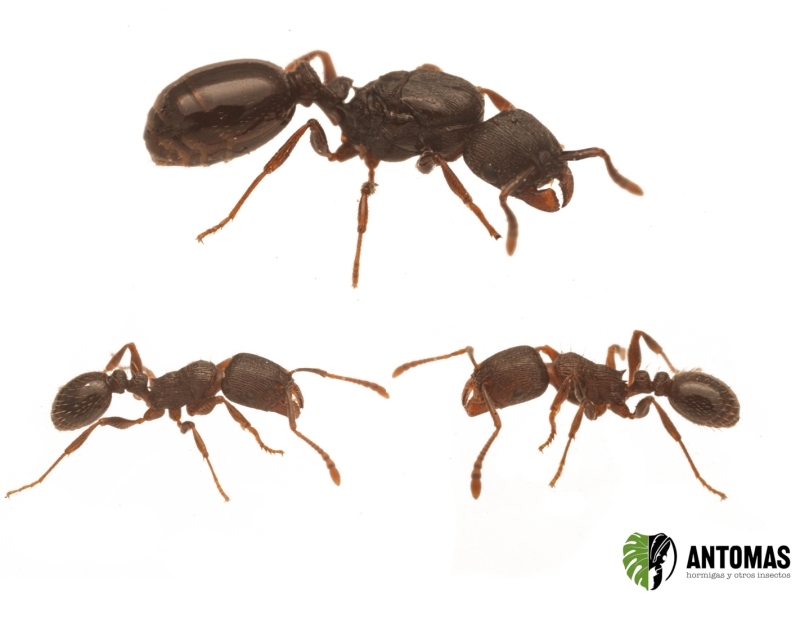
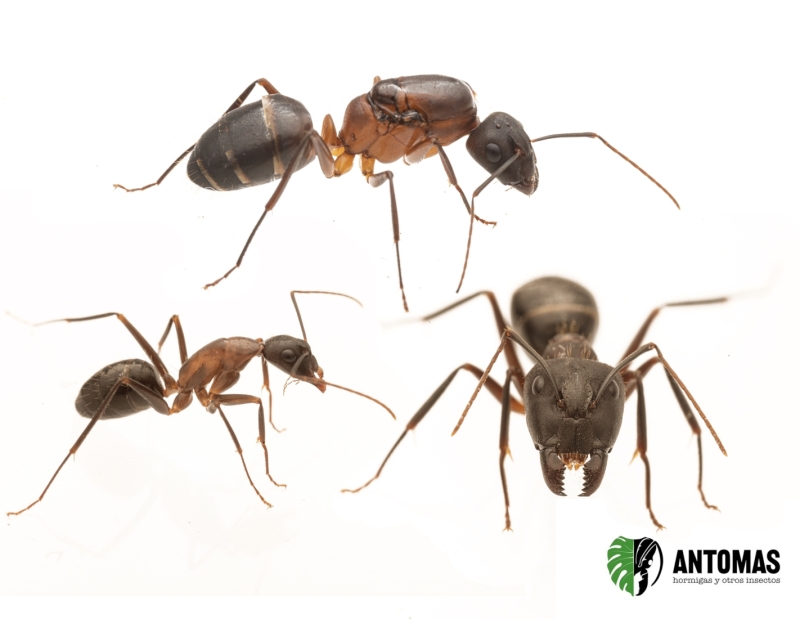
Difficulty: 2/5 – Beginner
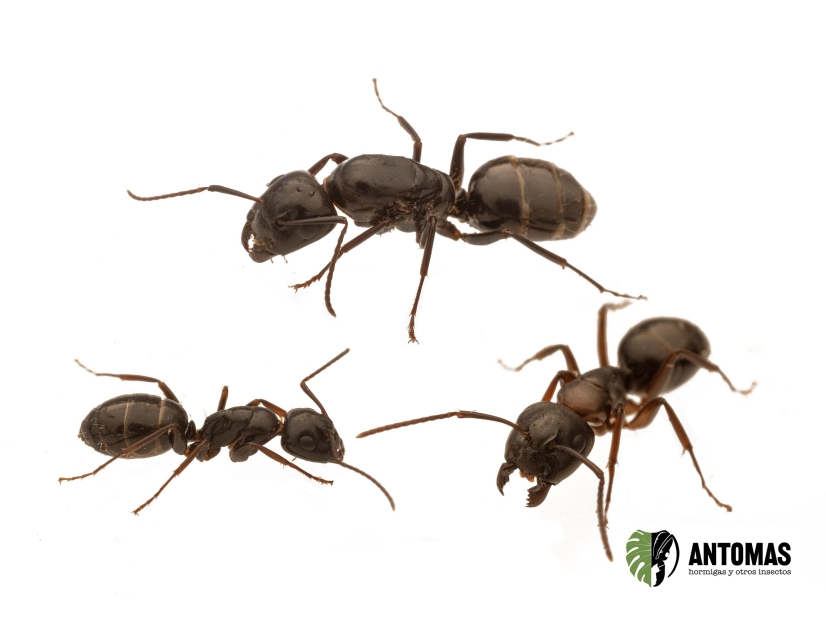
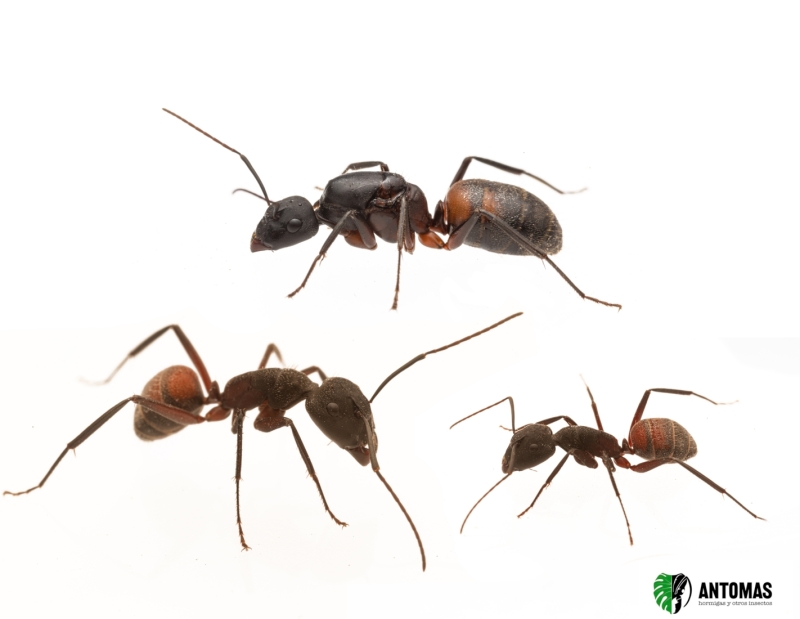
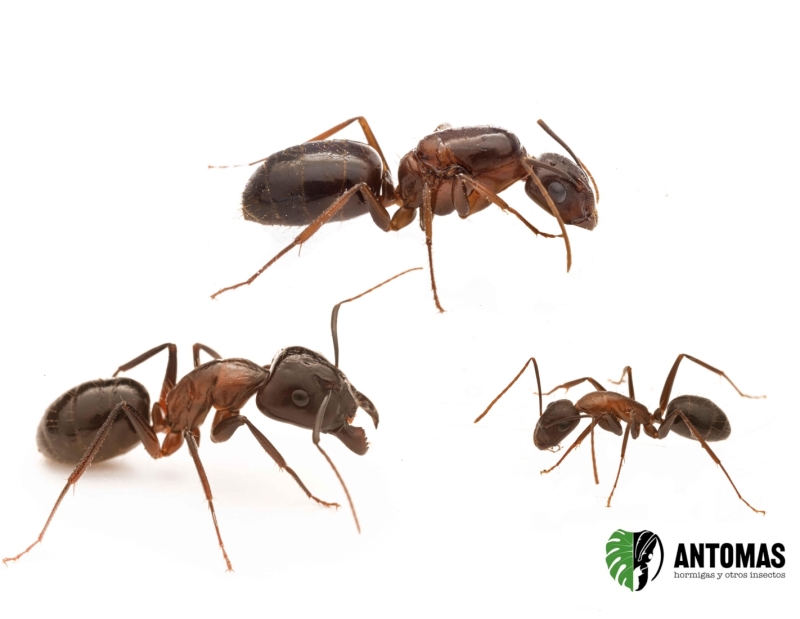
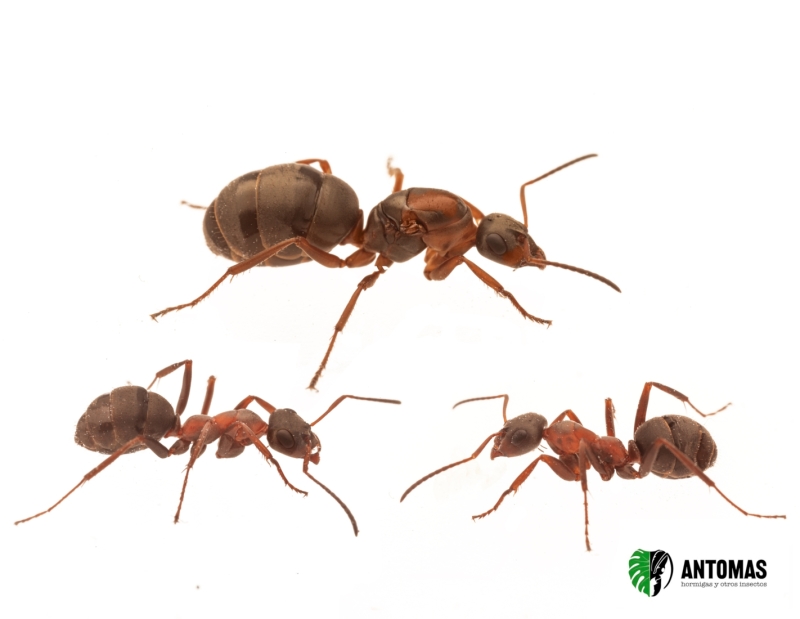
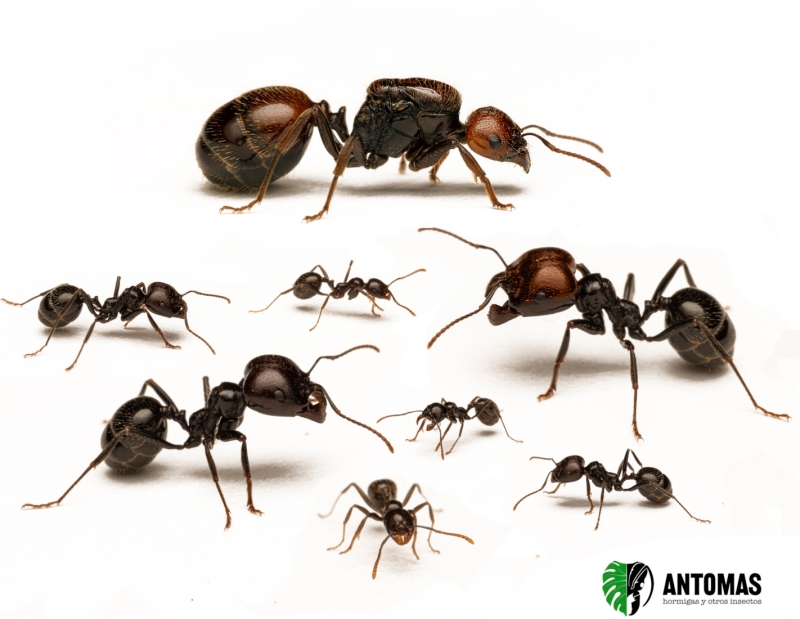
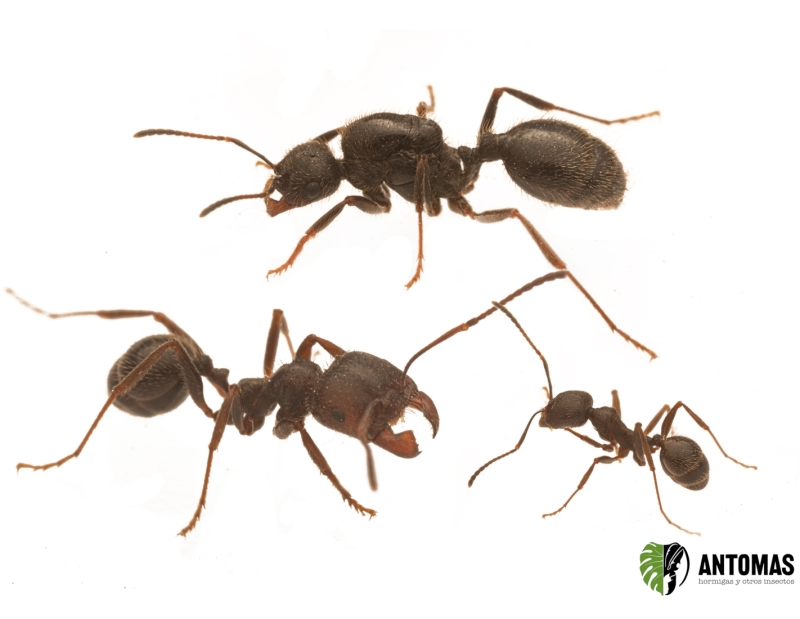
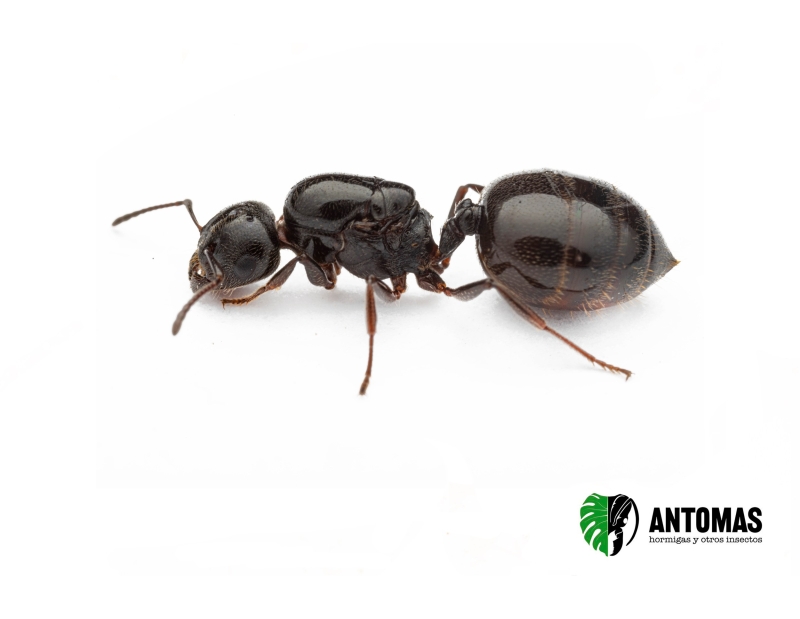
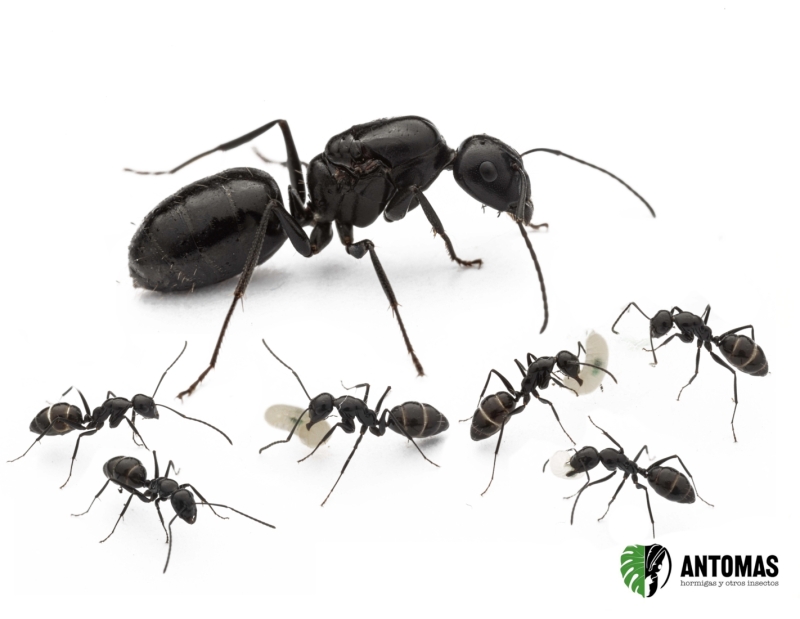
A medium-sized, tree-dwelling carpenter ant, black with a glossy gaster, which in the wild lives in the wood of old trees, often several metres above the ground. One queen per colony. It is sold as a 2026 queen on her own, who founds unaided, or as a queen with 20/40 workers and brood. Start it in a Qbik Wild One P 1C and later move it to the Alpha range, with medium galleries. It likes 23–27 °C with a warmer corner, a rather dry nest, nectar in a feeder and a variety of insects. It is shy and comes out mainly at dusk. Diapause: about 4 months, from mid-November to mid-March, at 6–10 °C. It climbs like few others: stop it with mineral oil or talc and a lid that closes properly.
Camponotus fallax (Nylander, 1856) is one of the most inconspicuous carpenter ants in Europe. It does not march in long columns across the ground or build mounds: it lives up high, under the bark and inside the dead wood of oaks, fruit trees and other old trees, and its workers go out to find food alone, nearly always as evening falls. That is why many naturalists spend years without seeing it, even with a nest right above their heads.
At home it is a rewarding species: calm, not at all fussy about food, with workers of several sizes and a queen that can live for many years. It asks for a little patience at the start, a good barrier and a proper winter. Because its biology has been little studied, in each section we state whether a fact comes from the scientific literature, from the experience of other keepers or from what we do at Antomas.
Biology
“The deceptive one”: a name never explained
It was described in 1856 by the Finnish naturalist William Nylander, as Formica fallax, in his synopsis of the ants of France and Algeria; that same year he also described C. micans. In Latin, fallax means “deceptive” or “misleading”. We have not found any text in which Nylander explains his choice; perhaps he was alluding to its resemblance to other black ants, but that is only a guess and should be taken as such.
Today its full name is Camponotus (Myrmentoma) fallax. The subgenus Myrmentoma, created by Auguste Forel in 1912, brings together small and medium-sized Palaearctic carpenter ants, such as C. lateralis or C. piceus; within it, C. fallax heads its own species group. The arrangement of Camponotus, a genus of more than a thousand species, into subgenera is still under revision: Ward and Boudinot (2021) point out that many resemblances between species are the result of convergence, not kinship.
In the German literature it is called Kerblippige Rossameise, roughly “notch-lipped carpenter ant”. The “lip” is the clypeus, the plate above the mandibles, and the notch in its edge is precisely the feature that gives it away best (see “How to recognise it”).
From Portugal to Ukraine, from Morocco to Sweden
It occupies central and southern Europe: according to Collingwood’s Scandinavian fauna (1979), from Portugal to Ukraine and from Morocco to Poland, and it reaches eastwards into western Asia, with records from Turkey and Iran; the world map antmaps.org gathers its records. At the far north it is a rarity: in Sweden it has only been found locally on old oaks in the province of Västmanland. In the Iberian Peninsula it is present across much of the territory, and there are published records from the centre, such as those from Soto del Real, in the mountains north of Madrid.
Its climate. It is an ant of temperate to Mediterranean climates, with warm summers and winters that, depending on the area, range from mild to genuinely cold: in the north of its range, December to February averages hover around 0–5 °C, and in inland Iberia they stay at about 5–7 °C. There is one important detail: its nest is not underground but in branches and trunks, exposed to the air, so the colony spends the winter at almost the ambient temperature. That is why its winter rest is colder and longer than that of C. micans, which shelters under stones in the south (see “Diapause: a tree-dweller’s winter”).
A life high up in the tree
Collingwood describes it in small colonies under bark or in the dead wood of old trees, two metres or more above the ground, in open deciduous woodland and parks. German keepers add tree-lined avenues, orchards and meadow orchards, with a preference for broadleaved trees and, above all, oaks, and sometimes they find it very high up. It uses both the dead wood of living trees, such as dry branches or rotten parts of the trunk, and that of trees already dead, and occasionally construction timber.
Unlike the large carpenter ants, it does not need to excavate sound wood: as the review by King and colleagues (2018) on ants in dead wood explains, Camponotus are among the few ants able to bore into it, but many make use of beetle galleries, cracks and ready-made cavities. A Polish keeper who has kept it since 2019 reports that, in the wild, it settles mainly under bark, unless the wood is already very rotten.
Neighbour to hornets in nest boxes
Its taste for tree hollows takes it to unexpected places. In 2019, Mora-Rubio, Pérez-Bote and Muriel published in Sociobiology the first documented association in Europe between C. fallax and the European hornet, Vespa crabro. It happened in Soto del Real (Madrid), in bird nest boxes: once the spotless starlings had finished breeding, hornets took over several of them, and in 2 of the 17 boxes with a hornet nest that year there were large numbers of C. fallax settled in the upper part.
It was not the first time it had been seen in nest boxes: the authors themselves mention a study in southern France in which this ant occupied some of the nest boxes put up for tits, especially in an urban plot. For an ant that lives in hollows in wood, a wooden box hanging from a tree is, quite simply, one more hollow.
An ant of the twilight
Its workers forage alone and are elusive, according to Collingwood: they do not form conspicuous trails or attack in groups. The German care sheet on ameisenhaltung.de describes it as active mainly at dusk and in the first half of the night, and keepers agree that it is shy and peaceful, that it rarely confronts other species and that it hides its brood in the most sheltered chambers. You will notice it in the formicarium: by day you will see few workers outside; as the light fades, foraging picks up.
Honeydew, small prey and a trusted bacterium
There are no studies of its diet in the wild beyond the general picture: honeydew and insects. Honeydew is the sugary liquid excreted by aphids, scale insects and other sap-sucking insects, and ants obtain it in exchange for protecting them, a deal known as trophobiosis. A classic review by Stadler and Dixon (2005) points out that this deal is not fixed: it depends on how much honeydew there is and what other food the ants can find. Italian keepers add small insects and arachnids from the wood itself.
Like all Camponotus, it houses a bacterium in its gut, Blochmannia, which the queen hands down to her offspring through the egg. In 2007 it was shown in C. floridanus that it makes essential amino acids and recycles nitrogen, which helps the ants live on a very sugary diet. That does not change the fact that the larvae need insects to grow (see “Feeding”).
Acid instead of a sting
It is a formicine, a subfamily without a sting. Its defence is formic acid, released through the acidopore, a small nozzle at the tip of the gaster. In 2020 a study in eLife reported that these ants swallow some of their own acid while grooming to keep the crop, the reservoir where they store the food they share, highly acidic, and in this way keep microbes in check. The tests were run on C. floridanus and other formicines. If you see a worker hunched over, licking the tip of its abdomen, it is disinfecting itself.
One queen, one colony, and bigger than it looks
Keeping sources agree that it is monogynous: one queen per colony. That is the norm in the region: Boulay and colleagues (2014) reviewed almost 150 Palaearctic species and found that monogyny is the original condition, and that several queens per nest tend to go hand in hand with huge societies. Founding is claustral: after the flight, the queen sheds her wings, shuts herself into a crack or a hollow in the wood and raises her first daughters on her fat reserves and her now useless flight muscles. Keller and Passera (1989) found that claustral founding queens weigh more and store more lipids than those that depend on workers.
How many workers? Here the figures vary widely. Collingwood speaks of colonies of 30–50 individuals, and the German care sheet of about 200. But a Polish keeper who documented his colony on a forum from 2019 counted 11 workers at the end of the first season, about 400 workers, 40 alates and 850 larvae at the end of the fourth, and later estimated around 2,000. It is a single case, but it suggests that in the wild we see colonies limited by the size of the tree hollow, and that in captivity, with space and plenty of food, they can grow considerably larger.
Spring nuptial flights
Collingwood recorded the alates in early summer, in May and June, and the German care sheet places the flights from early May to mid-June; in Italy keepers bring them forward to April. The Polish keeper found his queen, already wingless, climbing a tree in mid-morning on 27 April. He also warns of something useful: dehydrated queens, or those found next to a colony’s trails, may shed their wings without having been mated, so a wingless queen is not always a founding queen.
Rare in the north, protected in Germany
It is a species of old trees and dead wood, two things that are scarce in managed forests and in overly “tidy” parks. In the Red List of the ants of Germany, Seifert (2011) includes it in the warning list, the category for near-threatened species, and in Sweden it is known only from a few centuries-old oaks. Keeping old trees, dead branches and hollows in woodland benefits this ant and everything that lives alongside it.
A queen for many years
Nobody has measured how long a queen of C. fallax lives, but ant queens are among the longest-lived insects: Keller and Genoud (1997) showed that they live far longer than their workers, and in the genus Camponotus a queen was documented that lived 23.2 years in captivity (Haskins and Haskins, 1992). A well-kept queen is a companion for many winters.
Size and morphology
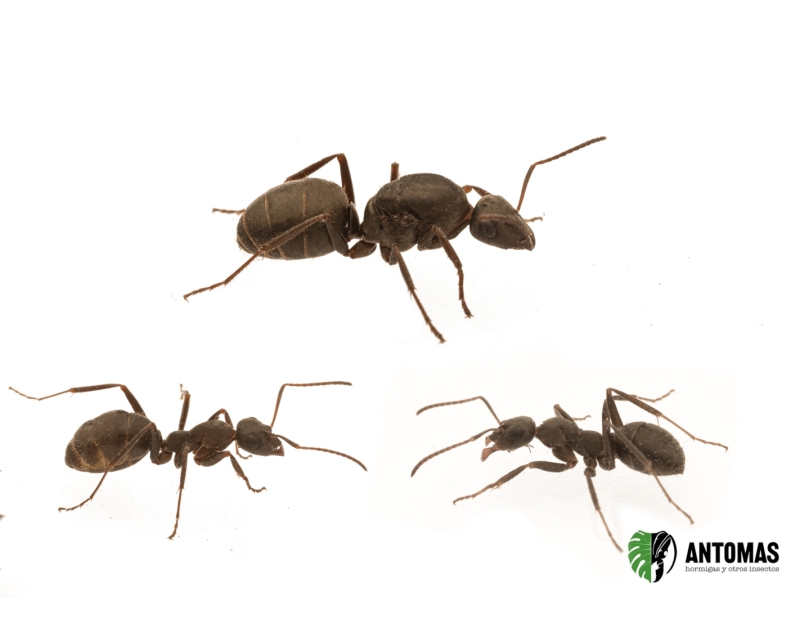
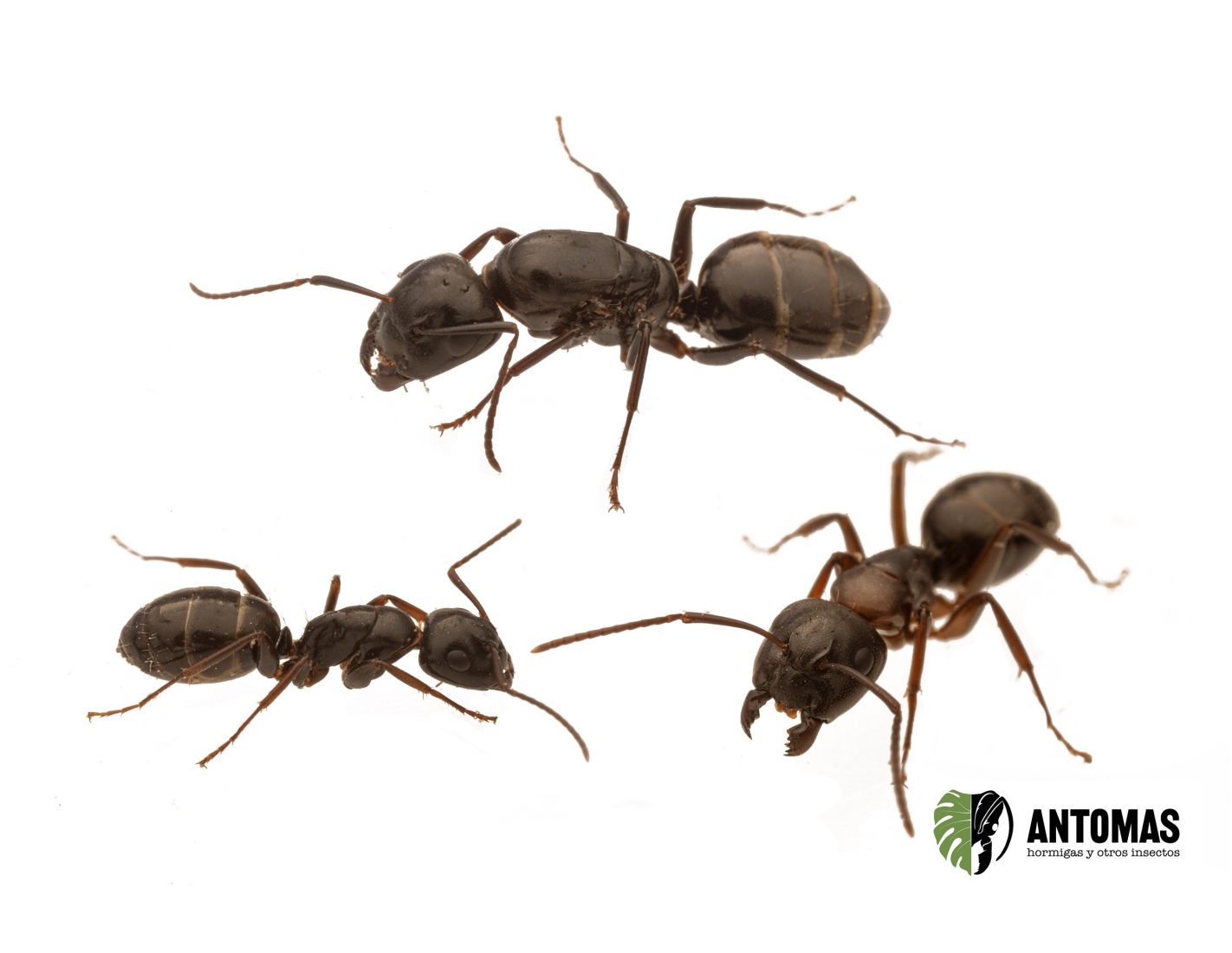
A medium-sized, polymorphic carpenter ant with no sting. Here we summarise Collingwood’s description (1979), which is still the most detailed we have had access to, together with what keepers add.
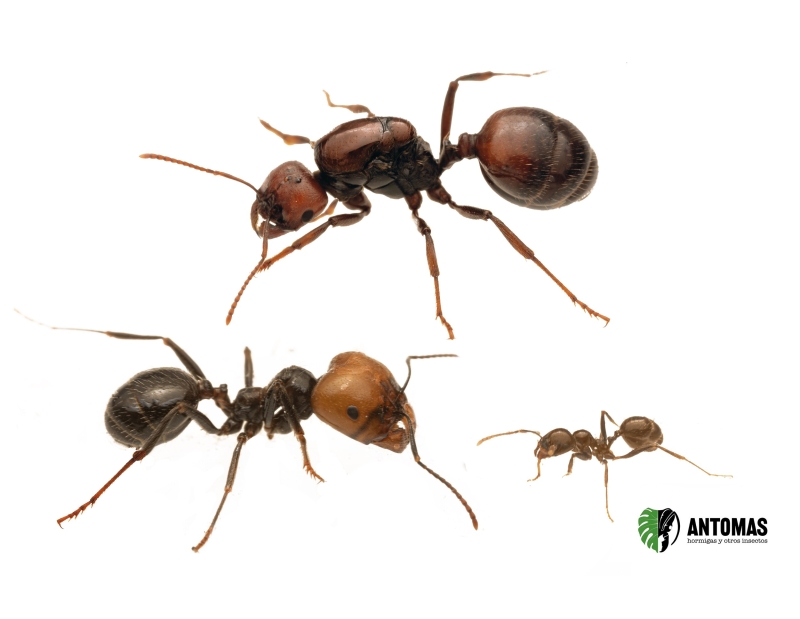
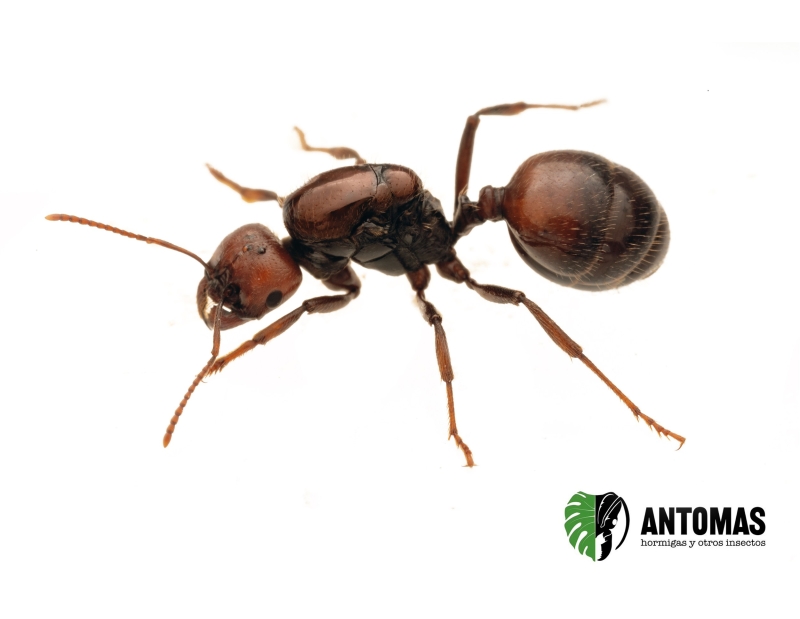
- Colour. From very dark red to black, with paler, brown legs and antennae. According to the German care sheet, the segments of the gaster have pale yellow edges.
- Surface. Head and thorax with a dense microsculpture that makes them look somewhat dull; the gaster is glossy. Few hairs on the whole body.
- Clypeus. It does not project beyond the insertion of the mandibles, and its front edge has a central notch which in large workers is so deep that it seems to have two teeth.
- Mandibles. Broad, with five well-marked teeth.
- Thorax. In profile, the back is fairly flat and the propodeum, the rear part, drops away in a steep slope.
- Castes. Workers of very variable sizes, from minors to majors with an almost square, broader head.
- Queen. Similar to a large worker, with a very broad head and a long, sloping upper surface to the propodeum.
- Male. Brownish black, with a slight notch in the clypeus, a single tooth on each mandible and pale wings with the front edge and the wing spot, the stigma, yellowish.
How to recognise it
- Compared with C. piceus and the C. lateralis group: these are its cousins in the same subgenus, also small or medium-sized, but without such a marked notch in the clypeus, and they nest mainly in the ground, under stones or in crevices. C. lateralis also usually has a reddish thorax. Seifert (2019) revised this group using measurements and separated several very similar species, something worth bearing in mind before identifying from photos.
- Compared with Colobopsis truncata (formerly C. truncatus): it also lives in branches, but it is smaller and its soldiers have a truncated head to plug the nest entrance. What is more, it is no longer a Camponotus: Ward, Blaimer and Fisher (2016) restored Colobopsis to the rank of genus.
- Compared with C. vagus: the other black wood-dwelling carpenter ant is much larger, with a matt body covered in long, erect hairs.
- Compared with C. ligniperda and C. herculeanus: much bigger, two-toned carpenter ants, with red on the thorax.
- Compared with the ground-dwelling Camponotus of the Iberian Peninsula, such as C. micans, C. cruentatus or C. barbaricus: all are larger and live in the ground, not in trees.
Measurements
According to Collingwood (1979): workers 4 to 9 mm, highly variable; queens 8 to 10 mm; males 7 to 8 mm. We have not been able to consult Seifert’s morphometric measurements (2018), so we give no further figures. What you will see at home: the first daughters of a founding queen emerge small, and each batch is a little bigger than the one before.
Care in captivity
Difficulty: 2/5 – Beginner
It is a good carpenter ant to start with, with a couple of nuances that set it apart from the easiest ones:
- The easy part: it is tough, eats nectar and almost any insect of a suitable size, has a single queen and poses no danger at all to people.
- What needs attention: it starts slowly and is shy and crepuscular, so by day it seems to be “doing nothing”; it needs a cold, long diapause, more so than southern Camponotus; and, as befits a tree ant, it climbs any surface.
If you get those three things right, warmth in the active season, a proper winter and a good barrier, it is a rewarding colony and a lovely one to watch at dusk.
Temperature, humidity and light
- Nest: from spring to autumn, 23–27 °C, with a warmer end of 28–30 °C. Care sheets suggest between 20 and 27 °C, and a Polish keeper raised his first seasons at 27–30 °C with good results. What matters, he insists, is to heat only one part of the nest, so that the colony can move away if it gets too warm.
- Foraging area: at room temperature, between about 18 and 28 °C.
- Humidity: moderate, around 50–60% in the nest, with one slightly moister corner and the rest dry. Keepers agree that it copes well with either a dry nest or a slightly moist one, as long as it has water.
- Water: a full test tube, plugged with cotton wool, always in the hunting area.
- Light: darkness in the chambers, brightness in the foraging area and the natural rhythm of days and nights, which in this species strongly shapes its activity.
- Diapause: about 4 months at 6–10 °C, from mid-November to mid-March.
For heat, fit a thermostat-controlled heating mat or cable along one flank of the nest. Avoid direct sunlight and radiators. If you see condensation or mould, there is too much humidity; if the brood crowds into the moist area, there is too little.
Recommended formicaria
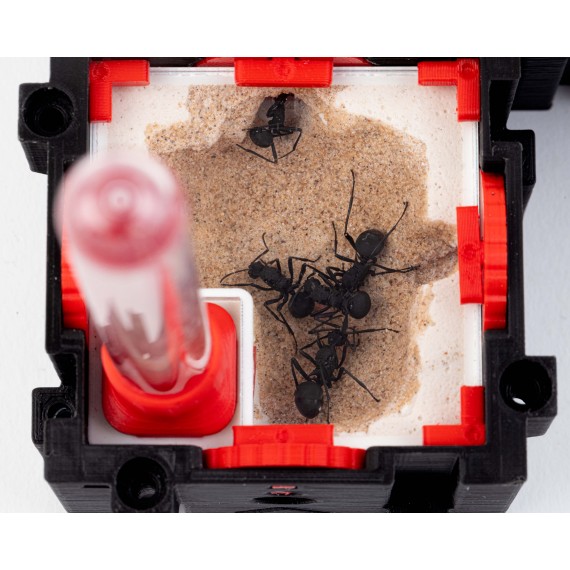
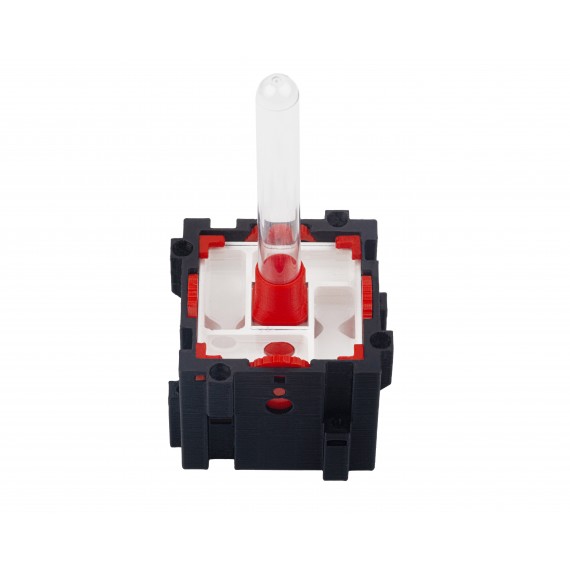
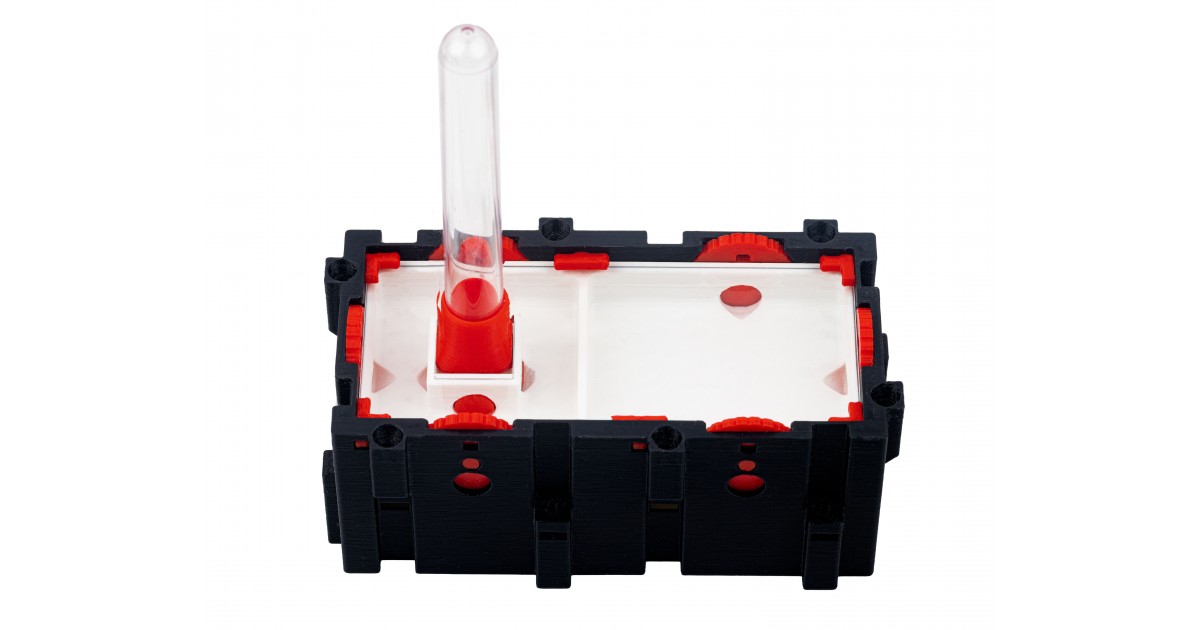
In the wild it lives in wood, but at home it does not need a wooden nest: what it is looking for is a dark, narrow, dry cavity, and a good formicarium provides exactly that. At Antomas we recommend founding in a Qbik Wild from Anthouse, made of plaster, which holds moisture, and ideally sized for a queen with her first workers. To begin with, the Qbik Wild One P 1C, with medium-sized galleries, suited to its 4 to 9 mm workers:
Once the colony is settled and starts running out of room, transfer it to the Alpha range: the QBIK ONE and, later on, the QBIK DUO, also with medium galleries. They are modular; moisture comes in through the tubes and the chambers stay dry, like the inside of a branch. They also cost less and are lighter, a real advantage if the colony grows as large as it can in captivity:
Expand as the colony asks for it, never in advance: the empty chambers of an oversized nest end up full of waste. The rest of the set-up:
- An anti-escape band at the top of the foraging area, made of mineral oil or talc, and a lid that closes properly.
- A dry foraging floor, with a little sand and a piece of bark or a dry twig, away from the barrier: they love exploring them, and they recall their habitat.
- Water in a tube, with its cotton wool plug, and a separate feeder for the nectar.
- Heat along one flank of the nest, with a thermostat and away from the feeder.
If you have a 2026 queen on her own: founding step by step
We send you a mated queen from the 2026 flight inside a tube, with her water reserve behind the cotton wool. Because she founds claustrally, she does not need to go out hunting: she will raise her first daughters on her own reserves. Your role is simple:
- If she arrives in autumn or winter, the natural thing is for her to go straight into her first diapause: leave the tube, just as it arrives, in a dark place at 6–10 °C until mid-March (see “Diapause”). Do not warm her up to “get ahead”: in the wild, spring queens spend their first winter shut away in the wood.
- In spring, or if she arrives during the active season, place her somewhere quiet and dark at 24–28 °C, with one end of the tube near the heat source and never above 30 °C.
- Handle her little, look at her as much as you like. This is the only stage when it is best to handle her little: a jostled queen may eat her eggs. Taking a look with a soft light does her no harm.
- A sweet droplet, optional. She does not need it, but Italian keepers say that feeding her helps. Now and then you can offer her a micro-drop of nectar on a small piece of foil, never on the cotton wool, and a tiny piece of firebrat once there are larvae. Whatever she does not eat comes out the next day.
- Water reserve. If it runs out or the tube gets very dirty, tip the queen and her brood into a clean tube.
How long until the first worker? It depends on the warmth: in European Camponotus, egg to worker usually takes between 6 and 12 weeks. The first daughters are small, shy and fragile. When they emerge, put nectar in a tiny feeder and small prey twice a week.
If you have a colony with 20/40 workers: straight into the nest
A colony with a queen, workers and brood can go straight into the Qbik Wild One P 1C. Get the formicarium ready before opening the tube, move them by tipping out the same day or the next, and start giving them nectar and insects from the very first moment. If it arrives in autumn, set it up just the same and, once it has settled in, start its diapause with the gradual drop in temperature we explain below.
Moving house by tipping out
With a queen on her own, at Antomas we move the colony into the formicarium when it has at least 5 workers, ideally 5–10. With the 20/40-worker colony, right from the start. Always by tipping them out: we do not wait for them to decide to leave.
- Have the formicarium ready: barrier applied, water connected and chambers in half-light.
- Do it over a tray: if a worker escapes up the tube or the tools, it will not get far.
- Unplug the tube inside the foraging area, next to the nest entrance, and carefully let its whole contents drop out: queen, workers and brood.
- Any that stay inside, nudge them out with a brush.
- Close the lid: within a short while all the brood will be inside the nest.
The later jump to the Alpha range is done the same way.
Feeding
Nectar always available. An ant that in the wild lives largely on honeydew must never be left without sugar. Serve it in a feeder, never on cotton wool: cotton wool soaked in nectar ferments and grows mould within days. Alternate flavours: Blue Sugar, Anthouse’s nectar, on most days (4–5 a week), and another nectar or sugar water on the remaining 1–2. A little protein can be added to the nectar.
Insects, without fear. Larvae grow on protein, and our rule is a generous one: if you clean up the leftovers every day, you can, and should, give more than they need, because a colony that senses plenty lays more eggs and grows sooner. If you cannot check the foraging area often, scale back the portions, because rotting leftovers attract mites and fungi. As it comes out mainly at dusk, offering prey late in the afternoon will let you watch them discover it. Some ideas:
With few workers, protein two or three times a week is enough; with many, daily or every other day. Buy insects from a trusted supplier, because any that have touched insecticides can wipe out the colony. And keep the water tube in the foraging area topped up.
Growth: patience in the first year
Like almost all Camponotus, it starts slowly. The first year is the year of patience: the Polish keeper we mentioned ended his first season with 11 workers. From the second year on, with warmth, a good diapause and plenty of protein, growth speeds up; in his colony, the first large worker appeared at the start of the second season. Expand when you see many ants standing idle in the foraging area because there is no room left inside. And expect that, in mature colonies, a good batch of winged queens and males may appear every spring.
Diapause: a tree-dweller’s winter
C. fallax needs a winter rest, the diapause, and all keeping sources consider it essential. Its nest, in a branch or a trunk, spends the winter at almost the air temperature, and its range reaches Poland and Sweden. The German care sheet places it from November to March; one shop suggests about 10 °C, and the Polish keeper ran it at 0–5 °C on a balcony and later in the fridge, recommending at least 2 months and, better still, 3 or more.
At Antomas we propose a safe middle ground: about 4 months at 6–10 °C, from mid-November to mid-March. It is colder and longer than that of C. micans, which comes from mild winters under stones in the south.
- A gentle way in. In November, switch off the nest heating and let the temperature drop little by little over 2–3 weeks.
- Four cool months, between 6 and 10 °C: a wine cooler, a garage or a storeroom that does not freeze. Do not let it drop below zero.
- The water tube stays in place all winter: cold air dries things out too.
- Minimal food: a little nectar in the feeder in case a worker wants it, and no insects. It is to be expected that the brood stops developing.
- An equally gentle way out. From mid-March, raise the temperature over 2–3 weeks and, when activity and eggs reappear, go back to offering insects.
It is normal for some workers to die over the winter, especially the oldest; the Polish keeper lost between one in ten and one in eight. Do not bring the warmth forward in the middle of January: it gains no time and may take its toll on the queen.
Behaviour and observation
Shy by day, active at dusk. If at midday you see the foraging area empty, there is nothing wrong: that is its rhythm. As evening falls, the workers come out to explore, each on its own, and it is the best moment to watch them hunt.
Things worth watching. The brood travels around the nest according to the temperature, in search of the ideal corner. Look out for trophallaxis, when two workers pass food mouth to mouth, for the grooming of the acidopore and for the difference in size between minors and majors, with those broad, square heads.
Watch as much as you want. An ant colony is for enjoying and learning from, not for hiding in a cupboard: that is how we see it at Antomas. Check the queen, the brood and the food often. With the chambers dark and the hunting area lit, you can watch it every day; just try not to shake the nest.
Warning signs:
- The brood does not progress in the middle of the active season: almost always a lack of warmth or protein.
- Droplets on the walls, mould or mites: too much water or forgotten food.
- Larvae and pupae piled up by the moist corner: the nest is too dry.
Keeping them in
It is a tree ant: it climbs with no trouble on plastic, glass and any rough surface. Well protected, it does not get out:
- Mineral oil or talc along the top edge of the foraging area, with no gaps. Replace the oil when it picks up dust and the talc when it cakes; a worn barrier is the most common cause of escapes, according to keepers of this species too.
- A lid that closes properly, in case one gets past the barrier.
- Check connections and stoppers, especially when moving to the Alpha range and adding modules.
- Nothing that could serve as a bridge near the barrier: keep the twig or bark in the middle of the foraging area.
Does it bite? Safety and handling
No risk whatsoever. It has no sting. A worker that feels attacked may bite, but the bite of an ant this size is weak and amounts to no more than a pinch. It can also release a little formic acid, which at most smells slightly or stings mildly on sensitive skin.
For their sake, move them with a brush or soft-tipped forceps, not by hand. Do not mix colonies or put new queens into a colony. And although it is native to much of Europe, a colony raised at home must never be set free in the wild.
What not to do
- Put two queens together or add a queen to a colony that is already working.
- Serve the nectar on cotton wool or let the feeder run dry.
- Always give the same prey or let leftovers pile up.
- Skip the diapause, let the nest freeze or wake the colony in the middle of winter.
- Go suddenly from warm to cold, or from cold to warm.
- Heat the whole nest evenly, with no cooler corner.
- Put a small colony into a huge formicarium.
- Forget to renew the oil or talc, or leave loose connections.
- Release the colony into the wild.
Scientific sources
For this care sheet we started from the scientific literature on Camponotus fallax, its subgenus and its genus, from distribution records and the climate of its range, and from what we have learnt at Antomas and other keepers have reported. We have also relied on works without a DOI: Nylander, W. (1856), “Synopsis des Formicides de France et d’Algérie”, Annales des Sciences Naturelles, Zoologie (4) 5; Collingwood, C. A. (1979), The Formicidae (Hymenoptera) of Fennoscandia and Denmark, Fauna Entomologica Scandinavica 8; Seifert, B. (2011), Red List of the ants of Germany, Naturschutz und Biologische Vielfalt 70(3): 469–487; Seifert, B. (2018), The Ants of Central and North Europe; and Seifert, B. (2019), revision of the Camponotus lateralis group, Soil Organisms 91: 7–32. Main references:
- Mora-Rubio, C., Pérez-Bote, J. L. & Muriel, J. (2019). Nest association between Camponotus fallax (Hymenoptera: Formicidae) and Vespa crabro (Hymenoptera: Vespidae) in Central Iberian Peninsula. Sociobiology 66: 523–526. doi:10.13102/sociobiology.v66i3.4437
- King, J. R., Warren, R. J., Maynard, D. S. & Bradford, M. A. (2018). Ants: ecology and impacts in dead wood. In: Saproxylic Insects, Zoological Monographs. Springer, Cham, pp. 237–262. doi:10.1007/978-3-319-75937-1_8
- Ward, P. S. & Boudinot, B. E. (2021). Grappling with homoplasy: taxonomic refinements and reassignments in the ant genera Camponotus and Colobopsis (Hymenoptera: Formicidae). Arthropod Systematics & Phylogeny 79: 37–56. doi:10.3897/asp.79.e66978
- Ward, P. S., Blaimer, B. B. & Fisher, B. L. (2016). A revised phylogenetic classification of the ant subfamily Formicinae (Hymenoptera: Formicidae), with resurrection of the genera Colobopsis and Dinomyrmex. Zootaxa 4072: 343–357. doi:10.11646/zootaxa.4072.3.4
- Janicki, J., Narula, N., Ziegler, M., Guénard, B. & Economo, E. P. (2016). Visualizing and interacting with large-volume biodiversity data using client–server web-mapping applications: the design and implementation of antmaps.org. Ecological Informatics 32: 185–193. doi:10.1016/j.ecoinf.2016.02.006
- Stadler, B. & Dixon, A. F. G. (2005). Ecology and evolution of aphid-ant interactions. Annual Review of Ecology, Evolution, and Systematics 36: 345–372. doi:10.1146/annurev.ecolsys.36.091704.175531
- Feldhaar, H., Straka, J., Krischke, M., Berthold, K., Stoll, S., Mueller, M. J. & Gross, R. (2007). Nutritional upgrading for omnivorous carpenter ants by the endosymbiont Blochmannia. BMC Biology 5: 48. doi:10.1186/1741-7007-5-48
- Tragust, S. et al. (2020). Formicine ants swallow their highly acidic poison for gut microbial selection and control. eLife 9: e60287. doi:10.7554/eLife.60287
- Boulay, R., Arnan, X., Cerdá, X. & Retana, J. (2014). The ecological benefits of larger colony size may promote polygyny in ants. Journal of Evolutionary Biology 27: 2856–2863. doi:10.1111/jeb.12515
- Keller, L. & Passera, L. (1989). Size and fat content of gynes in relation to the mode of colony founding in ants (Hymenoptera; Formicidae). Oecologia 80: 236–240. doi:10.1007/BF00380157
- Haskins, C. P. & Haskins, E. F. (1992). Note on extraordinary longevity in a queen of the formicine ant genus Camponotus. Psyche 99: 31–33. doi:10.1155/1992/53614
- Keller, L. & Genoud, M. (1997). Extraordinary lifespans in ants: a test of evolutionary theories of ageing. Nature 389: 958–960. doi:10.1038/40130