
Shopping Cart
At Antomas we have been breeding and selling ants since 2012. If you want to buy ants online and get it right first time, this guide helps you choose the species that suits you, get everything ready and know how your ants will reach your home. We have more than 100 species from all five continents, sold as colonies and queens, and every species has its own care sheet with step-by-step instructions.
The guide in 30 seconds
- Is this your first colony? Start with a Beginner-level species (1–2 out of 5), such as Messor barbarus or Camponotus nicobarensis.
- Already experienced? Advanced-level species (3–4) need closer control of temperature and humidity; Expert-level species (5) need a lot of patience.
- Shipping from Monday to Wednesday: around 24 hours within mainland Spain and 1 to 3 working days within the European Union, with a live arrival guarantee.
Why buy your ants from Antomas
- Breeders, not resellers. We have worked with ants for more than ten years and we are a registered animal facility (REGA ES460050000026). Read our story in About us.
- Every colony is checked before it ships. If something is not right, it does not leave.
- A care sheet for every species: temperature, humidity, feeding, recommended formicarium and whether it needs diapause.
- Legal species only. We do not sell any species on the European Union list of invasive alien species or in the Spanish catalogue.
- Live arrival guarantee and fast shipping to Spain and across Europe (see below for how it works).
How to choose your first ant colony
Each species has a difficulty score from 1 to 5, shown on its care sheet and by the coloured circles in the shop. Scores of 1–2 are Beginner level, 3–4 Advanced and 5 Expert. Before you look at the photo, ask yourself three questions:
- What temperature can I give it? European species do well at normal room temperature in spring and summer. Many tropical species need 24–28 °C all year round, with gentle heating and a thermostat.
- Do I have a cool spot for the winter? Species from temperate climates need diapause, a winter rest lasting several months. Tropical species do not.
- What do I want to watch? Messor store seeds in their granaries; Camponotus are large and eye-catching; hunters such as Harpegnathos or Myrmecia are a real spectacle, but they need more experience.
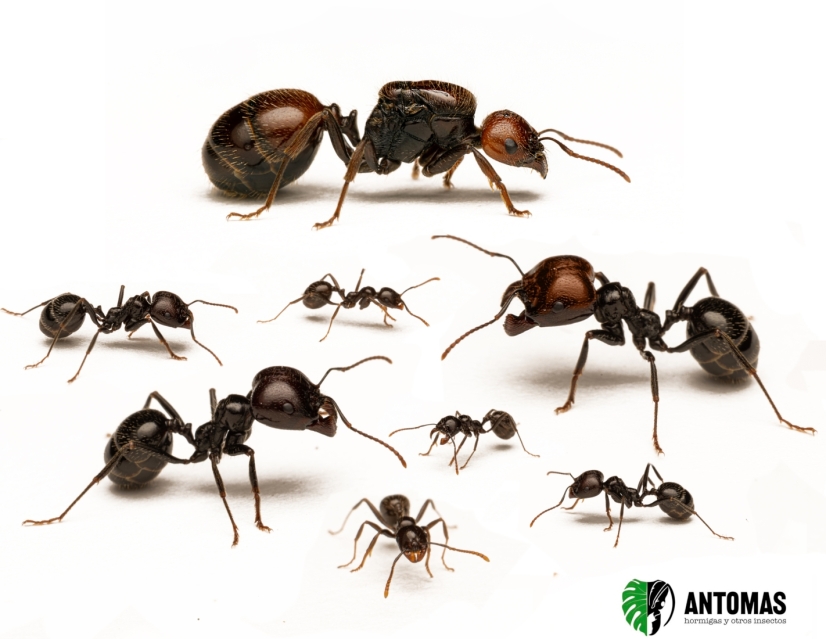

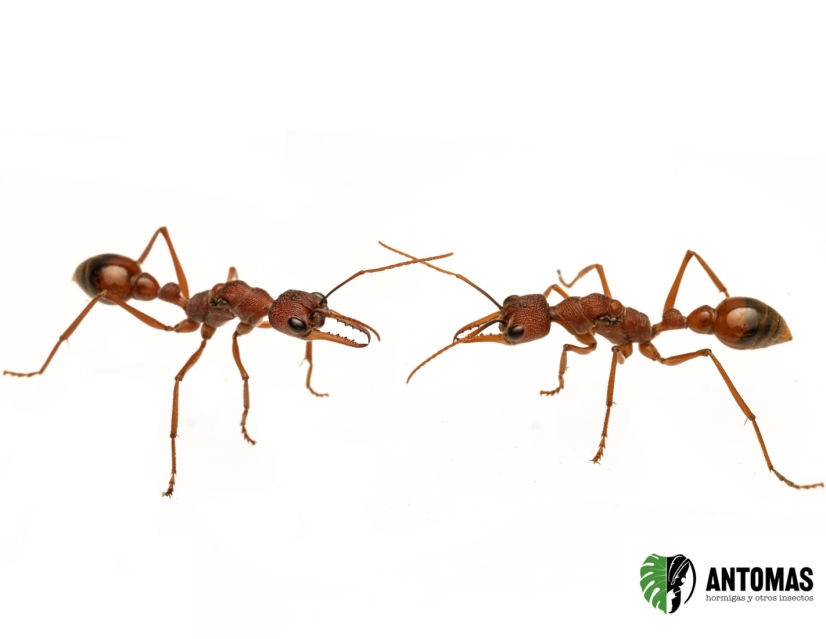
Comparison table: recommended species by level
We have chosen species that are in stock, bred and checked by us. The data come from each species' care sheet: size is the length of the workers and the queen, temperature is the nest temperature during the active season, and diapause is the winter rest. The ‘from’ price is the cheapest format available on 13/11/2026; it may change with stock, so please confirm it on the product page.
Beginner level (1–2 out of 5)
| Species | Level | Size | Temperature | Diapause | From |
|---|---|---|---|---|---|
| Messor barbarus | 1/5 | workers 3–13 mm; queen 13–15 mm | 22–28 °C | Yes: November to March, below 20 °C | €1.00 |
| Messor capitatus | 1/5 | workers from 5 to over 12 mm | 22–28 °C | Yes: November to March, below 20 °C | €3.99 |
| Crematogaster scutellaris | 1/5 | workers 3.5–5 mm; queen 8–9.5 mm | 22–26 °C | Yes: 4–5 months at 5–10 °C | €5.99 |
| Camponotus fedtschenkoi | 1/5 | workers 5.8–10 mm; queen 12–13 mm | 24–28 °C | Recommended: about 3 months at 10–15 °C | €15.99 |
| Camponotus nicobarensis | 1/5 | workers 3–10 mm; queen about 10 mm | 24–28 °C | No (optional mild rest) | €14.99 |
| Camponotus maculatus | 1/5 | workers 8–14 mm; queen 14–16 mm | 24–28 °C | No (optional mild rest) | €69.99 |
| Camponotus pseudoirritans | 2/5 | workers 5–14 mm; queen 14–16 mm | 24–28 °C | No (optional mild rest) | €19.99 |
| Camponotus vestitus | 2/5 | workers 4–10 mm; queen 11–12 mm | 24–28 °C | No | €64.99 |
| Rhytidoponera metallica | 2/5 | workers 5–7 mm | 23–27 °C | Yes, mild: 3–4 months at 15–18 °C | €99.99 |
Advanced level (3–4 out of 5)
| Species | Level | Size | Temperature | Diapause | From |
|---|---|---|---|---|---|
| Harpegnathos venator | 3/5 | workers 15–18 mm; queen 18–20 mm | 24–26 °C | No | €59.99 |
| Camponotus castaneus | 3/5 | workers 7–16 mm; queen 15.6–17.2 mm | 23–27 °C | Yes: 10–12 weeks at 8–14 °C | €79.99 |
| Camponotus ocreatus | 3/5 | workers 10–15 mm; queen 14–17 mm | 26–30 °C | Yes: about 3 months at 10–15 °C | €79.99 |
| Diacamma viridipurpureum quezonicum «BLUE» | 3/5 | workers 13–15 mm | 24–28 °C | No | €250.00 |
| Carebara diversa | 4/5 | workers 1.5–13 mm; queen 18–20 mm | 26–30 °C | No | €79.99 |
| Camponotus singularis | 4/5 | workers 9–20 mm; queen 18–20.5 mm | 24–27 °C | No | €69.99 |
| Atta mexicana | 4/5 | workers 2–12 mm; queen 20–22 mm | 23–26 °C (fungus) | No | €189.99 |
Expert level (5 out of 5)
| Species | Level | Size | Temperature | Diapause | From |
|---|---|---|---|---|---|
| Camponotus sp. «titanicus» | 5/5 | majors over 20 mm; queen 23–26 mm | 21–25 °C | Yes: about 3 months at 12–15 °C | €189.99 |
| Myrmecia simillima | 5/5 | workers 19–23 mm; queen 22–24 mm | 24–27 °C | Yes: about 3 months at 10–15 °C | €199.99 |
| Myrmecia nigriscapa | 5/5 | workers 17–25 mm; queen 23–26 mm | 22–26 °C | Yes: 3–4 months at 10–15 °C | €174.99 |
| Myrmecia cf. exigua | 5/5 | workers about 4–4.5 mm | 22–26 °C | Yes: about 3 months at 12–16 °C | €199.99 |
Myrmecia (bull ants) have a painful sting: we do not recommend them if there are young children, pets or anyone allergic to bee or wasp stings in your home. Looking for a formicarium full of life from day one? Have a look at our Showcase Colonies: large, mature and populous colonies for experienced keepers.
Starter kit: what you really need
You do not need to buy everything on day one. This is the basic equipment, with what we sell ourselves and the Anthouse formicaria we recommend in our care sheets.
1. The colony
Choose a Beginner-level species from the table. A small colony can live for the first few months in its test tube, with water and cotton wool, so you can watch it grow up close.
2. The formicarium
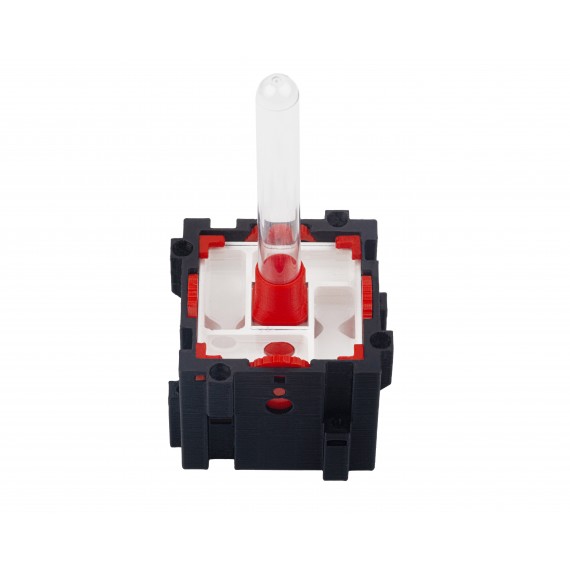
When the colony grows, move it into a nest of the right size. For Messor barbarus or Camponotus nicobarensis we recommend the QBIK ONE, and for Camponotus maculatus the Qbik Wild One P 1C, both by Anthouse. Each care sheet tells you which one and when.
3. The food
Sugars and protein, with a varied diet: Anthouse Blue Sugar Nectar 4–5 times a week and another sugary liquid 1–2 times. For protein, insects from our live food range: Shelfordella lateralis, crickets or Tenebrio molitor, switching insects from one week to the next. Messor also need seeds.
Complete your setup with an escape barrier around the edge of the foraging area and, for tropical species, gentle heating on one side of the nest, always with a thermostat. Springtails help keep the nest clean. Two examples that work:
- Harvester ant kit: Messor barbarus + QBIK ONE with medium galleries + mixed seeds and the occasional prey insect. No heating, with diapause in winter.
- Tropical carpenter ant kit: Camponotus nicobarensis + QBIK ONE + Blue Sugar Nectar + Shelfordella or crickets + gentle heating with a thermostat. Active all year round.
How we ship our ants
Live animals ship from Monday to Wednesday, so they are not left in the carrier's depot over the weekend. When your order ships, we send you the tracking number. Delivery times count from dispatch:
| Destination | Carrier | Delivery time | From |
|---|---|---|---|
| Mainland Spain | GLS (24 hours) | about 1 working day | €9.99 |
| Balearic Islands, Canary Islands, Ceuta and Melilla | Correos | 1–4 working days | €9 (see terms) |
| France, Germany, Belgium, Italy, the Netherlands and Portugal | UPS Express Saver | 1–3 working days | €24.99 |
| Rest of the EU and other European countries | UPS Express Saver | 1–3 working days | €27.99 |
| United Kingdom | Correos | 4–7 working days, plus customs | €18.99 |
- Thermal protection: in cold or very hot weather you can add a heatpack or an insulated cork box in the basket. For the United Kingdom we use the cork box, because a heatpack does not last the whole journey.
- If the weather is against us, we wait: if the temperature puts the ants at risk, we postpone the shipment and suggest another date. If that does not suit you, you can cancel and we will refund you.
- Live arrival guarantee: if your order arrives dead or damaged in transit, contact us as soon as possible with an uncut unboxing video: every side of the parcel before opening it, the whole opening and the condition of the contents. If the issue is confirmed, we will replace the specimen, give you a voucher or refund you. Details in our terms and conditions.
- Secure payment by card, PayPal or bank transfer. The exact shipping cost is shown in the basket before you pay.
Buying a Christmas present? Order in good time: live animals only ship from Monday to Wednesday, and cold weather or public holidays can delay shipping, so last-minute orders may move to the following week.
Common beginner mistakes
- Choosing by the photo, not by the level. An Expert-level species will not teach you faster: if something goes wrong, it goes wrong sooner.
- A formicarium that is too big. A small colony in a huge nest spreads out, gets stressed and neglects the brood. Upgrade as it grows.
- Uncontrolled heat. Always use the heat source with a thermostat and on one side, never under the whole nest, so the colony can choose where to settle.
- Getting diapause wrong. Skipping it in species that need it, or giving a cold winter to a tropical species that does not have one. Check the ‘Diapause’ column in the table.
- Assuming a queen is infertile because she stops laying in autumn. Many queens stop until spring, even when kept warm. This is normal.
- Too much food. Leftovers go mouldy. Give small amounts, remove what is left and vary the insects.
- Forgetting the escape barrier. Small workers get through the tiniest gaps: check lids and connections.
- Not watching them. Watch them often: how the queen is doing, whether there are eggs, larvae and pupae, whether they have water and whether they eat what you give them. That way you spot any problem in time, and it is the best part of keeping ants.
Checklist before you buy
- I have chosen a species for my level.
- I can give it the right temperature: if it is tropical, I have gentle heating with a thermostat.
- If it needs diapause, I have a cool spot for the winter, such as a cold room or a wine fridge.
- I have the right test tube or formicarium ready, plus an escape barrier.
- I have food: nectar or a sugary liquid, insects and, if it is a Messor, seeds.
- I have checked the weather: if it is cold or very hot, I will add a heatpack or a cork box in the basket.
- Someone will be at home to receive the parcel, and I will record an uncut unboxing video.
- If there are young children, pets or sting allergies at home, I will avoid species with a strong sting, such as Myrmecia.
- I know my country's rules on keeping exotic ants.
Ants from all over the world
You can also browse by origin: Europe, Asia, Africa, America and Oceania, home of the Myrmecia and the metallic-sheened Rhytidoponera metallica. From America, the leafcutter ants stand out, such as Atta mexicana, which grow a fungus on the leaves they cut (we have booster fungus for them), as do the honeypot ants. Not sure where to start? Have a look at our best sellers or at all our ants.
Frequently asked questions
Is it legal to buy ants?
Yes. All the species we sell can be kept legally: none is on the EU list of invasive alien species or in the Spanish catalogue. We are a registered animal facility (REGA ES460050000026). Outside Spain, please also check your country's rules. And never release ants into the wild.
Which ant is best for beginners?
A Beginner-level species (1–2 out of 5). If you do not want to use heating, Messor barbarus: it eats seeds, is very hardy and goes into diapause in winter. If you would rather see them active all year round, a tropical Camponotus such as C. nicobarensis or C. maculatus, with gentle heating.
Is it better to buy a single queen or a colony?
A single queen is cheaper, but the colony takes months to get going and the founding stage is the most delicate. A colony already has workers, and often brood, so you will see activity from day one and it is a safer start.
How long will my order take to arrive?
Live animals ship from Monday to Wednesday. From dispatch, around 24 hours within mainland Spain, 1 to 3 working days within the European Union and 4 to 7 to the United Kingdom, where customs charges are paid on delivery. We send you the tracking number.
What happens if the ants arrive dead?
Contact us as soon as possible with the unboxing video, recorded without cuts. If the issue is confirmed, we will replace the specimen, give you a voucher or refund you.
Can ants be shipped in winter?
Yes. In cold weather we recommend adding a heatpack or an insulated cork box in the basket; for the United Kingdom, the cork box. If it is too cold at origin or at the destination, we postpone the shipment and let you know.
What do ants eat? Do they eat worms?
Almost all of them need sugars (nectar or a sugary liquid) and protein (insects). Yes, they eat mealworms, as well as crickets or cockroaches, whole or cut up depending on the size of the colony. Messor feed mainly on seeds. A varied diet is best.
How long does a colony take to grow?
It depends on the species and the temperature. In European Camponotus, it usually takes 6 to 12 weeks from egg to worker. The first year tends to be slow and growth becomes noticeable from the second year. Tropical species grow faster with warmth and good food.
When should I move the colony from the test tube to a formicarium?
When the colony fills a good part of the tube or the water starts to run out. Choose a nest of the right size, not a huge one, and connect the tube so they can move in. Each species' care sheet explains the recommended nest and how to do the move.
Why is my queen not laying eggs?
The most common reason is the time of year: many queens that arrive in autumn stop laying until spring, even when kept warm. Stress from the journey and a low temperature also play a part. Give her a few days to settle, check the temperature on her care sheet and watch her often. If you have any doubts, write to us.