Difficulty: 4/5 – Advanced
A harvester ant from the deserts of south-western North America, famous because for years its venom was the most toxic ever measured in an insect. Young colonies with a single queen and brood. It founds claustrally, but at Antomas we raise it with assisted semi-claustral founding, using easy seeds such as dandelion. A QBIK ONE with medium galleries or a Qbik Wild One P 1C, 25–30 °C with a hot spot of 30–32 °C on one side, brood in a humid area and a granary that is always dry, small or cracked seeds, protein according to the larvae, sugar once or twice a month and a 3–4-month diapause at 10–15 °C. Never with your hands: tools, a mineral-oil barrier and a lid. This is not a species for homes with small children or pets, nor for people who are allergic to hymenopteran stings.
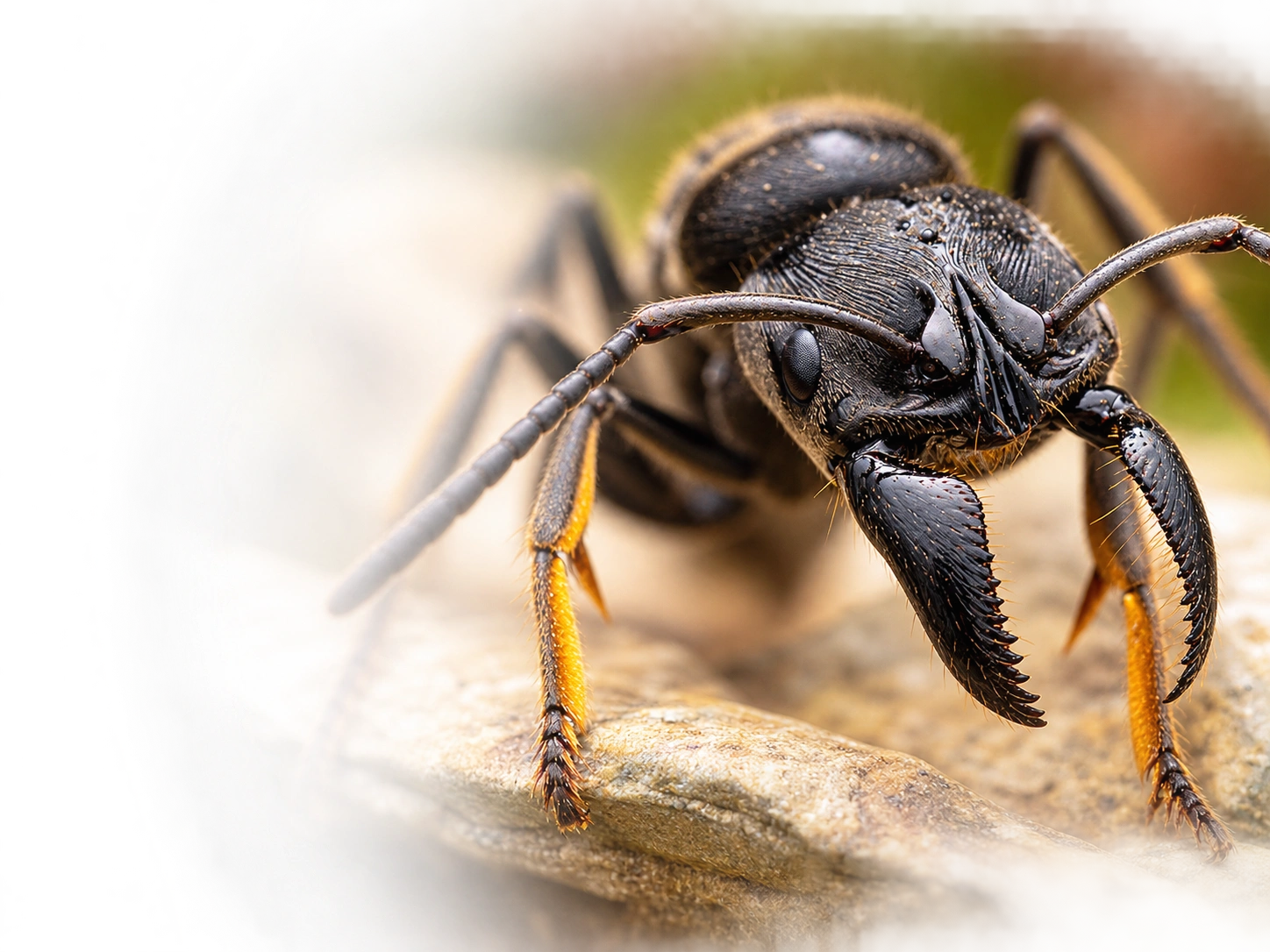
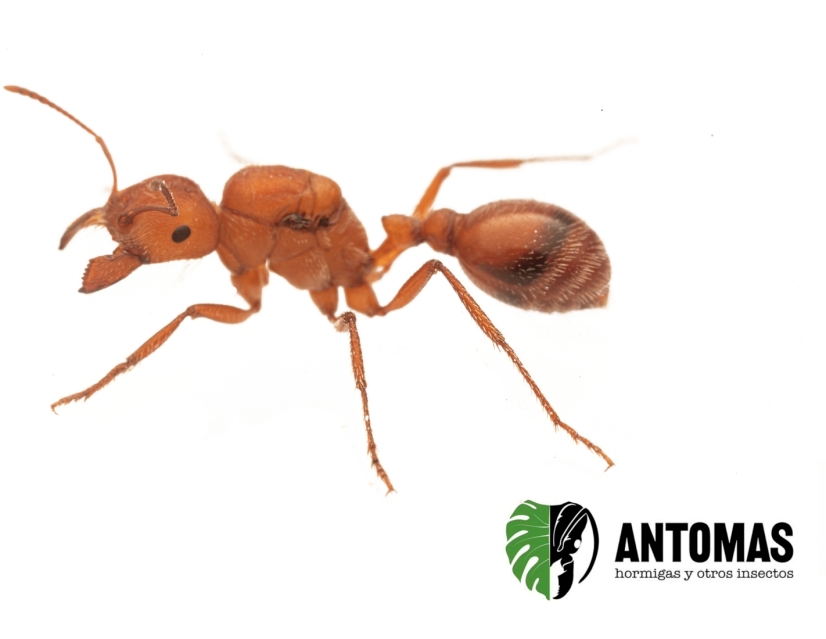
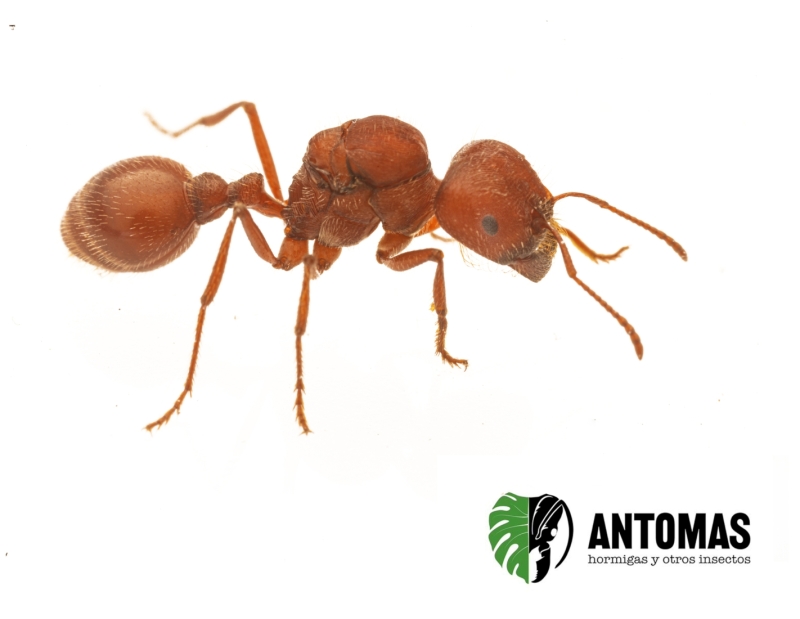
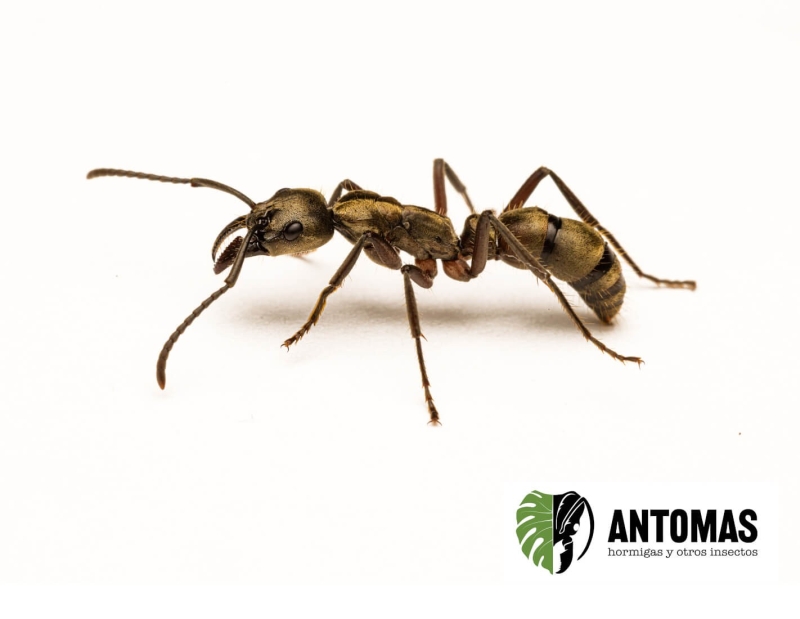
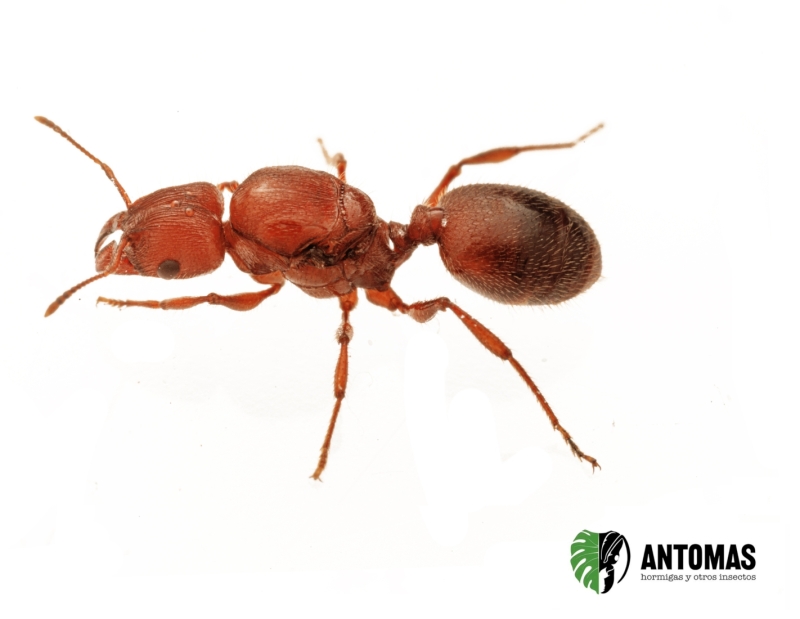
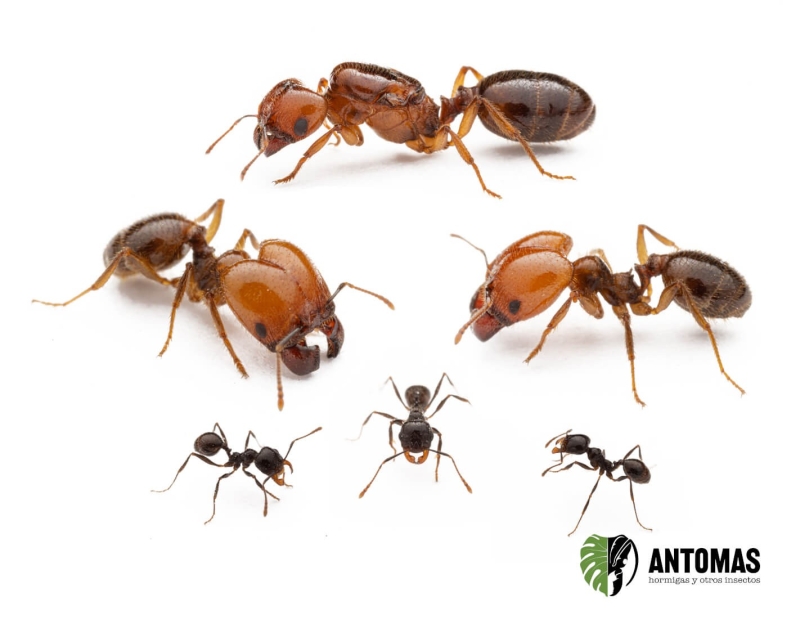
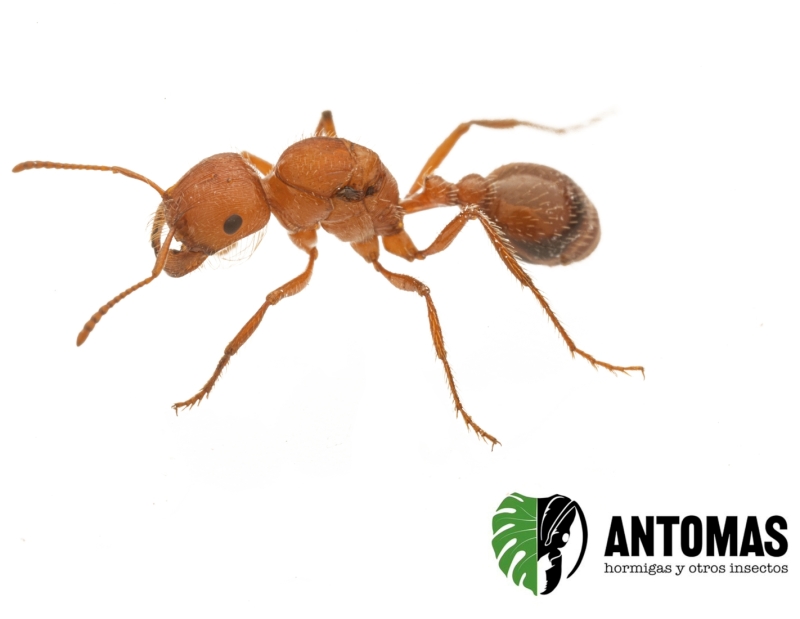
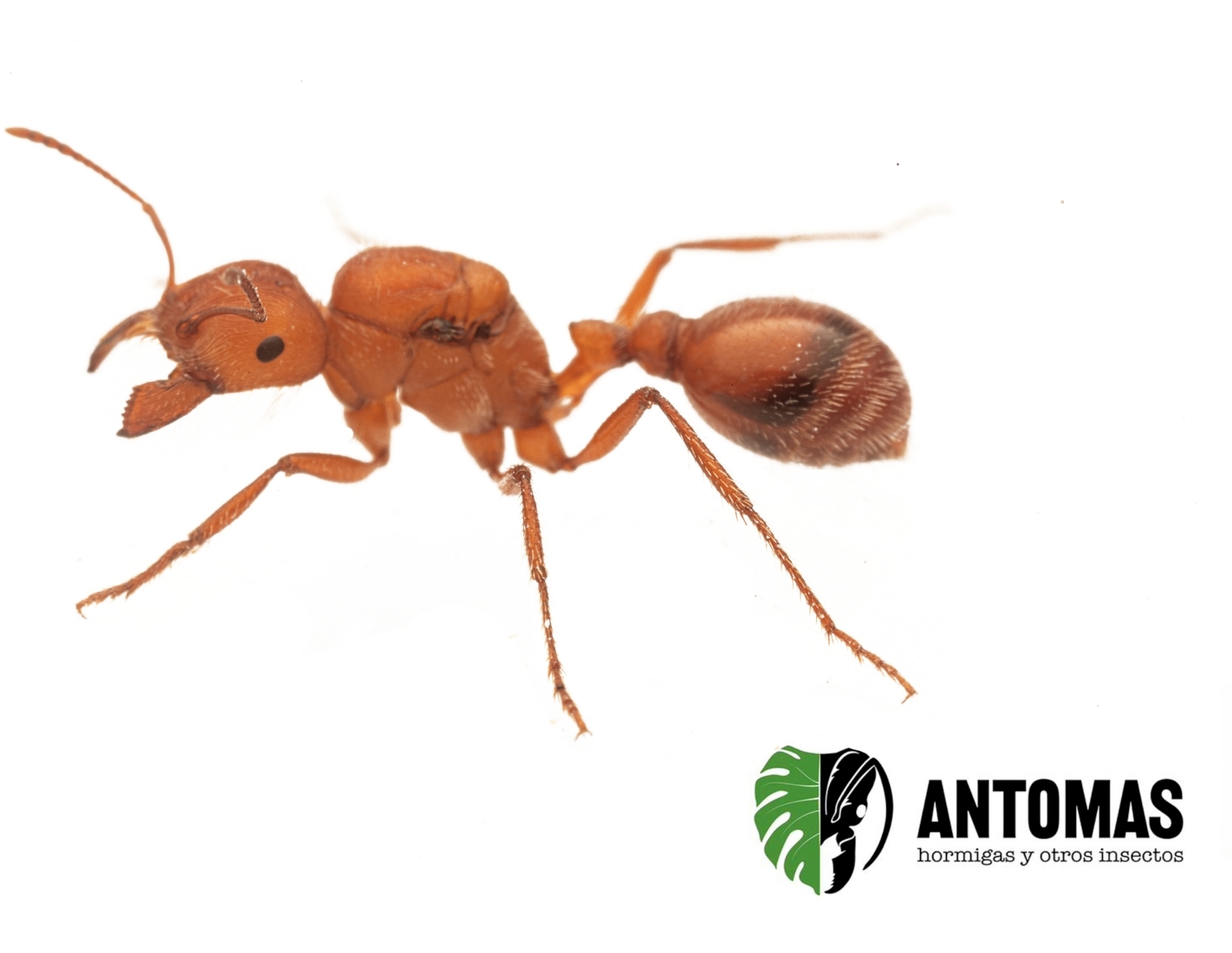
Pogonomyrmex maricopa Wheeler, 1914 is a harvester ant of the North American deserts: a robust myrmicine, ferruginous red ranging from light to very dark, with the “beard” of long hairs under the head that gives its genus its name, and a sting that has made it famous. It is the sister species of Pogonomyrmex californicus, with which it shares its species group, its looks and its habits, but it is somewhat larger, more matt and far more toxic. It lives on open, flat, well-drained ground, often sandy, where its workers go out one by one to gather seeds on scorching soil.
It owes its fame to its venom, some 23 times more toxic than a honeybee’s in tests on mice and, for years, the most toxic ever measured in an insect. But it has much more to tell: a lizard that eats it because it carries the antidote in its blood, toxins made to work against vertebrates, “cement” domes in the dunes, weddings high up in the shrubs and workers that forage alone. At home it is a rewarding harvester and great fun to watch, as long as you respect its sting.
Biology
For years, the most toxic insect venom ever measured
To compare venoms, scientists use the LD50, the dose that kills half of the test animals, expressed in milligrams per kilo of body weight: the lower it is, the more toxic the venom. The American entomologist Justin O. Schmidt measured it in dozens of hymenopterans by injecting the venom into the tail vein of laboratory mice. P. maricopa gave 0.12 mg/kg:
- P. maricopa: 0.12 mg/kg.
- Average of the Pogonomyrmex measured: 0.66 mg/kg.
- Honeybee (Apis mellifera): 2.8 mg/kg.
- A mutillid wasp, the so-called “velvet ant” (Dasymutilla klugii): 71 mg/kg.
In other words, its venom is about 23 times more toxic than that of the honeybee. In 1996, the University of Florida Book of Insect Records declared it the most toxic insect venom known, and that is how it made its way into the Guinness Book of Records. Schmidt calculated that about 12 stings would in theory be enough to kill a 2 kg rat: it is a laboratory calculation, and it cannot be extrapolated to a person.
Today the record needs a qualification. Among the 20 North American harvester ants measured, LD50 values range from 0.12 to 0.7 mg/kg, and P. maricopa is still at the most toxic end. But in a 2019 review, Schmidt includes the value for an Argentinian Pogonomyrmex, P. cunicularius: 0.088 mg/kg, more toxic still. The fair thing is to say that P. maricopa has the most toxic venom measured in a North American insect, and that it held the world record for years.
The horned lizard that carries the antidote in its blood
Horned lizards (Phrynosoma), flattened and spiny, live mainly on harvester ants. How do they manage it, with a venom like that? In 1989, Paul Schmidt, Wade Sherbrooke and Justin Schmidt found the answer: the plasma of the Texas horned lizard (Phrynosoma cornutum) carries one or more factors that neutralise harvester-ant venom. With the venom of P. maricopa:
- Mouse: LD50 of 0.12 µg per gram of body weight.
- Texas horned lizard: LD50 of 162 µg/g, about 1,350 times higher.
- A lizard that does not eat harvester ants (Sceloporus jarrovii): LD50 of 28 µg/g; it tolerates about six times less than the horned lizard.
The antidote is very specific: it does not work against the venom of the honeybee, the rattlesnake, Russell’s viper or the cobra. In 2019, Justin Schmidt reviewed this “battle of ecological icons”: the venoms of the 23 harvester ants studied are highly lethal to mice and almost inactive in horned lizards. And the most lethal of all was a South American species, from a part of the world where there are no horned lizards.
Toxins aimed at vertebrates
Why does it hurt so much? In 2024, an international team led by Samuel Robinson unravelled the venom of harvester ants: it is “relatively simple”, made up mainly of peptides, and a single class of them causes almost all the lasting pain. They are short, hydrophobic peptides without cysteines that act on the voltage-gated sodium channels of mammalian sensory neurons: they lower the threshold at which the channels open and stop them from inactivating, so the nerve keeps on firing.
Two of the leading players come precisely from the venom of P. maricopa: the myrmicitoxins Pm1a and Pm2a. Both act on the NaV1.6 and NaV1.7 channels, the latter being key to pain transmission, and Pm2a also acts on NaV1.8 and NaV1.9. In mice they cause persistent pain that is abolished by tetrodotoxin, the pufferfish toxin. And the most striking thing of all: they do nothing to insects. The authors conclude that these toxins appear to have evolved specifically to deter vertebrates. It fits its way of life: a colony guarding an underground granary is a tempting morsel for the mammals, birds and reptiles of the desert.
A 3 out of 4 on the Schmidt pain index
Schmidt did not just measure venoms: he also felt them on his own skin. His famous pain index runs from 1 to 4 and takes the honeybee sting, a 2, as its reference. P. maricopa scores a 3, and in his book The Sting of the Wild (2016) he describes it like this: “After eight unrelenting hours of drilling into that ingrown toenail, you find the drill wedged into the toe.”
It is not a prick that soon wears off: it brings waves of intense, deep pain for 4–8 hours, with goosebumps and local sweating around the sting. All 21 Pogonomyrmex rated by Schmidt score a 3, and the only ant with a 4 is the bullet ant, Paraponera clavata. What sets P. maricopa apart is not so much the pain, which it shares with the rest of its genus, as the toxicity of its venom.
A daughter of the sand and the desert
According to Cole’s revision of the genus (1968), it lives in western Texas, New Mexico, southern Colorado, southern Utah, Arizona, south-eastern Nevada and south-eastern California, and in Mexico, in Sinaloa, Sonora, northern Chihuahua and northern Baja California. It is abundant in southern New Mexico and one of the commonest harvester ants in Arizona, and published records range from about 150 to about 1,400 m in altitude.
It always nests on open, flat ground, in sandy, silty or loamy soils, and rarely in rocky places. It is one of the few ants able to nest in loose sand, even in the white dunes of White Sands. Its nests are craters of sand or pebbles, or domes with a gravel surface; in Arizona, mounds 30–45 cm high have been described, made of soil, twigs and small stones, in the centre of a bare clearing 1.2–3 m across. Young colonies merely ring the entrance with twigs and debris: the mound appears in the second year.
A “cement” dome in the dunes
In 2003, the ecologist Walter Whitford described something unexpected in a field of fine-sand dunes in New Mexico. There, P. maricopa forms dense populations, of about 37 colonies per hectare, and covers 50 to 75% of each mound, 1.2 m in diameter, with a hard dome of cemented sand:
- Calcium carbonate: 60% in the dome, compared with 4% in the surrounding soil.
- Structure: the dome and the chambers in the top 30 cm are cemented; below that, between 30 and 60 cm, there is moist sand with many chambers and tunnels.
Where does the cement come from? Beneath the dunes, at a depth of 1–3 m, there is a layer of caliche, a natural crust of calcium carbonate, and according to Whitford that is where the calcium in the domes comes from. The dome protects the nest from erosion: the gales from January to April wear away the windward side and, by November, it has been repaired. Through this erosion, about 620 kg of calcium carbonate per hectare returns to the surface: an ant that changes the chemistry of the soil. Some pronghorn even dug into a few domes in 1991 and seemed to be eating the material. For now, it is an observation from a single locality.
Weddings in the shrubs after the monsoon
P. maricopa waits for the monsoon rains to reproduce: it flies from June to August, and new colonies are founded from July to October. Bert Hölldobler studied its mating flights in Arizona in the 1970s and described a very precise ritual:
- The signal. The flights are triggered by the first heavy rain of the season.
- The departure. In the morning, workers and alates crowd around the entrance, and the alates take off before midday.
- The lek. The males gather in trees and shrubs 2–4 m tall, sometimes a kilometre or more apart, and attract the females with a secretion from their mandibular glands.
- The competition. When a virgin female enters the swarm, up to four males compete for her, and each queen mates with several.
- The rest. After mating, the queen tears off her wings, climbs up into the vegetation and rests for many hours before digging, probably so as not to do it on the scorching ground.
It makes a curious contrast with its sister P. californicus, which does not wait for the monsoon and flies in early summer.
A queen who manages on her own
After the wedding flight, the queen digs a chamber, seals herself in and raises her first workers without going out to eat: this is claustral founding. In 2002, Robert A. Johnson, of Arizona State University, compared the founding strategies of several Pogonomyrmex, and P. maricopa queens produced their nanitics without taking a single bite, on their reserves alone. Together with P. barbatus and P. rugosus, it was among the species whose winged queens stored the most fat. The contrast with P. californicus is enormous: its queens weighed barely 40% of what P. maricopa queens weighed, and they have to go out foraging to get the colony off the ground.
In his care guide for the genus, Johnson estimates that the first workers of a Pogonomyrmex emerge after 3–4 weeks at 30 °C, and that at 25 °C this time can double. And he advises against feeding claustral species. So why do we feed the queen at Antomas? We explain it in “Founding: claustral in the wild, assisted at home”.
One queen, for life
P. maricopa is monogynous: each colony has a single queen. In Arizona, Hölldobler found hundreds of founding colonies of P. rugosus, P. barbatus and P. maricopa, and every one of them had a single queen. No queen associations are known in this species, unlike some populations of P. californicus, where several queens found a colony together and live side by side.
Nor are they welcoming to foreign queens. When a newly mated queen strays into the territory of a mature colony, the workers attack her, although she usually survives: they drag her to the edge of the territory and release her there. The lesson for the keeper is simple: one queen per colony, and never combine queens or colonies.
The solitary harvester
In Arizona, Hölldobler compared three harvester ants that share the same ground. P. barbatus and P. rugosus work along trunk trails, real chemically marked highways that divide up the land between neighbouring colonies. Not P. maricopa: each worker forages on her own, in any direction and guided by visual landmarks, almost always within 5–6 m of the nest and at most 25 m away. If a scout finds a rich patch of seeds, she lays a trail from her venom gland to recruit nestmates, but less effectively than her neighbours. Its nests are more widely spaced than theirs, and its diet seems more specialised.
Its working day is set by the thermometer: the workers come out when the soil surface reaches 21–23 °C, peak at 40–45 °C and, above 46 °C, their activity collapses. On clear summer days they retreat by mid-morning, return in the afternoon and, late in the day, carry twigs, soil and small stones to repair the mound. They do not come out in the rain, and after the first rains of July the workers can be seen drinking water at the entrances. As well as seeds, they collect dead insects and droppings. And there is no truce with neighbouring colonies: they fight fiercely at the edges of their foraging areas.
Neighbour to two giants: P. rugosus and P. barbatus
Across much of its range it shares the ground with two larger harvester ants, P. barbatus and P. rugosus, both from the barbatus group. The workers of P. barbatus exceed 8 mm, usually reaching about 10 mm, and both species have spines on the propodeum, which in P. maricopa are absent or short. Hölldobler saw that territorial rivalry was much fiercer between P. barbatus and P. rugosus than between either of them and P. maricopa, which partly sidesteps competition thanks to its more specialised diet. And if two nests of the same species end up too close together, the aggression escalates until the weaker colony moves out.
In a P. barbatus study plot in New Mexico that Deborah Gordon’s team has been following for decades, P. maricopa turns up only sporadically: since the early 2000s, never more than two colonies in any one year. Its big neighbours also hold a genetic secret that it does not share: in some of their populations, whether a female becomes a worker or a queen depends on which genetic lineages come together in her, one of the most unusual caste systems in the animal world. P. maricopa was not included in those studies, and no work links it to that system.
An Arizona name for a New Mexico ant
Pogonomyrmex comes from the Greek pogon, “beard”, and myrmex, “ant”, after the psammophore these ants carry under the head. The species name has more history to it. William Morton Wheeler described it in 1914 as a subspecies of P. californicus, and its type specimens are from New Mexico. Wheeler did not explain the name, but it recalls the Maricopa people (the Piipaash), Yuman speakers from the middle reaches of the Gila River, in Arizona. It would not be surprising: Wheeler had already named other south-western harvester ants after Indigenous peoples, such as P. apache and P. comanche, in 1902.
Creighton raised it to species rank in 1950, and two later names, barnesi (Smith, 1929) and sinaloanus (Olsen, 1934), turned out to be the same ant. At Antomas we call it the Maricopa harvester ant.
Size and morphology
A robust myrmicine, armed with a sting and with a single worker caste: it has no soldiers or major workers, although some workers are somewhat larger than others.
- Worker colouring. From light to very dark ferruginous red, with the gaster moderately to very shiny, according to Cole (1968).
- Queen. Medium to dark ferruginous red, sometimes with a darker gaster. She is winged and laden with fat reserves, as befits a claustral foundress.
- Male. Winged and very different: head, thorax and petiole brownish black, with the gaster and antennae paler. Its mandible usually has 4–5 teeth, compared with 2–3 in the male of P. californicus.
- Head. With fine, closely packed rugae and dense punctation between them, which leave the head and thorax matt or only slightly shiny. This is the easiest way to tell it apart from P. californicus, which is shiny.
- Psammophore. The “beard” of long hairs under the head, typical of the genus, with which they carry fine sand, small stones and small seeds.
- Mandibles. Built for seeds but, in Antomas’s experience, less powerful than those of a large Messor (see “Seeds: which to use and which to avoid”).
- Propodeum and petiole. The propodeum is unarmed or bears angles, small teeth or spines, usually short ones; any armature at all separates it from P. californicus, which has none. The petiolar node often bears a tooth on its lower front edge.
- Development. As in all myrmicines, the pupae are naked, without a cocoon.
- Chromosomes. 2n = 32.
Approximate measurements
- Workers: 6–7.5 mm in total length (Wheeler 1914)
- Queen: about 8 mm in total length (Wheeler 1914, measured on a single dealate specimen)
- Male: no published total length
- Workers: head 1.60–2.05 mm long and 1.52–2.05 mm wide; mesosoma 1.90–2.44 mm (Cole 1968)
- Queen: head 1.98–2.28 mm long and 2.09–2.32 mm wide; mesosoma 3.04–3.42 mm (Cole 1968)
- Male: head 1.37–1.63 mm long and 1.63–1.82 mm wide; mesosoma 3.04–3.15 mm (Cole 1968)
For comparison, Wheeler gave 5.5–6 mm for the workers of P. californicus. The longer lengths that circulate online for this species do not come from published measurements, so we prefer not to give them.
Care in captivity
Difficulty: 4/5 – Advanced
It is not a delicate ant: it is hardy, feeds without complications and does not demand an impossible climate. Its difficulty comes from elsewhere:
- The sting and the venom. They mean always working with tools, a barrier and a lid, and planning the set-up so that you never have to put your hands among the foragers.
- A slow founding stage. Young colonies grow slowly at first.
- Dry granaries and humid brood. You have to maintain two environments in the same nest without the seeds getting wet.
- Heat with a gradient. It needs a hot spot with a thermostat and a properly managed diapause.
And it is well worth it. You will see each worker set off alone to explore, come back with her seed, carry sand in her beard and fill the granary. If the harvester ants of these deserts appeal to you, at Antomas we also have its sister P. californicus, its neighbours P. barbatus and P. rugosus, and Novomessor cockerelli, another seed-gatherer from the North American south-west.
Recommended parameters
- Nest temperature: 25–30 °C in the active season, with a hot spot on one side reaching about 30–32 °C, always on a thermostat. The colony must be able to choose.
- Why these figures: in its range, the soil where the brood chambers lie, at a depth of 10–50 cm, averages 28–32 °C in summer. The 40–45 °C at which they forage are surface temperatures, which they withstand for a few minutes at a time; they should not be confused with nest temperatures.
- Below about 24 °C, growth slows down a great deal, as keepers agree; laboratories in the United States keep the genus at 30 °C or more.
- Humidity: localised, with the brood in a moderately humid area and the granaries dry (see “Localised humidity and granaries”).
- Water: always available, in a test tube with water and cotton wool in the foraging area.
- Light: a dark nest and a lit foraging area, with a normal day–night cycle. Many keepers provide heat for about 10–12 hours a day, on a timer, imitating the desert day.
- Diapause: 3–4 months, roughly from December to February, at 10–15 °C (see “Diapause”).
Localised humidity and granaries
This is the key to keeping it. In the wild, the colony stores its seeds in dry chambers and rears its brood where the soil retains some moisture; at home you have to give it both:
- Brood in a moderately humid area. Moisten only the part of the nest set aside for the brood: damp but not wet, as Johnson recommends for the genus. A nest that dries out completely is also a problem.
- A granary that is always dry. If the seeds end up next to condensation or wet substrate, they germinate, ferment or go mouldy, and the roots of the germinated ones drink up the water from the tube.
- Seeds well away from the cotton wool and from any wet area.
- Frequent checks. Two or three times a week, remove any germinated or mouldy seeds, and empty the rubbish dump from time to time.
- Good ventilation, without draughts, so that moisture does not condense in the seed chambers.
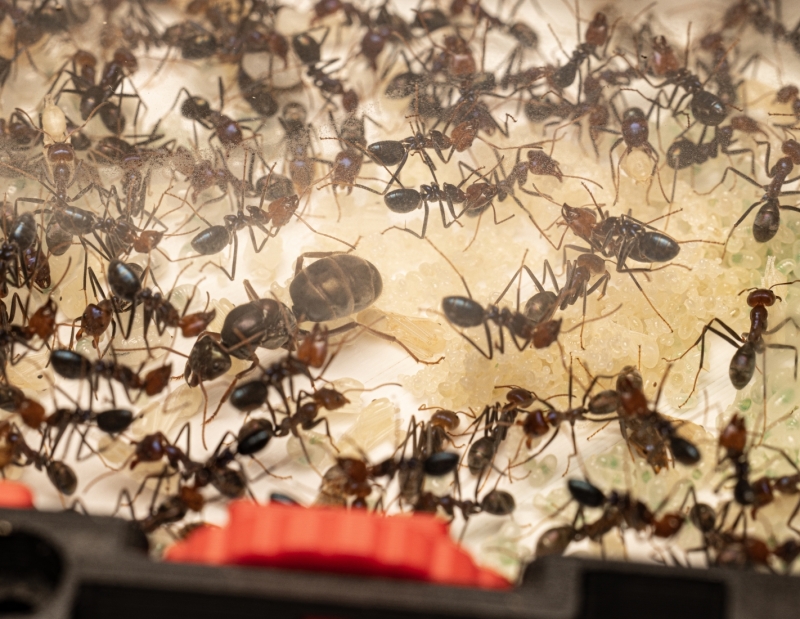
Within a few days you will see the brood in the humid part and the grain piled up in the dry part.
Recommended formicaria
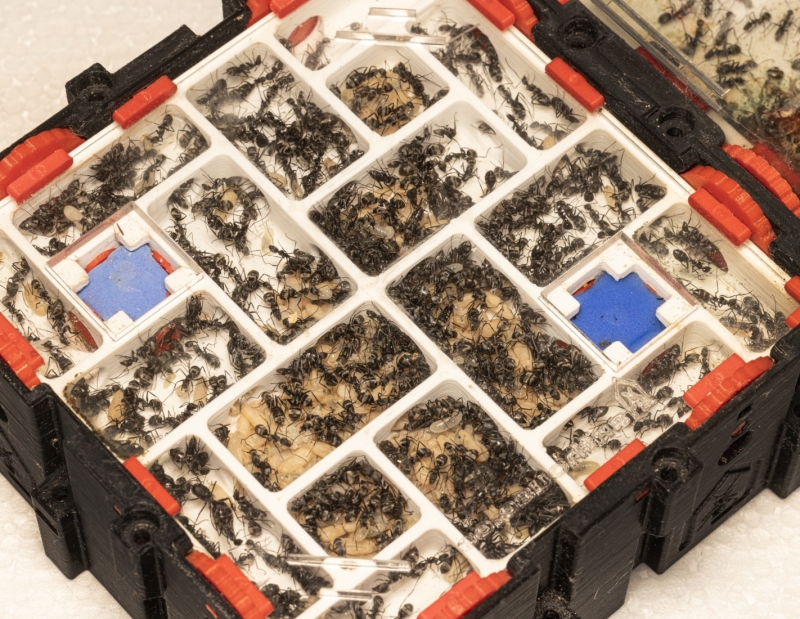
At Antomas we keep it in both the Anthouse Qbik Alpha and Qbik Wild ranges, interchangeably: it adapts to both, and the choice depends on the set-up you prefer.
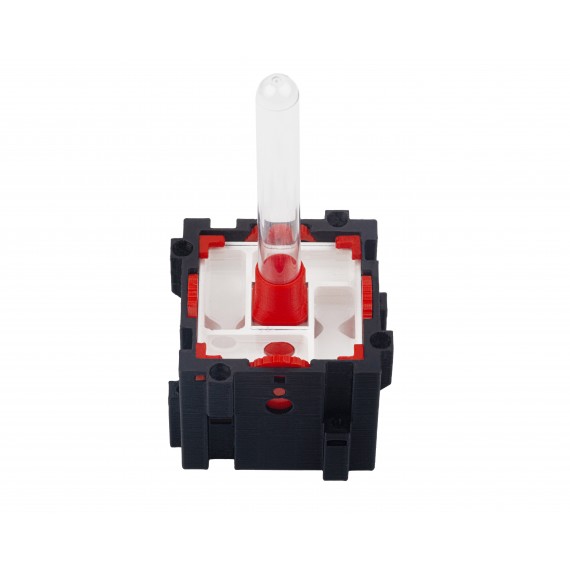
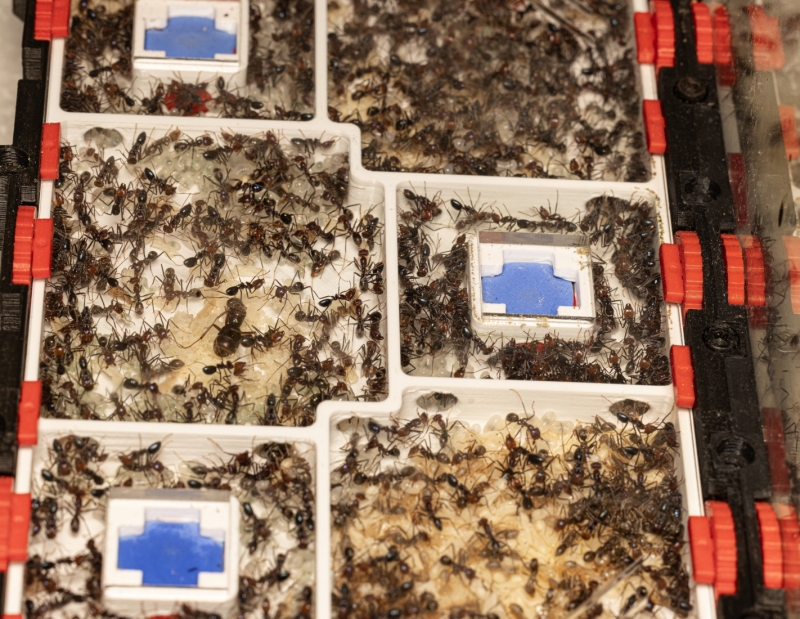
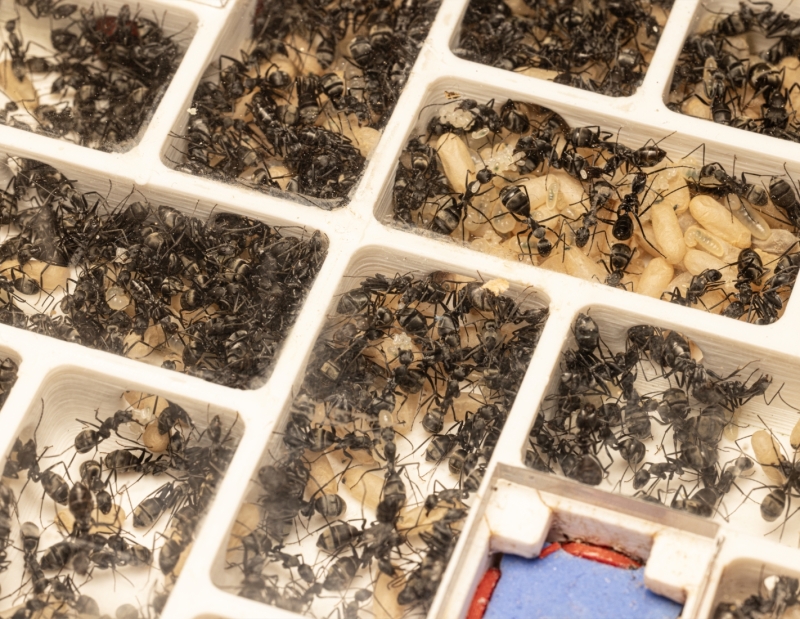
The Qbik Alpha formicaria are modular and rather dry, and very practical for observing the colony, locating the granaries and keeping the humid and dry areas well apart. To start with, a QBIK ONE with medium galleries:
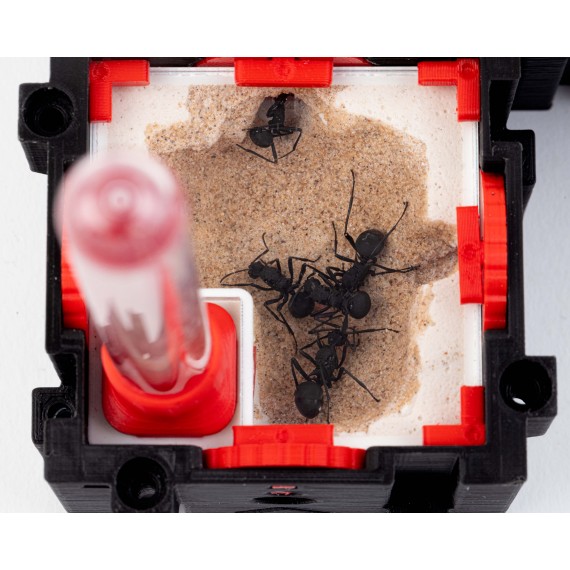
The Qbik Wild formicaria are made of plaster, hold moisture and have a more natural look: with them, the humid brood area is more stable, and you just need to make sure the granary stays in the dry part. For a young colony, the Qbik Wild One P 1C:
The module should always be in proportion to the colony: there is no point in putting a queen with a couple of workers into a huge formicarium, which would end up with chambers turned into rubbish dumps, mould and mites. Expand when you see workers sitting still in the foraging area with no room inside; in the Alpha range, the next step is the QBIK DUO. Complete the set-up like this:
- A horizontal set-up, without long climbs: they are poor climbers and move better on the flat.
- Sand in the foraging area. A thin layer of dry sand and, if you like, a few small stones and twigs, so that you can watch them use their psammophore and build their rubbish dump.
- Water in a test tube with cotton wool, never in an open dish, and a feeder for the sugar, never cotton wool.
- A mineral-oil barrier and a well-fitting lid (see “Escapes and barriers”).
Founding: claustral in the wild, assisted at home
Here two things need to be kept apart: what the queen can do and what we recommend at Antomas.
- Biologically, it is claustral. The queen is able to raise her first workers on her reserves alone, without eating (see “A queen who manages on her own”).
- In captivity, at Antomas we recommend assisted semi-claustral founding. Being able to do it alone does not make it the best option: a founding colony with few nanitics reaches its first winter with very few workers and struggles to get going in spring. With food from the start, the queen keeps more of her reserves and the first generation comes out stronger.
It has not been measured in P. maricopa, but in another harvester ant of the genus, P. occidentalis, fed queens produce more brood and lose less weight, and many keepers leave a few seeds for their P. maricopa queens “just in case”. The Antomas protocol:
- Easy seeds from day one, above all dandelion (Taraxacum officinale). What we call a seed is in fact an achene, very small and light, and in Antomas’s experience it is one of the easiest things for this species to process: even the queen on her own can open it. Keepers say the same of poppy and niger seed, which queens husk by themselves.
- The occasional small prey item when there are larvae: a Drosophila, a small Thermobia or a little piece of cockroach. Remove any leftovers the next day.
- No large foraging area. A founding chamber connected to a mini-arena is enough, or you can simply leave the food next to the entrance.
- No overfeeding and no disturbance: warmth, darkness and peace and quiet.
Our colonies arrive with their queen, workers and brood: they have come through the riskiest stage, but they are still small, and this protocol serves them until they grow. Many keepers wait until there are about 10–15 workers before moving them from the tube into the formicarium, or do it sooner if the tube gets dirty or runs out of water.
Arrival and moving by tipping
When you receive the colony, let it rest in a quiet, dark place at 25–30 °C, check that it has water and offer it a few dandelion seeds. To move it into the formicarium, at Antomas we do it by tipping:
- Set up the formicarium beforehand, with the humid area ready, the oil barrier in place and the water where it belongs.
- Work over a tray, with long forceps and a soft brush, never with your hands.
- Open the tube in the foraging area, next to the nest entrance, and gently tip out the queen, the workers, the brood and the seeds, helping the stragglers along with the brush.
- Close the lid and leave the nest dark. Within a few hours they will have carried the brood to the humid area and started setting up the granary.
To move them into a larger module later on, use the same method.
Seeds: which to use and which to avoid
Seeds are the basis of its diet, but it is not a Messor. In Antomas’s experience, even a mature colony has considerably less strength for cracking hard husks than a large colony of Messor barbarus or Messor capitatus: “granivorous” does not mean “able to open any seed”. The Antomas rule is clear: small seeds, or large ones but cracked, and always dry.
- The best: dandelion, poppy, niger, millet, amaranth, chia and lawn-grass seed (Poa pratensis), the staple on which Johnson rears his laboratory colonies.
- Large seeds, cracked. Break the husk or split the grain, without crushing it to powder, so that they can get at the inside. With small seeds there is no need: they keep better whole. Sunflower seeds should be hulled, cracked and given only to large colonies.
- Always dry, never wet. Moistening them to soften them encourages germination and lets fungi into the granary.
- No birdseed mixes with round, hard seeds, which they cannot handle, and no seeds treated with fungicide, which usually have a pinkish tint.
Leave them in the foraging area so that the workers carry them to the dry granary. For a small colony, small amounts and often; for a large one, more, because it stores them.
Protein, sugar and water
Protein, according to the larvae. Even though they are harvesters, animal protein is the engine of growth: the queen needs it to lay and the larvae need it to grow. With lots of larvae, be generous; with no larvae, give little. If you carry out frequent maintenance and remove leftovers within 24 hours, it is better to give too much than too little. Change the type of insect from one week to the next:
Buy your insects from a reliable supplier: insects treated with insecticides can kill the colony.
Sugar: once or twice a month. They hardly touch it, because their energy comes from the seeds. Offer it in a feeder, almost always Anthouse’s Blue Sugar nectar and, now and then, another nectar, and never on cotton wool, which goes mouldy. Nor should it be their main food: on the forums there are harvester colonies whose brood stalled on honey water as their only food.
Water: always, in the test tube with cotton wool. Even though they eat dry seeds, they do drink, and in the wild they can be seen drinking at the nest entrances after the first rains.
Diapause
No study has shown that it needs an obligatory diapause, and some keepers keep it active all year round. But its climate has a mild yet real winter: from December to February, the soil where the chambers lie drops to about 11–14 °C in the low desert, and somewhat lower in the high desert, and in its neighbour P. rugosus the nest goes over the course of the year from just under 10 °C to 30 °C. In the wild, the egg-laying of P. maricopa peaks in June, and by October only a few larvae remain. That is why at Antomas we recommend the same diapause as for P. californicus: 3–4 months, from December to February, at 10–15 °C.
- A gradual start. In autumn, remove the hot spot and keep the colony at 18–20 °C for 2–3 weeks before cooling it further.
- During diapause: water always available, a dry granary with seeds and protein down to almost zero.
- A gradual exit in March, until you are back at 25–30 °C with the hot spot.
- Very small colonies: at the mild end of the range, around 15 °C.
- Where: an unheated room often does not get cold enough; a garage, a cellar or a wine cooler usually does the job. Never below freezing.
On video: keeping a venomous ant
A short video by Anthouse devoted to keeping this harvester ant:

Pogonomyrmex maricopa, the Maricopa harvester ant with the record-breaking venom, kept in captivity (Anthouse).
Behaviour and observation
Solitary foragers. Do not expect columns: each worker goes out alone, explores the foraging area at her own pace and comes back with her seed. When they find a pile, one of them may recruit her nestmates, but without the lines of a Messor.
Growth. It starts slowly and speeds up with warmth, seeds and protein. Keepers in the United States speak of hundreds of workers in the first year under the best conditions and of mature colonies numbering thousands; there are no scientific counts for the species.
Defence. Scientific databases describe it as “extremely combative”: if you knock the formicarium or open it abruptly, they will come out to defend it.
Watch without fear. At Antomas we believe ants are there to be enjoyed, watched and learnt from, not kept hidden away. It is enough to leave them a dark nest and a lit foraging area, and to watch them gently, intervening as little as possible.
Warning signs: if the colony does not grow in the height of the season, check the temperature and the protein; if there is mould or there are germinated seeds, there is too much moisture in the granary; and if many workers die in a short time, check the water, the heat and the leftovers.
Escapes and barriers
It has one advantage: it is a poor climber. Keepers agree that it cannot climb glass, acrylic or smooth plastic. But with a sting like this one it is not worth taking the risk, and dust, soil or condensation on the walls can give it a grip:
- A band of mineral oil on the upper part of the walls of the foraging area, renewed whenever it collects dust or debris.
- A well-fitting lid, with no gaps at the connections or plugs.
- Nothing that could act as a bridge to the barrier: no long twigs, forgotten forceps or tubes leaning against the walls.
Handling and safety
Its venom is among the most toxic ever measured in an insect, but that figure comes from injecting it into a mouse’s vein: it is useful for comparing venoms, not for working out what would happen to a person. What is clear is that the sting hurts a great deal, and for hours. With correct handling, it rarely comes to that:
- Never with your hands. Always with tools: long forceps, a soft brush and, for transfers, tubes and adaptors.
- Open the formicarium only as much as necessary, work calmly over a tray and close it when you have finished.
- This is not a species for homes with small children or pets, nor for people who are allergic to bee, wasp or ant stings.
- If you are stung, wash the area and apply something cold.
It is an exotic species: it must never be released.
What not to do
- Handle it with your hands, or open the formicarium without a barrier or tools.
- Combine queens or colonies.
- Wet the seeds, or leave them in the humid area or next to the cotton wool.
- Give it birdseed mixes, treated seeds or large grains that have not been cracked.
- Heat the whole nest evenly, or keep it below about 24 °C in the active season.
- Let the brood area dry out completely.
- Skimp on protein when there are larvae, or leave leftovers.
- Use sugar as the main food, or put it on cotton wool.
- Change the temperature abruptly when going into or coming out of diapause.
Scientific sources
This care sheet is based on the scientific literature on Pogonomyrmex maricopa and its genus, including Cole’s revision (1968) and J. O. Schmidt’s work on venoms, and on the experience of Antomas and other keepers. Main references:
- Wheeler, W. M. (1914). New and little known harvesting ants of the genus Pogonomyrmex. Psyche 21: 149–157. doi:10.1155/1914/52760
- Hölldobler, B. (1974). Home range orientation and territoriality in harvesting ants. Proceedings of the National Academy of Sciences 71: 3274–3277. doi:10.1073/pnas.71.8.3274
- Hölldobler, B. (1976). Recruitment behavior, home range orientation and territoriality in harvester ants, Pogonomyrmex. Behavioral Ecology and Sociobiology 1: 3–44. doi:10.1007/BF00299951
- Hölldobler, B. (1976). The behavioral ecology of mating in harvester ants (Hymenoptera: Formicidae: Pogonomyrmex). Behavioral Ecology and Sociobiology 1: 405–423. doi:10.1007/BF00299401
- Schmidt, J. O., Blum, M. S. & Overal, W. L. (1980). Comparative lethality of venoms from stinging Hymenoptera. Toxicon 18: 469–474. doi:10.1016/0041-0101(80)90054-9
- MacKay, W. P. (1981). A comparison of the nest phenologies of three species of Pogonomyrmex harvester ants (Hymenoptera: Formicidae). Psyche 88: 25–74. doi:10.1155/1981/78635
- Schmidt, P. J., Sherbrooke, W. C. & Schmidt, J. O. (1989). The detoxification of ant (Pogonomyrmex) venom by a blood factor in horned lizards (Phrynosoma). Copeia 1989: 603–607. doi:10.2307/1445486
- Johnson, R. A. (2002). Semi-claustral colony founding in the seed-harvester ant Pogonomyrmex californicus: a comparative analysis of colony founding strategies. Oecologia 132: 60–67. doi:10.1007/s00442-002-0960-2
- Whitford, W. G. (2003). The functional significance of cemented nest caps of the harvester ant, Pogonomyrmex maricopa. Journal of Arid Environments 53: 281–284. doi:10.1006/jare.2002.1039
- Anderson, K. E., Gadau, J., Mott, B. M., Johnson, R. A., Altamirano, A., Strehl, C. & Fewell, J. H. (2006). Distribution and evolution of genetic caste determination in Pogonomyrmex seed-harvester ants. Ecology 87: 2171–2184. doi:10.1890/0012-9658(2006)87[2171:DAEOGC]2.0.CO;2
- Schmidt, J. O. (2019). Pain and lethality induced by insect stings: an exploratory and correlational study. Toxins 11: 427. doi:10.3390/toxins11070427
- Schmidt, J. O. (2019). Predator–prey battle of ecological icons: horned lizards (Phrynosoma spp.) and harvester ants (Pogonomyrmex spp.). Copeia 107(3). doi:10.1643/CP-18-158
- Fertschai, I., Sherbrooke, W. C., Ott, M. & Chagnaud, B. P. (2021). Avoiding being stung or bitten – prey capture behaviors of the ant-eating Texas horned lizard (Phrynosoma cornutum). Biology Open 10: bio058453. doi:10.1242/bio.058453
- Robinson, S. D., Deuis, J. R., Niu, P., Touchard, A., Mueller, A., Schendel, V., Brinkwirth, N., King, G. F., Vetter, I. & Schmidt, J. O. (2024). Peptide toxins that target vertebrate voltage-gated sodium channels underly the painful stings of harvester ants. Journal of Biological Chemistry 300: 105577. doi:10.1016/j.jbc.2023.105577