Difficulty: 2/5 – Beginner
An amber-coloured Asian acrobat ant that does not yet have a species name: a robust queen, small workers and big-headed majors that not every Crematogaster has. Queen with workers and brood. Nest at 24–28 °C with one side slightly warmer, fairly dry and with one damp area, a QBIK ONE with small galleries to start with, nectar in a feeder, plenty of varied protein, moving house by tipping and an oil barrier. A clue to finding out what it is: look at the waist from above with a magnifying glass.
This ant is a small mystery. It is a Crematogaster, an acrobat ant, amber-coloured and with workers of very different sizes, but we do not yet know which species it belongs to. That is why we sell it as Crematogaster sp.: “sp.” is the abbreviation of species and is used in taxonomy when the genus is known but the species is not.
In this care sheet we tell you honestly what can and cannot be said about it from a photo, what links it to the other acrobat ants of Asia and how to keep it. Anything that does not come from scientific studies is marked as the experience of Antomas or of other keepers.
Biology
What does “sp.” mean, and what is “Big Major”?
Crematogaster is one of the largest ant genera in the world, with around five hundred described species, and Asia is one of its great centres of diversity. New species are still being described there almost every year: the Japanese researchers Shingo Hosoishi and Kazuo Ogata, for example, have revised several Asian groups and described numerous new species over the last two decades. Naming an Asian acrobat ant takes measurements, views from the front and from above, the sculpture of the cuticle and, often, comparison with the type specimens kept in museums.
“Big Major” is not a scientific name: it is a keepers’ label that describes the most striking thing about this colony, its big-headed major workers. We keep it in quotation marks to distinguish it from other Crematogaster sp. until it can be identified. A profile photo, however good, is not enough to give the species, and we prefer not to make things up.
What is certain: an acrobat ant
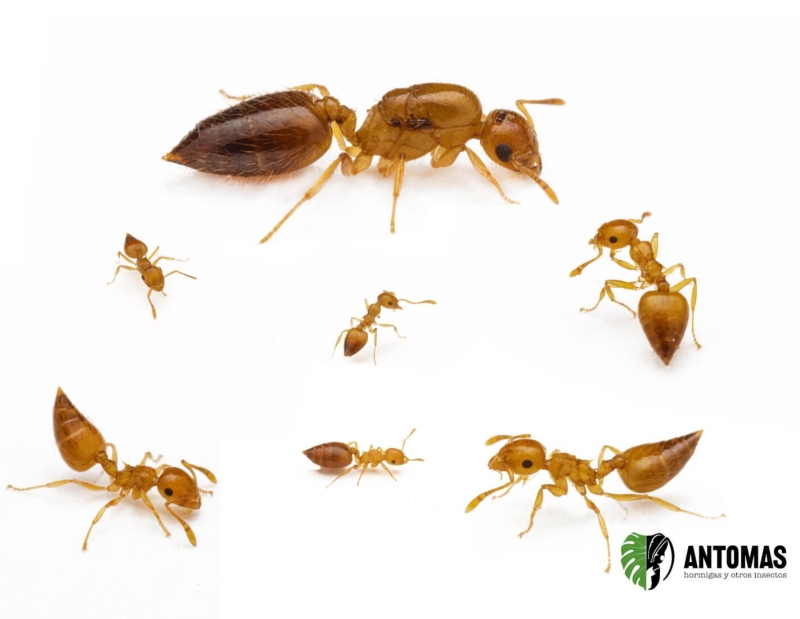
Although it has no species name, the genus is easy to recognise in the photos of the colony:
- A two-segmented waist, petiole and postpetiole, like all myrmicines.
- A heart-shaped gaster, flattened on top and pointed at the tip, attached to the postpetiole by its upper surface. This is the key feature of the genus: thanks to this attachment they can raise the gaster above the body.
- Two short spines at the rear of the thorax, the propodeum, in both workers and queen.
- Antennae ending in a club of longer segments, and well-developed eyes.
Which Crematogaster? Two great lineages
In 2012 the entomologist Bonnie Blaimer reorganised the genus, with hundreds of species spread across the world, into just two subgenera: Orthocrema and Crematogaster sensu stricto. The two are distinguished above all by the shape of the petiole and postpetiole and by the position of the propodeal spiracle, details that can be seen with a magnifying glass from above and from the side.
There is one clue that fits our ant: according to AntWiki, Orthocrema workers are usually monomorphic, all of a similar size, and intermediate workers appear only in some species. A colony with such marked majors therefore points to the subgenus Crematogaster sensu stricto, that of our C. rogenhoferi and C. aurita. It is a reasonable hypothesis, not an identification: to confirm it, you need to look at the waist with a magnifying glass (see “The magnifying glass test”).
What we can rule out: it is not a “pot-belly”
In Asia there is a group of acrobat ants famous for workers of many sizes: the former subgenus Physocrema, now the inflata group, revised by Hosoishi and Ogata in 2009. Their workers have a propodeum swollen like a balloon, with enormous metapleural glands that release a defensive secretion, and they have no spines. Our ant has a normal propodeum and two clearly visible spines, so it does not belong to that group. If you would like to see one of those “pot-bellies”, you will find it in our C. aurita.
Majors in an acrobat ant
In many Crematogaster, the workers of a colony vary somewhat in size, but without forming castes as distinct as the soldiers of Pheidole. In others, polymorphism is strong: in C. aurita, for example, head width ranges from 0.95 to 1.84 mm, almost double from the smallest worker to the largest (Hosoishi and Ogata, 2009).
What happens in this colony, a major with a clearly larger, rounder head alongside small minors, is among the most eye-catching in the genus. What we do not yet know is whether there are workers of every intermediate size (continuous polymorphism) or two well-separated castes, or what exactly the majors do. In many ants, the large workers cut up prey, store liquid or defend the nest, but there are no studies of this ant and we are not going to claim anything. It is one of the most rewarding things you can discover by watching it.
The magnifying glass test
If you have a 10× magnifying glass or a phone with a macro mode, you can help to pin it down:
- The waist seen from above. Look at the postpetiole, the second node. If it has a central groove dividing it into two lobes, it points fairly reliably to the subgenus Crematogaster sensu stricto, where the vast majority of species have one; Orthocrema do not. If you see no groove, neither is ruled out (Blaimer, 2012).
- The antennal club. Count the thick segments at the end: traditionally, Orthocrema have a two-segmented club and most of the others a three-segmented one.
- The sizes. As the colony grows, check whether workers of intermediate sizes between minors and majors appear or whether there are still two clearly distinct sizes.
- Carton. Many Asian acrobat ants build with chewed plant fibres. If you offer them fine sawdust or untreated wood shavings and they start filling gaps with a dark paste, that is one more clue.
With sharp photos of the queen, a minor and a major from the front, in profile and from above, a specialist could get much closer to the species. If you take them, share them with us.
The heart-shaped gaster and a sting that smears
Crematogaster are called acrobat ants because of the way they defend themselves: they raise the gaster and carry it above the thorax and even the head, pointing it towards the threat. Their sting does not pierce: its tip is spatula-shaped and is used to smear the venom on contact. In the Mediterranean acrobat ant, C. scutellaris, it has been shown that this secretion repels other ants and that the posture is both a warning and a weapon (Marlier and colleagues, 2004). As soon as you open the lid, you will see it: dozens of gasters raised high.
Trails that smell of feet
Acrobat ants have a curious way of marking their trails. Unlike most ants, which lay the trail with glands in the abdomen, many Crematogaster mark it with a gland in the hind legs, on the tibia, as Leuthold showed in 1968. That is why, when a scout finds food, the trail quickly fills with workers in single file.
Honeydew, scale insects and prey
Like so many acrobat ants, in the wild it lives largely on honeydew, the sugary liquid excreted by aphids and scale insects, which it tends and “milks”. But it is also an efficient predator and scavenger: working as a group, the workers surround and dismember prey much larger than themselves. That is why at home it needs both, sugar and protein, and plenty of each.
Size and morphology
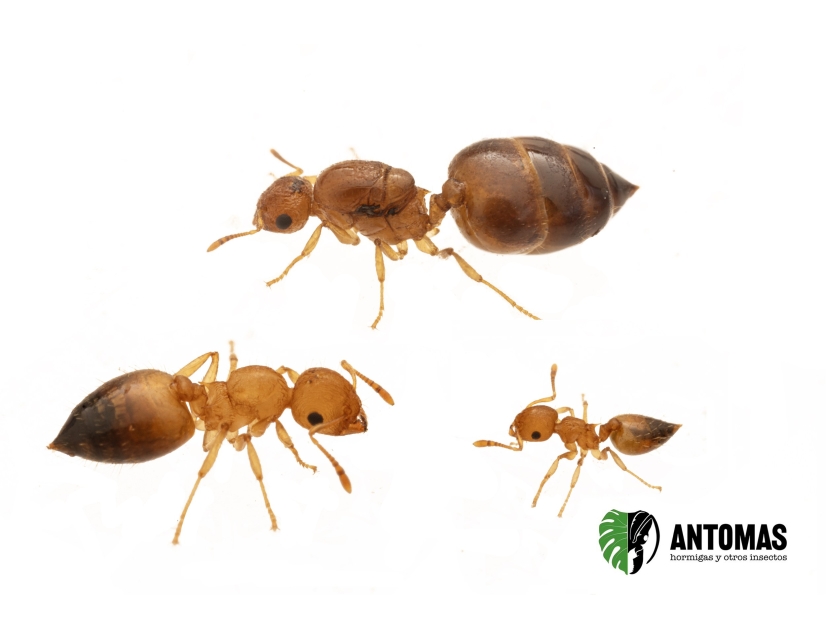
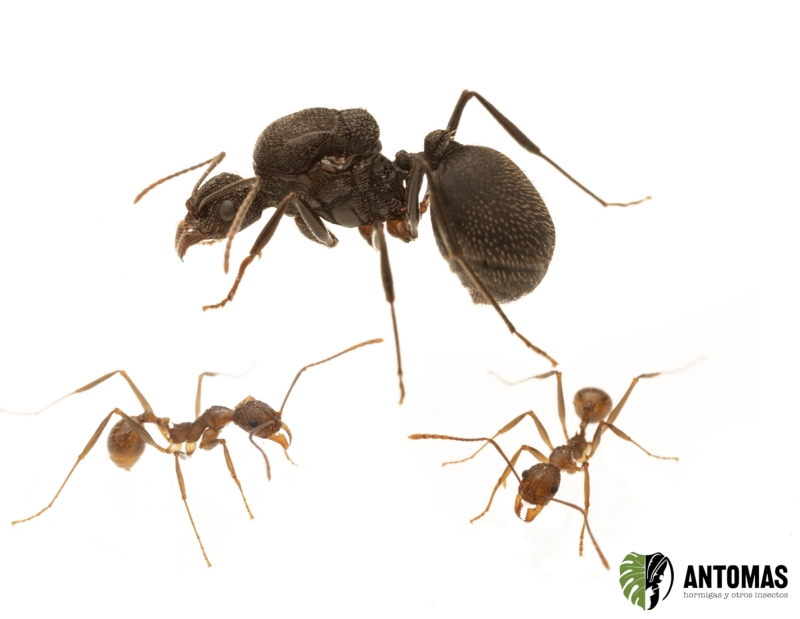
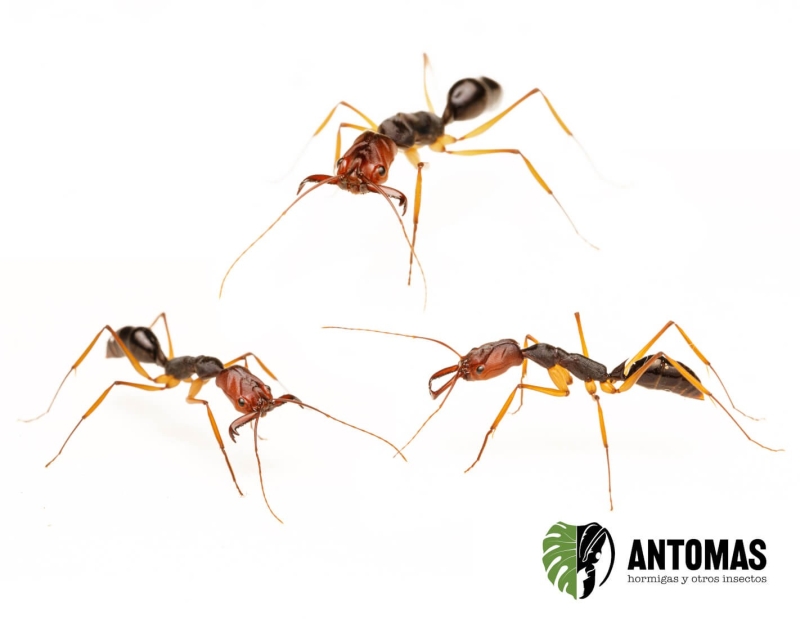
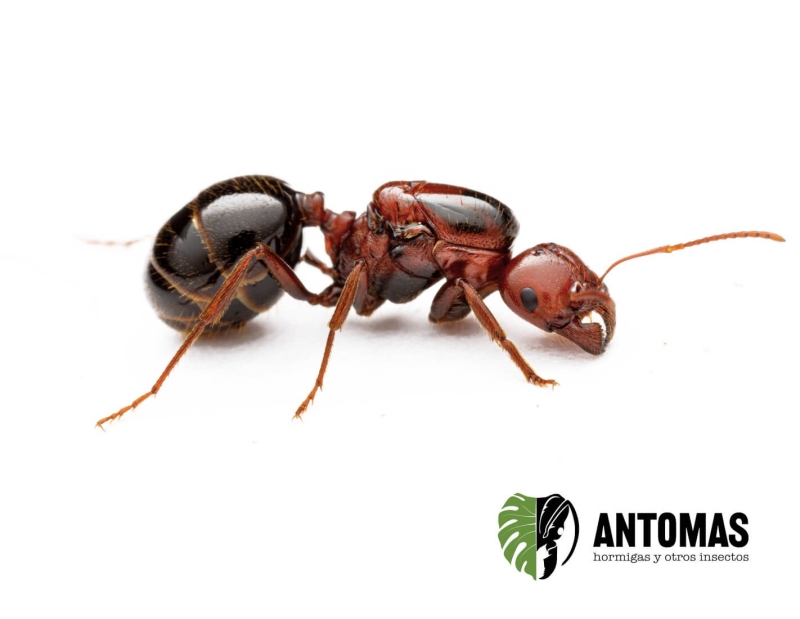
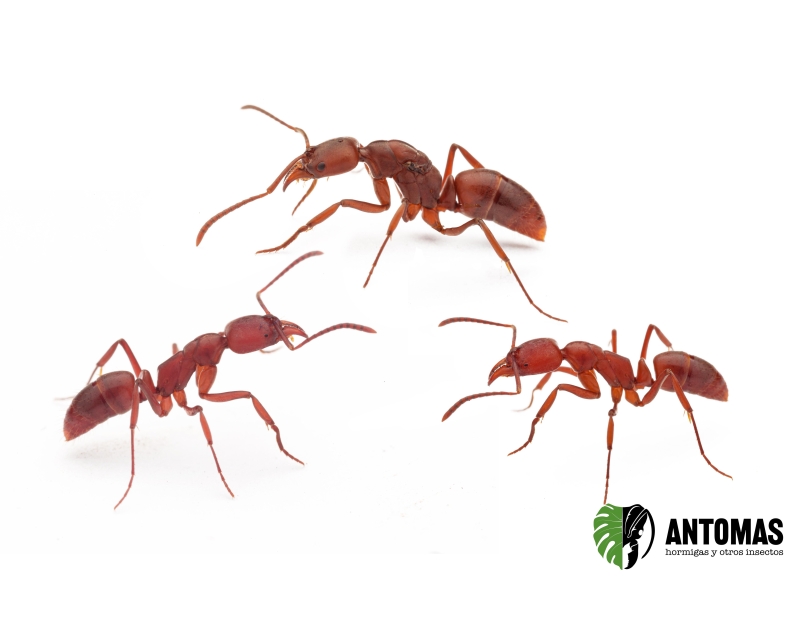
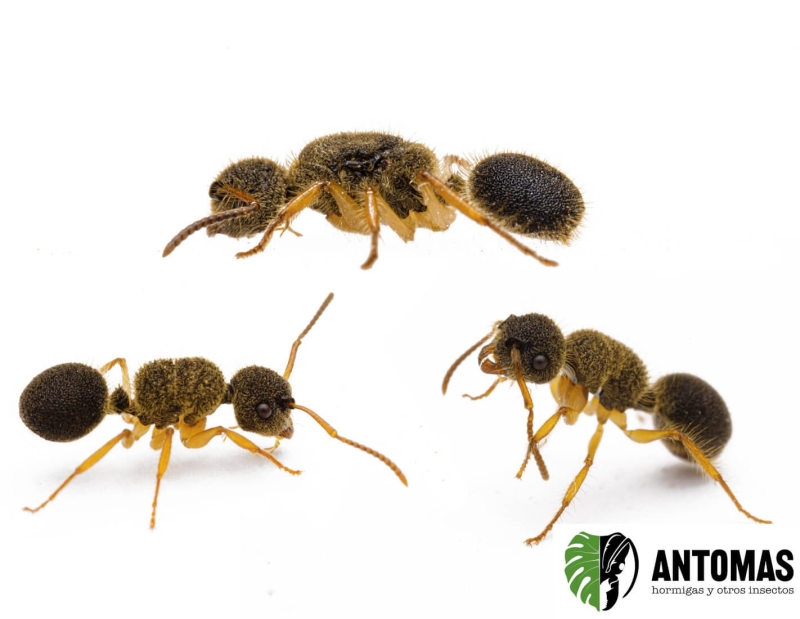
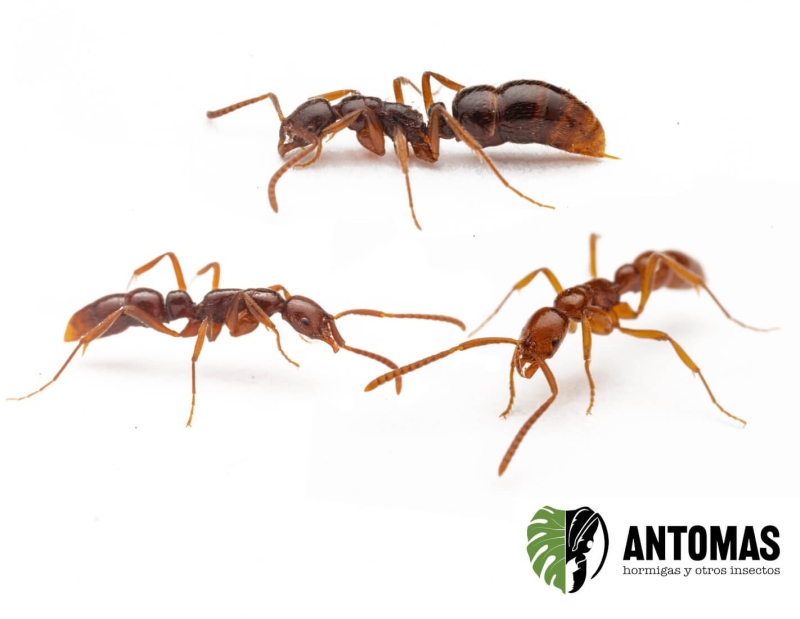
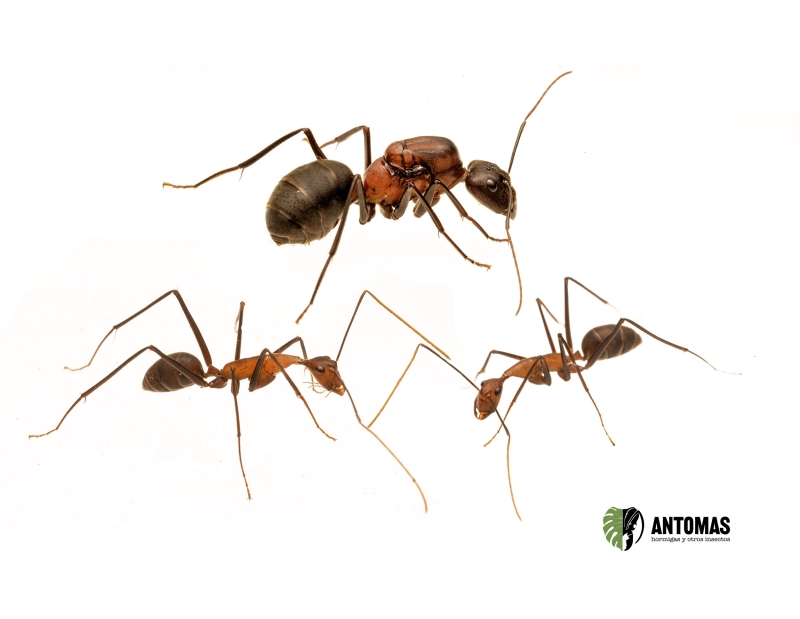
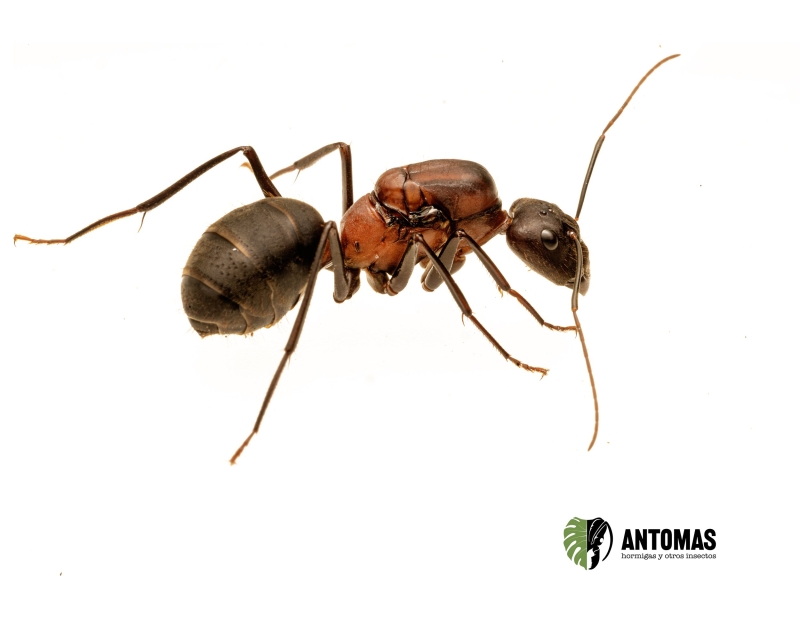
A small to medium-sized acrobat ant, amber-coloured, shiny and with sparse pale hairs, with workers of very different sizes. What follows comes from our own photos of the colony:
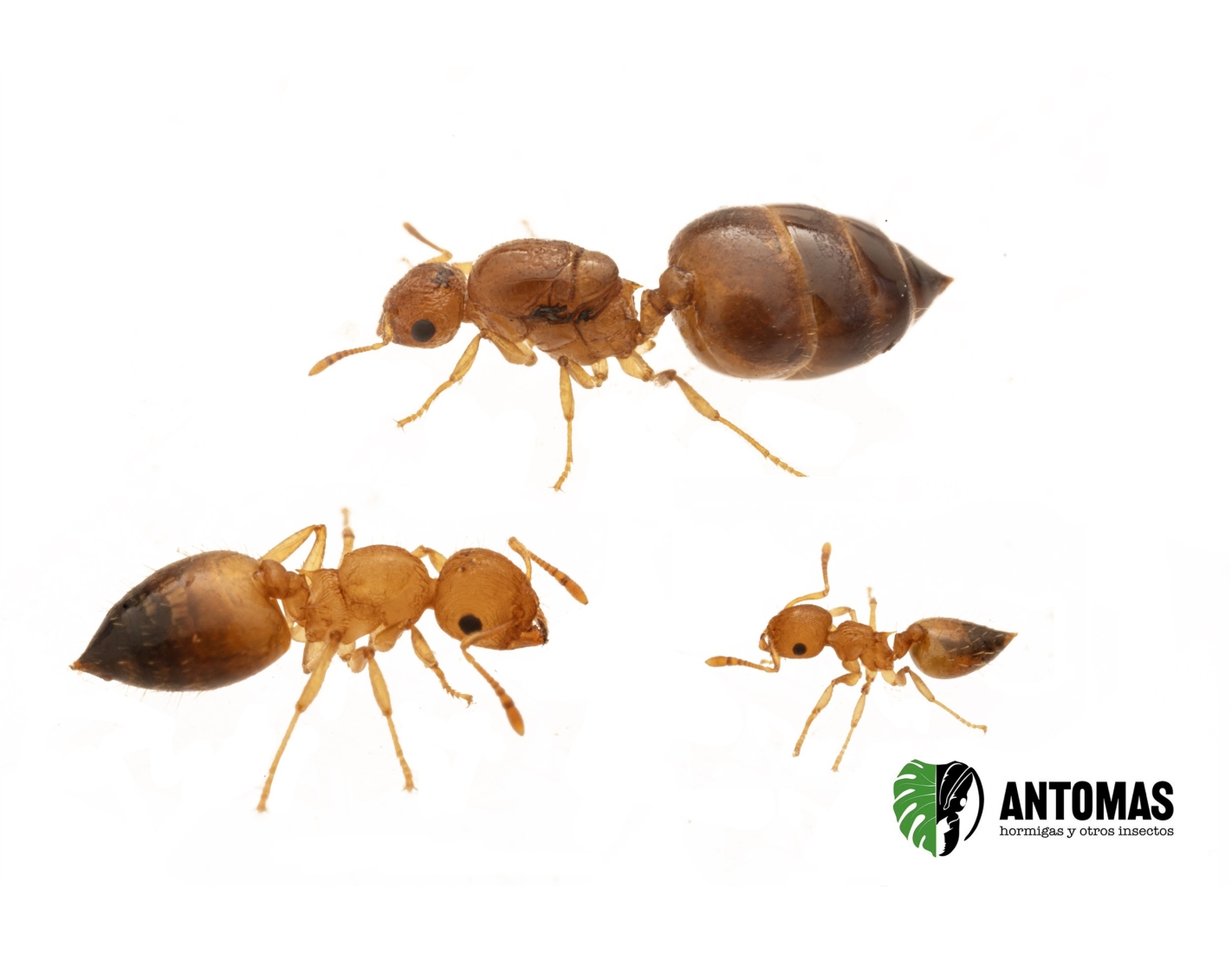
- Queen. Amber, with the large, domed thorax that housed the flight muscles (she loses her wings after the nuptial flight), a head that is small for her body and a large gaster, darker, brownish, towards the tip.
- Major worker (major). Amber, with a large, rounded head, clearly wider than that of the minors, large eyes, a robust thorax with two short spines and a heart-shaped gaster that darkens towards the tip.
- Minor worker (minor). Much smaller and nimbler, the same colour, with a rounded head and a pale gaster with a dark tip: she is the colony’s scout.
- Antennae. Yellowish, with some segments ringed in dark before the club, a detail that shows up very well in the photos.
- Gaster. Heart-shaped, attached to the postpetiole from above, with a spatulate sting.
Approximate measurements
As the species has not been identified, there are no published measurements to refer to, and we prefer not to give figures from other species as if they were its own. As a visual guide, the major is considerably larger than the minor, with a much wider head, and the queen is the largest member of the colony. We will keep adding to this section with our own measurements from the colony.
Captive care
Difficulty: 2/5 – Beginner
At Antomas we place it at beginner level. It eats everything, the colony arrives already up and running, with workers and brood, and its needs are those of an Asian acrobat ant: moderate warmth, a fairly dry, well-ventilated nest, sugar always available and varied protein. Three things to bear in mind:
- Warmth. It needs 24–28 °C in the nest for most of the year; in a European home, that usually calls for a heating cable or mat with a thermostat.
- A climber. Like any good acrobat ant, it climbs everything and its minors get through the tiniest gaps: the escape barrier must always be in good condition.
- Species yet to be identified. There is little specific information: you will need to observe and adjust. That is also what makes it interesting.
And it is worth it. It is an Asian acrobat ant rarely seen in Europe, eye-catching, with big-headed majors and a small taxonomic mystery that you can help to solve. If you are looking for other easy Asian acrobat ants, compare it with C. rogenhoferi or with the small C. biroi.
Recommended parameters
- Nest temperature: 24–28 °C, with one side slightly warmer and always with a thermostat, so that the colony can choose. With a little less it stays active, but grows more slowly.
- At night it can drop a few degrees without any problem, as in the wild.
- Humidity: a fairly dry nest, with a slightly damp area that never dries out (see “Dry and ventilated, with the water kept separate”).
- Foraging area: at room temperature, dry and ventilated.
- Water: always, in a test tube with water and cotton wool in the foraging area.
- Light: nest in the dark and foraging area in the light, with a normal day–night cycle and no direct sunlight.
- Winter: see “Winter: keep an eye on its rhythm”.
For heating, a cable or heating mat on one side of the nest, with a thermostat, is better than a source that heats the whole formicarium evenly or from below, which dries it out and causes condensation. Avoid direct sunlight and radiators.
Dry and ventilated, with the water kept separate
Many Asian acrobat ants live in trees, in carton nests or in hollow branches, in the open air. With our other Asian Crematogaster, experience is clear: excess humidity brings mould and, according to other keepers’ breeding logs, mass escape attempts. At Antomas we recommend:
- While the colony is small, one slightly damp part of the nest, where they usually keep the eggs and small larvae, and the rest dry.
- Once the colony has grown, a dry, well-ventilated nest, with the humidity limited to one area.
- Never soaked: condensation on the walls, mould or mites mean there is too much water or that leftovers have been forgotten.
- Never without water: the water tube must never be missing. Letting them dehydrate is a serious mistake.
Recommended formicaria
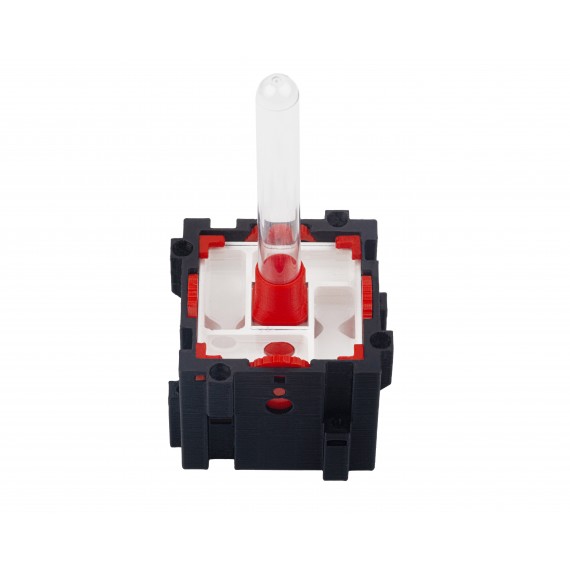
In the wild they may nest in wood or carton, but at home we do not recommend wood, cork or bamboo nests: they hold humidity poorly, go mouldy and barely let you see the colony. At Antomas we recommend the Qbik Alpha range by Anthouse: modular, with a fairly dry nest and the humidity in the tubes, exactly what an acrobat ant needs. For a colony like the one we sell, a QBIK ONE with small galleries, where the colony feels safe and where you can keep a close eye on the queen, the majors and the brood:
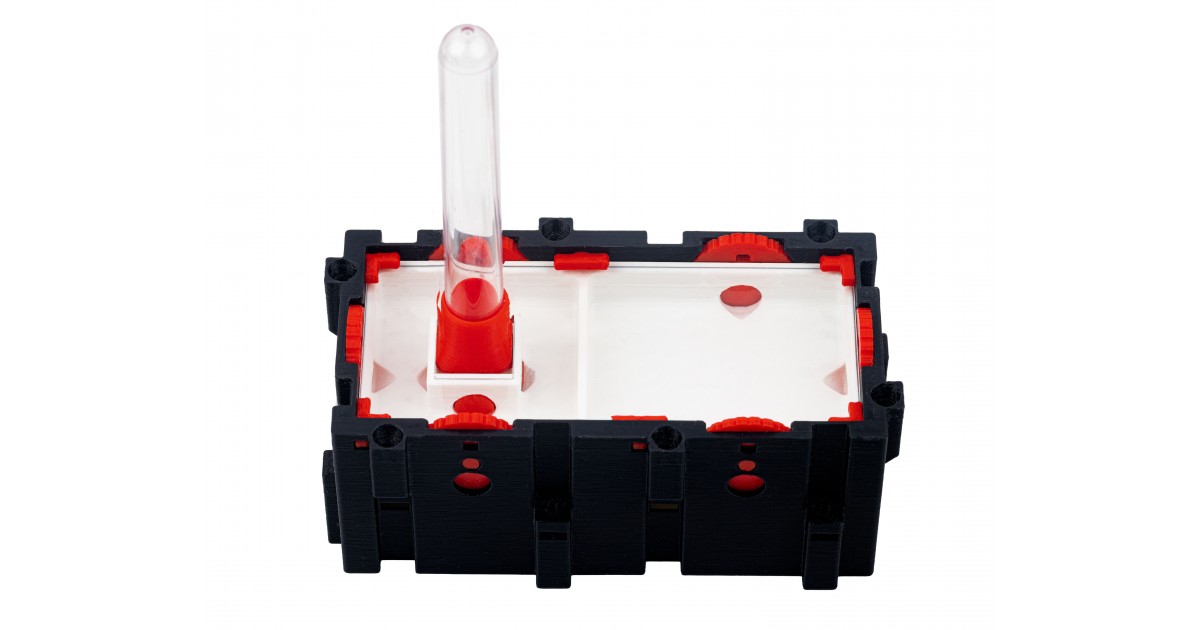
Acrobat ants grow fast: when the colony needs it, move on to the QBIK DUO and then to the larger modules of the same range.
The nest should always be in proportion to the colony: in one that is too big, the spare chambers become a rubbish dump, with mould and mites. Extend when you see lots of workers idling in the foraging area because they no longer fit inside. Complete the set-up as follows:
- An enclosed foraging area, with a few dry twigs for climbing and exploring, with nothing reaching up to the barrier.
- Water in a test tube with cotton wool and a feeder for the sugar, never on cotton wool.
- Heat on one side of the nest, with a thermostat, away from the feeder.
- An oil barrier and a well-fitting lid (see “Escapes and barriers”).
Arrival and moving house by tipping
At Antomas we sell it as a queen with workers and brood: a colony already up and running, past the founding stage. When it arrives:
- First few days. Keep it for a few days just as it arrives, somewhere dark and free of vibrations, at 24–26 °C.
- Gentle food. Offer it a drop of nectar on a small piece of aluminium foil and a small prey item, opened up. Remove whatever is left the next day.
- Check on it often, carefully. Look every day at how the queen, the brood and the water are doing, without opening the container or moving it more than necessary.
With the workers it arrives with, it can already go into its first formicarium. At Antomas we do it by tipping:
- Set up the formicarium beforehand, with the humidity loaded, the barrier in place and the water where it belongs, so that the lid is open for as short a time as possible.
- Work over a large tray, with a soft brush or soft tweezers, never with your hands.
- Open the tube or container it arrives in inside the foraging area, next to the nest entrance, and gently tip out the queen, the workers and the brood, helping the stragglers along with the brush.
- Close the lid and leave the nest in the dark. Within a few hours they will have carried the brood inside.
Also check the cotton wool in the tube: some acrobat ants pull it out to build with. If they are picking it apart, replace it before the water spills. To move later to a larger module, use the same method.
Growth and majors
There are no scientific data on the development of this ant, so we are not going to give you egg-to-worker figures that we cannot back up. What we do know from experience with Asian acrobat ants is that they grow fast and that temperature and protein are what count: at 24–28 °C and well fed, the colony progresses at a good pace; in the cold or with little protein, it stalls.
Majors will appear in greater numbers once the colony is strong, and the more protein it gets, the sooner. Note how many emerge and in what sizes: that is exactly what we still need to know about this ant. One colony, one queen: at Antomas we do not combine queens or colonies.
Feeding
Sugar in a feeder, always available. In the wild, much of its energy comes from the honeydew of aphids and scale insects. At Antomas we recommend variety: Blue Sugar nectar by Anthouse 4–5 times a week and another nectar or sugary liquid 1–2 times a week. You can also add a little protein to the nectar. Always offer it in a feeder, where the drop stays spread out and accessible, and never on cotton wool, which goes mouldy and spoils the liquid very quickly. Avoid large puddles of honey: the small workers can get stuck.
Protein: the more, the better. It is the engine of growth and, in all likelihood, of major production. In Antomas’s experience, if you do maintenance often and remove leftovers, it is better to give too much than too little: the colony understands that it has resources and grows faster and in greater numbers. If you will not be able to clean often, it is better not to overfeed. Change the type of insect from one week to the next, so that they do not always eat the same thing:
As the colony grows, you will see them surround and dismember prey much larger than themselves, gasters raised high: quite a spectacle. Buy the insects from a reliable supplier: those treated with insecticides can kill the colony. Remove leftovers the next day.
Water: always, in the test tube with cotton wool in the foraging area, kept separate from the sugar.
Winter: keep an eye on its rhythm
Asia ranges from equatorial rainforests with no cold season to monsoon regions with a cool, dry winter, and without knowing the species we cannot give you a fixed routine. At Antomas we recommend keeping it at 24–28 °C all year round and watching its rhythm:
- If in autumn and winter the queen slows down her laying and the colony becomes less active even though it has warmth and food, go along with it by giving it a gentle rest: a few degrees lower, never below 18–20 °C, nectar and water always available and less protein, for a few weeks.
- At the end of winter, gradually return to 24–28 °C and plenty of protein.
- Never severe cold.
We will keep refining this section with what we see in our colonies.
Behaviour and observation
Fast and organised. As soon as a scout finds food, the trail fills with workers. When you open the lid, you will see the gasters raised high. Watch where the majors position themselves: whether they stay by the brood, go out to dismember prey or stand guard at the entrances.
Watch without fear. At Antomas we believe ants are there to be enjoyed, watched and learnt from, not kept hidden away. Simply give them a dark nest and a lit foraging area, and watch them often and gently, intervening and stressing them as little as possible. Checking on them frequently is the best way to spot any problem in time.
Warning signs:
- The colony does not grow in the middle of the season: almost always a lack of protein or warmth.
- Larvae that do not develop or a queen that stops laying: check that the nest is at 24–28 °C.
- Workers crowding on the lid or trying to get out en masse: too much humidity or not enough ventilation.
- Gasters that are always thin: not enough sugar.
- Condensation, mould or mites: too much humidity or forgotten leftovers.
- Cotton wool in the tube picked apart: replace it.
- Lots of workers idling in the foraging area: time to extend.
Escapes and barriers
This is the point that demands the most attention: acrobat ants climb very well and cling tightly, and their minors are small and get through tiny gaps.
- A well-fitting lid or very fine mesh on the foraging area, and connections, stoppers and tubes firmly fitted.
- A barrier of paraffin oil or petroleum jelly on the upper part of the foraging area walls, in a thin, continuous band. Renew it when it collects dust or debris. With our other Asian acrobat ants, PTFE (Fluon) only half works.
- Take care when opening. That is when most escape: open only as much as you need and close it again when you are done.
- No bridges: make sure no twig, tube or pair of tweezers touches the barrier or the lid.
Handling and safety
Its sting is spatulate and does not pierce the skin; what you may notice is the odd bite, which from a home colony is no more than a pinch. Even so, work calmly:
- Always with tools: a soft brush, soft tweezers and, for transfers, tubes and adapters. Never with your hands.
- Open the formicarium only as much as needed, work slowly over a tray and close it when you are done.
- Do not combine queens or different colonies, and do not keep it with other species.
- With small children at home, let them enjoy watching it, with the formicarium closed, but never let them handle it.
It is an exotic species: under no circumstances should it be released.
What not to do
- Keep it below 22 °C for long periods or expose it to severe cold.
- Heat the whole formicarium from below or without a thermostat.
- Flood the nest or keep the terrarium laden with humidity, or leave it without water.
- Put it in a wood, cork or bamboo nest, or in a formicarium that is huge for its size.
- Put the sugar on cotton wool or in large puddles of honey, or let it run out.
- Always give it the same insect or leave leftovers for more than a day.
- Leave gaps or loose lids, or rely entirely on PTFE.
- Go days without looking at it: check the colony often, carefully.
- Combine queens or colonies, or handle it with your hands.
Scientific sources
As the species has not been identified, this care sheet draws on the literature on the genus Crematogaster and its Asian groups, on our photos of the colony and on the experience of Antomas and other keepers with Asian acrobat ants. Main references:
- Blaimer, B. B. (2012). A subgeneric revision of Crematogaster and discussion of regional species-groups (Hymenoptera: Formicidae). Zootaxa 3482: 47–67. doi:10.11646/zootaxa.3482.1.3
- Hosoishi, S. & Ogata, K. (2009). A taxonomic revision of the Asian endemic subgenus Physocrema of the genus Crematogaster (Hymenoptera: Formicidae). Zootaxa 2062: 15–36. doi:10.11646/zootaxa.2062.1.2
- Hosoishi, S. & Ogata, K. (2017). Phylogenetic analysis and systematic position of two new species of the ant genus Crematogaster (Hymenoptera, Formicidae) from Southeast Asia. European Journal of Taxonomy 370: 1–17. doi:10.5852/ejt.2017.370
- Marlier, J.-F., Quinet, Y. & de Biseau, J.-C. (2004). Defensive behaviour and biological activities of the abdominal secretion in the ant Crematogaster scutellaris (Hymenoptera: Myrmicinae). Behavioural Processes 67: 427–440. doi:10.1016/j.beproc.2004.07.003
- Leuthold, R. H. (1968). A tibial gland scent-trail and trail-laying behavior in the ant Crematogaster ashmeadi Mayr. Psyche 75: 233–248. doi:10.1155/1968/73761
- AntWiki. Orthocrema. antwiki.org (accessed in 2026)
- Bolton, B. AntCat: An online catalog of the ants of the world. antcat.org (accessed in 2026)