Difficulty: 3/5 – Advanced
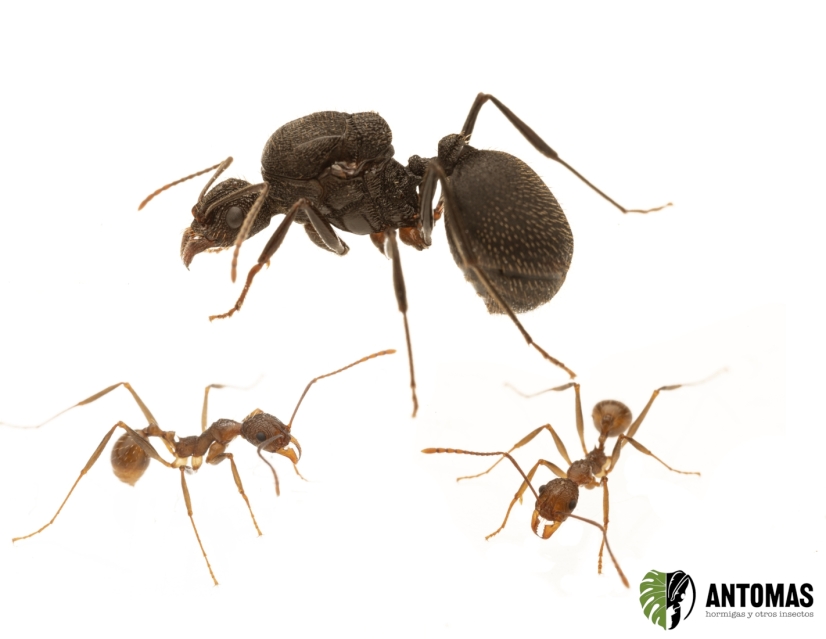
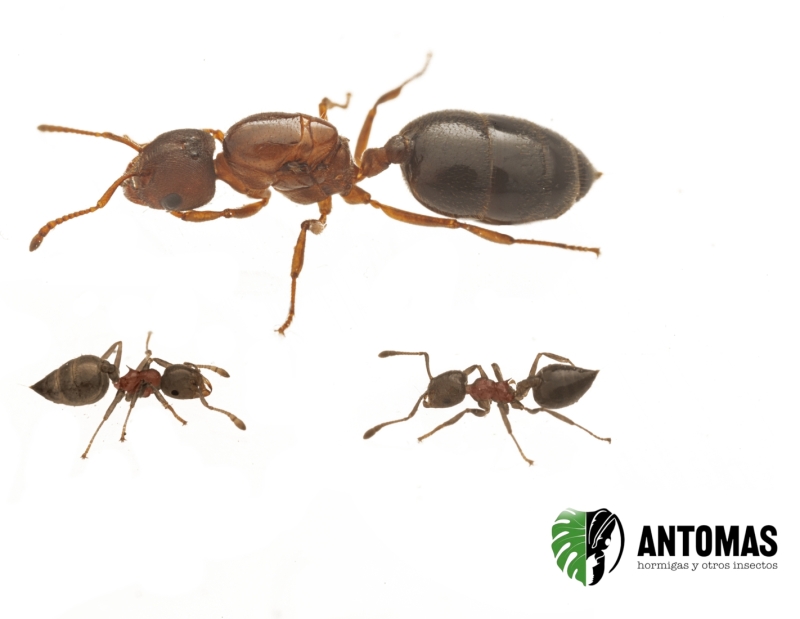
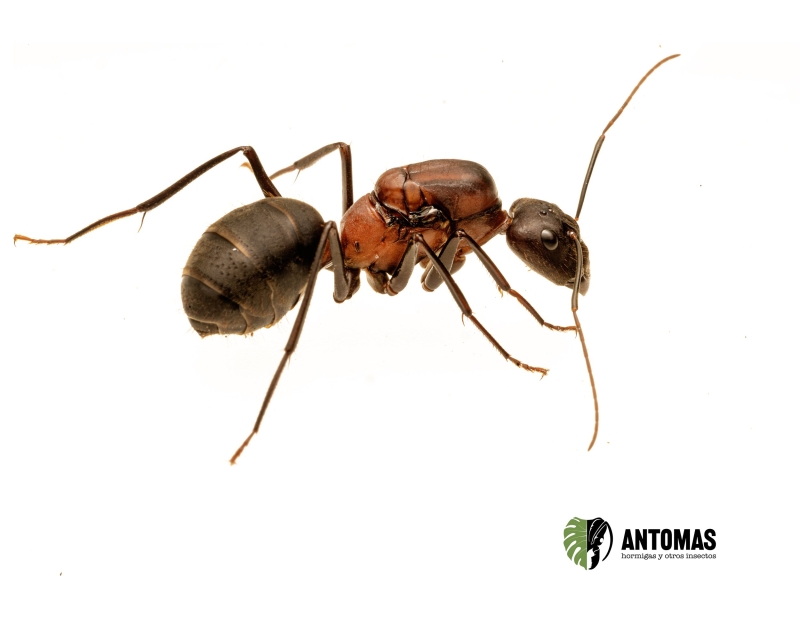
Slender, fast and reddish chestnut with a dark head and gaster, Aphaenogaster geei is a soil ant from Asia that science barely knows. It belongs to a genus famous for using tools and sowing the forest. Queen with workers and brood. Nest at 22–26 °C with moderate humidity, a gentle diapause of about 4 months at 12–16 °C, Qbik Wild One to start with, nectar in a feeder and varied protein, moving by tipping. Fast workers: escape barrier and lid from day one.
Aphaenogaster geei Wheeler, 1921 is one of those ants that catalogues name and almost nobody has studied. It is known from its description, a few records and what its keepers report. We do, however, know its relatives well: Aphaenogaster is one of the richest genera of the myrmicines, with more than 200 species, among them ants that soak sponges to carry liquids and others that sow the flowers of the forest.
That is why this care sheet separates what has been published on A. geei, what is known about other Aphaenogaster, what other keepers report and what we recommend at Antomas.
Biology
An ant named after a professor
The great American myrmecologist William Morton Wheeler described it in 1921 in “Chinese ants” and dedicated it to the man who had sent it to him: Professor Nathaniel Gist Gee (1876–1937). Gee, an American biologist, arrived in China in 1901 and taught natural sciences at Soochow University, where in 1912 he headed the country’s first independent biology department (Fu, 2017). He went on to train several generations of Chinese biologists and helped to found the Peking Society of Natural History and the Fan Memorial Institute of Biology, where he was the only foreign member of the board.
The species was described from a single colony that Gee collected in Soochow, today’s Suzhou: 18 workers, 9 queens and 10 males, which are still in Harvard’s Museum of Comparative Zoology. Wheeler added some workers from Foochow, today’s Fuzhou.
The younger cousin of A. famelica
Wheeler compared it with A. famelica, a species from Japan, and separated it by several details: A. geei is browner, smaller and slimmer, with a longer head and antennae, weaker sculpture and smaller, more upright spines. In 1929 he placed it in the subgenus Attomyrma.
A genus that does not quite hold together
Aphaenogaster has 218 living species and another 14 fossil ones (AntWiki), from the Mediterranean, home to more than half of them, to North America, Asia and Australia. But recent phylogenies show that it is not a natural group: it brings together lineages that do not share an exclusive ancestor (Branstetter and colleagues, 2022). Part of it has already been split off. In 2015 DeMarco and Cognato revived the genus Novomessor for the large harvesters of the American deserts, such as the Novomessor cockerelli we keep at Antomas, formerly Aphaenogaster cockerelli.
It is also an old lineage: fossil species are known from Baltic amber and from Miocene amber from China (Wang and colleagues, 2021).
Ants that use tools
This is the genus’s great claim to fame. Myrmicines cannot store much liquid in the crop, and Aphaenogaster have found a solution: they drop bits of leaf, grains of soil or pine needles on to liquid food, wait for them to soak it up and carry them back to the nest. Joan and Gary Fellers described this in 1976 in the journal Science, and it has since become one of the classic examples of tool use in insects.
- They do not use just anything. Maák and colleagues (2017) found that they choose their materials. A. senilis learnt in about 10 trials to prefer paper and sponges, which do not exist in its habitat, and paper soaked up as much as 28 times its weight in diluted honey.
- They break tools down to size. More than 80 % of the time, A. subterranea tore sponges into smaller pieces.
- Not all of them do it. In A. senilis, only one in ten of the workers present used tools. The users were more exploratory and more attracted to prey: personality counts too (Maák and colleagues, 2020).
This has not been studied in A. geei. But if you ever see soil or debris on a drop of nectar, it may not be dirt: look closely.
Gardeners of the forest
Other Aphaenogaster play a huge role in the forest. Many plants add a small fatty reward, the elaiosome, to their seeds. The ant carries the seed off, eats the reward and leaves the seed somewhere safe, where it germinates. In the forests of eastern North America, Aphaenogaster are so important to these plants that Ness and colleagues (2009) asked whether they are keystone mutualists for the whole group.
And in Australia, their relatives dig so much that they move soil on a large scale: they are known as funnel ants, after the shape of their entrances, and are studied as agents that change soils and slopes (Richards, 2009). They even cause problems in pastures and on golf courses. Others farm aphids on plant roots. None of this has been studied in A. geei, but it gives an idea of what an ant of this genus may be hiding.
What is known about its life (and what is not)
The literature says nothing about its nest, its prey or its flights, and Wheeler did not describe the nest. Everything else comes from shops and keepers, who do not always agree:
- Nest: in the soil, under stones.
- Queens: one per colony.
- Founding: claustral, with flights around the rainy season.
- Diet: omnivorous and scavenging, like the rest of the genus.
- Foraging: individual, with fast workers that follow odour trails.
- Colony size: no agreement here: a few hundred, 5,000 or 10,000 workers, depending on the shop.
In other species of the genus, workers recruit nestmates to large prey, and up to 26 workers can come to a wasp within a few minutes.
A monsoon climate with a winter
The published records are from eastern China, in Jiangsu and Fujian. It is an ant of subtropical monsoon climates: long, hot and very humid summers, with averages of 27–29 °C, and cool, drier winters. Where it was described, the winter is genuinely cold; in the mildest areas, the cold months average around 14–18 °C. Underground, the nest stays within a few degrees of these figures and does not freeze. That winter shapes the guidance in this care sheet (see “Gentle diapause”).
Size and morphology
A medium-sized, slender, long-legged Aphaenogaster, without major workers. According to the original description:
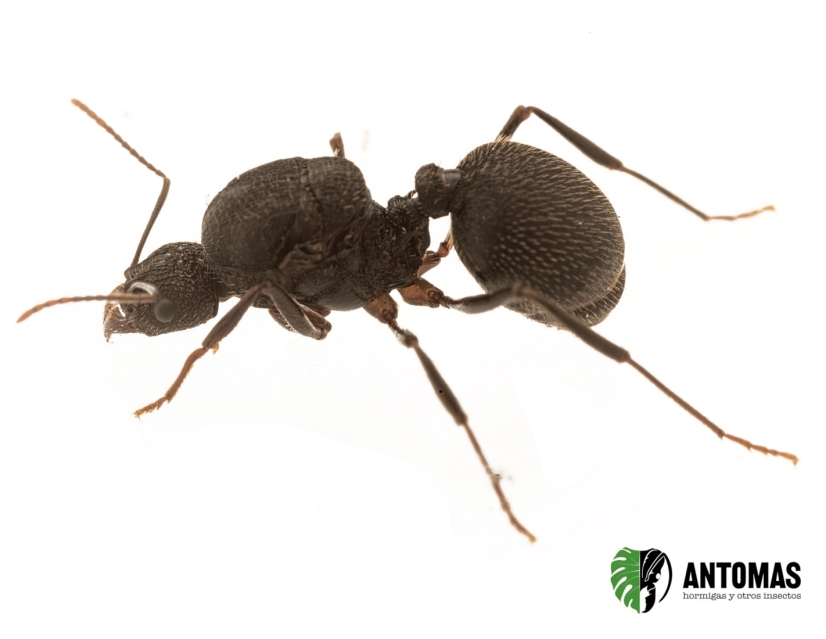
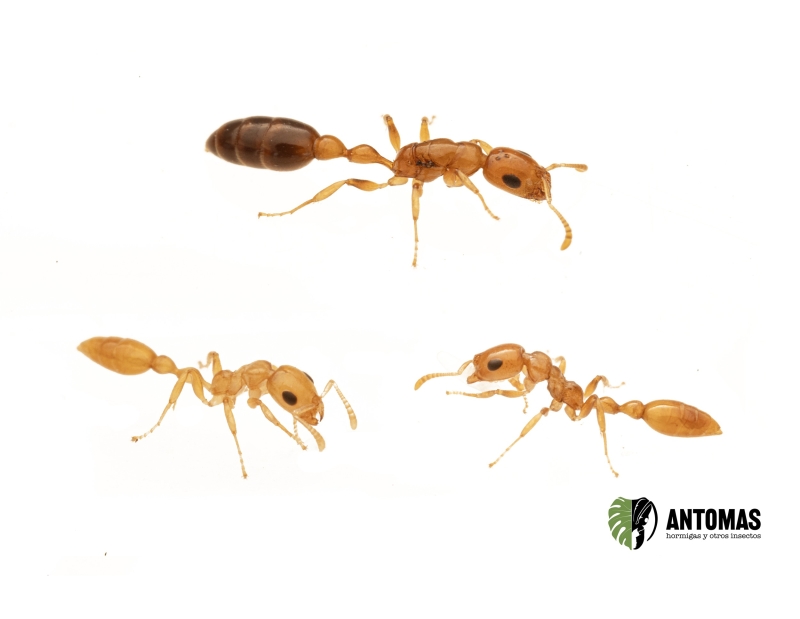
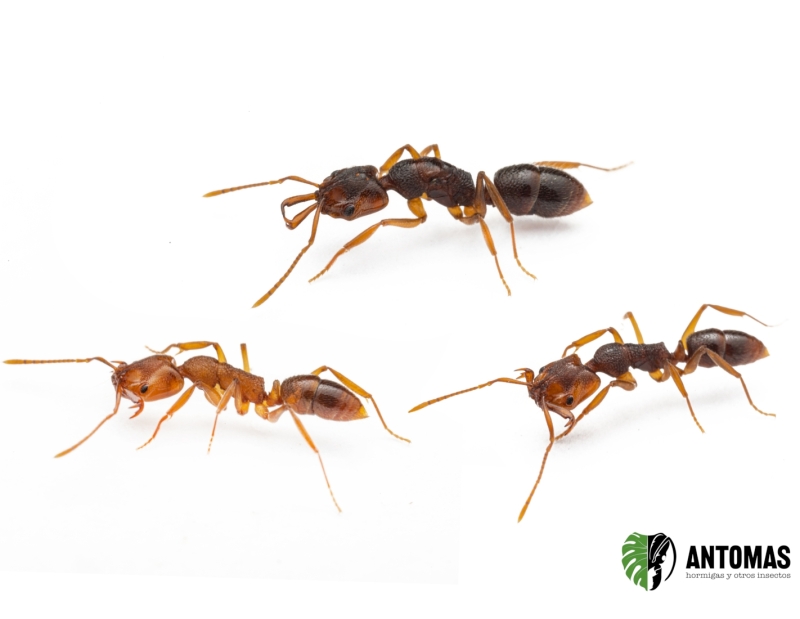
- Worker. Reddish chestnut, with the top of the head dark and the gaster blackish except for the tip. Elliptical head, longer than wide, with dense, wrinkled sculpture; gaster and legs smooth and shiny. Two spines on the propodeum, directed upwards and backwards.
- Hairs. Yellowish, moderately abundant, coarse and erect on the body.
- Queen. Almost black, with reddish chestnut mandibles, cheeks and legs, and spines stouter than the worker’s.
- Male. Black, with dark legs and yellowish mandibles, antennae and tarsi. Its spines are reduced to two tiny teeth.
Approximate measurements
- Worker: 6.5–7.5 mm (Wheeler, 1921)
- Queen: 9–10 mm, with wings of 10–10.3 mm (Wheeler, 1921)
- Male: 5–5.5 mm (Wheeler, 1921)
Shops give somewhat larger queens, of 11–13 mm, and workers of 5–9 mm. Wheeler’s measurements come from a single colony.
Care in captivity
Difficulty: 3/5 – Advanced
It eats everything and is not delicate, but at Antomas we place it at the advanced level for four reasons:
- Diapause. It asks for a gentle winter, neither tropical nor European.
- Humidity. It needs a stable humid area, without flooding.
- Escapes. Its workers are fast and exploratory.
- Little published experience. There are hardly any keeping journals: you will have to observe and adjust.
And it is worth it. It is an active, elegant ant, rarely seen in Europe, from a genus with fascinating behaviour. If you have one, you may be among the first to describe how it lives.
Recommended parameters
- Nest temperature: 22–26 °C in the active season, from March to November. If heat is needed, at the side and always with a thermostat.
- Foraging area: room temperature, up to about 28 °C.
- Nest humidity: 50–70 %, with one humid area and the rest drier.
- Foraging area humidity: 40–50 %.
- Why these values: in summer, the soil in its climate is around 24–27 °C at nest depth, and shops give very similar ranges (nest at 22–28 °C and between 50 and 70 % humidity).
- Light: dark nest and lit foraging area, with a normal day and night cycle.
- Diapause: gentle, for about 4 months (see “Gentle diapause”).
Recommended formicarium
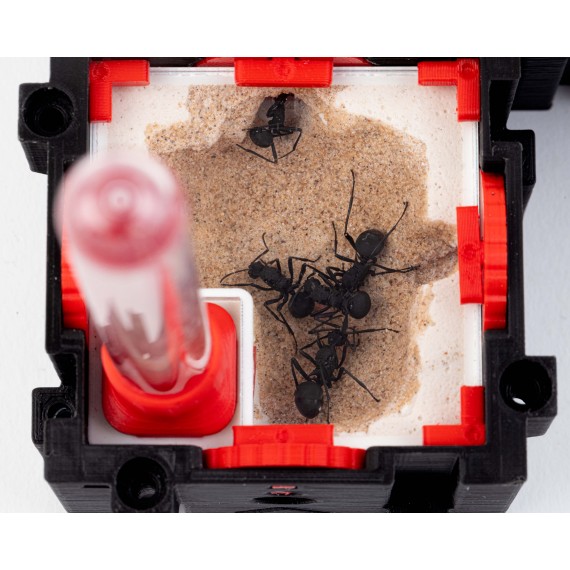
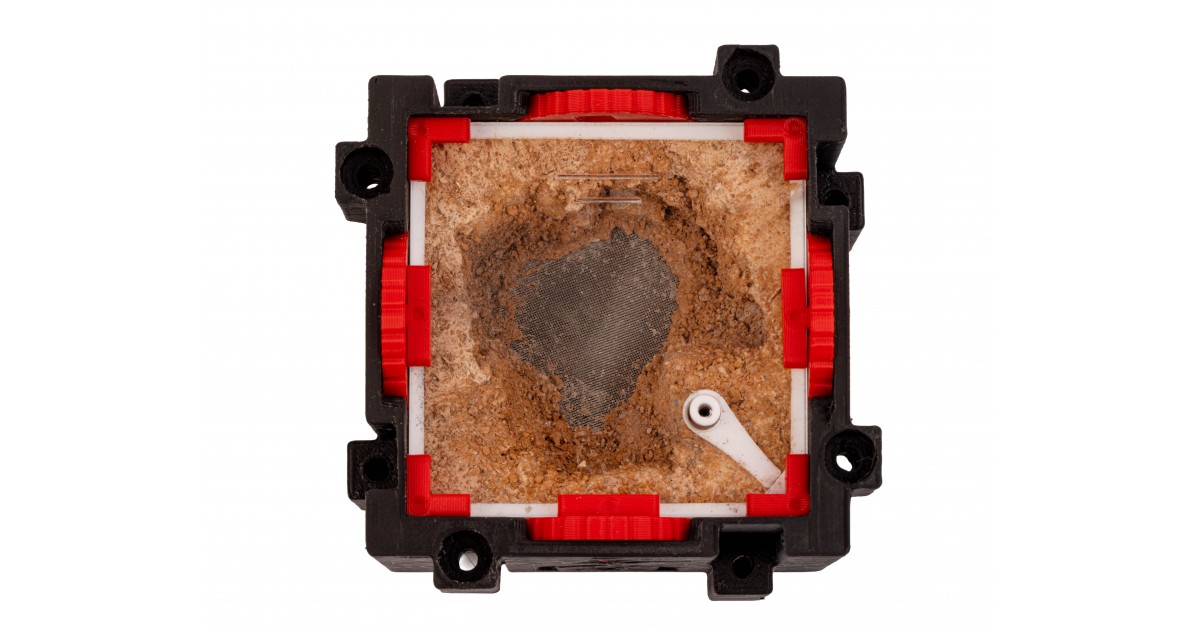
To start with, at Antomas we recommend the Anthouse Qbik Wild One, made of plaster, which holds humidity well, in either its standard or its evaporation version. The standard version has a refillable water tube. In the evaporation version, the water sits in a reservoir under the nest, separate from the galleries, and the humidity rises through a mesh, creating a gradient so that the colony can choose where to settle.
The small colony will have plenty of room for a while. The large colony will fill it sooner, and the natural next step is then the Qbik Wild Duo P 2C.
Expand when you see many workers idle in the foraging area, with no room inside. Complete the setup as follows:
- A large foraging area with some substrate, stones and leaf litter: it is very active and likes to explore.
- Water in a test tube with cotton wool and a feeder for the sugar.
- Escape barrier and a well-fitting lid (see “Escapes and barriers”).
How to prepare the Qbik Wild
The formicarium arrives dry, and the plaster takes about a week to take up moisture. Prepare it before the colony arrives, following Anthouse’s instructions:
- Standard version: fill the humidity tube and keep it upright. To speed things up, add 2.5–5 ml of water with a syringe through a side access.
- Evaporation version: fill the reservoir with a syringe. When the water runs out, empty it completely and refill it from scratch.
- Water only: nectar and other liquids ruin the humidity system.
- Heat always at the side: never directly on the modules.
Arrival and moving by tipping
When it arrives, leave it for a day somewhere quiet and dark at room temperature and check that it has water. To move it into the formicarium, at Antomas we do it by tipping:
- Set up the formicarium beforehand, with the humid area ready, the water in place and the barrier on.
- Work over a tray with a soft brush, never with your hands.
- Open the container it arrived in inside the foraging area, next to the nest entrance, and gently tip out the queen, the workers and the brood, helping any stragglers with the brush.
- Close the lid and leave the nest dark. Within a few hours they will have carried the brood inside.
To move it to a larger module later, use the same method.
If it arrives in autumn or winter, let it settle for a few days and then lower the temperature gradually so that it has that year’s diapause, a shorter one if need be.
Growth
We sell it as a queen with workers and brood, in two colony sizes. Shops and keepers describe moderate, steady growth, with about 5–7 weeks from egg to worker in warm conditions. There are no scientific data. One colony, one queen: at Antomas we do not combine queens or colonies.
Feeding
Sugar in a feeder, always available. At Antomas we recommend variety: Anthouse Blue Sugar Nectar 4–5 times a week and another nectar or sugary liquid 1–2 times a week. You can also add a little protein to the nectar. Always offer it in a feeder, where the drop stays spread out and within reach, and never on cotton wool, which goes mouldy and quickly spoils the liquid.
Protein: varied and frequent. It is an opportunistic omnivore, and in the experience of Antomas, the more protein a colony gets, the faster it grows. If you clean often and remove the leftovers, it is better to overdo it than to fall short; if you cannot clean, it is better not to overfeed. Change the type of insect from one week to the next:
Seeds, only as a supplement. Some keepers occasionally offer small, untreated seeds, as the genus makes use of them. Remove any they do not touch.
Remove the leftovers within 24–48 h and buy the insects from a reliable supplier: insects treated with insecticides can kill the colony.
Water: always, in the test tube with cotton wool in the foraging area, separate from the sugar.
Gentle diapause
The sources disagree here: some shops say it does not need one, others that a gentle rest does it good and others that it is compulsory. Nobody has studied it. Given the climate it lives in, with a cool and well-marked winter, at Antomas we recommend a gentle diapause of about 4 months, from mid-November to mid-March, at 12–16 °C:
- Going in. Lower the temperature gradually: about 2 weeks at 18–20 °C, cutting back the protein until you stop it.
- During diapause. Water at all times, the humid area never dry, a little nectar and hardly any protein. Disturb it as little as possible.
- Coming out. Raise the temperature gradually in March, again with a stage at 18–20 °C, and go back to protein as soon as you see brood.
- Where. A garage, a cellar or a wine cooler will do, as long as it does not fall below about 10 °C. A heated room does not get cold enough.
Behaviour and observation
Fast and active. Workers cover the foraging area at a good pace, each on its own. One shop describes it as calm and nocturnal.
Watch the liquid food. Put a drop of nectar in the foraging area with bits of paper and grains of sand nearby. If they use them, you will be among the first to see it in this species (see “Ants that use tools”).
Watch without fear. At Antomas we believe ants are there to be enjoyed, watched and learnt from, not kept hidden away. All it takes is a dark nest, a lit foraging area and a gentle approach when you watch them.
Warning signs:
- Larvae not developing in the middle of the season: check the temperature and the protein.
- Workers crowded in the humid area: the rest may be too dry.
- Mould or mites: too much water or forgotten leftovers.
- Many workers idle in the foraging area: time to expand.
Escapes and barriers
Its workers are fast and agile, and shops stress escape prevention:
- Barrier: a thin, continuous strip of mineral oil at the top of the foraging area walls. Renew it when it gathers dust or debris.
- A well-fitting lid as a second line.
- No gaps in connections, plugs and tubes.
- Nothing that acts as a bridge to the barrier.
Handling and safety
It has a sting and may use it to defend itself, but it is not aggressive, and its sting is much less painful than that of a bee or wasp. Work with tweezers and a soft brush over a tray, and take your time. With small children or pets at home, keep the formicarium closed and out of their reach. This is an exotic species: it must never be released.
What not to do
- Skip the diapause or put it in a fridge.
- Let the nest dry out or soak all of it.
- Put the sugar on cotton wool or always give the same insect.
- Leave leftovers for more than a day.
- Give protein in the middle of diapause.
- Combine queens or colonies.
- Neglect the barrier or the gaps: it is fast.
- Move a small colony into a huge formicarium.
Scientific sources
This care sheet is based on the scientific literature on Aphaenogaster geei and its genus, on the AntCat and AntWiki catalogues, on climate data from its range and on the experience of Antomas and other keepers. Main references:
- Wheeler, W. M. (1921). Chinese ants. Bulletin of the Museum of Comparative Zoology 64: 529–547. Text on the Internet Archive (open access)
- Wheeler, W. M. (1929). Some ants from China and Manchuria. American Museum Novitates 361: 1–11.
- Fellers, J. H. & Fellers, G. M. (1976). Tool use in a social insect and its implications for competitive interactions. Science 192: 70–72. doi:10.1126/science.192.4234.70
- Ness, J. H., Morin, D. F. & Giladi, I. (2009). Uncommon specialization in a mutualism between a temperate herbaceous plant guild and an ant: are Aphaenogaster ants keystone mutualists? Oikos 118: 1793–1804. doi:10.1111/j.1600-0706.2009.17430.x
- Richards, P. J. (2009). Aphaenogaster ants as bioturbators: impacts on soil and slope processes. Earth-Science Reviews 96: 92–106. doi:10.1016/j.earscirev.2009.06.004
- Guénard, B. & Dunn, R. R. (2012). A checklist of the ants of China. Zootaxa 3558: 1–77. doi:10.11646/zootaxa.3558.1.1
- DeMarco, B. B. & Cognato, A. I. (2015). Phylogenetic analysis of Aphaenogaster supports the resurrection of Novomessor (Hymenoptera: Formicidae). Annals of the Entomological Society of America 108: 201–210. doi:10.1093/aesa/sau013
- Maák, I., Lőrinczi, G., Le Quinquis, P., Módra, G., Bovet, D., Call, J. & d’Ettorre, P. (2017). Tool selection during foraging in two species of funnel ants. Animal Behaviour 123: 207–216. doi:10.1016/j.anbehav.2016.11.005
- Fu, L. (2017). Nathaniel Gist Gee’s contribution to biology in modern China. Protein & Cell 8: 237–239. doi:10.1007/s13238-016-0318-x
- Maák, I., Roelandt, G. & d’Ettorre, P. (2020). A small number of workers with specific personality traits perform tool use in ants. eLife 9: e61298. doi:10.7554/eLife.61298
- Branstetter, M. G., Longino, J. T., Reyes-López, J. L., Brady, S. G. & Schultz, T. R. (2022). Out of the temperate zone: a phylogenomic test of the biogeographical conservatism hypothesis in a contrarian clade of ants. Journal of Biogeography 49: 1640–1653. par.nsf.gov/biblio/10376190
- Wang, B., Shi, G., Xu, C., Spicer, R. A., Perrichot, V. et al. (2021). The mid-Miocene Zhangpu biota reveals an outstandingly rich rainforest biome in East Asia. Science Advances 7: eabg0625. doi:10.1126/sciadv.abg0625