Difficulty: 2/5 – Beginner
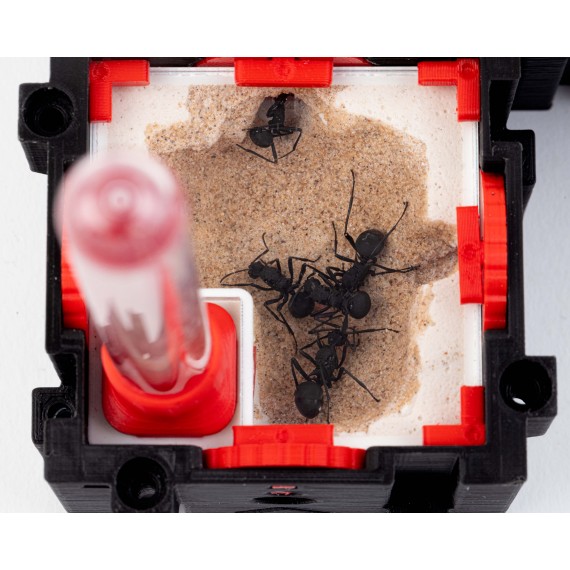
A young colony from our own breeding: one queen with 20–30 workers and brood, past the founding stage and ready to grow. Ideal for watching a mountain carpenter ant from North Africa go from a few dozen workers to a polymorphic colony with majors.
The essentials: a small, dry nest to begin with (a QBIK ONE with large or cave-type galleries), expanded as the colony grows; 22–27 °C with a warmer spot; water in a test tube with cotton wool, nectar in a feeder, plenty of varied protein; a PTFE or paraffin oil barrier; moving by tipping out; and diapause of 4–5 months at 5–10 °C every winter.
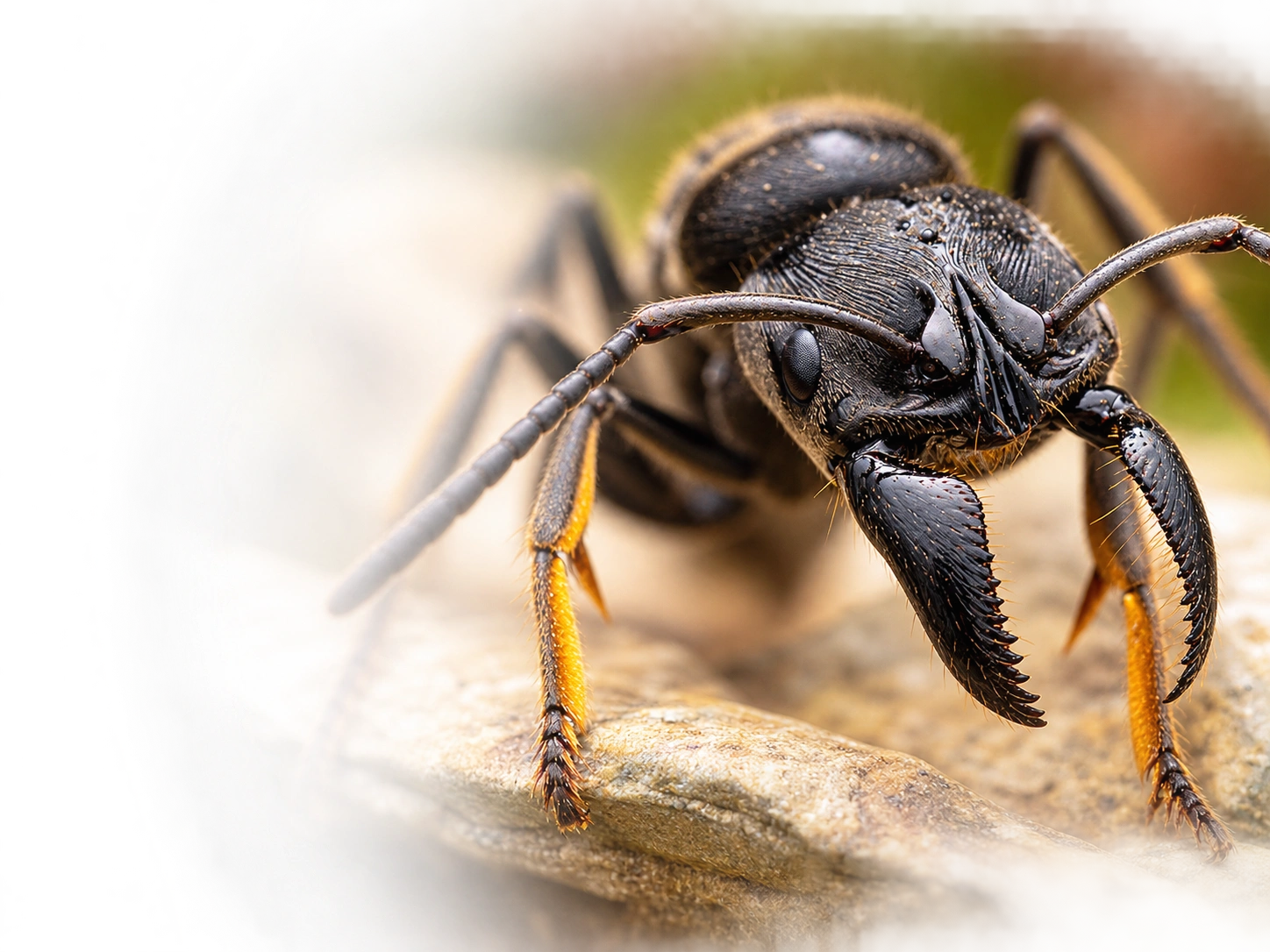
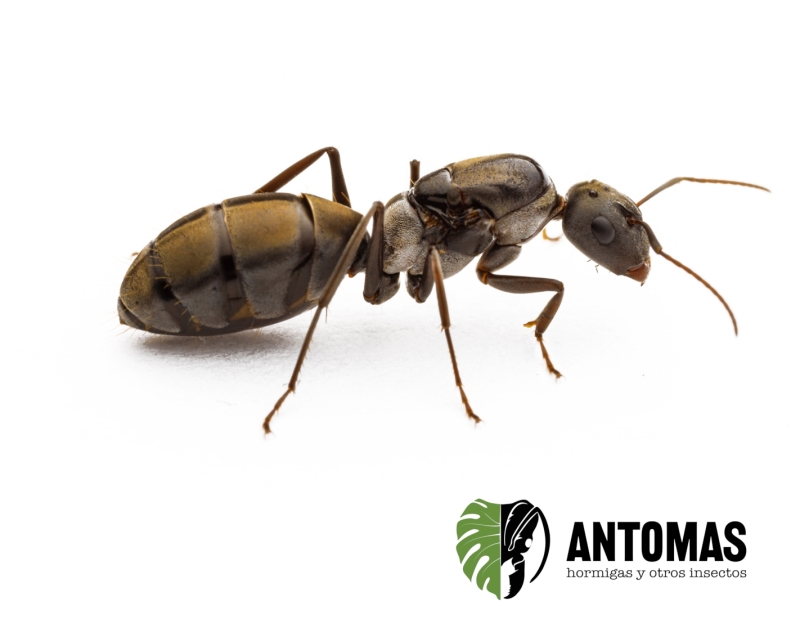
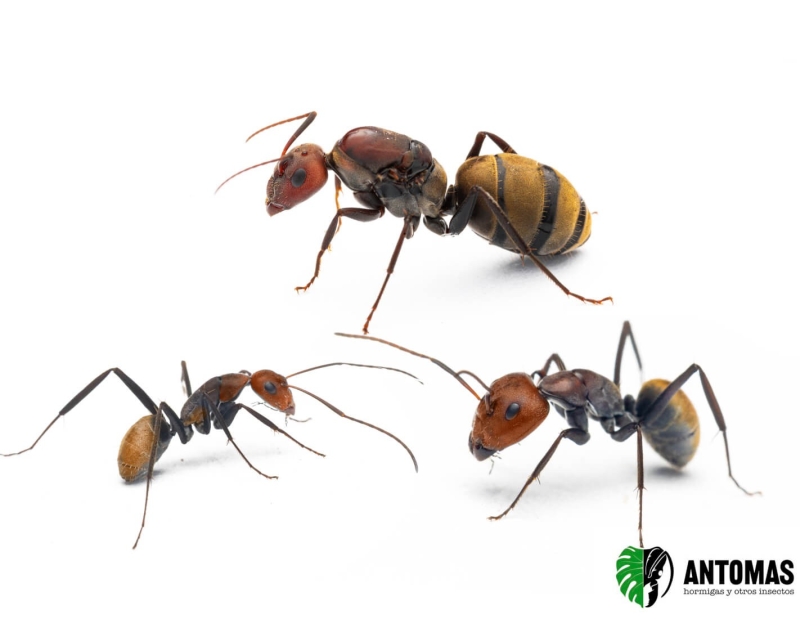
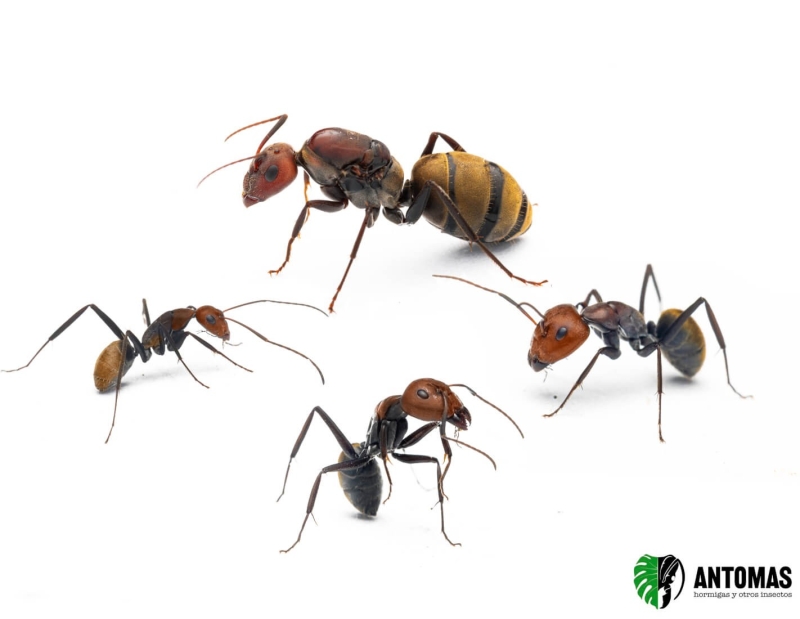
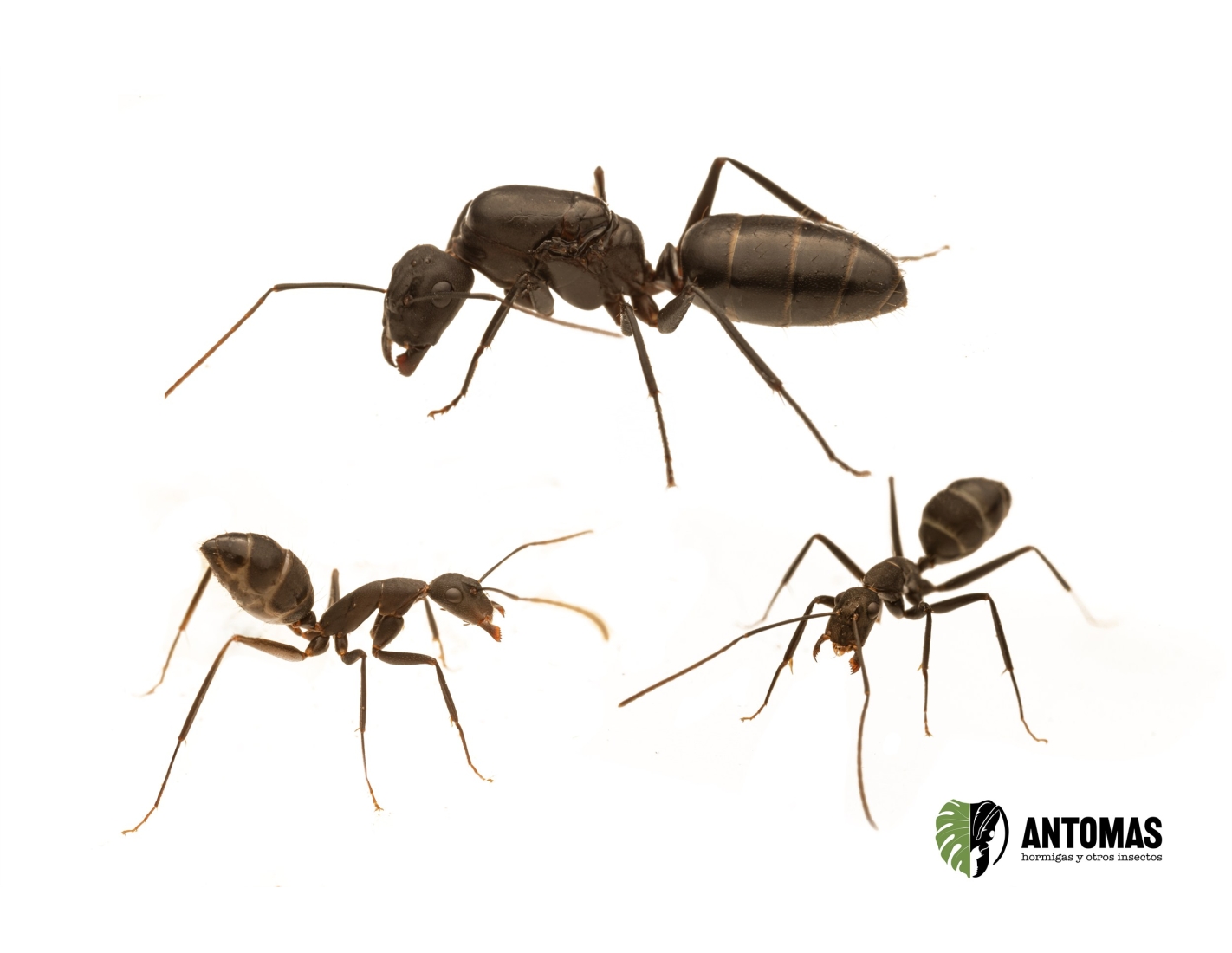
Few African carpenter ants break the stereotype quite like Camponotus alii Forel, 1890. This is not a savannah or desert species: it lives in the mountains of the Maghreb, in pine, oak and cedar forests where winter brings frost and snow. Its workers are glossy black and long-legged, and over the years the colony fills with workers of very different sizes, from slender scouts to broad-headed majors. In some Algerian mountain forests it is quite simply the most abundant ant.
This is the main care sheet for the species at Antomas, written for anyone starting with a small colony: a queen with her first few dozen workers and brood. It is the best way to really get to know a Camponotus: following it season by season as it grows. Everything we say about the species comes from the scientific literature; where something has not been studied in C. alii, we explain it from the genus, and we say so.
If you would rather skip that stage and start with a mature colony of hundreds of workers, there is the Camponotus cf. alii Empire, with its own care sheet focused on keeping large colonies.
Biology
Why we call it Camponotus cf. alii
The name of our line includes the abbreviation cf., from the Latin confer (“compare with”). Taxonomists use it when a specimen matches a known species but its identity has not been confirmed by a formal study: specialist keys, fine measurements and comparison with the type specimens from which the species was described. In a genus as huge as Camponotus, with more than a thousand species and many of them very similar, it is the honest way to name a breeding line. Our colonies match C. alii in every visible respect, and in this care sheet we treat them as such.
An 1889 “race” that became a species
Auguste Forel, one of the founding fathers of myrmecology, described this ant in 1890 in his work on the ants of Tunisia and eastern Algeria. At the time he did not regard it as a separate species but as a “race” of Camponotus rubripes, and named it C. rubripes r. alii. The workers in the description were collected in March and April 1889 in the pine forests of Djebel Ozmor, a mountain near Tébessa in eastern Algeria, above 1100 m.
A few years later it came to be treated as a species, and today it is placed in the subgenus Tanaemyrmex, which brings together many good-sized Camponotus from the warm regions of the Old World. In the modern classification of the subfamily Formicinae, revised with molecular data by Ward, Blaimer and Fisher in 2016, the genus belongs to the tribe Camponotini, the carpenter ants.
A curiosity for natural history enthusiasts: Forel’s original specimens are still in Switzerland. The catalogue of his collection at the Naturmuseum Solothurn, published by Christoph Germann in 2017, photographs three of these syntypes with their handwritten label, “Djebel Ozmor p. Tebessa, 1380 m”. They are the physical reference for the species, the one that would have to be consulted to confirm any identification.
Spread across mountain ranges separated by plains and deserts, the species also has several subspecies described in the 20th century, such as C. alii auresi Emery, 1920, from the Aurès, or C. alii hoggarensis, from the Hoggar: isolated populations with small differences in colour, hairiness or sculpture.
The queen of the Yakouren forests
The most striking fact about C. alii in the wild comes from Kabylia, in northern Algeria. In 2021, Lamia Abdi-Hamecha and her colleagues, among them Henri Cagniant, the great specialist in the ants of the Maghreb, published a survey of the ants of the Yakouren forest, a mountain forest. Of all the species they found, C. alii was the most abundant, ahead of such common species as Pheidole pallidula or Crematogaster auberti.
A large carpenter ant dominating a forest like this says a lot about how effective it is as a forager. It is exactly what you will see at home: an active ant with a good appetite and a keen urge to explore everything.
From Djebel Ozmor to the High Atlas
Museum and collection records allow its range to be mapped fairly precisely. It is known from eastern Algeria (pine forests at the type locality and oak forests around 1000 m), from the cedar and black pine forests of the Djurdjura, between about 1450 and 1600 m, from several regions of Morocco recorded by Cagniant in his 2006 catalogue, with records in the eastern High Atlas at close to 2000 m, and from the Hoggar, in the central Sahara, also at about 2000 m. For the Camponotus of Morocco there is also a dedicated identification key, published by Cagniant in 1996.
There are also records from Libya and the Arabian Peninsula, including the United Arab Emirates, where Collingwood and colleagues recorded it in 2011 in Wadi Wurayah. These are best treated with caution. A checklist of the ants of Iran published in 2026 by Khalili-Moghadam and Salata points out that, according to the global GABI database, confirmed records of C. alii are limited to the western Mediterranean. Arabia is also home to C. arabicus, a very similar species distinguished by abundant setae under the head and a more sculptured gaster, as noted by Sharaf and colleagues in their work on the ants of Oman. What is certain is its stronghold in the mountains of North Africa.
African, but with snowy winters
That habitat explains the most important rule for keeping it. In the mountains of the Maghreb the climate is Mediterranean montane: hot, dry summers with several months of hardly any rain, and cold winters with frost and snow, which on the highest peaks can cover the ground for months. Colonies spend that season at rest, sheltered under stones, in the soil or in wood.
So, although it is listed in our Africa section, C. alii is not kept like a tropical species. Its annual cycle is shaped by a winter diapause like that of any European Camponotus, and it is this pause that prepares the queen for laying in spring.
How a Camponotus colony is born
There are no studies on colony founding in C. alii, but within the genus the pattern is very consistent, and it is the one your colony has followed. After the nuptial flight, the mated queen tears off her wings, looks for a crevice or a chamber under a stone and seals herself in. There she spends weeks without going out or eating: this is claustral founding. All the energy to lay the first eggs and feed the first larvae comes from her own body, above all from her flight muscles, which she no longer needs, and from her fat reserves.
In 1989 Laurent Keller and Luc Passera compared the queens of many species and found that those that found colonies claustrally are, proportionally, larger and carry considerably more fat than those that go out foraging during founding. That reserve is what pays for the first generation. The first workers, sometimes called nanitics, are small because they are reared on very limited resources; as soon as they emerge, they open the chamber, look for food and free the queen from every task except laying eggs.
It is the most delicate stage, and your colony has already left it behind.
Minors first, majors later
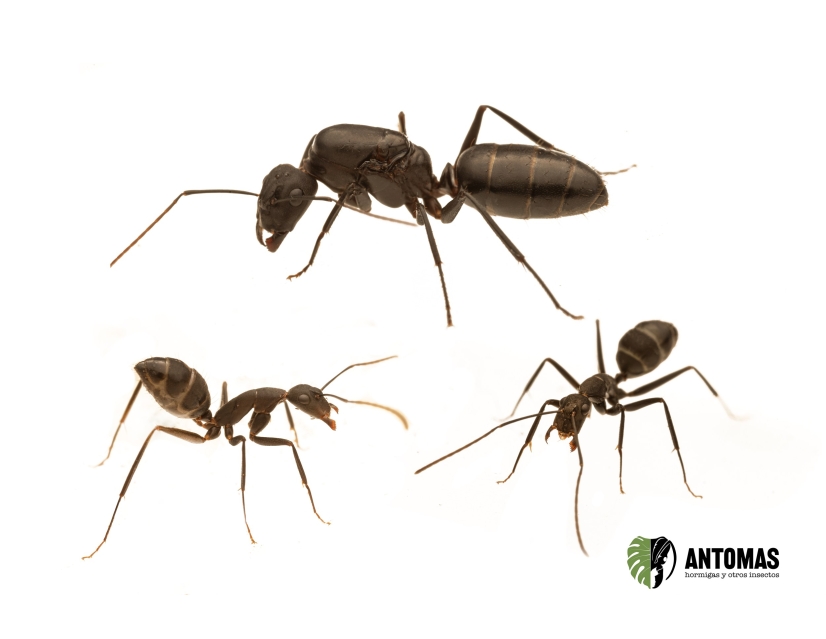
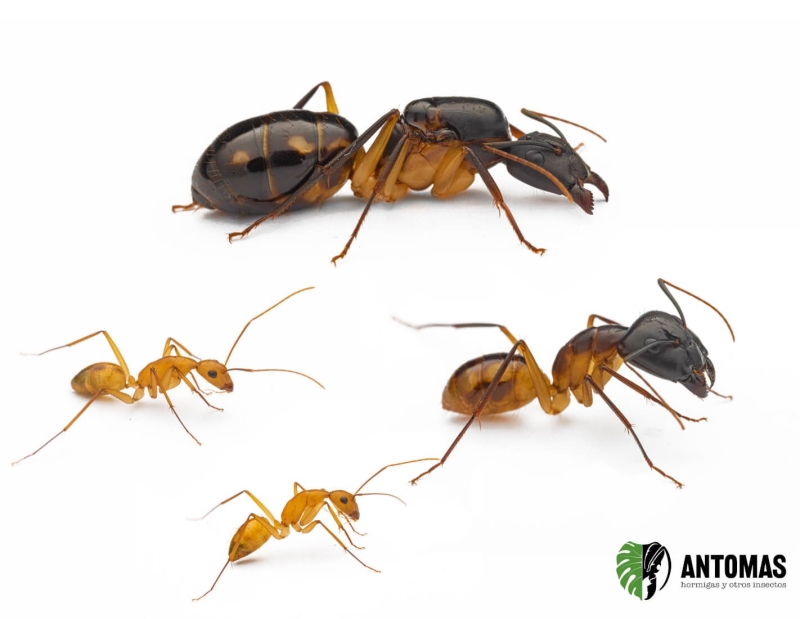
One of the loveliest things about raising a Camponotus from a small colony is watching the different types of worker appear. Like other Tanaemyrmex, C. alii is polymorphic: there are minor, media and major workers, and the differences are not just in size but in proportions, because the head of the majors grows much faster than the rest of the body.
What decides whether a larva will become a minor or a major? In 1991 the biologist Diana Wheeler reviewed what was known about the development of worker castes and explained it like this: it is determined mainly by larval nutrition and by hormonal signals, including juvenile hormone, which act at specific points in development. A larva that exceeds a certain size at the key moment goes down the major pathway. That is why a young colony, with few workers bringing in food, produces almost nothing but minors, and majors begin to appear once the colony has workers to spare and abundant protein.
In practice, the first major is quite an event for the keeper: the sign that the colony has gone from surviving to thriving.
The chemical signature of a thriving queen
In Camponotus floridanus, the best-studied carpenter ant in the laboratory, Annett Endler, Jürgen Liebig and Bert Hölldobler studied what a queen “says” with her scent. They found that her eggs carry on their surface the same blend of hydrocarbons as the queen’s cuticle, and that this chemical profile changes with the size of the colony she has built. It is a fertility signal: the workers perceive it and, as long as the queen is productive, refrain from reproducing themselves.
It is a study of another species in the genus, but it helps explain growth in a formicarium. At first, the queen lays in proportion to what a few workers can tend and feed; each new worker brings in more food, allows more larvae to be reared and the colony picks up pace. That is why growth in Camponotus is slow in the first seasons and speeds up later, and why generous feeding makes such a difference to a small colony.
Nurses, cleaners and foragers
In 2013 Danielle Mersch, Alessandro Crespi and Laurent Keller followed every worker in several colonies of Camponotus fellah, a carpenter ant from North Africa and the Middle East, for weeks using barcode tags. They discovered that workers are organised into three groups according to where in the nest they spend their time: nurses, which stay with the queen and brood; cleaners, which move around the rest of the nest; and foragers, which go outside. Each worker tends to move from one group to the next as it ages, from the inside outwards.
This is what you will see in your colony: the young workers, somewhat paler for their first few days, stay with the brood, and the veterans go out into the foraging area, which is the riskiest part.
Lifelong partners: Blochmannia
Camponotus carry a symbiotic bacterium, Blochmannia, which lives in special cells in their gut. In 2002 Christina Sauer and her colleagues showed in C. floridanus that the bacterium is also found in the queen’s ovaries and passes into the eggs, so every worker is born already carrying its partners. A few years later, in 2007, Heike Feldhaar’s team showed that Blochmannia makes essential amino acids that the ant cannot produce, and that its contribution shows in brood growth when the diet is low in protein.
That is why carpenter ants can live mainly on sugars; even so, a young colony needs plenty of animal protein to grow.
Food that travels mouth to mouth
Camponotus pass liquid food to one another mouth to mouth, in an exchange called trophallaxis. In 2016 Adria LeBoeuf’s team analysed the content of these droplets in C. floridanus and found much more than food: growth-related proteins, juvenile hormone and chemical signals. With them, workers influence the development of the larvae they feed; this closes the circle with what Wheeler explained about the origin of majors.
Moreover, like other formicines, Camponotus have no sting and defend themselves with formic acid. In 2020 Simon Tragust and his team discovered that they also use it internally: after feeding, workers bring the tip of the gaster to their mouth and swallow a drop of their own venom, which acidifies the crop and eliminates a good share of the microbes in the food. If, after topping up the nectar, you see a worker curled over on itself with its gaster under its head, that is what it is doing.
Size and morphology
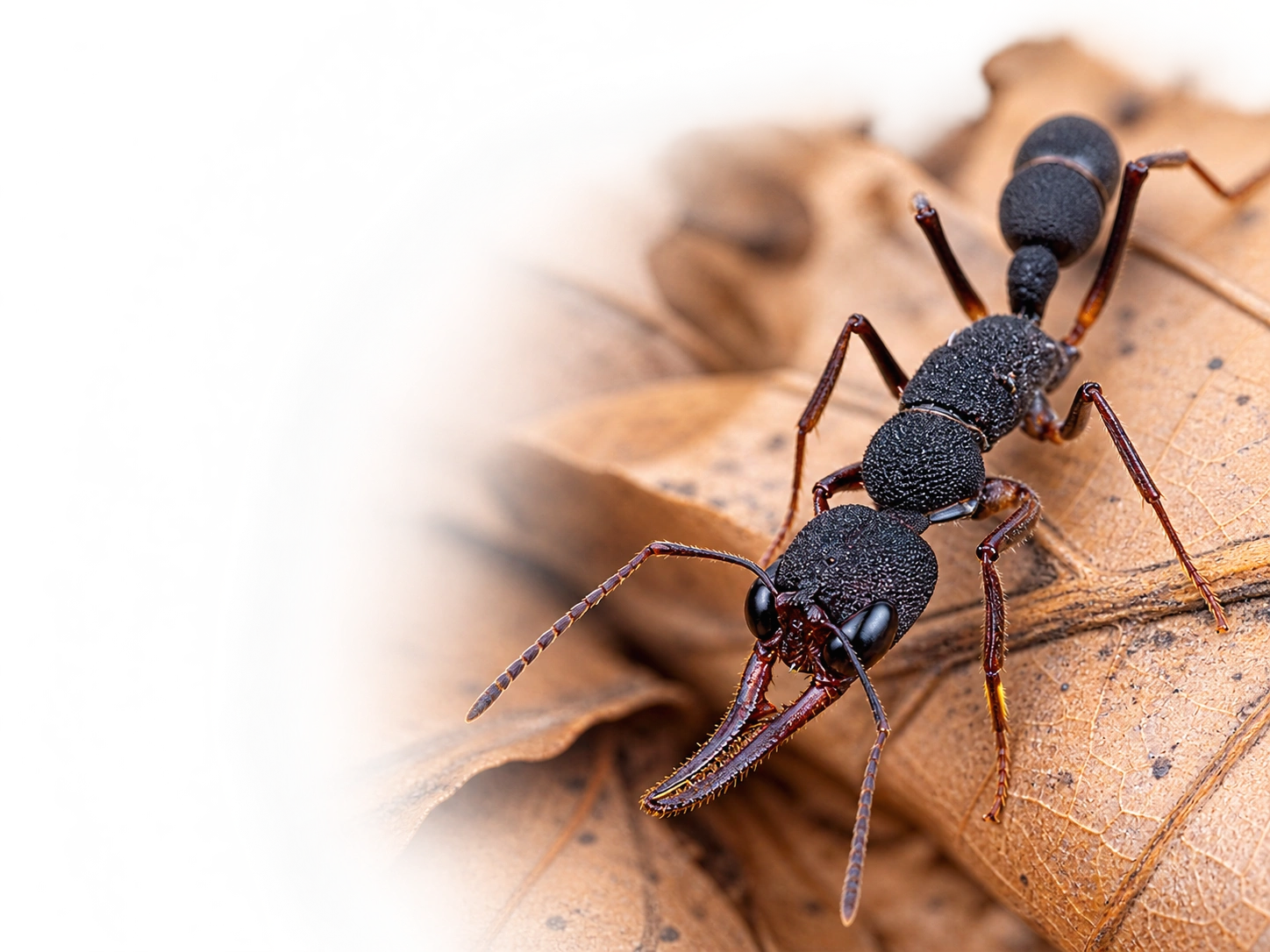
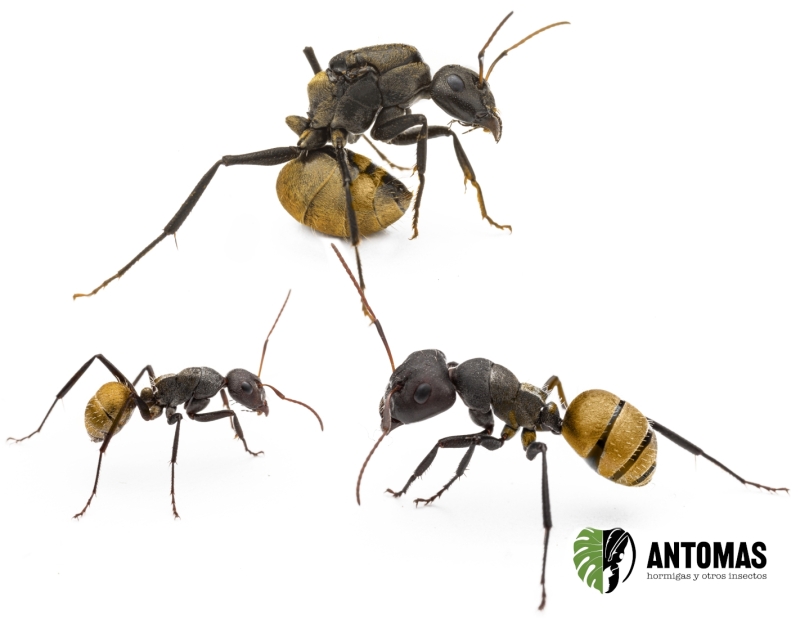
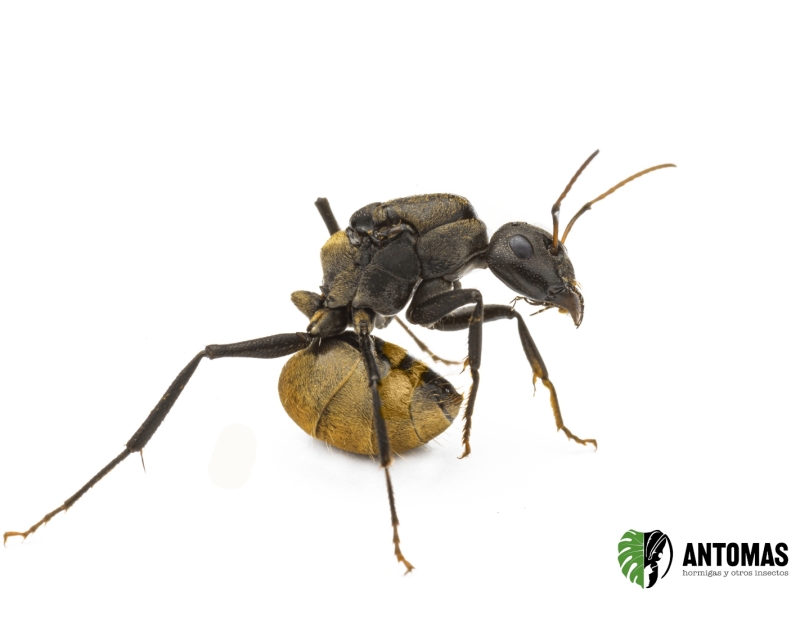
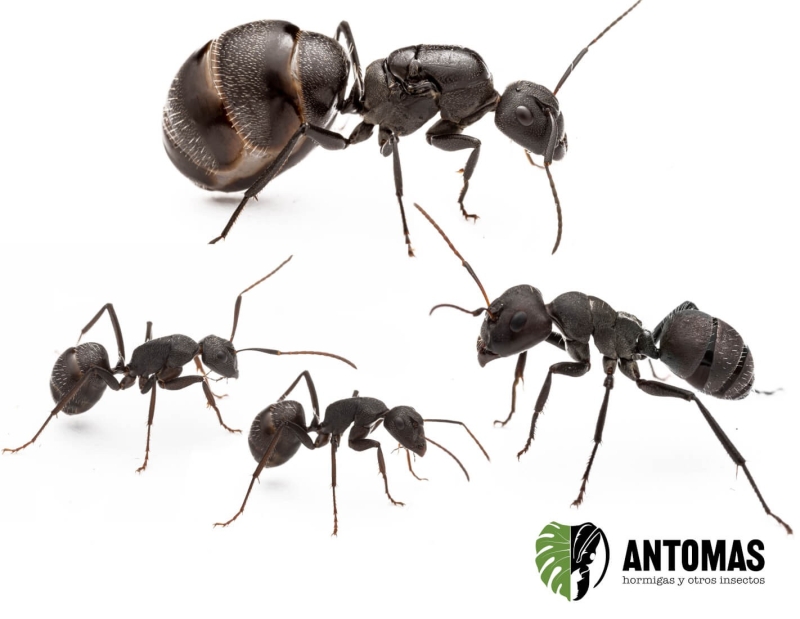
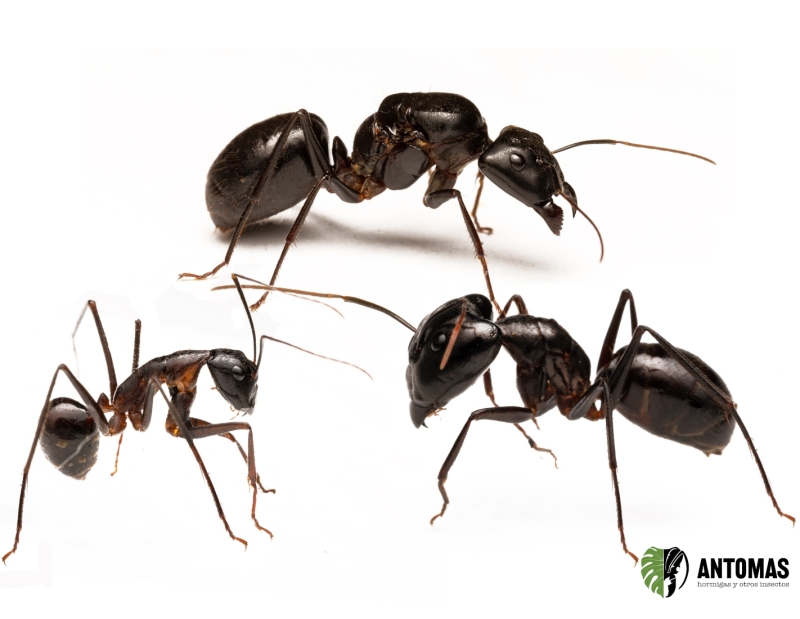
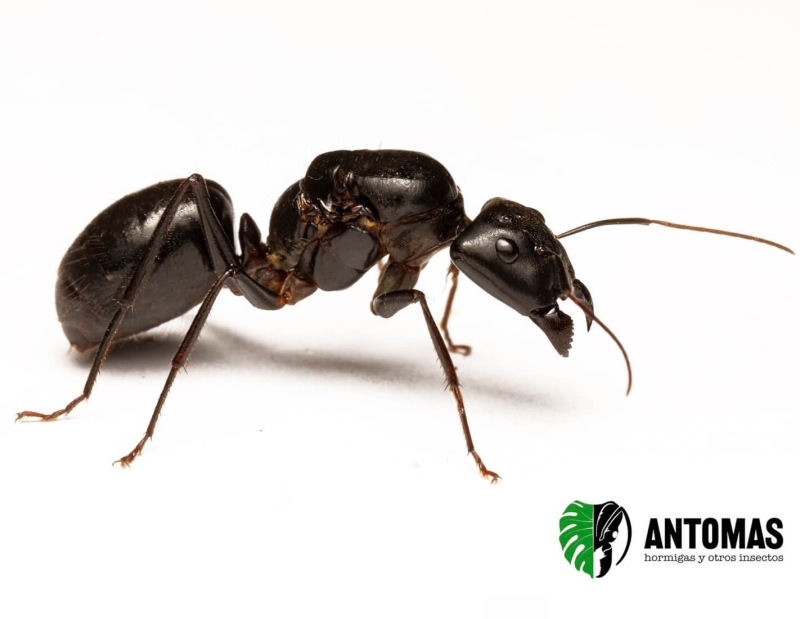
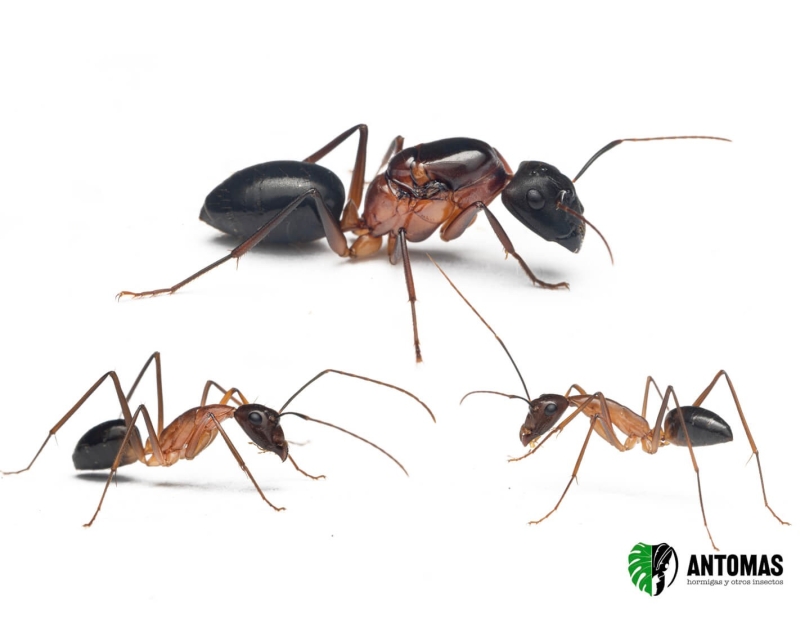
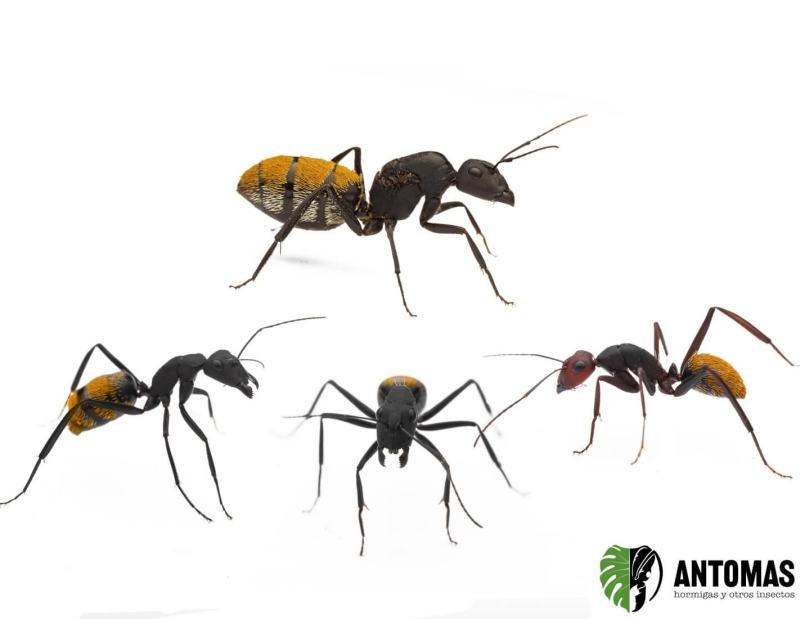
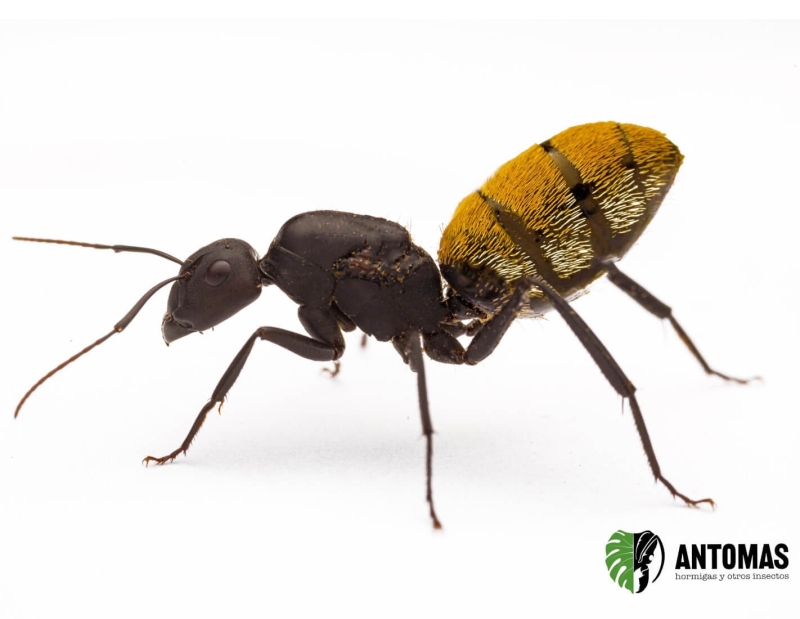
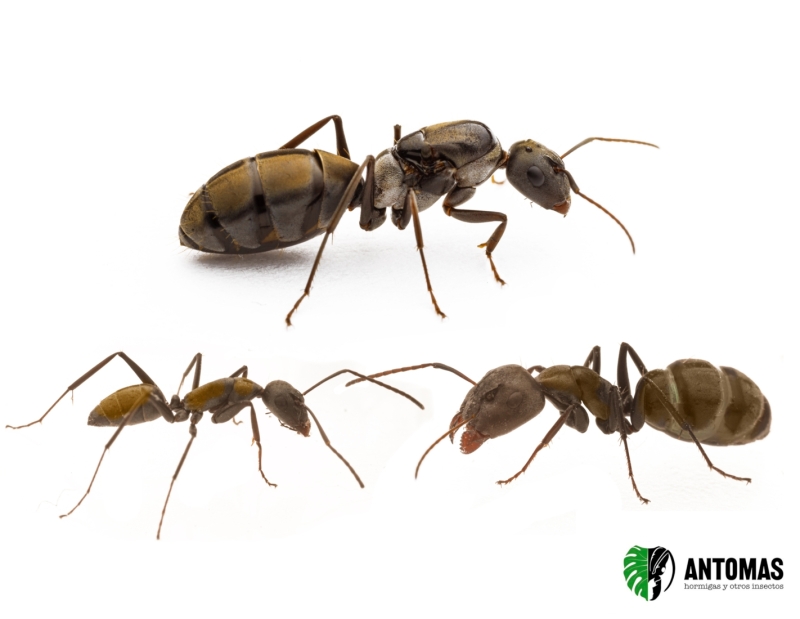
It is a carpenter ant with an elongated, robust build, long legs and antennae, a single-segment waist (the scale-shaped petiole) and a gaster ending in the acidopore, the opening through which it sprays formic acid. In our line these features can be seen:
- Colouring: black or blackish brown, with a marked sheen; mandibles and antennal tips reddish, and the gaster segments with a thin, paler edge.
- Minor workers: the first you will see and the most numerous in a young colony; slender, with a small, rounded head and very long legs, fast and curious.
- Media workers: they appear as the colony gains workers; the head is already proportionally broader.
- Major workers (majors): they arrive once the colony is well fed and has grown; broad head, almost square seen from the front, and strong mandibles.
- Queen: the largest in the colony, with a bulky thorax where the wings were attached and a voluminous gaster, which swells in spring when laying is under way.
- Brood: tiny eggs in clusters, white larvae and, as in all formicines, pupae wrapped in a silk cocoon ranging from cream to light brown.
To separate C. alii from its relatives, specialists look at fine details such as the hairs under the head, the sculpture of the gaster or the profile of the thorax, using Cagniant’s key (1996) as the reference for North Africa. Without that study, the correct name for our line is C. cf. alii.
Approximate measurements
We have not found measurements of the castes of C. alii in accessible scientific sources: Forel’s description is brief and later works deal mainly with its distribution. We prefer not to give figures taken from other species. What you will see is that, as the colony grows, the difference between minors, majors and queen becomes ever more striking.
Keeping in captivity
Difficulty: 2/5 – Beginner
At Antomas we consider it a very suitable species for getting started with Camponotus. It eats everything, copes well with normal room temperature, does not need high humidity and forgives small mistakes. With a colony that already has 20–30 workers, the most fragile moment, when the queen is alone with her first larvae, is also behind it. There are only two things that cannot be neglected: the diapause every winter and generous feeding during the active season, because the speed of growth depends on it.
Recommended parameters
- Temperature: 22–27 °C in the nest during the active season, roughly from March to October.
- Warm spot: 28–30 °C at one end of the nest, using a heat mat or heat cable with a thermostat, so the colony can move the brood wherever suits it. Never heat the whole nest.
- Humidity: dry nest, with a slightly damper area only for the first few days after setting up.
- Water: always available, in a test tube with water and cotton wool in the foraging area.
- Light: nest in semi-darkness and foraging area lit, with a normal day–night rhythm.
- Diapause: 4–5 months at 5–10 °C, roughly from November to March.
Recommended formicarium
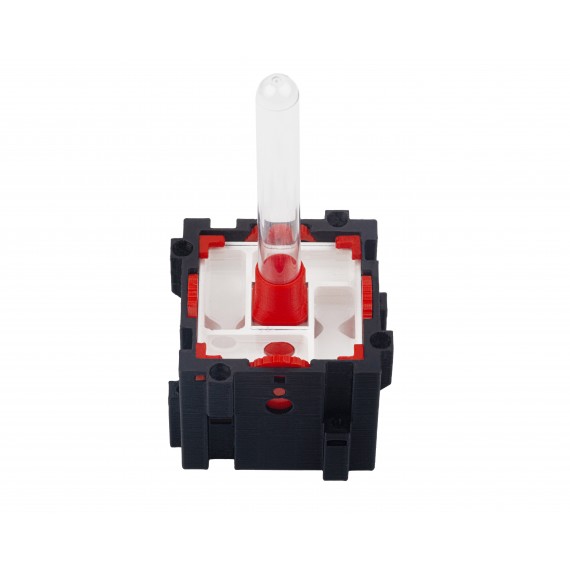
A small colony feels safer in a nest that suits its size, where it can gather the queen and brood in one chamber and defend the entrance with just a few workers. For a colony of 20–30 workers, at Antomas we recommend a QBIK ONE from Anthouse’s Alpha range: dry, modular and with room to grow without being too big. Always choose large or cave-type galleries: even if there are only minors now, the majors will come and will need plenty of room to pass.
If you prefer a plaster nest, in which the colony is very easy to see, the Qbik Wild One P 1C is a good alternative for this stage. Moisten it slightly when setting up the colony and then let it dry out: C. alii does not need a damp nest.
The foraging area should be moderately sized, with a little dry substrate, a flat stone and a twig or piece of bark to climb on.
How your colony will grow
There are no published data on the growth rate of C. alii, and in Camponotus it depends heavily on temperature, food and diapause. What is consistent across the genus is the shape of the curve: slow at first and faster and faster. This is what is usually seen in a colony like yours:
- First weeks: the colony settles in, moves the brood into the warmest chamber and starts exploring the foraging area. It is normal for few workers to come out at first.
- First season: with warmth and protein, successive batches of cocoons; almost all the new workers are minors, and the odd media begins to appear.
- After the first diapause: the queen resumes laying strongly in spring. This is the season in which many colonies make the leap from dozens to a hundred or more workers.
- First majors: they arrive when the colony has workers to spare and plenty of food. They are the sign that the colony has matured and will soon need more space.
When to expand: when the chambers are full of brood and workers, when you see cocoons in the corridors or workers sleeping outside the nest. Expand module by module and, when the colony reaches around a hundred workers, think about moving up to a QBIK DUO. A nest that is too big for the colony ends up with debris and mould in the empty chambers.
Arrival and moving by tipping out
When it arrives, leave the colony in its travel container in a quiet place at room temperature, with water within reach, and give it a day to recover. At Antomas, moves are always done by tipping out:
- Prepare the formicarium beforehand, with the escape barrier applied and dry, the water tube in place and a drop of nectar in the feeder.
- Tip the colony out into the foraging area, close to the nest entrance, with a few gentle taps, over a tray in case any ants fall outside.
- Check that the queen and brood have come out; if anything remains inside, leave the container open in the foraging area for a few hours and the workers will collect it.
- Cover the nest so it stays in semi-darkness. Before long they will have the brood inside and the queen settled.
Later moves, when the colony needs a bigger nest, are done the same way.
Feeding
A varied diet, always. In the wild, Camponotus combine sugary liquids, such as honeydew from aphids and scale insects or nectar, with prey and dead insects. At home you need to imitate that mix.
Sugars. Blue Sugar nectar by Anthouse 4–5 times a week, and another nectar or sugary liquid 1–2 times a week, so they do not always get the same thing. You can also add protein to the nectar. Offer it in a feeder, where the droplet stays within reach, never on cotton wool, because it goes mouldy and spoils the liquid within a few days.
Protein: the more, the better. Protein is what turns eggs into workers, and it is the factor that most speeds up the growth of a small colony. At Antomas we are clear about this: if you do daily maintenance and remove leftovers, it is better to overdo it than to fall short, because the colony senses that resources are available and grows faster and in greater numbers; if you cannot clean often, it is better not to overfeed. Change the insect every week:
Use captive-bred insects, not wild-caught ones, which may carry insecticides, and remove leftovers within 24–48 hours.
Diapause
For a species from snowy mountains, diapause is not optional. At Antomas we recommend 4–5 months at 5–10 °C, roughly from November to March:
- Gradual start: in autumn, switch off the warm spot and keep the colony at 15–18 °C for a few weeks. The queen will stop laying and the workers will finish rearing any brood present.
- During the rest: in a cellar, garage, cold room or wine cooler, never below 0 °C; water always available in the tube, a little nectar and almost no protein.
- Gradual end: in spring, raise the temperature in stages up to 22–27 °C, switch the warm spot back on and start offering protein as soon as you see activity.
Many colonies overwinter with some larvae, which resume their development in spring. Skipping diapause usually results in a queen that lays less and a colony that stalls.
Behaviour and observation
It is a very rewarding ant to watch. The minors explore the foraging area, climb the twigs and, when they find prey they cannot move on their own, return to the nest and come back with company. At the feeder you will see several workers filling their crops and, shortly afterwards, the nectar being shared mouth to mouth inside the nest.
At Antomas we believe ants are there to be enjoyed, observed and learned from. With the nest in semi-darkness and the foraging area lit, you can watch them whenever you like; just do it gently and intervene as little as possible. Following a young colony and noting when the first major appears teaches you a great deal.
Warning signs: no cocoons in the middle of the season usually means a lack of warmth or protein; mould in the nest indicates too much moisture or leftovers not removed; sudden worker deaths are usually due to lack of water or spoiled food.
Escapes and handling
It climbs plastic and glass with ease. Apply a PTFE (Fluon) or paraffin oil barrier to the top of the foraging area walls, renew it when it gets dirty and keep the lid firmly closed. Watch out for bridges: a twig or tube touching the barrier is a sure way out.
It does not sting, but it can bite and spray formic acid, which stings sensitive skin and eyes. Handle it with soft forceps and a paintbrush. Never combine different colonies or mix it with other species, and never release it: it is an exotic species.
What not to do
- Skip diapause or carry it out with sudden temperature changes.
- Keep the nest wet once the colony has settled in.
- Put a small colony in a huge nest: expand gradually.
- Use small galleries: always large or cave-type.
- Give nectar on cotton wool or leave the feeder empty.
- Skimp on protein in spring and summer, or always give the same insect.
- Leave food remains in the formicarium.
- Heat the whole nest evenly.
- Combine different colonies or queens.
Scientific sources
This care sheet is based on the scientific literature on Camponotus alii (description, catalogues and faunal studies of North Africa and Arabia) and on the biology of the genus Camponotus, as well as on Antomas’s own experience. Main references:
- Cagniant, H. (1996). Les Camponotus du Maroc (Hymenoptera: Formicidae): clé et catalogue des espèces. Annales de la Société entomologique de France (N.S.) 32(1): 87–100. doi:10.1080/21686351.1996.12278857
- Germann, C. (2017). On the Auguste Forel ant collection in the Naturmuseum Solothurn, Switzerland: current state and illustrated type catalogue (Hymenoptera, Formicidae). Revue suisse de Zoologie 124(2): 241–254. doi:10.5281/zenodo.893513
- Abdi-Hamecha, L., Barech, G., Khaldi, M., Ali-Ahmed Sadoudi, D., Salem, S., Zazgad, I. & Cagniant, H. (2021). Diversité des fourmis (Hymenoptera, Formicidae) dans la forêt de Yakouren (Algérie): estimation de la richesse, biogéographie et taxonomie. Revue suisse de Zoologie 128(1): 61–72. doi:10.35929/RSZ.0035
- Sharaf, M. R., Wetterer, J. K., Mohamed, A. A. & Aldawood, A. S. (2022). Faunal composition, diversity, and distribution of ants (Hymenoptera: Formicidae) of Dhofar Governorate, Oman, with updated list of the Omani species and remarks on zoogeography. European Journal of Taxonomy 838: 1–106. doi:10.5852/ejt.2022.838.1925
- Khalili-Moghadam, A. & Salata, S. (2026). Checklist of the Iranian ants (Hymenoptera: Formicidae): additions and updates. Zootaxa 5833(1): 1–75. doi:10.11646/zootaxa.5833.1.1
- Ward, P. S., Blaimer, B. B. & Fisher, B. L. (2016). A revised phylogenetic classification of the ant subfamily Formicinae (Hymenoptera: Formicidae), with resurrection of the genera Colobopsis and Dinomyrmex. Zootaxa 4072(3): 343–357. doi:10.11646/zootaxa.4072.3.4
- Keller, L. & Passera, L. (1989). Size and fat content of gynes in relation to the mode of colony founding in ants (Hymenoptera; Formicidae). Oecologia 80(2): 236–240. doi:10.1007/BF00380157
- Wheeler, D. E. (1991). The developmental basis of worker caste polymorphism in ants. The American Naturalist 138(5): 1218–1238. doi:10.1086/285279
- Endler, A., Liebig, J. & Hölldobler, B. (2006). Queen fertility, egg marking and colony size in the ant Camponotus floridanus. Behavioral Ecology and Sociobiology 59: 490–499. doi:10.1007/s00265-005-0073-0
- Mersch, D. P., Crespi, A. & Keller, L. (2013). Tracking individuals shows spatial fidelity is a key regulator of ant social organization. Science 340(6136): 1090–1093. doi:10.1126/science.1234316
- Sauer, C., Dudaczek, D., Hölldobler, B. & Gross, R. (2002). Tissue localization of the endosymbiotic bacterium «Candidatus Blochmannia floridanus» in adults and larvae of the carpenter ant Camponotus floridanus. Applied and Environmental Microbiology 68(9): 4187–4193. doi:10.1128/AEM.68.9.4187-4193.2002
- Feldhaar, H., Straka, J., Krischke, M., Berthold, K., Stoll, S., Mueller, M. J. & Gross, R. (2007). Nutritional upgrading for omnivorous carpenter ants by the endosymbiont Blochmannia. BMC Biology 5: 48. doi:10.1186/1741-7007-5-48
- LeBoeuf, A. C., Waridel, P., Brent, C. S., Gonçalves, A. N., Menin, L., Ortiz, D., Riba-Grognuz, O., Koto, A., Soares, Z. G., Privman, E., Miska, E. A., Benton, R. & Keller, L. (2016). Oral transfer of chemical cues, growth proteins and hormones in social insects. eLife 5: e20375. doi:10.7554/eLife.20375
- Tragust, S., Herrmann, C., Häfner, J., Braasch, R., Tilgen, C., Hoock, M., Milidakis, M. A., Gross, R. & Feldhaar, H. (2020). Formicine ants swallow their highly acidic poison for gut microbial selection and control. eLife 9: e60287. doi:10.7554/eLife.60287