This website uses its own and third-party cookies to improve our services and show you advertising related to your preferences by analyzing your browsing habits. To give your consent to its use, press the Accept button.
Functional cookies are strictly necessary to provide the services of the shop, as well as for its proper functioning, so it is not possible to refuse their use. They allow the user to browse through our website and use the different options or services that exist on it.
Cookie
Provider
Purpose
Expiry
PHP_SESSID
antomas.es
The PHPSESSID cookie is native to PHP and allows websites to store serialised status data. On the website it is used to establish a user session and to pass state data through a temporary cookie, which is commonly known as a session cookie. These Cookies will only remain on your computer until you close your browser.
Session
PrestaShop-#
antomas.es
This is a cookie used by Prestashop to store information and keep the user's session open. It stores information such as currency, language, customer ID, among other data necessary for the proper functioning of the shop.
These are cookies that collect information about the advertisements shown to users of the website. They can be anonymous, if they only collect information about the advertising spaces shown without identifying the user, or personalised, if they collect personal information about the user of the shop by a third party, for the personalisation of these advertising spaces.
Collect information about the user's browsing experience in the shop, usually anonymously, although sometimes they also allow the user to be uniquely and unequivocally identified in order to obtain reports on the user's interests in the products or services offered by the shop.
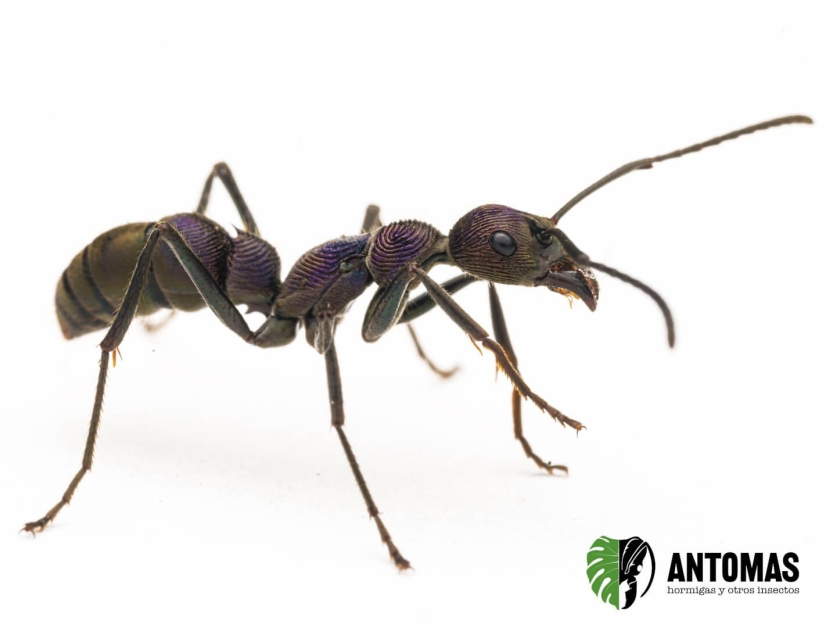
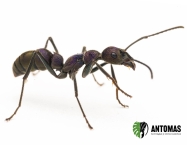
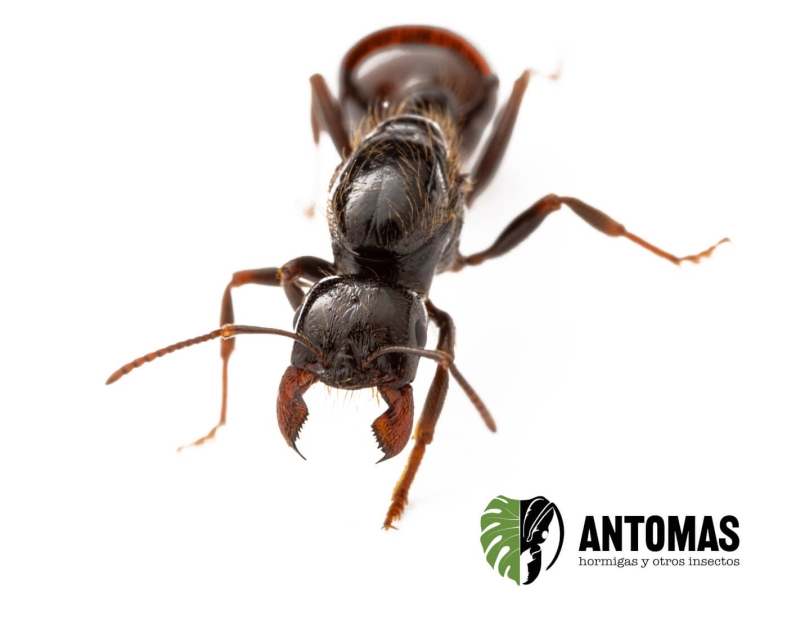
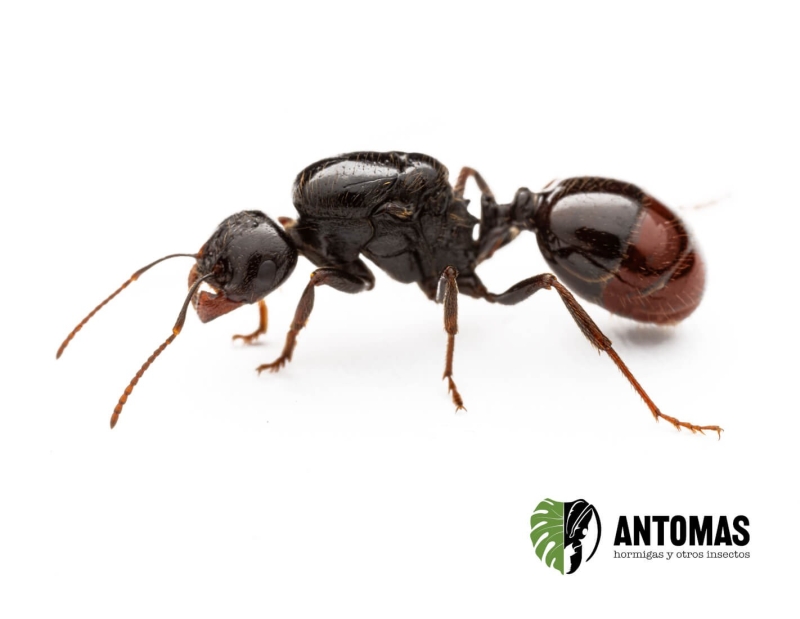
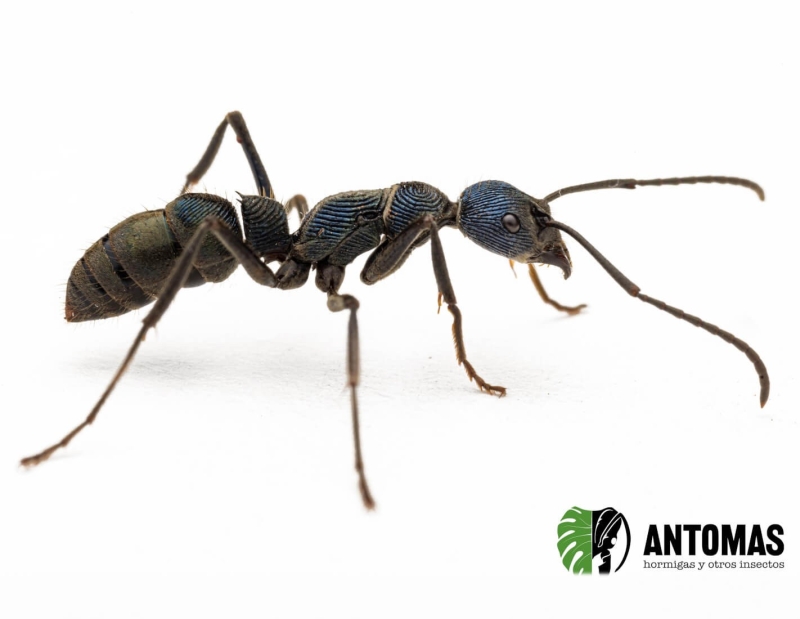
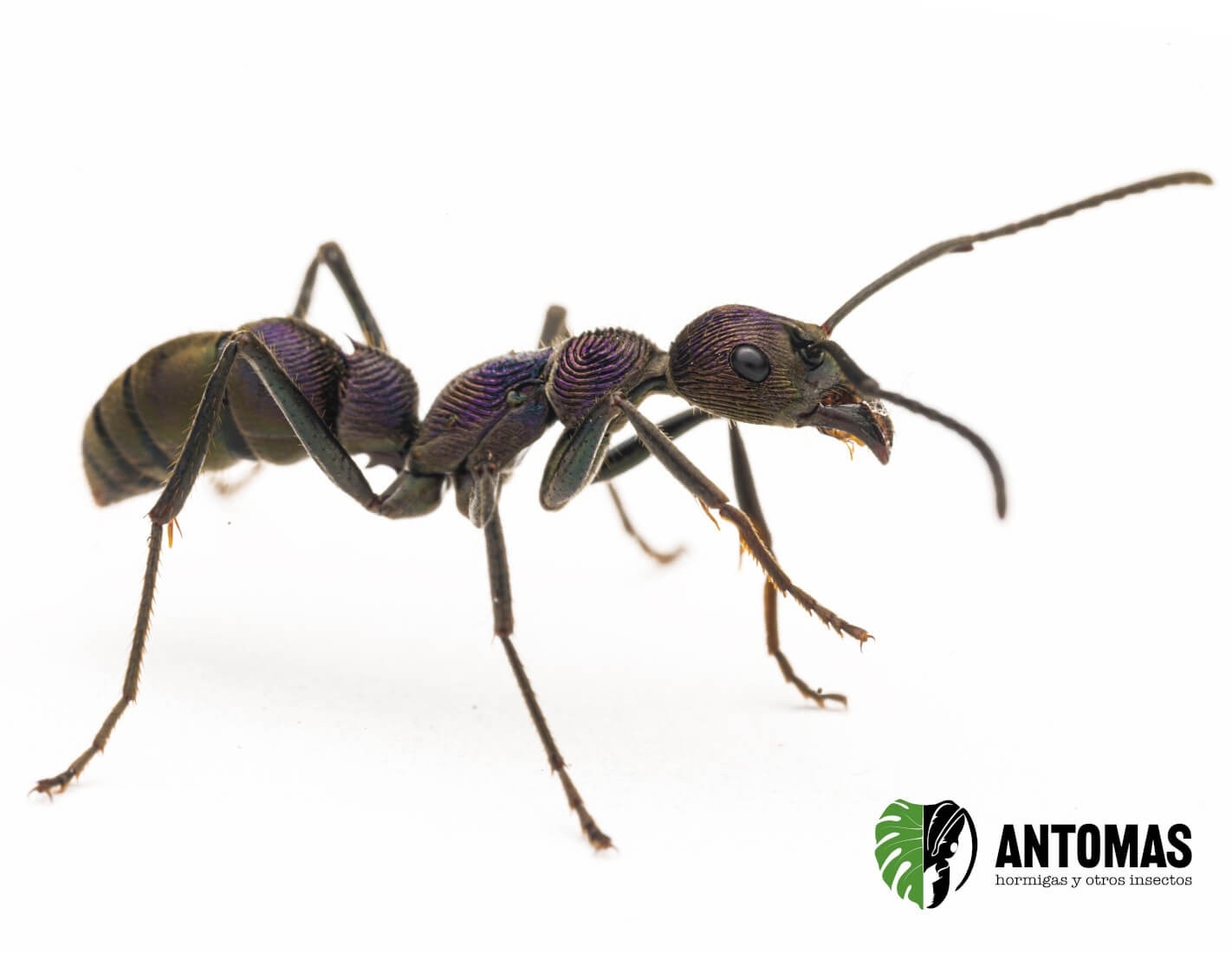
A living jewel from the Philippines: the Purple Morph lights up with purple reflections that vary from colony to colony and blaze on a dark substrate under good light. For us, the most beautiful Diacamma of all. But do not be fooled by its shine: it is a relentless hunter that stalks and stings any arthropod with overwhelming aggression. And its colony has no queen: it is ruled by the gamergate, a mated worker that mutilates her sisters as they emerge so she has no rivals. Colonies with a gamergate. Shipping throughout Europe, live arrival guaranteed.
In our view, the most beautiful of our Diacamma: purple reflections that vary from colony to colony and look their best in a terrarium with dark substrate and good lighting. They have no queen: the eggs are laid by a mated worker, the gamergate. A very aggressive hunter; very humid nest (60–80 %) at 24–28 °C.
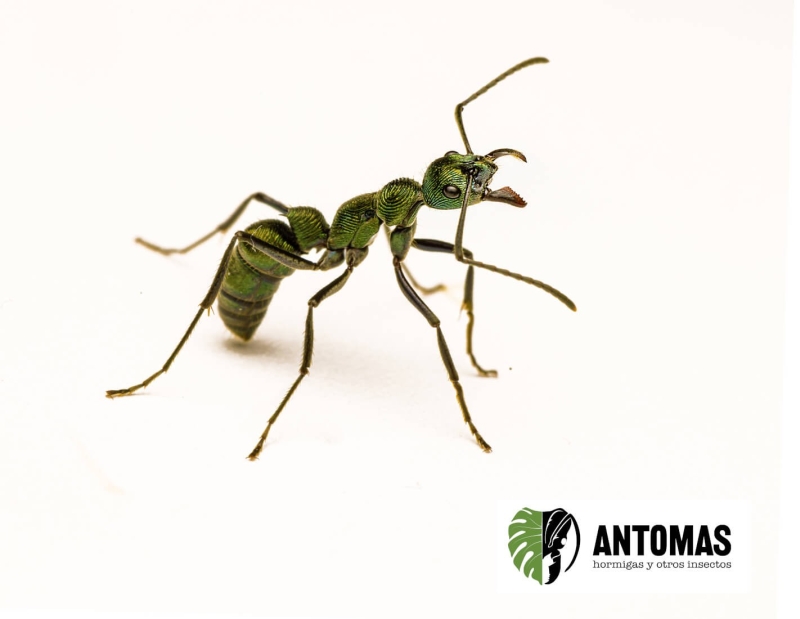
If we had to pick just one of our Diacamma for its looks, at Antomas we would pick this one. Diacamma excellens, the Purple Morph, is a ponerine ant from the Philippines whose dark body lights up with purple reflections when the light catches it, and beneath that jewel-like appearance lies a relentless hunter, ready to pounce on any arthropod that enters its territory. Like the rest of the genus, it lives without a queen: the eggs are laid by a gamergate, a mated worker that prevents the others from reproducing by mutilating them as they emerge.
An honest warning before going on: D. excellens was described in 2016 and, apart from its description, science has published nothing about it. We know its biology from what has been studied in other Diacamma (D. australe, D. ceylonense, D. indicum and the species from Okinawa), and we extrapolate it to the Purple Morph, pointing this out each time.
Biology
What is a gamergate?
The word joins two Greek terms, gamos ("marriage") and ergátēs ("worker"), and it means exactly that: a worker that has married. In other words, a mated worker that lays eggs and takes the place in the colony that the queen holds in other ants.
There are no queens in Diacamma: no winged female has ever been found in the genus. All females are born as workers, and only one per colony, usually mated with a single male, becomes the reproductive. And she looks very little like a queen:
She has no wings and never had any, so there is no nuptial flight: she mates right at her own doorstep.
She is not bigger: she keeps a worker's body and is the same size as her nestmates. In 26 colonies of D. ceylonense she was the only one with developed ovaries and mated, but her size did not give her away.
She is not predestined: she reaches the position as an adult, through how she interacts with the others inside the nest, not because she was raised differently. What does change afterwards is her "scent" (the cuticular hydrocarbons that ants read with their antennae) and the expression of a few genes, mostly linked to nutrition, which shifts almost at once when she takes the dominant position.
The easiest way to recognise her is to look at her thorax: the gamergate is the only one that keeps her gemmae, two small structures that are torn off all the other workers at emergence.
Who is the Purple Morph? A species described in 2016
"Purple" is the trade name of this purple-sheened Diacamma. Its scientific name is Diacamma excellens Zettel, Pal & Laciny, 2016, and its epithet, excellens, means "outstanding" or "excellent" in Latin; the authors chose it, in their own words, for its brilliant colour. It was described by the entomologists Herbert Zettel, Anna Pal and Alice Laciny in the second part of their revision of the genus, from a holotype and 17 paratypes, all workers, collected at Almeria, on the island of Biliran (Eastern Visayas). According to the authors, it belongs to the D. rugosum group in the strict sense and combines characters of D. viridipurpureum (the species of our Blue and Green Morphs) and of D. generali. The Antomas line comes from the Philippines.
And that is where the published record ends: the original description gives its measurements and colour, but there are no studies on its biology, habitat or colonies, and so far it is known only from the type locality. What we say about its behaviour comes from the genus and from our own colonies.
The Philippines is one of the great centres of diversity of the genus. Between 2015 and 2016 alone, more than a dozen new species and subspecies of Diacamma were described there, and the genus now has about 44 valid species (Bolton, 2024), ranging from India to northern Australia. At Antomas we have three Philippine Diacamma, each of a different colour: the Blue Morph (D. viridipurpureum quezonicum), the Green Morph (D. viridipurpureum viridipurpureum) and this Purple Morph. And if you prefer a classic Diacamma without metallic reflections, there is Diacamma rugosum, the type species of the genus.
A purple that depends on the light
Metallic Diacamma have been known for a century: back in 1922 Wheeler and Chapman spoke of workers "black or bronzy, more rarely beautifully metallic blue or green". In the revisions of the Philippine species, the type and intensity of the sheen on the trunk is used as a character to tell species apart.
Where does that colour come from? It has not been investigated in Diacamma, but in most insects metallic hues are structural colours: the cuticle has microscopic layers that reflect only certain wavelengths, just like a soap bubble or a butterfly wing, with no pigment needed. That explains why the purple of the Purple Morph looks dull in dim light and lights up under good lighting, and why its tone shifts with the angle. We make the most of this below, in "How to show it off".
Wings turned into a control organ
Diacamma workers leave the cocoon with two tiny appendages on the thorax, the gemmae. Their story is curious: in the larva there are wing buds that almost disappear through programmed cell death, and the little that remains ends up forming the gemma. Each gemma is lined with sensory hairs and has a gland of its own. From wing remnants, they become the piece that decides who may reproduce.
The gamergate's bite
The gamergate keeps an eye on every emergence. When a worker emerges, still pale and soft (what is called a callow), the gamergate approaches and bites off her gemmae. That worker will never perform the sexual calling or mate: she keeps working for the colony but can never become the reproductive. The change is permanent, probably because losing the gemma makes the connections between its sensory hairs and the central nervous system degenerate.
A common error online is to say that they are mutilated "at pupation". That is not so: it is adults freshly emerged from the cocoon that are mutilated. Callows, for their part, do not resist an established gamergate, although they are aggressive towards other unmutilated callows, their potential rivals.
Who carries the signal?
A related form from southern India, known as "nilgiri", solved the puzzle. There the gamergate does not mutilate: she keeps her monopoly through dominance alone. Researchers reared D. ceylonense cocoons in "nilgiri" colonies and vice versa. "Nilgiri" workers were not mutilated even though they grew up surrounded by D. ceylonense, while D. ceylonense workers were, even in a colony where nobody mutilates.
The signal therefore comes from the newly emerged worker herself, most likely from her gemmae, and not from the colony environment.
Passing on the throne
A living gamergate has no rivals: every worker that emerges loses her gemmae before she can compete. Only when she dies does mutilation stop, and a callow that keeps her gemmae, usually the first to emerge, mates and replaces her. The colony can thus outlive its reproductive.
The condition is that the new gamergate finds a male, and in the wild males come from other colonies. At home it is also possible, by providing a male from another colony; we explain this under "If the gamergate dies".
A wedding that lasts two days
A few days after emerging, the intact worker climbs to the nest entrance and performs the sexual calling, releasing pheromones from the metatibial gland in her hind legs to attract winged males from other colonies. Mating can last up to two days; when it ends, the gamergate and her nestmates kill the male and remove him. The sperm of that single male is enough for the gamergate for her whole life.
Sisters watching each other
Mutilated workers keep their ovaries and can lay unfertilised eggs, from which males hatch. With the gamergate present they rarely do so; in colonies that have lost her, often. In the Diacamma from Japan, the gamergate and the other workers keep a double watch on those that try to lay.
That watch is not always the same. In a 2018 study, only colonies of a hundred workers or more produced males (47 of 56 males came from colonies of more than 100 and none from colonies of fewer than 50), and in the laboratory 58 % of the males were sons of workers, not of the gamergate. The larger the colony, the looser the control.
Colonies that reproduce by splitting
With no winged females there can be no nuptial flights or founding queens. Diacamma colonies multiply by fission: a group of workers splits off with a new gamergate and settles somewhere else. How many workers leave in each split has not been published. In the laboratory both splits and fusions have been seen, and in D. indicum researchers have studied what happens when two parts of a divided colony meet again.
Travelling two by two
Instead of marking routes with pheromones, Diacamma recruit by tandem running: a worker that knows the destination leads another, which follows without losing antennal contact. When a D. indicum colony moves, almost all females travel this way, the gamergate included, while males and brood are carried in the mandibles. What is more, the follower often carries a larva or pupa while following her leader: one adult and one brood item per trip.
Short cuts without a map
The leaders do not repeat the route blindly. In experiments with D. indicum, when the target nest was moved during the relocation, most corrected their course with an average error of only 1.65 % (262 leaders); when the main leader was removed, others replaced her without losing pace; and, faced with several paths, they chose the shortest far more often than the others. All without chemical trails to follow.
Solitary hunters on a fixed heading
Diacamma hunt by day and each worker on her own. In D. ceylonense, about 24 % of the workers are outside the nest at any moment, a proportion so stable that it allows colony size to be estimated without digging. Each one forages only during one phase of her life, 9 to 23 days, and almost always in the same direction; together they cover the whole surrounding area. Termites are their main prey in the wild: the worker locates it, stalks it, stings it until it is paralysed and carries it to the nest. And there is a curious habit reported in the genus: according to Mark Moffett (1985), some Diacamma surround their nest entrance with feathers and ant corpses, perhaps to collect dew; it is an unconfirmed hypothesis.
Size and morphology
Like all Diacamma, the Purple Morph has monomorphic workers: all alike in shape and almost in size, gamergate included. The features below come from the original description (Zettel, Pal & Laciny, 2016):
Colour. Black trunk with a strong metallic blue or purple sheen: blue dominates more on top and purple more on the sides, and the extent of each colour varies from one specimen to another. Antennae and legs black, and the tip of the gaster pale brown. In good light the sheen intensifies greatly (Antomas observation), and in Antomas's opinion it is the most striking of our three colourful Diacamma.
A colouration that changes from colony to colony. In Antomas's experience, the colour of the Purple Morph varies considerably from one colony to another, and sometimes shares hues with the Green Morph. Some colonies have a purple head, a green thorax and a green-and-black gaster, and others the opposite: the head, or its edges, green and the rest of the body purple. This fits the published record: the description of D. excellens itself notes that the distribution of colours varies between specimens, and the Green Morph's species, D. viridipurpureum, is described with a polychrome sheen mixing greens and purples. The authors even point out that the Purple Morph combines characters of that species, although this does not prove a direct relationship; what is clear is that these metallic colours are highly variable.
Sculpture. Very coarse rugae from the cheeks to the first gastral segment: longitudinal striae on the back of the head, concentric and elliptical wrinkles on the pronotum, oblique striae on the sides of the thorax and semicircular ones on the first gastral segment; the rest of the gaster finely punctured and shiny. Abundant short erect hairs.
Petiole. Stout, with two medium-sized, slightly diverging spines set further apart than in related species: one of the features that distinguish it.
Head. Somewhat elongate and strongly convex behind relatively small eyes; finely striate mandibles.
Gemmae. All workers have them at emergence; only the gamergate keeps them.
Sting. Functional, long and curved upwards.
Approximate measurements
Workers and gamergate in Antomas colonies: 11–13 mm; about 2 mm smaller than the Blue Morph (13–15 mm)
Published reference (holotype and 17 paratypes): 12.2–13.5 mm total length
Gamergate: the same as the workers (monomorphic workers)
Genus Diacamma, workers: usually 8–16 mm, depending on the species
Care in captivity
Difficulty: 3/5 – Advanced
It is not a fragile ant, but it needs attention on three fronts: a nest with very high and constant humidity that never becomes waterlogged or mouldy; a diet led by live prey; and care when handling the formicarium, because the colony depends on a single gamergate. Among Diacamma keepers there are all kinds of opinions, and the consensus puts them at an intermediate level.
Is it worth it? Without a doubt. You get at once one of the most beautiful ants you can keep and one of the most intense hunters: fast workers that spot their prey by sight, chase it and attack it with overwhelming aggression. And, inside the nest, a queenless social system you can watch live.
Recommended parameters
Temperature: 24–28 °C, with a gradient: one area towards 28 °C and a cooler one towards 24 °C. This is the range used by most keepers of the genus.
Nest humidity: very high, 60–80 %; at Antomas we usually keep it around 70 %.
Foraging area: somewhat drier than the nest, with water always available.
Diapause: none. Active all year round at 24–28 °C; avoid sudden changes.
Light: nest dark or covered; foraging area well lit (see "How to show it off").
Keep one part of the nest wetter, for eggs and larvae, and another slightly less so. Add water little by little and often: excess water brings mould and mites.
Recommended formicaria
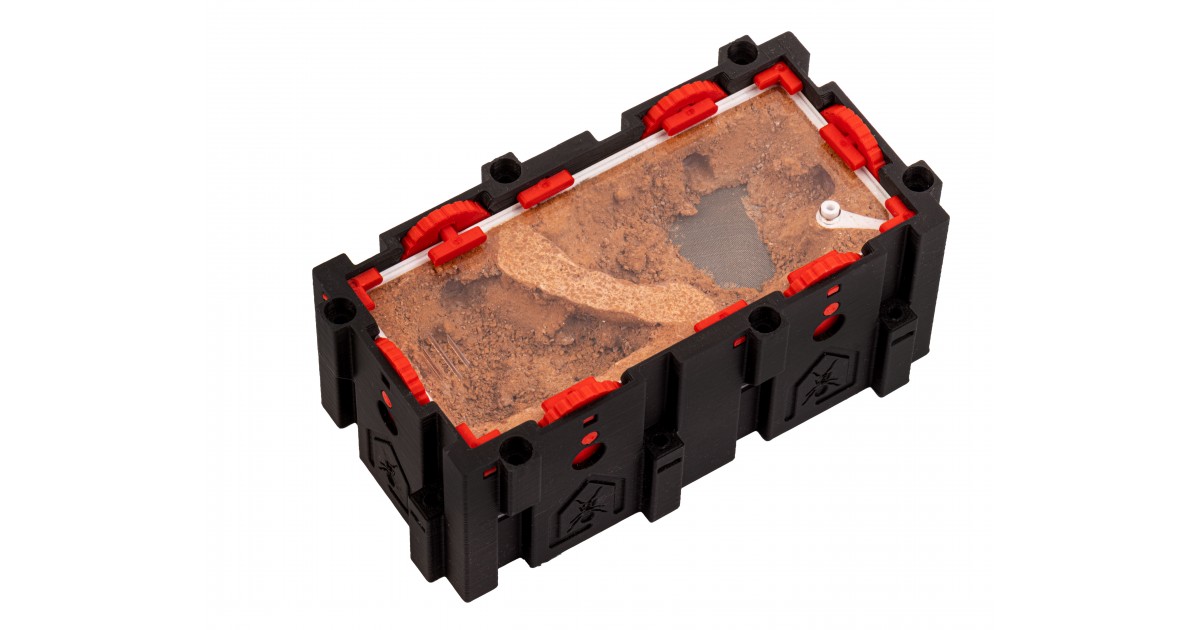
As a nest, at Antomas we recommend the Anthouse Qbik Wild range in the Duo format, the best suited to the size of our colonies. Our favourite is the Qbik Wild Duo P 2C Hybrid, which combines an evaporation reservoir under a technical mesh with a side drinking tube. The evaporation version (the water does not touch the chambers and a natural gradient forms) and the standard version (refillable water tube) also work very well.
Expand when the colony already fills almost the whole nest; empty chambers tend to dry out or go mouldy.
How to show it off
The purple sheen of the Purple Morph really shows when the workers come out to hunt under good light, so it is worth taking care of the foraging area. In Antomas's experience, it looks best in a terrarium with dark substrate and good lighting: against a background of dark soil, coco fibre or black sand, the purple reflection stands out far more than on light sand. A lamp or LED strip above the hunting area (never over the nest) does the rest, and also stimulates these diurnal hunters. And take a close look at your workers: since the colouration changes considerably from colony to colony, yours may show mixes of purple and green that you will not see in another.
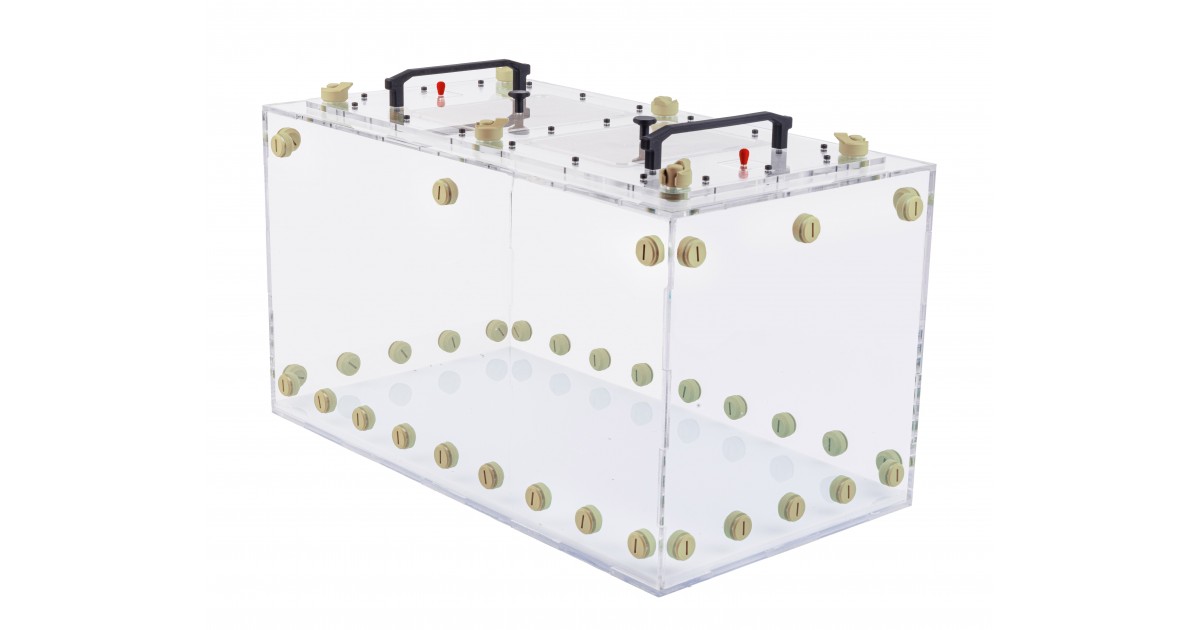
If you want a display setup, Anthouse GAIA terrariums are a good choice as a foraging area, connected to the Duo Hybrid, which remains the nest.
Keep the terrarium humid with light misting and always leave a drier area; and remember the lid (see "Escapes and barriers").
Arrival of the colony and the first weeks
We sell colonies with a gamergate, in the size available at the time. A gamergate on her own is no use: Diacamma do not found colonies from an isolated female but by fission, and they need workers.
When it arrives, leave it in a quiet, dark place at a stable temperature, and remove any workers that died in transit. In the first weeks, avoid knocks, direct light on the nest and unnecessary opening: this is what most often holds back brood rearing. To move it to a new formicarium, at Antomas we almost always do it by tipping it in: we tip the colony into the new formicarium and often force them to go inside. It is the method that works best for us.
You will recognise the gamergate because she keeps her gemmae; the rest only have scars. However, in Antomas's experience she is very shy and elusive and never goes out to forage, so you will not see her hunting.
If the gamergate dies
It can be fixed. When the gamergate dies, mutilation ends, and the workers that emerge afterwards keep their gemmae; any of them can take over if she mates. All that is missing is a male, and it has to come from another colony, as happens in the wild.
At Antomas we have seen it work: customers who lost their gamergate asked us for males and managed to get an intact worker to mate and become the new gamergate. If it happens to you, contact us. Meanwhile, keep giving the colony its usual care and, above all, always handle it calmly so as not to lose the gamergate.
Feeding
A varied diet: protein, mainly live, and sugars.
Protein. They accept dead prey, but at Antomas we recommend live prey almost always: watching them hunt is the best thing about this species. They are exceptionally aggressive towards other arthropods and invertebrates, and seeing a purple flash pounce on a cricket is quite a show. Offer crickets, feeder cockroaches, flies, mealworms and other safe feeder insects of a size they can overpower, and change the insect every week. At Antomas we give them protein 3–5 times a week, depending on the number of larvae.
Do not leave them short: according to keepers, a lack of protein can lead them to eat their own brood. Remove leftovers within 24 h, because at this humidity they go mouldy straight away.
Sugars. They really like sugary liquids: offer them every 3–4 days or leave a feeder ad libitum. As a base, Anthouse Blue Sugar Nectar, 4–5 times a week if you use a feeder; and, for variety, another sugary liquid 1–2 times a week. At Antomas we use lactose-free milk with honey, which also provides some liquid protein (the milk must always be lactose-free).
Water: clean water always available.
This is how Diacamma hunt, with the gamergate in view (Anthouse).
Behaviour in captivity
Very active outside the nest, especially in warmth and good light: workers patrol alone and pounce on any prey. Towards other arthropods and ants from other colonies they are extremely aggressive, so no shared setups; towards people, on the other hand, they are not especially aggressive. When the colony moves by itself, you will be able to see the pairs of tandem running.
If they crowd into the warmest spot and there is hardly any brood, warmth or humidity is usually lacking; if they stop raising brood after being handled, leave them alone for a few days.
Escapes and barriers
They are not great escape artists: a well-fitting, ventilated lid and a large foraging area are usually enough. As back-up, oil, petroleum jelly or "talcol" (talcum powder with alcohol; once the alcohol evaporates, a band of talc remains) all work.
Fluon (PTFE) loses effectiveness at high humidity and can fail without you noticing; if you use it, always with a lid. Check plugs and connections.
Handling and safety
They have a functional sting, but in Antomas's experience they find it quite hard to pierce the skin and are slow to sting; they are not especially aggressive towards people. As with any sting, an allergic person could react: handle them with a brush or soft tweezers, and calmly so as not to lose the gamergate. This is an exotic species: never release it.
What not to do
Go outside the temperature or humidity range, or change it suddenly.
Waterlog the nest.
Leave food remains for more than 24 h.
Skimp on protein or always give the same insect.
Expand before the colony needs it.
Open or light the nest often, or subject it to vibrations.
Leave workers that died in transit inside the nest.
Light up the nest to show off the colour: light belongs only on the foraging area.
Handle in a hurry and lose the gamergate.
Merge colonies: it cannot be done, they are quite aggressive towards each other. Do not mix it with other species either.
Rely on Fluon alone at high humidity and without a lid.
Scientific sources
This care sheet is based on the description of the species, the scientific literature on the biology of the genus Diacamma, and the experience of Antomas and European keepers. Main references:
Zettel, H., Pal, A. & Laciny, A. (2016). Taxonomic notes on the ant genus Diacamma (Hymenoptera: Formicidae), part 2. Zeitschrift der Arbeitsgemeinschaft Österreichischer Entomologen 68: 129–168. antcat.org
Laciny, A., Pal, A. & Zettel, H. (2015). Taxonomic notes on the ant genus Diacamma (Hymenoptera: Formicidae), part 1. Zeitschrift der Arbeitsgemeinschaft Österreichischer Entomologen 67: 83–136. zobodat.at
Baidwan et al. (2024). Description of Diacamma rugosum jerdoni (Insecta: Hymenoptera) male along with two new additions to the myrmecofaunal diversity of Kerala, India. Halteres 14: 20–30. doi:10.5281/zenodo.14439664
Peeters, C. & Higashi, S. (1989). Reproductive dominance controlled by mutilation in the queenless ant Diacamma australe. Naturwissenschaften 76: 177–180. doi:10.1007/BF00366404
Gotoh, A., Billen, J., Hashim, R. & Ito, F. (2005). Apoptotic wing degeneration and formation of an altruism-regulating glandular appendage (gemma) in the ponerine ant Diacamma sp. from Japan. Development Genes and Evolution. doi:10.1007/s00427-004-0456-7
Ramaswamy, K. et al. (2004). Social mutilation in the ponerine ant Diacamma: cues originate in the victims. Insectes Sociaux 51: 410–413. doi:10.1007/s00040-004-0765-x
Cournault, L. & Peeters, C. (2012). Aggression regulates monogyny in non-mutilating Diacamma ants. Insectes Sociaux 59: 533–539. doi:10.1007/s00040-012-0251-9
Okada, Y. et al. (2017). Social dominance alters nutrition-related gene expression immediately: transcriptomic evidence from a monomorphic queenless ant. Molecular Ecology. doi:10.1111/mec.13989
Peeters, C. & Tsuji, K. (1993). Reproductive conflict among ant workers in Diacamma sp. from Japan: dominance and oviposition in the absence of the gamergate. Insectes Sociaux 40: 119–136. doi:10.1007/BF01240701
Shimoji, H. et al. (2018). Social enforcement depending on the stage of colony growth in an ant. Proceedings of the Royal Society B 285: 20172548. doi:10.1098/rspb.2017.2548
Cuvillier-Hot, V., Cobb, M., Malosse, C. & Peeters, C. (2001). Sex, age and ovarian activity affect cuticular hydrocarbons in Diacamma ceylonense, a queenless ant. Journal of Insect Physiology 47: 485–493. doi:10.1016/S0022-1910(00)00137-2
Kaur, R. et al. (2014). Coupled adult-brood transport augments relocation in the Indian queenless ant Diacamma indicum. Insectes Sociaux. doi:10.1007/s00040-014-0338-6
Vigneron, J.P. et al. (2006). Spectral filtering of visible light by the cuticle of metallic woodboring beetles and microfabrication of a matching bioinspired material. Physical Review E 73: 041905. doi:10.1103/PhysRevE.73.041905