This website uses its own and third-party cookies to improve our services and show you advertising related to your preferences by analyzing your browsing habits. To give your consent to its use, press the Accept button.
Functional cookies are strictly necessary to provide the services of the shop, as well as for its proper functioning, so it is not possible to refuse their use. They allow the user to browse through our website and use the different options or services that exist on it.
Cookie
Provider
Purpose
Expiry
PHP_SESSID
antomas.es
The PHPSESSID cookie is native to PHP and allows websites to store serialised status data. On the website it is used to establish a user session and to pass state data through a temporary cookie, which is commonly known as a session cookie. These Cookies will only remain on your computer until you close your browser.
Session
PrestaShop-#
antomas.es
This is a cookie used by Prestashop to store information and keep the user's session open. It stores information such as currency, language, customer ID, among other data necessary for the proper functioning of the shop.
These are cookies that collect information about the advertisements shown to users of the website. They can be anonymous, if they only collect information about the advertising spaces shown without identifying the user, or personalised, if they collect personal information about the user of the shop by a third party, for the personalisation of these advertising spaces.
Collect information about the user's browsing experience in the shop, usually anonymously, although sometimes they also allow the user to be uniquely and unequivocally identified in order to obtain reports on the user's interests in the products or services offered by the shop.
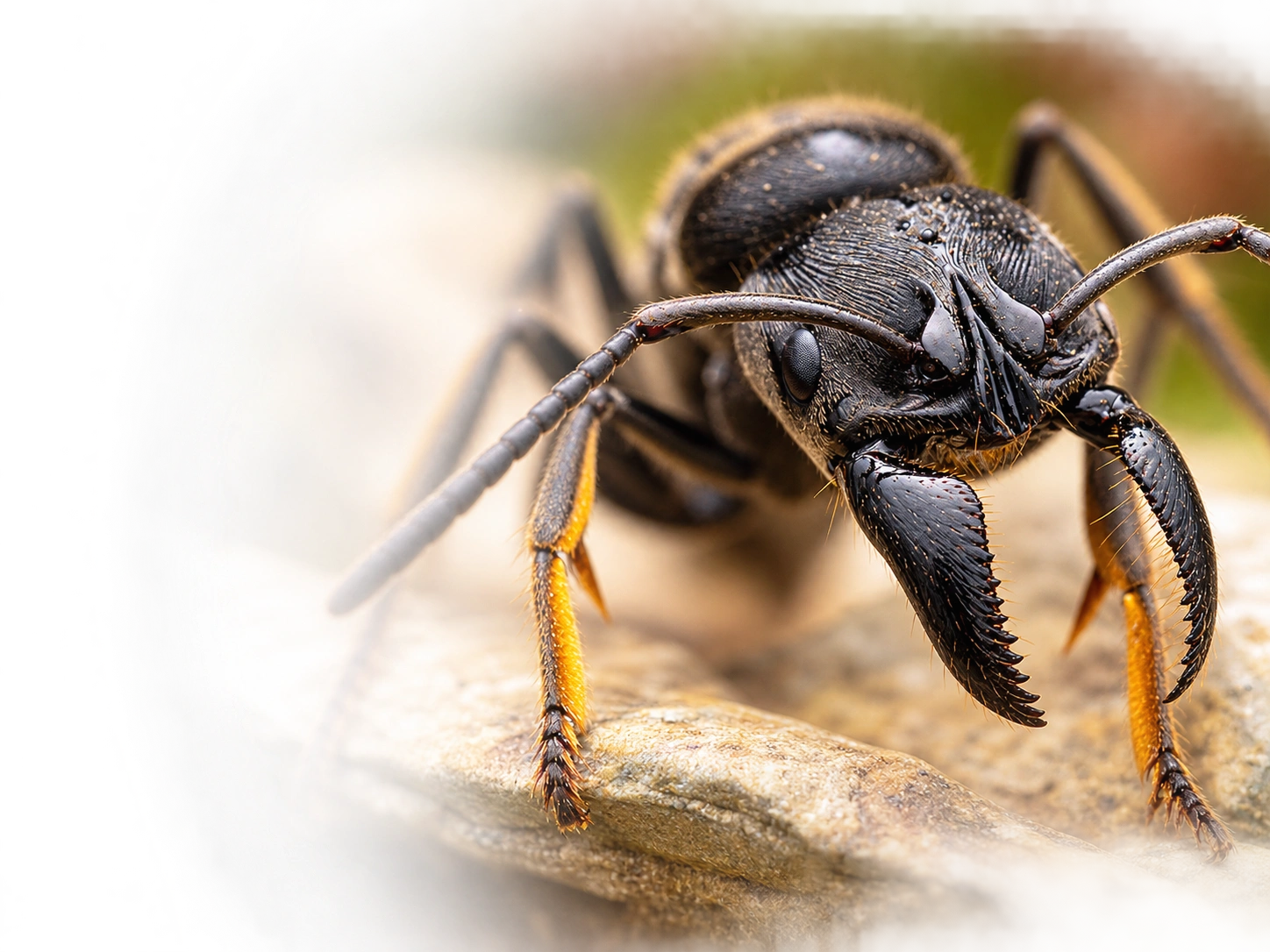
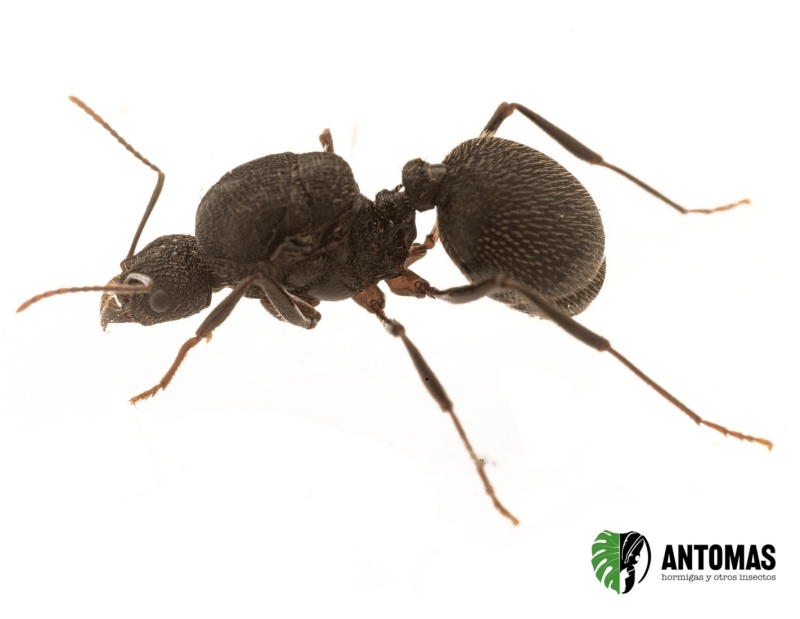
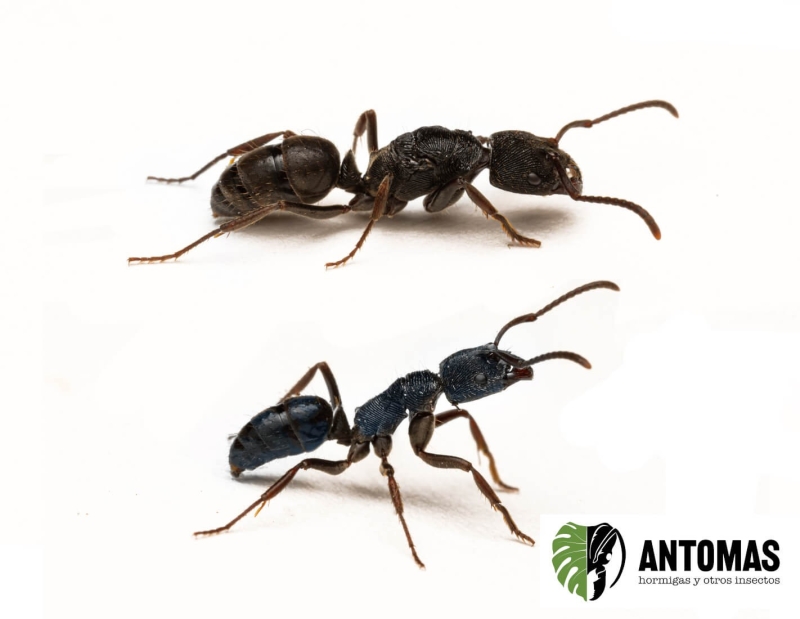
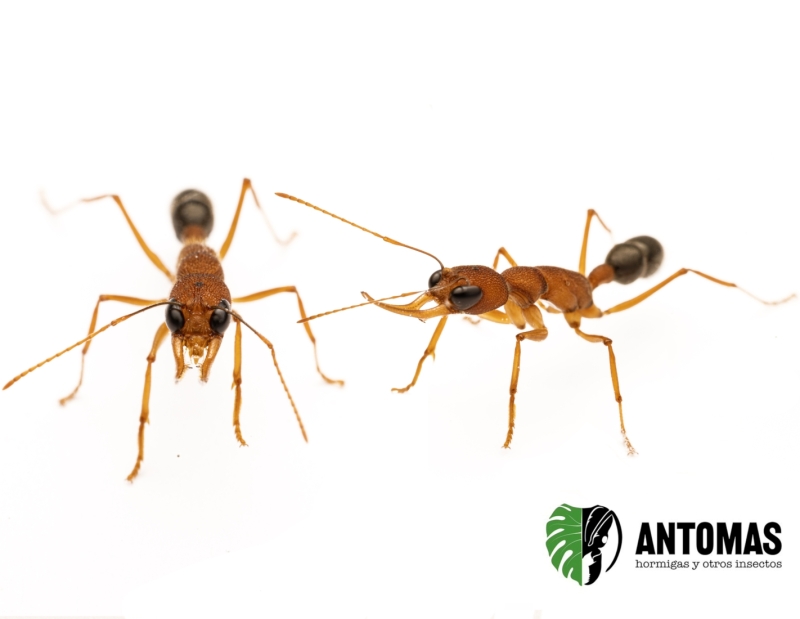
The original Diacamma: the species that gave its name to the whole genus, black, armoured with striae and with two spines at the waist. It hunts alone, chases its prey at full speed and hurls itself at any arthropod with unmatched ferocity. There is no queen in its colony: a gamergate rules, a mated worker who holds on to power by sterilising her sisters as they emerge. Tandem moves and a unique social order, right before your eyes in your formicarium. Colonies with a gamergate. Shipping throughout Europe, live arrival guaranteed.
The species that gave its name to the genus: black, heavily striated and a ferocious hunter of other arthropods. They have no queen: the eggs are laid by a mated worker, the gamergate. It needs a very humid nest (60–80 %) at 24–28 °C, with no diapause.
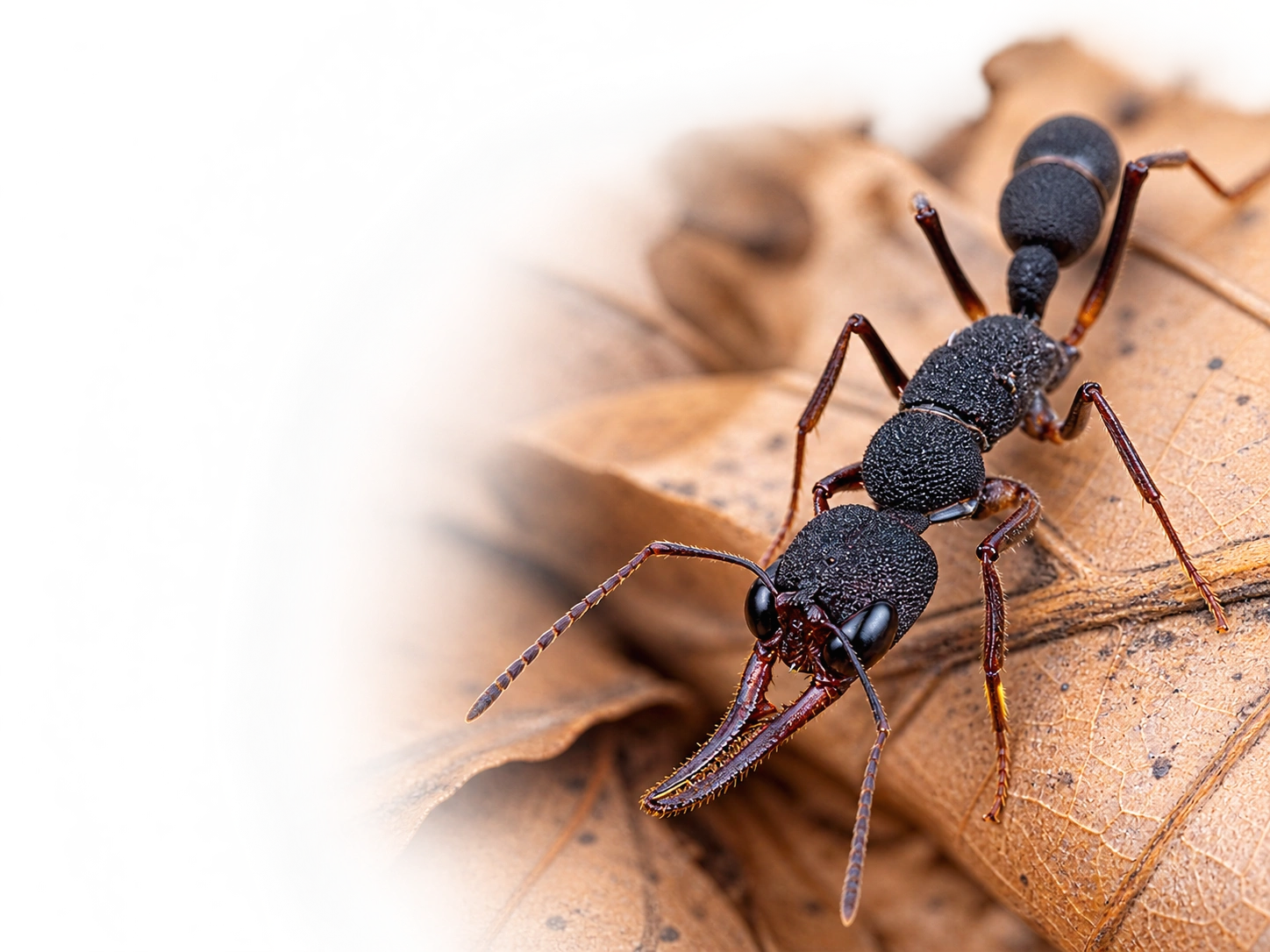
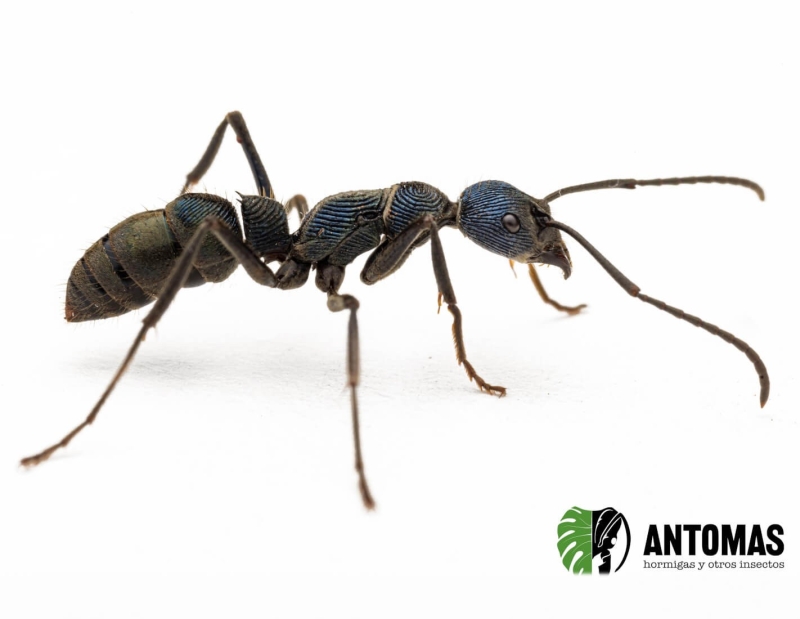
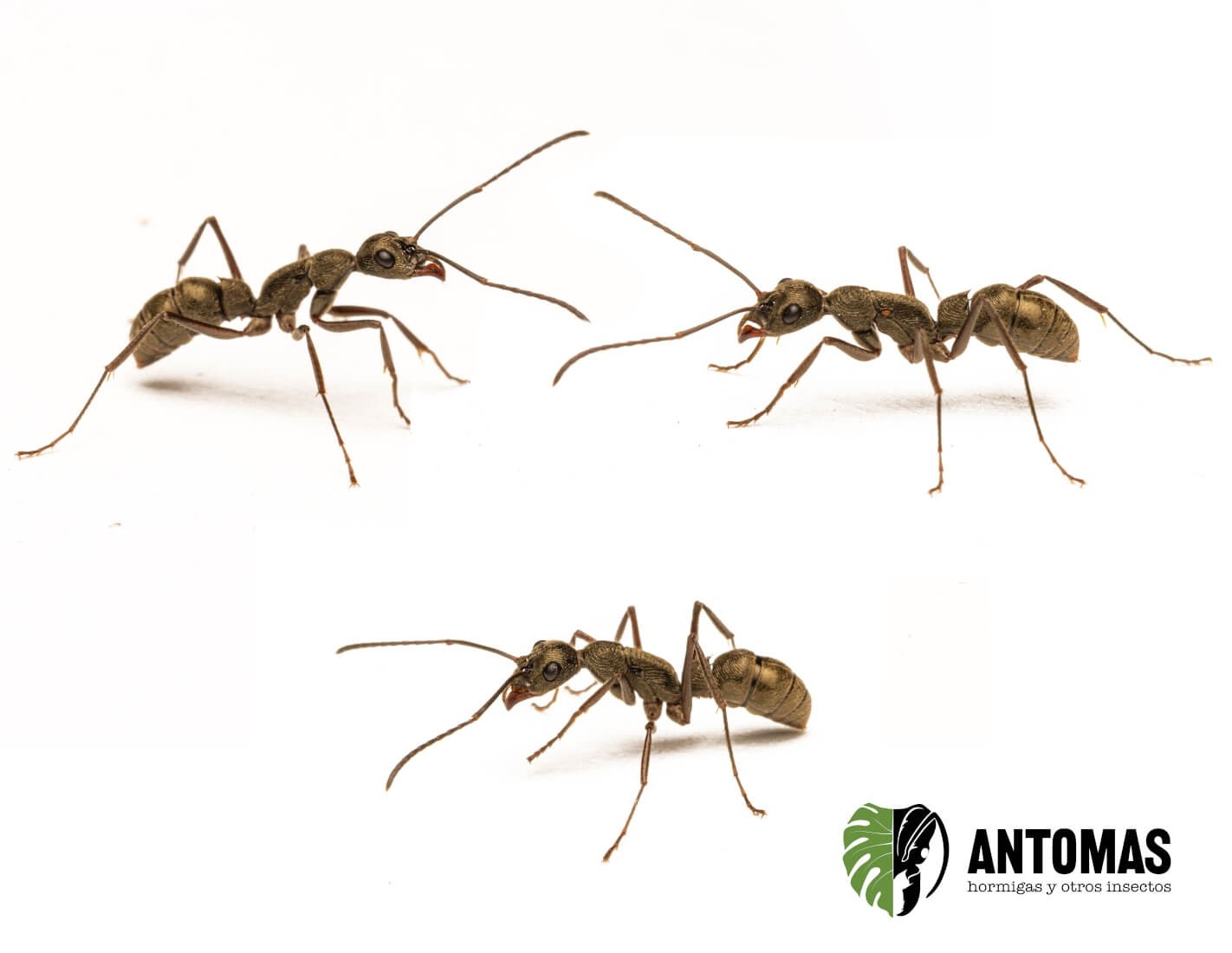
Black, armoured with striae and with a pair of spines at the waist, Diacamma rugosum is the ant that gave its name to its entire genus and one of the fiercest hunters you can keep at home: it patrols alone, chases its prey at full speed and throws itself at any arthropod without hesitation. Its colony works without a queen. The eggs are laid by a gamergate, a worker that has mated and that, to avoid competition, sterilises her sisters as soon as they emerge.
One thing should be made clear from the start: almost everything known about Diacamma behaviour comes from studies of closely related species (D. australe, D. ceylonense, D. indicum and the Diacamma from Okinawa, which for years was published as "rugosum"). We apply it to D. rugosum because the social system is shared across the genus, but we point it out whenever a fact comes from another species.
Biology
What is a gamergate?
Myrmecologists coined the term from two Greek words: gamos ("marriage") and ergátēs ("worker"). A gamergate is therefore a mated worker that reproduces. In most ants that job belongs to the queen; in Diacamma the queen simply does not exist, and her role is taken on by a single worker per colony.
What sets her apart from a true queen comes down to three points:
A worker's body. A queen is born with wings and a broad thorax packed with flight muscles. The gamergate never had wings, keeps a worker's silhouette and is the same size as the others: in a study of 26 colonies of D. ceylonense, she was the only one with active ovaries and stored sperm, but her measurements did not set her apart.
No nuptial flight. She does not fly off to find a mate: she waits for males at the entrance of her own nest.
A position, not a caste. Any worker could have become the gamergate. The role is decided in adult life, through interactions inside the nest, not during larval development. From then on her chemical profile changes (the cuticular hydrocarbons that nestmates read with their antennae), and so does the activity of a handful of genes, mostly linked to metabolism and nutrition, which readjusts almost immediately once she reaches the dominant position.
How can you spot her? By an anatomical detail we will see shortly: she is the only one in the colony that keeps her gemmae intact.
The first Diacamma: the story of a name
In 1842 the French naturalist Le Guillou described a large, striated ant under the name Ponera rugosa. Twenty years later Gustav Mayr created the genus Diacamma (1862) for it and its relatives, and that Ponera rugosa became the type species: the reference on which the whole genus is defined. The epithet rugosum means "wrinkled" and refers to the sculpture of its cuticle, covered with striae and wrinkles from end to end.
Today the genus contains about 44 valid species (Bolton, 2024) and more than 20 subspecies, ranging from India and southern China to southern Japan, Southeast Asia and northern Australia. In popular English, D. rugosum is sometimes called the "Bornean queenless ant" or the "Asian bullet ant". The second name is only a trade nickname: it does not mean that its sting resembles that of the famous bullet ant of the Americas.
One name, many ants: the rugosum complex
D. rugosum has been recorded across a huge area: India, Nepal, Bangladesh, Sri Lanka, Myanmar, Thailand, Vietnam, southern China, Singapore, the Philippines, New Guinea and many Indonesian islands, from Borneo and Sulawesi to Java, Bali, Lombok and Timor. Such a wide range is already suspicious. In 1922 Wheeler and Chapman counted some 25 subspecies and varieties under this name, and around twenty are still described today, their validity awaiting a modern revision: the authors of the latest work on the group in India warn that the rank of these subspecies "may change".
Over time, several forms once published as "rugosum" have been split off as species in their own right, such as D. ceylonense, D. indicum or D. vagans from the Moluccas, and new species keep appearing in Southeast Asia. So, to be cautious: in practice the trade name "D. rugosum" covers a complex of very similar species, and a colony sold under that name belongs to the rugosum group, though not always to the species in the strict sense. Antomas colonies come from Southeast Asia.
In its natural habitat it nests in the soil, under stones, among roots or in earth banks. Nests in the genus are austere: in D. indicum, casts of 77 natural nests almost always revealed an entrance gallery leading into a single chamber.
Gemmae: fate is decided on leaving the cocoon
On the thorax of every newly emerged worker there are two small appendages, one on each side: the gemmae. They are covered with sensory hairs and have a gland of their own, and their origin is curious: they are what remains of wings that never develop, because the larva's wing buds are almost completely reabsorbed.
The gamergate watches over emergences. When a worker leaves the cocoon, still pale and soft (keepers call her a callow), the gamergate holds her down and bites her gemmae off. From that moment the mutilated worker shows no sexual behaviour and will never be able to mate. The explanation seems to lie in the nervous system: once the gemmae are lost, the connections between their sensory hairs and the brain degenerate, so the change is irreversible.
Watch out for an error often repeated online: it is not the pupae that are mutilated, but newly emerged adults. And newly emerged workers do not fight an established gamergate, although they do attack other intact callows, their direct competitors for succession.
A clue carried by the victim
What signal tells the gamergate to mutilate? The answer came from comparing two Diacamma from southern India: D. ceylonense, which mutilates like the rest of the genus, and a form called "nilgiri", whose gamergate never mutilates and keeps control through dominance and aggression alone. When cocoons were swapped between colonies, "nilgiri" workers raised among D. ceylonense escaped mutilation, while D. ceylonense workers raised among "nilgiri" suffered it, even though nobody mutilates in that colony.
In other words, the signal that triggers the attack is given off by the newly emerged worker herself, probably from her gemmae, and not by the colony she grows up in.
When the gamergate is gone
While the gamergate is alive, no rival reaches adulthood with intact gemmae, so dethroning her is practically impossible. Change only comes with her death: mutilation stops, and the first callow to emerge intact is usually the one that mates and takes over. The colony therefore does not die with its reproductive: it can replace her.
The successor does, however, need to mate with a male, and in the wild those males come from other colonies. In captivity the same situation can be recreated by providing a male from another colony; we explain how under "If the gamergate dies".
Pheromones in the legs and a sacrificed male
A few days after emerging, the intact worker takes up position at the nest entrance to perform the sexual calling: she releases pheromones from the metatibial gland, located in her hind legs, and uses them to attract winged males flying in from other colonies. Mating is surprisingly long, up to two days, and ends abruptly: the gamergate and the workers kill the male and take him out of the nest. In D. rugosum, mating has even been observed inside the nest itself. The sperm of that single male is enough for the gamergate for the rest of her life.
Sisters keeping watch
Being mutilated does not mean a worker cannot lay eggs: she keeps her ovaries, and her unfertilised eggs produce males, as in all Hymenoptera. While the gamergate is present this rarely happens; in orphaned colonies, by contrast, workers lay frequently. In the Diacamma from Japan a double surveillance system has been described: the gamergate and the other workers pursue those that try to lay.
The surveillance also depends on colony size. A 2018 study found males only in colonies of around a hundred workers or more (47 of 56 males came from colonies of more than 100, and none from colonies of fewer than 50), and in the laboratory more than half of the males (58 %) were sons of workers rather than of the gamergate. Large colonies, it seems, are more permissive.
Born by splitting
With no winged queens, there are no nuptial flights and no females founding colonies on their own. Diacamma reproduce at colony level by fission: part of the workers leaves with a new gamergate and settles elsewhere. How many workers leave in each split has not been published. Laboratories studying the genus have observed both splits and fusions of groups, and even what happens when the two halves of a divided colony meet again.
Moving in pairs
To move as a group, Diacamma do not lay pheromone trails: they recruit one at a time, by tandem running. The worker that knows the destination goes ahead and another follows closely, constantly touching her with her antennae. When D. indicum colonies move, most females travel this way, the gamergate included; males and brood are carried in the mandibles. And efficiency goes further: the follower often carries a larva or pupa in her mouth, so that each trip moves one adult and one brood item at the same time.
Navigators that take the short cut
The leaders of these moves make decisions. In experiments with D. indicum, when the target nest was changed halfway through a move, most of them corrected their route with an error margin of only 1.65 % (262 leaders analysed); when the main leader was removed, others took over without the move slowing down; and, given a choice of several routes, they significantly preferred the shortest. With no chemical trails and colonies of only a few hundred individuals, everything depends on each worker's memory and sense of direction.
Teamwork: better coordinated than their larger relatives
In Antomas’ experience, D. rugosum cooperates considerably better than the large Diacamma species. Workers recruit nestmates in one way or another (for example with the tandem running we have just seen in nest moves) to carry prey or move the brood, and the colony organises itself smoothly. Anyone familiar with Iberian ants will find the comparison easy: they coordinate roughly like Aphaenogaster senilis, which also recruits its nestmates to food.
Termite hunter, true to her heading
Diacamma hunt by day and alone. Field studies with D. ceylonense showed that at any given moment about 24 % of the workers are outside the nest, a figure so constant that it can be used to estimate colony size without digging it up. Each worker forages only during one stage of her life, 9 to 23 days, and usually always heads out in the same direction or within a narrow sector; together they cover the whole area around the nest. Given their large eyes, they very probably navigate by sight, although this has not been studied in detail.
Termites are their main prey in the wild, and D. rugosum in particular has been described as a very effective termite hunter in sand-arena trials. The sequence is always similar: it detects the prey, approaches, stings it until it is immobilised and carries it back to the nest; if the food source is large, it goes back for help and recruits nestmates in tandem.
A doorway decorated with feathers
In 1985 Mark Moffett described a striking habit: some Diacamma, probably from the rugosum group, decorate their nest entrance with bird feathers and ant corpses. It has been suggested that these objects condense the early-morning dew and give workers water right at the door. It is an unconfirmed hypothesis; if your colony piles up this kind of debris by the entrance, we would love to hear about it.
Size and morphology
Like all Diacamma, D. rugosum has monomorphic workers: a single body form and a very uniform size, among which the gamergate does not stand out. Main features (described in detail for D. r. jerdoni, from Kerala):
Sculpture. This is what gives it its name. The head is furrowed with longitudinal striae; the pronotum with concentric, almost circular wrinkles; the rest of the thorax with oblique striae; and the declivity of the propodeum with transverse striae. The petiolar node repeats the concentric pattern, and on the gaster only the first segment bears transverse striae; the rest is smooth.
Petiole. A thick scale ending in two sharp spines; in D. r. jerdoni they are 0.48–0.57 mm apart.
Head. Large, convex eyes, triangular mandibles armed with 7 teeth and 12-segmented antennae.
Gemmae. Present in all workers at emergence; only the gamergate keeps them.
Sting. Functional, long and curved upwards.
Male. Winged, pale yellowish brown, with huge eyes, three ocelli, small mandibles and 13-segmented antennae.
Approximate measurements
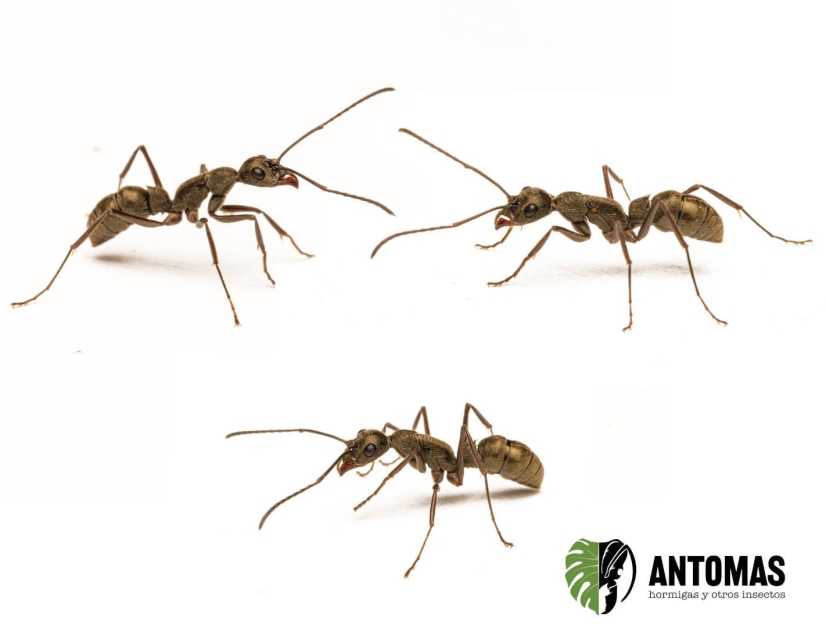
Workers and gamergate in Antomas colonies: 6–10 mm, depending on the subspecies. They are smaller than the published reference from India given below, which is to be expected in such a variable species complex
Published reference, D. rugosum jerdoni (Kerala), worker: 12.0–12.5 mm (head 2.58–2.62 mm long and 2.17–2.21 mm wide)
Gamergate: the same as the workers (monomorphic workers)
Male, D. r. jerdoni: 10.0 mm
Genus Diacamma, workers: usually 8–16 mm depending on the species
The measurements of D. r. jerdoni come from very few specimens (two workers and one male), so the real range of the complex is certainly wider.
Care in captivity
Difficulty: 3/5 – Advanced
Day to day it is a hardy ant, but it demands three things that take it beyond beginner level: a nest with very high, stable humidity that never becomes waterlogged or mouldy; a diet based mainly on live prey; and care when handling the formicarium, because the whole colony depends on a single gamergate. Keepers' opinions range from "easy" to "experts only"; the middle ground is an intermediate level.
Why is it worth it? Because few ants hunt with such intensity: fast workers that spot their prey by sight, chase it and attack it with overwhelming aggression. And because in the same formicarium you can follow one of the rarest social systems in the animal world: a worker acting as queen, tandem moves and, if you are lucky, the mutilation of a newly emerged worker.
Recommended parameters
Temperature: 24–28 °C, with a gradient between a warmer end (about 28 °C) and a cooler one (about 24 °C). This is also the range used by most keepers of the genus.
Nest humidity: very high, 60–80 %; at Antomas we usually work at close to 70 %.
Foraging area: somewhat less humid than the nest, with water always at hand.
Diapause: not needed. It can stay active all year round at 24–28 °C; what matters is avoiding sudden changes.
Light: nest dark or covered; the hunting area can be lit, as it is a diurnal hunter that relies heavily on sight.
Spread the humidity: leave a wetter zone, where the colony usually places eggs and larvae, and a somewhat drier one. It is better to add a little water often than a lot at once, because excess water brings mould and mites.
Recommended formicaria
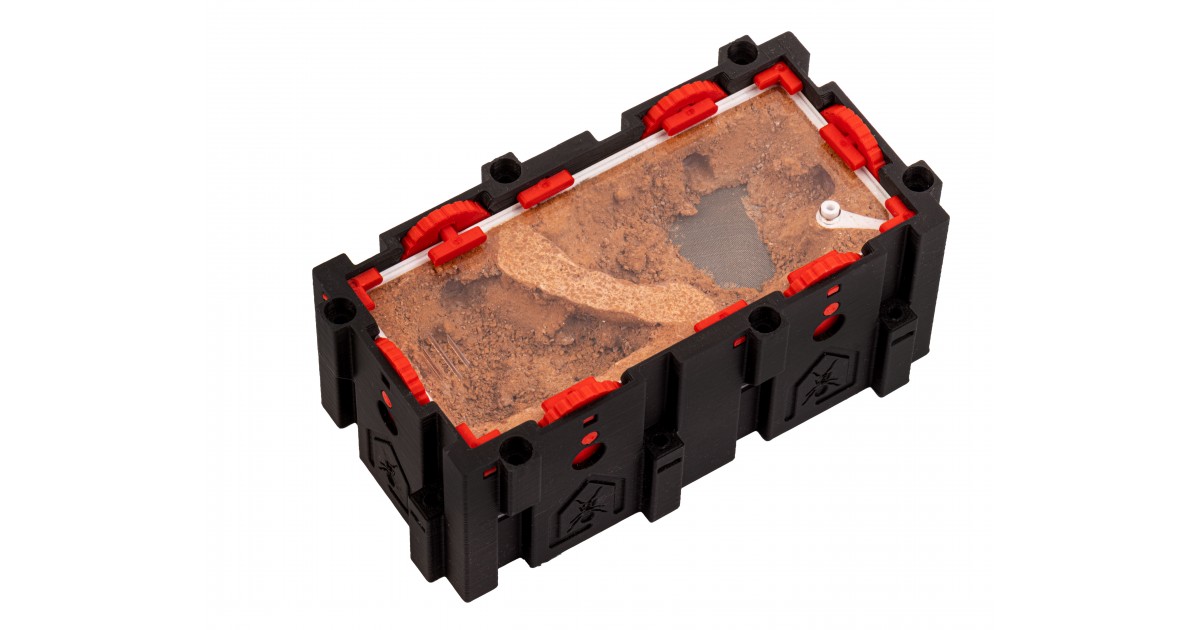
At Antomas we work with the Anthouse Qbik Wild range, and any of its three humidity systems suits this species. For the size of the colonies we sell, the ideal format is the Duo, and our favourite is the Qbik Wild Duo P 2C Hybrid, which combines an evaporation reservoir under a technical mesh with a side drinking tube. The evaporation version, in which the water never touches the chambers and a natural gradient forms, and the standard version, with a refillable water tube, also work very well.
For the hunting area, sand mixed with a little clay and a few small stones is enough: it looks natural and holds some humidity. Do not expand too early; do it when the colony already fills almost the whole nest, because empty chambers tend to dry out or grow mould.
Arrival of the colony and the first weeks
At Antomas we sell colonies with a gamergate, in a size that depends on stock at the time. Selling a gamergate on her own would make no sense: in Diacamma there is no founding by an isolated female, and the colony needs workers from day one.
When it arrives, put it in a quiet, dark place at a stable temperature, and remove any workers that died in transit. During the first weeks, no knocks, no spotlights on the nest and no opening it out of curiosity: these are what most often make a colony stop raising brood. To move it to a new formicarium, at Antomas we almost always do it by tipping it in: we tip the colony into the new formicarium and often force them to go inside. It is the method that works best for us.
The gamergate can be told apart because she keeps her gemmae, while the other workers only show the scars. But she will not be easy to see: in Antomas's experience she is very shy and elusive and never goes out to forage, so do not look for her in the hunting area.
If the gamergate dies
Losing the gamergate does not have to be the end. Once she is gone, nobody mutilates the new workers, who emerge with intact gemmae, and any of them can become the successor if she mates. The missing piece is a male from another colony, which is exactly what happens in the wild, where males fly in from neighbouring colonies.
We have seen it work: Antomas customers who lost their gamergate asked us for males and managed to get an intact worker to mate and take over. If it happens to you, contact us and we will advise you. In the meantime, the colony only needs its usual care: food, humidity and peace and quiet. And the best prevention is to handle the formicarium calmly, so as not to lose the gamergate by accident.
Feeding
Protein, mainly as live prey, and sugars, always varying what you offer.
Protein. Although they accept dead prey, at Antomas we recommend live prey most of the time: it is the best way to appreciate their character. They are extraordinarily aggressive towards other arthropods and invertebrates, and watching them locate, harass and sting a cricket is the great spectacle of this species. Crickets, feeder cockroaches, flies, mealworms and other safe feeder insects of a size they can overpower all work; switch the type of insect every week. At Antomas we give them protein 3–5 times a week, more the more larvae the colony has.
A colony short of protein may end up devouring its own brood, as several keepers report. And do not leave remains for more than 24 h: with so much humidity, they go mouldy straight away.
Sugars. They love sugary liquids. You can offer them every 3–4 days or leave a sugar feeder ad libitum, always available. For variety, use Anthouse Blue Sugar Nectar as the base (4–5 times a week if you use a feeder) and, 1–2 times a week, another sugary liquid. On those days at Antomas we use a mix of lactose-free milk with honey, which also adds some liquid protein. Important: the milk must be lactose-free.
Water: clean water always available.
A Diacamma chasing its prey: this is how fast and aggressive their hunting is (Antomas channel).
The gamergate and the hunt of Diacamma (Anthouse).
Behaviour in captivity
Outside the nest it is a very active species, especially in warmth and good light: workers roam the hunting area one by one and pounce on any prey as soon as they see it. Towards other arthropods and ants from other colonies their aggression is enormous, so no shared setups. Towards people, on the other hand, they are not particularly aggressive. If the colony relocates, you will see the pairs of tandem running, often with the follower carrying a larva.
If the colony huddles in the warmest spot and has hardly any brood, it is usually short of warmth or humidity. If it stops raising brood right after being handled, give it a few days of peace.
Escapes and barriers
It is not much of an escape artist. A well-fitting, ventilated lid and a spacious foraging area, where it has room to patrol, are usually enough. If you want an extra barrier, oil, petroleum jelly or "talcol" (talcum powder mixed with alcohol: you paint a band and, once the alcohol evaporates, a layer of talc remains) all work.
Bear in mind that Fluon (PTFE) performs poorly at the high humidity this species needs and may stop working without you noticing. If you use it, always with a lid. Also check plugs and connections: for an ant of this size, a crack is enough.
Handling and safety
It has a functional sting, but in Antomas's experience it finds it quite hard to pierce the skin and is slow to sting; it is not particularly aggressive towards people, as it saves all that fury for its prey. As with any stinging hymenopteran, an allergic person could react, so handle it with a brush or soft tweezers and calmly, also so as not to lose the gamergate. This is an exotic species: it must never be released.
What not to do
Let temperature or humidity go out of range, or change them suddenly.
Waterlog the nest: mould and mites appear straight away.
Leave prey remains for more than 24 h.
Skimp on protein or always give the same insect (lack of protein can lead to brood cannibalism).
Expand the formicarium before the colony fills it.
Open, light up or knock the nest frequently.
Leave workers that died in transit inside the nest.
Handle in a hurry and lose the gamergate.
Merge colonies: they cannot be joined, as they are quite aggressive towards each other. Do not combine it with other species either.
Rely entirely on Fluon in a humid environment without a lid.
Scientific sources
This care sheet is based on the scientific literature on the Diacamma rugosum complex and the biology of the genus Diacamma, and on the experience of Antomas and European keepers. Main references:
Baidwan et al. (2024). Description of Diacamma rugosum jerdoni (Insecta: Hymenoptera) male along with two new additions to the myrmecofaunal diversity of Kerala, India. Halteres 14: 20–30. doi:10.5281/zenodo.14439664
Wheeler, W.M. & Chapman, J.W. (1922). The mating of Diacamma. Psyche 29: 203–211. psyche.entclub.org
Schmidt, C.A. & Shattuck, S.O. (2014). The higher classification of the ant subfamily Ponerinae (Hymenoptera: Formicidae), with a review of ponerine ecology and behavior. Zootaxa 3817: 1–242. doi:10.11646/zootaxa.3817.1.1
Peeters, C. & Higashi, S. (1989). Reproductive dominance controlled by mutilation in the queenless ant Diacamma australe. Naturwissenschaften 76: 177–180. doi:10.1007/BF00366404
Gronenberg, W. & Peeters, C. (1993). Central projections of the sensory hairs on the gemma of the ant Diacamma: substrate for behavioural modulation? Cell and Tissue Research. doi:10.1007/BF00333695
Gotoh, A., Billen, J., Hashim, R. & Ito, F. (2005). Apoptotic wing degeneration and formation of an altruism-regulating glandular appendage (gemma) in the ponerine ant Diacamma sp. from Japan. Development Genes and Evolution. doi:10.1007/s00427-004-0456-7
Ramaswamy, K. et al. (2004). Social mutilation in the ponerine ant Diacamma: cues originate in the victims. Insectes Sociaux 51: 410–413. doi:10.1007/s00040-004-0765-x
Cournault, L. & Peeters, C. (2012). Aggression regulates monogyny in non-mutilating Diacamma ants. Insectes Sociaux 59: 533–539. doi:10.1007/s00040-012-0251-9
Baratte, S., Cobb, M. & Peeters, C. (2006). Reproductive conflicts and mutilation in queenless Diacamma ants. Animal Behaviour 72: 305–311. doi:10.1016/j.anbehav.2005.10.025
Kikuta, N. & Tsuji, K. (1999). Queen and worker policing in the monogynous and monandrous ant, Diacamma sp. Behavioral Ecology and Sociobiology 46: 180–189. doi:10.1007/s002650050608
Shimoji, H. et al. (2018). Social enforcement depending on the stage of colony growth in an ant. Proceedings of the Royal Society B 285: 20172548. doi:10.1098/rspb.2017.2548
Kaur, R. et al. (2014). Coupled adult-brood transport augments relocation in the Indian queenless ant Diacamma indicum. Insectes Sociaux. doi:10.1007/s00040-014-0338-6
Mukhopadhyay et al. (2019). Path minimization in a tandem running Indian ant in the context of colony relocation. Journal of Experimental Biology. doi:10.1242/jeb.206490