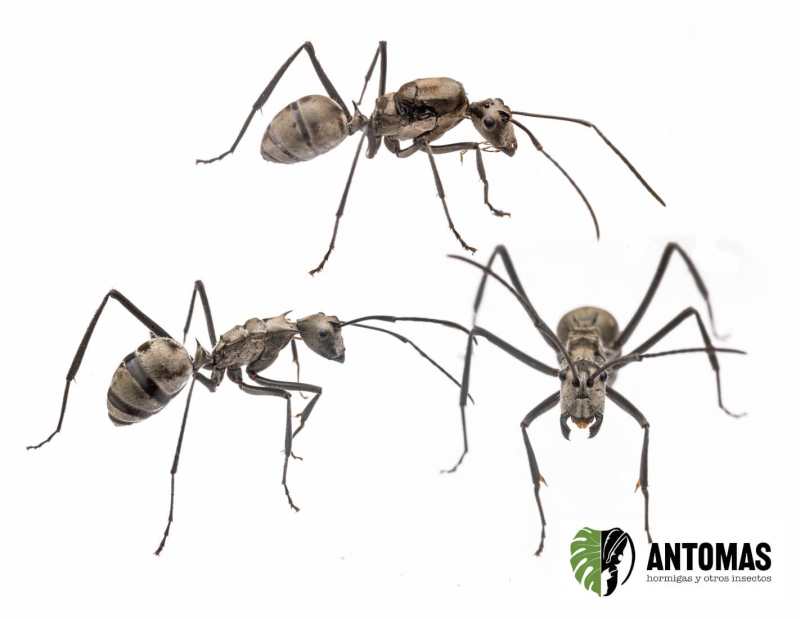
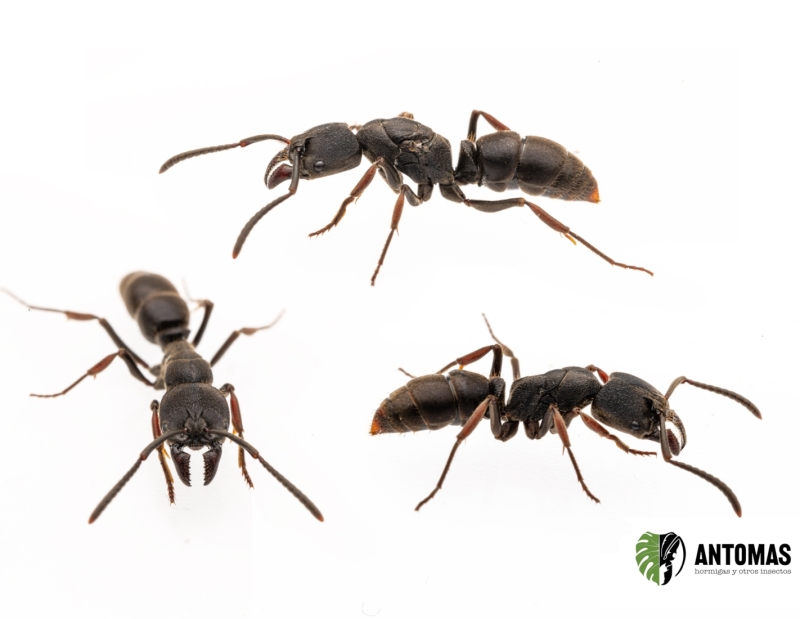
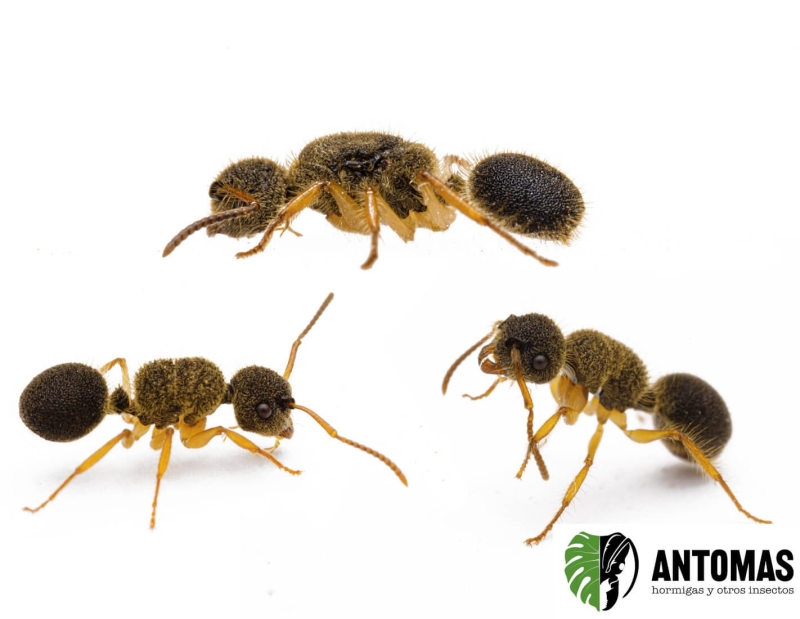
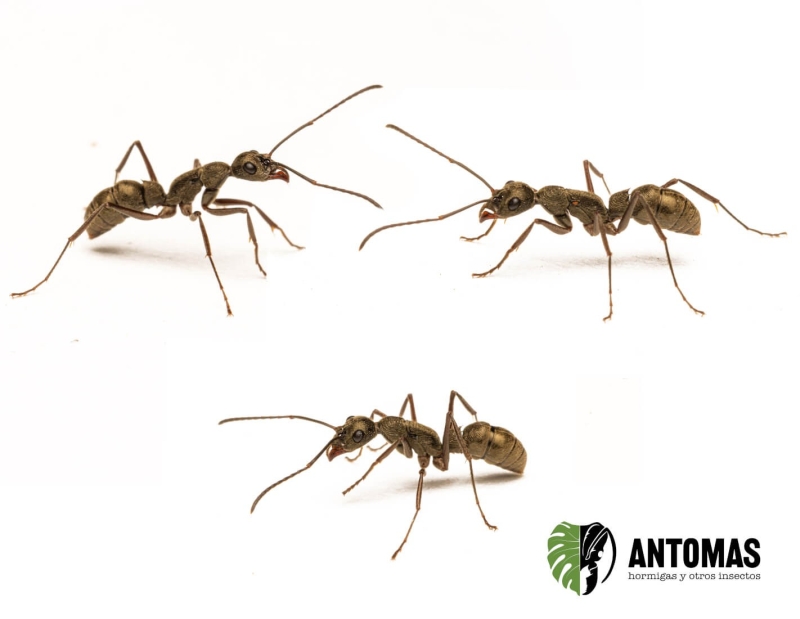
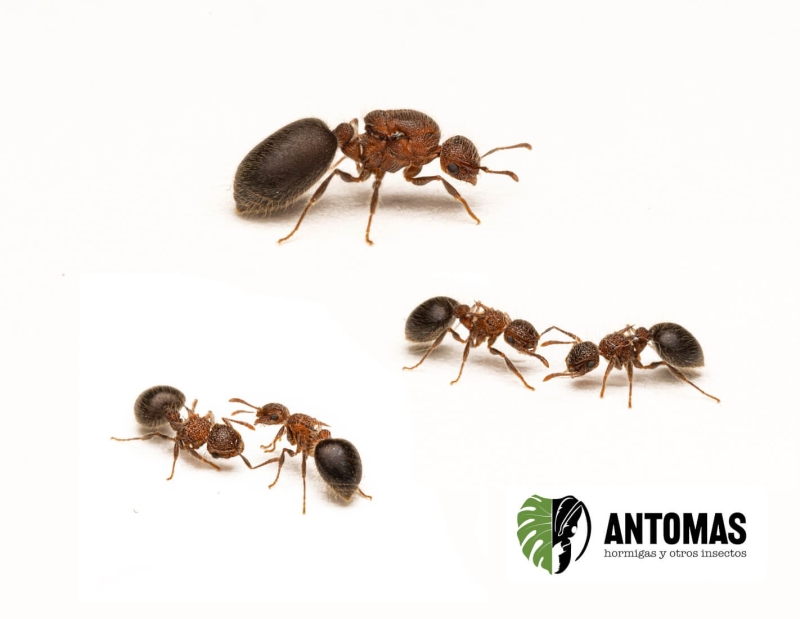
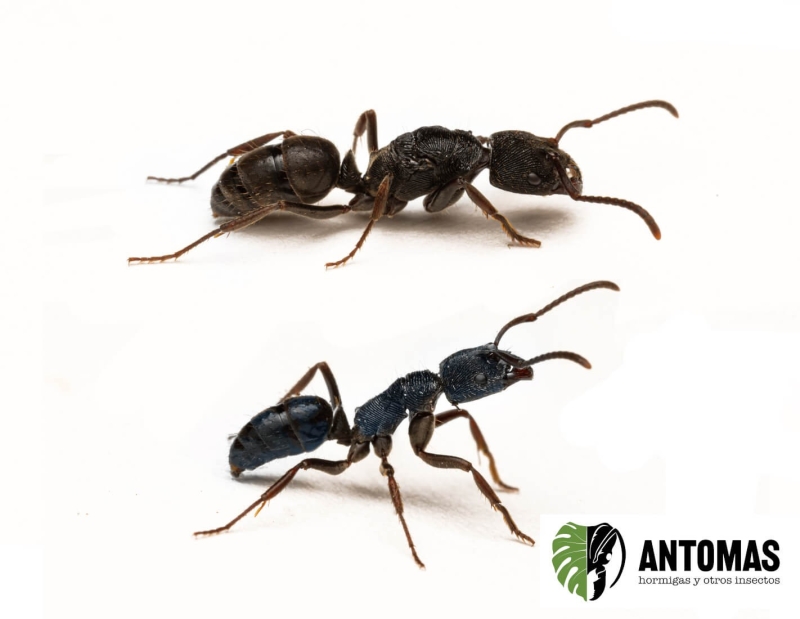
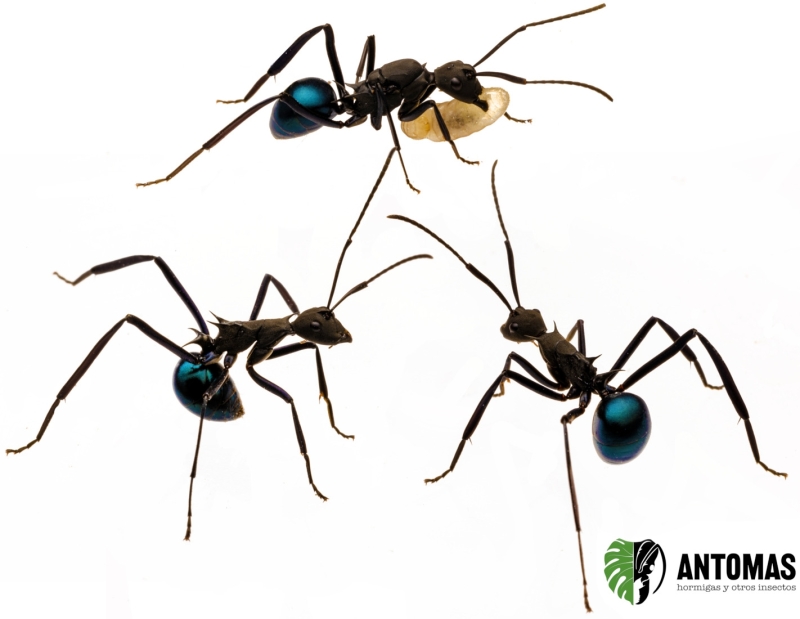
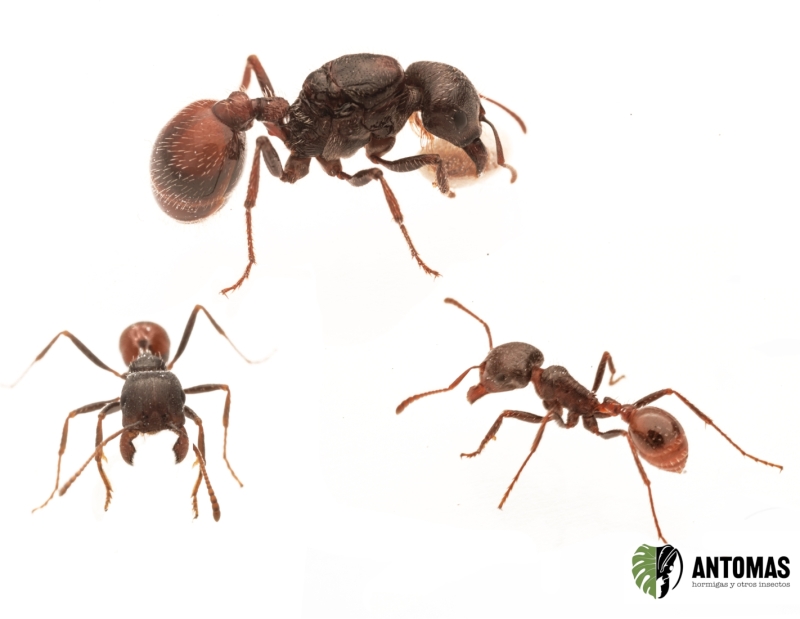
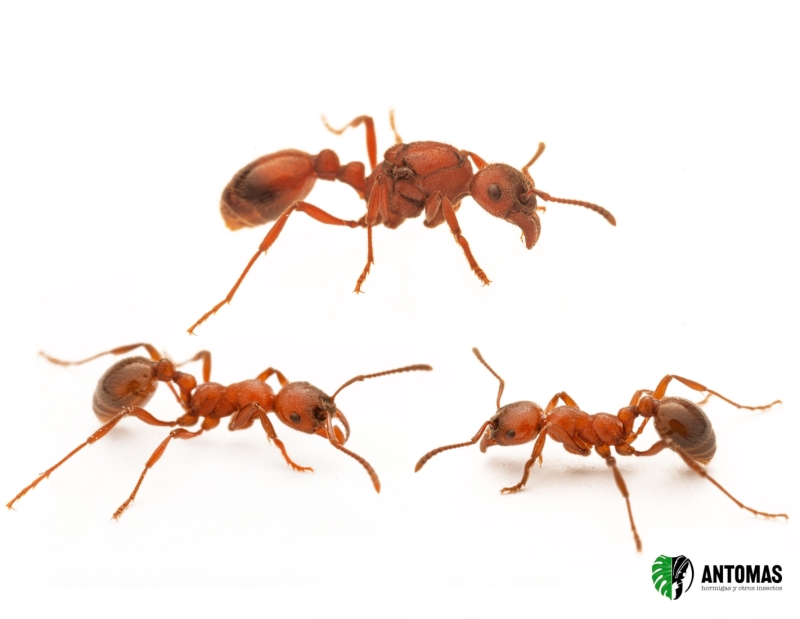
Difficulty: 1/5 – Beginner
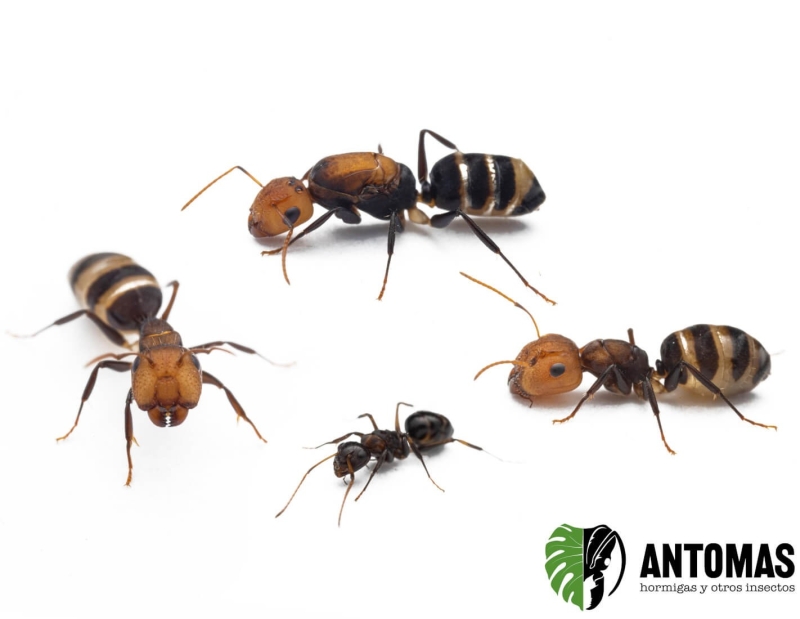
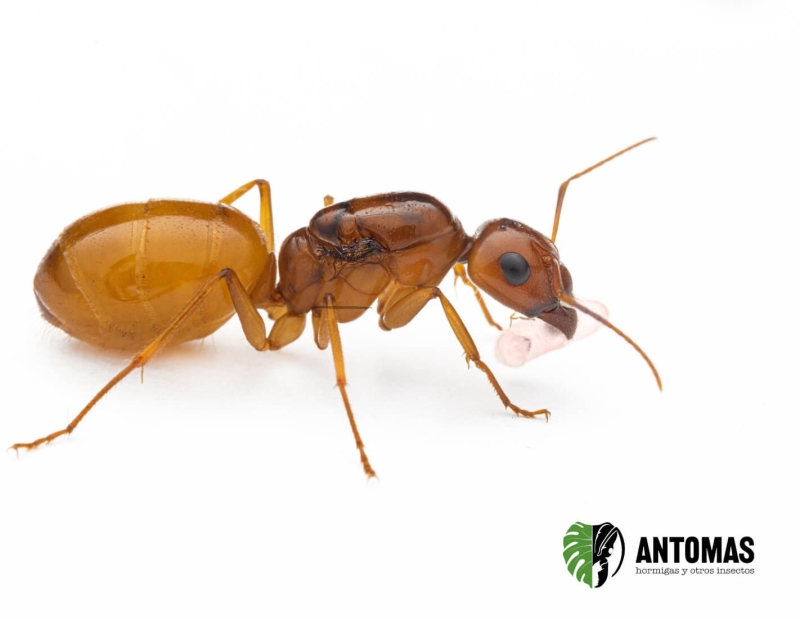
A medium-sized Camponotus from tropical Asia: reddish brown, polymorphic and nocturnal, with an antifungal venom that science has only just discovered. For us, one of the best Camponotus to start with. Queens with brood, also in groups of 2, 3 or 5 queens, with claustral founding. Qbik Alpha or Qbik Wild, 24–28 °C, low to moderate humidity with a gradient, sugar always available and plenty of protein. No diapause (optional rest of 4–8 weeks at 15–20 °C). It climbs: mineral oil barrier.
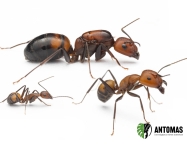
Camponotus nicobarensis Mayr, 1865 is a medium-sized carpenter ant from tropical and subtropical Asia: reddish brown, polymorphic, with workers of several sizes, and mainly nocturnal in its habits. It is one of the most popular exotic Camponotus in the hobby worldwide, and one of the species you ask us for most at Antomas. And yet, as the authors of a 2025 paper on a colony kept at home pointed out, the scientific literature says almost nothing about its biology.
That is changing. In 2026 it was one of the model species in a study showing that the venom of Camponotus is not just formic acid, and other recent work has pitted it against fire ants. In this care sheet we always keep apart what is documented by science, what other keepers report and what we have learnt keeping it at Antomas.
Biology
A name that sailed on the frigate Novara
It was described by the Austrian entomologist Gustav Mayr in 1865, in the ant volume of the scientific expedition of the frigate Novara, which sailed around the world between 1857 and 1859. Its name says it all: Mayr described it from workers collected on Car Nicobar, one of the Nicobar Islands, in the Indian Ocean. Those reference specimens, the syntypes, are kept at the Natural History Museum in Vienna.
Since then it has changed “pigeonhole” several times: Forel placed it in the subgenus Myrmothrix in 1914, and Emery placed it in Myrmoturba in 1920 and, in 1925, in Tanaemyrmex, where it remains today. Camponotus is a huge genus, with more than a thousand species, whose internal classification is still a work in progress: the 2025 phylogenomic study of the tribe showed that several Asian species described as Camponotus actually belong to new genera.
Besides the typical form, three infraspecific forms have been described, monticola, rabbani and the variety exiguoguttatus, which Bingham listed in 1903 as darker forms. Their current status is unclear, and the species has never had a modern revision, with detailed measurements or DNA. That is why, as you will see shortly, there are open questions about its identity.
More than formic acid: the antifungal venom of 2026
For more than a century it was taken for granted that the formicines, the stingless subfamily to which Camponotus belongs, had a simple venom: a spray of formic acid, which in this subfamily makes up between 40 and 70% of the venom. In 2026, a study published in Science Advances by Lukas Koch and some twenty researchers overturned that idea, and C. nicobarensis was one of its stars.
They analysed the venom of eight Camponotus species from different parts of the world and found 35 peptides, short chains of amino acids, from two gene families. They named them formicitoxins. In C. nicobarensis, the venom turned out to be a real cocktail:
- Formic acid, as in all formicines.
- A main peptide of 22 amino acids, with a mass of 2,507.53 Da, which they called FRTX1-Cnic1a: “FRTX” for formicitoxin and “Cnic” for C. nicobarensis. Its average concentration is about 0.36 mg per millilitre of venom.
- Lipids (N-acylethanolamines and lysophosphatidylcholines) and a fair amount of potassium, the most abundant metal in the venom, at 1.3 mg/ml.
And it produces it in quantity. C. nicobarensis workers often expelled more than 1 µl of venom: one cubic millimetre, a drop just over a millimetre across, huge for an ant of its size.
What is the peptide for? Here comes the surprise. FRTX1-Cnic1a slows the growth of fungi: in the laboratory it inhibited the three fungi tested at very low concentrations, 0.5–2.2 micromolar, and it does not damage red blood cells, that is, it is not haemolytic. Then they tested it where it really matters: on C. nicobarensis pupae infected with Metarhizium, a fungus that kills insects. In the pupae treated with the peptide, the fungus took considerably longer to appear. The authors interpret this as a role for the venom in colony hygiene: the workers not only defend themselves with it, but also protect the brood against mould.
One more detail: in the same study a fungus, Penicillium brocae, was isolated from a pupa from a laboratory-reared C. nicobarensis colony. In other words, it is kept in European laboratories as a study ant, just as it is in our homes. And it is not the first time: in 2024 it was one of nine species in a PLoS Biology paper on neuroparsin A, a brain hormone that holds back the ovaries and whose level falls when a young queen starts to reproduce.
It swallows its own acid to disinfect the larder
Formic acid is not just a weapon. In 2020, a German team showed that formicines swallow their own venom. During grooming, the ant bends its gaster forwards and brings to its mouth the tip, where the acidopore is, the small nozzle through which the venom comes out, and takes up a few drops of acid. This keeps the crop very acidic: the “social stomach” where it stores the food it later shares mouth to mouth with its nestmates. That acid filters out the microbes that come in with the food and curbs infections within the colony.
It was studied in C. floridanus and seven other formicines, not in C. nicobarensis, but it is a trait of the whole subfamily. And the 2026 study adds another piece: it photographed C. nicobarensis major workers cleaning their acidopore, the same gesture. Put the two pieces together and this ant’s venom is at once a weapon, a disinfectant for the larder and a fungicide for the brood. When you see a worker curled over on itself, with its mouth at the tip of its gaster, you will know what it is doing.
One species or several? What “cf.” means
With C. nicobarensis something happens that is common among Asian ants in the hobby: the name is correct in essence, but the species has been so little revised that nobody can guarantee that everything kept under that name is exactly the same thing. That is why one of the large European shops sells it as Camponotus cf. nicobarensis. “Cf.” comes from the Latin confer, “compare”, and indicates that the identification is probable but provisional.
There are several signs that the name might hide a species complex, a group of very similar species:
- The confusion goes back a long way. On Car Nicobar itself, Mayr misidentified a worker of another species in the group.
- It has a “twin”. In southern China it lives alongside C. pseudoirritans, which is very similar, and the features that separate them are in Chinese keys that are not available online.
- Variation in the hobby. Keepers describe colours, sizes and habits that change depending on where the ants come from, and on the forums it has been suggested that the name lumps together several species.
But there is also reassuring data. In a genetic barcoding study from southern China, the five C. nicobarensis sequences were almost identical to one another, differing by 0–0.2%, and very different from those of the other species. There, at least, the species is consistent. And in 1903 Bingham gave a practical feature for recognising it: very flattened tibiae with a groove running along them (see “Size and morphology”). Our conclusion is an honest one: what we keep at Antomas is what the hobby knows as C. nicobarensis, a species whose taxonomy awaits revision. For keeping it, what counts is experience with real colonies, and that is what we share in this care sheet.
From India to southern China
It is an ant of tropical and subtropical Asia. Its range runs from India and the Nicobar Islands, through Indochina, to southern China and Taiwan, with scattered records in insular South-East Asia. In GBIF, the large global biodiversity database, it has almost 1,700 records, most of them from southern China, mainly because a lot of sampling has been done there.
It is not put off by human-altered environments. In a survey with almost 4,000 sticky tapes baited with sausage, spread across parks, roadsides, plant nurseries and copses in a large city in southern China, it turned up on 98. And on a few of them it did something curious: it “paved” the tape, covering it with particles so that it could walk on it without getting stuck. There are no scientific descriptions of its natural nests; keepers mention dead wood, stumps and soil under stones.
Its climate. In the subtropical north of its range, summer is monsoonal, with averages of 26–29 °C and a relative humidity of 78–83%, and winter is cool and dry, with averages of 16–18 °C in the coldest months and no frost. In the tropical south there is no winter: averages stay between 26.5 and 28.7 °C all year round. This explains why it does well at 24–28 °C and does not need diapause, although it tolerates a mild winter rest well (see “Winter rest: optional and mild”).
Face to face with fire ants
What happens when C. nicobarensis meets fire ants? Two recent studies, carried out in China, have measured it in the laboratory.
Against the red fire ant (Solenopsis invicta), a 2026 study pitted it against eight species in individual and group fights. C. nicobarensis and its “twin” C. pseudoirritans were the ones that caused the highest mortality among the fire ants in 1:1 encounters, with the same number of ants of each species. The authors attribute a key role to defensive substances: when they blocked the acid-gland pore of the dominant species in the trial, the mortality they caused fell significantly. Bear in mind, though, that it is a preprint, a paper published before peer review, and it should be treated with caution.
Against the little fire ant (Wasmannia auropunctata), whose workers measure little more than a millimetre, the story changed. A 2023 study pitted it against five resident ants of southern China, including C. nicobarensis, and Wasmannia prevailed even with the same number of workers, with a greater advantage the more numerous it was. A detail from the study: in the group fights, the larger the resident ant, the lower its mortality.
None of this happens in a formicarium, of course, but it helps to understand its character: it is an ant that defends itself very well when it has to, although it is not invincible.
The colony that moved into a teapot
The most curious story about the species was published in 2025 by a team of myrmecologists from Warsaw, and it took place in a flat in that city. A hobbyist had kept a C. nicobarensis colony in a formicarium for several years. One day, the colony found a way out, explored the flat and decided, of its own accord, to settle in an empty ceramic teapot.
It was not a desperate escape. In the teapot, the queen kept on laying and the brood developed normally. Eight months later, the whole colony moved into another teapot standing next to it, and raised brood there again. And five months after that, when the colony had grown a lot, a group of workers went back to the first teapot with many larvae and set up a secondary nest there, a satellite nest of the same colony. The ants went out at night to look for food around the flat, especially in the kitchen, and in summer they even reached the balcony.
The authors present it as proof of its great flexibility in choosing a nest and of its considerable adaptability. For us, the anecdote leaves three lessons. It is very adaptable: it happily settles in almost any dry, sheltered cavity. It can spread across several nests, which is called polydomy. And barriers matter: a colony that has been settled in its formicarium for years may one day find the gap nobody had noticed (see “Escapes and barriers”).
An ant of the night
There are no studies of its daily rhythm in the wild, but the Warsaw colony was clearly nocturnal, and keepers agree: it is a mainly nocturnal ant that goes out foraging at dusk. That said, large colonies are often seen during the day too, especially when there is food in sight. Some keepers interpret intense, constant daytime activity as a sign of hunger. If you want to see the colony in full swing, watch it at dusk.
Aphids, nectar and a bacterium that makes amino acids
Like almost all Camponotus, it lives largely on sugary liquids. It has been included in a study of the aphid-tending ants of southern China, those that tend these insects to collect their honeydew, the sugary liquid they excrete, and it has been photographed exploiting extrafloral nectaries, small nectar glands that some plants have outside their flowers precisely to attract ants that defend them. This is trophobiosis: sugar in exchange for protection.
Such a sugary diet has a secret. All Camponotini, the tribe of Camponotus, carry a bacterium inside them, Blochmannia, which lives in special cells in the gut and passes from the queen to her daughters through the eggs. Its genome retains the pathways to make almost all the essential amino acids, the ones the ant cannot produce, and an enzyme that allows it to recycle nitrogen.
It is a very old alliance. According to a 2009 hypothesis, the tribe acquired the bacterium precisely by tending sap-sucking insects. The 2025 phylogenomic study places the origin of the tribe about 38 million years ago, probably in Australasia or in the Indomalayan region, that of C. nicobarensis, with a history of the bacterium that largely runs parallel to that of its ants. And a 2026 study of the bacteria of 26 ants, including C. nicobarensis, found it to be the characteristic bacterium of the Camponotini gaster. Note, though: this is no excuse to skimp on protein, because the larvae need insects to grow (see “Feeding”).
Several queens: what science knows and what we see at Antomas
It is the question you ask us most, because at Antomas we also sell groups of 2, 3 and 5 queens. Let us take it step by step.
What science knows: nothing. There is no study on the number of queens in its colonies in the wild or on founding by several queens in this species. Two words are worth distinguishing. In pleometrosis, several queens found a colony together and join forces in the most delicate stage; in polygyny, an adult colony keeps several egg-laying queens. In many ants, the alliance lasts only through founding; in others, the queens live together for years. In C. nicobarensis nobody has studied it.
What other keepers report. Shops almost always describe it as monogynous, that is, with a single queen, or as “oligogynous”, with several queens that tolerate each other but live in different parts of the nest. And on the forums there is a bit of everything:
- Colonies with 3 and 4 queens living together. One three-queen founding reached about 120 workers in a few months, with no fighting in sight.
- Queens added to an established colony that ended very badly: according to one keeper, torn apart by the workers within a few minutes.
- The odd case of a pair of founding queens in which, over time, the workers eliminated one of the queens.
What we see at Antomas. C. nicobarensis queens do not kill each other, especially if they have been together from the start. That is why we sell them in groups that already live together and have raised their first brood together. What we never recommend is adding queens later to an established colony: in that case the workers may indeed reject them.
What do you gain with several queens? More queens means more eggs and, in our experience, much faster growth, especially at the beginning, when a Camponotus colony is at its slowest. What is more, the colony does not depend on a single queen. We cannot promise you figures, but the difference shows (see “Groups of 2, 3 or 5 queens”).
How big can a colony grow?
There is no scientific data on the size of its colonies in the wild. What circulates comes from shops and keepers, and ranges from a few thousand workers to 10,000–20,000 in the largest colonies. The bigger figures sometimes seen have no source behind them.
What almost all accounts do agree on is the pace: a slow start, as in all Camponotus, up to a few dozen workers, and then growth that one keeper described as “insane for a Camponotus”. A single-queen colony usually ends its first year with a few dozen workers or just over a hundred, depending on the keeper and the food.
In our experience, well-kept colonies can exceed ten thousand workers with relative ease. The driving force is twofold: plenty of protein and several queens. Colonies with several queens grow very quickly, and a well-fed colony changes from one week to the next.
Queens for many years
How long does a C. nicobarensis queen live? Nobody has measured it. The Warsaw colony had been in its formicarium for “several years” before escaping. What is known is that ant queens are among the longest-lived insects in existence.
There is a famous record in the genus. The entomologists Caryl and Edna Haskins kept in their laboratory a queen of an Australian Camponotus, of the form then called C. perthiana, which lived 23.2 years and raised between 5,000 and 7,000 workers in that time. When it was published, in 1992, it was one of the longest lifespans documented in an ant, second only to a Lasius niger queen that lived almost 29 years. It is a different species and cannot simply be extrapolated, but it gives an idea: a well-cared-for Camponotus queen is a companion for many years.
Size and morphology
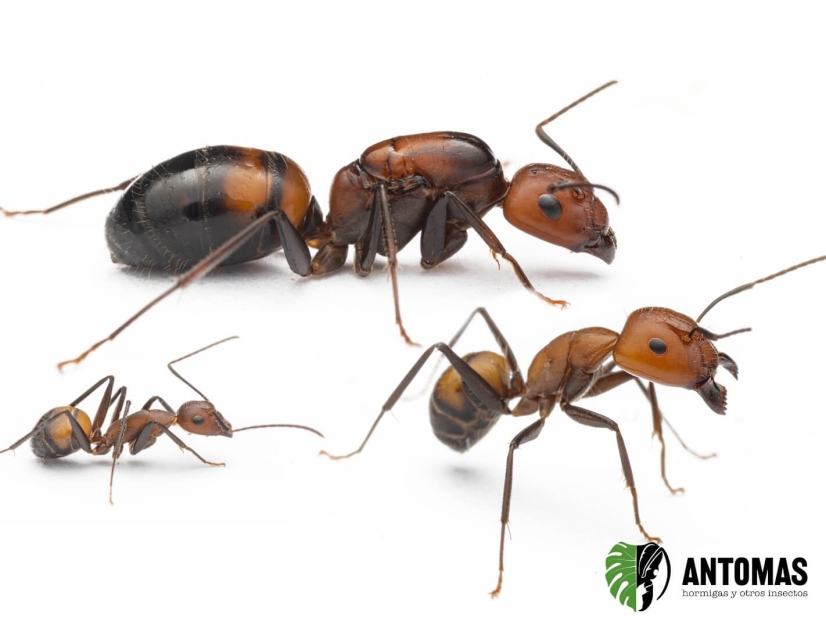
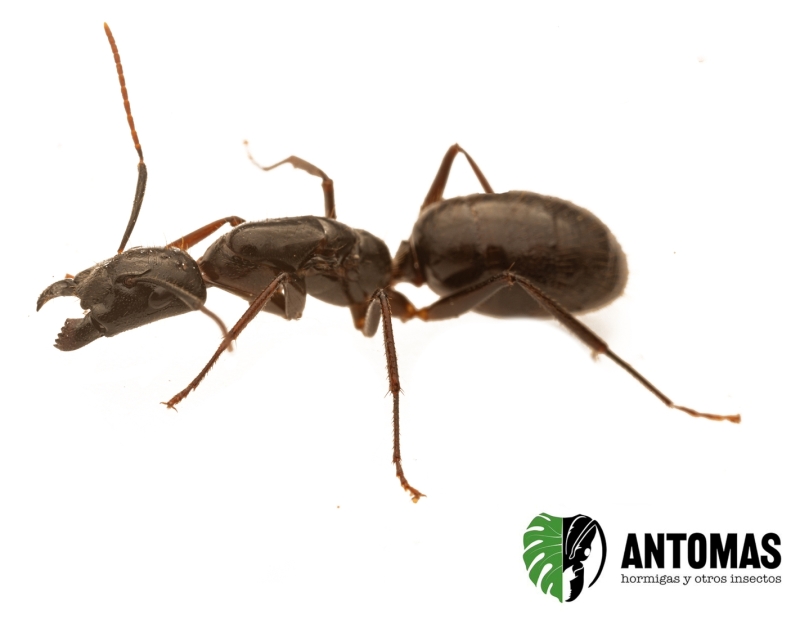
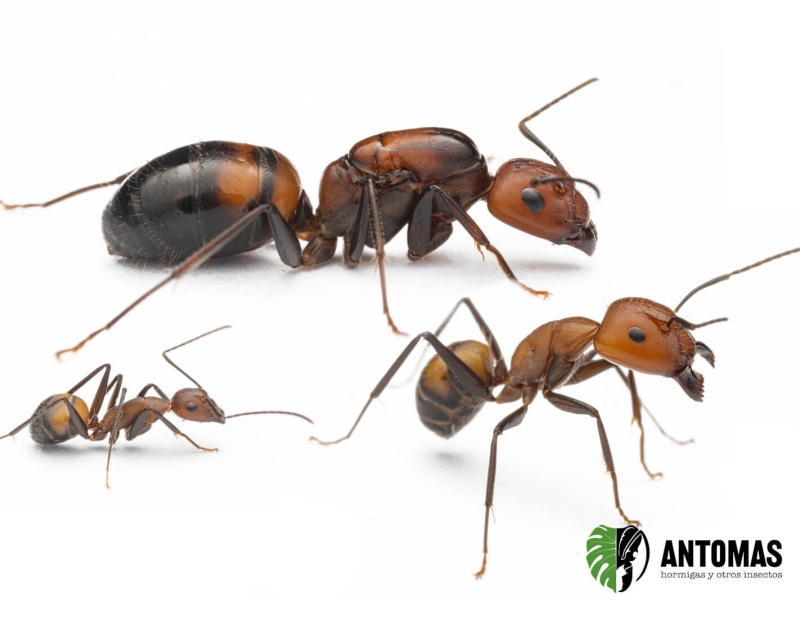
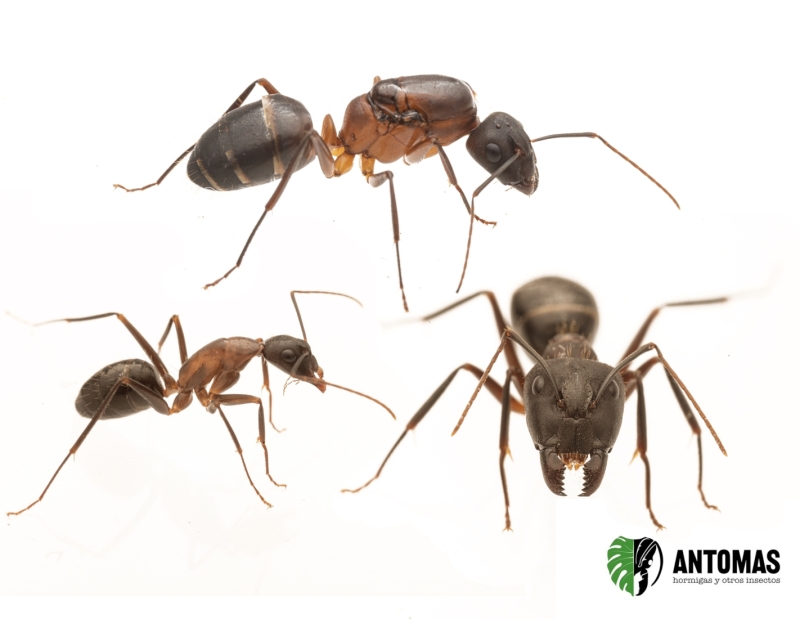
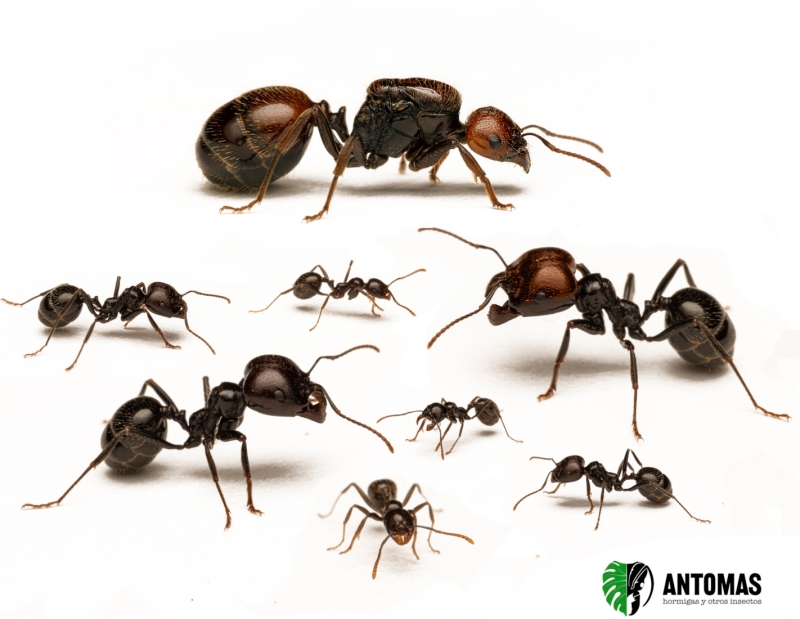
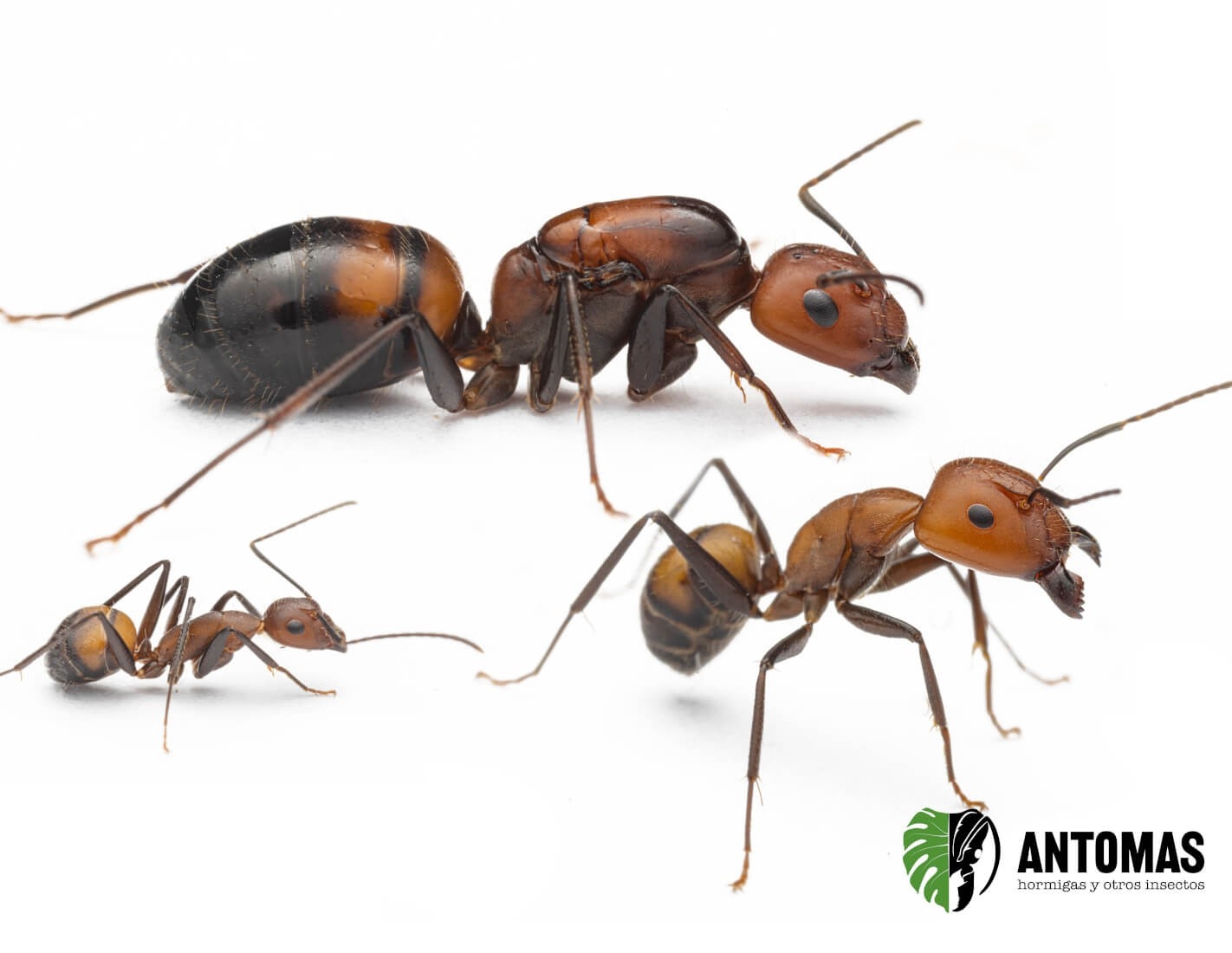
A medium-sized Camponotus, polymorphic, with workers of several sizes, from minors to majors, and no sting. The reference scientific description is Bingham’s (1903).
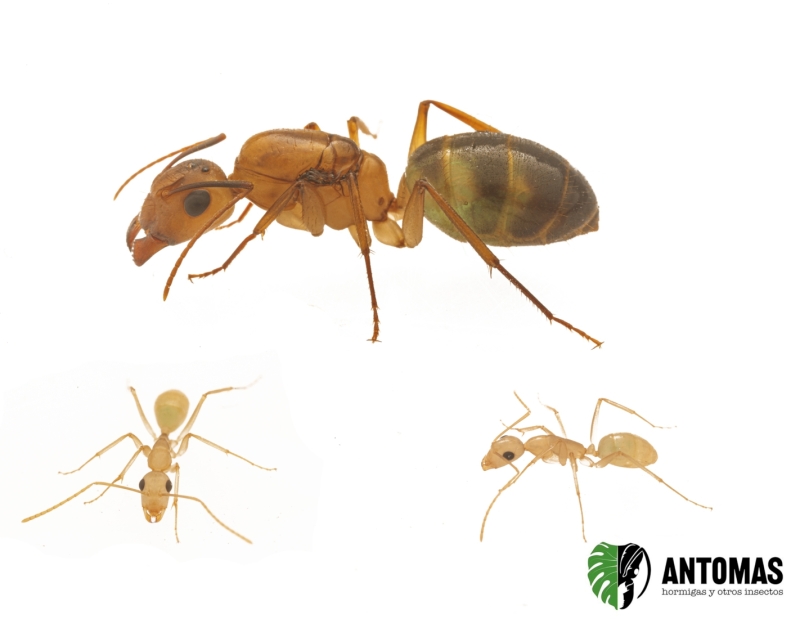
- Colour. Reddish brown, with the rear of the gaster darkened. In our colonies, brown with reddish tones, especially on the head and thorax. The colour varies across its range: Bingham already listed darker forms.
- Surface. Matt and finely rugose, without shine.
- Head of the majors. Subtriangular, with the back of the head notched and short, broad mandibles with seven teeth. In our experience, the majors of this species are understated: they have a large head, but not as exaggerated as that of other Camponotus.
- Minors. Slimmer, smaller and paler than the majors, with an oval head and a proportionally longer thorax.
- Legs. Short in the majors, with very flattened tibiae that have a longitudinal groove: a useful feature for identifying it.
- Petiole. The node, the “knot” of the waist, is convex in front, rounded above and concave behind in the majors, and conical in the minors.
- Gaster. Almost globular in the majors. It ends in the acidopore, through which the venom comes out.
- Queen and male. No description has been published.
Approximate measurements
- Queen: about 10 mm (Antomas queens; no published measurements)
- Workers: 3–5 mm in our colonies; minors of 5–7 mm according to Bingham (1903)
- Soldiers (majors): 6–10 mm in our colonies; 7–8 mm according to Bingham (1903)
- Male: no published measurements
The only scientific description with measurements that we have been able to consult is Bingham’s (1903); those of our colonies are approximate. The first workers of a young colony are the smallest, and the average size increases with each generation. There is no published data on when the first majors appear, but in our experience they come fairly quickly: the first ones can emerge at 3–4 months.
Care in captivity
Difficulty: 1/5 – Beginner
At Antomas we consider it one of the best Camponotus to start with, and this is also the majority view in the hobby: most shops and guides recommend it for beginners. These are the reasons:
- It needs no diapause: it can stay active all year round.
- It eats everything, and eagerly. It is a great hunter.
- It grows fast once it gets going, and even faster with several queens.
- It adapts to different nests and to household temperatures, with a little extra heat.
- It is easy to handle: shy from day to day, although it defends its nest.
The only thing it really asks for is a good escape barrier (see “Escapes and barriers”). And it is well worth it: it is a warm-toned Camponotus, with majors and minors, that grows before your eyes and hides in its venom one of the most interesting discoveries of recent years.
Recommended parameters
- Nest temperature: 24–28 °C during the active season. This matches the summer averages in its range, 26–29 °C, and what keepers recommend. A little lower and it stays active, but grows more slowly.
- Foraging area: at room temperature, or with one end a little warmer if you like.
- Humidity: low to moderate, with a gradient: one slightly moist area and the rest dry (see “Humidity: low to moderate, with a gradient”).
- Water: always available, in a test tube with water and cotton wool in the foraging area.
- Light: it is enough to leave them a dark area in the nest and light in the foraging area, with a normal day–night cycle.
- Diapause: they do not undergo it. If you wish, you can give them a mild rest of 4–8 weeks in winter, at 15–20 °C (see “Winter rest: optional and mild”).
For extra heat, a heating cable or mat on one side of the nest, with a thermostat, is better than a source that heats the whole formicarium evenly. Avoid direct sunlight and radiators.
Humidity: low to moderate, with a gradient
It is an ant with a rather dry nest. At Antomas we recommend low to moderate humidity, always with a gradient: one part of the nest slightly moist, where the colony can take the brood when it needs to, and the rest dry, with a dry foraging area. That way, it is the colony that chooses. Keepers agree that the substrate in the foraging area should not be wet, and the Warsaw colony chose a ceramic teapot, a dry nest, of its own accord.
- In the Qbik Alpha, moisture comes from the water tubes: leave one connected, especially while the colony is small.
- In the Qbik Wild, made of plaster, which retains moisture, add water sparingly, just enough for one area to stay slightly moist.
- Signs of too much moisture: condensation on the walls, mould or mites.
- Signs of too little: brood piled up next to the water.
Recommended formicaria
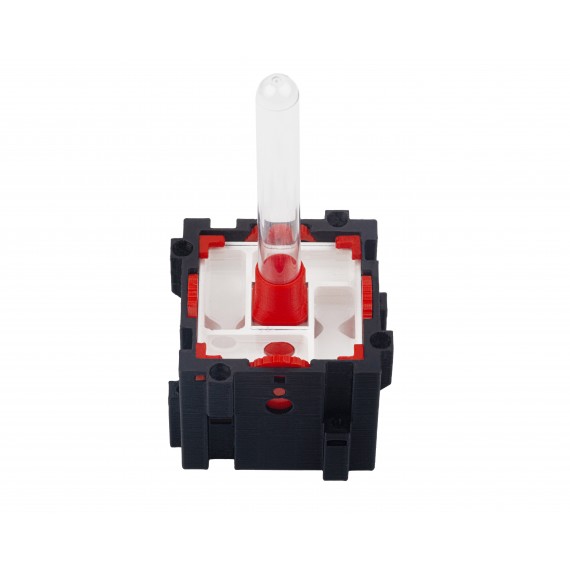
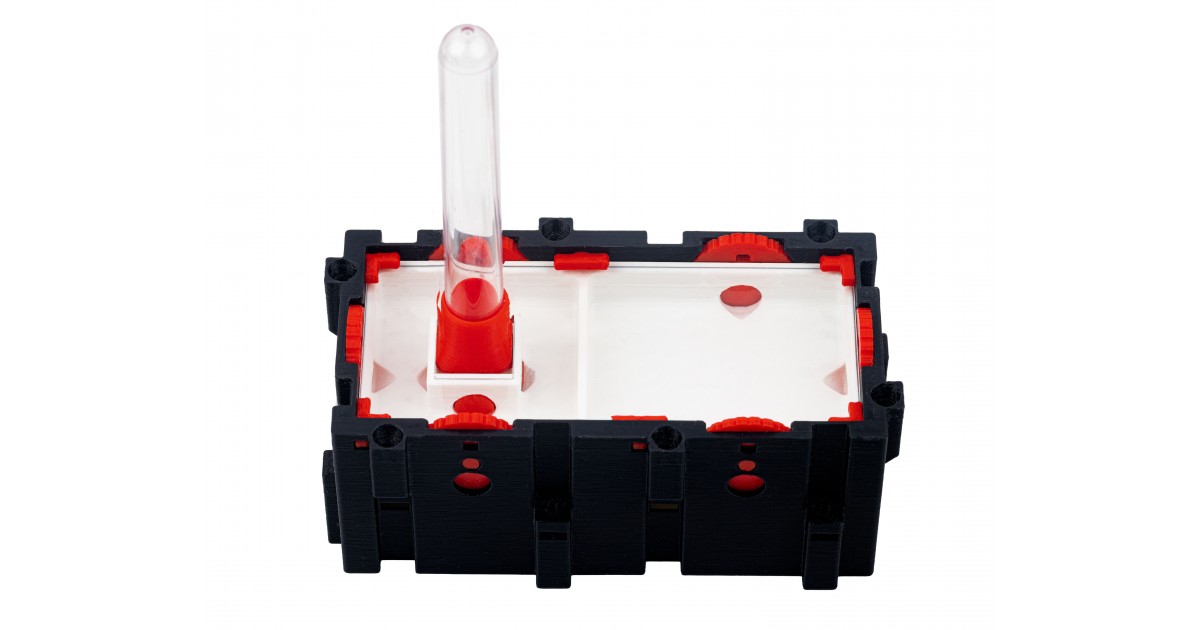
At Antomas we recommend Anthouse formicaria from the Qbik Alpha range or the Qbik Wild range, interchangeably, because C. nicobarensis likes both. The Qbik Alpha are modular, with a rather dry nest and the moisture in the tubes; the Qbik Wild are made of plaster, a material that holds some moisture. Choose the one you like best. To start, a QBIK ONE with medium galleries:
To expand, the QBIK DUO and, when the colony grows and the majors appear, larger galleries and the bigger formats in the same range:
If you prefer plaster, a good alternative is the Qbik Wild Duo P 2C Hybrid: a lower reservoir, separate from the galleries, transmits moisture through a mesh, and it is completed with a side drinking tube. That way you can control exactly how much moisture you provide:
Expand when the nest gets too small for them, which with this species, and especially with several queens, happens sooner than you think. But do not jump ahead: in a huge nest for a small colony, the spare chambers end up as rubbish dumps. Complete the set-up with these details:
- Escape barrier: a band of mineral oil at the top of the foraging area walls, and a well-fitting lid (see “Escapes and barriers”).
- Dry foraging area, with some sand, flat stones and a twig or piece of bark to climb on, with nothing that could act as a bridge to the barrier.
- Water always available, in a test tube with water and cotton wool.
- A feeder for sugary liquids, never on cotton wool (see “Feeding”).
- Gentle heat, only if needed, on one side of the nest and away from the feeder, with a thermostat.
Founding and the first weeks
At Antomas we sell C. nicobarensis in several versions: queen with brood, queen with 5–15 workers and brood and groups of 2, 3 or 5 queens with brood. In every case, these are colonies already started in a test tube. The species’ founding is claustral: the queen raises her first workers without going out to feed, using her own body reserves.
- Tube and peace and quiet. Keep the tube as it arrives, with its water reservoir behind the cotton wool, in a quiet, dark place free of vibrations, at 24–28 °C.
- Water. Check from time to time that the cotton wool is still moist and that there is water left in the reservoir. If it runs out or the tube gets very dirty, move the colony to a new tube by tipping it in.
- Food. As soon as there are workers, offer a drop of sugary liquid on something that will not soak the cotton wool, such as a small piece of aluminium foil, and a small piece of insect once or twice a week. Remove the leftovers the next day. A lone queen with her brood also appreciates a tiny drop of sugar now and then. Never put the sugar on the cotton wool in the tube: it goes mouldy and spoils the water reservoir.
- Patience. According to keepers, it takes about 4–6 weeks from egg to worker, depending on the temperature. The first workers are small.
When should you move it into the nest? At Antomas we move it when it has at least 5 workers; the ideal is to do it with 5–10, always into a nest suited to its size, with medium galleries. A nest that is too big for a small colony makes humidity and cleaning harder: one keeper says he lost his first colony that way.
Groups of 2, 3 or 5 queens
If you have chosen a group of queens, care is the same, with a few rules of its own:
- Keep them together. They arrive together and have raised their first brood together, and that is how they live together. Do not separate them to reunite them later.
- Never add queens later. New queens in an established colony usually end badly.
- Do not be alarmed if they spread out. Over time, each queen may occupy one area of the nest, and it is normal to see them apart: keepers describe this in this species.
- More eggs, more food. A colony with several queens needs more protein from the start.
How many to choose? With 2 queens you will already notice the difference in egg-laying; with 3 or 5, the colony gets going even faster. We cannot give you figures, but in our experience colonies with several queens grow very quickly. And if one day a queen is lost, through age or accident, the colony carries on with the others.
Arrival and moving
When you receive your colony, let it rest in a quiet, dark place at 24–28 °C, and check that the tube has water. Do not move it into the nest as soon as it arrives. When the time comes to move it into the formicarium, at Antomas we do it by tipping: we open the tube inside the foraging area, next to the nest entrance, and gently tip out the queen or queens, the workers and the brood, helping the stragglers with a soft brush. Three tips:
- Prepare everything beforehand: the formicarium set up, with the oil barrier in place and the water tube connected.
- Work over a tray, in case a worker climbs up the tube or the tools.
- Take your time: after tipping, the workers gather the brood and carry it into the nest. Keep the nest area dark so that they occupy it straight away.
If you ever need to move the colony to another formicarium, use the same method.
Feeding
Sugary liquids, always available. In the wild it lives largely on honeydew and nectar, and at home it should never run out of sugar. Vary the sugars: at Antomas we recommend Anthouse’s Blue Sugar nectar 4–5 times a week and another sugary liquid or nectar 1–2 times a week. You can also add a little protein to the nectar. Always offer them in a feeder and never on cotton wool, because cotton wool goes mouldy and spoils the liquid very quickly. Use a traditional or home-made feeder, where the drop stays “spread out” and accessible, and replace it before it ferments.
Protein: the more, the better. They are voracious: in our experience, a growing colony pounces on any insect and leaves nothing. Protein is the engine of its growth, and this is the Antomas philosophy: if you do daily maintenance and remove the leftovers, it is better to overfeed, because the colony understands that it has more resources and grows faster and in greater numbers. If you will not be able to clean often, it is better not to overfeed: leftover food rots and brings mould and mites.
- Change the type of insect from one week to the next, so that they do not always eat the same thing: flies, crickets, small cockroaches, chopped mealworms and, for small colonies, Drosophila. Keepers also mention wood cockroaches.
- Live prey, too. It is a good hunter: it catches small live prey and finishes off injured insects. For young colonies, chopped or freshly killed insects are better; for large ones, small live prey as well.
- Fresh and reliable. Freeze-dried protein is fine as a supplement, but fresh is better. Buy insects from a reliable supplier: those treated with insecticides can kill the colony.
A tip for a nocturnal species: put the protein in late in the afternoon, when they start to move, and remove the leftovers the next morning.
Water: always, in the test tube with cotton wool in the foraging area. Even though their nest is rather dry, they must never be without drinking water.
Winter rest: optional and mild
C. nicobarensis does not undergo diapause: it can stay active all year round, which is what most keepers do. But, if you wish, you can let it rest for a few weeks in winter, at a mild temperature of 15–20 °C. This fits its climate: in the northern part of its range, winter is cool and dry, with averages of 16–18 °C. It is useful, for example, if your home gets cold in winter and you do not want to heat the formicarium: the colony copes well.
- Duration: 4–8 weeks, for example in midwinter.
- Gradually: lower the temperature over one or two weeks, and raise it the same way at the end.
- Never below 15 °C: this is a mild rest, not a cold diapause like that of European ants.
- During the rest: water always available, some sugary liquid and little or no protein. Egg-laying slows down, and that is normal.
- At the end: go back to protein as soon as you see activity and brood.
If you do not want to do it, no problem: at 24–28 °C all year round, it simply keeps growing.
Behaviour in captivity
Nocturnal. They are most active at dusk and at night, although large colonies are often seen during the day, especially if there is food in sight (see “An ant of the night”).
Shy… and self-assured. Sources describe it as a shy, calm ant from day to day, but very determined when its nest is threatened. In our experience, once the colony is large it is very self-assured in its territory: it occupies the whole foraging area, pounces on food and hunts voraciously. The two fit together: cautious with what it does not know and determined with what it considers its own.
An alarm drumming. According to keepers, when alarmed the workers strike the substrate with their gaster, a drumming that can sometimes even be heard. If you hear it, something has disturbed them.
A visible division of labour. As in other polymorphic Camponotus, the minors are the ones that forage most, and the majors, when they appear, mainly take care of defence and of cutting up and carrying large prey.
Spread-out nests. Do not be surprised if the colony occupies several areas of the formicarium or takes brood to a corner of the foraging area: it is a flexible species (see “The colony that moved into a teapot”).
Observe without fear. At Antomas we believe that ants are there to be enjoyed, observed and learnt from, not kept hidden away. It is enough to leave them their dark area in the nest and light in the foraging area, and to observe them gently, intervening and stressing them as little as possible. They get used to your presence.
Warning signs:
- Brood that stalls or disappears: protein is almost always lacking.
- A lot of daytime activity, constantly: they may be hungry.
- Condensation on the walls or mould: too much moisture or forgotten leftovers.
- Many workers sitting still in the foraging area, with no room inside: time to expand.
Escapes and barriers
C. nicobarensis climbs smooth surfaces, and keepers describe it as a good climber. It is also an explorer: as the teapot colony shows, if there is a way out, sooner or later it will find it. In our experience, the best barrier is mineral oil:
- A band of mineral oil at the top of the foraging area walls, thin and continuous. Renew it when you see it collecting dust or debris.
- A well-fitting lid, as a second line of defence.
- No gaps: check the connections, stoppers and tubes, especially as the colony grows and more workers are exploring.
- Nothing that could act as a bridge: no twigs or stones resting near the barrier.
- Care when opening: open only as much as necessary, work calmly and close up when you finish.
With the oil barrier and everything well fitted, they cause no problems.
Handling and safety
They do not sting: they have no sting. If they feel attacked, they bite and can spray formic acid, which stings a little on sensitive skin or in a small cut. According to keepers, the workers’ bite is barely noticeable, but the queen can give you a proper nip. Nothing to worry about if you work calmly. Handle them with entomological tools, such as a soft brush or soft forceps, not with your hands, and work slowly so as not to harm any worker, let alone a queen. Do not put different colonies together, because they fight, and do not keep them with other species. It is an exotic species: it must never be released.
What not to do
- Adding queens to an established colony, or separating a group of queens to reunite them later.
- Neglecting the barriers: leaving gaps, loose connections or ill-fitting lids, or not renewing the oil.
- Moving a small colony into a nest that is too big for its size.
- Wetting the whole nest or the substrate in the foraging area.
- Giving it a cold winter rest: never below 15 °C.
- Putting sugary liquids on cotton wool, or letting them run out.
- Always giving them the same insect, or leaving leftovers uncleaned.
- Putting different colonies together.
- Handling them with your hands.
Scientific sources
This care sheet is based on the scientific literature on Camponotus nicobarensis and its genus, on distribution records and climate data from its range, and on the experience of Antomas and other keepers. Main references:
- Koch, L., Andreotti, S., Schubert, M. et al. (2026). Beyond formic acid: Peptides in carpenter ant venoms aid in disease protection. Science Advances 12: eaed4078. doi:10.1126/sciadv.aed4078
- Tragust, S. et al. (2020). Formicine ants swallow their highly acidic poison for gut microbial selection and control. eLife 9: e60287. doi:10.7554/eLife.60287
- Siddiqui, J. A., Chen, Z., Li, Q., Deng, J., Lin, X. & Huang, X. (2019). DNA barcoding of aphid-associated ants (Hymenoptera, Formicidae) in a subtropical area of southern China. ZooKeys 879: 117–136. doi:10.3897/zookeys.879.29705
- Bharti, H., Guénard, B., Bharti, M. & Economo, E. P. (2016). An updated checklist of the ants of India with their specific distributions in Indian states (Hymenoptera, Formicidae). ZooKeys 551: 1–83. doi:10.3897/zookeys.551.6767
- Shen, L. et al. (2023). Paving behavior in ants and its potential application in monitoring two urban pest ants, Solenopsis invicta and Tapinoma melanocephalum. Insects 14: 219. doi:10.3390/insects14030219
- Zhang, W., Jiang, L., Cheng, M., Xu, Y. & Li, J. (2026). Interspecific competition between Solenopsis invicta Buren and eight other ant species. Preprint, Research Square (not peer reviewed). doi:10.21203/rs.3.rs-9183057/v1
- Nie, L., Bamisile, B. S., Li, Y., Ran, H., Wang, S., Wang, L. & Xu, Y. (2023). Interspecific competition predicts the potential impact of little fire ant Wasmannia auropunctata (Roger) (Hymenoptera: Formicidae) invasion on resident ants in southern China. Insect Science 30: 1518–1530. doi:10.1111/1744-7917.13170
- Zhang, X. et al. (2024). An evolutionarily conserved pathway mediated by neuroparsin-A regulates reproductive plasticity in ants. PLoS Biology 22: e3002763. doi:10.1371/journal.pbio.3002763
- Ward, P. S., Fisher, B. L., Wernegreen, J. J. & Blaimer, B. B. (2025). Evolutionary history, novel lineages and symbiont coevolution in the ant tribe Camponotini (Hymenoptera: Formicidae). Systematic Entomology 50: 646–676. doi:10.1111/syen.12678
- Wernegreen, J. J., Kauppinen, S. N., Brady, S. G. & Ward, P. S. (2009). One nutritional symbiosis begat another: phylogenetic evidence that the ant tribe Camponotini acquired Blochmannia by tending sap-feeding insects. BMC Evolutionary Biology 9: 292. doi:10.1186/1471-2148-9-292
- Feldhaar, H. et al. (2007). Nutritional upgrading for omnivorous carpenter ants by the endosymbiont Blochmannia. BMC Biology 5: 48. doi:10.1186/1741-7007-5-48
- Pei, Z., Zhang, J., Bai, H., Li, M., Zhang, L. & He, H. (2026). Bacterial communities in the heads and gasters of 26 ant taxa. Insects 17: 910. doi:10.3390/insects17090910
- Haskins, C. P. & Haskins, E. F. (1992). Note on extraordinary longevity in a queen of the formicine ant genus Camponotus. Psyche 99: 31–33. doi:10.1155/1992/53614
- Keller, L. & Genoud, M. (1997). Extraordinary lifespans in ants: a test of evolutionary theories of ageing. Nature 389: 958–960. doi:10.1038/40130