Difficulty: 3/5 – Advanced
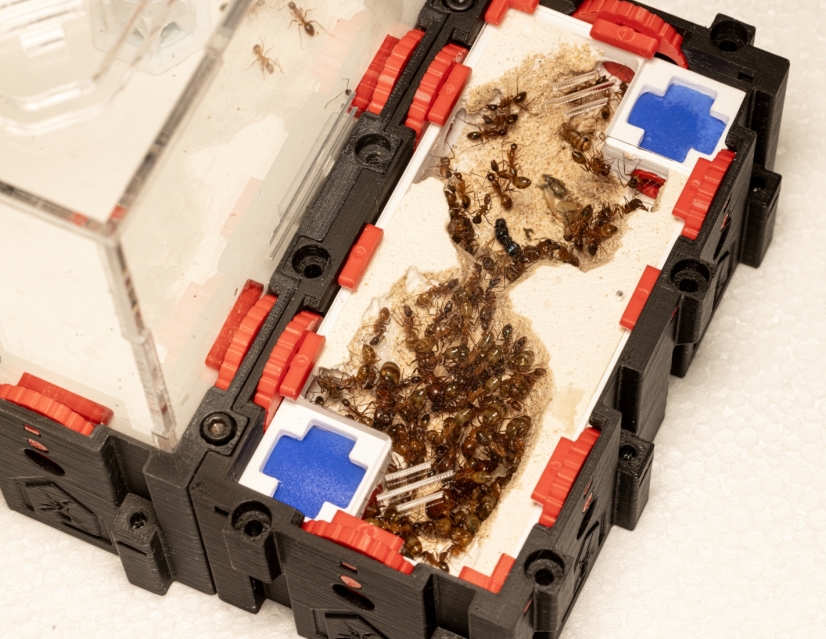
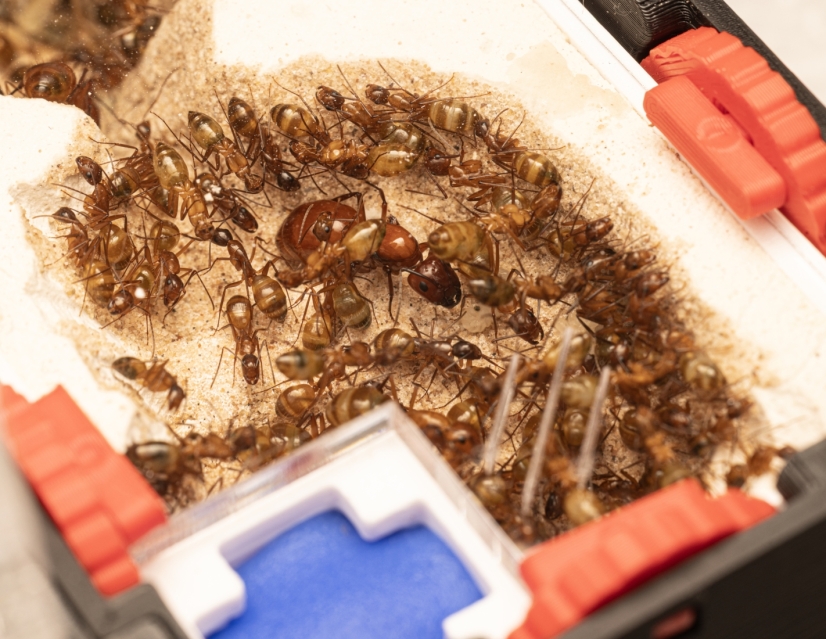
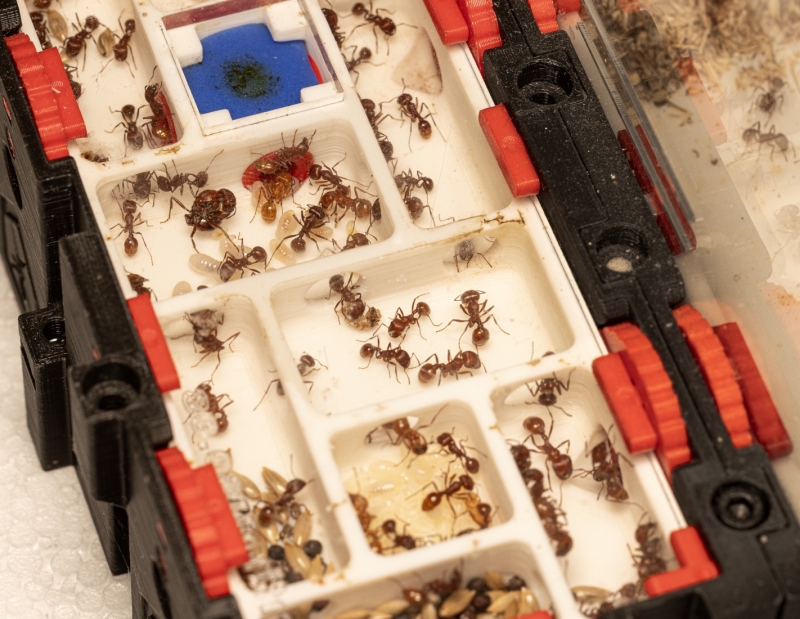
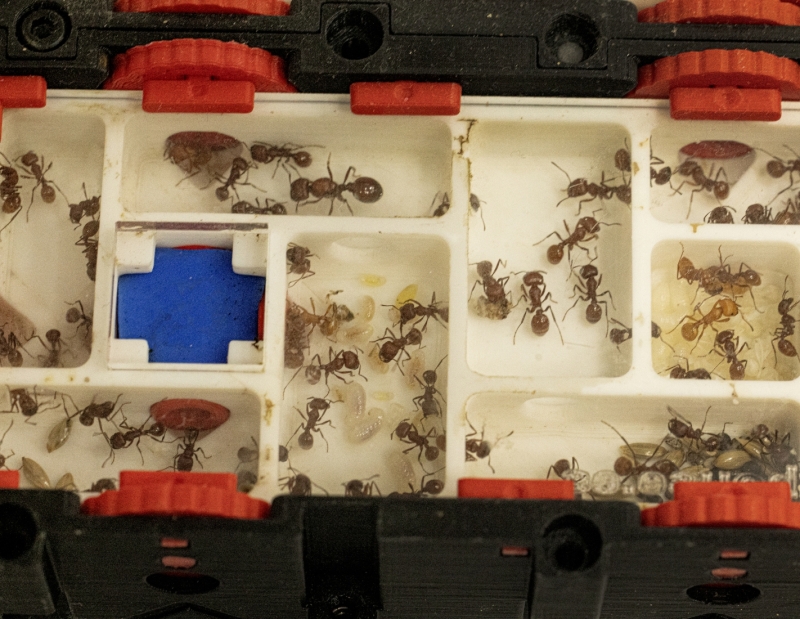
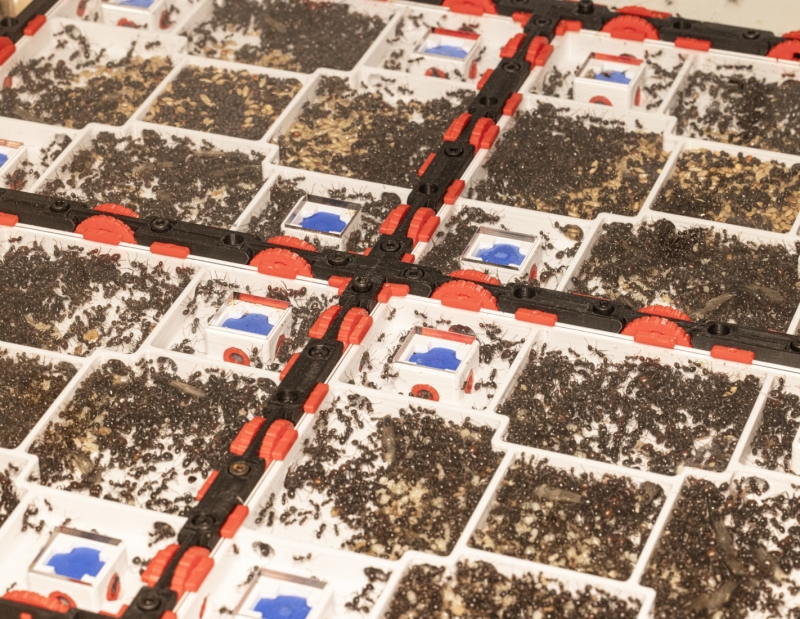
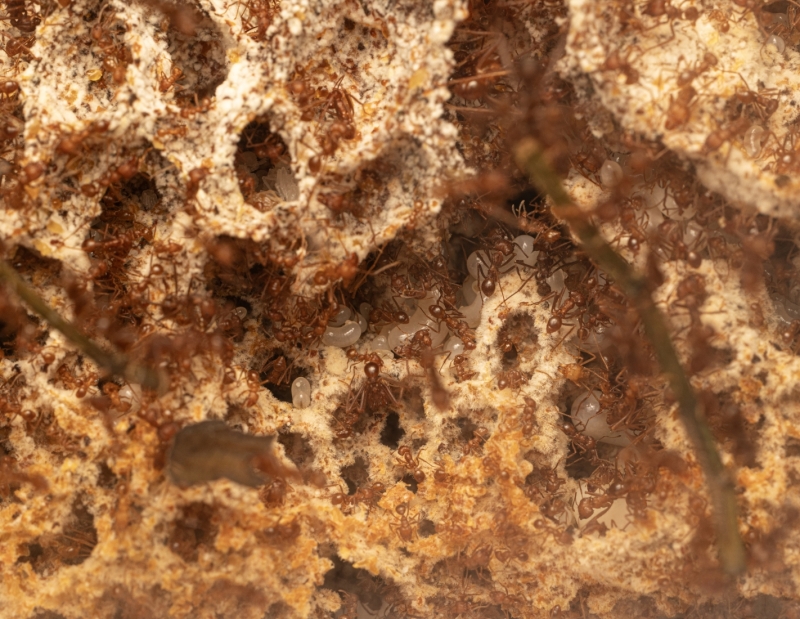
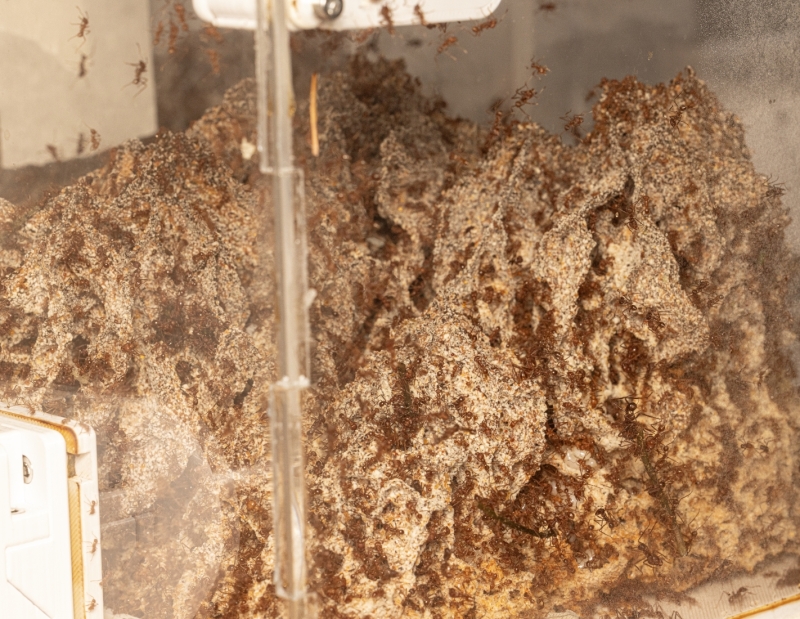
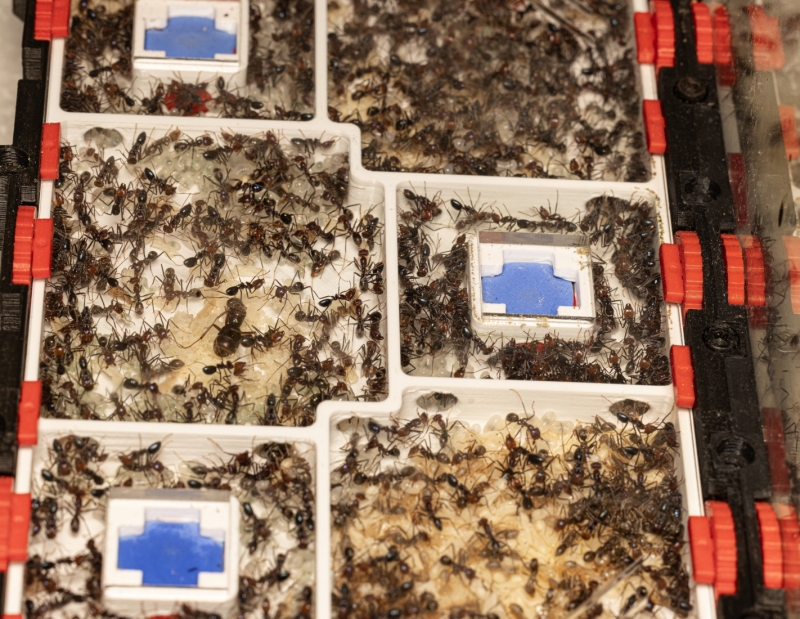
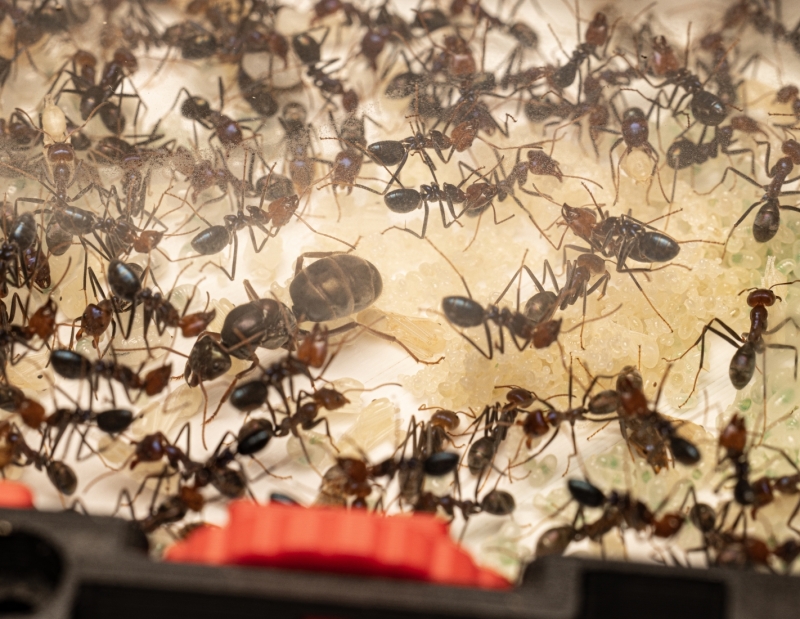
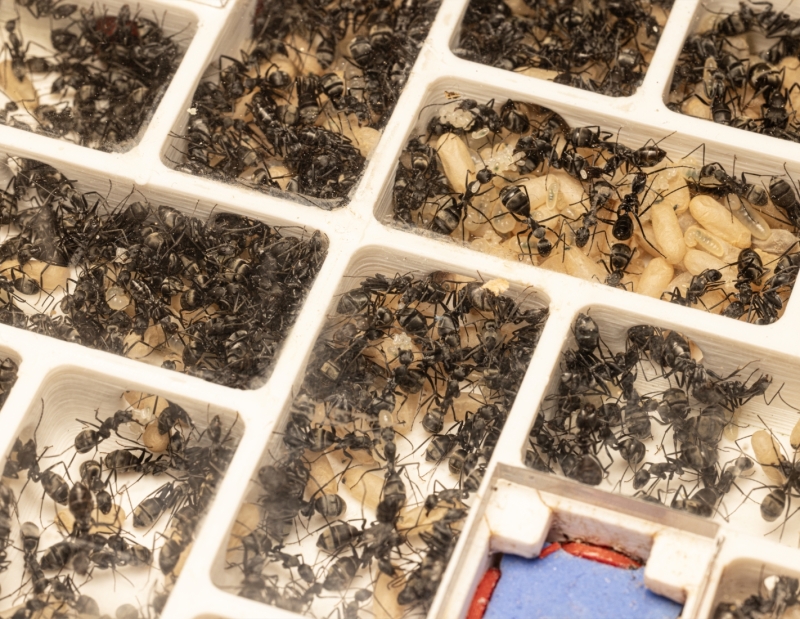
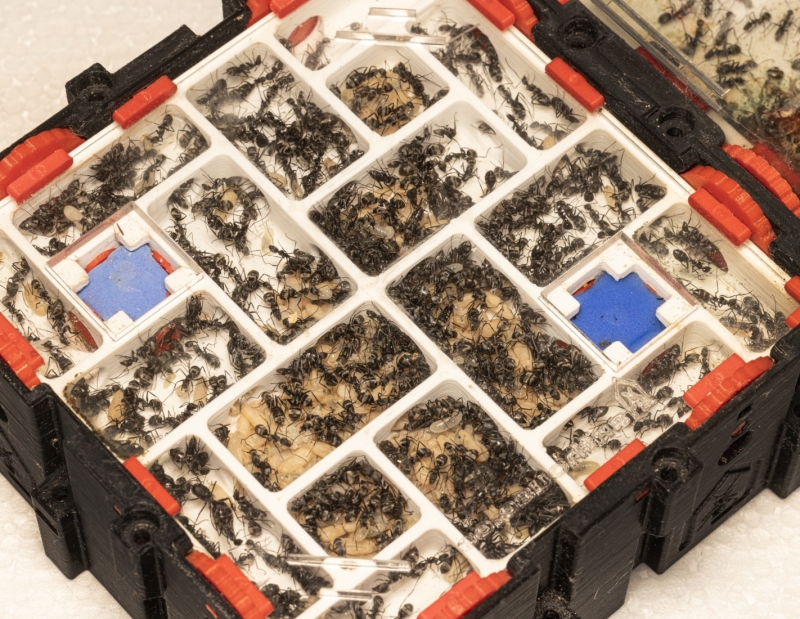
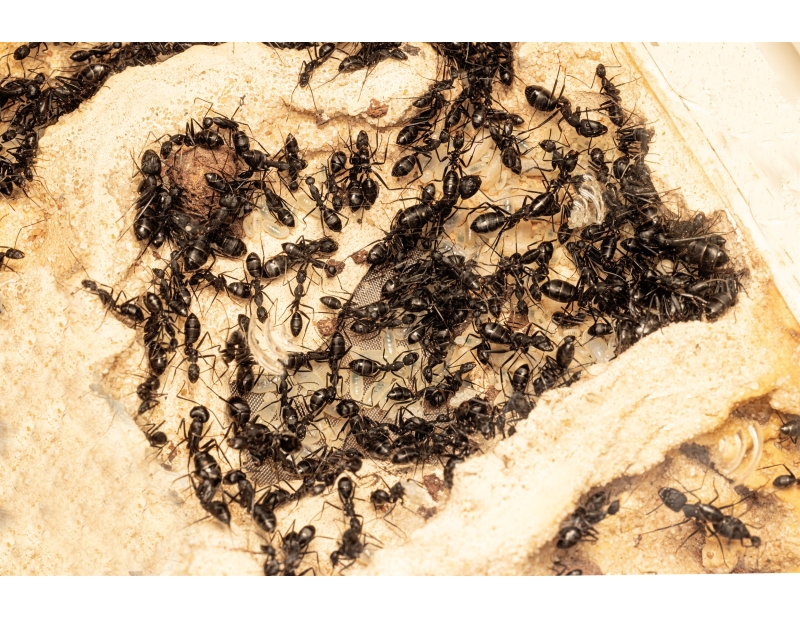
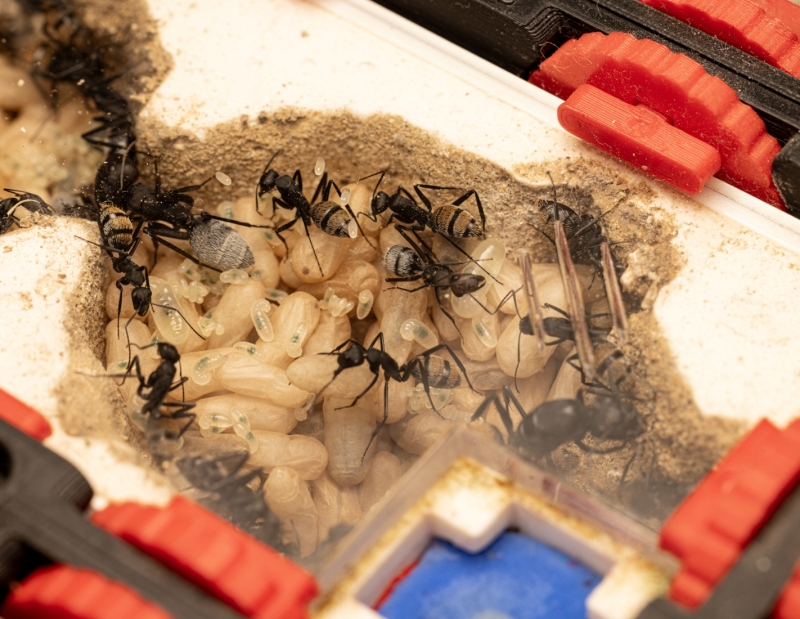
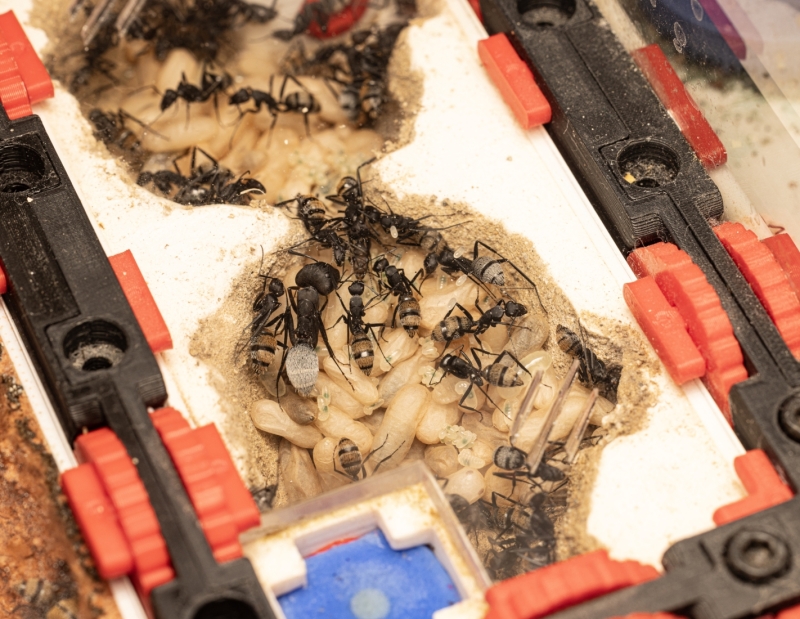
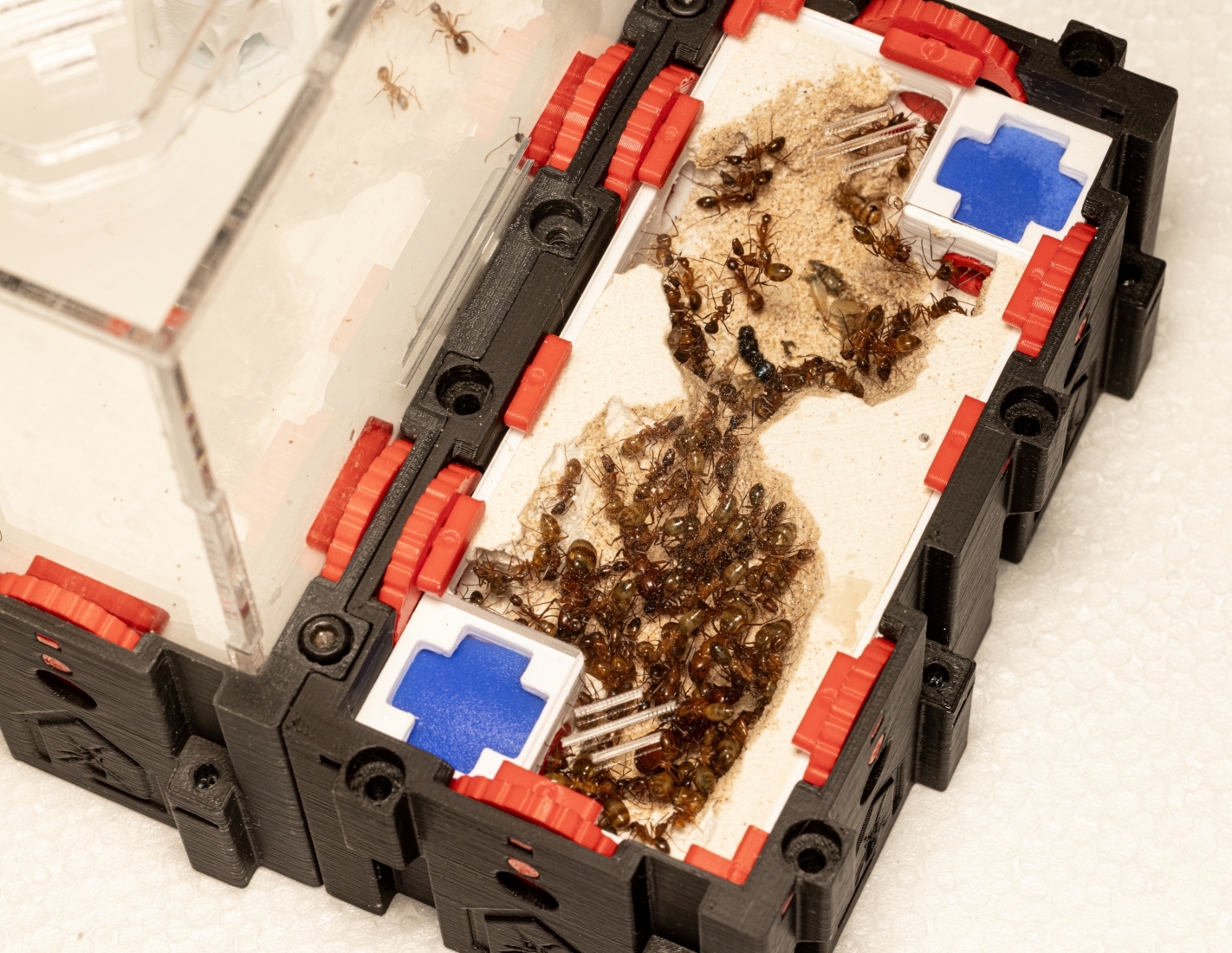
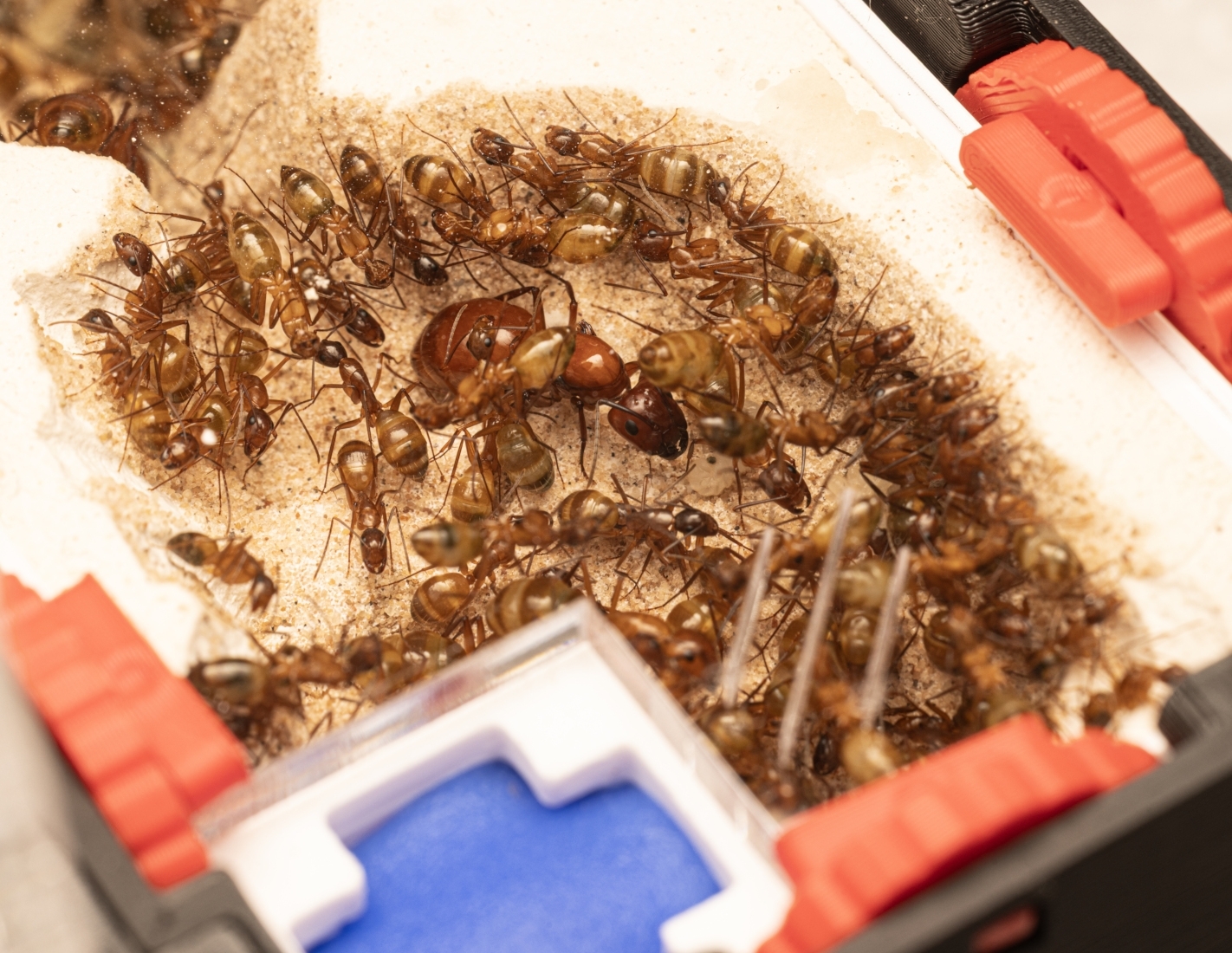
This is a Chestnut Empire: an established colony of 60–80 workers with its queen, from 2025, and about 1 year old.
The large chestnut carpenter ant of eastern North America, natural host of the ‘zombie’ fungus Ophiocordyceps kimflemingiae, with founding and the slow first year already behind it. Nocturnal, shy and monogynous: a single queen. QBIK DUO or an expansion with large galleries for the majors, nest at 23–27 °C and never above 28 °C, a large humid area, sugar always available in a feeder and plenty of protein. Diapause of 10–12 weeks at 8–14 °C. It climbs glass: escape barrier needed.
Camponotus castaneus (Latreille, 1802) is a large, elegant carpenter ant from eastern North America, of an orange chestnut so uniform and glossy that it looks varnished. It is shy, works at night and holds a special place in the history of science: the ‘zombie’ fungus O. kimflemingiae knows how to manipulate only two ants, this one and its twin C. americanus. Keeping it has a slow part, founding and a first year that often ends with fewer than ten workers. The Chestnut Empire skips it: it arrives with 60–80 workers of several sizes and brood under way, ready to grow from day one.
Biology
The ant the zombie fungus knows how to control
In the forests of the south-eastern United States, the spores of Ophiocordyceps kimflemingiae land on workers foraging on the ground and the fungus grows inside them. After two or three weeks, the worker leaves the colony, climbs up, clamps its mandibles onto a twig and dies there, in the ‘death grip’. A fungal stalk sprouts from the back of its head and drops its spores onto the ground, right where its nestmates forage.
What is astonishing is how specific it is. In 2014 a team at Pennsylvania State University infected four species that live together in those forests in the laboratory. The fungus killed all four, but only manipulated its natural hosts, C. castaneus and C. americanus. Grown alongside living ant brains, it secreted different substances depending on the species of brain: it ‘recognises’ its victim. Later it was found that its cells form a network surrounding the muscles throughout the body without invading the brain, and that the final grip is due to the mandible muscles becoming hypercontracted. In 2018 it was named in honour of Kim Fleming, the amateur naturalist who found the first dead ants in her woods. Do not worry: it is a forest parasite and does not affect captive-bred colonies or people.
A carpenter ant of soil and night
It lives from New York to Florida and, westwards, as far as Oklahoma, Kansas and Texas, in woodland, prairies, scrub and gardens. Despite being a carpenter ant, it does not depend on wood: it nests mainly in the soil, under stones, among roots or at the foot of trees, and also in rotten stumps. It does not eat wood and is not a household pest. It comes out at dusk and at night, and it is ‘very timid’: when disturbed, the first thing it does is retreat into the nest.
Its dark-headed twin
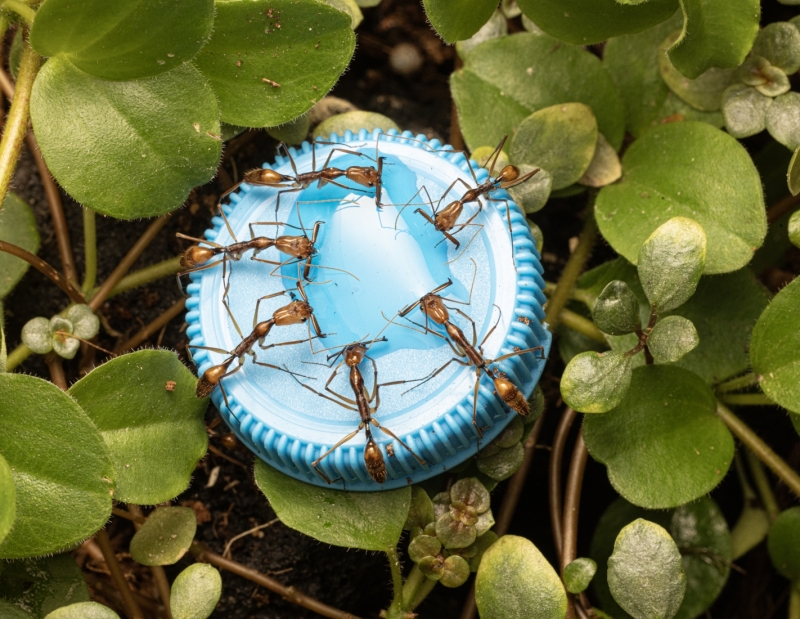
It looks very much like C. americanus, its closest relative. The trick to telling them apart: in C. castaneus, the head and mesosoma are the same colour; in C. americanus, the head is darker. If the whole ant looks carved from the same piece of chestnut wood, it is ours.
Hundreds, not thousands
It does not form gigantic colonies: the census of five complete colonies in Florida gave an average of about 350 workers. A Chestnut Empire of 60–80 workers is therefore about a fifth of an average wild colony, with all its growth ahead of it, and its mature colony fits into a set-up of reasonable size. It is monogynous: a single queen, which does not tolerate others.
Princesses that spend the winter at home
Nuptial flights take place at night, from spring to late summer, and the alates can spend the winter inside the nest before flying the following season. Over the years, a mature colony from your Empire could produce queens and males: do not be surprised to see them spend diapause at home.
Size and morphology
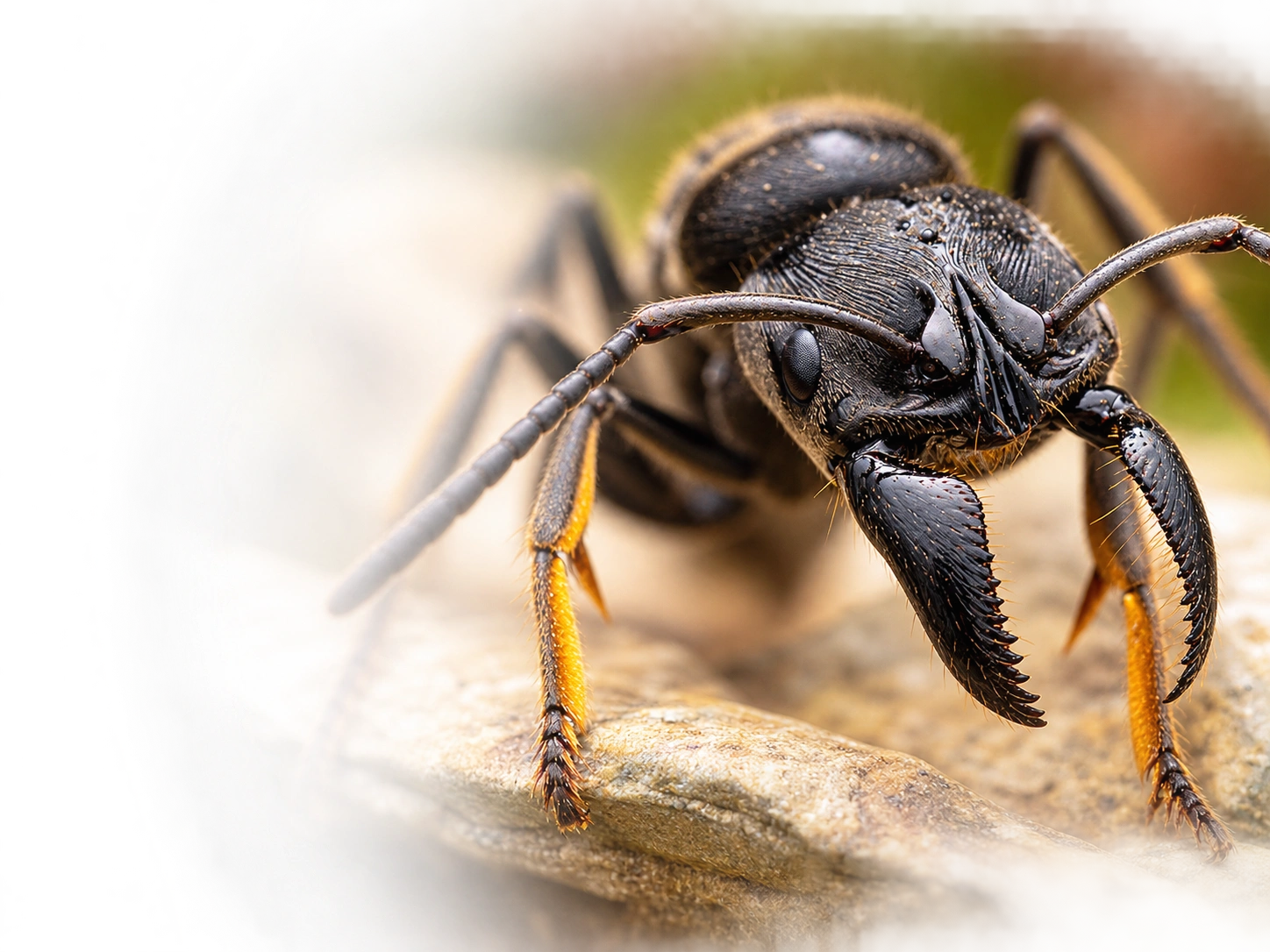
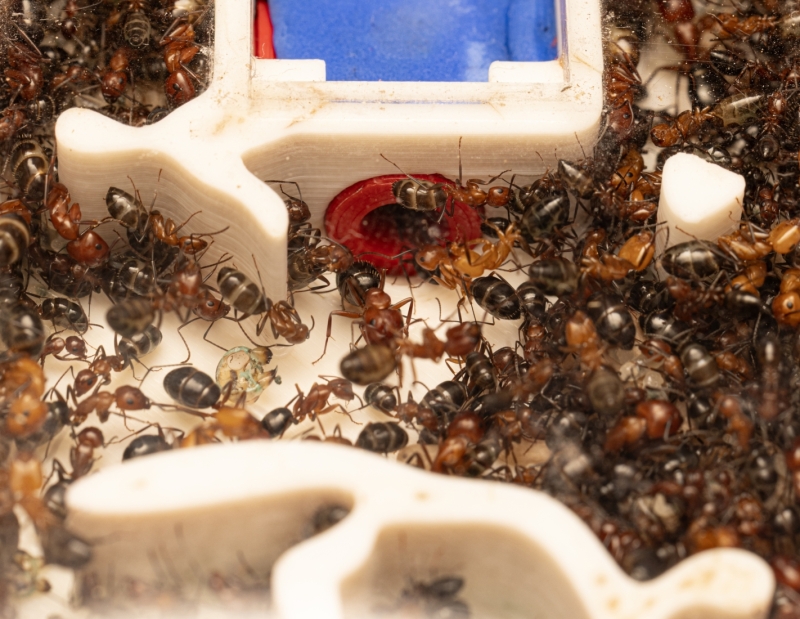
Uniform colouring, from reddish chestnut to orange, with an amber gaster; a smooth, glossy, almost hairless exoskeleton. The polymorphism is continuous: minors have elongated heads and majors broad, almost square ones, with powerful mandibles. No sting: like all formicines, it defends itself with formic acid.
Approximate measurements
- Minor workers: 6.9–8.5 mm
- Major workers: 11–16 mm in our captive line; 10.9–12.1 mm in museum series
- Queen: 15.6–17.2 mm
- Male: 8.7–9.6 mm
The measurements for minors, queen and male are those of the Mississippi Entomological Museum. Majors measure 10.9–12.1 mm in museum series, but in our captive line they reach 11–16 mm: these are Antomas measurements taken in our own colonies.
Care in captivity
Difficulty: 3/5 – Advanced
At Antomas we place it at the advanced level, at the more accessible end. With a Chestnut Empire you skip the slowest and most delicate part, founding and the first year, and start with a stable colony. In return, it asks for consistency in three things: a cool diapause every winter, slightly higher humidity than other Camponotus and patience with its nocturnal timetable.
What an established colony means
- Space from the start. With 60–80 workers it no longer fits in a tube: it needs a formicarium with large galleries, ready for the majors (see ‘Recommended formicarium’).
- More protein. A colony this size has a lot of brood to feed: plan to offer insects several times a week.
- Majors on the way. According to keepers, the first majors appear when the colony reaches a few dozen workers, often in the second or third year. Your Empire is right at that point.
- More night-time activity. With more workers, the trails at nightfall are clearer and the show is bigger.
- Faster growth. After the slow first year the colony picks up pace: expand before the nest gets too small.
Recommended parameters
- Nest temperature: 23–27 °C during the active season, with one side slightly warmer, heated from the side and never under the whole nest. Never above 28 °C: above about 29 °C it grows more slowly.
- Humidity: a gradient with a large humid area for eggs and larvae and a drier one for the pupae. It prefers more humidity than most Camponotus.
- Foraging area: dry and at room temperature.
- Water: always available, in a tube with water and cotton wool in the foraging area.
- Light: the nest in darkness and the foraging area in the normal light of the room.
- Diapause: 10–12 weeks at 8–14 °C.
Recommended formicarium
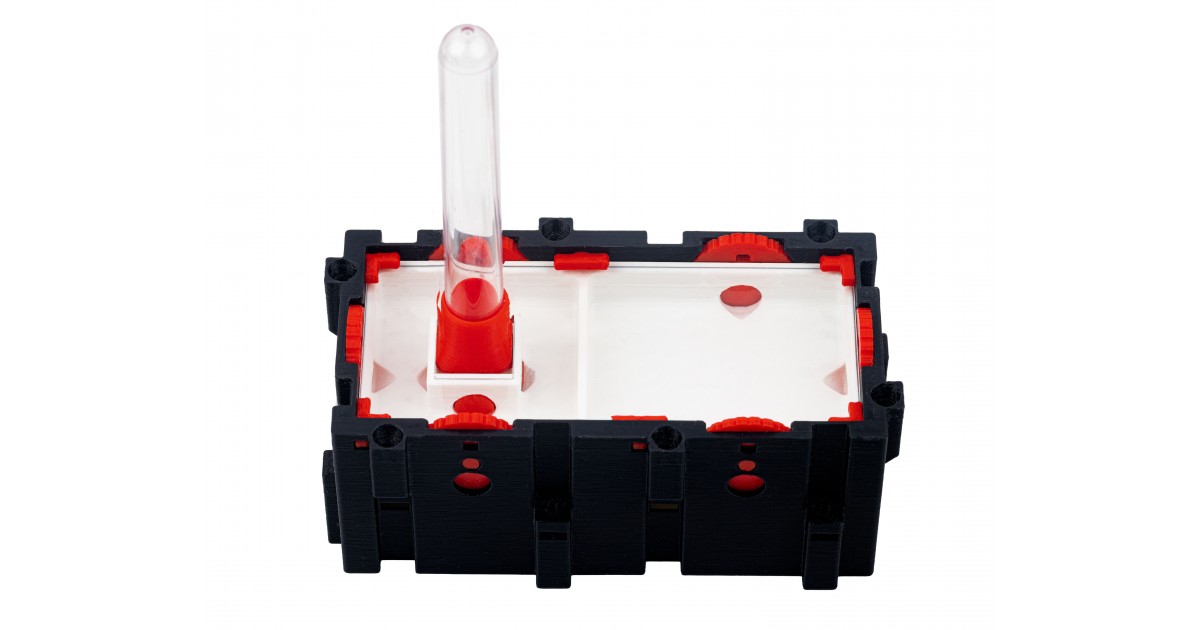
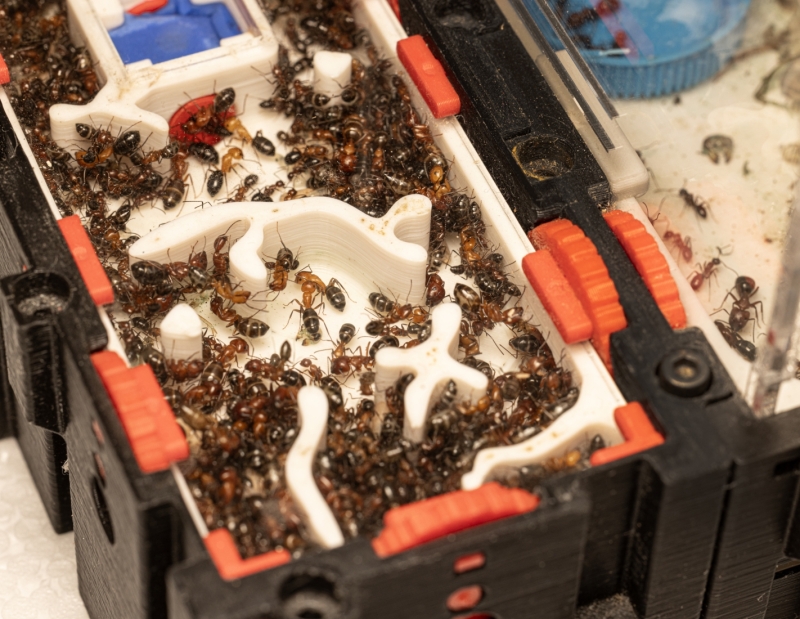
For a Chestnut Empire we recommend a QBIK DUO from Anthouse’s Alpha range, in PLA and acrylic, with large galleries that the majors can pass through easily with their broad heads. If you already have modular nests from the Alpha range, you can also expand them with large-gallery modules. It needs neither cork nor wood, and these materials give a very good view of the brood and good control of humidity.
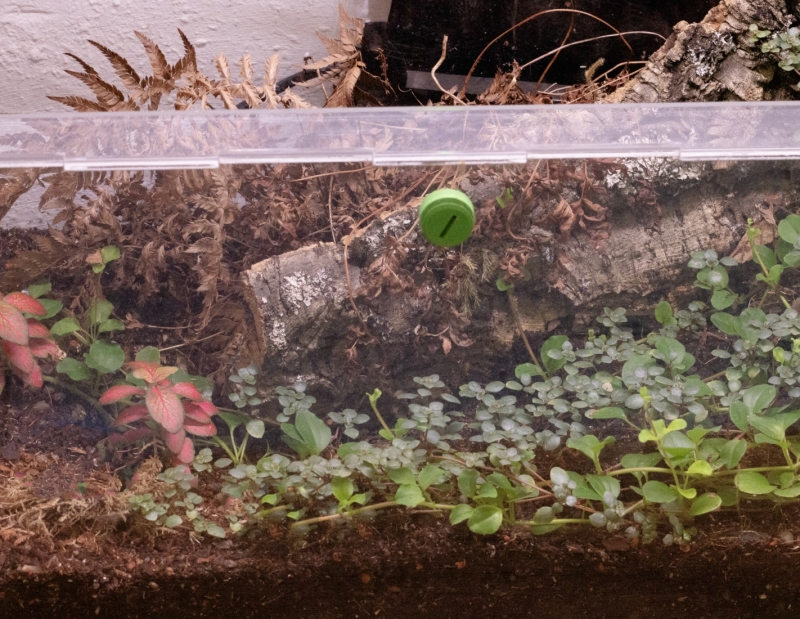
QBIKs in the Alpha range are on the dry side and get their humidity from the water tubes: make sure the brood area always has its supply. Set up a dry foraging area with sand or soil, a flat stone and a piece of bark, always well away from the barrier.
For full details on the species, see the complete care sheet for the standard colony: Camponotus castaneus
Arrival and set-up
At Antomas we always move colonies by tipping them, and this is how you will settle your Empire in:
- Everything ready beforehand: the QBIK DUO set up, with the barrier in place and the water connected.
- Over a tray, in case a worker climbs up your hands or the tools.
- Tip them in: open the container in the foraging area, next to the nest entrance, and empty it with a few gentle taps. Help any stragglers along with a brush.
- Darkness in the nest: cover it with something opaque and the workers will carry in the brood and the queen.
- Calmly: no shaking or blowing. A very stressed colony releases formic acid, which in a closed container harms the ants themselves.
- A couple of quiet days, with water and sugar at hand, before starting on protein.
Feeding
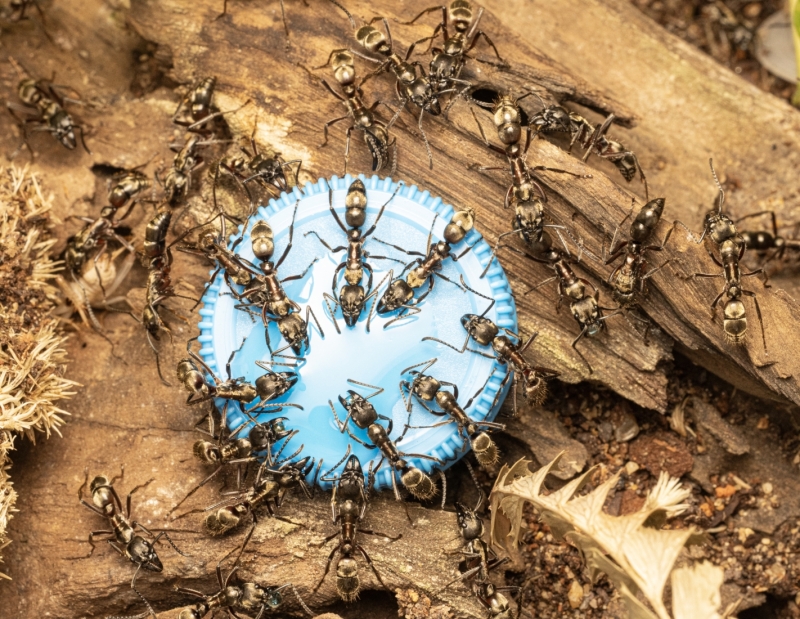
Sugar, always, in a feeder where the drop stays spread out and accessible, and never on cotton wool, which goes mouldy. Vary the sugars: at Antomas we recommend Anthouse Blue Sugar Nectar 4–5 times a week and another nectar or sugar water 1–2 times a week; you can also enrich it with a little protein. In a well-fed colony, many workers carry a swollen gaster.
Protein, and plenty of it. With so much brood, the colony will accept insects several times a week. If you do maintenance daily and remove leftovers, it is better to overdo it than to fall short: the colony senses it has resources to spare and raises more brood, faster.
- Change the prey every week: flies, which keepers say are their favourite, crickets, dubia roaches and red runner roaches, opened up or cut into pieces until there are majors to butcher them.
- At dusk: put the protein out late in the afternoon and remove the leftovers the next morning, or within 24 hours at most.
- Water separately, always in its tube: in this species, letting it dehydrate is a serious mistake.
Diapause
Your Empire needs its winter rest every year: according to keepers, skipping it weakens the colony.
- When: from mid-November or December to February or early March, when the queen stops laying and foraging drops off.
- How long and at what temperature: 10–12 weeks at 8–14 °C, in an unheated room or a cool, dark cellar.
- Gradually: lower and raise the temperature over 2–3 weeks. Sudden changes can kill the queen.
- During the rest: water always, nest humidity maintained, a little sugar if there are active workers and no protein.
Behaviour, escapes and handling
Watch without fear. At Antomas we believe ants are there to be enjoyed, observed and learnt from. Keep the nest dark and the foraging area lit; to see them at their rush hour, at nightfall, use dim or red light. Majors tend to stay inside and come out for large prey or disturbances.
They climb glass, plastic and silicone joints: apply an escape barrier of mineral oil or talc around the top of the walls, fit a tight lid with fine mesh over the vents and leave nothing that could act as a bridge. Check the barrier in the afternoon, before their night shift.
No sting and no danger to people: at most, a major can give a noticeable nip. The real risk is to them, if they get stressed in a closed container and formic acid builds up. Use tubes, spare containers and long tweezers, and never release it: it is a North American species.
What not to do
- Combine queens or colonies: it is monogynous.
- Heat the whole formicarium or go above 28 °C.
- Let the nest dry out or run out of water.
- Put sugar on cotton wool or always give the same prey.
- Skip diapause or change the temperature suddenly.
- Leave narrow galleries once there are majors.
- Neglect the barrier or the lid.
Scientific sources
This care sheet summarises the scientific literature on Camponotus castaneus and its parasitic fungus, in particular the species page of the Mississippi Entomological Museum (Rasoamanana and MacGown, open access), and the experience of Antomas and other keepers. Main references:
- de Bekker, C., Quevillon, L. E., Smith, P. B., Fleming, K. R., Ghosh, D., Patterson, A. D. & Hughes, D. P. (2014). Species-specific ant brain manipulation by a specialized fungal parasite. BMC Evolutionary Biology 14: 166. doi:10.1186/s12862-014-0166-3
- de Bekker, C., Ohm, R. A., Loreto, R. G., Sebastian, A., Albert, I., Merrow, M., Brachmann, A. & Hughes, D. P. (2015). Gene expression during zombie ant biting behavior reflects the complexity underlying fungal parasitic behavioral manipulation. BMC Genomics 16: 620. doi:10.1186/s12864-015-1812-x
- Araújo, J. P. M., Evans, H. C., Kepler, R. & Hughes, D. P. (2018). Zombie-ant fungi across continents: 15 new species and new combinations within Ophiocordyceps. I. Myrmecophilous hirsutelloid species. Studies in Mycology 90: 119–160. doi:10.1016/j.simyco.2017.12.002
- Fredericksen, M. A., Zhang, Y., Hazen, M. L., Loreto, R. G., Mangold, C. A., Chen, D. Z. & Hughes, D. P. (2017). Three-dimensional visualization and a deep-learning model reveal complex fungal parasite networks in behaviorally manipulated ants. Proceedings of the National Academy of Sciences of the USA 114: 12590–12595. doi:10.1073/pnas.1711673114
- Mangold, C. A., Ishler, M. J., Loreto, R. G., Hazen, M. L. & Hughes, D. P. (2019). Zombie ant death grip due to hypercontracted mandibular muscles. Journal of Experimental Biology 222: jeb200683. doi:10.1242/jeb.200683
- King, J. R. (2010). Size–abundance relationships in Florida ant communities reveal how ants break the energetic equivalence rule. Ecological Entomology 35: 287–298. doi:10.1111/j.1365-2311.2010.01177.x