This website uses its own and third-party cookies to improve our services and show you advertising related to your preferences by analyzing your browsing habits. To give your consent to its use, press the Accept button.
Functional cookies are strictly necessary to provide the services of the shop, as well as for its proper functioning, so it is not possible to refuse their use. They allow the user to browse through our website and use the different options or services that exist on it.
Cookie
Provider
Purpose
Expiry
PHP_SESSID
antomas.es
The PHPSESSID cookie is native to PHP and allows websites to store serialised status data. On the website it is used to establish a user session and to pass state data through a temporary cookie, which is commonly known as a session cookie. These Cookies will only remain on your computer until you close your browser.
Session
PrestaShop-#
antomas.es
This is a cookie used by Prestashop to store information and keep the user's session open. It stores information such as currency, language, customer ID, among other data necessary for the proper functioning of the shop.
These are cookies that collect information about the advertisements shown to users of the website. They can be anonymous, if they only collect information about the advertising spaces shown without identifying the user, or personalised, if they collect personal information about the user of the shop by a third party, for the personalisation of these advertising spaces.
Collect information about the user's browsing experience in the shop, usually anonymously, although sometimes they also allow the user to be uniquely and unequivocally identified in order to obtain reports on the user's interests in the products or services offered by the shop.
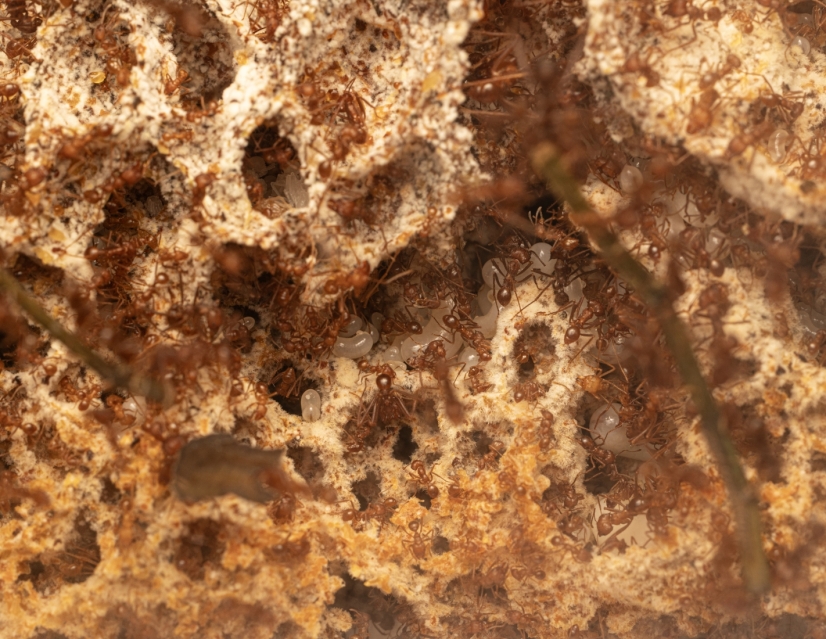
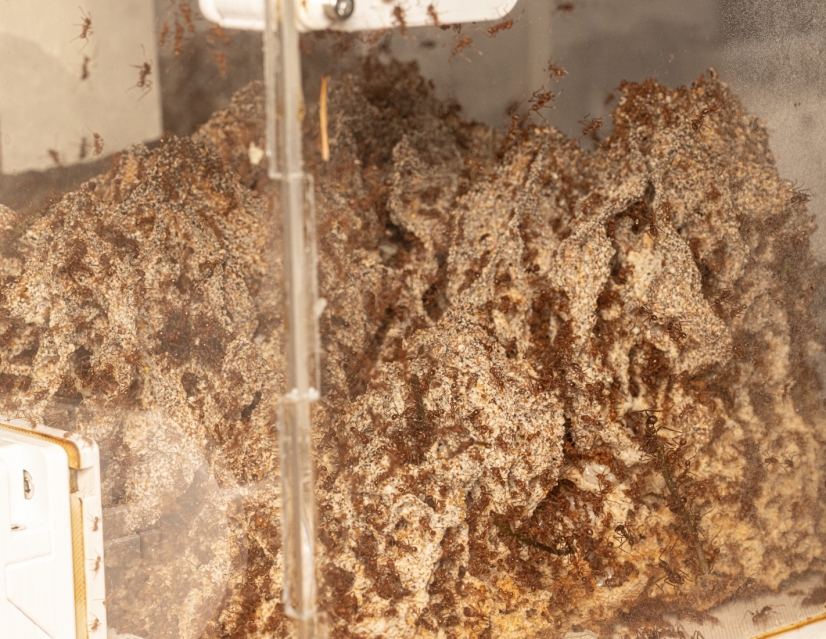
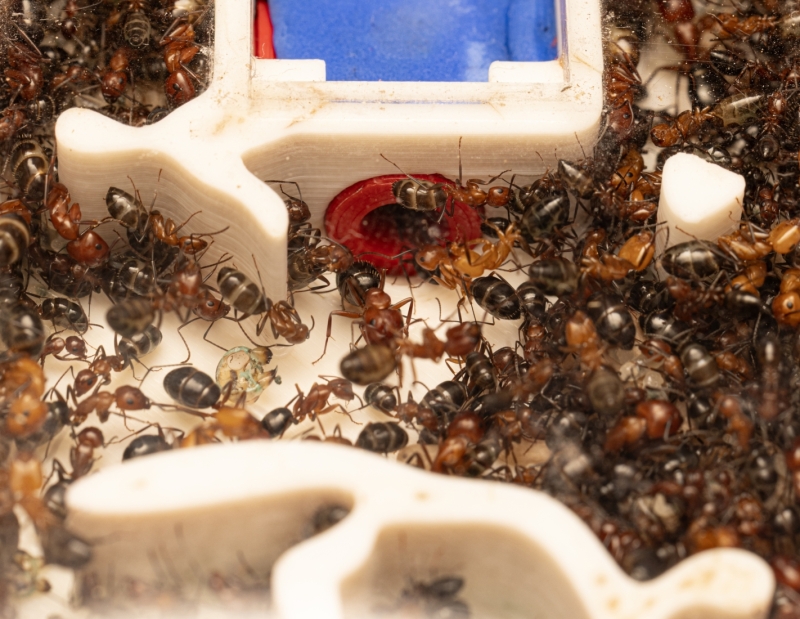
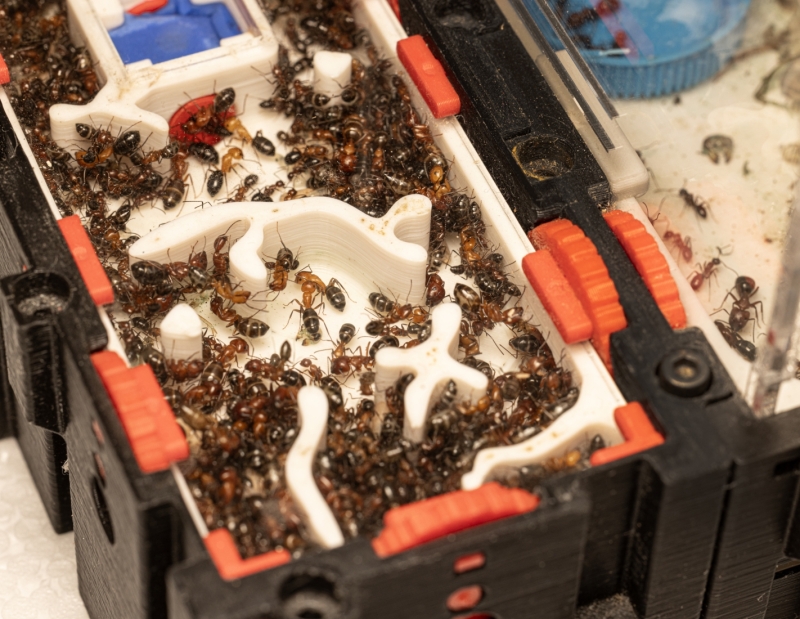
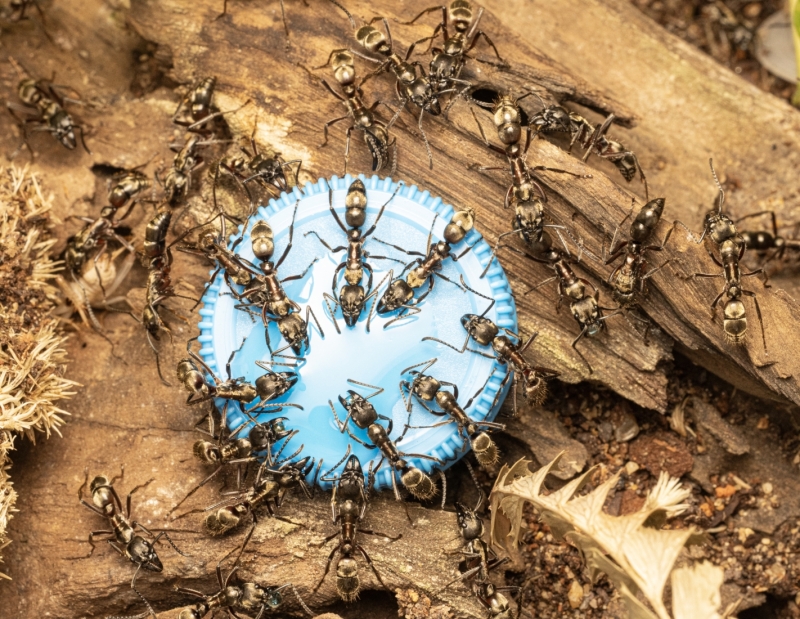
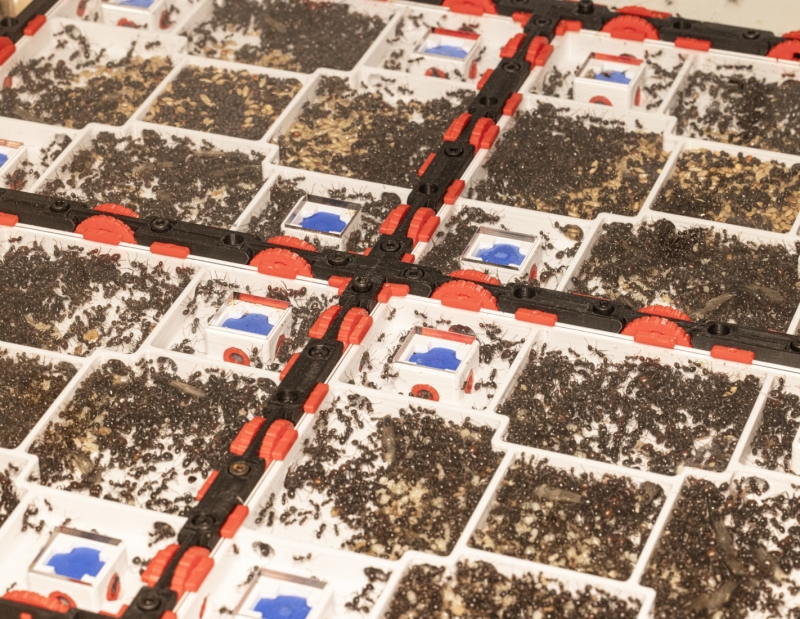
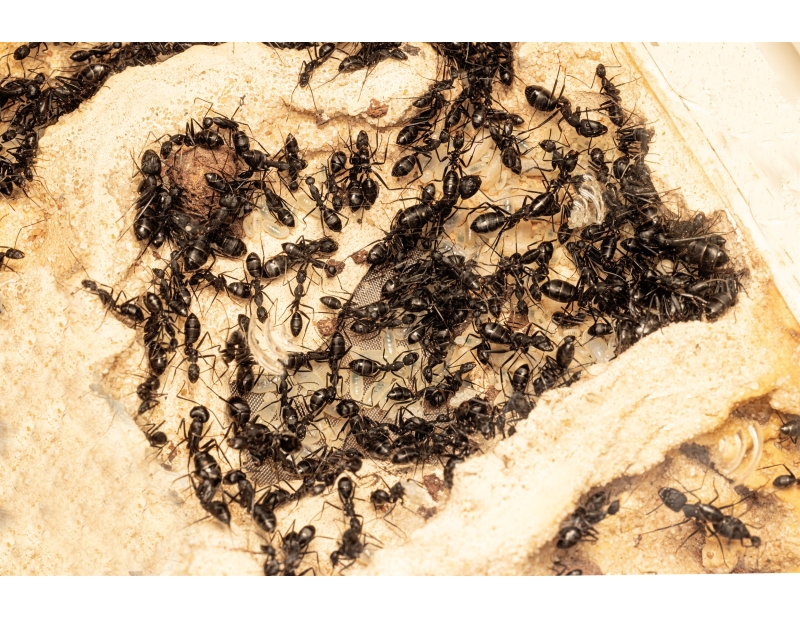
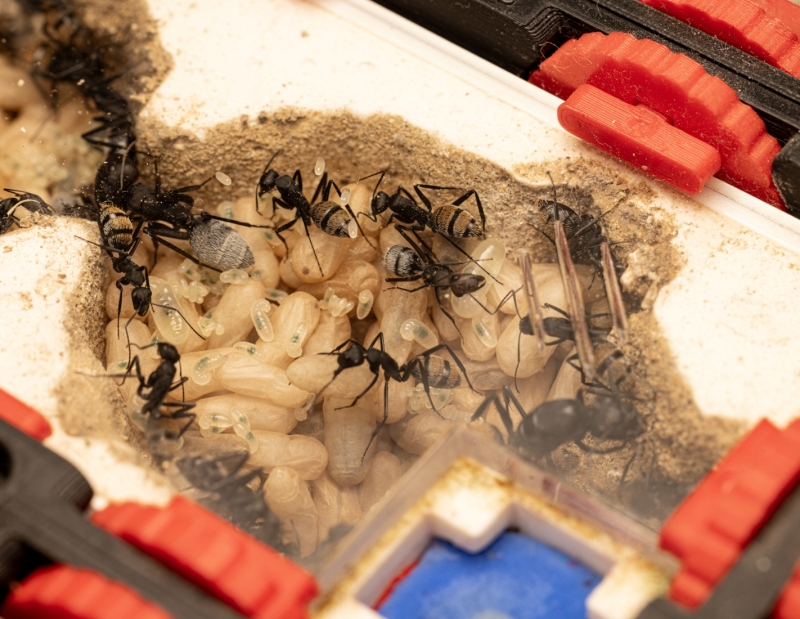
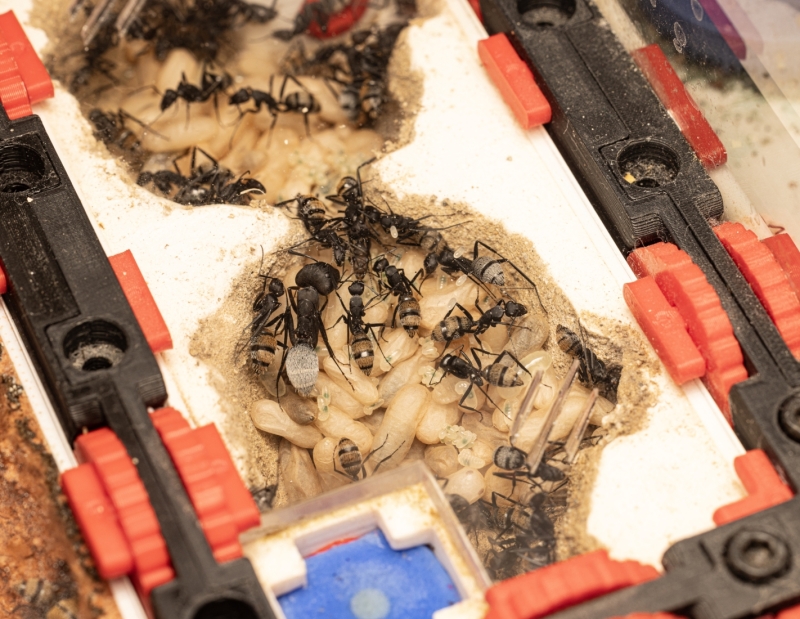
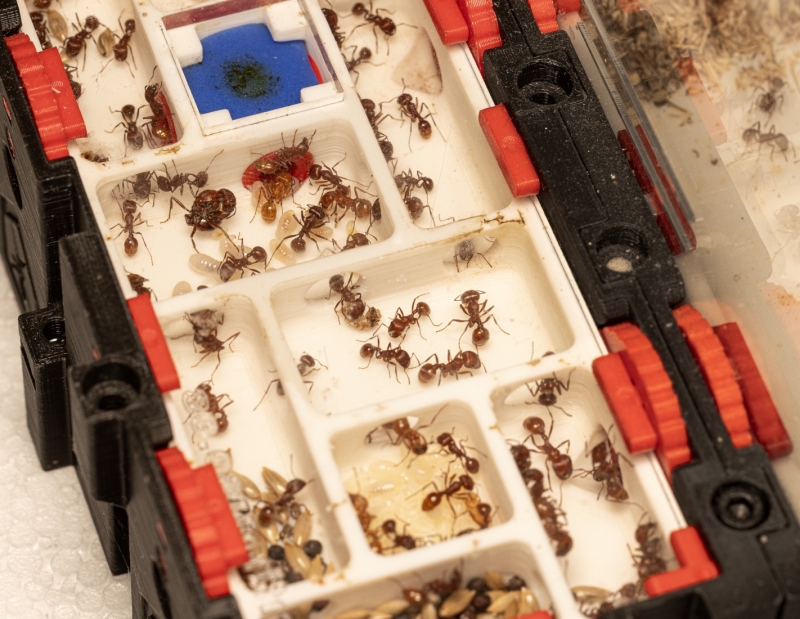
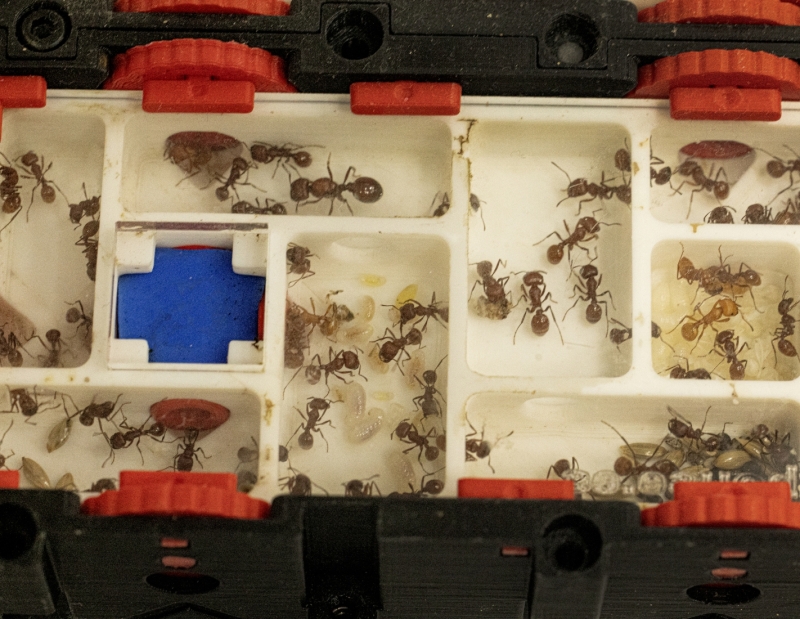
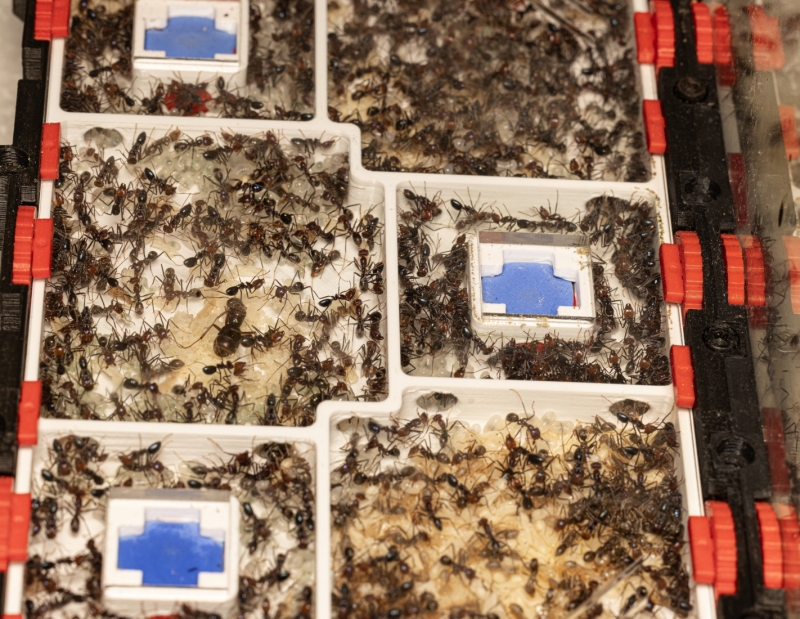
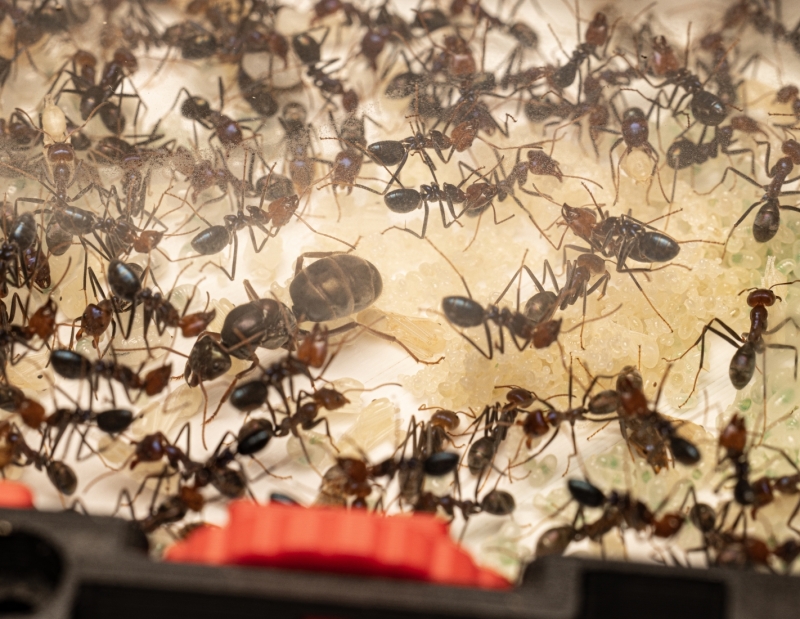
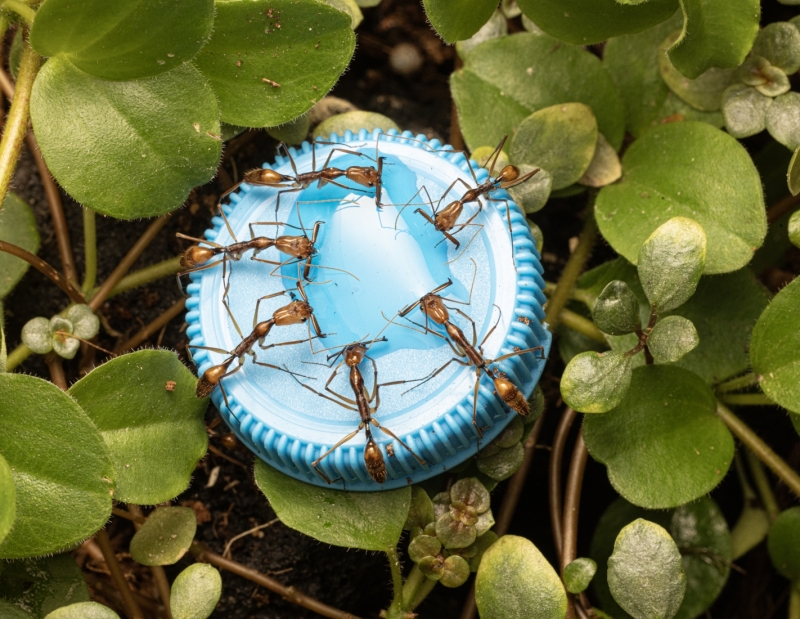
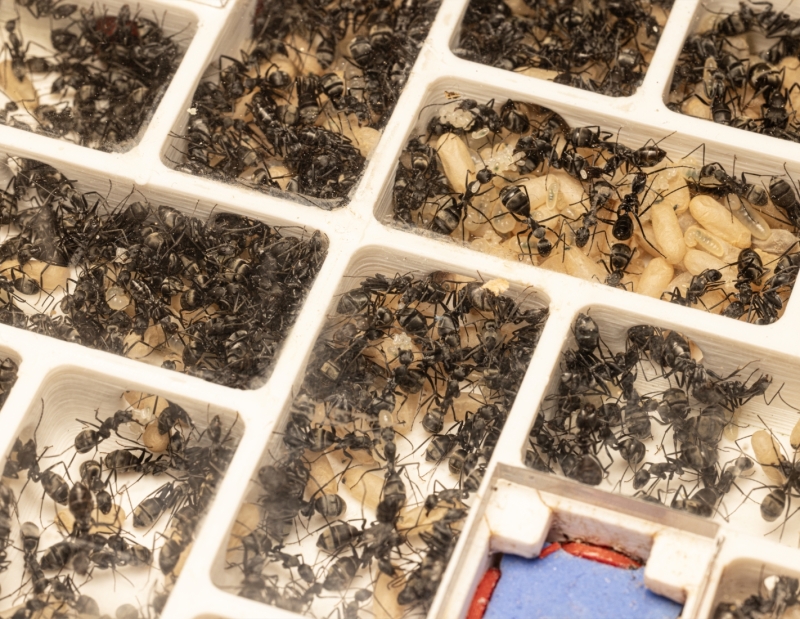
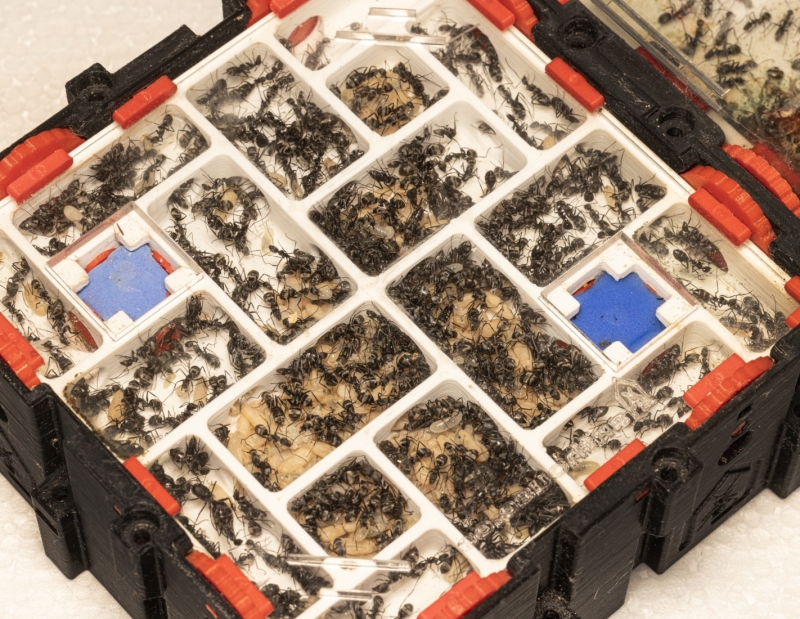
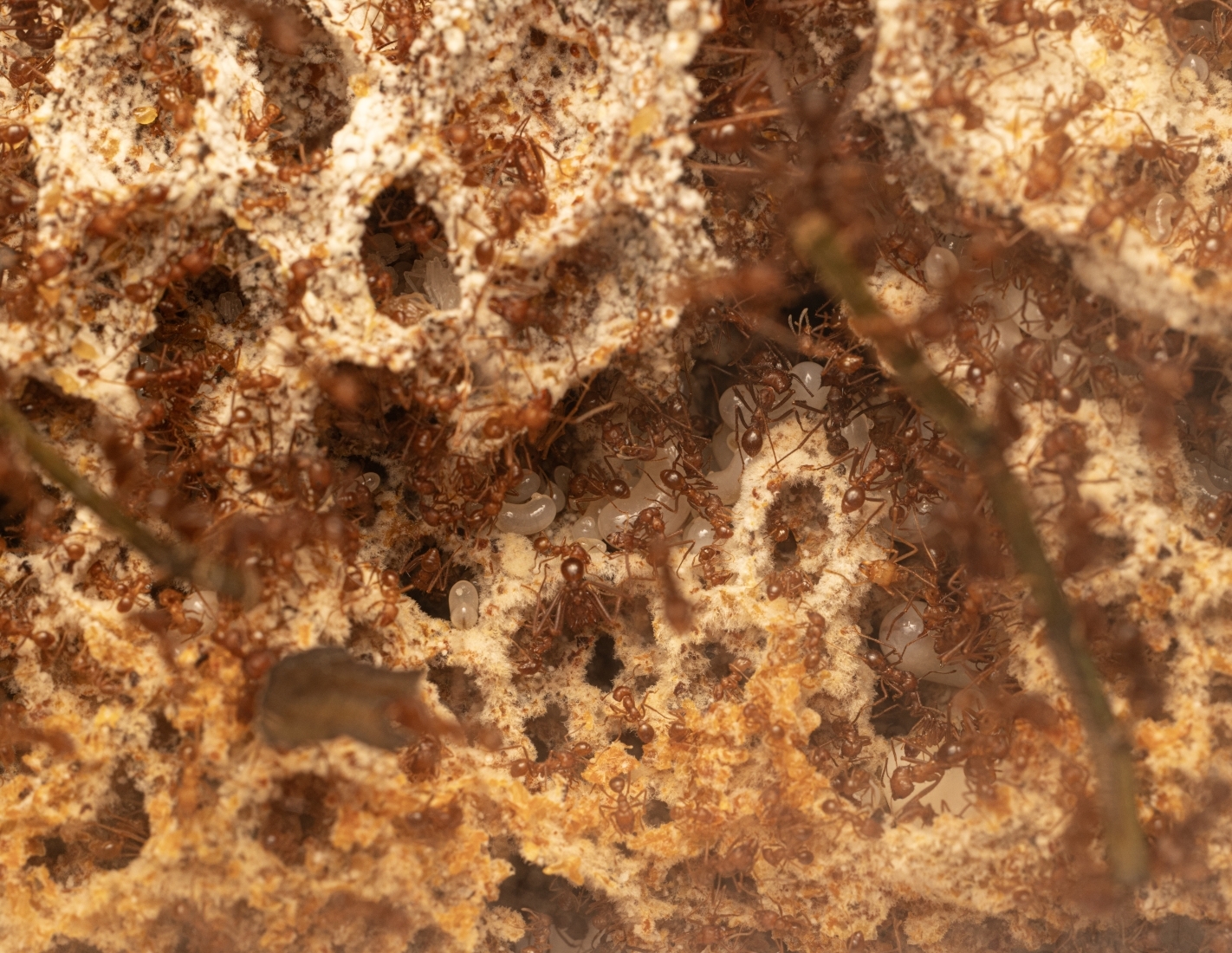
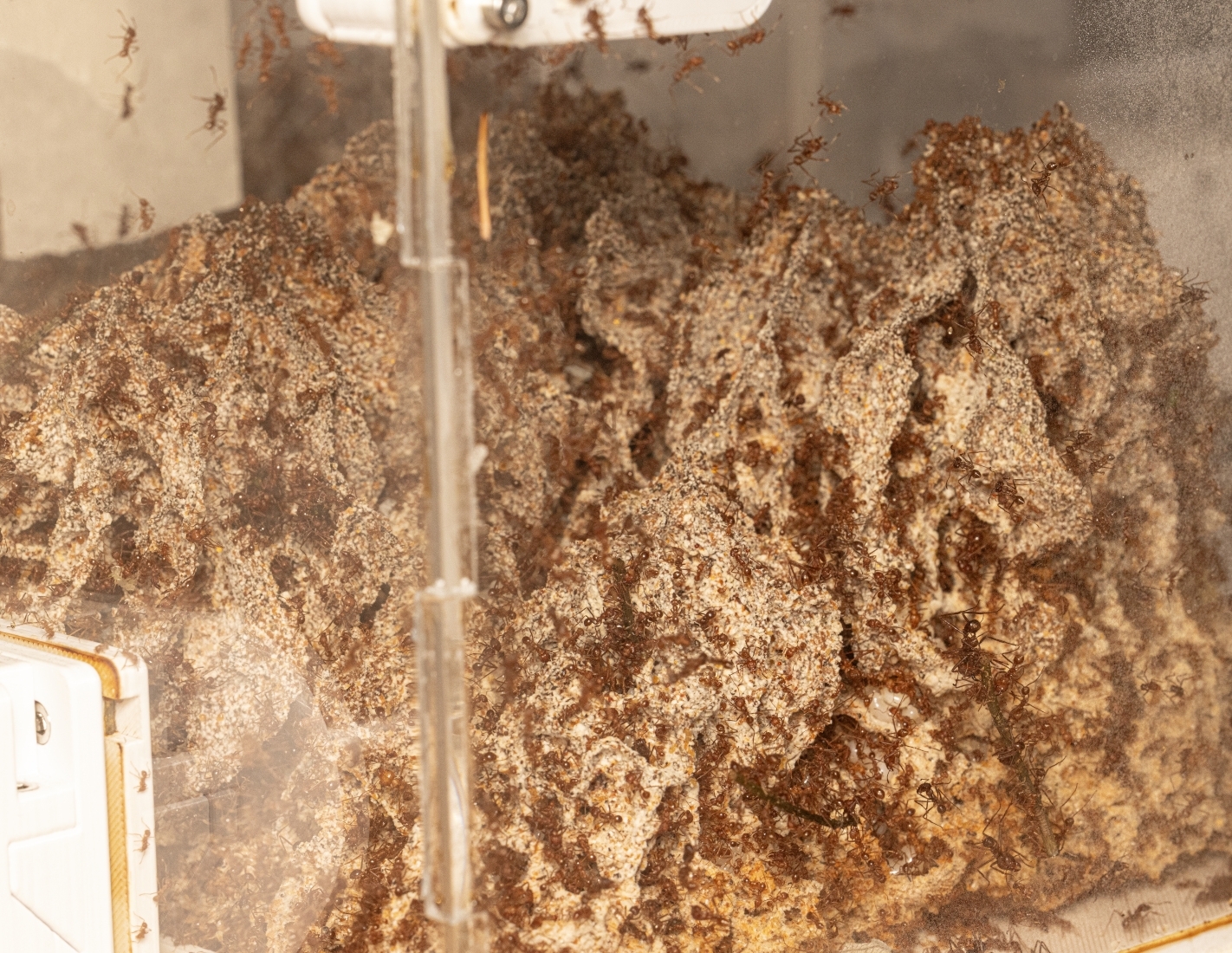
Age: Less than 1 year Queen: November 2025 Population: +10,000 workers Text: Since November 2025, this queen has transformed a small fungus culture into a living metropolis. More than 10,000 workers advance in columns, cutting vegetation, transporting fragments, and tending the fungal garden that sustains the entire Leafcutter Empire. In less than a year, the colony has deployed an extraordinary force divided into castes—from tiny gardeners to large soldiers—all dedicated to a single mission: to tirelessly cultivate, defend, and expand the domains of Atta mexicana.
This is a Leafcutter Empire: a colony of more than 10,000 workers (7,500–15,000) with its queen, from November 2025, and less than 1 year old.
The great leafcutter ant of Mexico and Arizona, already in full expansion: a large fungus garden, complete castes, from minims to soldiers, and leaf highways from day one. Monogynous: a single queen. Several Anthouse Fungarium Kit modules, fungus at 23–26 °C, high humidity without puddles, fresh pesticide-free leaves every day and a separate waste dump. Never above 30 °C continuously: the queen can become infertile.They climb: mineral oil barrier. Majors: never with your fingers.
Atta mexicana (Smith, 1858) is one of the great leafcutter ants of North America and Mesoamerica, and the only Atta that reaches the Sonoran Desert, in Arizona. It does not eat the leaves it cuts: it uses them to grow a fungus that feeds the whole colony. In the wild, its nests cover hundreds of square metres, its colonies probably number millions of workers and they can live for more than twenty years. This Leafcutter Empire skips the slowest and most delicate stage of keeping them: founding. It arrives with thousands of workers of every size and its own garden, ready to grow from day one.
Biology
The leafcutter that reached the desert
Leafcutter ants of the genus Atta are, above all, ants of the American tropics. A. mexicana is one of those that stray furthest from them: it is found across much of Mexico, reaches Guatemala, El Salvador and Honduras to the south and, to the north, southern Arizona, in the heart of the Sonoran Desert. It inhabits everything from arid regions and thorn scrub to tropical dry forests, riparian areas and mountain environments. A 2023 study found that its most favourable conditions are in the pine and oak forests of the Sierra Madre Occidental and the dry forests of the Bajío: climates with summer rains, from which it shelters underground.
Its closest relative is A. texana, the leafcutter of Texas and Louisiana; the two form the Archeatta group and are the only Atta in the United States. A. mexicana can be recognised by the lack of erect hairs on the back of the head and on the first segment of the gaster, and by its relatively short pronotal spines.
Cities beneath the desert
At Organ Pipe Cactus National Monument, in Arizona, its colonies have been censused for three decades. Large ones can occupy a central area of about 20 × 20 m, come to exploit more than 2 hectares and use tunnels of up to about 130 m to reach their foraging areas. An established colony can bring some 200 kg of dry plant matter a year into its farming system.
Unlike Acromyrmex octospinosus, A. mexicana builds clearly multi-chambered nests: numerous fungus gardens spread across underground chambers and linked by tunnels. And those nests breathe: in those of another leafcutter, A. vollenweideri, it was shown that the wind renews the air, which leaves through the central tunnels and enters through the peripheral ones. In captivity, this organisation is reproduced with several connected fungus modules, and with a colony like this one you will need them soon.
A garden renewed every month
The workers cut leaves, flowers and other tissues, clean them, cut them up, chew them and add them to the garden, where they grow their symbiotic fungus, Leucoagaricus gongylophorus. The fungus produces swollen, nutritious hyphae, the gongylidia, which feed mainly the larvae; in practice, it is the food of the whole colony. And it is not eternal: the substrate of each portion of fungus is exhausted in about a month, and the workers remove it.
Here A. mexicana breaks with the norm. Most Atta keep their rubbish in underground chambers, but this species, like A. colombica, takes it out of the nest and piles it up on the surface. With thousands of workers, a lot of spent fungus comes out: that is why, in a Leafcutter Empire, the waste dump is a central part of the set-up (see ‘Waste dump’).
Antibiotics from a gland, not from bacteria
The garden has a specialised pest, Escovopsis, a parasitic fungus that lives only in the gardens of fungus-growing ants. Many fungus-growers, such as Acromyrmex, defend themselves with a whitish layer of antibiotic-producing bacteria on the cuticle, Pseudonocardia. Atta has lost that visible layer, or greatly reduced it, and relies on the secretion of its metapleural gland, rich in phenylacetic acid, and on “weeding”: they pull out diseased pieces of fungus and carry them to the waste dump. The authors link this chemical defence to the enormous size of its colonies. That is why, in A. mexicana, a clean, shiny worker is normal.
Leaf tasters, and a fungus that gives the warning
It is polyphagous, but it does not cut just anything. In a 2020 study, the workers preferred rose and rejected coffee, guava and mandarin, the latter more because of the physical characteristics of the leaf than its chemistry. In another study from 2026 they clearly chose the soft, hairless, juicy leaves of flor de mayo (Palicourea padifolia), whose extract favoured the fungus, and even removed the hairs from loquat leaves before cutting them.
And the fungus has the last word. Workers may accept a plant that harms it, for example one treated with fungicides; hours later, about 10 in a study with another leafcutter, they start to reject it, and that “memory” can last for weeks: up to 18 in Atta colombica. Two lessons: being cut does not mean it is safe, and if they suddenly stop cutting a plant they used to accept, remove it and don’t insist.
From minims to soldiers: one size, one trade
This is one of the great attractions of a Leafcutter Empire: complete castes. In Arizona, workers range from about 2 mm to about 12 mm, and each size has its trade:
The minims, tiny, work inside the garden: they handle and clean the fungus and tend the eggs and larvae.
The media workers cut and carry most of the plant material.
The large majors or soldiers deal with defence and with tasks that require great mandibular strength.
The waste workers work in the refuse tip and keep away from the garden, so as not to carry the microbes from the waste into it.
In a colony of this size you will see them all at once, each to her own job.
One milligram to go around the world
They communicate with trail pheromones, contact signals and colony odour: when a few scouts find a suitable plant, the route soon turns into a continuous stream of laden workers. These pheromones are astonishingly potent. The first ant trail pheromone to be identified was that of its relative A. texana, in 1971, and the authors calculated that 0.33 mg would in theory be enough to lay a trail around the Earth. It is a theoretical calculation and a figure for A. texana: that of A. mexicana has not been studied. Leafcutters also “listen”: they produce vibrations, stridulation, which travel through the ground and the leaves.
A single queen, several fathers
In Arizona, winged queens leave in the darkness before dawn after summer storms, with fungus from their home colony stored in a small pouch beneath the mouth. Founding is the hardest part of their lives: in a 2023 study, 98–100 % of the Atta queens collected after the flight died in the laboratory. A Leafcutter Empire has left that stage far behind.
In Antomas’ experience, A. mexicana is monogynous: a single queen per colony. Queens do not tolerate one another and, if put together, they kill each other. Its relative A. texana, on the other hand, is polygynous in our experience, and its queens can live together. That said, the queen mates only during the nuptial flight, but usually with several males: in A. colombica, colonies had on average 2.6 fathers. The sperm she stores that night has to last her whole life, which is why we take such care over temperature (see ‘Temperature’).
Millions of workers and twenty years of life
In the Organ Pipe censuses, A. mexicana colonies normally lived 10–20 years; several passed 20, but none lasted the 30 years the monitoring went on. Mature colonies probably number millions of individuals. A Leafcutter Empire of more than 10,000 workers and less than a year old therefore has its whole journey ahead of it.
A colony of Atta leafcutter ants growing at Antomas (Antomas channel).
From farm pest to delicacy
In Mexico, Atta are called hormigas arrieras, and they are a major agricultural pest: in the amaranth fields of southern Puebla, the arriera is the main pest. But their winged queens, the chicatanas, are also a pre-Hispanic delicacy that is toasted on the comal and ground into salsas, in Oaxaca, Chiapas, Veracruz, Guerrero or Puebla. Toasted A. mexicana chicatanas contain 43.7 % protein.
Size and morphology
Atta mexicana shows one of the most spectacular polymorphisms among North American ants, and in a Leafcutter Empire you can see it in full.
Minims. Very small, delicate bodies, for working in the narrow spaces of the garden.
Media workers. Mandibles adapted to cutting and carrying vegetation.
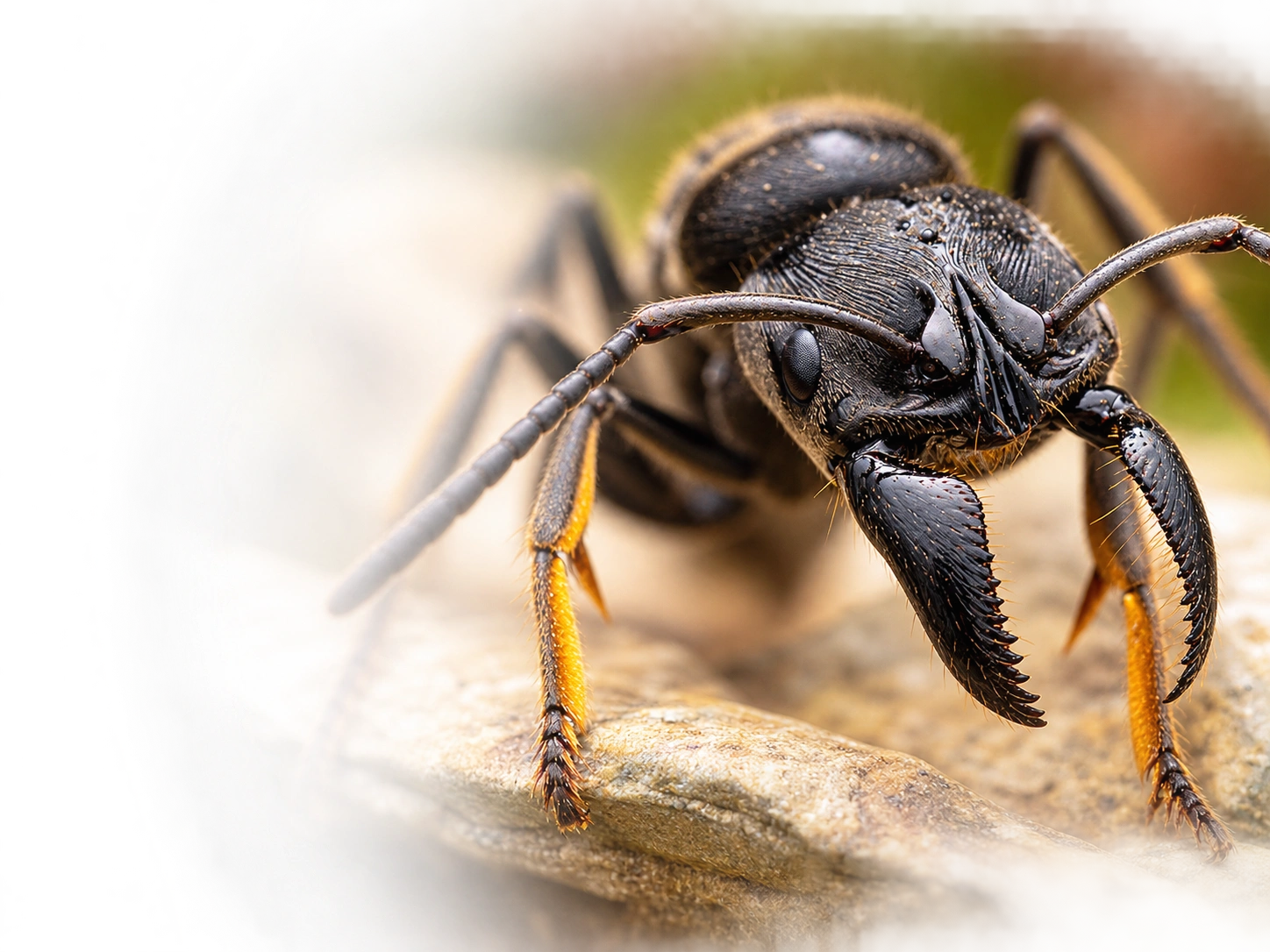
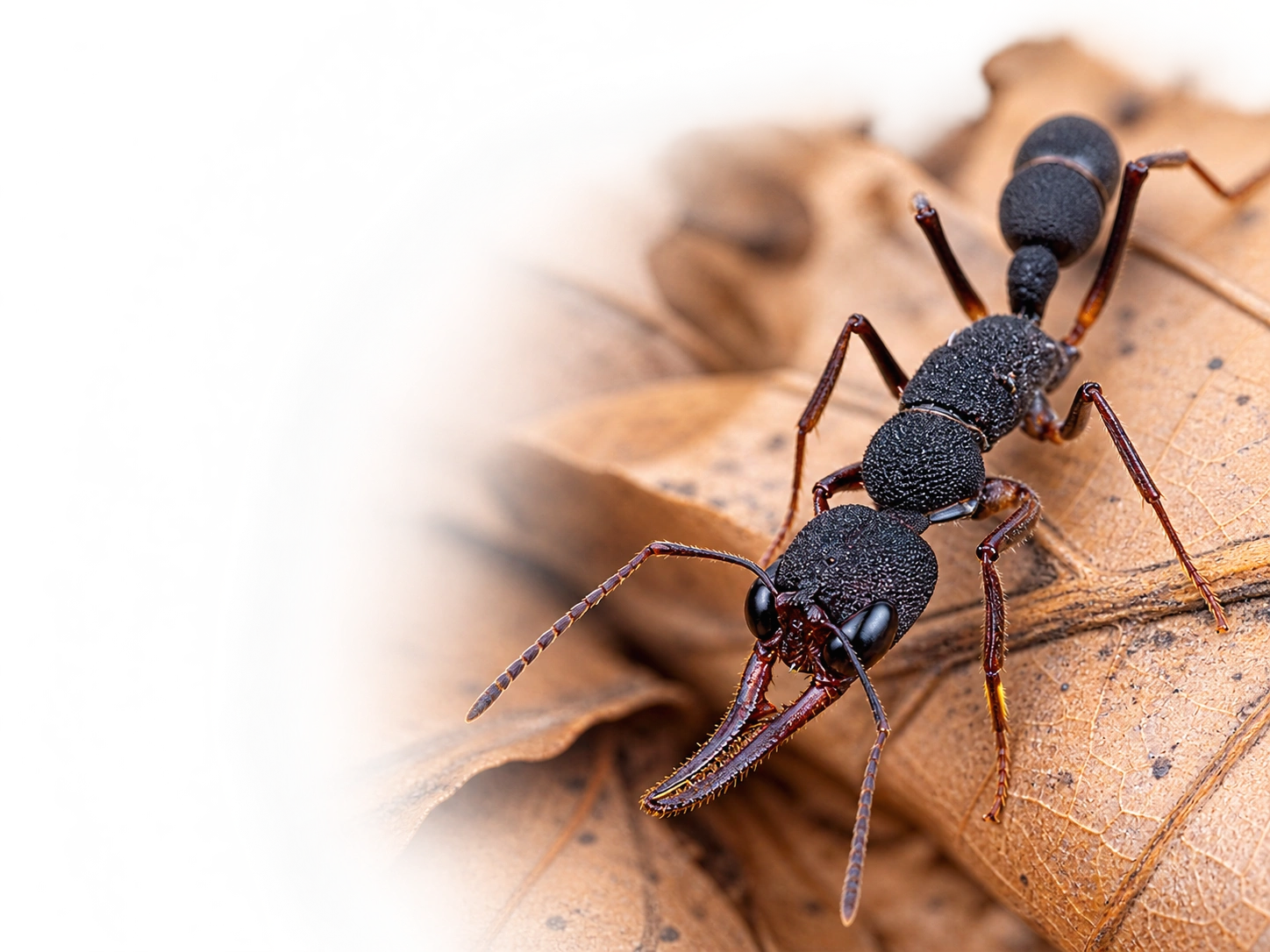
Majors. An enormous head and extraordinarily powerful mandibular muscles: true soldiers. In Antomas’ experience, the largest ones can make cuts that go through the skin and draw blood, even though the species has no sting.
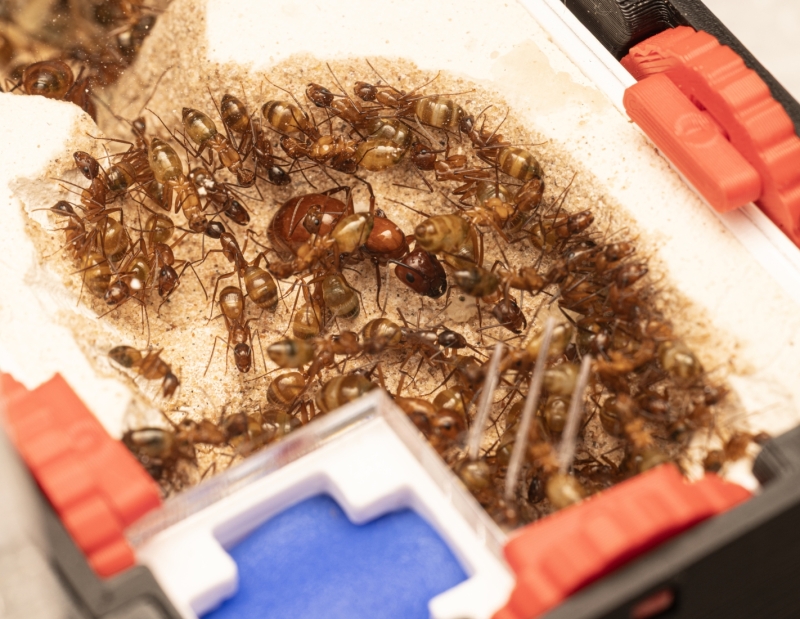
Queen. Enormous, with a very bulky gaster; according to Mintzer, the largest known ant in North America.
Colour. From reddish brown to dark red or maroon tones.
Pupae. Naked, without a cocoon.
Approximate measurements
Minims: about 2 mm
Media workers: all the intermediate sizes
Majors (soldiers): up to about 12 mm
Queen: 20–22 mm and around half a gram (about 500 mg)
These are measurements from the Arizona populations. The higher figures circulating in some shops are not backed by published measurements.
Care in captivity
Difficulty: 4/5 – Advanced
At Antomas we consider it an advanced-level species, but it is not a species just for experts. With a Leafcutter Empire you skip the most delicate phase, founding, and start with a stable colony and a garden already up and running. In return, from day one it asks for consistency with three things:
The fungus. The colony depends on it completely. It needs high humidity, without puddles, and a stable temperature, never above 30 °C continuously, and it does not tolerate treated plants.
The leaves. Fresh, varied, pesticide-free leaves every day, all year round, including in winter.
The space. With more than 10,000 workers, growth is already fast: you will need to keep adding modules.
If you have access to untreated leaves and space to grow, it is perfectly manageable. And it is worth it like few others: it is a glimpse into one of the most complex societies in the animal kingdom, a civilisation of insects that grows its own food.
What keeping an already large colony involves
Space. One module is not enough: plan from the start for several connected Fungarium Kit modules, at least one growing chamber, a foraging area and a separate module for the waste dump, with room to expand (see ‘Recommended set-up’).
Leaves every day. There are no published figures for the consumption of a colony in captivity, so we will not give you a made-up number. As a reference, a mature desert colony brings some 200 kg of dry plant matter a year into its garden, with probably millions of workers. Yours starts with more than 10,000, and its consumption will grow with it: plan to offer fresh leaves daily and to adjust the amount to what they cut.
A much larger waste dump. Each portion of fungus is exhausted in about a month, and with thousands of workers, spent fungus, leaf remains and corpses come out every day. The waste dump fills up quickly and needs emptying regularly (see ‘Waste dump’).
Constant activity. Leafcutters stridulate, but those vibrations travel mainly through the ground and the leaves and can barely be heard. What you will notice is the movement: there is leaf traffic almost round the clock and, in summer, more at night than by day. It is a spectacle, and it is best kept somewhere you can look after it daily.
Complete castes. From minims to soldiers. The large majors bite hard and can draw blood: always work with forceps and without putting your hands among the workers (see ‘Handling and safety’).
Recommended parameters
Fungus temperature: 23–26 °C, as stable as possible.
Never above 30 °C continuously: in Antomas’ experience, the queen can become infertile (see ‘Temperature’).
Foraging area: at room temperature.
Humidity: high in the fungus chamber, but without free water or puddles; the foraging area drier, and the waste dump dry.
Ventilation: constant, without drying out the outside of the garden.
Water: the humidity tray of the growing chamber. A drinker in the foraging area is optional: they get plenty of water from the fungus itself and from the humidity in the set-up.
Light: a normal day-night cycle. Avoid direct sunlight on the fungus chamber, because it heats it up.
Diapause: not needed.
Temperature
For the garden we recommend 23–26 °C, kept stable. This is the usual range for keeping leafcutters in captivity, and it suits the species: even in the Sonoran Desert, the fungus chambers keep relatively constant conditions.
Be very careful with heat. In our experience with Atta, queens can become infertile if they are kept above 30 °C continuously, and the fungus itself also deteriorates. We know of no experiment that has measured that threshold in A. mexicana: it is a handling limit based on experience, and it makes perfect sense, because the queen never mates again. In a colony like this, the queen is the whole future of the empire. If you need extra heat in winter, a gentle, thermostat-controlled source on one side of the chamber is best, and in summer, make sure the room temperature does not soar.
Humidity, ventilation and drainage
The fungus needs high ambient humidity, but it must not stay wet, and letting it dry out is a serious mistake. With a large colony, the fungus mass is large too: it holds a lot of water and, with the respiration of thousands of ants, the container quickly reaches very high humidity. If the walls or the lid are slightly colder, that humidity condenses, drips onto the garden and can end up forming puddles at the bottom.
In Antomas’ experience, free water accumulating around the fungus must be drained, without waiting days for it to evaporate. When it appears, drain or remove the water, increase ventilation slightly and check whether there is too much moisture input or too great a temperature difference between the inside and the walls. In the Fungarium, the fungus rests on a raised grid above a water tray, which helps a great deal.
high humidity + constant ventilation + no waterlogging
The right balance is easy to recognise: moist, active fungus, without dry crusts, but without droplets constantly falling or puddles. Never spray water directly onto the fungus.
Recommended set-up
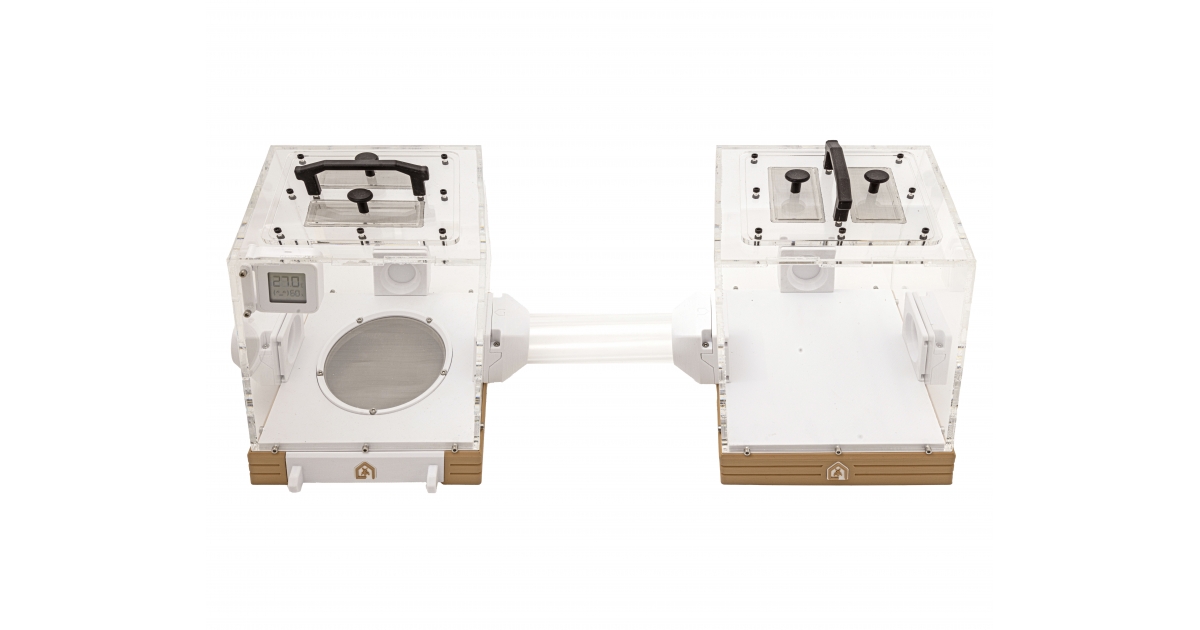
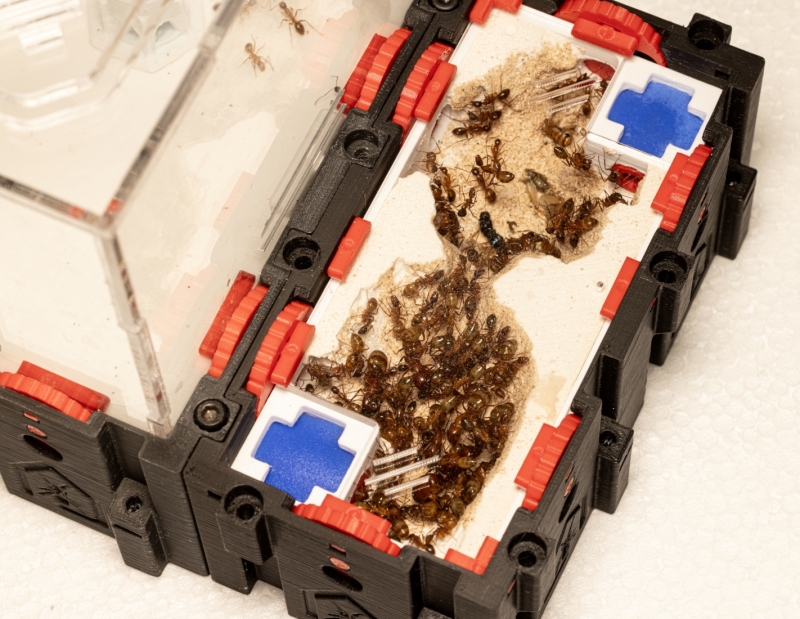
For this species we recommend the Anthouse Fungarium Kit, a modular system designed specifically for leafcutter ants, with modules measuring 19.5 × 19.5 × 26 cm. For a Leafcutter Empire, plan for several connected modules from the start:
Growing chamber with passive humidity: the fungus rests on a raised grid, above a water tray, never touching it.
Reducing covers to adjust the volume to the size of the fungus; with a large colony, you will probably remove them soon.
Built-in hygrometer and thermometer.
Foraging and maintenance box, connected by wide tubes, through which the workers pass laden with leaves.
Fully closing rotating doors, optional, to isolate each module when cleaning or expanding. With thousands of workers, highly recommended.
Separate at least fungus chamber → foraging area → waste dump, with the waste dump in its own module from the start. As the fungus grows, connect new growing chambers: it is a naturally multi-chambered species and it is best not to concentrate the whole garden in a single box. In the foraging area, place the fresh leaves and, if you like, a drinker, which is optional. Since they climb smooth surfaces, protect it with a strip of mineral oil along the top of the walls and keep it well closed.
A Leafcutter Empire always arrives with its fungus, in a container with the queen and her workers. We often also include a test tube with reinforcement fungus, in case the main garden arrives a little the worse for the journey.
Very important: the ants in the reinforcement tube must be removed. They must never be mixed with the workers in the queen’s container. Before using that fungus, remove every ant in it with soft forceps or a brush, and check it carefully, because the minims hide inside the garden. Those ants are never put together with your colony at any point.
Before opening anything: several modules assembled and connected, with the tray of water and the grid, the foraging area with tender leaves and the strip of mineral oil, the waste dump ready and the lids checked.
First, the reinforcement tube: if there is one, remove all its ants and set it aside, closed, at the same temperature.
The main fungus, in large blocks: move it to the growing chamber with the workers on it, without crumbling it. With a colony of this size, you may have to split it into several blocks, always large and complete.
The reinforcement, only if needed: if the main garden has arrived in poor shape, place the fungus from the tube next to it, with no ants left on it at all.
The colony’s stragglers, by tipping: the workers left in the queen’s container are gently tipped into the foraging area and will make their own way back to the fungus. Never tip the ants from the reinforcement tube in there.
Calm: leave them in peace for a day or two, with tender leaves within reach, while they reorganise the garden.
For expansions there is no need to move anything: just connect the new module, and it is the ants themselves that decide how much fungus they take to each one.
Handling the fungus
A healthy garden should be handled as little as possible: it can be observed perfectly well through the walls of the chamber. Do not routinely mix fungus from different colonies; the reinforcement we sometimes send is the exception, and always without its ants. Bear in mind that the garden grows upwards and, in a colony in full expansion, very fast: if the fungus already fills almost the whole chamber, remove a cover or connect a new module.
Waste dump
In a Leafcutter Empire, the waste dump deserves a section of its own. In the wild, A. mexicana takes its rubbish out of the nest, and in captivity it is best to reproduce this with an external module, physically separate from the fungus chambers and rather dry.
Volume: with thousands of workers, spent fungus, leaf remains and corpses come out every day, and the waste dump fills up fast. Empty it regularly.
Without touching the fungus: the container should be easy to disconnect and clean without opening the growing chambers. The rotating doors help a great deal.
Let them choose the refuse tip and, once it is established, don’t keep moving it.
Grey or brown fungus in the waste dump: normal. Each portion of fungus is exhausted in about a month; it is not a disease.
Feeding
Leafcutters feed their garden with leaves, and the diet must be broad, varied and always free of treatments. The more fresh leaves, the more fungus and the bigger the colony: if you do daily maintenance and remove what they don’t use, it is better to offer plenty. Remove wilted leaves they have not cut before they go mouldy.
Rose (leaves and petals), also backed by science: it was one of the preferred leaves in the laboratory.
Hibiscus (leaves and, depending on the colony, flowers), from plants we know have not been treated.
Orange tree and other citrus: in our experience young, more tender leaves work well, and they eat orange as a fruit quite readily. As a nuance, in the 2020 study they rejected mandarin leaves, which is why we prefer young leaves to mature ones.
Almond (leaves and flowers in season), mulberry (tender leaves) and bramble.
In winter. When the almond and the mulberry lose their leaves, rely on evergreens such as bramble, citrus or hibiscus, and on these resources, which we use a lot at Antomas at that time of year:
Dried rose petals, which are sold ready to use, fit for consumption and free of treatments.
Supermarket fruit: apple, banana and orange, which they eat quite readily.
Vegetables: lettuce, cauliflower and broccoli, which they accept well.
Oat flakes, especially when there is a lot of humidity in the set-up: they are a dry resource that adds no water.
Fruit and vegetables are a supplement: in small amounts, removing the leftovers before they ferment.
Avoid coffee and guava, which they rejected in the laboratory, and any treated plant: florists’ flowers, nursery plants or newly bought ornamentals, and plants from gardens or fields that are sprayed. Washing a leaf does not guarantee it is safe, because many plant protection products are systemic. Introduce new things little by little and watch the fungus over the following days.
No insects. Leafcutters need no animal protein: their food is the fungus.
Nectar, only now and then. It is not necessary. If you wish, offer a little nectar or sugary liquid very occasionally, as a supplement, roughly every 15 days, always in a drinker and never on cotton wool, and remove whatever is left over. Don’t turn it into a routine.
Water, optional. You can put a drinker in the foraging area, but it is not necessary: in our experience, they get plenty of water from the fungus itself and from the humidity that evaporates in the set-up. What is a serious mistake is letting the fungus dehydrate.
Diapause
Atta mexicanadoes not need a cold diapause. Even in Arizona it keeps its fungus in deep chambers, at a greatly buffered temperature, and goes on foraging by day in the middle of winter. Keep roughly the same conditions all year round.
Behaviour in captivity
Leaf highways. A new plant turns, within a few hours, into a continuous stream of workers laden with pieces of leaf, often larger than themselves. In summer, don’t be surprised to see more activity at night than by day.
Watch without fear. At Antomas we believe ants are there to be enjoyed, observed and learnt from. It is enough to observe them gently, intervening as little as possible: the garden can be seen through the walls, without opening it.
Signs that all is well: moist, spongy, growing fungus, workers cutting and carrying leaves, and old fungus regularly coming out to the waste dump.
Warning signs:
The fungus shrinks, dries out or forms crusts: not enough humidity.
Constant droplets or puddles at the bottom: too much water or not enough ventilation.
They suddenly stop cutting a plant they used to accept: remove it.
Workers crowd outside the fungus, with no room inside: time to expand.
Escapes and barriers
A colony of this size has thousands of scouts, the majors are very strong, the minims get through tiny gaps and, in our experience, they climb smooth surfaces. We recommend a strip of mineral oil along the top of the walls of the foraging area, which in our experience works quite well; well-fitting lids on all modules; vents with fine mesh; nothing that can act as a bridge near the barrier; and checking tubes and joints after each expansion.
Handling and safety
The large majors deserve a specific warning: their mandibles are powered by enormous muscles and, in Antomas’ experience, they can make cuts that go through the skin and draw blood. Do not pick them up with your fingers. Use forceps and a set-up that lets you feed, clean and expand without putting your hands among the workers. Do not put queens or different colonies together. It is an exotic species and, in its natural range, an agricultural pest: under no circumstances should it be released.
What not to do
Spraying water onto the fungus, leaving puddles or letting it dry out.
Giving leaves from florists, nurseries or any treated plant.
Basing the diet on a single plant, or turning nectar into a routine.
Keeping the queen or the fungus above 30 °C continuously: the queen can become infertile.
Mixing the ants from the reinforcement tube with those of the colony.
Putting queens together, as they kill each other, or different colonies.
Opening or breaking up the garden to see inside.
Running out of space or letting the waste dump overflow.
Neglecting the oil barrier: they climb smooth surfaces.
Giving it a cold diapause.
Picking up the majors with your fingers.
Scientific sources
This care sheet is based on the scientific literature on Atta mexicana and leafcutter ants, in particular the field censuses by A. C. Mintzer at Organ Pipe Cactus National Monument (Arizona), published in Park Science in 2018 (open access), and on the experience of Antomas and other keepers. Main references:
Infante-Rodríguez, D. A., Velázquez-Narváez, A. C., Aguilar-Méndez, M. J., Fuentes-Jacques, L. J., Monribot-Villanueva, J. L., Guerrero-Analco, J. A. & Valenzuela-González, J. (2026). Selection of leaves of Palicourea padifolia, Platanus mexicana and Eriobotrya japonica by Atta mexicana (Hymenoptera: Formicidae) and its influence on the growth of the mutualistic fungus Leucoagaricus gongylophorus. Botanical Sciences 104: 81–97. doi:10.17129/botsci.3671
Infante-Rodríguez, D. A. et al. (2020). Phytochemical characteristics of leaves determine foraging rate of the leaf-cutting ant Atta mexicana (Smith) (Hymenoptera: Formicidae). Chemoecology 30: 147–159. doi:10.1007/s00049-020-00306-4
Mintzer, A. (1979). Foraging activity of the Mexican leafcutting ant Atta mexicana (F. Smith), in a Sonoran Desert habitat (Hymenoptera, Formicidae). Insectes Sociaux 26: 364–372. doi:10.1007/BF02223555
Gómez-Díaz, J. A., Baena, M. L., González-Zamora, A. & Delfín-Alfonso, C. A. (2023). Potential present and future distributions of the genus Atta of Mexico. PLoS ONE 18: e0292072. doi:10.1371/journal.pone.0292072
Fernández-Marín, H., Zimmerman, J. K., Nash, D. R., Boomsma, J. J. & Wcislo, W. T. (2009). Reduced biological control and enhanced chemical pest management in the evolution of fungus farming in ants. Proceedings of the Royal Society B 276: 2263–2269. doi:10.1098/rspb.2009.0184
Heine, D. et al. (2018). Chemical warfare between leafcutter ant symbionts and a co-evolved pathogen. Nature Communications 9: 2208. doi:10.1038/s41467-018-04520-1
Herz, H., Hölldobler, B. & Roces, F. (2008). Delayed rejection in a leaf-cutting ant after foraging on plants unsuitable for the symbiotic fungus. Behavioral Ecology 19: 575–582. doi:10.1093/beheco/arn016
Saverschek, N., Herz, H., Wagner, M. & Roces, F. (2010). Avoiding plants unsuitable for the symbiotic fungus: learning and long-term memory in leaf-cutting ants. Animal Behaviour 79: 689–698. doi:10.1016/j.anbehav.2009.12.021
Tumlinson, J. H., Silverstein, R. M., Moser, J. C., Brownlee, R. G. & Ruth, J. M. (1971). Identification of the trail pheromone of a leaf-cutting ant, Atta texana. Nature 234: 348–349. doi:10.1038/234348b0
Fjerdingstad, E. J., Boomsma, J. J. & Thorén, P. (1998). Multiple paternity in the leafcutter ant Atta colombica — a microsatellite DNA study. Heredity 80: 118–126. doi:10.1038/sj.hdy.6882470
Santos, T. T. M., Santana, M. V., Mascarin, G. M., Arthurs, S. P. & Fernandes, P. M. (2023). Collecting young nests of Atta spp. is more efficient to establish laboratory colonies than collecting founder queens after nuptial flights. International Journal of Tropical Insect Science 43: 1837–1841. doi:10.1007/s42690-023-01060-0
Kleineidam, C., Ernst, R. & Roces, F. (2001). Wind-induced ventilation of the giant nests of the leaf-cutting ant Atta vollenweideri. Naturwissenschaften 88: 301–305. doi:10.1007/s001140100235