This website uses its own and third-party cookies to improve our services and show you advertising related to your preferences by analyzing your browsing habits. To give your consent to its use, press the Accept button.
Cookie preferences
| Cookie | Provider | Purpose | Expiry |
|---|---|---|---|
| PHP_SESSID | antomas.es | The PHPSESSID cookie is native to PHP and allows websites to store serialised status data. On the website it is used to establish a user session and to pass state data through a temporary cookie, which is commonly known as a session cookie. These Cookies will only remain on your computer until you close your browser. | Session |
| PrestaShop-# | antomas.es | This is a cookie used by Prestashop to store information and keep the user's session open. It stores information such as currency, language, customer ID, among other data necessary for the proper functioning of the shop. | 480 hours |
| rc::a | It is used to read and filter bot requests. | Persistent | |
| rc::c | It is used to read and filter bot requests. | Persistent |
| Cookie | Provider | Purpose | Expiry |
|---|---|---|---|
| _ga | Registers a unique ID that is used to generate statistical data on how the visitor uses the website. | 2 years | |
| _gat | Used by Google Analytics to throttle request rate | 1 day | |
| _gat_gtag_UA_# | Used to throttle request rate. | 1 minute | |
| _gd# | This is a Google Analytics Session cookie used to generate statistical data on how you use the website which is removed when you quit your browser. | Session | |
| _gid | Registers a unique ID that is used to generate statistical data on how the visitor uses the website. | 1 day |
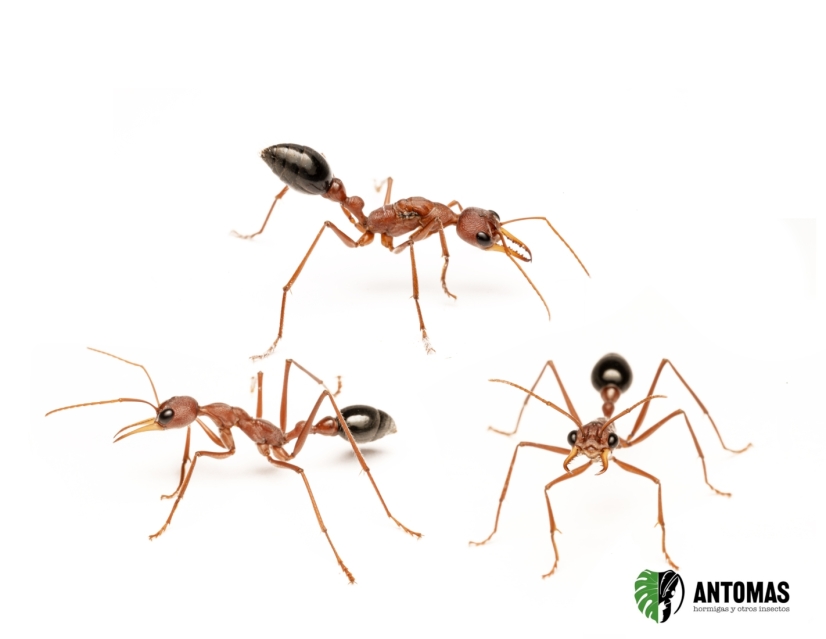
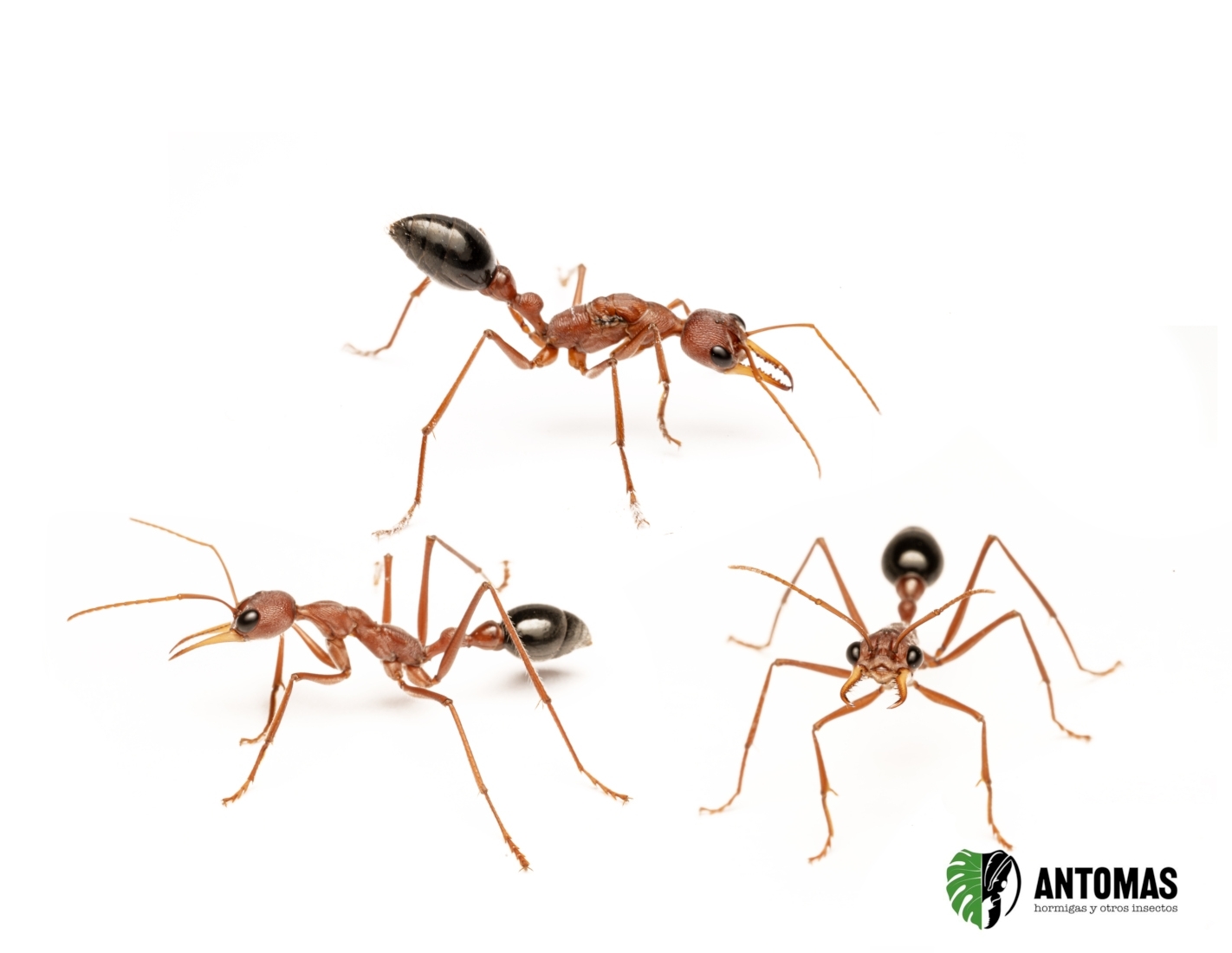
Myrmecia pavida – Western Australian Bulldog Ant
Biology
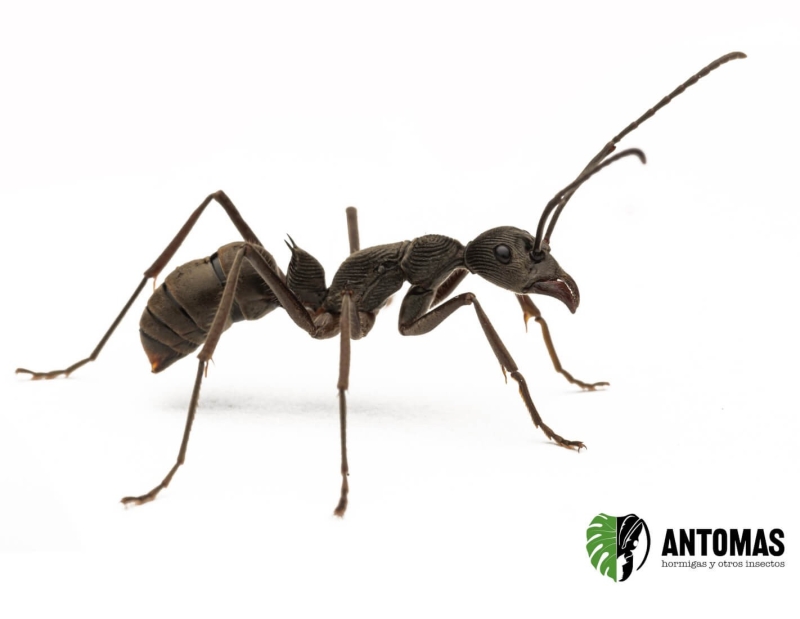
Myrmecia pavida is a large bulldog ant native to southwestern Australia, with records mainly from relatively temperate, Mediterranean-type regions. It inhabits open forests, shrublands, and areas with well-drained soils where it builds its nests directly in the ground.

It belongs to the gulosa group, which includes some of the largest and most powerful Myrmecia. As is characteristic of the genus, it has large compound eyes, strong mandibles, and a fully functional sting.
Available records indicate mainly nocturnal or crepuscular activity, although this aspect is not as well documented as in other species of the genus. Workers may forage during low-light periods, which reduces exposure to excessive heat.
It is a very defensive species. When a worker detects a threat, it often turns its head and follows the movement before adopting a defensive posture or attacking.
Its natural diet combines the capture of small invertebrates with the consumption of sugar-rich liquids. Workers mainly hunt individually, without relying on mass recruitment.
The social structure of Myrmecia pavida is especially interesting. Most studied colonies were monogynous, but occasional polygynous colonies have also been recorded, with more than one reproductive queen.
This occasional polygyny should not be confused with its high polyandry. In this species, a single queen may mate with several males, increasing the genetic diversity within the colony.
The maximum number of individuals a colony can reach is not well documented. However, because it belongs to the gulosa group, it is expected to form moderate-sized colonies rather than extremely massive ones.
Founding is semi-claustral. The queen must periodically leave her shelter to feed and capture small prey during the first stages of colony development.
Size and Morphology
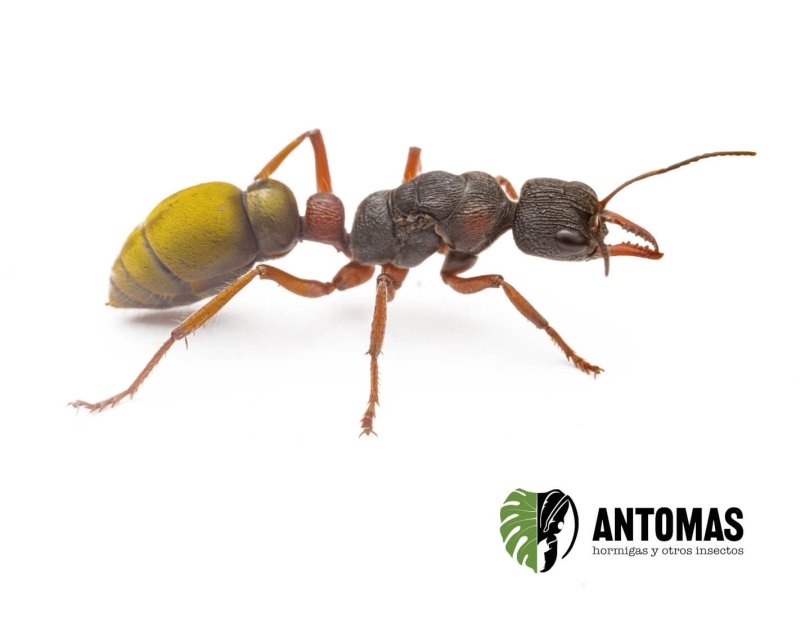
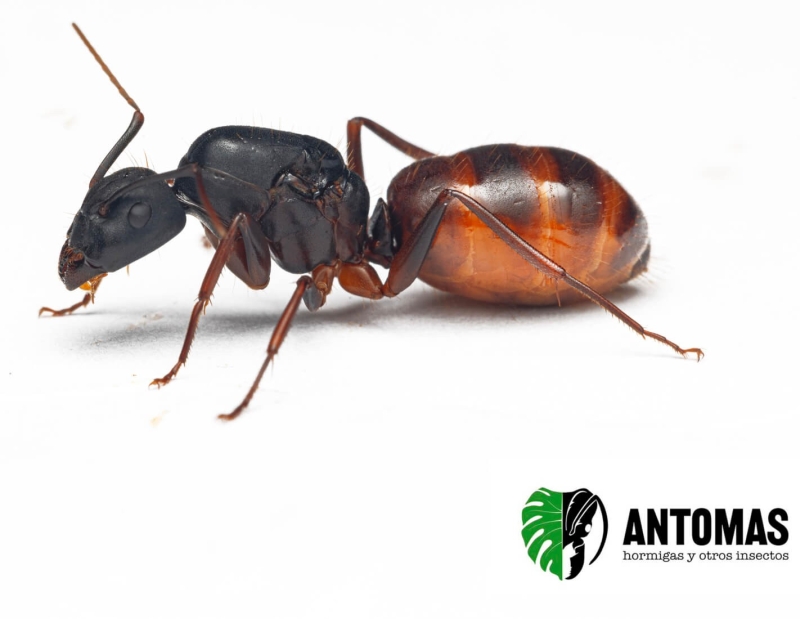
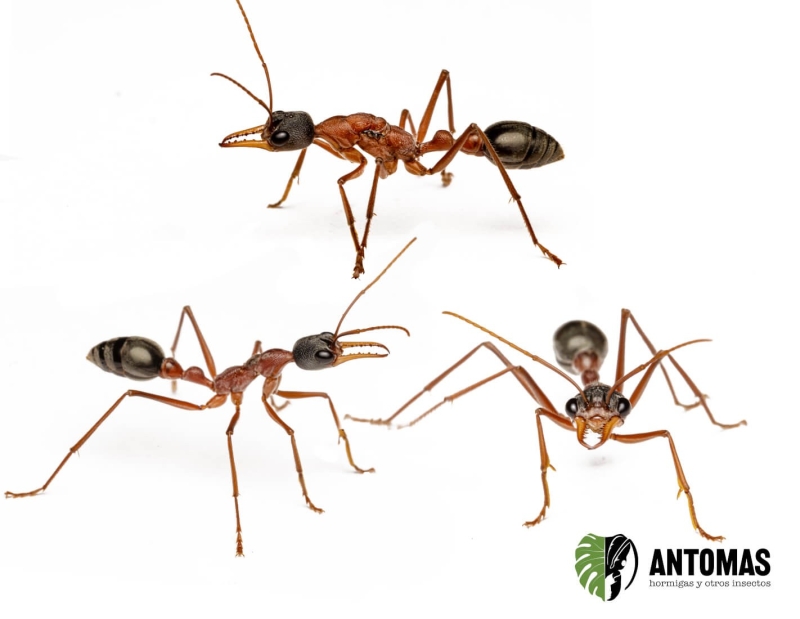
Myrmecia pavida is a large, robust, and imposing ant. It has an elongated silhouette, large compound eyes, and powerful mandibles adapted for both hunting and defense.
Coloration can vary considerably between populations. Several color morphs have been identified, generally maintaining dark, reddish, orange, or brown tones depending on locality.
This variability makes M. pavida an especially attractive species, as two colonies from different populations may show noticeably different appearances.
Workers show some size variation, which is common in large species of the gulosa group, although there are no clearly differentiated soldier castes.
The sting is fully developed and connected to venom glands. The combination of mandibles, body strength, and sting makes it a species that must be handled with great caution.
Approximate measurements
- Workers: 19-22 mm
- Queens: 24-27 mm
Captive Care
Myrmecia pavida is a relatively straightforward species within the inherent complexity of the genus. Colonies are not usually excessively large, but they require stability, space, and careful management.
Recommended parameters
- Active temperature: 22–27 °C
- Humidity: 50–70 % in the brood area
- Nest: naturalistic or mineral, with substrate available for larvae
The nest must provide a well-defined humidity gradient. Eggs and larvae need a humid area that prevents desiccation, while pupae should be kept in drier areas to complete development properly.
Larvae need substrate particles to build their cocoons correctly. Therefore, even when using an artificial formicarium, it is advisable to provide some sand, soil, or fine mineral substrate.
Diapause
The species comes from regions with marked seasonality and should benefit from a mild wintering period. In Australia, this period coincides with the colder months of the year.
During this period they can be kept at approximately 10 to 18 °C, avoiding sudden drops. Foraging and development slow down considerably.
Feeding
The diet should be based on two pillars:
- Carbohydrates: nectars or sugary liquids available regularly, preferably ad libitum.
- Proteins: small insects, preferably freshly killed during founding and live or freshly killed in established colonies.
During founding, small and preferably freshly killed prey should be offered, reducing risk to the queen. Once the colony is established, a wider range of prey can be provided.
Protein consumption increases notably when developing larvae are present. During periods without larvae, it is normal for workers to reduce protein intake.
It is a very visual, fast, and reactive species. Workers can detect external movements and follow the keeper with their head, especially if the nest is disturbed.
It can climb smooth surfaces agilely, so the use of escape barriers is recommended.
Its large size makes individuals easy to locate, but it also increases the reach of its mandibles and the power of its sting. Direct handling is not recommended under any circumstances.