This website uses its own and third-party cookies to improve our services and show you advertising related to your preferences by analyzing your browsing habits. To give your consent to its use, press the Accept button.
Cookie preferences
| Cookie | Provider | Purpose | Expiry |
|---|---|---|---|
| PHP_SESSID | antomas.es | The PHPSESSID cookie is native to PHP and allows websites to store serialised status data. On the website it is used to establish a user session and to pass state data through a temporary cookie, which is commonly known as a session cookie. These Cookies will only remain on your computer until you close your browser. | Session |
| PrestaShop-# | antomas.es | This is a cookie used by Prestashop to store information and keep the user's session open. It stores information such as currency, language, customer ID, among other data necessary for the proper functioning of the shop. | 480 hours |
| rc::a | It is used to read and filter bot requests. | Persistent | |
| rc::c | It is used to read and filter bot requests. | Persistent |
| Cookie | Provider | Purpose | Expiry |
|---|---|---|---|
| _ga | Registers a unique ID that is used to generate statistical data on how the visitor uses the website. | 2 years | |
| _gat | Used by Google Analytics to throttle request rate | 1 day | |
| _gat_gtag_UA_# | Used to throttle request rate. | 1 minute | |
| _gd# | This is a Google Analytics Session cookie used to generate statistical data on how you use the website which is removed when you quit your browser. | Session | |
| _gid | Registers a unique ID that is used to generate statistical data on how the visitor uses the website. | 1 day |
Opisthopsis rufithorax – Strobe Ant
Biology
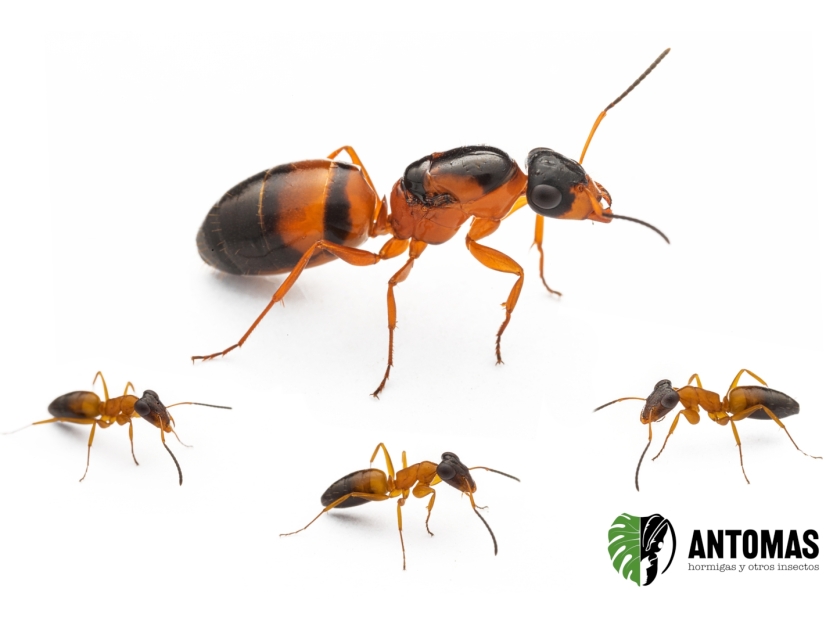
Opisthopsis rufithorax is an Australian species belonging to a very peculiar genus, easily recognized by the extraordinary development of its compound eyes. It mainly inhabits warm regions and open forests of Australia, where it nests in the ground.
It is internationally known as the “Strobe Ant”, a name related to its enormous eyes and its extremely visual and reactive behavior.
It is a mainly diurnal ant, highly dependent on vision for orientation, threat detection, and locating resources. Workers usually move quickly and nervously, making frequent pauses to observe their surroundings.
Foraging is usually carried out individually or in small numbers, with workers exploring open surfaces in search of small insects, sugary liquids, and other food resources.
The colonies are usually relatively small or moderate in size, although they can reach stable populations under suitable conditions. Nest entrances are often discreet and located directly in the soil.
This is a particularly interesting species from an ethological point of view due to the importance of vision in its behavior, an unusual trait among many ants.
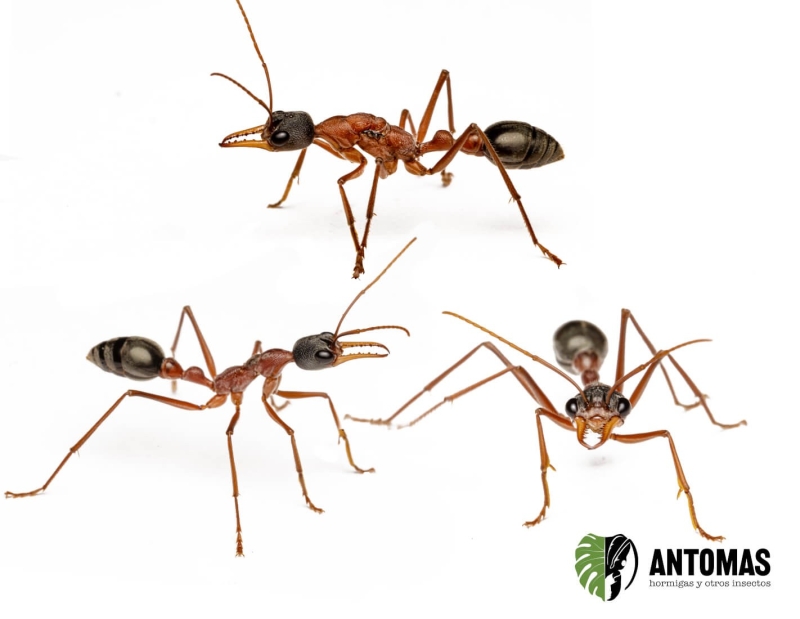
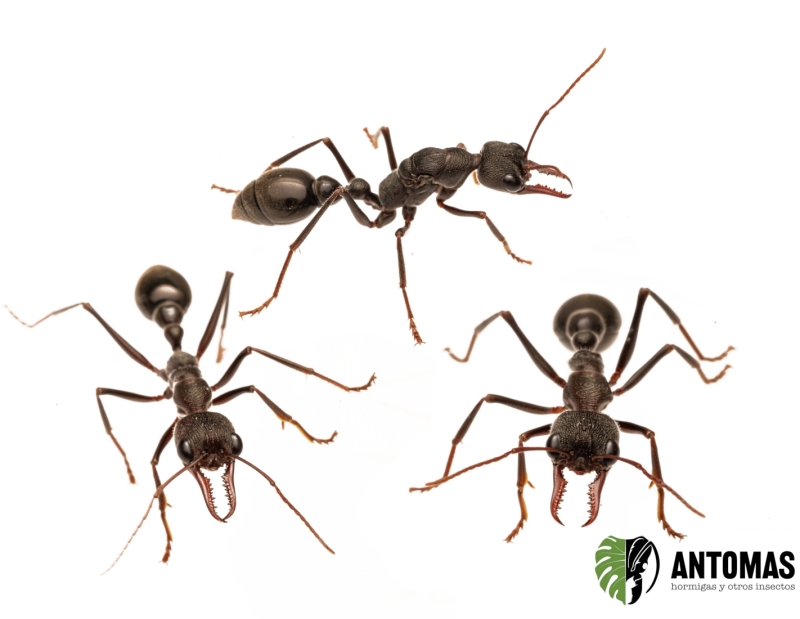
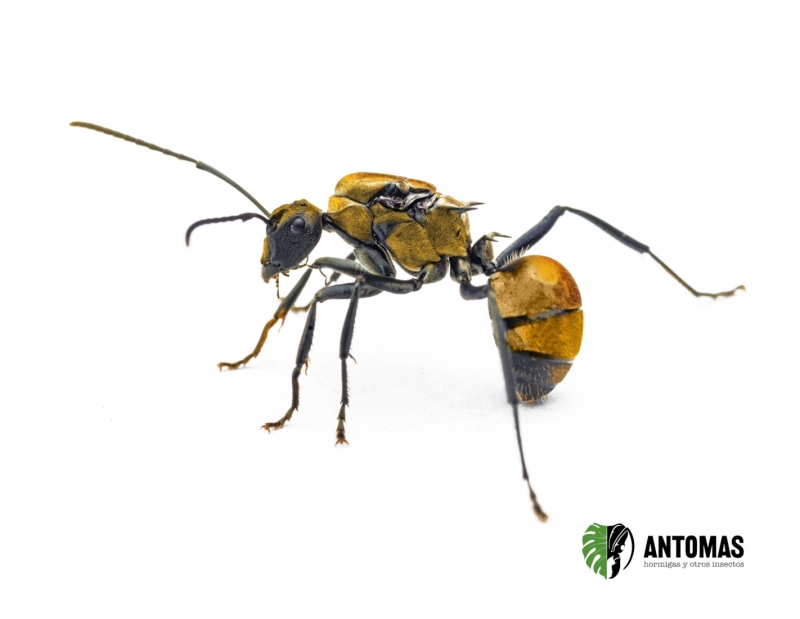
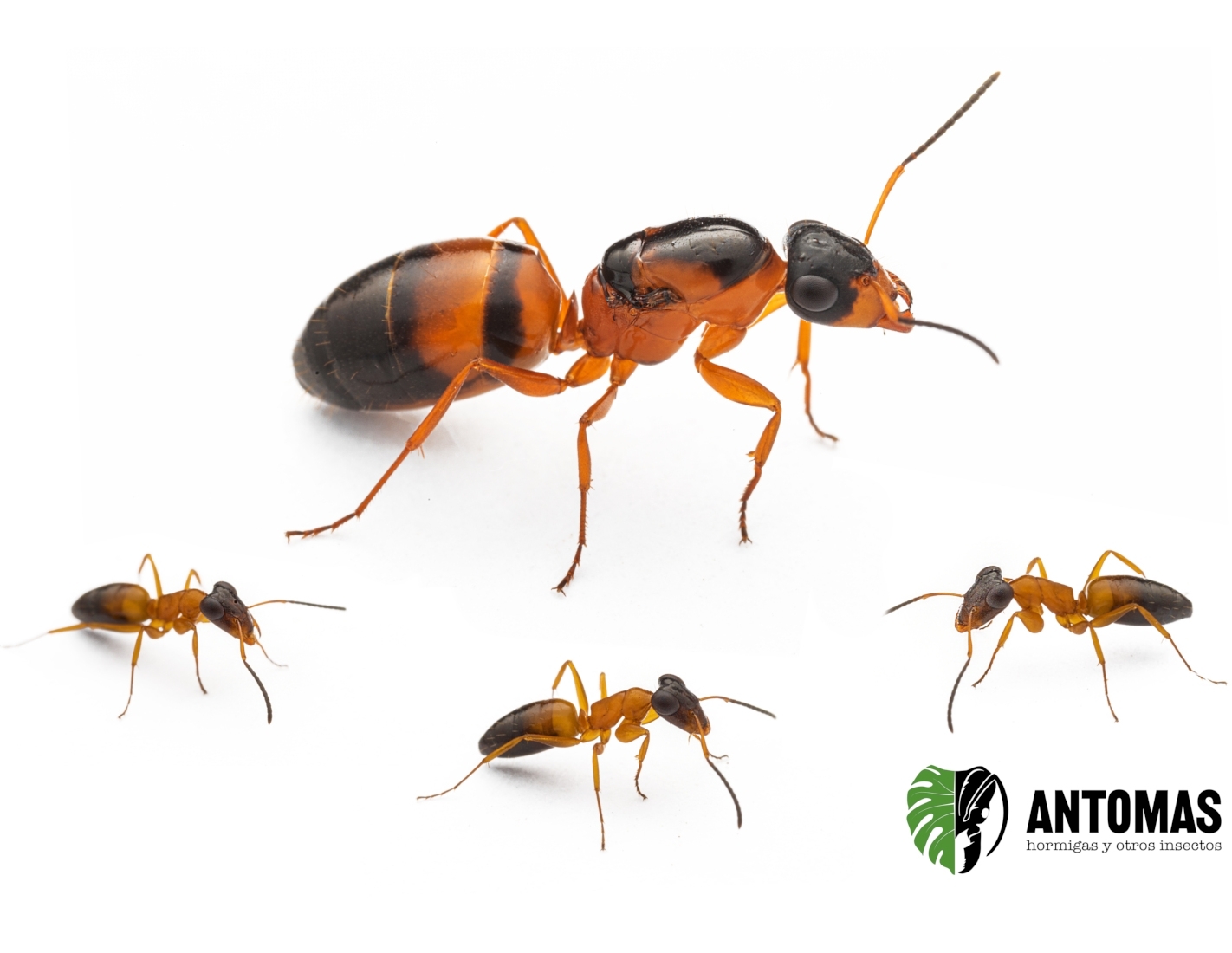
Opisthopsis rufithorax has a slender and elongated body, adapted for fast movement across open terrain.
Its most distinctive feature is the enormous size of its compound eyes, which occupy a large part of the head and give it an unmistakable appearance.
The general coloration combines dark tones with reddish or orange areas on the thorax, which gives rise to the specific name rufithorax.
The legs are long and slender, allowing agile and rapid movement. The body has a light structure compared with more compact ant species.
It does not show marked polymorphism among workers, although slight size differences between individuals may be observed.
Approximate measurements:
- Workers: 5 – 7 mm
- Queen: 7 – 9 mm
Opisthopsis rufithorax is a species of intermediate difficulty, recommended for keepers with some experience due to its activity, speed, and visual sensitivity.
Recommended parameters:
- Temperature: 24–28 °C
- Humidity: 40–60 %
- Nests: mineral or natural materials, with dry areas and slightly humid zones.
It is important to provide a clear humidity gradient, allowing the ants to choose the most suitable areas according to their needs.
They require spacious foraging areas, as the workers are very active and use vision to explore their surroundings.
The diet should be structured around:
- Carbohydrates: sugary liquids, diluted honey, or nectars offered regularly
- Proteins: small insects such as flies, micro crickets, termites, or fruit flies
This is a very visually active species, reacting quickly to external movements. It is especially interesting to observe how workers follow visual stimuli from inside the nest.
It does not usually show extreme aggression, although its speed requires careful work during maintenance or openings.
Direct handling is not recommended; entomological tools and secure systems should be used to prevent escapes.