This website uses its own and third-party cookies to improve our services and show you advertising related to your preferences by analyzing your browsing habits. To give your consent to its use, press the Accept button.
Functional cookies are strictly necessary to provide the services of the shop, as well as for its proper functioning, so it is not possible to refuse their use. They allow the user to browse through our website and use the different options or services that exist on it.
Cookie
Provider
Purpose
Expiry
PHP_SESSID
antomas.es
The PHPSESSID cookie is native to PHP and allows websites to store serialised status data. On the website it is used to establish a user session and to pass state data through a temporary cookie, which is commonly known as a session cookie. These Cookies will only remain on your computer until you close your browser.
Session
PrestaShop-#
antomas.es
This is a cookie used by Prestashop to store information and keep the user's session open. It stores information such as currency, language, customer ID, among other data necessary for the proper functioning of the shop.
These are cookies that collect information about the advertisements shown to users of the website. They can be anonymous, if they only collect information about the advertising spaces shown without identifying the user, or personalised, if they collect personal information about the user of the shop by a third party, for the personalisation of these advertising spaces.
Collect information about the user's browsing experience in the shop, usually anonymously, although sometimes they also allow the user to be uniquely and unequivocally identified in order to obtain reports on the user's interests in the products or services offered by the shop.
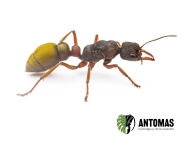
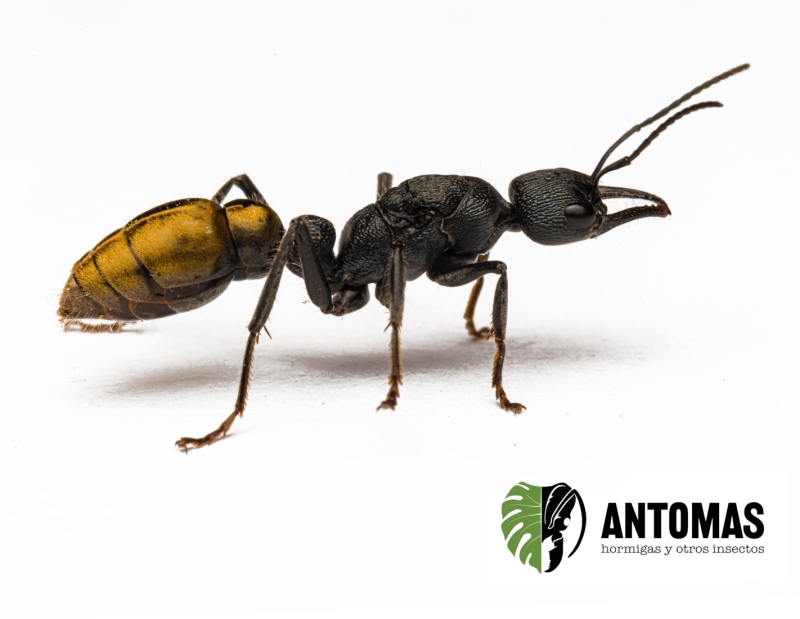
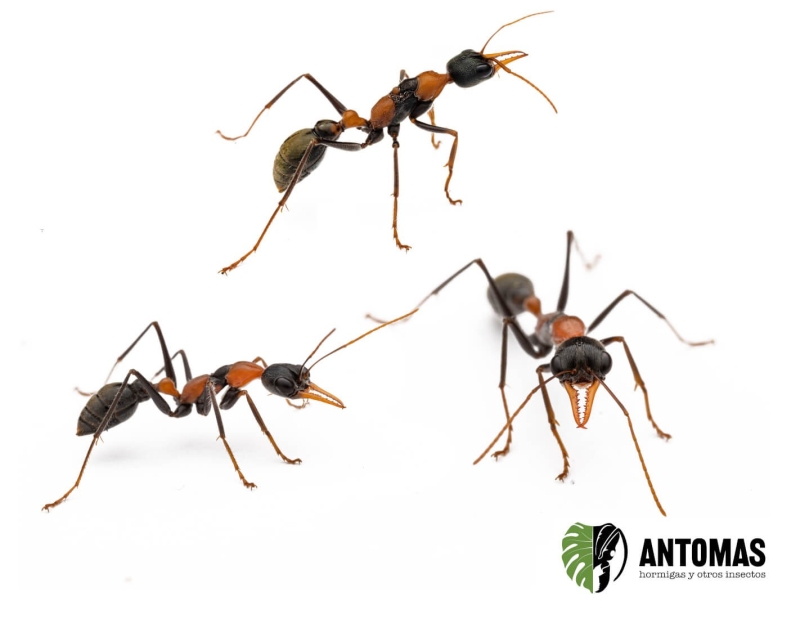
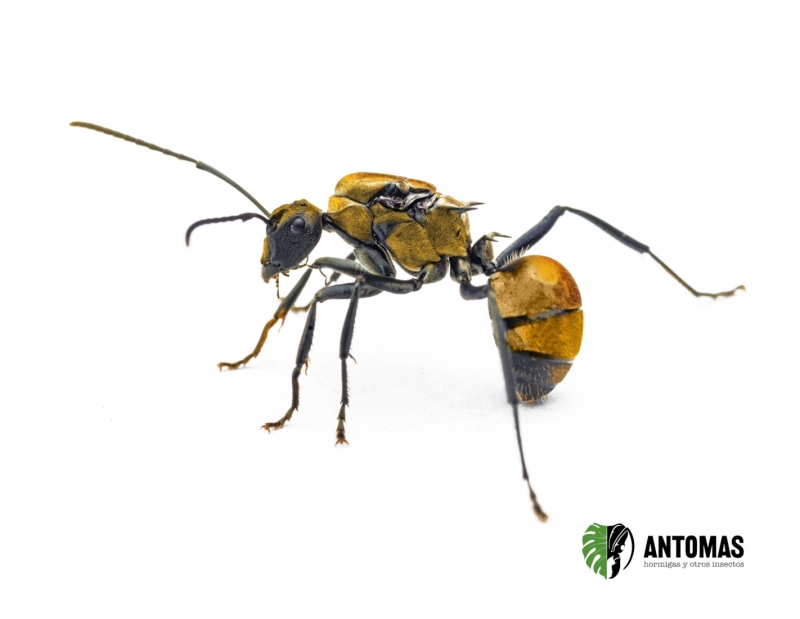
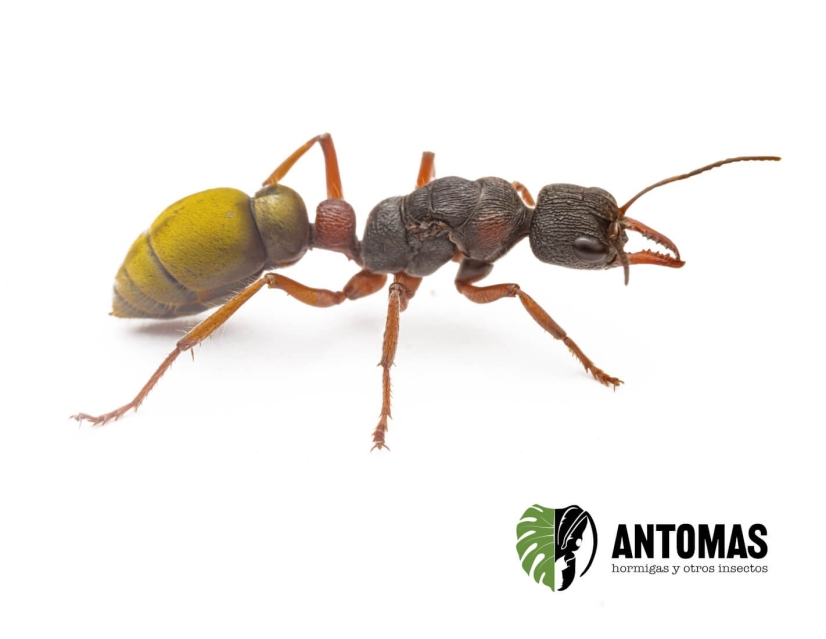
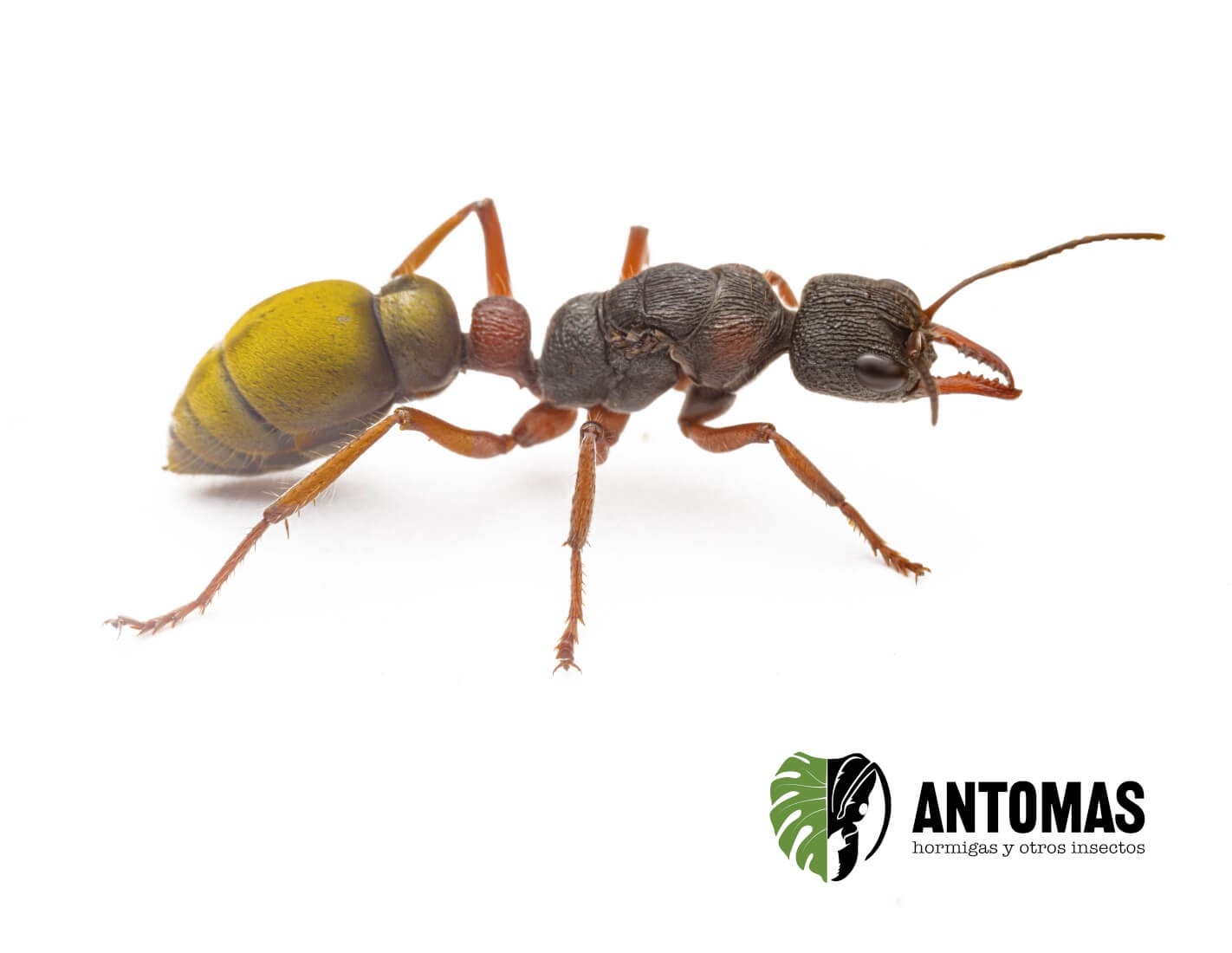
Myrmecia chrysogaster is a species of the genus Myrmecia native to Australia, characterized by its medium size within the group, its predatory behavior, and its high reactivity to external stimuli. It stands out visually due to the golden coloration of the gaster and the presence of reddish tones on several body structures.
Like the rest of the genus, it bases its survival strategy on solitary hunting, without dependence on mass recruitment. Workers locate, pursue, and capture prey individually, using their mandibles and stinger to immobilize them quickly and precisely.
It possesses a highly developed visual system that allows it to orient itself efficiently and detect prey or threats in its immediate surroundings, resulting in vigilant and reactive behavior.
It displays a markedly diurnal activity pattern, carrying out most of its foraging during daylight hours.
It is a territorial and defensive species, with rapid responses to disturbances. Workers react immediately to vibrations or intrusions, using their stinger when necessary.
Colonies are relatively small, generally composed of a few hundred individuals, consistent with its lifestyle strategy based on individual hunting.
Size and Morphology
Myrmecia chrysogaster displays a compact and robust morphology. Its most distinctive feature is its coloration pattern: the gaster shows characteristic golden tones, while the legs, mandibles, and petiole display reddish coloration. In some cases, these red tones may partially extend onto the thorax, creating an even more contrasting appearance.
Despite its relatively short legs, it possesses great agility and speed of movement. The compound eyes are highly developed and prominent, reflecting its dependence on vision for orientation and hunting.
The mandibles are strong and toothed, designed to efficiently grasp live prey.
Approximate measurements
Workers: 0.8–2.4 cm
Queen: 2.2–3 cm
Captive Care
Myrmecia chrysogaster is a demanding species, recommended for experienced keepers, although within the genus it is not considered especially difficult, occupying an intermediate level compared to other Myrmecia species.
It requires moderate and stable temperatures:
Temperature: 24–27 °C
Humidity: 50–70 %
Nests: use of natural materials, with a suitable substrate mix (coconut fiber, fine sand, clay, etc.) and large chambers that allow proper cocoon spinning and the creation of humidity gradients
It may undergo a mild wintering period between June and August, with temperatures ranging between 10 and 20 °C, during which larval development slows considerably. However, in Europe it commonly adapts to the Northern Hemisphere climatic cycle, carrying out this mild diapause between December and February, while maintaining some activity and the presence of larvae in the nest.
Feeding in captivity should be based on two main pillars:
Carbohydrates: sugary liquids or nectars, which may be offered continuously (ad libitum)
Proteins: small prey appropriate to its relatively small size within the genus, such as silverfish, termites, small crickets, and small cockroaches.
It does not possess good climbing ability on smooth surfaces, which significantly reduces the risk of escape in this type of setup.
Direct handling is not recommended under any circumstances and should only be carried out using entomological tools.