This website uses its own and third-party cookies to improve our services and show you advertising related to your preferences by analyzing your browsing habits. To give your consent to its use, press the Accept button.
Cookie preferences
| Cookie | Provider | Purpose | Expiry |
|---|---|---|---|
| PHP_SESSID | antomas.es | The PHPSESSID cookie is native to PHP and allows websites to store serialised status data. On the website it is used to establish a user session and to pass state data through a temporary cookie, which is commonly known as a session cookie. These Cookies will only remain on your computer until you close your browser. | Session |
| PrestaShop-# | antomas.es | This is a cookie used by Prestashop to store information and keep the user's session open. It stores information such as currency, language, customer ID, among other data necessary for the proper functioning of the shop. | 480 hours |
| rc::a | It is used to read and filter bot requests. | Persistent | |
| rc::c | It is used to read and filter bot requests. | Persistent |
| Cookie | Provider | Purpose | Expiry |
|---|---|---|---|
| _ga | Registers a unique ID that is used to generate statistical data on how the visitor uses the website. | 2 years | |
| _gat | Used by Google Analytics to throttle request rate | 1 day | |
| _gat_gtag_UA_# | Used to throttle request rate. | 1 minute | |
| _gd# | This is a Google Analytics Session cookie used to generate statistical data on how you use the website which is removed when you quit your browser. | Session | |
| _gid | Registers a unique ID that is used to generate statistical data on how the visitor uses the website. | 1 day |
Camponotus maculatus
Biology
Camponotus maculatus is one of the largest and most ecologically successful species within the genus Camponotus, characterized by the formation of extremely populous colonies and by its dominance across vast semi-arid regions of the African continent. It is an exceptionally common species throughout much of Africa, where it occupies a wide variety of open habitats, ranging from savannas to sparsely vegetated areas with hard soils.
Within these ecosystems, C. maculatus acts as a dominant species both because of its body size and its aggressiveness and recruitment capacity. Its foraging trails may extend over great distances from the nest, and workers intensively exploit any food resource available in the environment. This ability to monopolize food contributes decisively to its ecological success and to the high colony densities it can locally achieve.
From a trophic perspective, it is an atypical species within the genus Camponotus. Unlike many species more oriented toward the consumption of sugary liquids and carrion, C. maculatus displays strongly predatory behavior. The prey it captures or encounters are consumed with extreme speed and voracity, to the point of dismantling small vertebrate carcasses until little more than the skeleton remains within a relatively short period of time. This behavior reflects remarkable collective efficiency in the fragmentation and transport of animal tissue.
Its predatory nature is not merely opportunistic. Compared with other species of the genus, it demonstrates greater effectiveness in active hunting and superior aggressiveness toward competing ants. When conflicts with other species occur, it responds through coordinated attacks and intensive use of both chemical and mechanical weaponry.
It possesses the ability to spray large quantities of formic acid as a defense mechanism, allowing it to rapidly disorganize potential enemies. In addition, its bite is powerful enough to pierce human skin, making this species one of the most impressive and feared members of the genus from a functional perspective. The combination of bite and acid forms a highly effective defensive system against both arthropods and small vertebrates.
A remarkable trait of this species is its “surgical” behavior following conflicts. It is capable of providing advanced care to injured nestmates, especially when wounds are at risk of infection. Specialized workers can detect damaged tissue and proceed with the amputation of legs, antennae, or other affected body parts in order to prevent infection from spreading. After amputation, they meticulously clean the wound and seal it through manipulation and the application of secretions, greatly increasing the injured worker’s chances of survival. This behavior, rare within the genus Camponotus, suggests strong adaptation to intercolonial warfare and to the high frequency of combat in the ecosystems where this species dominates.

Size and Morphology
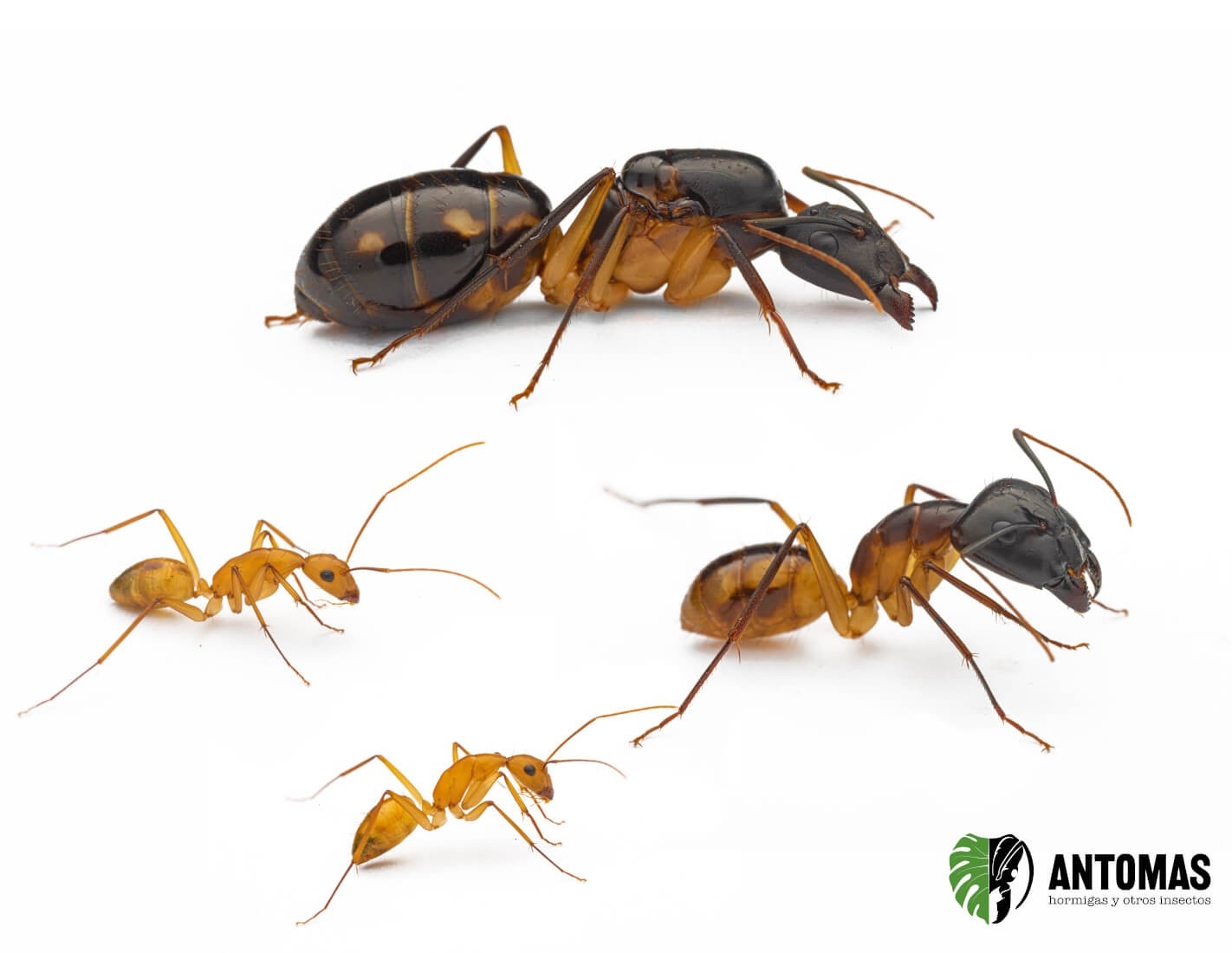
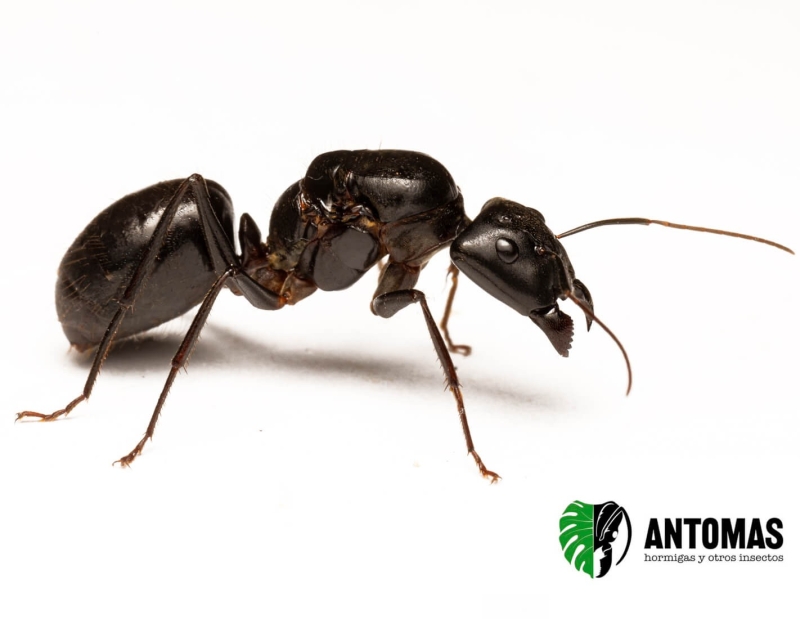
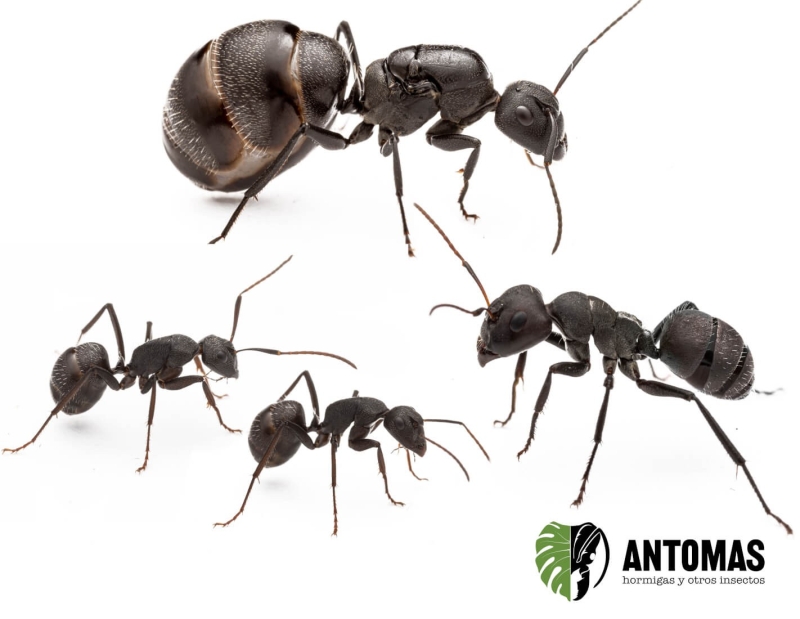
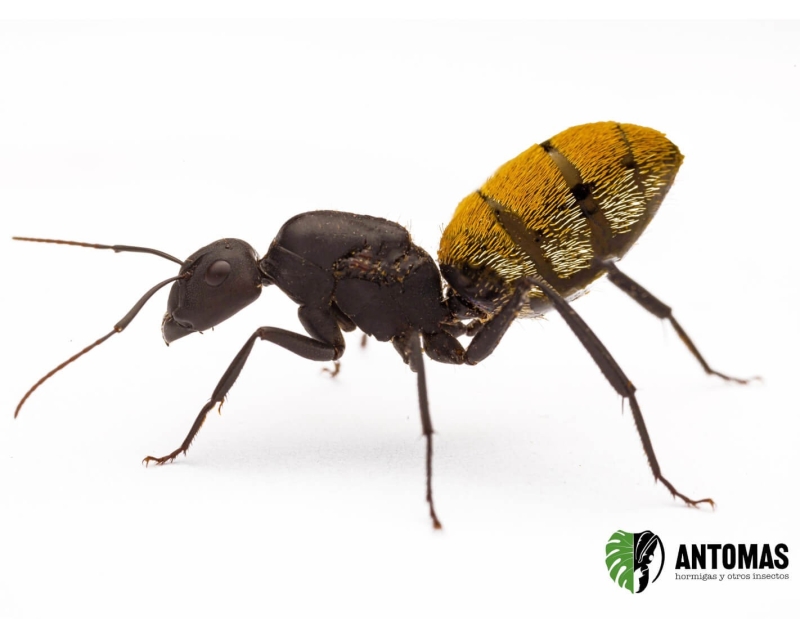
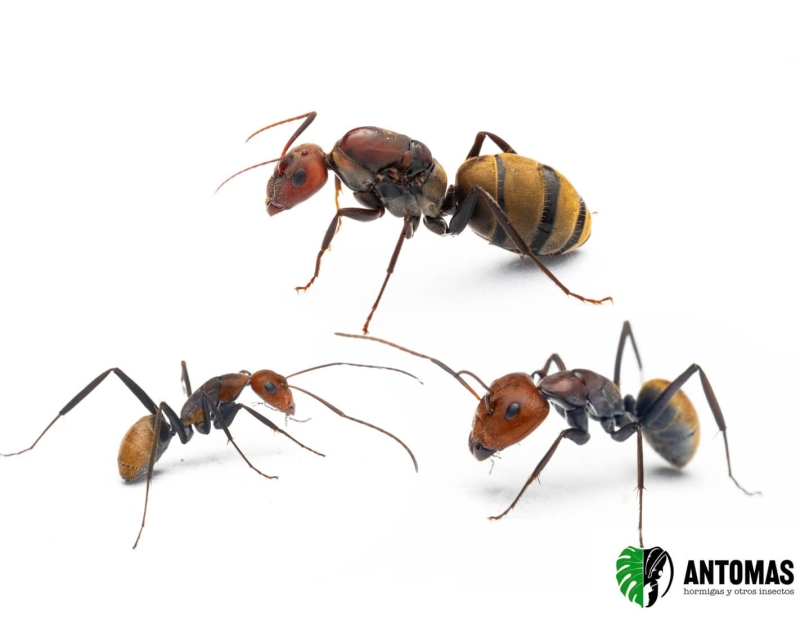
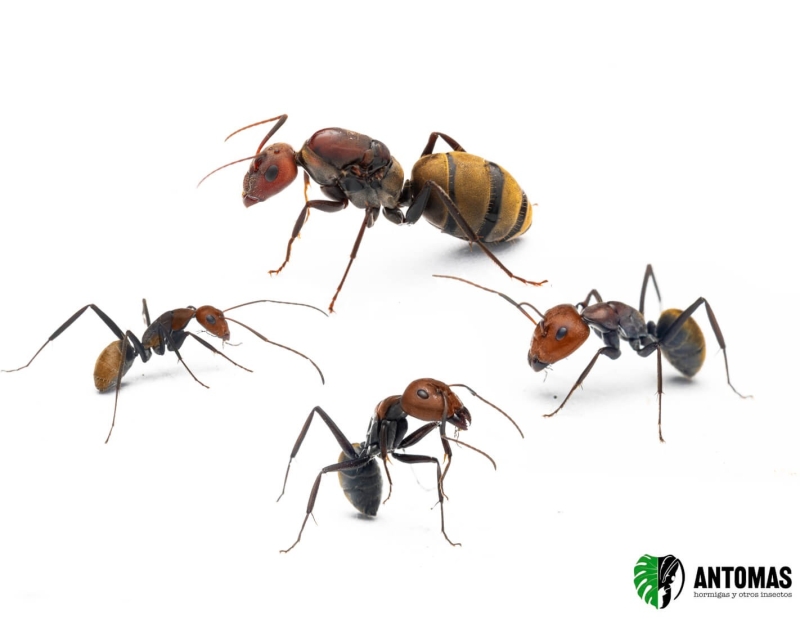
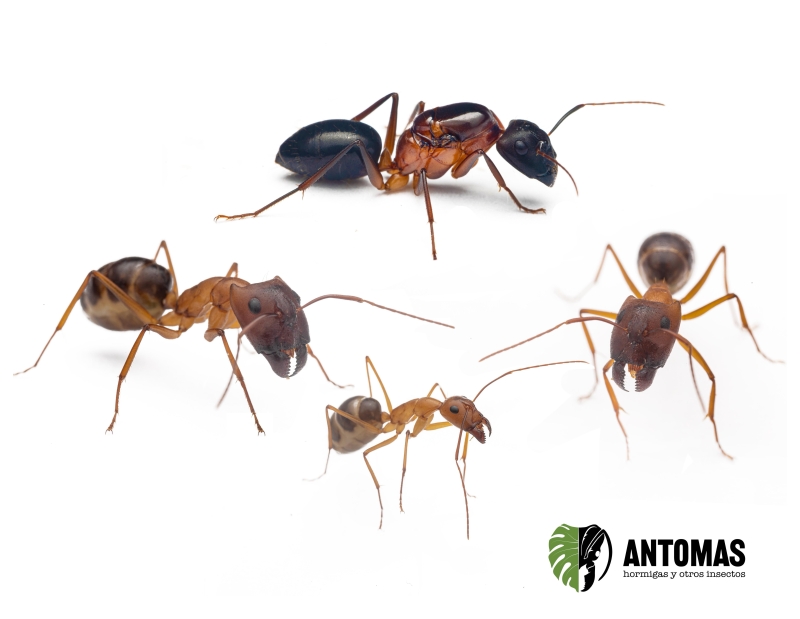
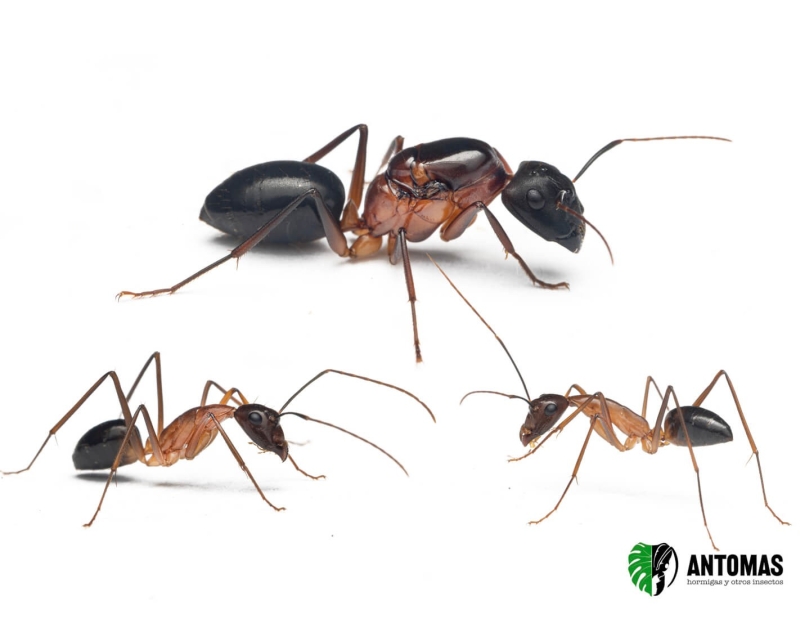
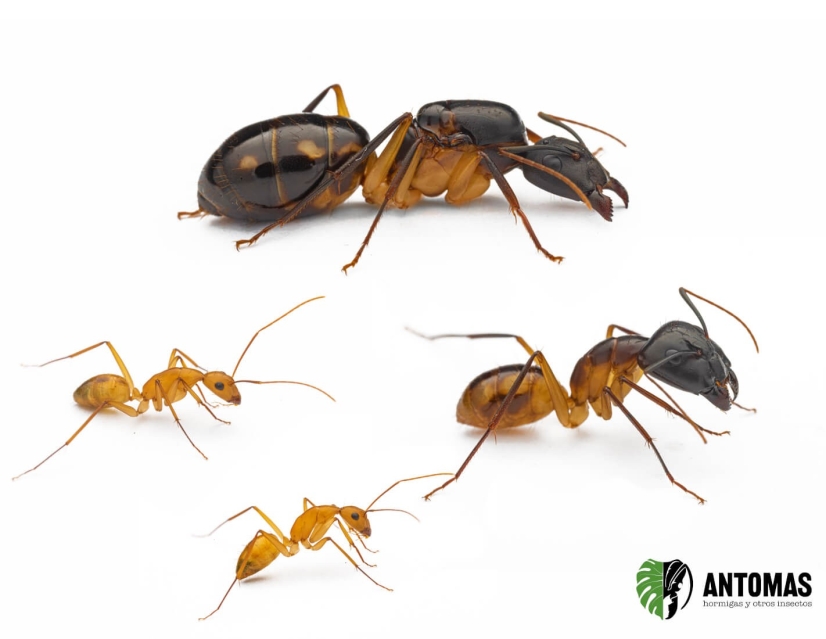
Camponotus maculatus is a large ant species displaying pronounced polymorphism. Within the colony there is a broad gradation of sizes, including clearly differentiated soldiers (majors). However, one of the most singular traits of this species is the appearance of extremely developed mega-majors, which are only produced once the colony surpasses approximately three years of age.
These mega-majors are individuals significantly more massive than ordinary soldiers, with much broader and darker-colored heads. Their presence is associated with mature and well-established colonies. In addition, they exhibit a particular behavior: they only begin to forage when they reach advanced ages, normally after two years of life, suggesting functional specialization related to defense and the handling of large prey.
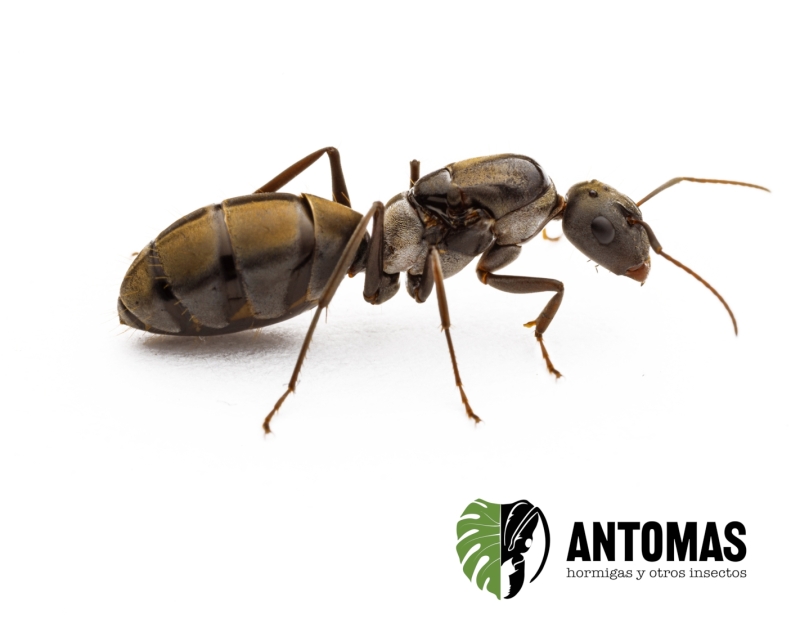
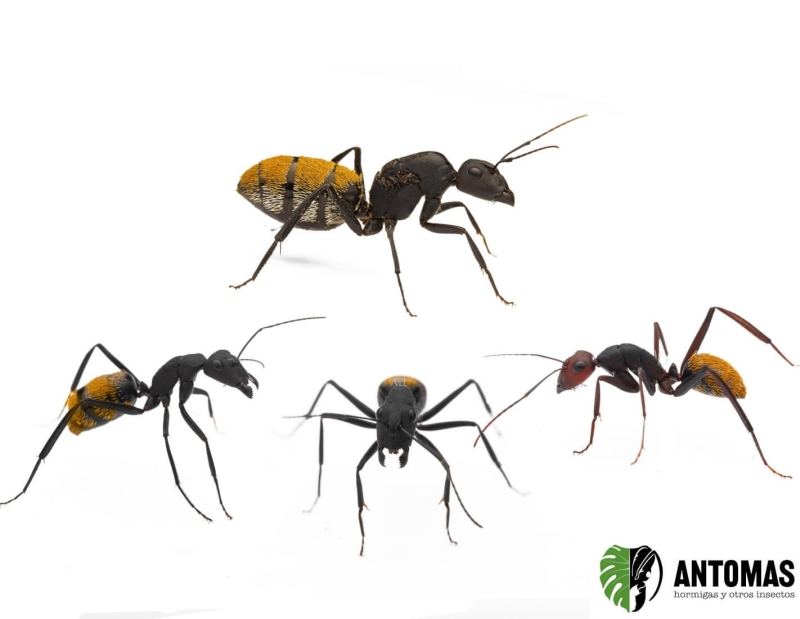
The coloration of the species is extraordinarily variable, with hundreds of chromatic morphs existing. Individuals may display orange, yellowish, brown, or completely black tones. Despite this enormous variability, all forms share one diagnostic feature: the presence of characteristic spots on the abdomen, which give the species its name and allow identification even in very dark morphs.
The queens also display remarkable size variability, with large forms reaching up to 2 cm in length, while smaller forms do not exceed 1.4 cm. This variation may be related to population or environmental differences.
Approximate measurements
- Workers: 0.8–1.3 cm
- Soldiers: 1.3–2 cm
- Queen: 1.3–2 cm
Captive Care
In captivity, Camponotus maculatus is characterized by the construction of very large nests and by its capacity to form extremely populous colonies within a relatively short period. Under suitable conditions, it can reach populations of tens of thousands of workers, making it probably the Camponotus species capable of achieving the largest colony sizes in artificial environments.
In addition to its final colony size, it stands out for having one of the fastest growth rates within the genus. Young colonies may experience exponential increases in worker numbers when provided with abundant food and stable environmental conditions.
Nests intended for this species must provide good ventilation and low to moderate humidity levels, avoiding excessively humid environments that do not reproduce its natural conditions. It is essential to provide large foraging areas, as this is a highly active species that generates large quantities of organic waste due to its voracious feeding behavior.
From a nutritional perspective, it requires large amounts of nectar or other sugary substances to satisfy the colony’s energetic demands, as well as a substantial supply of proteins in the form of varied prey. Its extremely voracious behavior allows it to accept even large larvae such as Zophobas or Tenebrio, something unusual within the genus Camponotus, which generally prefers smaller or fragmented prey.
The ease of breeding, tolerance to captive conditions, and spectacular size make Camponotus maculatus one of the most recommended species for beginners in captive myrmecology. Added to this is its great observational interest, as it clearly allows the study of extreme polymorphism, the development of specialized castes, and collective predatory behavior.