This website uses its own and third-party cookies to improve our services and show you advertising related to your preferences by analyzing your browsing habits. To give your consent to its use, press the Accept button.
Functional cookies are strictly necessary to provide the services of the shop, as well as for its proper functioning, so it is not possible to refuse their use. They allow the user to browse through our website and use the different options or services that exist on it.
Cookie
Provider
Purpose
Expiry
PHP_SESSID
antomas.es
The PHPSESSID cookie is native to PHP and allows websites to store serialised status data. On the website it is used to establish a user session and to pass state data through a temporary cookie, which is commonly known as a session cookie. These Cookies will only remain on your computer until you close your browser.
Session
PrestaShop-#
antomas.es
This is a cookie used by Prestashop to store information and keep the user's session open. It stores information such as currency, language, customer ID, among other data necessary for the proper functioning of the shop.
These are cookies that collect information about the advertisements shown to users of the website. They can be anonymous, if they only collect information about the advertising spaces shown without identifying the user, or personalised, if they collect personal information about the user of the shop by a third party, for the personalisation of these advertising spaces.
Collect information about the user's browsing experience in the shop, usually anonymously, although sometimes they also allow the user to be uniquely and unequivocally identified in order to obtain reports on the user's interests in the products or services offered by the shop.
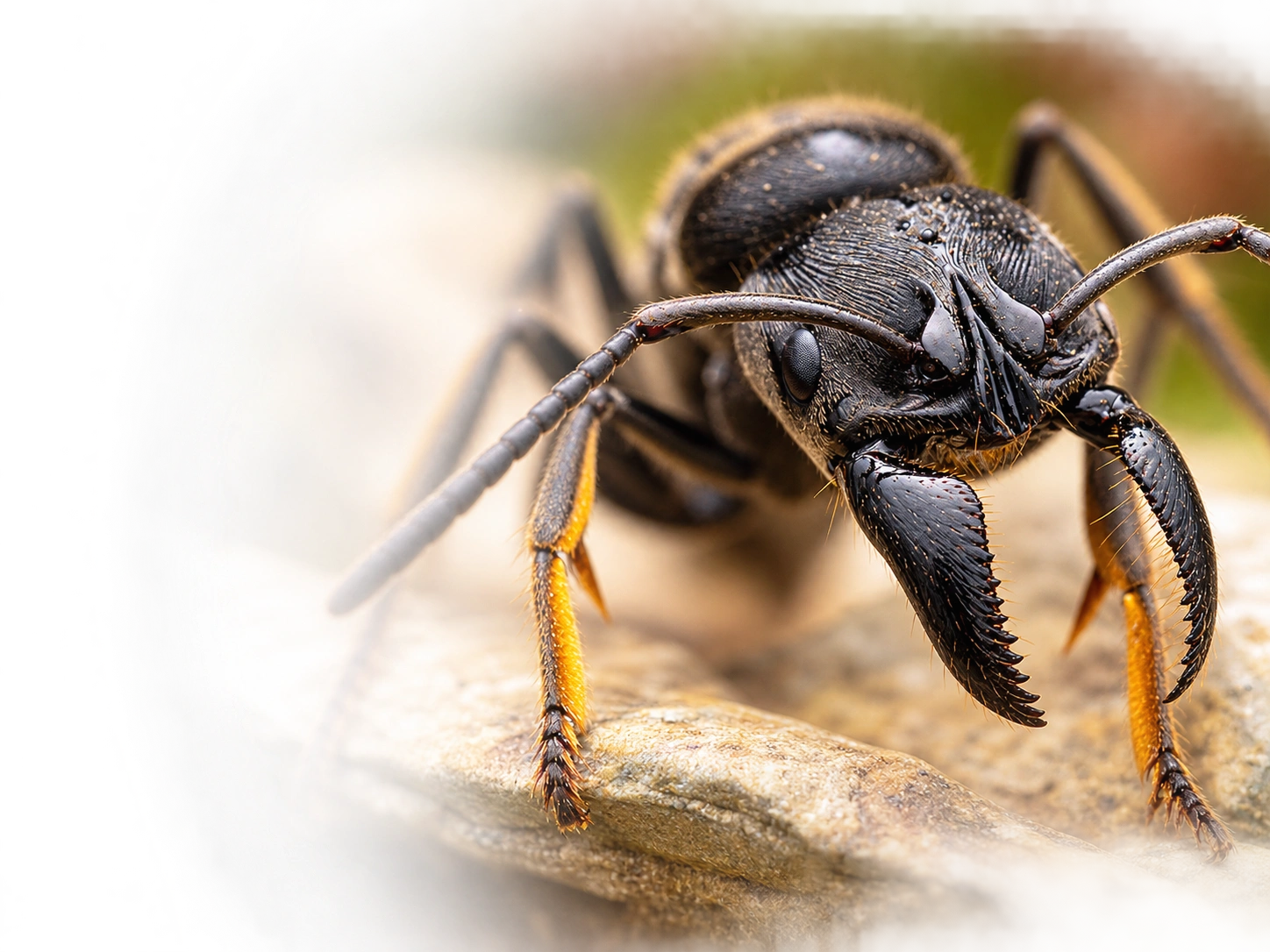
The warriors that astonished Darwin. Polyergus rufescens, the Amazon ant, does not dig, does not tend its young and cannot even feed itself: its workers, armed with sickle-shaped mandibles, set out at five in the afternoon in columns over a thousand strong to raid Formica nests and carry off their cocoons. The ants that hatch from that loot become their slaves and do everything for them. A queen who kills another queen to take over her colony, a chemical perfume for infiltration and an army that reads the sky before attacking: Europe’s most famous social parasite, for expert keepers only. Colonies with a queen and auxiliary workers of Formica gerardi. Shipping across Europe, live arrival guaranteed.
The European Amazon ant, the slave-maker that astonished Huber and Darwin: an obligate social parasite whose workers, armed with sickle-shaped mandibles, neither tend the brood nor feed themselves, and set out in columns hundreds strong to steal Formica cocoons. Colonies with a queen and auxiliary workers of Formica gerardi, its slave species in the Iberian Peninsula. A plaster nest sized for the Formica, 21–26 °C, sugar in a feeder and plenty of protein. The key: renew the slaves with Serviformica cocoons (F. rufibarbis, F. fusca, F. gerardi…) from a “farm” colony of your own. Diapause of 4–5 months at 5–10 °C. Mineral oil barrier.
Polyergus rufescens (Latreille, 1798), the Amazon ant, is one of the most famous ants in the history of science. It was with this species that Pierre Huber discovered, in 1810, that slave-making ants exist, and Darwin devoted several pages of On the Origin of Species to it. It is an obligate social parasite: its workers are warriors that raid Formica nests to carry off their cocoons. The Formica that hatch from them in the amazons’ nest become their auxiliary workers, their “slaves”, and they are the ones that dig, forage and feed the queen, the larvae and the amazons themselves.
Keeping it means keeping two ants at once, which is why it is one of the most demanding species you can keep at home. Antomas colonies arrive with their queen, their amazons and a group of auxiliary workers of Formica gerardi, a Formica found almost only in the Iberian Peninsula and southern France and recorded as a slave of the amazons in the peninsula. In this care sheet we keep apart what science has documented, what keepers do in practice and what Antomas has learnt.
Biology
Huber, Darwin and the 30 amazons that could not feed themselves
To find out how far the amazons’ dependence went, Huber carried out an experiment as simple as it was brutal. He shut 30 amazons in without their slaves, but with larvae and pupae of their own species and with the food they liked best. They did nothing: they did not tend the brood, did not repair the nest and did not even feed themselves. Many starved to death.
Then he introduced a single Formica fusca worker, one of their usual slaves. She set to work at once: she fed the survivors, took care of the brood, dug a few chambers and restored order to the nest. Half a century later, Darwin told the story in the chapter on instinct in On the Origin of Species. The lesson still holds for any keeper: an amazon without slaves is not a colony, and everything you do for this species you are really doing for its Formica.
What is dulosis? The “very hard-working” ant that does not work
Slavery in ants is called dulosis, from the Greek doulos, “slave”. A dulotic species obtains its auxiliary workers by stealing brood from another species, nearly always pupae, and rearing it in its own nest. The workers that hatch join the colony as if it were their own, because it is the only one they know. P. rufescens is an obligate dulotic species: it cannot live without its hosts.
The name is rather ironic. Latreille described it in 1798 as Formica rufescens, “the reddish one”, and in 1804 created the genus Polyergus for it, usually translated from the Greek as “very hard-working”. Few ants do less housework. The name “Amazon”, on the other hand, suits it perfectly, because its workers form an army of warriors that sets out on expeditions.
Formica gerardi: the amazons’ Iberian slave
Amazons do not enslave just anyone. Their hosts are Formica of the subgenus Serviformica, a name that comes from the Latin servus, “servant”. In the Iberian Peninsula there is one star of the show: Formica gerardi, the slave species that comes with our colonies.
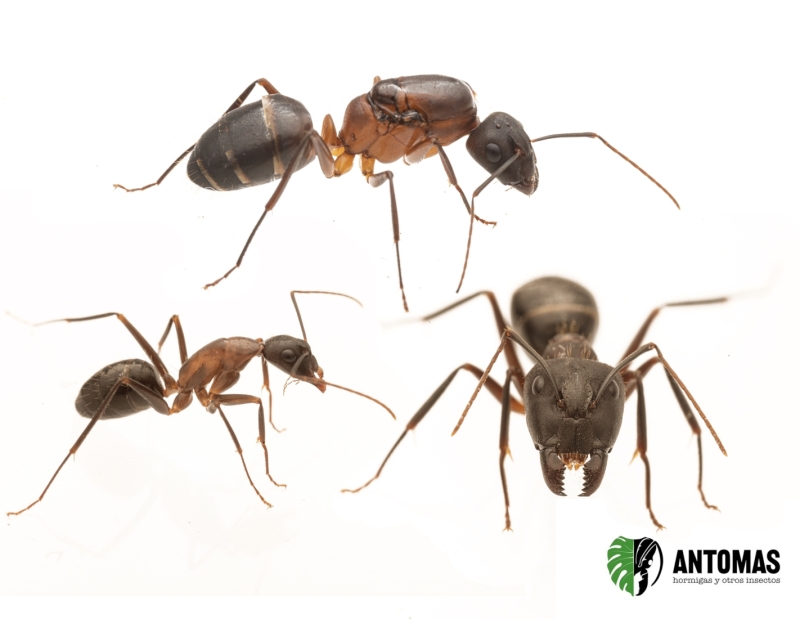
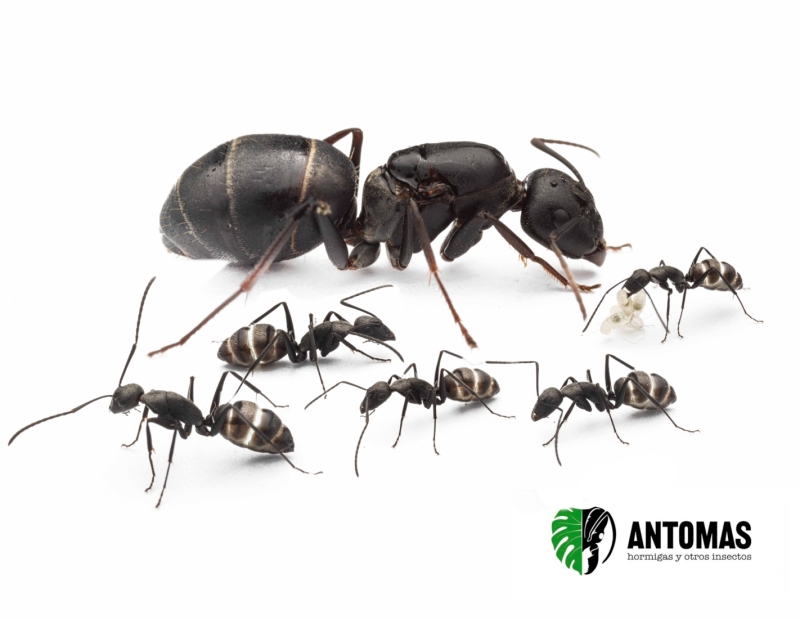
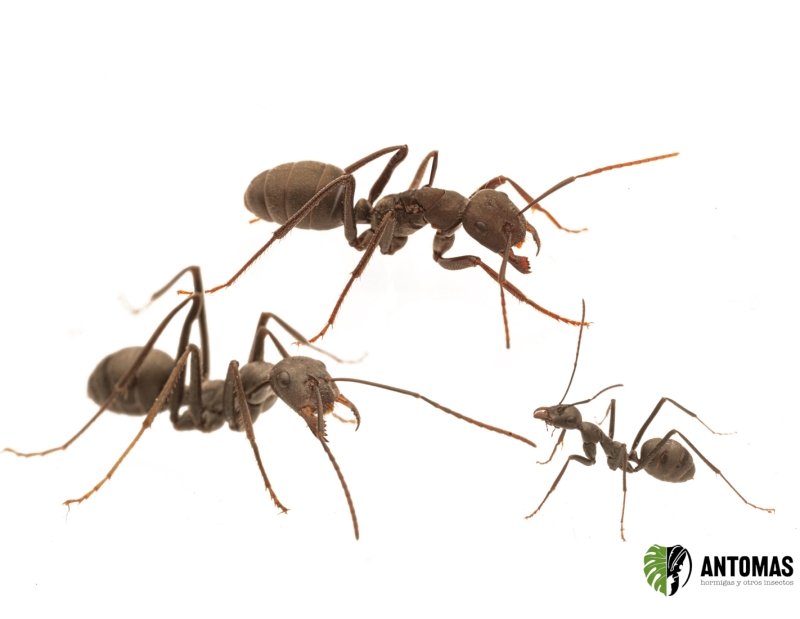
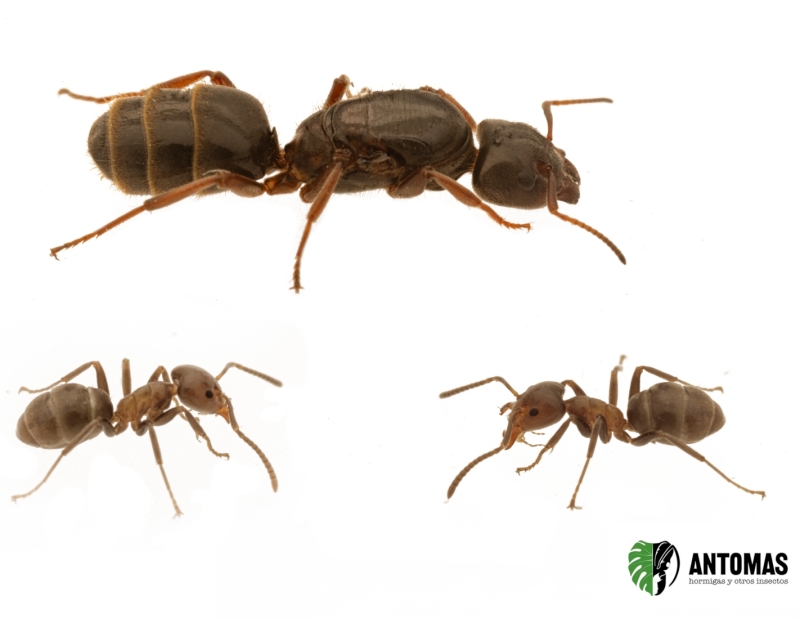
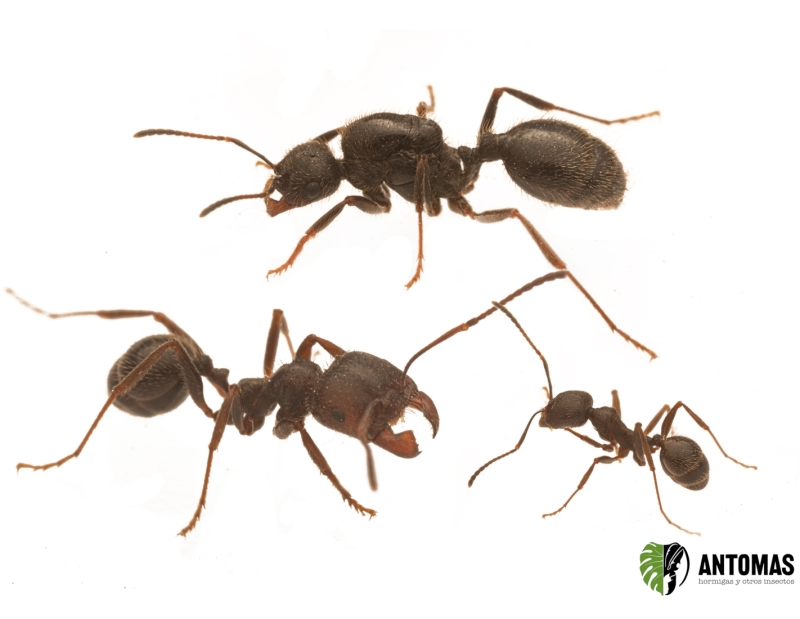
F. gerardi Bondroit, 1917 is a Serviformica of the fusca group, found almost only in the Iberian Peninsula and southern France, and it is the most xerothermic Formica in Europe: the one that best withstands heat and drought. Even so, it reaches the northern Meseta, and in the south it seeks out shady woodland. Its workers are brown, with a completely matt body, the feature that sets it apart from the other Iberian Serviformica. Its taxonomy has had many twists: it was confused with Iberoformica subrufa, moved to the genus Iberoformica and, in 2018, returned to Formica by an international team using genetic and morphological data, which also described its queen and male for the first time.
Above all, it is a slave of the amazons. James Trager, author of the 2013 world revision of the genus, had series of amazons from the Pyrenees with F. gerardi, which there is the most abundant potential host. In 2018 a case of dulosis between the two species was published from a Mediterranean mountain pine forest in the east of the Iberian Peninsula. Curiously, I. subrufa, which is abundant in the peninsula, is never found enslaved. Our shop also has a page for Formica gerardi, one of the Serviformica that, as you will see, are the key to keeping an amazon colony alive for years.
From Atlantic Europe to the mountains of Central Asia
P. rufescens ranges from Atlantic Europe to the mountains of Kyrgyzstan, Kazakhstan and western China, and in western and central Europe it is the only species of its genus. It is an ant of open, sunny places: dry grassland, clearings, woodland edges and sunny slopes, and in the Iberian Peninsula also Mediterranean pine forest. What it really needs is an abundant population of Formica to plunder. Its climate is temperate, with cold winters and summers in which, at ground level, afternoons often exceed 30 °C.
In each region it enslaves whatever Serviformica are to hand. The classic hosts in Italy, France and central Europe are F. cunicularia, F. fusca and F. rufibarbis, and F. gagates, F. cinerea and F. clara have also been recorded. In the Iberian Peninsula, the only well-documented host is F. gerardi. And in nature each colony usually works with a single species: colonies with slaves of several species are rare. In captivity, however, a mix works: at Antomas, our colonies live with a mix of F. rufibarbis, F. fusca and F. gerardi.
Five o’clock sharp: anatomy of a raid
The classic study was signed by Alessandra Mori, Donato Grasso and Francesco Le Moli, of the University of Parma. They followed a colony in northern Italy for 53 consecutive days, ten hours a day, and recorded 38 raids on 32 days: 27 ended with the plundering of ten F. cunicularia nests and 11 failed. A typical raid follows this pattern:
Scouts. From early afternoon, a few workers set out alone in search of Formica nests, up to about 30 m away.
Recruitment. At around 16:30, several hundred amazons swirl around the entrance for some 20 minutes.
Departure. The column sets off on average at 17:00, between 16:00 and 18:00, and earlier and earlier as the summer goes on.
The column. An average of 1,061 workers, in a formation more than 10 m long, led by one or two scouts.
There and back. At about 1.5 m per minute on the way out and 2 m per minute on the way back, along the same route: about 70 m in all and some 50 minutes. By around 18:30 it is all over.
A few years later, the same group followed 47 scouts one by one: the outward path was winding, a search; the return path, much more direct. Back at the nest they recruited their nestmates and guided them to the target, and the column returned along a chemical trail. Another study by the team examined the glands that produce the recruitment, trail and “propaganda” signals, the substances that sow confusion among the defenders.
In the Białowieża Forest, in Poland, Wojciech Czechowski estimated columns of up to about 2,000 workers. This is what an amazon army looks like, in two short videos by Anthouse:
Amazons in action: “The army of the slave-making ants”, a video by Anthouse.
Another look at the slave-makers: “The army of the slave-making ants 3”, by Anthouse.
Six-legged weather forecasters
They do not go raiding on just any day. In the Italian study, 94% of raid days had clear skies, compared with 9% of days without a raid, and at 17:00 the average temperature was 32.5 °C on raid days and 29.7 °C on the others. The authors suggest that they also navigate by the sun and the polarised light of the sky, which would explain their preference for clear afternoons.
Nor are they infallible. In 1979 the myrmecologist Cedric Collingwood wrote that their raids were invariably successful, but the field data tell a different story: 29% failed, many because of something as mundane as a puddle cutting across the route.
Sappers and adult thieves: eudulosis
If the Formica have blocked the entrance with small stones, several amazons start to dig to clear the way for the column, something they never do in their own nest. The plundering lasts only a few minutes. The loot is mainly worker pupae, but also large larvae and the odd newly emerged worker. And in three raids the researchers saw something never before observed in the field: the amazons were carrying off adultFormica workers. This is eudulosis, the theft of adults as well as brood. It was not possible to tell whether those workers ended up integrated or eaten.
They only attack their relatives
The study area had nests of Myrmica sabuleti, Lasius alienus, L. niger and Tetramorium caespitum, and the amazons never attacked them: they raided only Formica, their close relatives. This is what Emery’s rule predicts: social parasites tend to be closely related to their hosts. There are, however, raids between amazon colonies too, in territorial disputes.
Amazons against red wood ants
In Białowieża, Czechowski followed two amazon colonies living inside the territories of Formica polyctena, one of the aggressive red wood ants. The columns crossed their trails with hardly any losses, and on one occasion the F. polyctena parted before them like the Red Sea. The amazons even raided small F. polyctena nests eight times, carrying off 200–300 pupae and larvae, yet they never started the fights: they only responded when attacked.
Many pupae end up in the larder
Not all stolen pupae become slaves: many are eaten by the slaves themselves, especially if they belong to another species. Czechowski left some 3,000 pupae of F. exsecta and F. sanguinea, two Formica that are not Serviformica, next to the nest of an amazon colony. The slaves gathered them up, but the following year there were only F. fusca slaves, the usual ones. In the North American amazon Polyergus lucidus, too, slaves destroy more pupae of other species than of their own. The lesson for keepers is clear: slaves are renewed with Serviformica cocoons, the amazons’ natural slaves, and it is worth keeping an eye on how the colony takes in the first batches.
Hyenas in the rearguard: “hyenism”
A raid leaves dead Formica workers around the plundered nest, and others are quick to profit. The Czech myrmecologist Pavel Pech watched Myrmica sabuleti, and probably Lasius alienus, collecting the F. fusca corpses left behind by an amazon raid. He called it hyenism, after the hyenas that take advantage of other animals’ kills. And it was no mere nibble: the dry biomass taken by M. sabuleti was equal to half the dry weight of all its workers.
Weddings on the battlefield
Nuptial flights are concentrated in July and August, usually in the early afternoon, on sunny, hot days. What is curious is what happens next. Females may mate next to their nest, return to an amazon colony and wait for a raid to set out, or mate in the middle of a raid. They shed their wings within minutes, and winged and newly dealate queens have been seen inside the column in several raids. It is no coincidence: following a column is their way of finding a nest to invade, just when the attack has thrown it into disarray.
A queen that kills the queen
The amazon queen cannot found a colony alone, either claustrally or semi-claustrally. Her route is usurpation: she enters a Formica nest, often taking advantage of a raid, seeks out the host queen and bites her to death. The resident workers attack her at first, but the aggression dies down and alternates with grooming, and within a few hours the usurper is accepted, surrounded by workers that clean and feed her.
And if two arrive? Patrizia D’Ettorre and her colleagues placed two amazon queens at the same time in F. cunicularia nests. They never cooperated: the workers adopted one and killed the other. The accepted queen began laying the following spring. This is haplometrotic founding, with a single queen. The same group also found that acceptance depends on the Formica species and on where it comes from.
Appease or repel? The mystery of decyl butyrate
How does a lone queen get an entire nest to stop attacking her? The key lies in her Dufour’s gland, which is hypertrophied before usurpation and shrinks afterwards. How its secretion works is the subject of a fine scientific debate:
Appeasement. Mori’s team proposed in 2000 that the secretion acts as an appeasement allomone, calming the aggression of the host workers.
Dual strategy. That same year, D’Ettorre’s team put forward another idea. The queen has an inconspicuous chemical profile, and her Dufour’s secretion is more than 90% decyl butyrate. The queen’s synthetic blend reduced the aggression of F. cunicularia, and decyl butyrate on its own proved repellent: hungry workers would not even approach a drop of honey treated with it, something limonene, a known repellent, failed to achieve.
The title of that paper sums it up neatly: “Sneak in or repel your enemy”. Going unnoticed while keeping the defenders at bay: a chemical infiltration worthy of a spy novel.
Chemical chameleons
In an ant nest, the “identity card” is chemical: the cuticular hydrocarbons, the waxes that coat the body. In 2002, D’Ettorre and her team showed that young amazon workers adjust their chemical profile to resemble the Formica that rear them. Those reared in isolation ended up with a profile almost identical to that of the main host of their population: a local adaptation to their usual slave.
Newly emerged amazons have another trick: they offer their slaves a tiny droplet from the tip of the abdomen, which the Formica find very attractive. It was the first proctodeal, or anal, trophallaxis described in formicines, and it may help them to be accepted.
Size and morphology
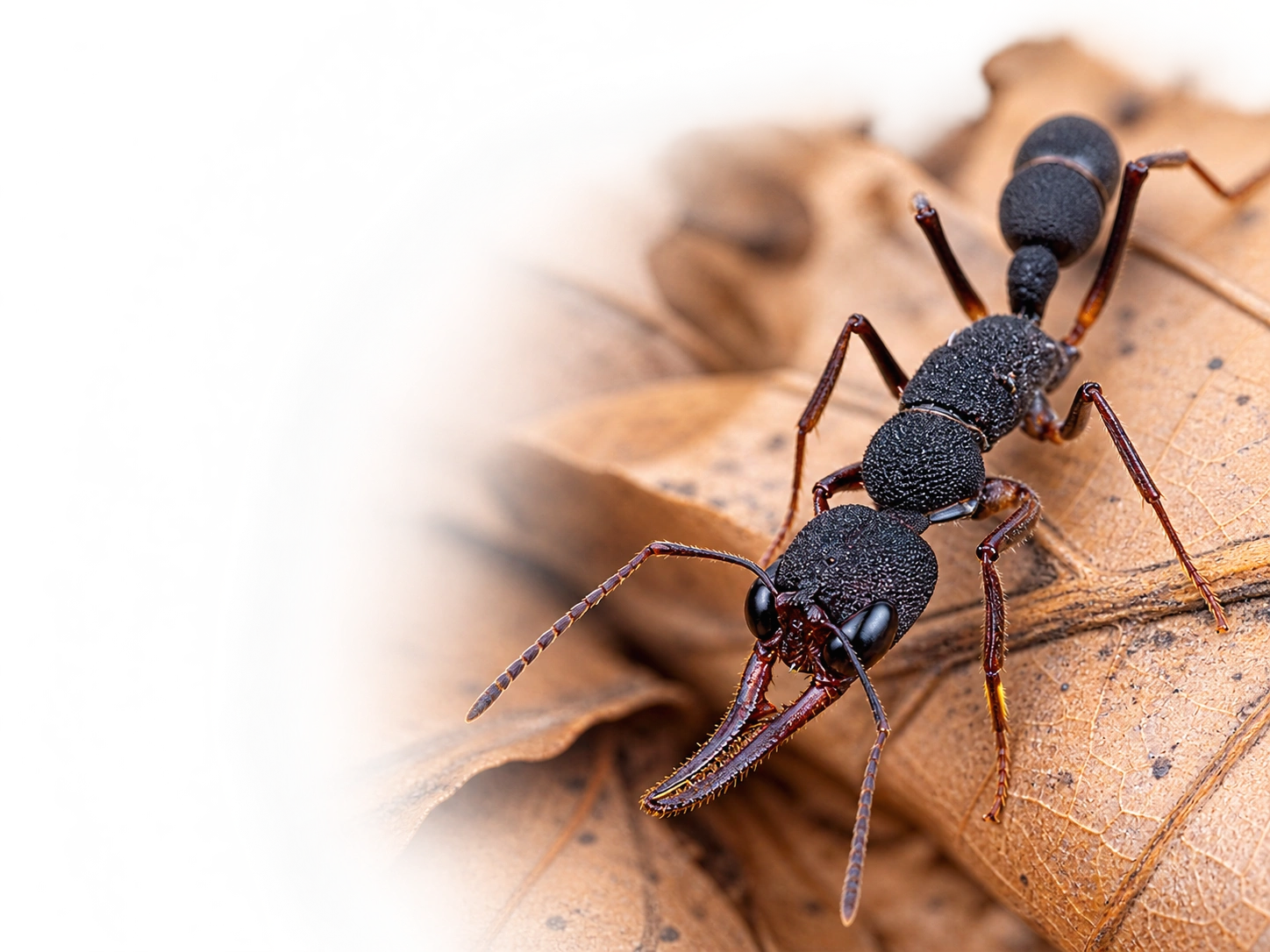
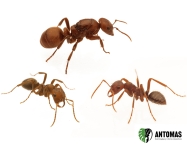
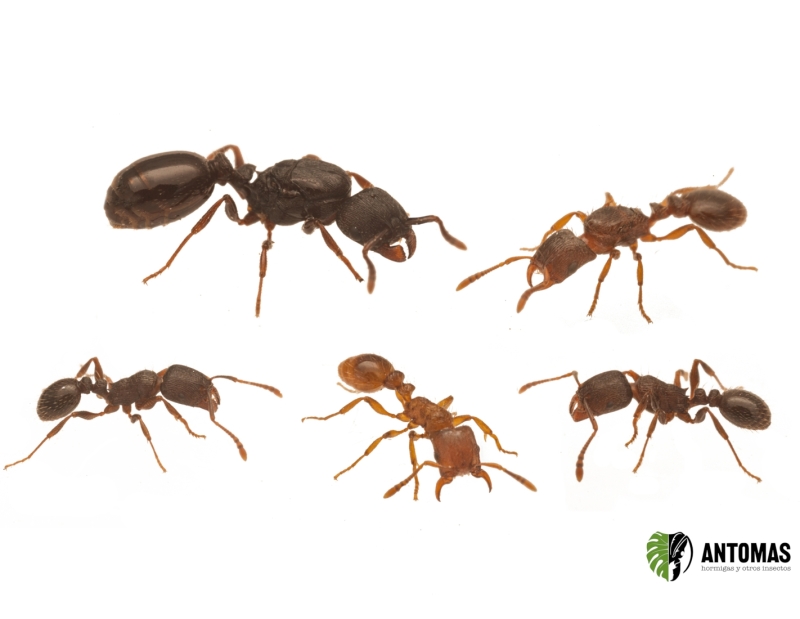
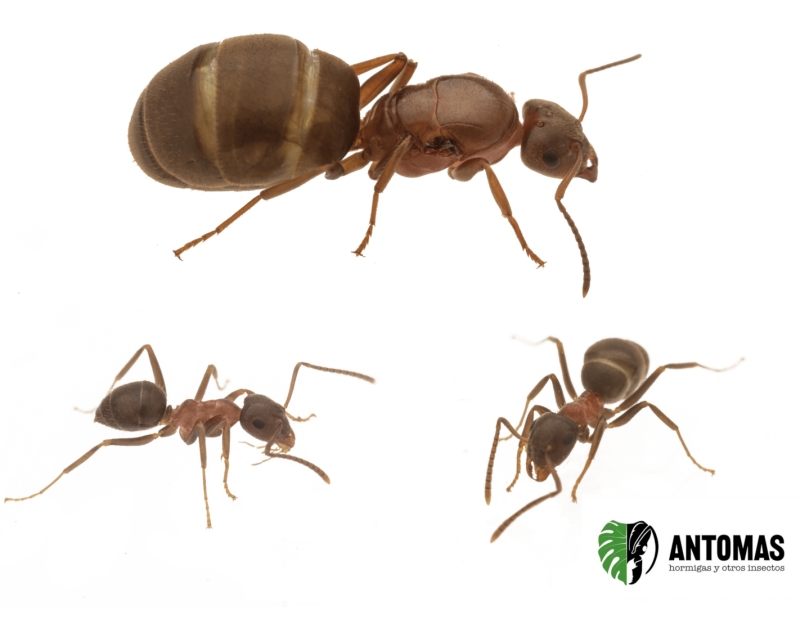
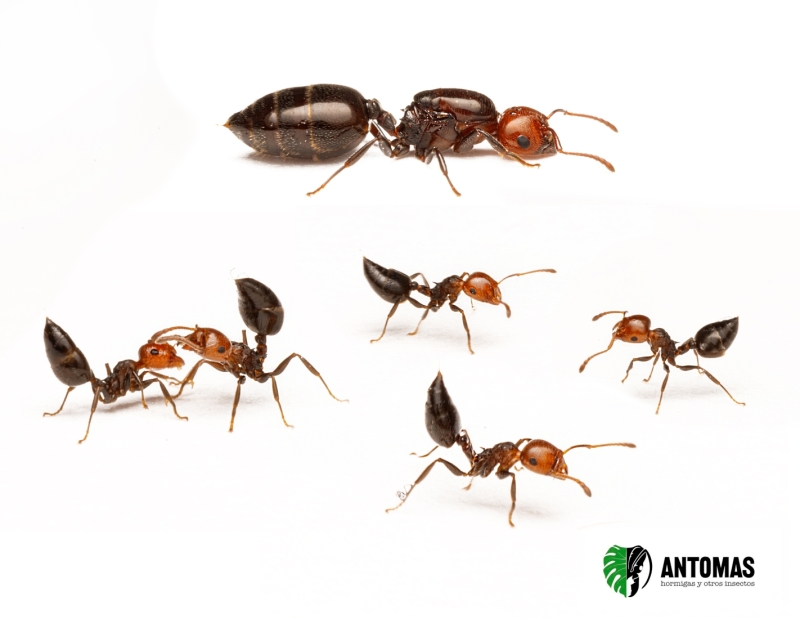
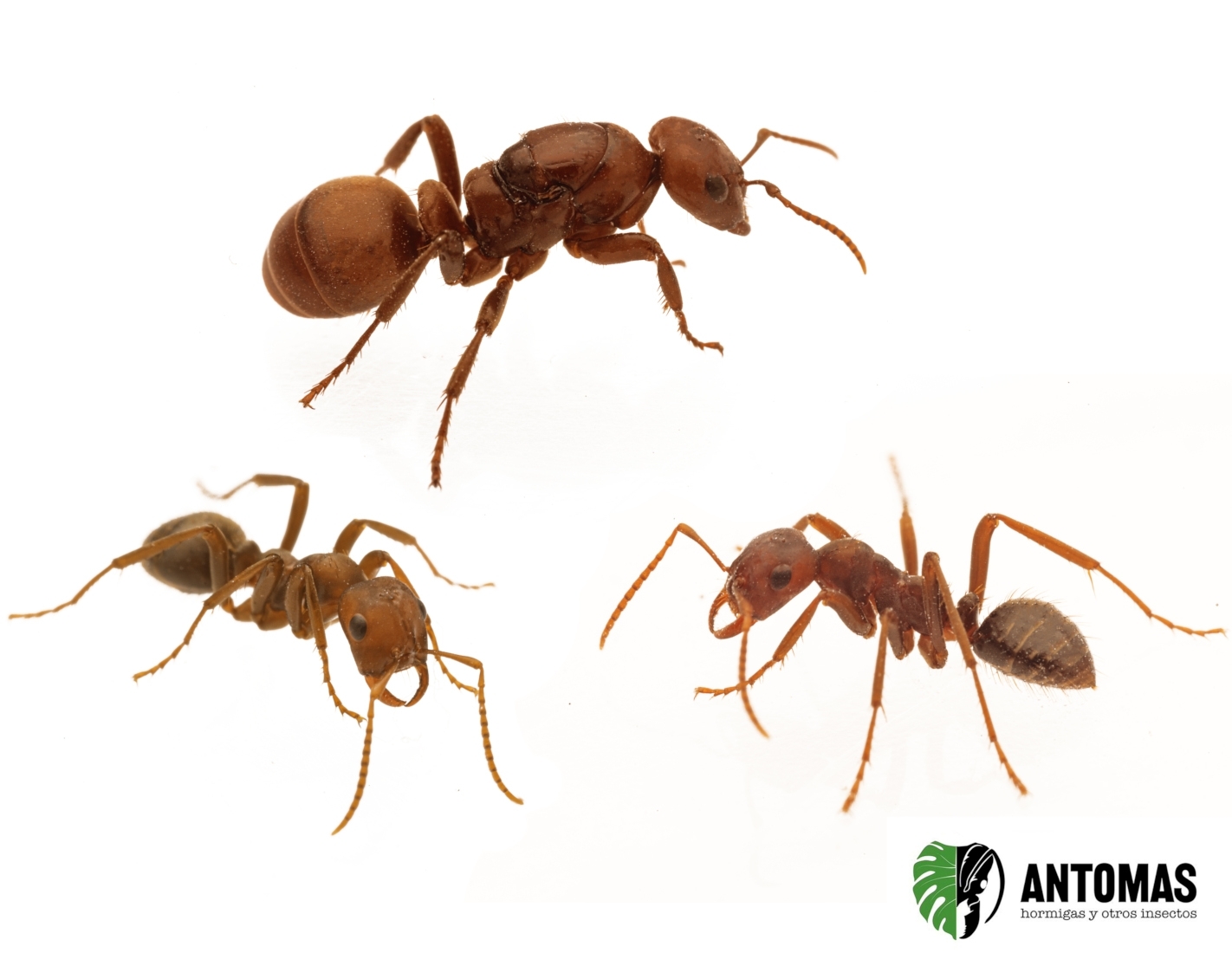
A slender ant, more or less uniformly reddish brown, with regional variation. The workers are monomorphic: there are no soldiers, because they are all warriors already.
Sickle-shaped mandibles. Long, narrow, curved and pointed, like small sabres. Perfect for piercing a defender’s head and for carrying pupae, and of very little use for tending larvae or cutting up food.
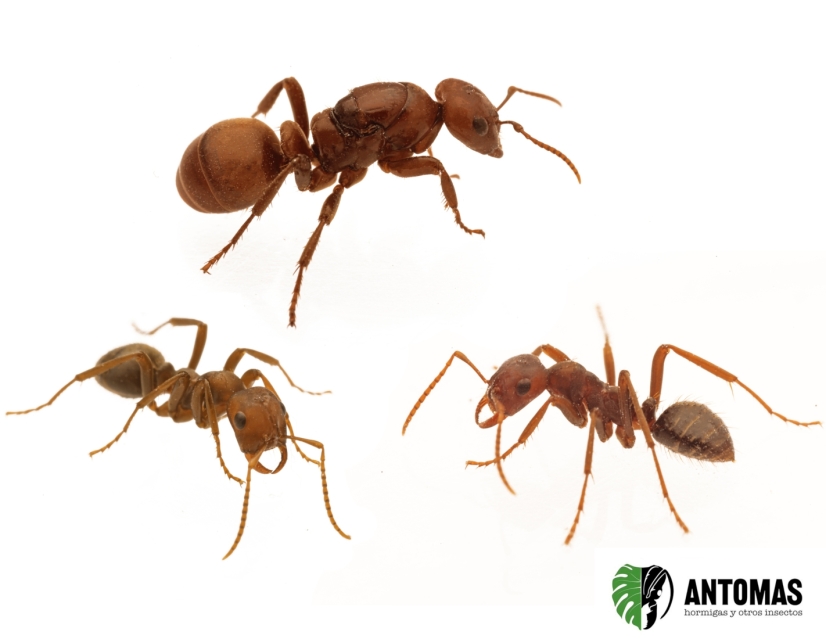
Colouring of our colonies. Uniform reddish brown in both the queen and the workers.
Queen. Sturdier, with a large gaster. The usual form is a winged queen that sheds her wings after mating, but there are also ergatoid queens, wingless and worker-like, which Collingwood described as like the worker but with a more voluminous alitrunk. Both can found a colony by replacing the host queen.
No sting. Like all formicines, it has an acidopore, the nozzle at the tip of the gaster through which it sprays its defensive secretions.
An exclusive gland. In 1984, Bert Hölldobler discovered the pygidial gland in amazons: among formicines, Polyergus is the only genus that has it. It should not be confused with the Dufour’s gland, which all formicines have.
Approximate measurements
Workers: 4.7–7 mm (Trager, 2013); 5–7 mm according to Collingwood (1979)
Normal queen: 8–9.5 mm
Ergatoid queen: 7–9 mm
Male: 6–7 mm
The measurements of the queens and the male are from Collingwood (1979). Some commercial care sheets give workers of 7–8 mm or queens of 10 mm or more, figures that do not appear in the scientific literature.
Care in captivity
Difficulty: 5/5 – Expert
It is not difficult because of temperature or food, but because keeping it means holding two species in balance. The amazons depend entirely on their Formica, and those Formica do not reproduce in the mixed colony: they have no queen of their own, so they age and die off. Without replacements, the colony fades away even if everything else is perfect. That is why it is a 5/5:
Total dependence. A queen or a group of amazons without slaves is not viable: in a case described on a Spanish forum, a queen left alone in a tube died in under 24 hours.
The slaves must be renewed, with Serviformica cocoons from a colony of your own (see “Renewing the slaves: the Serviformica ‘farm’”).
Slaves from the subgenus Serviformica: whichever you have to hand or can obtain, but not Formica from other groups, whose pupae are often lost. And never unfamiliar adult workers, which attack the queen.
Fragile queens: they are small, and keepers agree that they are easily injured in any fight, especially their antennae.
Is it worth it? For an experienced keeper, without a doubt. This is Huber’s and Darwin’s species, one of the ants with the most extraordinary behaviour in Europe, and watching the Formica feed their warriors mouth to mouth is something no other ant offers. If you have already kept Formica successfully, you are ready for the next level.
Recommended parameters
Nest temperature: 21–26 °C in the active season.
Foraging area: somewhat warmer at one end, up to about 28 °C, so the colony can choose.
Humidity: a gradient in the plaster nest, with a slightly moist area for the brood and drier chambers; dry foraging area.
Water: always available, in a test tube with water and cotton wool in the foraging area.
Light: a dark area in the nest and a lit foraging area, with a normal day–night cycle.
Diapause: 4–5 months, from November to March, at about 5–10 °C (see “Diapause”).
Recommended formicaria: designed for the Formica
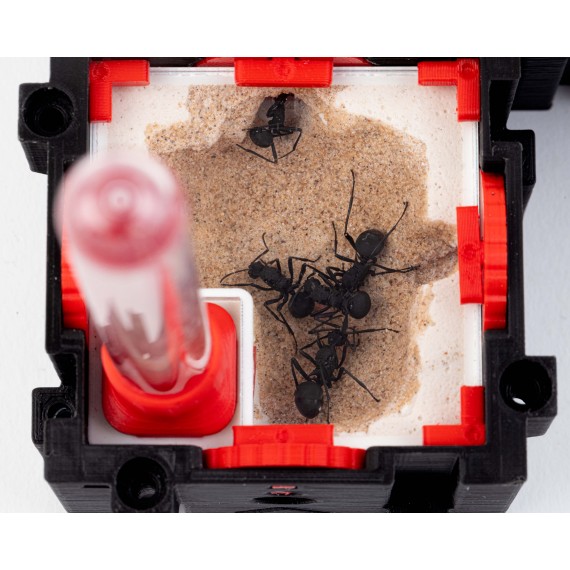
The nest is sized for the Formica, which maintain it and rear the brood; the amazons spend almost all their time inside, waiting to be fed. At Antomas we recommend the Anthouse Qbik Wild range, made of plaster, which holds moisture well, allows a gradient and has chambers and galleries to suit the Formica. For the colony as it arrives, the Qbik Wild One P 1C:
Do not expand too early: in a huge nest for a small colony, the spare chambers end up as rubbish tips. Complete the set-up with these details:
A spacious foraging area, with some sand and flat stones: the Formica are active foragers and the amazons are explorers.
A mineral oil barrier and a tight-fitting lid (see “Escapes and barriers”).
Water in a tube with cotton wool and a feeder for sugary liquids.
Gentle heat, only if needed, on one side and with a thermostat.
Temperature and humidity
Nobody has measured the species’ thermal optimum, so temperature is set to suit both ants at once. At Antomas we recommend 21–26 °C in the nest and one end of the foraging area somewhat warmer. Slaves such as F. gerardi cope well with heat, but that does not mean the brood should live at the temperature of a raiding afternoon: a Spanish keeper reported that, with an area that was too hot, his ants moved all the cocoons out of it. A gradient is better than an overheated nest.
The same goes for humidity. It is enough to moisten one part of the plaster nest and leave the rest drier: the colony will move the brood as it needs. The usual slaves, such as F. gerardi or F. rufibarbis, are ants of dry habitats, so there is no need to soak the nest; what you must avoid is permanent condensation, which brings mould and mites.
Arrival and moving
When you receive the colony, let it rest in a quiet, mild place and check that it has water. To move it into the formicarium, at Antomas we do it by tipping: we open the shipping container inside the foraging area, next to the nest entrance, and gently tip out the queen, the amazons, the Formica and the brood, helping the stragglers with a soft brush. With the nest area kept dark, the Formica gather up the brood and carry it inside straight away.
Prepare everything beforehand: the formicarium set up, with the barrier in place, the water tube and the food.
Work over a tray, in case a worker climbs up the container.
Keep an eye on the queen: she is the most valuable and most fragile member of the colony. If she lags behind, guide her to the entrance with the brush.
Feeding: you feed the slaves
In an amazon colony, the ones that really eat are the Formica: they collect the food and share it mouth to mouth, by trophallaxis, with the queen, the larvae and the amazons. Everything you offer is meant for them. And it is quite a sight to watch an amazon beg food from a slave with her antennae and receive the droplet from her mouth.
Sugary liquids. Vary the sugars: at Antomas we recommend Anthouse Blue Sugar nectar 4–5 times a week and another sugary liquid or nectar 1–2 times a week. You can also add some protein to the nectar. Always offer them in a feeder and never on cotton wool, which goes mouldy and spoils the liquid very quickly: a traditional or home-made feeder where the drop stays “spread out” and accessible.
Protein: the more, the better. This is the Antomas philosophy: if you do daily maintenance and remove leftovers, it is better to overfeed, because the colony understands that it has more resources and grows faster and in greater numbers. If you cannot clean often, do not overfeed, because leftover food brings mould and mites. Change the type of insect from one week to the next:
Thermobia domestica, the firebrat: a small, soft-bodied prey, perfect for small colonies.
Offer them cut up or freshly killed and buy your insects from a reliable supplier: insects treated with insecticides can kill the colony. A Spanish keeper who lost more than 20 larvae in a month put it down to a lack of protein: in a mixed colony, skimping is costly. And water, always, in the tube with cotton wool in the foraging area.
Founding and growth: a colony born of theft
In nature, an amazon colony is born by usurpation (see “A queen that kills the queen”). At home there is no need to repeat that delicate moment, because Antomas colonies arrive already formed. From then on, the colony grows at two different paces:
The amazons hatch from the queen’s eggs, and the Formica rear that brood. According to keepers, development from egg to worker takes about 6–7 weeks in warm conditions. The pupae are in cocoons.
The Formica do not reproduce, because they have no queen: they only increase if you renew them.
In nature, slaves can make up 80–90% of a mature colony. Keepers recommend maintaining at least 4–8 Formica per amazon: if the amazons start to be almost as numerous as the slaves, or you see the brood neglected, it is time to renew. And if you ever need to build a colony around a queen, the method that has worked best for keepers is to give her a few newly emerged slaves and several dozen pupae, never unfamiliar adult workers, which tend to fight with her and injure her.
Renewing the slaves: the Serviformica “farm”
This is the key to keeping amazons. In nature, the colony renews its slaves through summer raids; at home, at Antomas we recommend doing it with Serviformica cocoons from a colony of your own that acts as a “farm”, of whichever species you have to hand or can obtain:
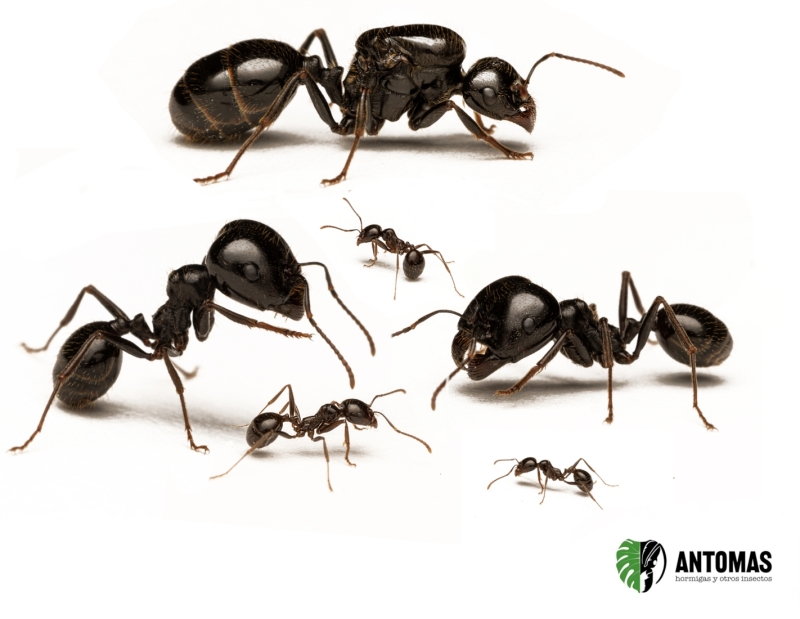
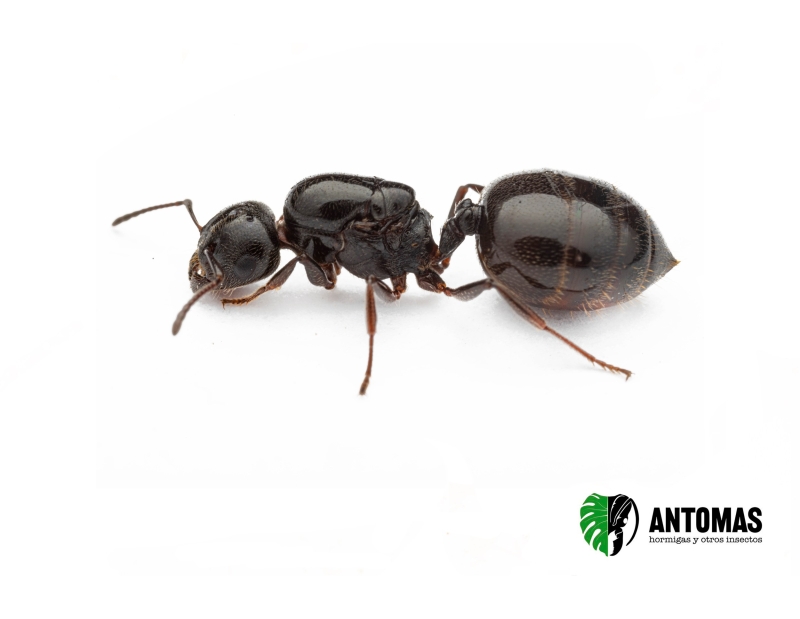
Keep a healthy Serviformica colony separately, with its own queen and in its own formicarium, and feed it very well so that it produces plenty of pupae. F. rufibarbis, F. fusca, F. gerardi or F. cunicularia, among others, will all do, but not Formica from other groups, such as F. sanguinea, the rufa group or F. exsecta. You can start it with one of our Formica gerardi or Formica rufibarbis colonies.
In summer, when the farm has worker cocoons, take a batch with a brush or soft forceps and leave it in the amazons’ foraging area, next to the nest entrance: they will collect it and carry it inside. Keepers have used batches of several dozen cocoons.
Do not empty the farm: take only part of the cocoons, so that it keeps growing and gives you pupae year after year.
It need not be a single species. At Antomas, our colonies live with a mix of F. rufibarbis, F. fusca and F. gerardi, and it works. A German keeper reported the opposite: when he switched Formica species, his established slaves threw the newly emerged workers of the other species out of the nest, and they died. It is an isolated experience, but it is worth watching how the colony takes in the first batches of a new species.
Never unfamiliar adult workers: they fight with the residents and can injure the queen.
Never wild nests. Do not dig up Formica nests from the wild: your own farm is the responsible way and the one that works best.
For the workers that hatch from those cocoons, the amazon colony will be their own. A Spanish keeper maintained a colony this way for more than three years, with F. fusca, and saw new amazons emerge. What about recreating raids at home? In 2001 the Parma team managed to trigger them in the laboratory, but it is not our method: the attacked colony loses its brood and suffers casualties. Cocoons from the farm are simpler and kinder to your Serviformica.
Anthouse filmed an experiment that shows it very clearly: an amazon nest joined to a Formica nest. The follow-up shows the lethal attack and the subjugation of the Formica:
“El experimento de las hormigas esclavistas”, by Anthouse (in Spanish): amazons and Formica in joined nests.
The follow-up, “El experimento del hormiguero esclavista”, by Anthouse (in Spanish): lethal attack and subjugation.
Diapause
This is an ant of temperate climates, and at Antomas we recommend a diapause of 4–5 months, roughly from November to March, at about 5–10 °C. It fits with what is known: queens accepted in the usurpation experiments began laying the following spring. What nobody has studied is the stage in which the brood overwinters.
Adjust it to the Formica: it has to suit both the amazons and their slaves. With Mediterranean Serviformica such as F. gerardi, there is no need to push it to the cold end of the range.
Lower the temperature gradually in autumn, over one or two weeks, and raise it the same way in spring.
During diapause: water always available, a little sugary liquid and no protein.
When it ends, go back to protein as soon as you see activity, and get the farm ready: Formica cocoons arrive with the warm weather.
Behaviour in captivity
A nest of two species. The Formica do everything, and the amazons spend most of their time waiting inside the nest. It is normal to see them standing still, begging food from the slaves with their antennae, while the Formica patrol the foraging area. In warm weather you may see them more restless in the afternoon: that is their raiding clock.
Watch without fear. At Antomas we believe ants are there to be enjoyed, watched and learnt from, not kept hidden away. It is enough to leave them their dark area in the nest and a lit foraging area, and to watch them gently, intervening and stressing them as little as possible.
Warning signs:
Few Formica for many amazons, or neglected brood: time to renew the slaves.
Larvae disappearing: protein is almost always lacking.
Amazons unable to get out of their cocoons: keepers put this down to the slaves not helping them, another reason to keep a good ratio.
Formica workers laying eggs: this usually happens when the colony has lost its queen.
Escapes and barriers
There are no published data on whether amazons or their Serviformica climb glass or acrylic, so at Antomas we recommend treating them like any Formica: fast, agile ants and good explorers.
A strip of mineral oil at the top of the foraging area walls, thin and continuous. Renew it when it collects dust.
A tight-fitting lid, as a second line of defence.
Closable connections with no gaps.
Nothing that could act as a bridge to the barrier.
Handling and safety
They cannot sting, as they have no sting. Amazons and Formica can bite and spray their defensive secretions, but nothing to worry about if you work calmly. Handle them with entomological tools (a soft brush or soft forceps), not with your hands, and take special care near the queen. Do not combine different colonies, and never release a mixed colony or its Formica into the wild.
What not to do
Leave the queen or the amazons without slaves, even for a few hours.
Let the slaves run out: they must be renewed before they are lacking.
Renew them with pupae of Formica that are not Serviformica (F. sanguinea, the rufa group, F. exsecta…), or with unfamiliar adult workers.
Take Formica nests from the wild, or empty the farm of cocoons in one go.
Skimp on protein or leave leftovers uncleaned.
Put sugary liquids on cotton wool.
Overheat or soak the nest: a gradient is better.
Skip diapause, or start and end it abruptly.
Handle them with your hands.
Scientific sources
This care sheet is based on the scientific literature on Polyergus rufescens and its hosts of the subgenus Serviformica, on the classic writings of Huber and Darwin, and on the experience of Antomas and other keepers. Main references:
Trager, J. C. (2013). Global revision of the dulotic ant genus Polyergus (Hymenoptera: Formicidae, Formicinae, Formicini). Zootaxa 3722: 501–548. doi:10.11646/zootaxa.3722.4.5
Hölldobler, B. (1984). A new exocrine gland in the slave raiding ant genus Polyergus. Psyche 91: 225–235. doi:10.1155/1984/27318
Mori, A., Grasso, D. A. & Le Moli, F. (1991). Eco-ethological study on raiding behaviour of the European amazon ant, Polyergus rufescens Latr. Ethology 88: 46–62. doi:10.1111/j.1439-0310.1991.tb00262.x
Le Moli, F., Grasso, D. A., Mori, A. & Ugolini, A. (1994). Eco-ethological factors affecting the scouting and raiding behaviour of the slave-making ant, Polyergus rufescens Latr. Ethology 96: 289–302. doi:10.1111/j.1439-0310.1994.tb01017.x
Mori, A., D'Ettorre, P. & Le Moli, F. (1994). Mating and post-mating behaviour of the European amazon ant, Polyergus rufescens. Bollettino di Zoologia 61: 203–206. doi:10.1080/11250009409355886
Mori, A., D'Ettorre, P. & Le Moli, F. (1995). Host nest usurpation and colony foundation in the European amazon ant, Polyergus rufescens Latr. Insectes Sociaux 42: 279–286. doi:10.1007/BF01240422
D'Ettorre, P., Mori, A. & Le Moli, F. (1997). Haplometrotic colony founding by the slave-making ant Polyergus rufescens. Italian Journal of Zoology 64: 49–53. doi:10.1080/11250009709356171
Mori, A., Visicchio, R., Sledge, M. F., Grasso, D. A., Le Moli, F., Turillazzi, S., Spencer, S. & Jones, G. R. (2000). Behavioural assays testing the appeasement allomone of Polyergus rufescens queens during host-colony usurpation. Ethology Ecology & Evolution 12: 315–322. doi:10.1080/08927014.2000.9522804
D'Ettorre, P., Errard, C., Ibarra, F., Francke, W. & Hefetz, A. (2000). Sneak in or repel your enemy: Dufour's gland repellent as a strategy for successful usurpation in the slave-maker Polyergus rufescens. Chemoecology 10: 135–142. doi:10.1007/PL00001815
Le Moli, F., Visicchio, R., Mori, A., Grasso, D. A. & Castracani, C. (2001). Laboratory observations on raiding behaviour of the slave-making ant, Polyergus rufescens. Italian Journal of Zoology 68: 323–326. doi:10.1080/11250000109356426
D'Ettorre, P., Mondy, N., Lenoir, A. & Errard, C. (2002). Blending in with the crowd: social parasites integrate into their host colonies using a flexible chemical signature. Proceedings of the Royal Society B 269: 1911–1918. doi:10.1098/rspb.2002.2110
Czechowski, W. (2007). Behavioural and socially parasitic relations between Polyergus rufescens (Latr.) and Formica polyctena Först. (Hymenoptera: Formicidae). Entomologica Fennica 18: 54–64. doi:10.33338/ef.84378
Pech, P. (2012). Hyenism in ants: non-target ants profit from Polyergus rufescens raids (Hymenoptera: Formicidae). Sociobiology 59: 67–69. doi:10.13102/sociobiology.v59i1.667
Gómez, K., Lorite, P., García, F., Tinaut, A., Espadaler, X., Palomeque, T., Sanllorente, O. & Trager, J. (2018). Differentiating Iberoformica and Formica (Serviformica) with description of the sexual castes of Formica (Serviformica) gerardi Bondroit, 1917 stat. rev. Sociobiology 65: 463–470. doi:10.13102/sociobiology.v65i3.3315