This website uses its own and third-party cookies to improve our services and show you advertising related to your preferences by analyzing your browsing habits. To give your consent to its use, press the Accept button.
Cookie preferences
| Cookie | Provider | Purpose | Expiry |
|---|---|---|---|
| PHP_SESSID | antomas.es | The PHPSESSID cookie is native to PHP and allows websites to store serialised status data. On the website it is used to establish a user session and to pass state data through a temporary cookie, which is commonly known as a session cookie. These Cookies will only remain on your computer until you close your browser. | Session |
| PrestaShop-# | antomas.es | This is a cookie used by Prestashop to store information and keep the user's session open. It stores information such as currency, language, customer ID, among other data necessary for the proper functioning of the shop. | 480 hours |
| rc::a | It is used to read and filter bot requests. | Persistent | |
| rc::c | It is used to read and filter bot requests. | Persistent |
| Cookie | Provider | Purpose | Expiry |
|---|---|---|---|
| _ga | Registers a unique ID that is used to generate statistical data on how the visitor uses the website. | 2 years | |
| _gat | Used by Google Analytics to throttle request rate | 1 day | |
| _gat_gtag_UA_# | Used to throttle request rate. | 1 minute | |
| _gd# | This is a Google Analytics Session cookie used to generate statistical data on how you use the website which is removed when you quit your browser. | Session | |
| _gid | Registers a unique ID that is used to generate statistical data on how the visitor uses the website. | 1 day |
Atta mexicana – Giant Leaf-cutting Ant
BIOLOGY
Atta mexicana is one of the large leaf-cutting ants of North America and Mesoamerica. Its range covers much of Mexico and reaches the southernmost United States, with populations in Arizona's Sonoran Desert. It inhabits environments ranging from arid regions and thorn scrub to tropical dry forests, riparian zones and mountain habitats, showing considerable ecological plasticity.
At Organ Pipe Cactus National Monument, Arizona, large colonies may occupy a central area of around 20 × 20 m, exploit more than 2 hectares of land and use lateral tunnels extending up to about 130 m to reach foraging areas. An established colony may bring approximately 200 kg of dry plant matter per year into its cultivation system.
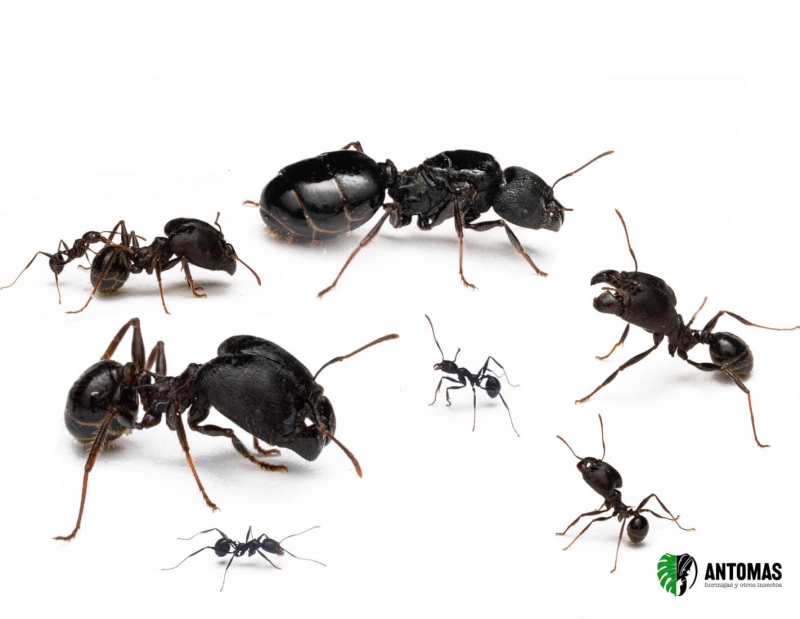
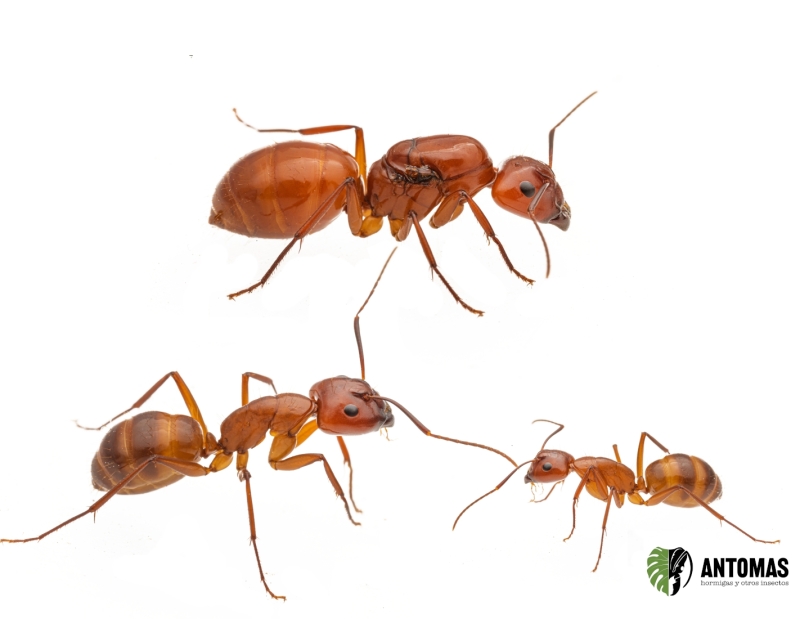
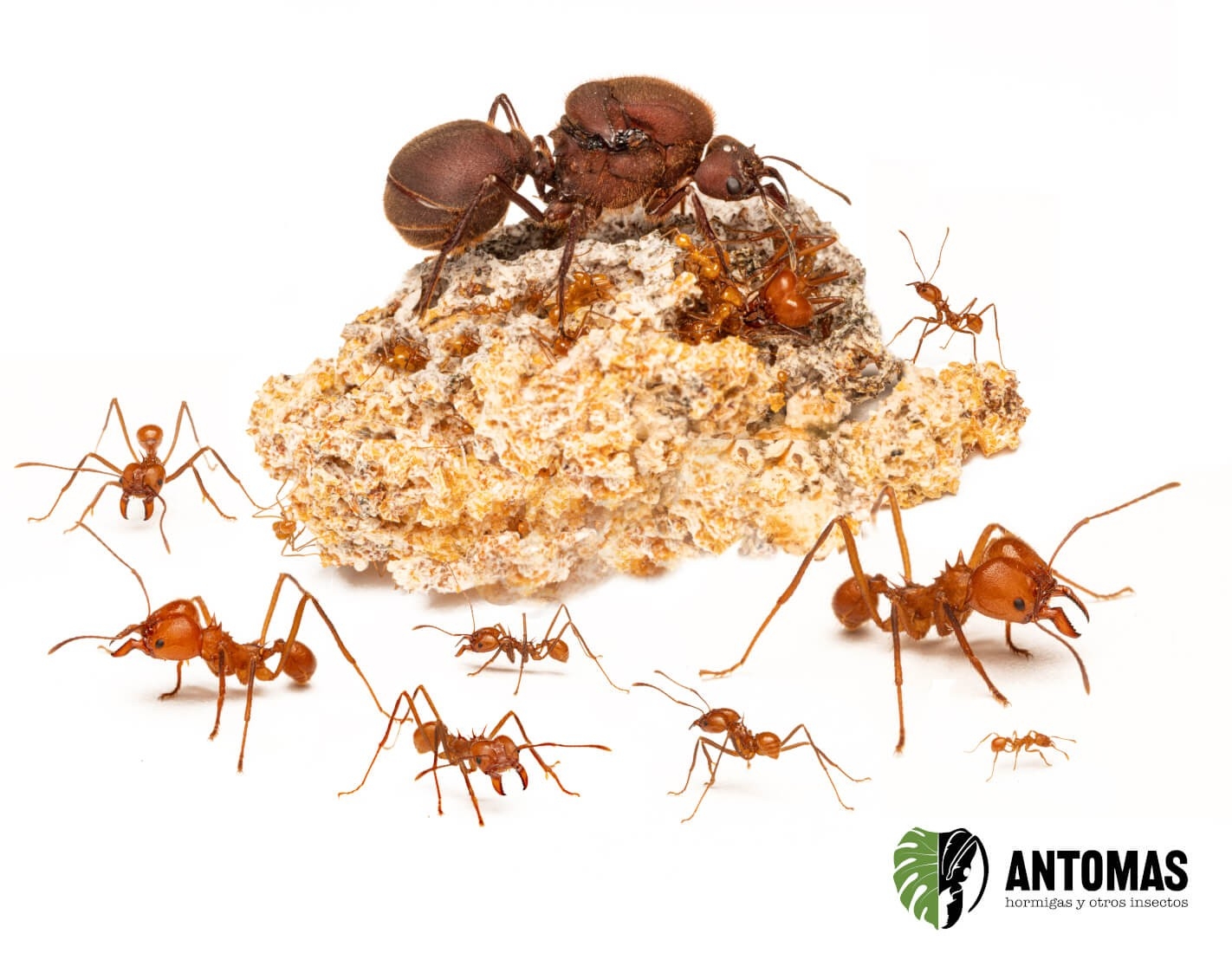
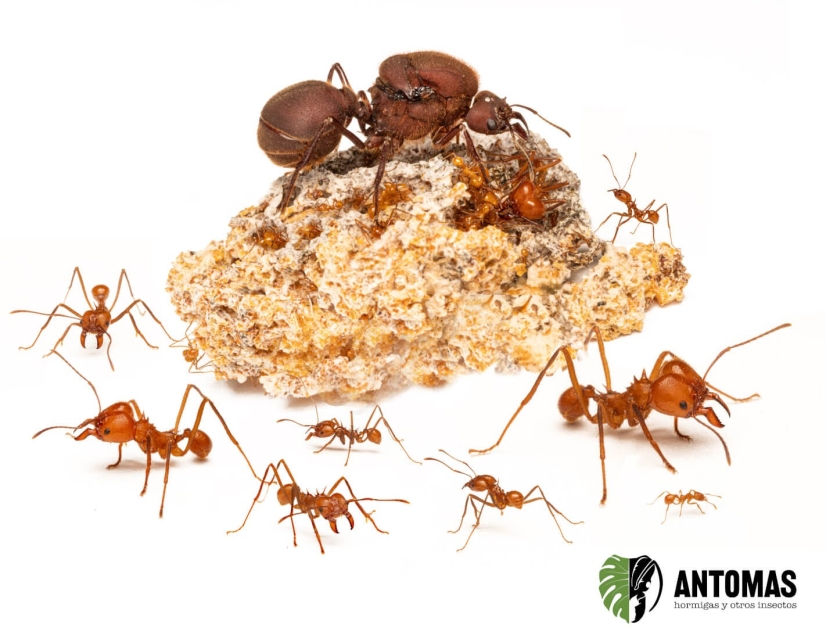
Mature colonies reach enormous sizes, probably millions of individuals, and show an extremely marked division of labour. From tiny gardener workers only a few millimetres long to large defensive majors, each size range specialises in particular functions.
Fungus agriculture
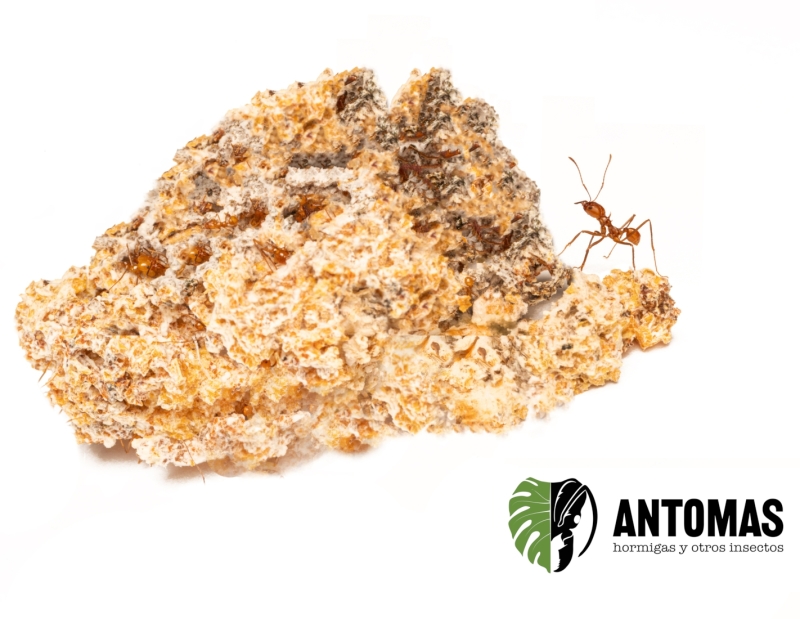
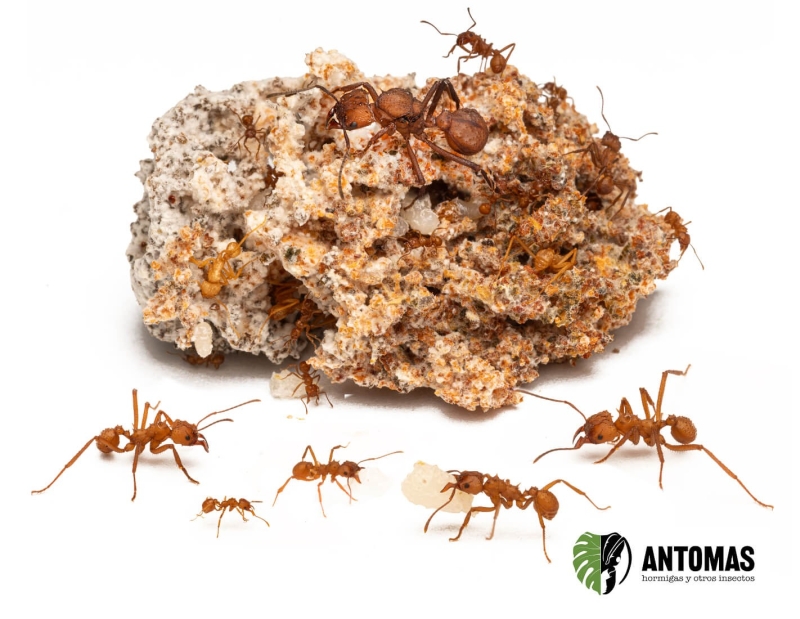
Atta mexicana does not consume leaves in the same way as a conventional herbivore. It uses plant material to cultivate a symbiotic fungus, Leucoagaricus gongylophorus, which forms the functional centre of the colony.
Workers cut leaves, flowers and other tissues, carry them to the nest and progressively process them. The material is cleaned, cut into increasingly smaller fragments, chewed and conditioned before being incorporated into the garden.
The smallest workers then continue the work directly inside the fungus garden.
The cultivar develops specialised nutritious structures that are especially important for feeding the larvae. The queen and workers also obtain resources from the agricultural system and from plant fluids released during processing.
The garden should not be understood as a simple mass of fungus. It is a living ecosystem in which the cultivar, bacteria and other microorganisms coexist, and whose composition varies even between different areas of the same garden.
A healthy colony maintains this ecosystem through cleaning, removal of ageing areas, selection of plant material and constant transport of waste.
Plant selection
Atta mexicana does not indiscriminately cut every plant it encounters.
Leaf hardness, water content, the presence of hairs or trichomes and chemical composition all influence selection.
A study published in 2026 compared three plants:
Palicourea padifolia — known as flor de mayo, cafecillo or flor de cera depending on the region;
Platanus mexicana — Mexican sycamore;
Eriobotrya japonica — loquat.
The ants showed a very strong preference for P. padifolia. Its leaves were softer, lacked trichomes and contained a great deal of water. Loquat and Mexican sycamore had harder, hairier leaves and were collected much less intensively. In addition, the extract of P. padifolia promoted fungal growth, whereas extracts from the other two species caused moderate inhibition.
In the case of loquat, workers even removed the trichomes from the leaves before cutting them, a very fine manipulation that shows how thoroughly they assess and prepare material before cultivating it.
Desert populations have also been documented using plants such as:
Larrea tridentata — creosote bush;
Olneya tesota — desert ironwood;
Sapium biloculare;
as well as different palo verde species and numerous seasonal herbaceous plants.
The diet of a wild colony changes enormously depending on location and season.
Division of labour and communication
Division of labour is one of the most striking features of Atta mexicana.
The extremely small minims work mainly inside the garden, handling the fungus and caring for eggs and larvae.
Medium-sized workers perform much of the cutting and transport of plant material.
Large majors or soldiers are particularly involved in defence and tasks requiring great mandibular strength.
Communication among them uses trail pheromones, contact signals, colony odours and other chemical stimuli. When a few scouts discover a suitable plant, the route can quickly change from a handful of workers into a continuous stream of laden foragers.
Plant selection is also part of this information system. Workers that process the material before introducing it into the garden provide another filter before the plant comes into contact with the cultivar.
Nest and fungus chambers
Unlike Acromyrmex octospinosus, Atta mexicana develops clearly polycameral colonies.
A mature society maintains numerous fungus gardens distributed among different underground chambers and connected by an extensive tunnel network.
This structure maintains temperature and humidity conditions that are much more stable than those at the surface. Even populations living in the Sonoran Desert keep the cultivar in deep, protected chambers.
In captivity, this characteristic is reproduced much better with several connected fungus containers than by trying to keep a large colony in a single gigantic container.
As the population increases, new modules can be added, and the ants themselves decide how much fungus to maintain in each one.
Founding
Founding is claustral and independent.
Before the nuptial flight, the gyne carries a small portion of fungus from her natal colony in the infrabuccal cavity. After mating, she excavates a chamber, deposits this small portion and begins cultivating the new garden herself.
The queen produces the first generation without needing to leave the nest to collect leaves.
I would not place different mated queens together during this stage. Atta mexicana normally founds with a single reproductive female, and females after the flight can show considerable aggression towards one another.
Founding survival depends directly on preserving the small initial fragment of fungus.
A queen without fungus is not in the same situation as a healthy founding queen, even if she has begun laying eggs.
SIZE AND MORPHOLOGY
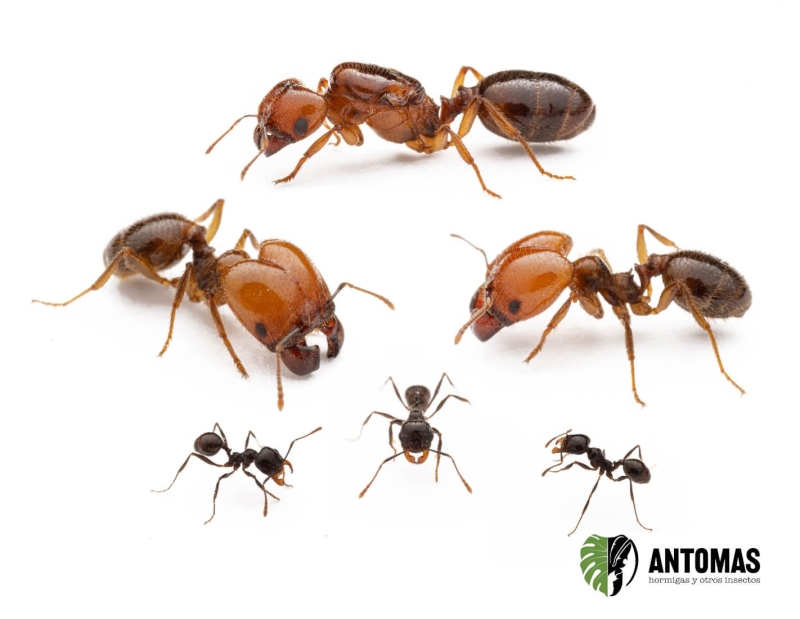
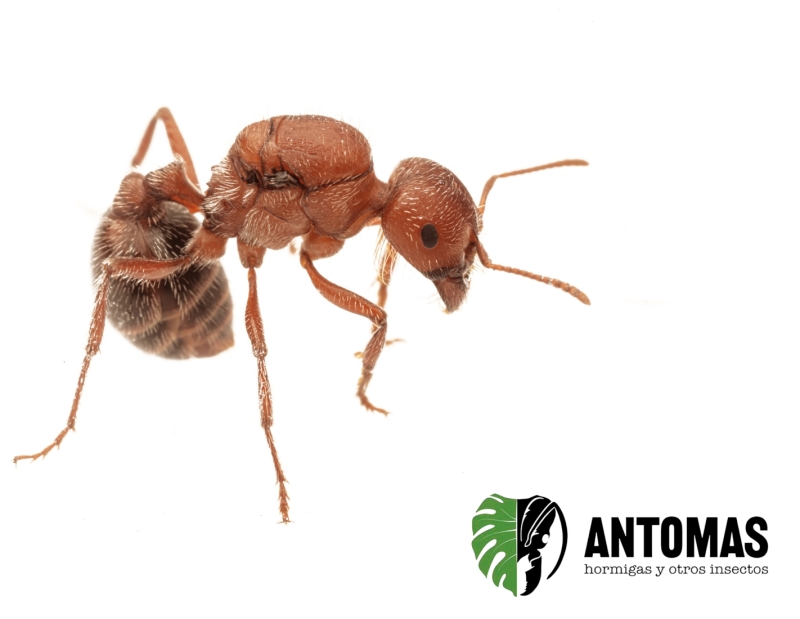
Atta mexicana displays one of the most spectacular forms of polymorphism among North American ants.
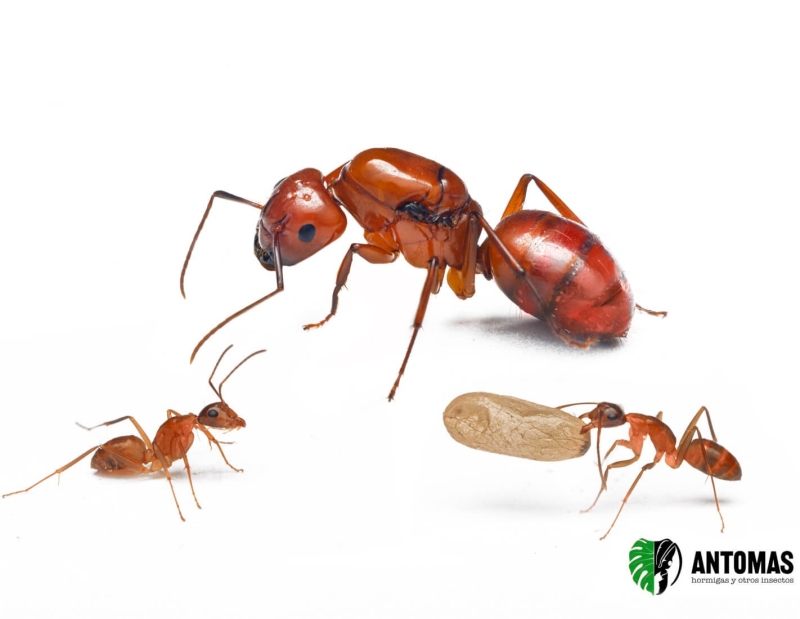
In Arizona populations, workers range approximately from 2 mm in minims to about 12 mm in large soldiers. The queen reaches approximately 20–22 mm and around half a gram in weight, making her one of the largest female ants in North America.
Minims have very small, delicate bodies that allow them to work within the narrow spaces of the garden.
Medium-sized workers have mandibles adapted for cutting and transporting vegetation.
Majors develop an enormous head and extraordinarily powerful mandibular musculature.
Here we are indeed dealing with true soldiers.
In Antomas' experience, the largest majors can inflict cuts capable of breaking the skin and causing bleeding. They should not be handled directly, even though the species lacks the dangerous sting of a Myrmecia or Pogonomyrmex.
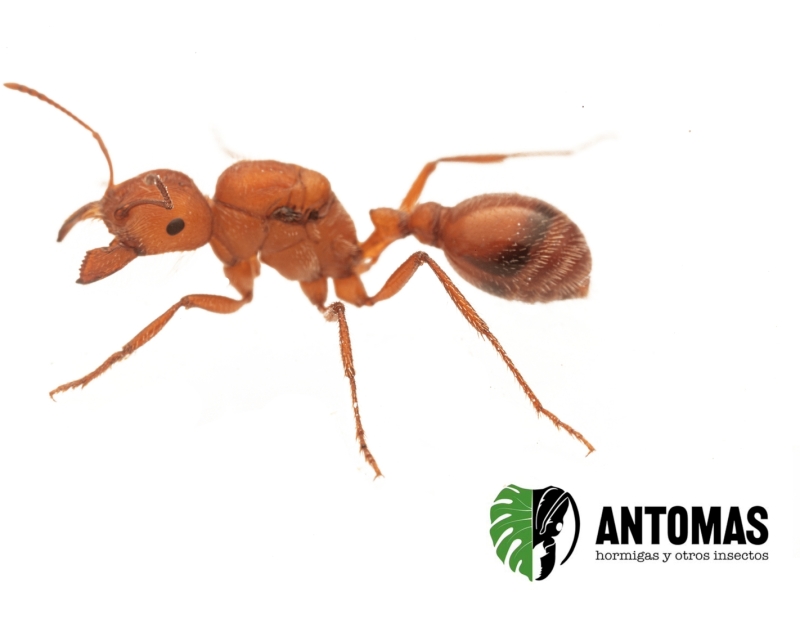
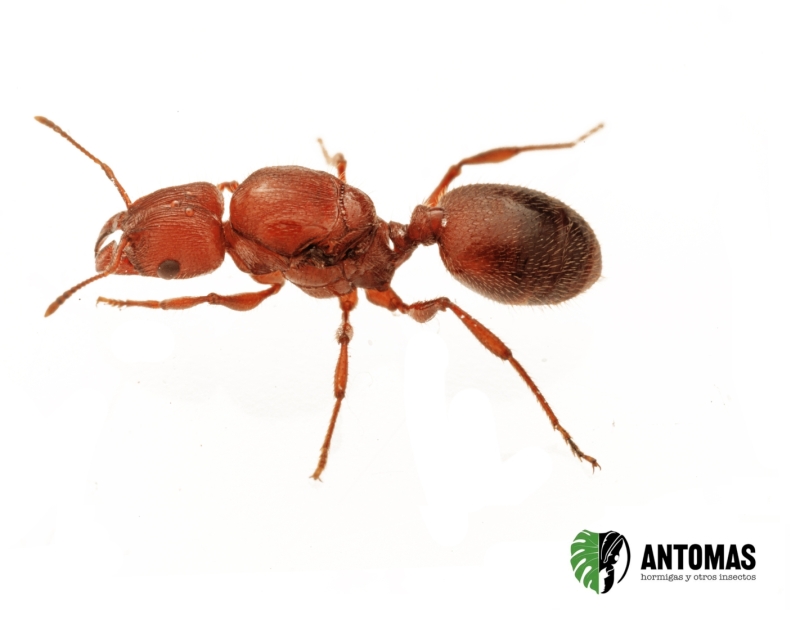
General colouration ranges from reddish brown to dark red or burgundy tones.
The pupae are naked.
KEEPING IN CAPTIVITY
Difficulty: 5/5 – Expert
Atta mexicana is a species for experienced keepers.
An established colony does not necessarily require complicated daily intervention, but it combines absolute dependence on the fungus, enormous growth potential, powerful majors, abundant waste production and the need to continually expand the setup.
A mini-colony can be straightforward.
The real challenge appears when the fungus and population begin to multiply.
Temperature
For cultivation we recommend approximately 23–26 °C, with stable conditions and without intense heating.
Natural fungus chambers remain much more protected than the surface. Even in Sonoran Desert populations, conditions inside the nest are relatively constant.
As a comparative reference within the genus, colonies of other Atta used in research are commonly maintained at around 22–27 °C, and founding studies show good development of initial chambers at around 23–26 °C.
At Antomas we also apply a very important precaution:
fungus chambers and, especially, the chamber containing the queen should not be kept above 30 °C for prolonged periods.
Within the hobby and from experience keeping large Atta, there is concern that sustained exposure above this range may cause permanent reproductive damage to the queen, as well as deterioration of the fungus itself.
We do not present 30 °C as an experimentally proven physiological threshold specifically for A. mexicana, but as a preventive limit for captive management.
Because an Atta queen mates only once and must retain viable sperm for years, there is no benefit in exposing her to unnecessarily high temperatures.
The aim should be to keep her clearly below this limit.
Humidity, ventilation and drainage
This is one of the most important sections of the care sheet.
The fungus requires high ambient humidity, but it must not remain wet.
A large fungal mass contains an enormous amount of water. Between ant respiration, the metabolic activity of the garden and evaporation from the crop itself, the container can rapidly reach very high humidity.
If the walls or lid are somewhat cooler, this moisture begins to condense.
Droplets fall back onto the garden and, if the system cannot drain the water, it eventually accumulates at the bottom and forms pools.
This can become a serious problem.
In Antomas' experience, free water accumulated around the fungus must be drained.
We should not leave the lower part of the garden submerged for days while waiting for the water to evaporate on its own.
When liquid accumulates, we recommend:
draining or extracting the water, slightly increasing ventilation and checking whether there is excessive moisture input or an excessive temperature difference between the interior and the walls.
The system therefore needs a mechanism that allows accidentally accumulated water to be removed.
Ventilation is equally important.
Fungus and ants consume oxygen and release CO₂, heat and water vapour. Natural leaf-cutter nests have an architecture that promotes gas exchange; in other Atta species, peripheral and central tunnel systems related to air intake, heat removal and flood prevention have even been described.
In captivity we need to reproduce the function:
high humidity + constant ventilation + no waterlogging.
We are not looking for an airtight container.
Nor do we want so much ventilation that the outside of the garden constantly dries out.
The correct balance is easy to recognise: moist, active fungus with no dry crusts, but without continuously falling droplets or pools at the bottom.
Setup recommended by Antomas
For this species we recommend the FUNGARIUM by Anthouse.
An initial setup should separate at least:
fungus chamber → foraging area → waste chamber.
As the colony grows, new fungus containers should be added.
In Atta mexicana this modularity is especially important because we are dealing with a naturally polycameral species.
We do not recommend trying to concentrate the entire crop indefinitely in a single box.
Feeding
In captivity the diet should be broad and varied.
Antomas' experience with Atta mexicana shows very good acceptance of different plants that are easy to find in Spain.
Among the plant resources we use are:
Rose — Rosa spp.
Leaves and petals. One of the most useful resources, provided it comes from a plant completely free of treatments.
Hibiscus — Hibiscus spp.
They accept leaves and, depending on the colony, flowers as well. Ornamental hibiscus must come from plants known to be untreated.
Orange and other citrus — Citrus spp., especially Citrus sinensis.
In our experience, young orange leaves work particularly well, being much more tender than mature leaves.
Almond — Prunus dulcis.
Both leaves and flowers in season can be used, and the colony usually processes them well.
Mulberry — Morus spp.
It can be offered occasionally. Tender leaves are usually easier to handle.
Bramble — Rubus spp.
It can also be included in the feeding rotation.
We do not consider that any of these plants should make up the entire diet on its own.
Variety allows the colony to continually select the material that works best at any given time.
In addition to leaves and flowers, at Antomas we occasionally offer other resources.
Among fruits, they may accept:
apple — Malus domestica
banana — Musa spp.
And among vegetables:
lettuce — Lactuca sativa
broccoli — Brassica oleracea var. italica
Fruit and vegetables should be regarded as a supplement, not as permanent substitutes for leaves and flowers.
Because of their high water content and, in fruit, sugars, it is advisable to provide small amounts and remove leftovers before they ferment or develop microorganisms.
Plants documented in nature and laboratory studies
It is also worth mentioning some species used in scientific studies.
Palicourea padifolia — flor de mayo, flor de cera or cafecillo.
It was clearly the preferred plant in a recent experiment, and its extracts promoted fungal growth.
Platanus mexicana — Mexican sycamore.
It was selected much less, due among other factors to greater leaf hardness and the presence of trichomes.
Eriobotrya japonica — loquat.
It was also selected relatively little, although workers removed hairs from the leaves before processing them.
In the Sonoran Desert, the following have also been recorded:
Larrea tridentata — creosote bush;
Olneya tesota — desert ironwood;
Sapium biloculare and various palo verde species, as well as numerous annual plants available only during certain seasons.
There is no need to obtain these plants to keep the colony successfully. Their purpose in this care sheet is to show just how diverse the natural diet of A. mexicana is.
Plant safety
Every plant intended for the colony must be completely free of pesticides, acaricides, herbicides and fungicides.
I would never use cut flowers from florists or leaves from recently purchased ornamental plants.
Washing a leaf does not guarantee that it is safe.
Many plant-protection products are systemic and remain inside the tissue.
The ants themselves may reject certain resources, but their ability to select does not replace our own safety controls.
A plant they are cutting should not automatically be considered harmless to the fungus either.
For this reason, it is always worth introducing new foods in small amounts at first.
Founding
A newly mated queen should be kept with her small original portion of fungus in a quiet chamber.
She does not need leaves during the initial claustral phase.
Adding unnecessary plant material to a tiny culture only increases the risk of contamination.
What truly matters is keeping humidity, temperature and ventilation stable in this first chamber.
The initial fungus can be extremely small.
This should not be interpreted as a problem as long as it remains alive and continues growing.
I would not place different queens together.
Managing the fungus
A healthy garden should be handled as little as possible.
We do not recommend periodically dismantling it to inspect its interior.
If it must be moved, we should try to transfer it in complete blocks and avoid unnecessary fragmentation.
The workers themselves can recognise deteriorated areas, remove them and carry them to the waste chamber.
I would not routinely mix fungus from different colonies either.
A healthy reinforcement can be useful in specific circumstances, but each garden contains much more than Leucoagaricus: it includes an associated microbial community that can vary even between different areas of the same culture.
Waste chamber
The waste chamber should be physically separated from the fungus chambers.
The colony produces plant remains, fragments of exhausted culture, corpses and other waste.
In nature, the large Arizona colonies remove exhausted fungus and deposit it in substantial external refuse piles.
In captivity, it is advisable to allow the ants to choose one container as their refuse area.
Once established, I would not continually change its location.
The container should be easy to disconnect and clean without having to open the fungus chambers.
Diapause
Atta mexicana does not require a cold diapause in captivity.
Even northern populations that endure relatively cool winters keep the fungus in deep chambers where temperature fluctuations are greatly buffered.
I would not deliberately cool the FUNGARIUM during the European winter.
I would maintain approximately the same cultivation conditions throughout the year, allowing for small natural variations.
The colony may alter its foraging or growth rate, but it does not need a cold period equivalent to that of a temperate species.
Behaviour and safety
An Atta mexicana colony can grow from a few hundred individuals into an enormous society.
Its modular system should be designed for expansion from the outset.
A connection that seems sufficient for a mini-colony may become too small when tens of thousands of workers try to transport leaves simultaneously.
All lids, tubes and connections should be checked regularly.
Large majors also deserve a specific warning.
Their mandibles are powered by enormous head musculature and can exert considerable force.
In Antomas' experience, large soldiers can inflict cuts capable of breaking the skin and causing bleeding.
They should not be picked up with the fingers or handled directly.
A major that manages to clamp its mandibles firmly onto the skin can cause a much greater injury than might be expected from an ant without a sting.
When working with large colonies, we use tweezers and systems that allow feeding, cleaning and expansion without unnecessarily placing our hands among the workers.
- Dificultad
- Experienced
.jpg)