Difficulty: 3/5 – Advanced
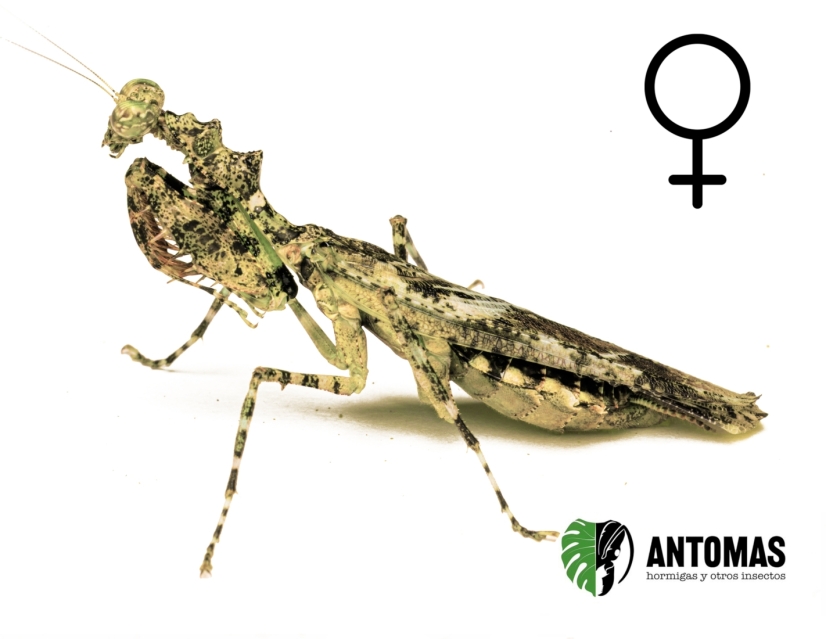
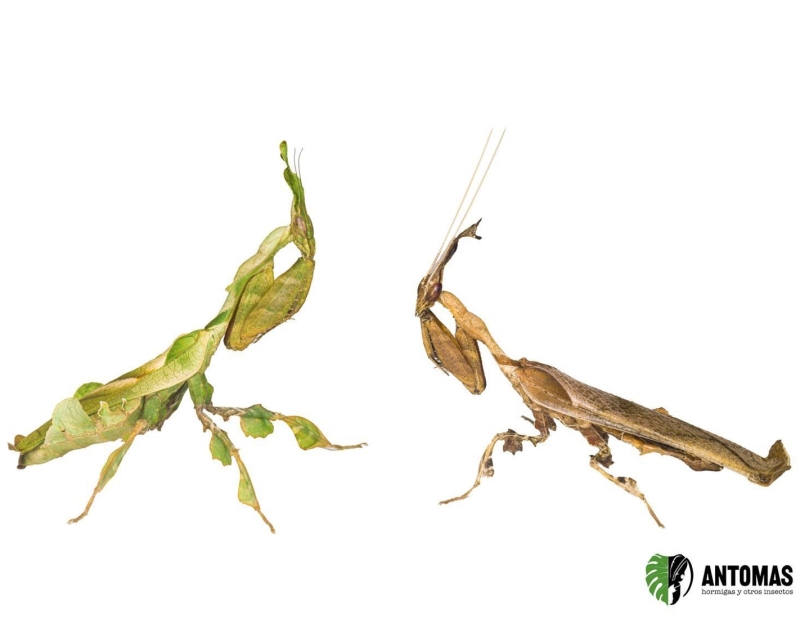
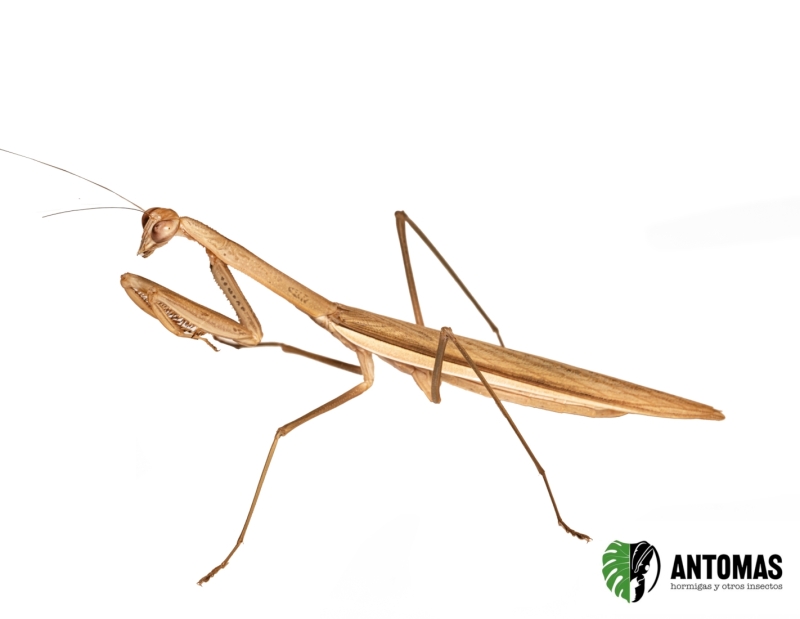
A small mantis from South-East Asia, brown and mottled, that blends into bark covered in moss and lichen. Sold as an L3 nymph pair: a tall, ventilated container for each one, 24–28 °C, 60–80 % humidity with good ventilation and Drosophila hydei from day one. Always kept apart until mating.
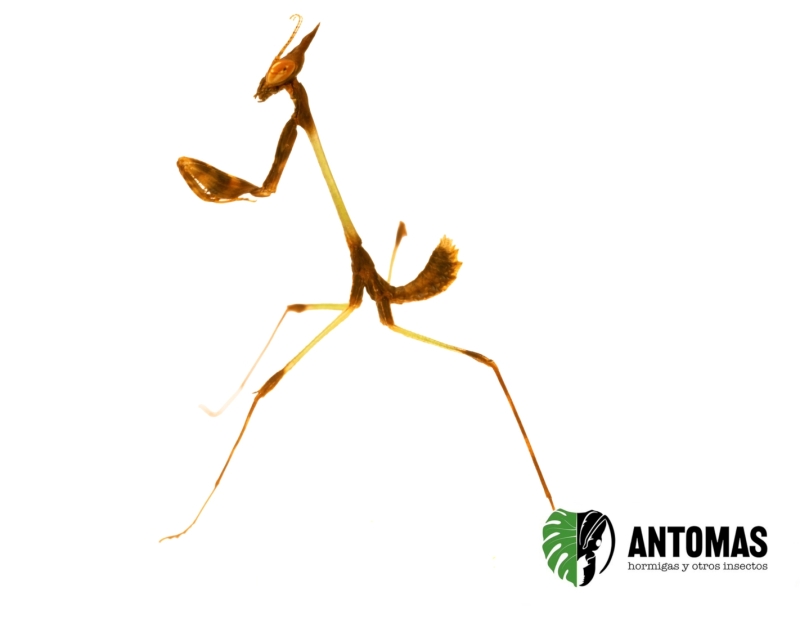
Majangella carli Giglio-Tos, 1915 is a mantis from South-East Asia. In the revision of the genus (Svenson and Vollmer 2014) it was moved to the subfamily Acromantinae (Hymenopodidae), alongside Acromantis, and the genus now has three species: M. moultoni, M. carli and M. ophirensis. M. carli is the smallest of the three. It spends almost all its time motionless, with its raptorial legs folded, and ambushes whatever passes within reach.
Identification, size and distribution
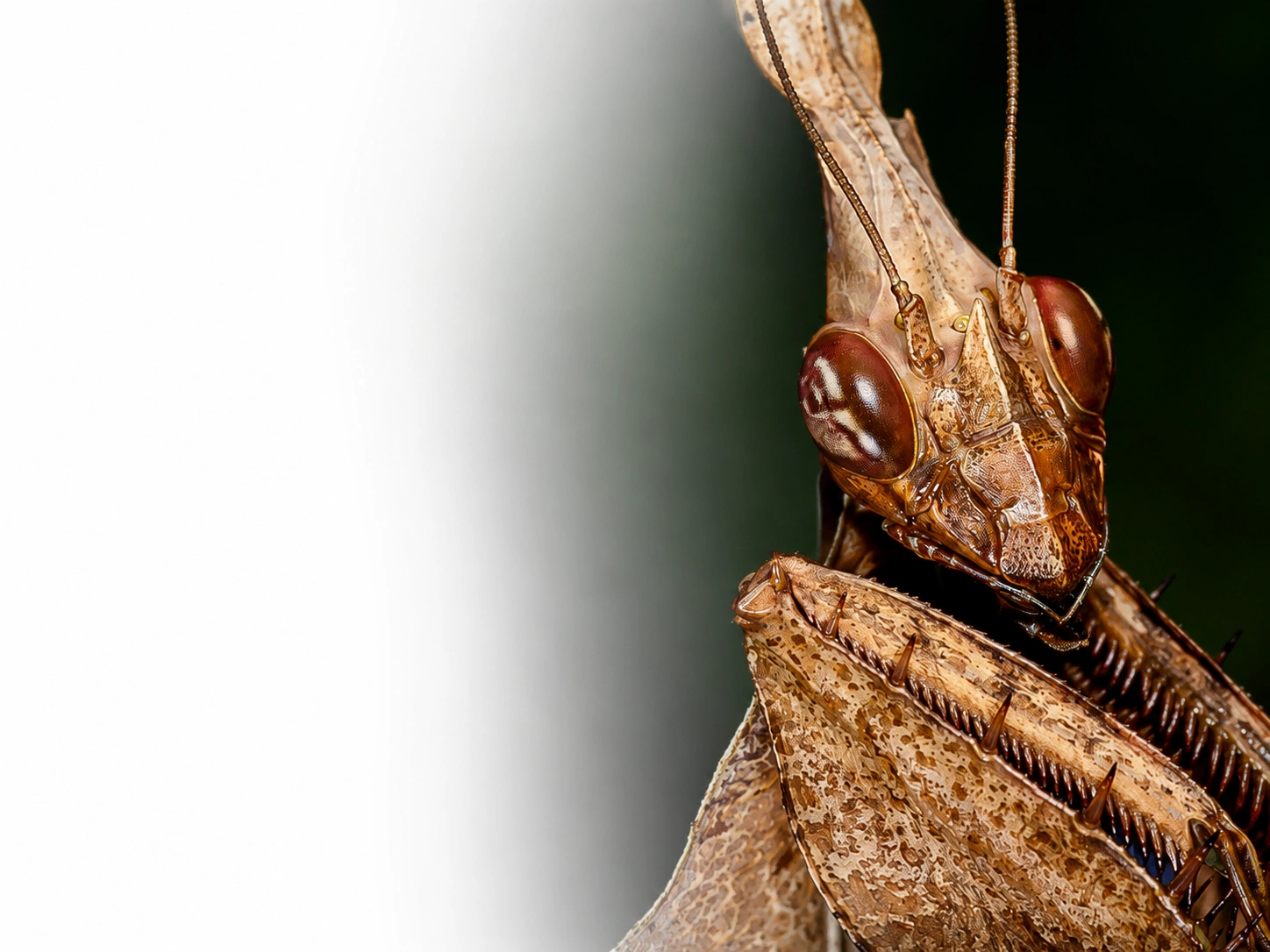
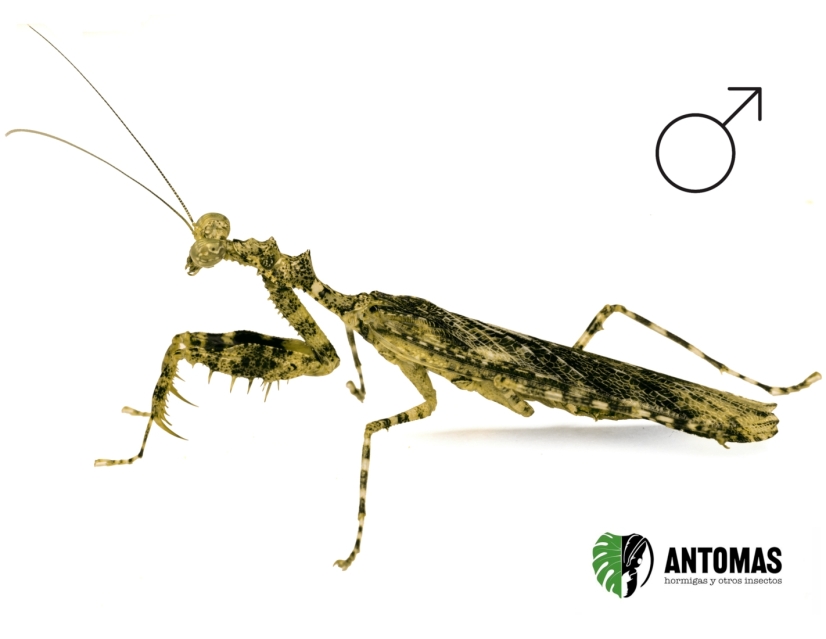
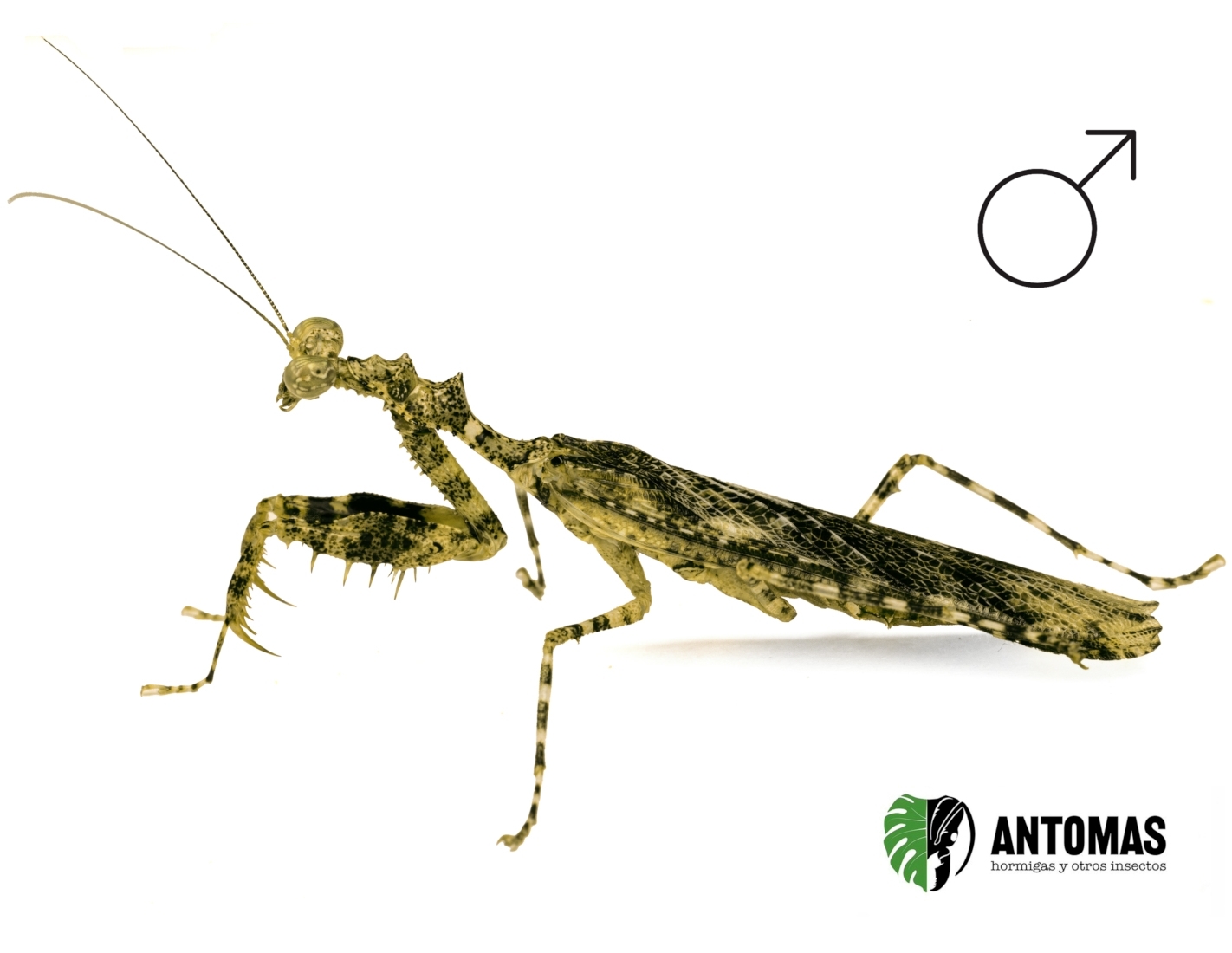
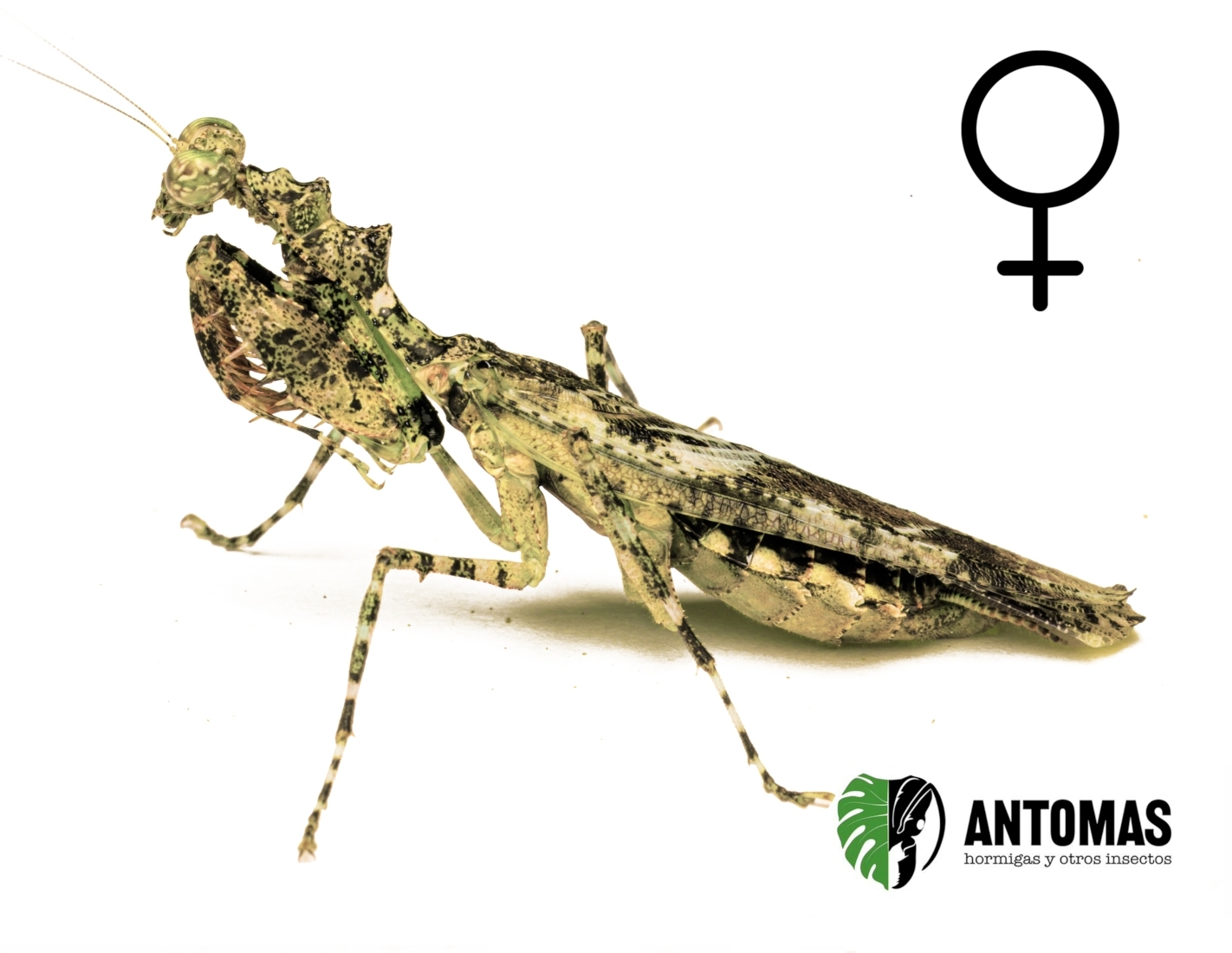
- Colour: brown with dark mottling all over the body; the tegmina are almost transparent, with brown patches in the costal and discoidal areas. That pattern is what makes it pass for a piece of mossy bark.
- Pronotum: with a toothed lateral margin and five conical tubercles on the dorsal surface, clearly visible under a magnifying glass.
- Head: large, bulging eyes; above the ocelli it bears a single process ending in a blunt point. In M. moultoni and M. ophirensis this process is bifid, which is the easiest way to tell them apart.
- Raptorial legs: the inner face of the fore femur is glossy black, with two small pale spots on the upper margin.
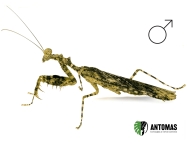
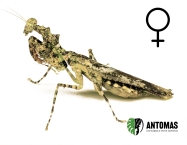
- Size: the males studied measure 29–30 mm from head to abdominal tip, with tegmina of 22–26 mm and a pronotum of 8.5–9.5 mm (Svenson and Vollmer 2014). The female has not been described in the literature: in 2014 only one museum specimen was known, very similar to the male. In captivity, females turn out sturdier.
- Distribution: Borneo (Sarawak and Sabah), Sumatra, Java, Peninsular Malaysia and southern Myanmar, in humid evergreen forests, both lowland and montane. It is the species of the genus with the most records (Svenson and Vollmer 2014).
A curious fact: Giglio-Tos described it next to Majanga, a genus from Madagascar, because of the similar pronotum. More than a century later it was shown that they are not close relatives; molecular analyses of a male from Sarawak place it among the Acromantinae (Svenson and Whiting 2009). Its biology in the wild remains unstudied.
Keeping in captivity
What follows is based on the climate of its range and on breeders’ experience with the genus, as there are no captive-breeding studies on this species.
Enclosure
- Height: at least 3 times the length of the mantis, so that it can moult hanging without touching the floor. For the L3 a pot of about 250–500 ml is enough; the adult needs an enclosure of about 20 × 20 × 30 cm.
- Ventilation: a mesh lid and, better still, a mesh side panel. It needs humidity, but in still air mould and failed moults appear.
- Decor: thin twigs placed diagonally, a piece of cork or bark and some dry moss or lichen; mesh on the ceiling to hang from.
- Substrate: coco fibre or kitchen paper, easy to clean.
Temperature, humidity and water
- Temperature: 24–28 °C during the day; at night it can drop a few degrees, but not below 20 °C.
- Humidity: 60–80 %, with peaks after misting that dry out within a few hours.
- Water: mist one wall and the decor once a day with fine droplets, without wetting the nymph. It drinks from the droplets.
Feeding
It hunts moving live prey no larger than its own body:
- L3–L4: Drosophila hydei, 4–6 per feed.
- L5 onwards: house flies or greenbottles, firebrats (Thermobia domestica) and small crickets now and then.
- Adults: flies as the staple. Flying prey is what it accepts best.
- Frequency: nymphs, every 1–2 days; adults, every 2–3 days, with more food for the female. Remove any prey not eaten within a day.
Moulting
- Pre-moult: it stops eating, stays still and hangs. From that moment on, do not touch it and remove any live prey.
- After the moult, wait about 24 hours before feeding it.
- With the imaginal moult the full wings appear and it does not moult again.
Breeding
Sexing and synchronisation
Count the segments on the underside of the abdomen: the female shows about 6, because the seventh sternite forms the subgenital plate; the male, about 8 (terminology in Brannoch et al. 2017). Males usually reach adulthood first. Based on breeders’ experience, keep the male at the lower end of the temperature range (23–24 °C) and the female at the upper end (27–28 °C) so that they mature at the same time.
Mating
- Wait about 2 weeks after the female’s imaginal moult.
- Feed her well before the encounter, introduce the male from behind and keep watch. Sexual cannibalism in mantises is documented in the wild too (Lawrence 1992).
- Separate the male when they have finished.
Ootheca
The female attaches the ootheca to a twig or to the mesh. Leave it where it is, at 26–28 °C, with a light misting of the container every 2–3 days, without wetting it. This is a tropical species: it does not need a cold period. When the nymphs hatch, separate them soon and feed them springtails or Drosophila melanogaster.
What NOT to do
- Touch it, move it or mist it directly during pre-moult or moulting.
- Leave crickets or other live prey in the enclosure while it is moulting.
- Help it out of the exuvia.
- Use a low container, one with no grip on the ceiling or one closed without ventilation.
- Waterlog the enclosure or let it drop below 20 °C for days.
- Put the male and the female together before mating, not even as nymphs.
- Put the male in with a freshly moulted or hungry female.
- Offer prey larger than the mantis or that could injure it.
- Release specimens or oothecae into the wild.
Scientific sources
This care sheet has been compiled from the scientific literature on Majangella and on mantises in general, and from breeders’ experience. Main references:
- Svenson, G. J. & Vollmer, W. (2014). A case of the higher-level classification of praying mantises (Mantodea) obscuring the synonymy of Majangella Giglio-Tos, 1915 (Liturgusidae, Liturgusinae) and Ephippiomantis Werner, 1922 (Hymenopodidae, Acromantinae). Zootaxa 3797: 103–119. doi:10.11646/zootaxa.3797.1.10
- Svenson, G. J. & Whiting, M. F. (2009). Reconstructing the origins of praying mantises (Dictyoptera, Mantodea): the roles of Gondwanan vicariance and morphological convergence. Cladistics 25: 468–514. doi:10.1111/j.1096-0031.2009.00263.x
- Brannoch, S. K., Wieland, F., Rivera, J., Klass, K.-D., Béthoux, O. & Svenson, G. J. (2017). Manual of praying mantis morphology, nomenclature, and practices (Insecta, Mantodea). ZooKeys 696: 1–100. doi:10.3897/zookeys.696.12542
- Lawrence, S. E. (1992). Sexual cannibalism in the praying mantid, Mantis religiosa: a field study. Animal Behaviour 43: 569–583. doi:10.1016/S0003-3472(05)81017-6