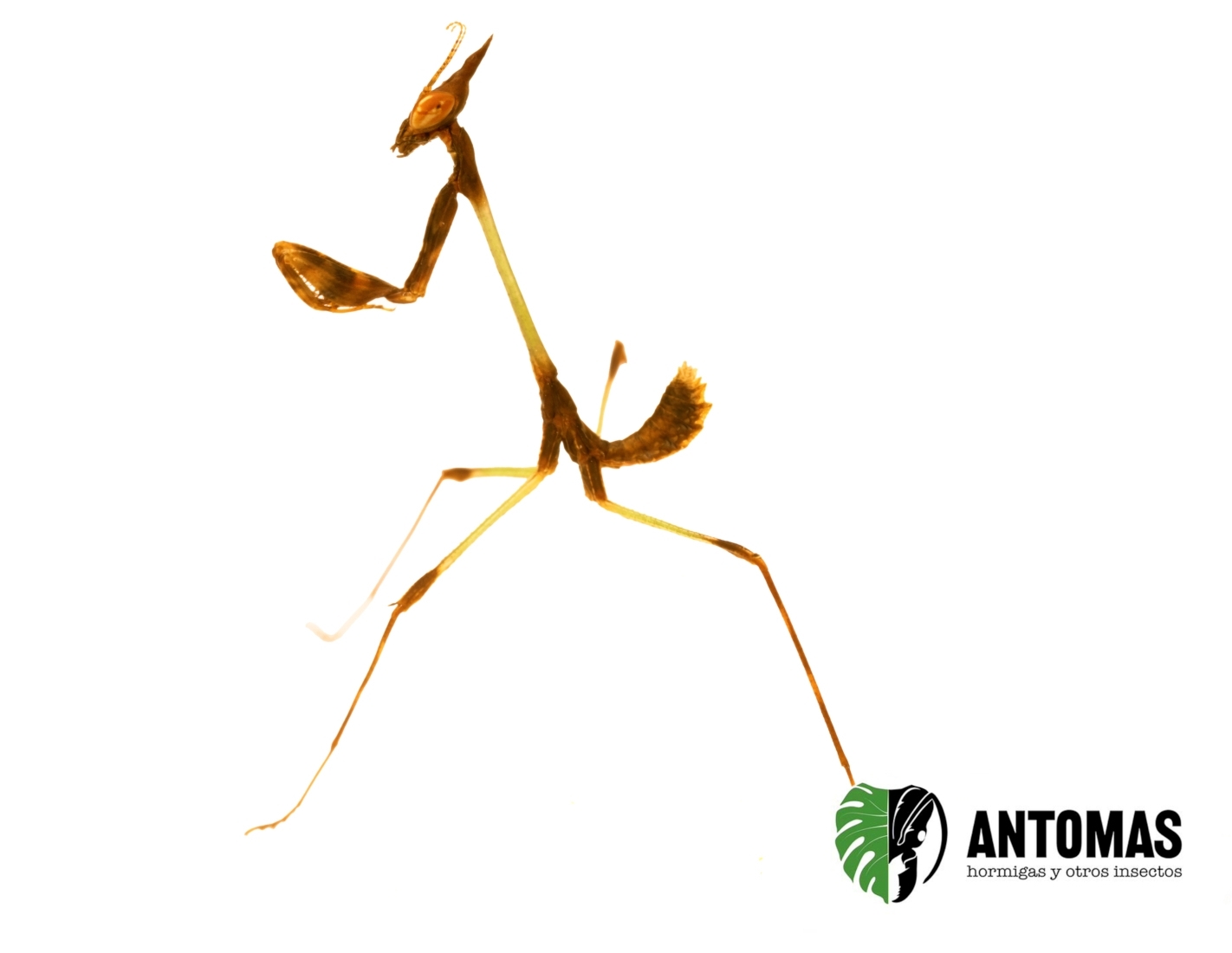
Idolomorpha sp. ‘Tanzania’
Difficulty: 3/5 – Intermediate. It is not a delicate mantis, but it is different from most: it needs heat, dry air and flying prey, and several routines that are common with other mantises do it harm (see “What not to do”).
Description
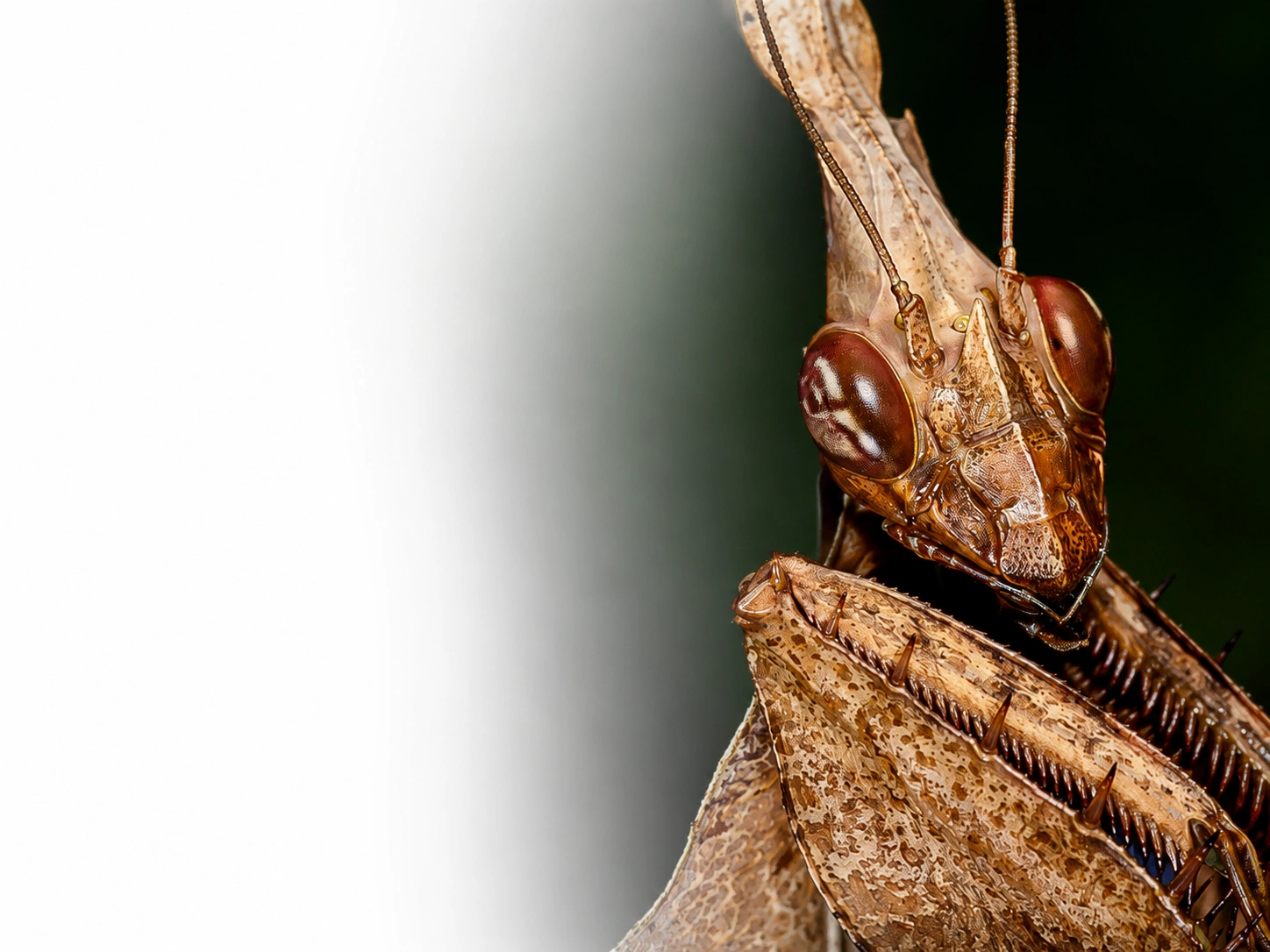
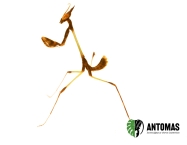
Idolomorpha is an African genus of the family Empusidae, the same family as Empusa and Gongylus. It lives in warm savannas and grasslands, where it ambushes prey among dry stems. Given the origin of our line (Tanzania), it is most likely I. dentifrons; we list it as Idolomorpha sp. until the species is confirmed.
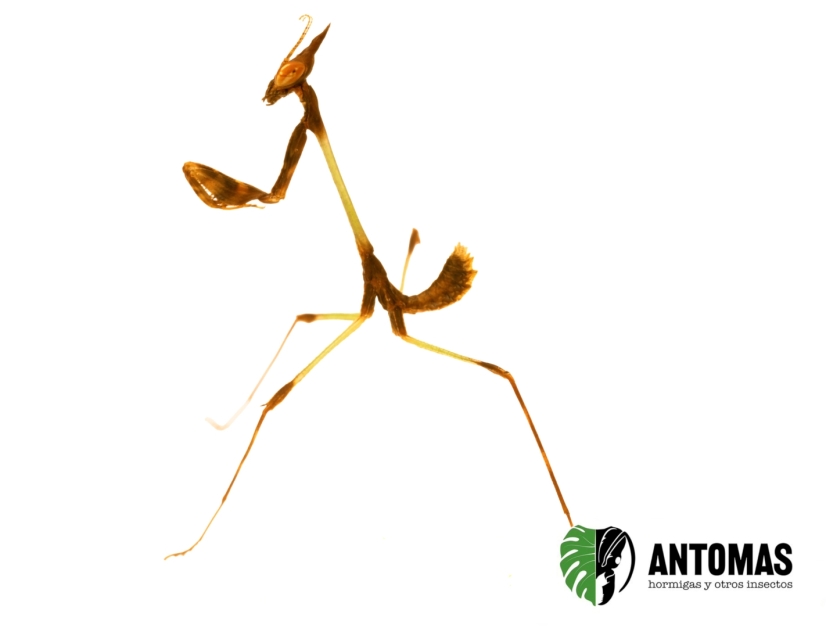
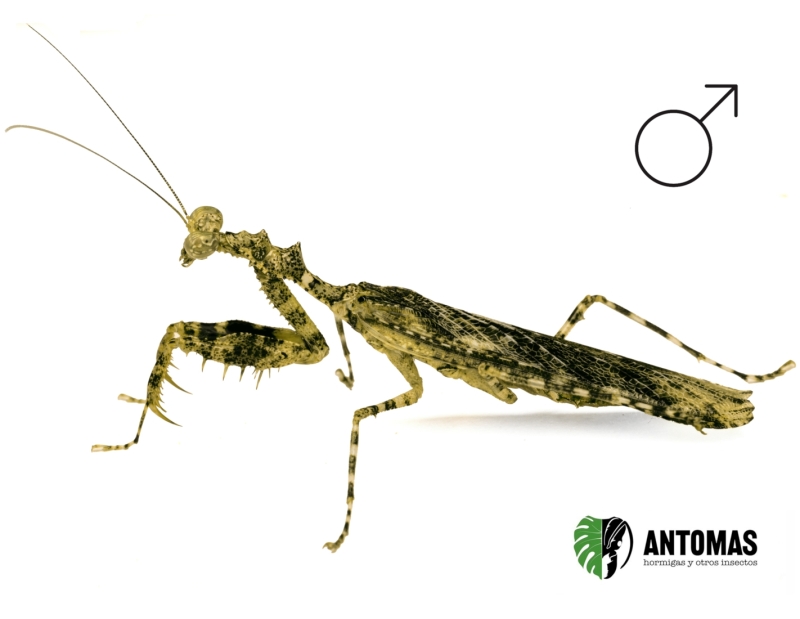
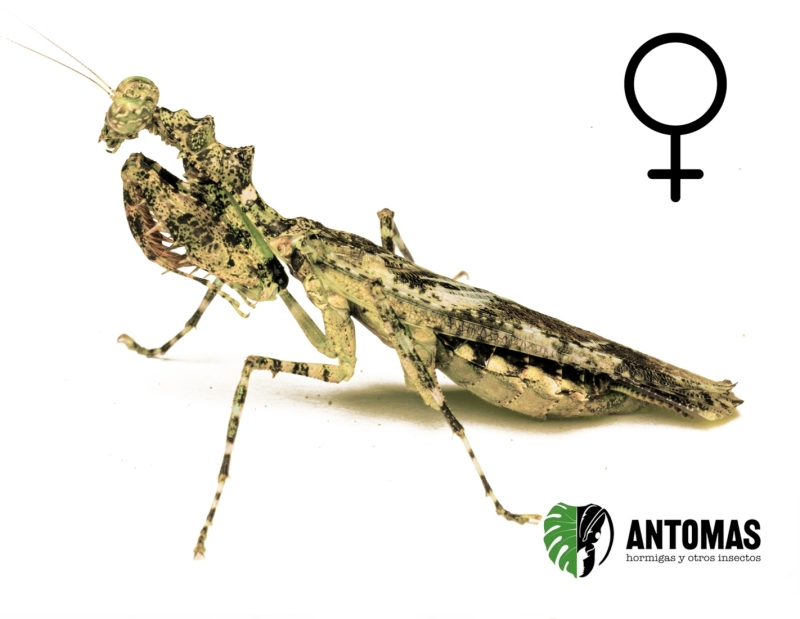
- Body: very long and slender, stick-like, straw-coloured or greenish, with long thin legs and a conical projection on the head.
- Antennae: males have pectinate (comb-like) antennae, typical of empusids. This is the easiest way to sex adults.
- Wings: adults of both sexes are winged.
- Adult size: about 7–8 cm (breeders’ data).
Parameters
- Daytime temperature: 28–32 °C, with a localised hot spot of up to 35 °C.
- Night-time temperature: 20–24 °C.
- Humidity: low, 40–55 %. It does not tolerate high humidity.
- Ventilation: very high.
- Misting: only 1–2 times a week. Empusids get most of their water from the prey they eat.
Setup
A vertical enclosure, made of mesh or with large ventilated areas, at least three times as tall as the adult’s length. It needs plenty of grip points and free space under the lid for moulting.
- Thin twigs, dry grass and dry stems.
- Dried or artificial plants.
- A mesh lid to hang from while moulting.
Feeding
It clearly prefers flying prey. It is very voracious: do not feed more than once every 3 days to avoid overfeeding and indigestion, which leads to vomiting.
- L1–L3: flying Drosophila hydei or D. melanogaster and small wax moths.
- From L3–L4: one fly or bluebottle every 3–4 days is more than enough.
- Adults: house flies and blowflies as the staple.
Even on this diet it develops very quickly thanks to the high temperatures: from L1–L2 to adult in about 7–9 weeks.
What not to do
- Do not mist daily as with other mantises: 1–2 times a week is enough.
- Do not keep it in a humid enclosure: no moss, live plants or wet substrate.
- Do not overfeed: one prey item every 3 days at most.
- Do not use crickets as the main prey, nor flightless Drosophila.
- Do not pull its legs when handling it: it is fragile. Let it walk onto another surface by itself.
- Never release specimens into the wild.
Group keeping
Like other empusids, it is not very cannibalistic and can be kept in groups, provided the enclosure is large enough for them to keep their distance without attacking each other and prey is always within reach. With little space or food, losses can occur.
Breeding
- Separate the specimens in the last instars, before subadult.
- After the final moult, wait about 20 days in both sexes before attempting mating.
- It is best to have more than one male: not every mating is successful.
- Oothecae are small and hatch in about 2–3 weeks at around 30 °C (breeders’ data).