This website uses its own and third-party cookies to improve our services and show you advertising related to your preferences by analyzing your browsing habits. To give your consent to its use, press the Accept button.
Cookie preferences
| Cookie | Provider | Purpose | Expiry |
|---|---|---|---|
| PHP_SESSID | antomas.es | The PHPSESSID cookie is native to PHP and allows websites to store serialised status data. On the website it is used to establish a user session and to pass state data through a temporary cookie, which is commonly known as a session cookie. These Cookies will only remain on your computer until you close your browser. | Session |
| PrestaShop-# | antomas.es | This is a cookie used by Prestashop to store information and keep the user's session open. It stores information such as currency, language, customer ID, among other data necessary for the proper functioning of the shop. | 480 hours |
Myrmecia simillima
Biology
Myrmecia simillima is a species native to southeastern Australia, mainly associated with open areas containing tree vegetation, especially eucalyptus forests. Like other species of the genus, it displays an active predatory behavior, based on individual hunting without recruitment.
Workers locate and capture prey autonomously, using their mandibles and stinger to immobilize them rapidly. It is a diurnal species, with activity concentrated during daylight hours.
A distinctive trait compared to other closely related species is its ability to perform small jumps, which it uses both when capturing prey and in escape or alert situations. This behavior gives it remarkable reactivity over short distances.
The species displays an extremely aggressive and territorial character, responding rapidly to vibrations or intrusions. Colonies nest beneath large stones, eucalyptus logs, and at the base of trees, from where workers frequently climb to forage.
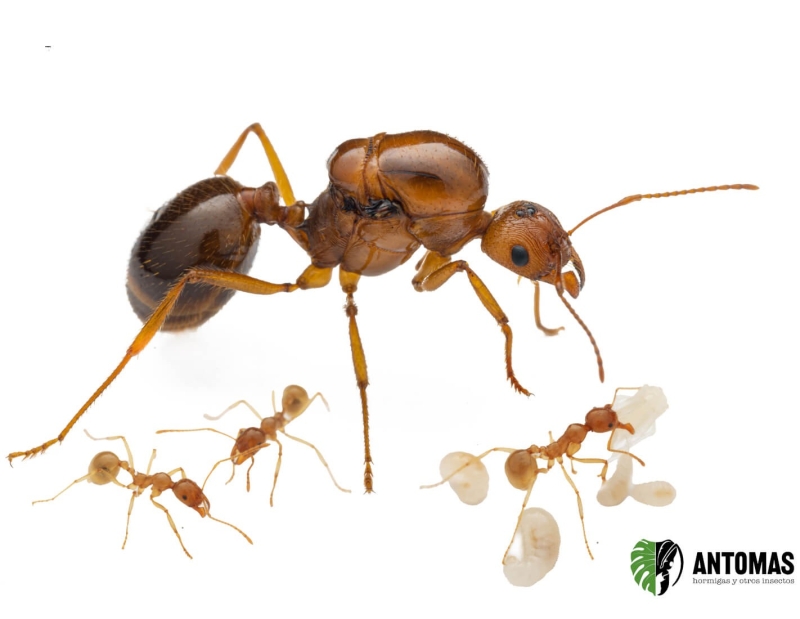
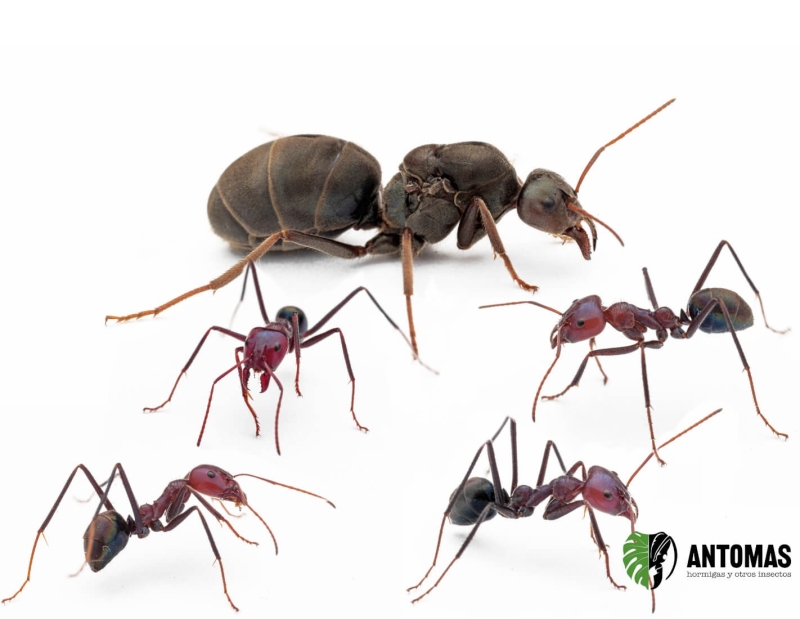
Colonies are small, usually consisting of a few hundred individuals. The species possesses brachypterous queens, meaning queens with reduced or poorly functional wings. These queens exhibit a limited dispersal capacity, implying that the founding of new colonies occurs close to the original nest, often through terrestrial movement rather than long nuptial flights. In addition, this trait makes queens difficult to distinguish from large workers to inexperienced observers.
As in the vast majority of species within the genus Myrmecia, colony founding is semi-claustral, meaning that the queen must leave the nest to hunt during the early stages in order to feed the larvae. This strongly conditions the success of colony foundation.
Size and Morphology
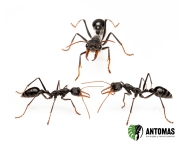
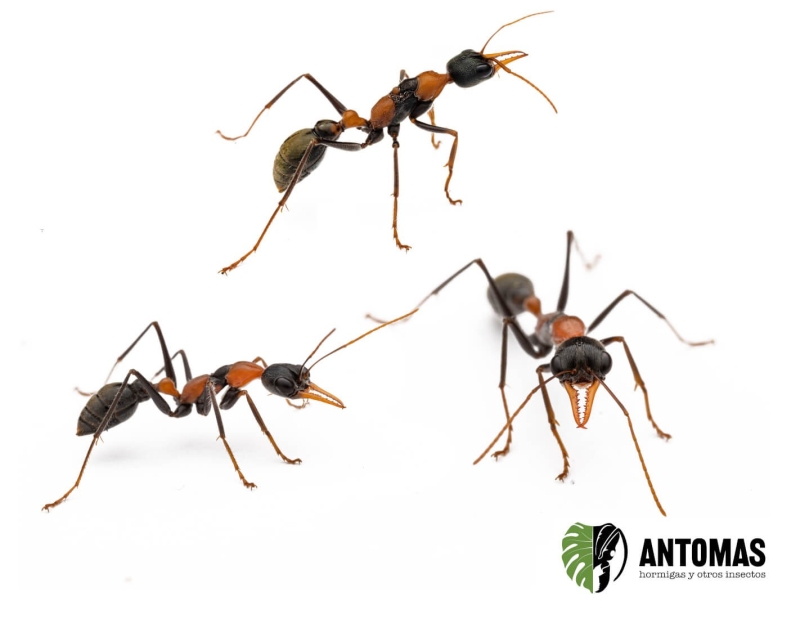
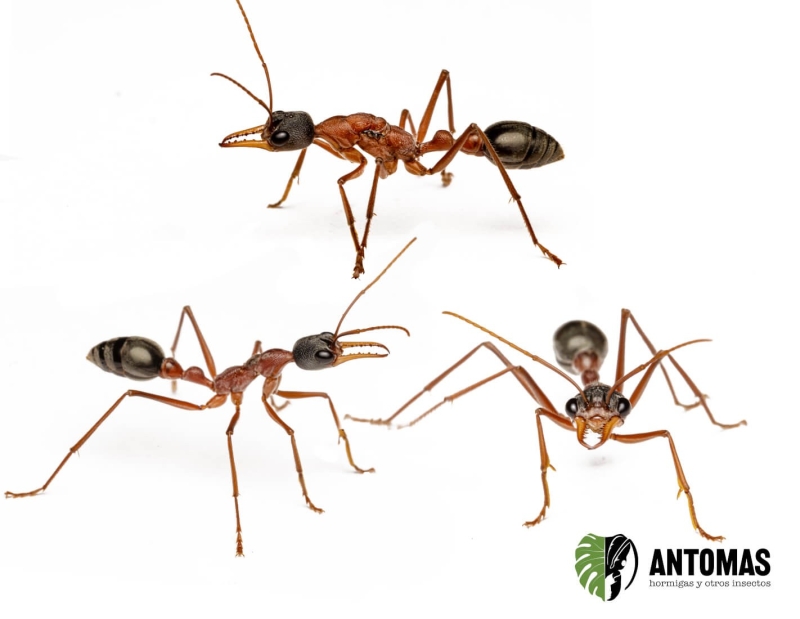
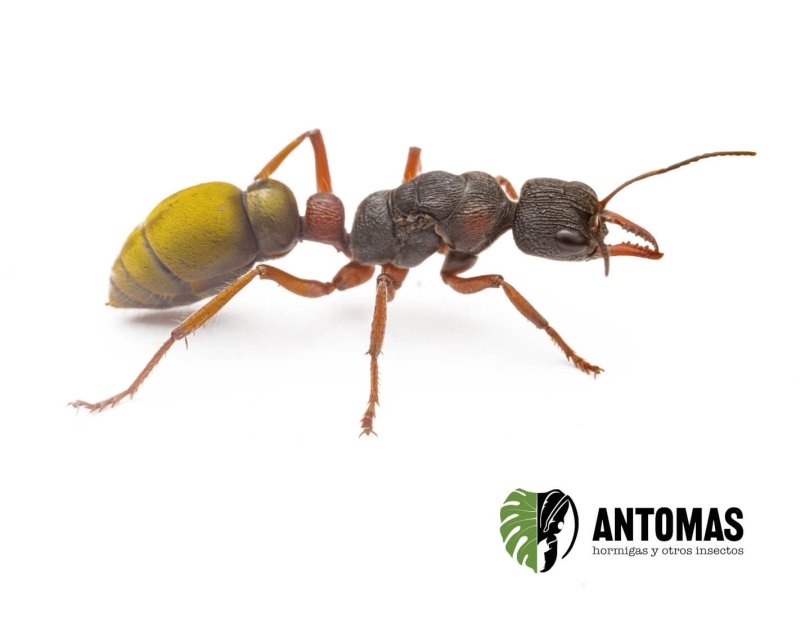
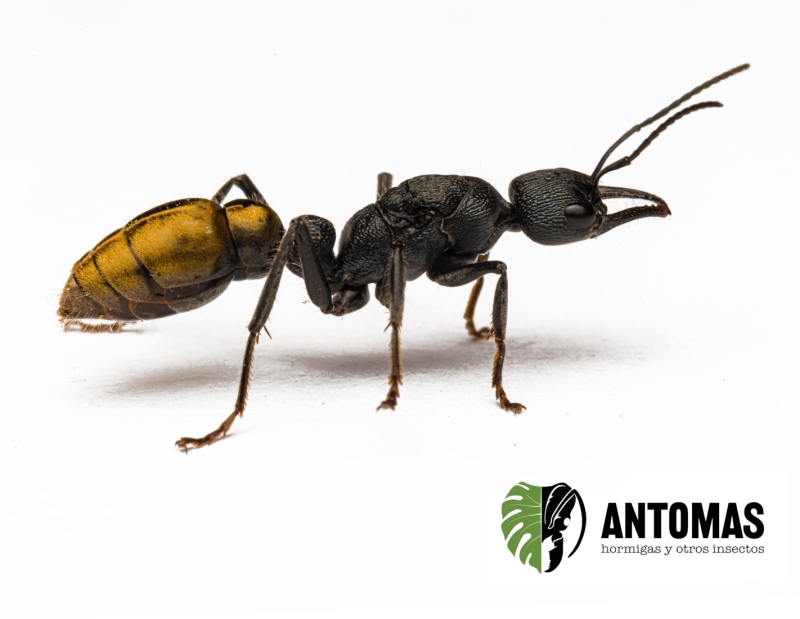
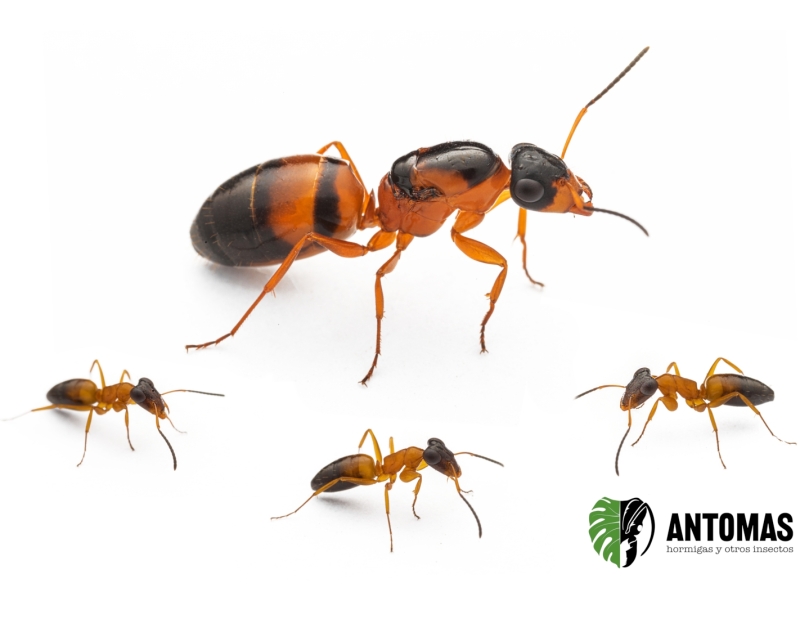
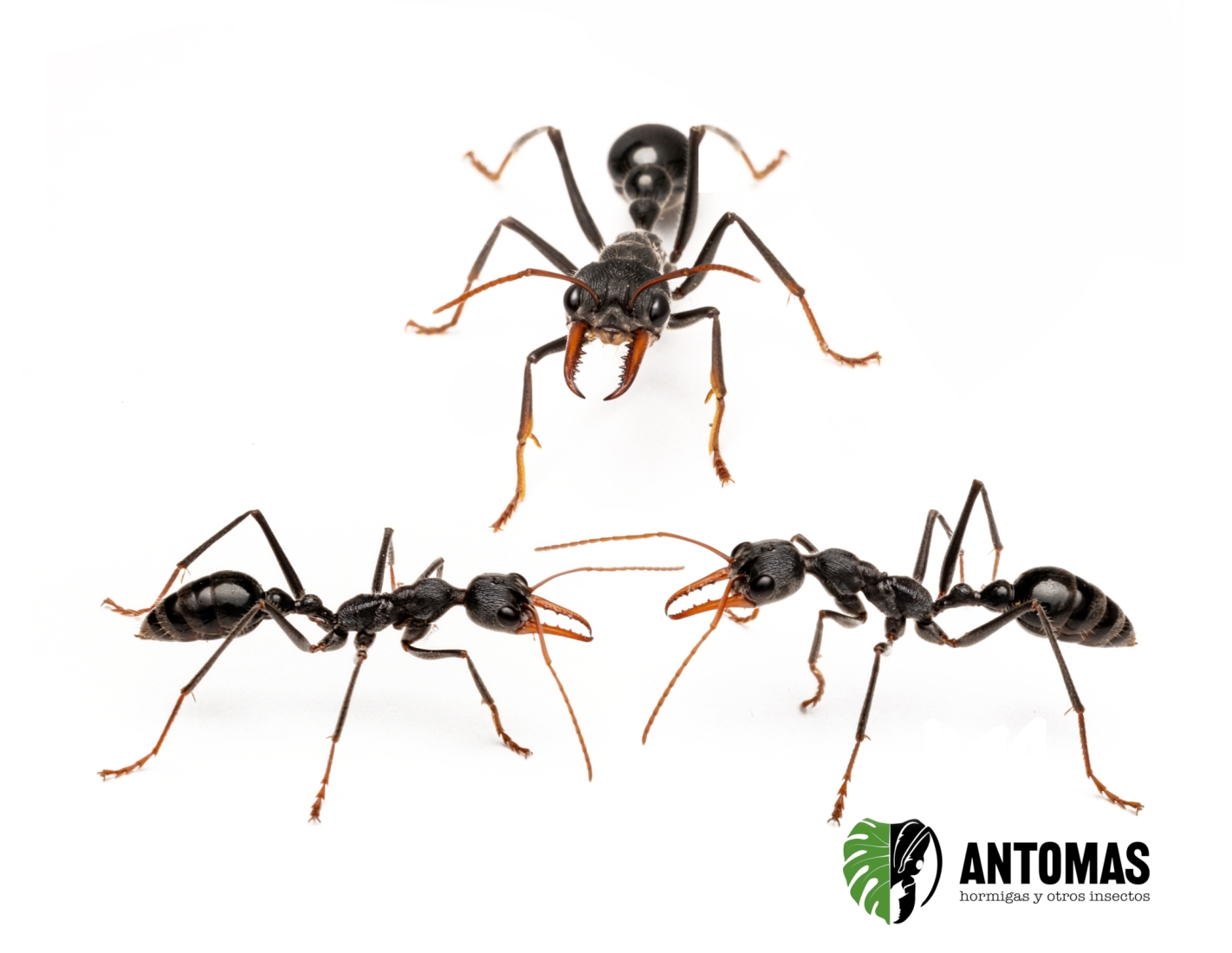
Coloration may vary depending on the morph. In the wild, individuals with reddish tones combined with a black gaster are very common, producing a highly characteristic contrast. However, in captivity, the most common morphotype and the one most frequently commercialized is completely black, which is the form breeders are most likely to encounter.
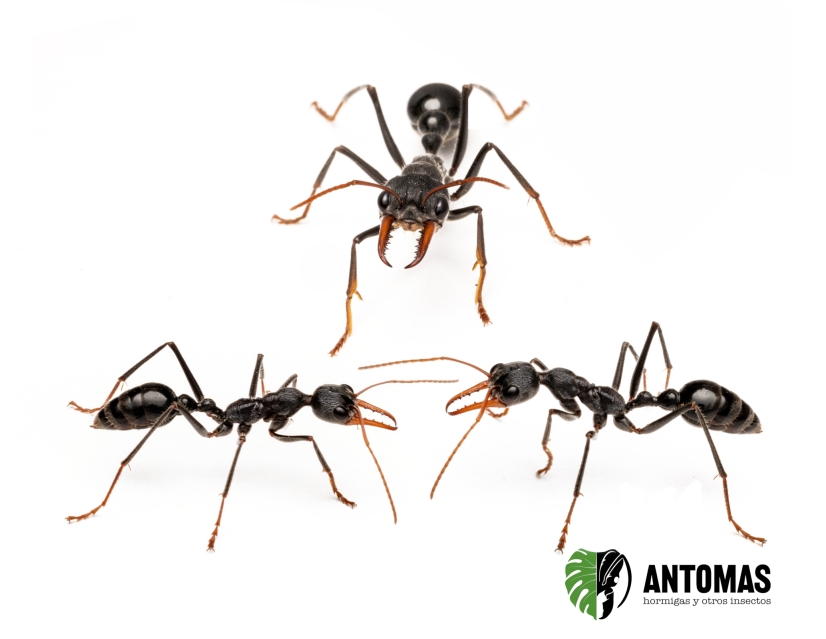
It stands out for possessing some of the longest legs within the genus, providing great speed and reaction capacity on the ground.
The compound eyes are large and prominent, reflecting its strong dependence on vision. The mandibles are elongated and toothed, designed to hold live prey with precision.
Approximate measurements
- Workers: 17–24 mm
- Queen: 20–24 mm
The species is monomorphic, without differentiated castes. Nevertheless, a certain biphasic structure can be observed among the workers, with two clearly distinct size ranges. This differentiation does not constitute true polymorphism, but it does appear to be associated with a functional specialization, where smaller workers tend to remain inside the nest, while larger workers participate more frequently in foraging and defense tasks.

Captive Care
Myrmecia simillima is considered an intermediate difficulty species, suitable for keepers with experience in easier species of the genus such as Myrmecia nigriceps or Myrmecia sp17.
Recommended conditions:
- Temperature: 24–27 °C
- Humidity: 50–70 %
- Nests: natural materials with mixed substrates (coconut fiber, fine sand, clay, or blonde peat), with large chambers that allow proper larval development and favor cocoon-spinning conditions.
It is essential to establish a humidity gradient within the nest: more humid zones for eggs and larvae, and drier areas for pupae.
It may undergo a mild diapause, with slowed development during cold periods. In Europe, it usually adapts to the local winter (December–February), maintaining a certain level of activity.
Feeding should be based on:
- Carbohydrates: sugary liquids or nectars offered regularly
- Proteins: small prey (flies, crickets, preferably runner cockroaches, etc.)
Its speed and jumping ability require extreme caution during handling.
As this is an aggressive species equipped with a functional stinger, direct handling is not recommended under any circumstances, and entomological tools should always be used.