This website uses its own and third-party cookies to improve our services and show you advertising related to your preferences by analyzing your browsing habits. To give your consent to its use, press the Accept button.
Functional cookies are strictly necessary to provide the services of the shop, as well as for its proper functioning, so it is not possible to refuse their use. They allow the user to browse through our website and use the different options or services that exist on it.
Cookie
Provider
Purpose
Expiry
PHP_SESSID
antomas.es
The PHPSESSID cookie is native to PHP and allows websites to store serialised status data. On the website it is used to establish a user session and to pass state data through a temporary cookie, which is commonly known as a session cookie. These Cookies will only remain on your computer until you close your browser.
Session
PrestaShop-#
antomas.es
This is a cookie used by Prestashop to store information and keep the user's session open. It stores information such as currency, language, customer ID, among other data necessary for the proper functioning of the shop.
These are cookies that collect information about the advertisements shown to users of the website. They can be anonymous, if they only collect information about the advertising spaces shown without identifying the user, or personalised, if they collect personal information about the user of the shop by a third party, for the personalisation of these advertising spaces.
Collect information about the user's browsing experience in the shop, usually anonymously, although sometimes they also allow the user to be uniquely and unequivocally identified in order to obtain reports on the user's interests in the products or services offered by the shop.
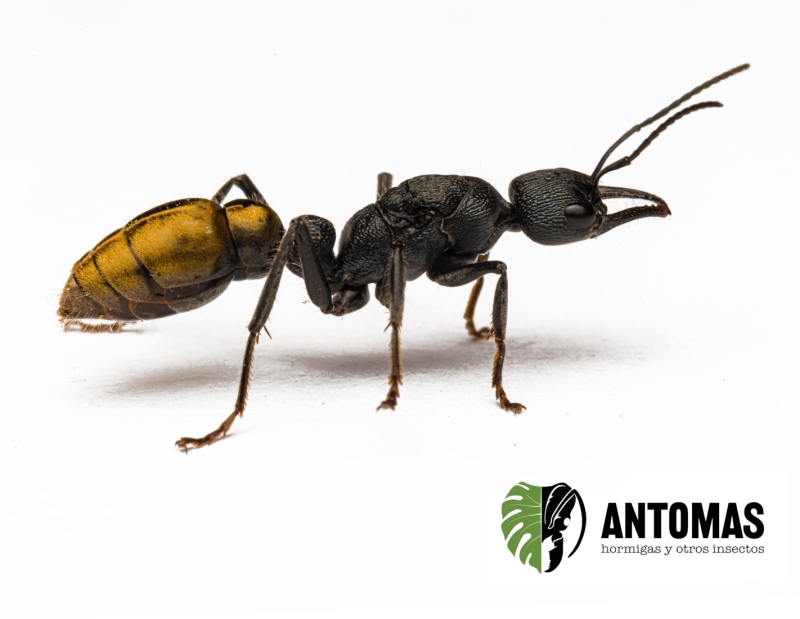
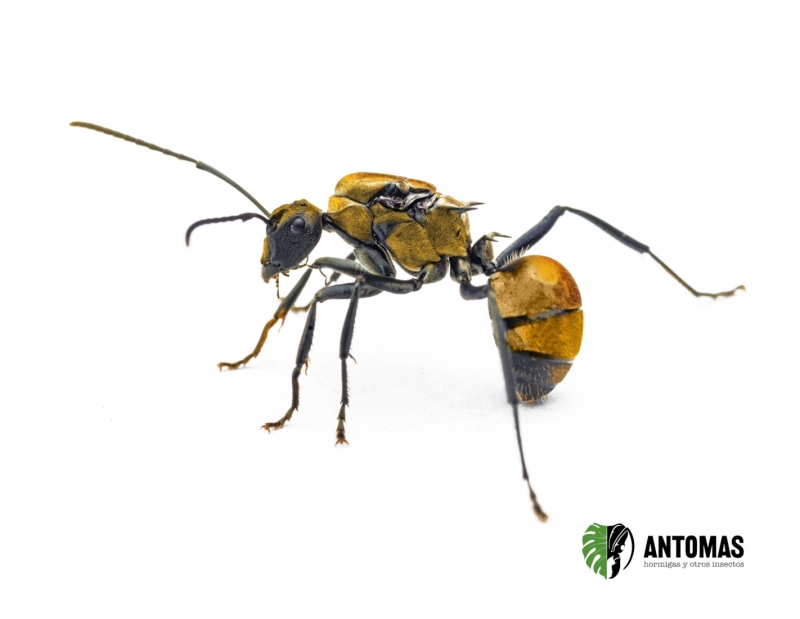
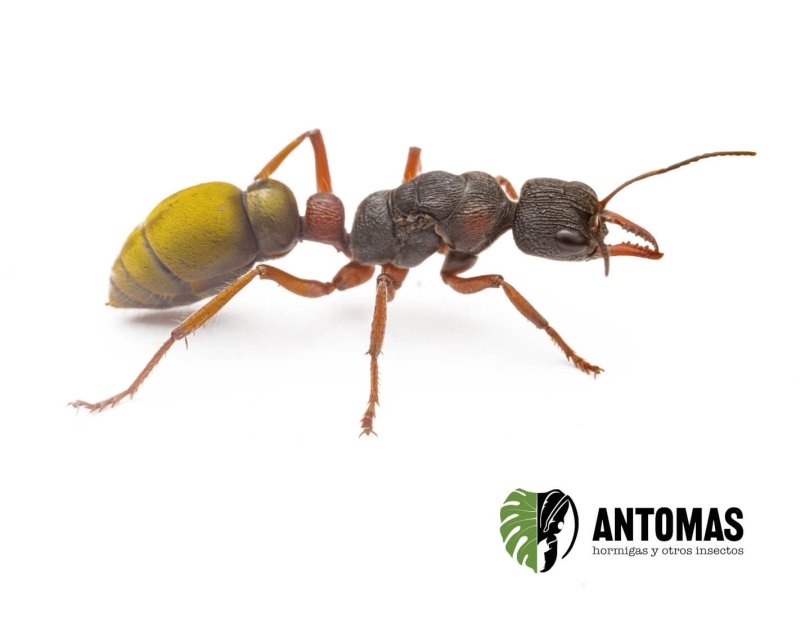
Rhytidoponera aspersa is an Australian species belonging to the subfamily Ectatomminae, a group of primitive ants characterized by their active behavior, functional sting, and relatively simple social organization compared with more derived ant groups.
It mainly inhabits open forests, shrublands, and areas with abundant leaf litter, where it usually nests under stones, logs, or directly in the soil.
It is an active and resilient species, adapted to different Australian microhabitats. Like other members of the genus, it carries out foraging individually or in small numbers.
The diet is omnivorous and opportunistic. It can consume live or dead insects, nectars, seeds, and carrion, showing considerable flexibility in captivity.
It is mainly diurnal, although during especially hot periods part of its foraging activity may shift to the cooler hours of the day.
The social organization of this species has not yet been fully studied. Unlike Rhytidoponera metallica, where the presence of gamergates is well known, the reproductive structure of R. aspersa appears to be more conventional, with a functional queen.
Colonies usually remain moderate in size, typically ranging from a few dozen to several hundred individuals.
Founding is presumably semi-claustral, as occurs in many species of the group.
Size and Morphology
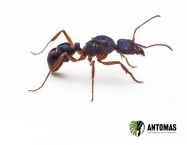
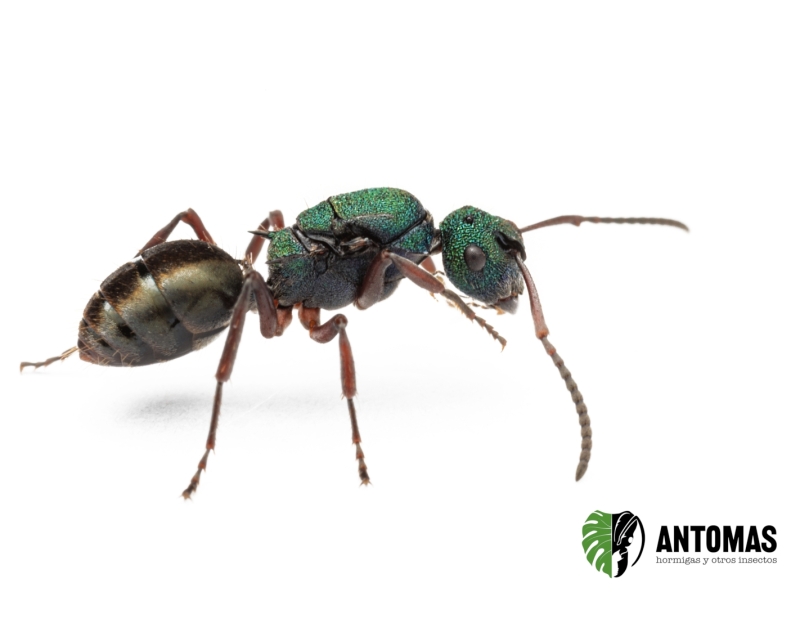
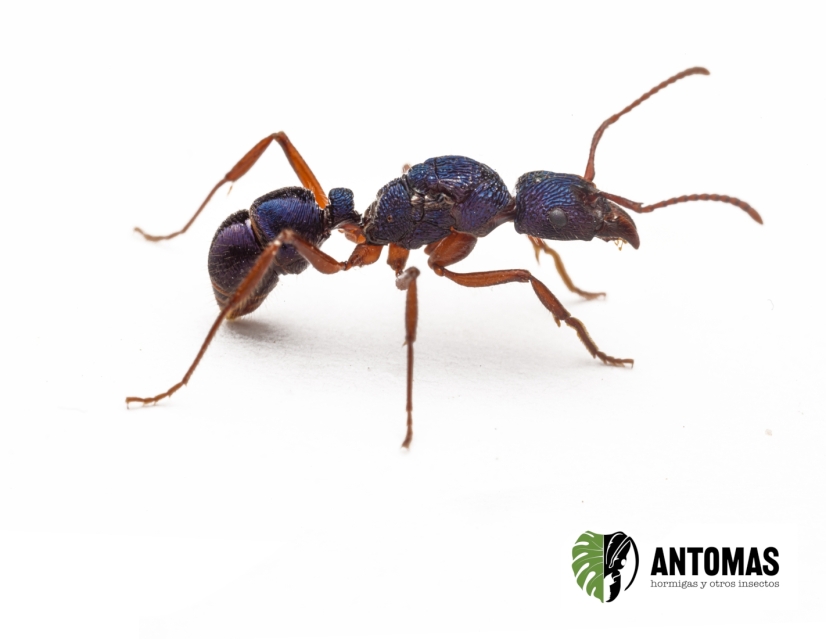
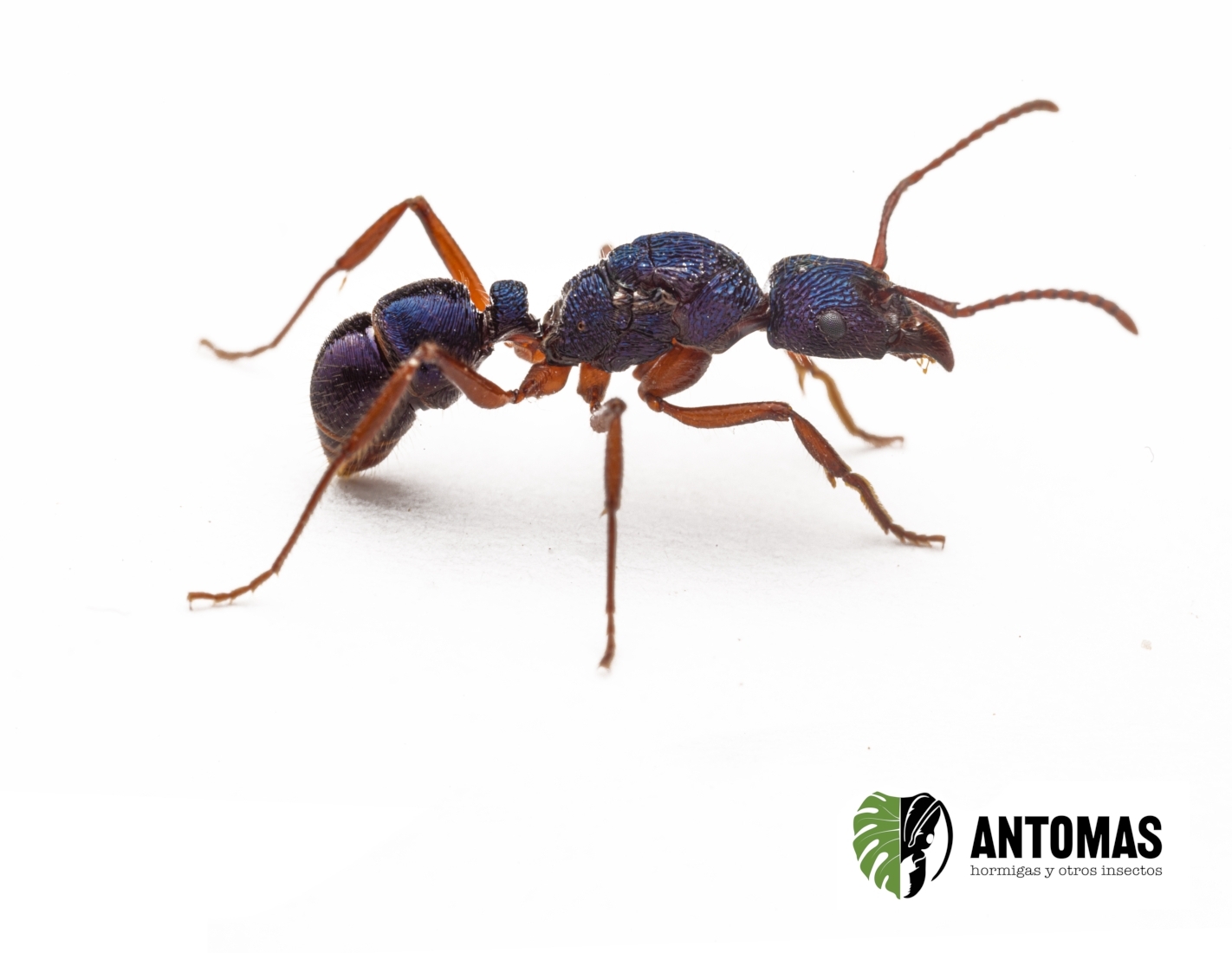
Rhytidoponera aspersa has a robust and compact body, slightly larger and stockier than Rhytidoponera metallica.
Its most striking feature is the intense bluish metallic coloration, especially visible under direct lighting, producing blue, violet, or greenish reflections depending on the angle.
The body has a rough and shiny texture characteristic of the genus.
The mandibles are strong and the sting is fully developed, although the sting is presumed to be less aggressive to humans than that of other more defensive Australian ants.
It does not show marked polymorphism among workers, maintaining a relatively uniform appearance within the colony.
Approximate measurements:
Workers: 6 – 9 mm
Queen: 8 – 10 mm
Captive Care
Rhytidoponera aspersa is a relatively hardy and adaptable species, suitable for keepers with some experience in Australian ants.
Recommended parameters:
Temperature: 22 – 27 °C
Humidity: 50 – 70 %
Nests: naturalistic systems or mineral materials with well-defined humidity gradients.
It accepts nests with sand, clay, compact soil, or mixtures of coconut fiber and mineral substrate well.
It is important to provide both slightly humid zones and drier areas within the nest, allowing the ants to regulate the location of the brood according to their needs.
The diet should be structured around:
Carbohydrates: sugary liquids, diluted honey, or nectars
Proteins: small insects and pieces of prey
It is a fairly active species during foraging and is generally not problematic in terms of feeding.
It does not usually climb completely smooth surfaces particularly well, although appropriate escape barriers should be maintained due to its speed.
Although its sting appears to be less problematic for humans than that of other more aggressive Australian ants, direct handling is not recommended.