This website uses its own and third-party cookies to improve our services and show you advertising related to your preferences by analyzing your browsing habits. To give your consent to its use, press the Accept button.
Cookie preferences
| Cookie | Provider | Purpose | Expiry |
|---|---|---|---|
| PHP_SESSID | antomas.es | The PHPSESSID cookie is native to PHP and allows websites to store serialised status data. On the website it is used to establish a user session and to pass state data through a temporary cookie, which is commonly known as a session cookie. These Cookies will only remain on your computer until you close your browser. | Session |
| PrestaShop-# | antomas.es | This is a cookie used by Prestashop to store information and keep the user's session open. It stores information such as currency, language, customer ID, among other data necessary for the proper functioning of the shop. | 480 hours |
| rc::a | It is used to read and filter bot requests. | Persistent | |
| rc::c | It is used to read and filter bot requests. | Persistent |
| Cookie | Provider | Purpose | Expiry |
|---|---|---|---|
| _ga | Registers a unique ID that is used to generate statistical data on how the visitor uses the website. | 2 years | |
| _gat | Used by Google Analytics to throttle request rate | 1 day | |
| _gat_gtag_UA_# | Used to throttle request rate. | 1 minute | |
| _gd# | This is a Google Analytics Session cookie used to generate statistical data on how you use the website which is removed when you quit your browser. | Session | |
| _gid | Registers a unique ID that is used to generate statistical data on how the visitor uses the website. | 1 day |
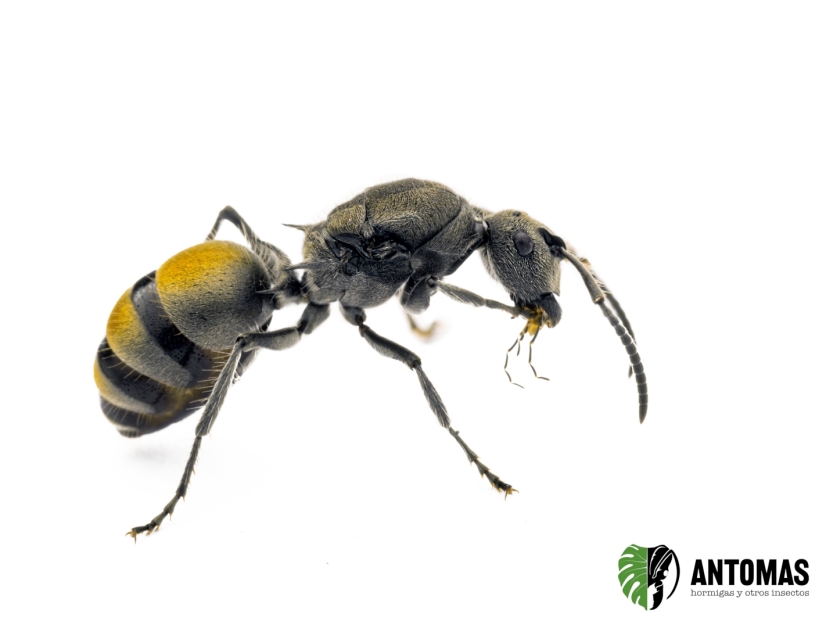
Polyrhachis vermiculosa – Golden Gaster Spiny Ant
Biology
Polyrhachis vermiculosa is a small spiny ant native to Australia, mainly distributed throughout Queensland and New South Wales. It inhabits warm or temperate regions associated with open eucalyptus forests, wooded areas, and habitats with abundant stones, branches, and leaf litter.
Although many Polyrhachis species build nests among leaves or use silk produced by their larvae, P. vermiculosa belongs to the subgenus Chariomyrma, composed mainly of terrestrial species. Its colonies usually establish themselves in the ground, taking advantage of small protected cavities beneath stones, logs, or accumulations of plant material.
It is an omnivorous and opportunistic species. Workers obtain energy from nectar, honeydew, and other sugary liquids, while the larvae are fed mainly with small insects, spiders, and other arthropods.
In captivity, it shows a rapid response to flies, small crickets, young cockroaches, and other appropriately sized feeder insects.
Workers are usually cautious and somewhat shy while the colony is still small. Their activity increases significantly as the colony grows and is mainly concentrated during periods of low light, especially at dusk and during the night.
The colony operates like a small team of explorers: a few workers constantly inspect the surroundings and, when they locate food, recruit their nestmates using chemical signals. Their behavior is active and easy to observe without requiring the large facilities needed by other species.
The maximum colony size and natural reproductive structure have not yet been fully documented. As a precaution, it should be considered a monogynous species in captivity, keeping a single queen and avoiding the introduction of individuals from different wild collections or colonies.
The founding method has also not been described with sufficient precision for all populations. In captivity, it is advisable to treat the queen as semi-claustral, providing her with access to small amounts of food from the very beginning.
A founding queen should have a dark, narrow chamber connected to a small foraging area. Microdrops of nectar, sugar water, or freshly killed tiny prey can be offered.
The larvae form pupae protected by cocoons, so they benefit from small particles of sand, plant fiber, or fine substrate that help with cocoon spinning.
It does not require a cold diapause. Northern populations come from regions with relatively mild winters and can remain active throughout the year if kept under stable conditions.
Size and Morphology
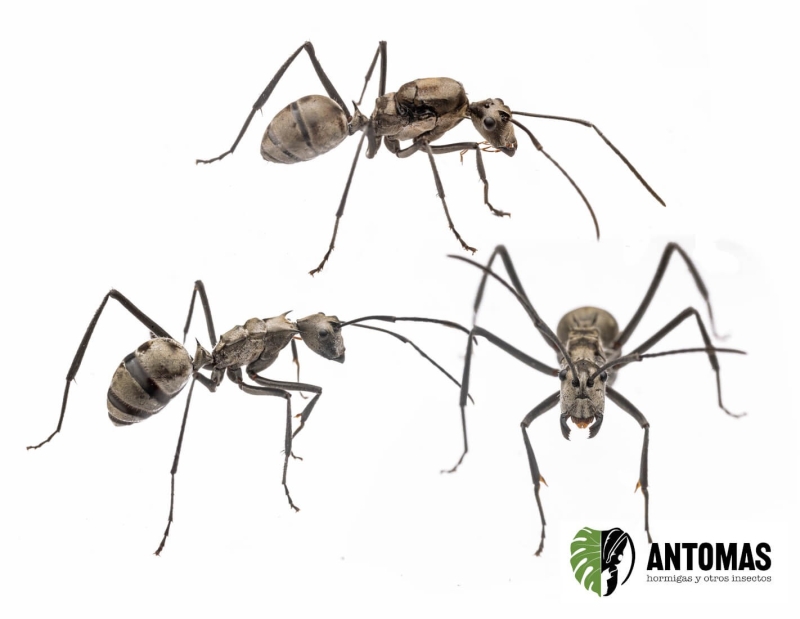
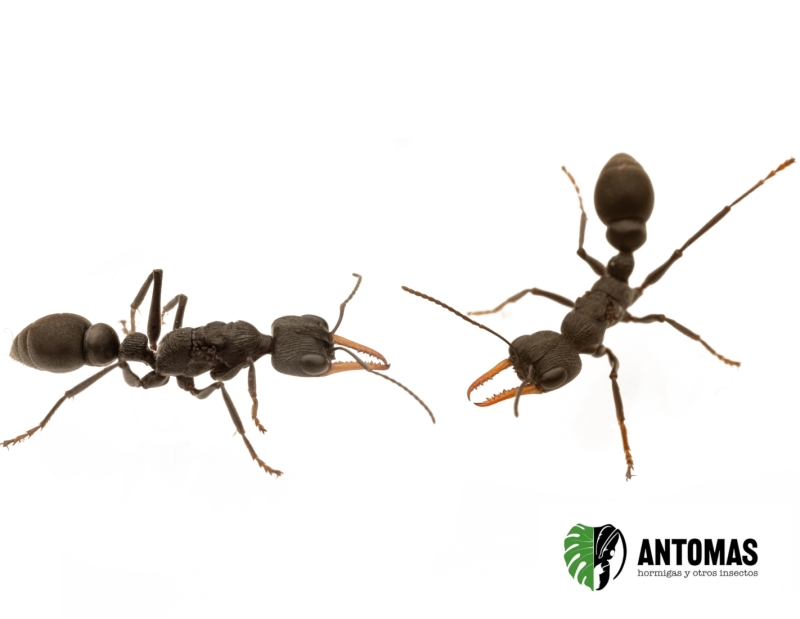
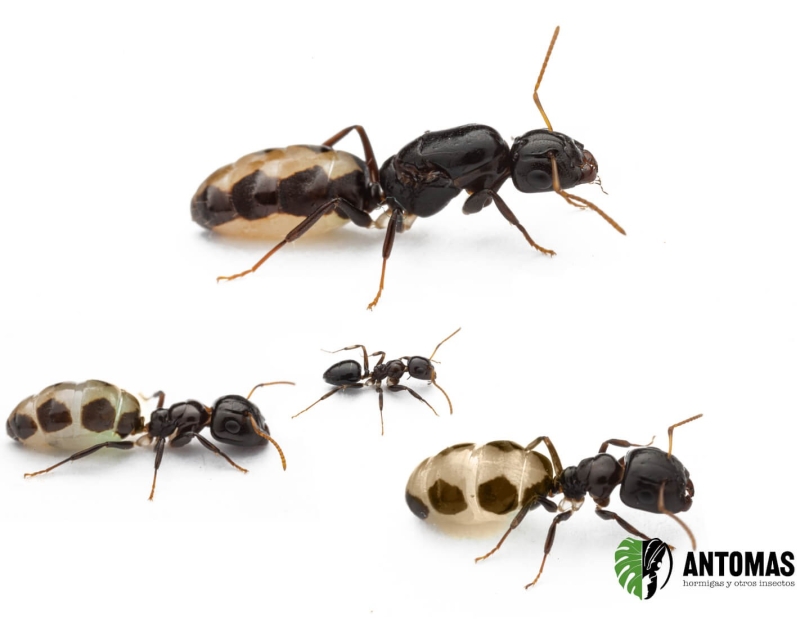
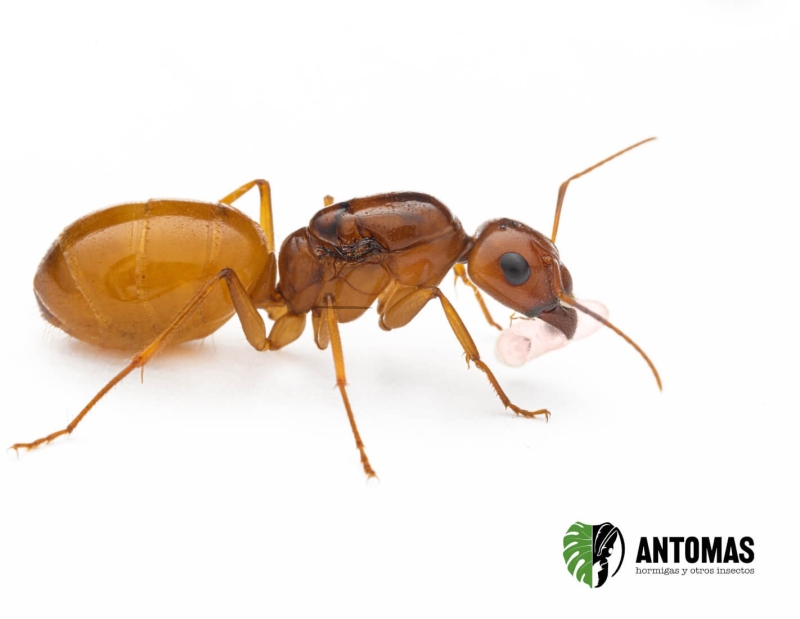
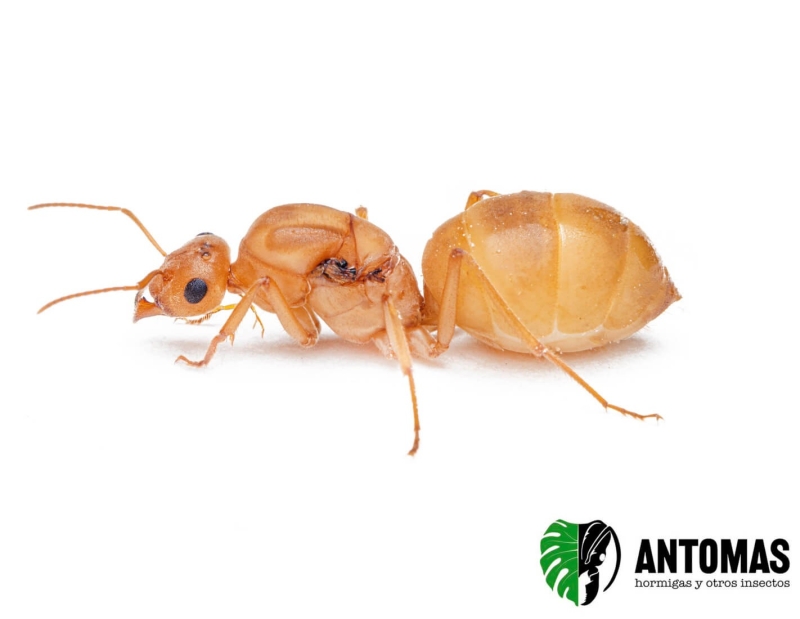
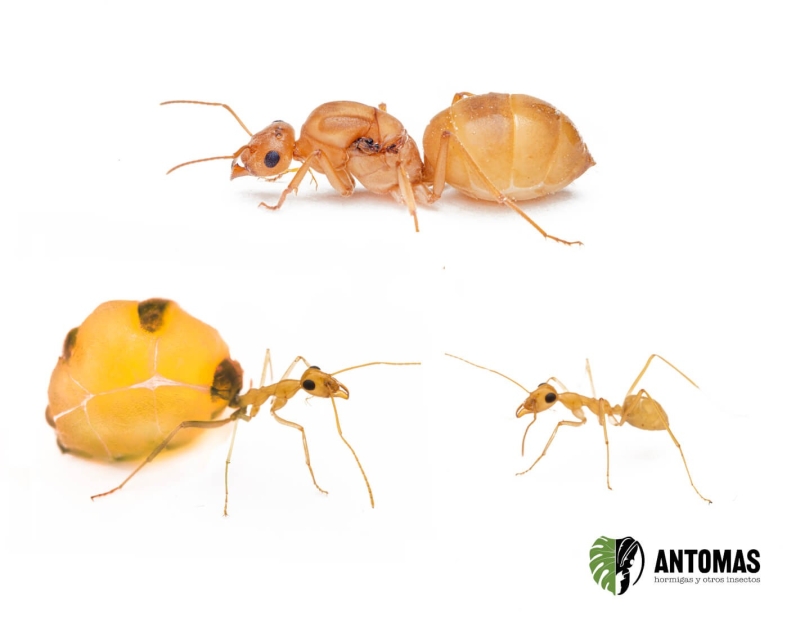
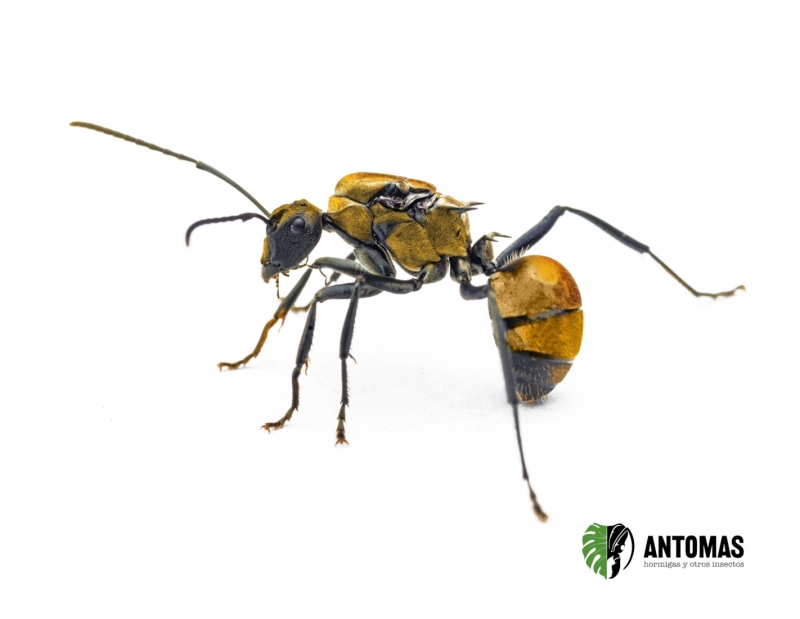
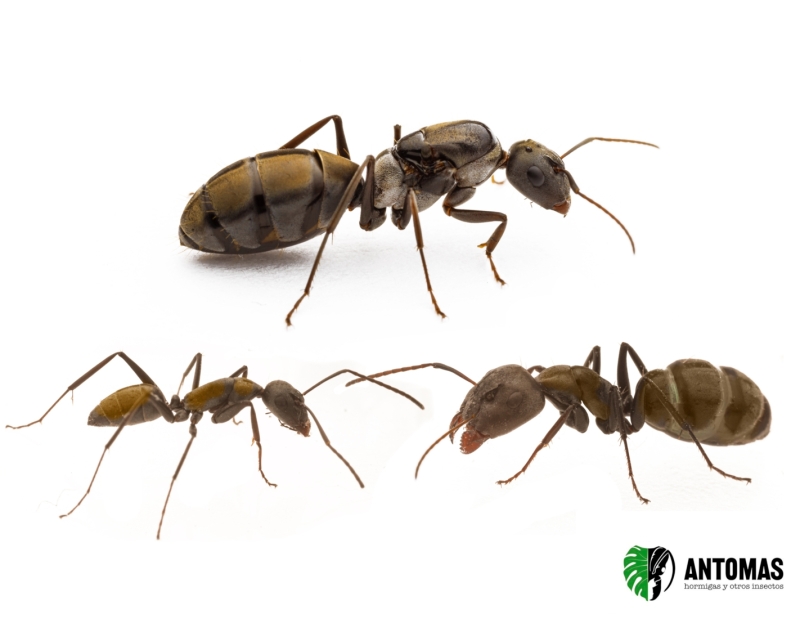
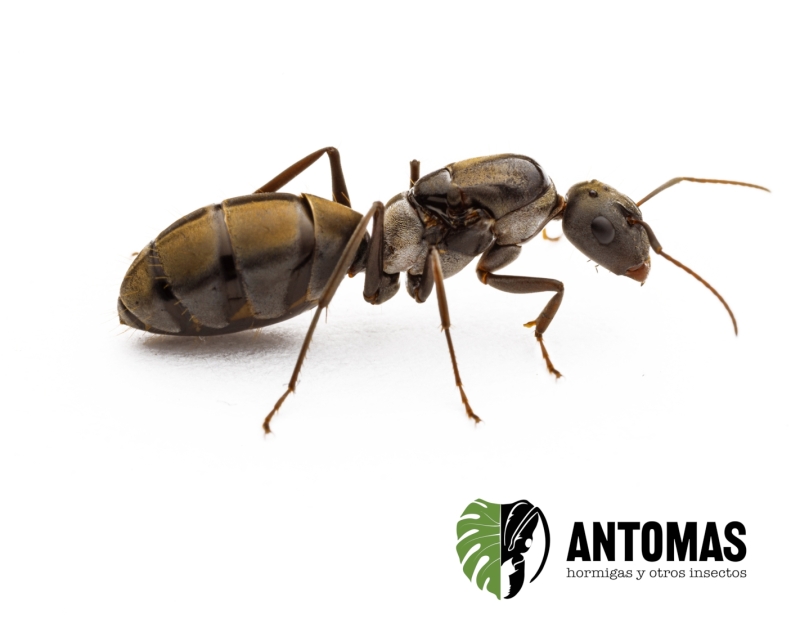
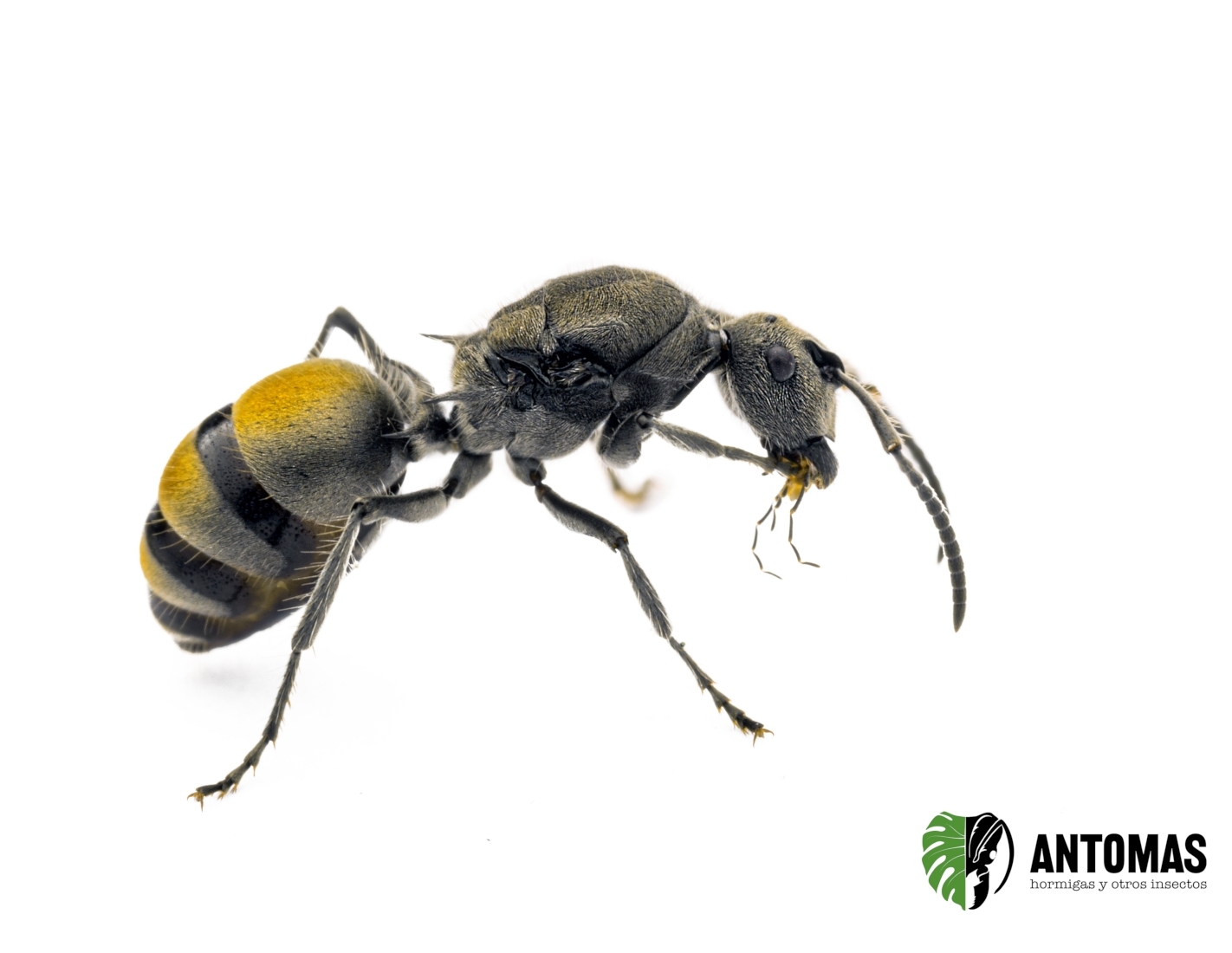
Polyrhachis vermiculosa is a medium-sized and elegant species, with a dark body and characteristic golden pubescence concentrated mainly on the gaster.
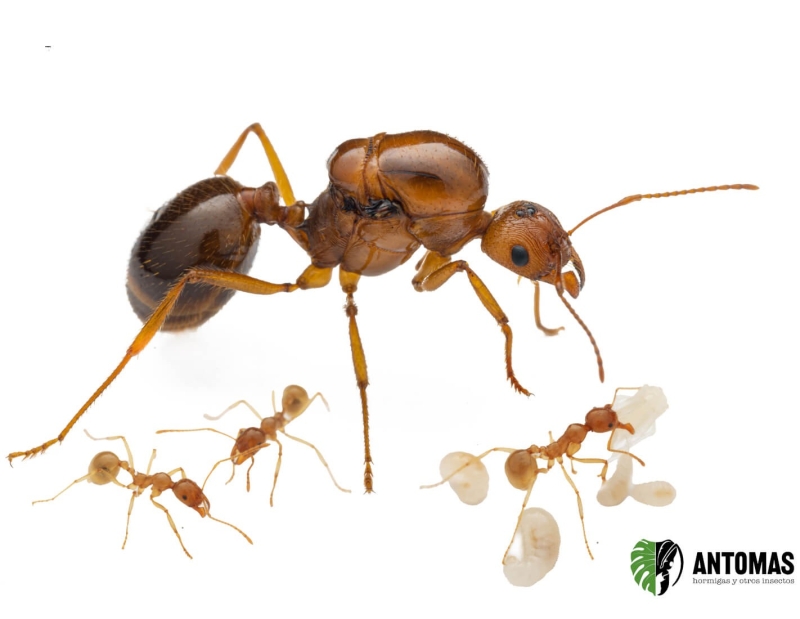
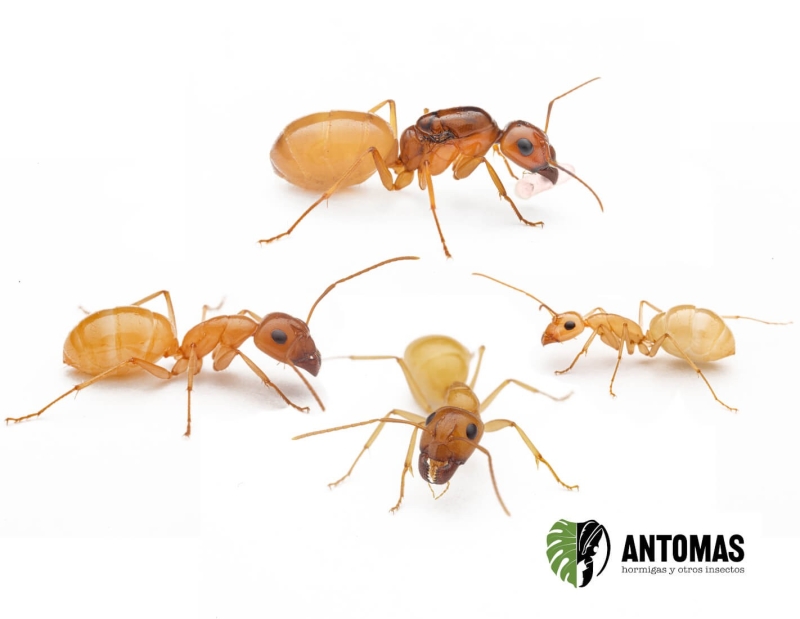
Minor workers show a very light yellow or yellow-orange coloration. They have a slender body, relatively long legs, and a proportionate head.
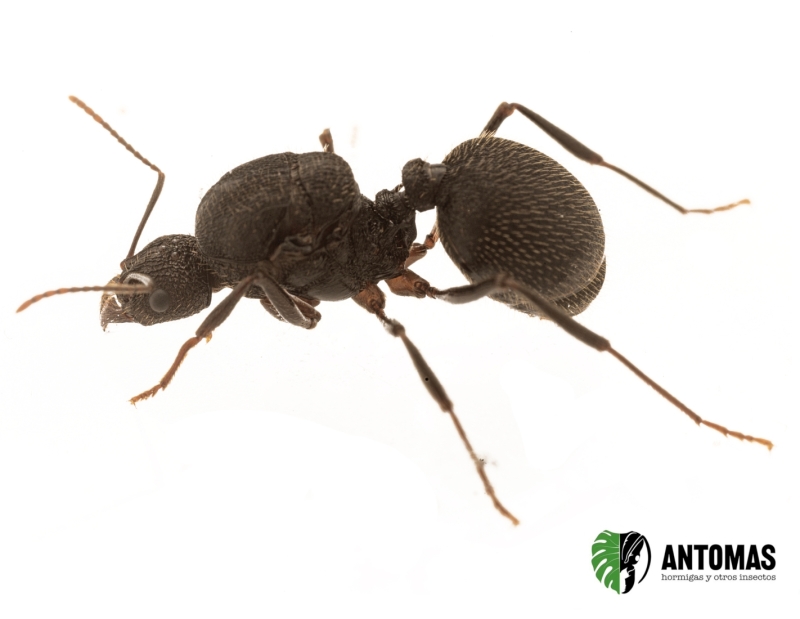
Its specific name, vermiculosa, refers to the marked sculpture of its exoskeleton. The surface of the head and mesosoma shows grooves and irregular textures.
The body is not completely smooth or shiny. The combination of sculpture, pubescence, and coloration produces a rough, velvety appearance that changes depending on the light.
The mesosoma and petiole have defensive spines. These structures do not inject venom, but they make it difficult for small predators to grab or swallow the ant.
The legs are relatively long and allow it to move agilely across the ground, branches, and vertical surfaces. There is no differentiated soldier caste.
As a member of the subfamily Formicinae, it lacks a functional sting. Instead, it has an acidopore at the end of the gaster, from which it can release formic acid as a defense.
Approximate measurements
- Workers: 6–8 mm
- Queen: 9–11 mm
CAPTIVE CARE
The difficulty of Polyrhachis vermiculosa can be considered low-intermediate. Its small size, manageable growth, and absence of a sting make it quite accessible, although it still requires attention to humidity, ventilation, and escapes.
Recommended parameters
- Active temperature: 23–27 °C
- Optional warm spot: 27–28 °C
- Nest humidity: 50–70 %
- Nest: compact, with a humidity gradient and good visibility
A humidity gradient should be provided, keeping part of the nest moderately humid for eggs and larvae and another area drier for pupae and resting workers.
It is not advisable to keep all chambers soaked. Constant excess humidity can encourage fungi, waste accumulation, and brood transfer to less suitable areas.
During founding, the queen needs a small, protected space. An overly large formicarium can cause stress, make food harder to locate, and slow down initial development.
RECOMMENDED FORMICARIA
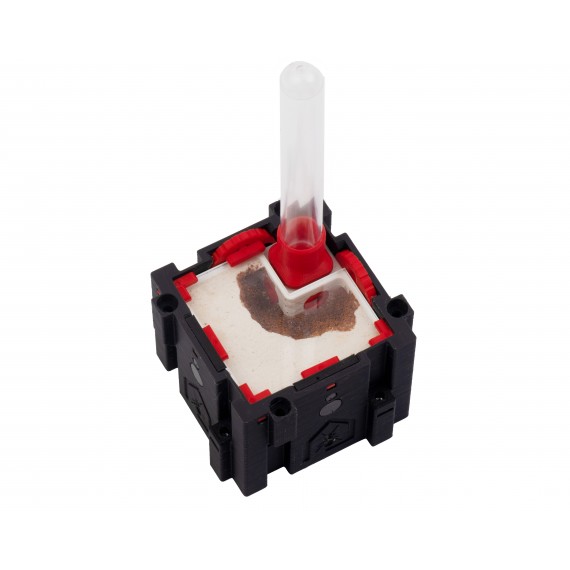
Due to the small size of the queen, workers, and first colonies, one of the most suitable systems is:
Its reduced galleries allow the queen and first workers to be kept in a proportionate space, avoiding the premature installation of the colony in oversized chambers.
The evaporation version is especially useful in dry rooms or when heating is used, as it helps maintain more stable humidity without soaking the nest.
Seasonal rest
A strong diapause is not recommended for P. vermiculosa. In the absence of an exact locality of origin, it can be kept during winter with only a slight reduction in temperature and activity.
If the colony remains active and maintains larvae, it should continue receiving proteins. Water and carbohydrates should not be removed during this period.
It should not be exposed to temperatures close to 10 °C or to the cold rest used for species from Canberra, Melbourne, or Tasmania.
Feeding
Carbohydrates
- Ant-specific nectar
- Sugar water
- Diluted honey
- Balanced syrups
- Small portions of ripe fruit occasionally
Sugary liquids should be offered regularly. Due to the small size of the workers, it is preferable to use microdrops or safe feeders that prevent them from becoming trapped.
Proteins
- Fruit flies
- Small flies
- Micro crickets
- Young or chopped cockroaches
- Mosquitoes
- Small moths
- Chopped mealworm
During founding, freshly killed and small prey should be offered. A solitary queen should not face crickets or cockroaches capable of defending themselves.
When large larvae are present, protein consumption increases considerably. During periods with eggs or pupae, the colony may show less interest in proteins.
Behavior in Captivity
Early colonies show discreet activity and may keep few workers outside. This behavior should not be confused with a lack of appetite, as the species tends to be cautious at first.
As the population increases, foraging routes and recruitment become more visible. Workers explore both the ground and branches, plants, and vertical surfaces.
They climb easily on glass, plastic, and silicone joints. The foraging area must have an escape barrier in good condition, and connections should be checked frequently.
They are fast ants, but not especially aggressive toward the keeper. When disturbed, they usually retreat, scatter, or use their chemical defenses.
Handling and Safety
Polyrhachis vermiculosa has no sting and represents no significant risk.
Direct handling of the queen or workers is not recommended. Transfers should be carried out using tubes, auxiliary containers, or suitable entomological aspirators.