This website uses its own and third-party cookies to improve our services and show you advertising related to your preferences by analyzing your browsing habits. To give your consent to its use, press the Accept button.
Functional cookies are strictly necessary to provide the services of the shop, as well as for its proper functioning, so it is not possible to refuse their use. They allow the user to browse through our website and use the different options or services that exist on it.
Cookie
Provider
Purpose
Expiry
PHP_SESSID
antomas.es
The PHPSESSID cookie is native to PHP and allows websites to store serialised status data. On the website it is used to establish a user session and to pass state data through a temporary cookie, which is commonly known as a session cookie. These Cookies will only remain on your computer until you close your browser.
Session
PrestaShop-#
antomas.es
This is a cookie used by Prestashop to store information and keep the user's session open. It stores information such as currency, language, customer ID, among other data necessary for the proper functioning of the shop.
These are cookies that collect information about the advertisements shown to users of the website. They can be anonymous, if they only collect information about the advertising spaces shown without identifying the user, or personalised, if they collect personal information about the user of the shop by a third party, for the personalisation of these advertising spaces.
Collect information about the user's browsing experience in the shop, usually anonymously, although sometimes they also allow the user to be uniquely and unequivocally identified in order to obtain reports on the user's interests in the products or services offered by the shop.
Rhytidoponera metallica is an Australian species widely distributed throughout coastal regions and open forests across eastern and southern Australia. It inhabits open woodland, dry sclerophyll forests, gardens, urban areas, and warm sunny environments where the soil offers suitable nesting conditions.
It is a highly characteristic ant due to its intense metallic coloration and its unusual social organization. In many colonies, reproduction may be carried out by mated workers known as gamergates, rather than by a clearly differentiated queen. This trait makes it especially interesting from an ethological point of view.
It is an opportunistic and omnivorous species, capable of exploiting a wide variety of food resources. It consumes small arthropods, carrion, sugary liquids, nectar, seeds, and other available organic matter.
Hunting is usually carried out individually. Workers use their strong mandibles and functional sting to subdue small prey and defend themselves against threats.
It is mainly diurnal, although in especially hot climates part of its foraging activity may shift to cooler hours of the day.
Colonies usually remain moderate in size, typically ranging from a few dozen to several hundred individuals, depending on environmental conditions and food availability.
Colony founding is semi-claustral, and queens commonly need to feed during the early stages of development. In some cases, reproductive workers may play an important role in maintaining the colony.
Size and Morphology
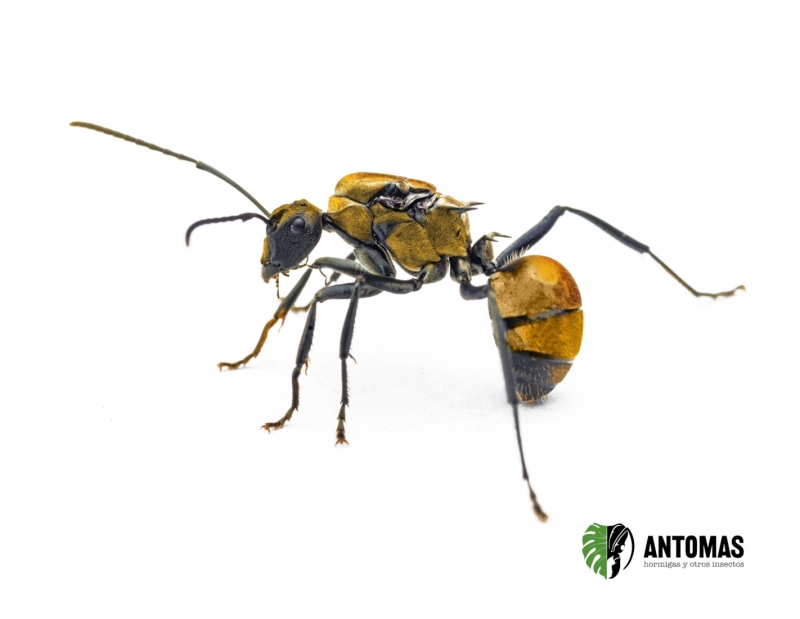
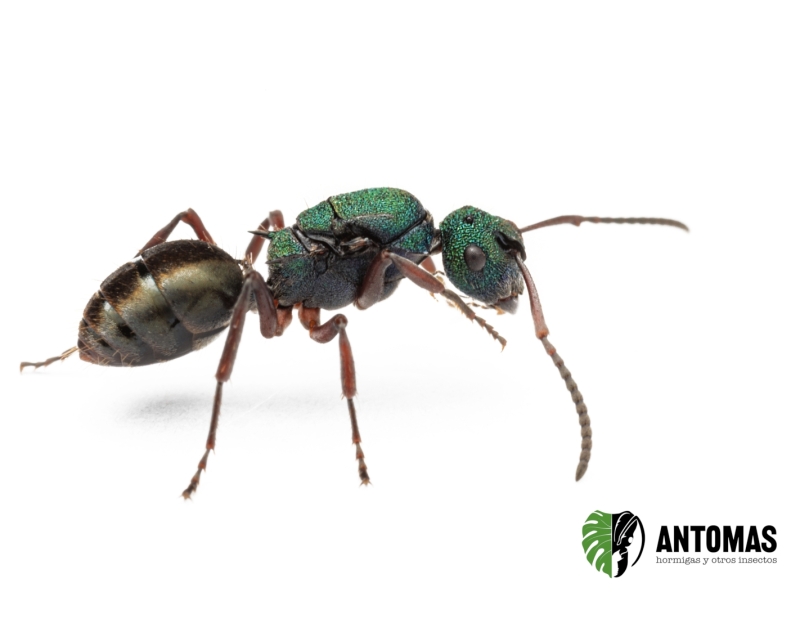
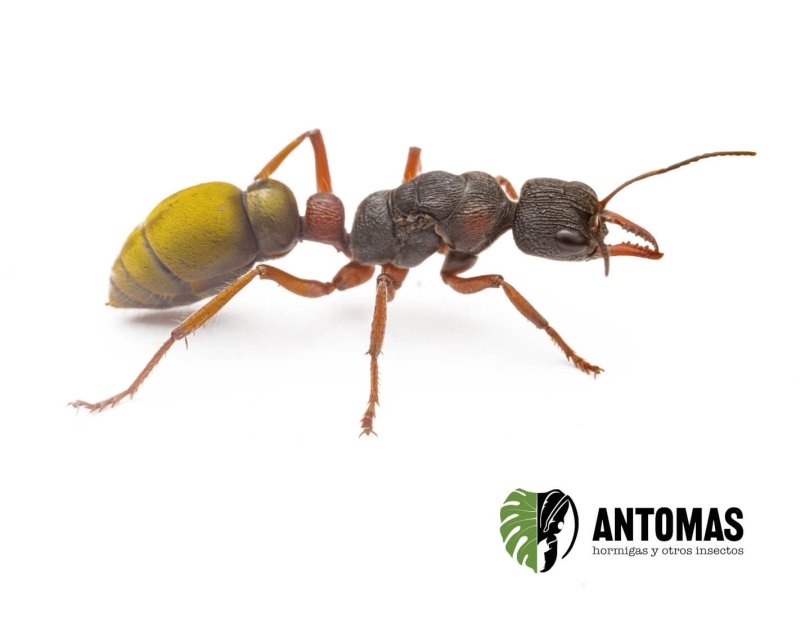
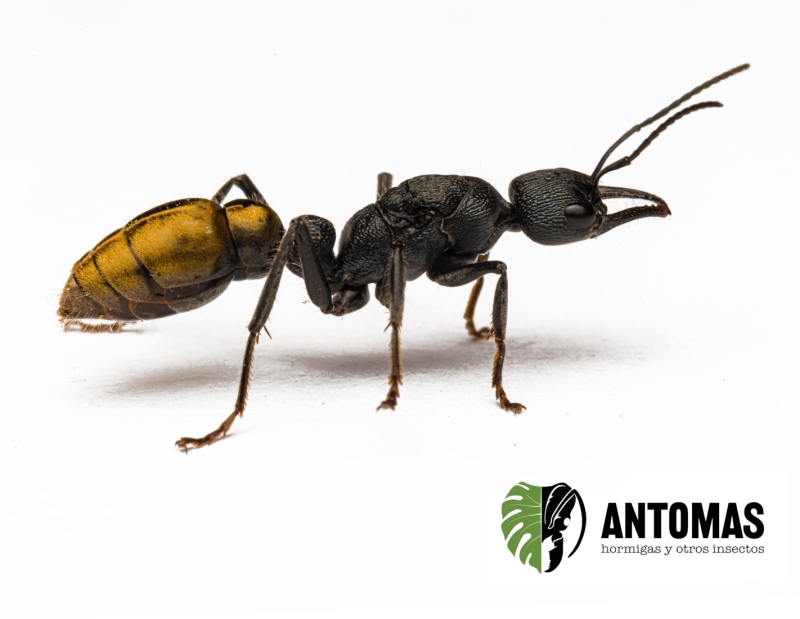
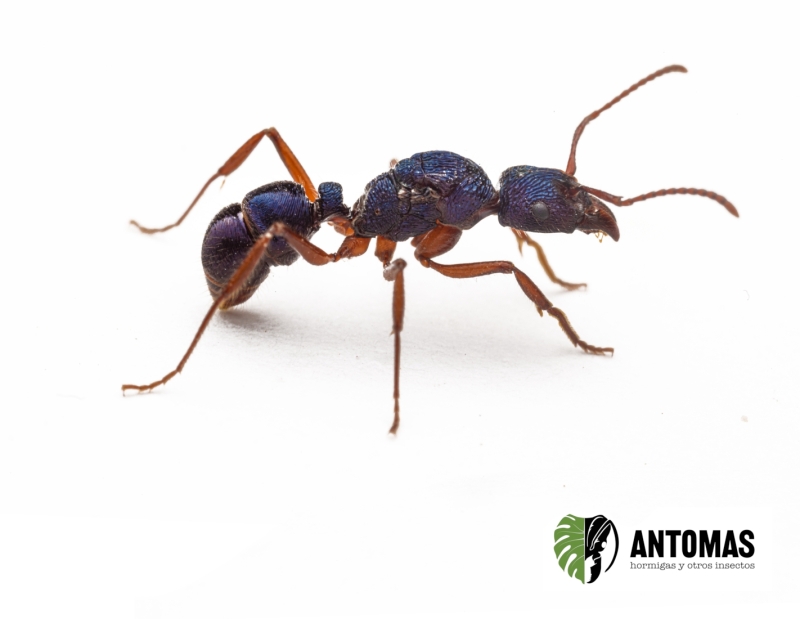
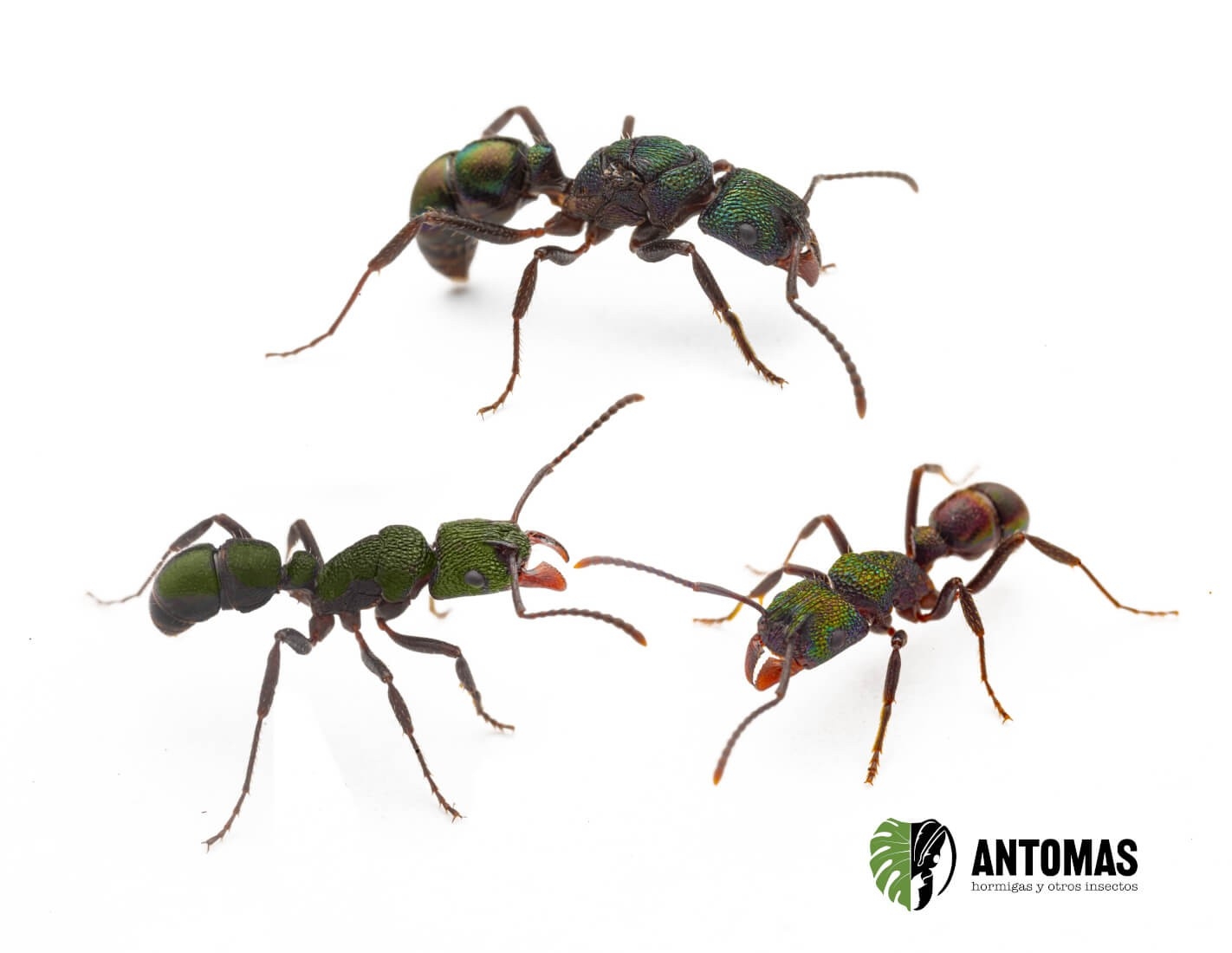
Rhytidoponera metallica has a compact and robust body, with a very characteristic appearance due to its metallic sheen. Coloration may vary between green, blue, violet, copper, and golden tones depending on the light angle.
The body usually has a slightly rough and shiny texture. The legs are relatively long and provide great mobility during foraging.
The mandibles are strong and the sting is fully developed, capable of producing a painful sting if the ant feels threatened.
It does not show marked polymorphism among workers, maintaining a fairly uniform appearance within the colony.
Approximate measurements:
Workers: 5 – 8 mm
Gamergates / reproductives: 7 – 8 mm
Captive Care
Rhytidoponera metallica is a very hardy and adaptable species.
Recommended parameters:
Temperature: 22–27 °C
Humidity: 50–70 %
Nests: mineral or natural materials, with dry and slightly humid areas.
It is important to provide both dry and slightly humid areas within the nest, allowing the ants to select the most suitable conditions according to their needs.
It may undergo a mild winter slowdown if temperatures drop moderately, although it usually does not require a strict diapause.
The diet should be structured around:
Carbohydrates: sugary liquids, nectars, and diluted honey offered regularly
Proteins: small insects, dead prey, pieces of cockroach, cricket, fly larvae, etc.
They readily accept a wide variety of foods and show a fairly active foraging response.
It is not usually a particularly escape-prone species, although the workers are fast and very curious. They do not have a strong ability to climb completely smooth surfaces, but the use of escape barriers is still recommended.
Due to their powerful sting, they should never be handled directly; entomological tools should always be used.