This website uses its own and third-party cookies to improve our services and show you advertising related to your preferences by analyzing your browsing habits. To give your consent to its use, press the Accept button.
Functional cookies are strictly necessary to provide the services of the shop, as well as for its proper functioning, so it is not possible to refuse their use. They allow the user to browse through our website and use the different options or services that exist on it.
Cookie
Provider
Purpose
Expiry
PHP_SESSID
antomas.es
The PHPSESSID cookie is native to PHP and allows websites to store serialised status data. On the website it is used to establish a user session and to pass state data through a temporary cookie, which is commonly known as a session cookie. These Cookies will only remain on your computer until you close your browser.
Session
PrestaShop-#
antomas.es
This is a cookie used by Prestashop to store information and keep the user's session open. It stores information such as currency, language, customer ID, among other data necessary for the proper functioning of the shop.
These are cookies that collect information about the advertisements shown to users of the website. They can be anonymous, if they only collect information about the advertising spaces shown without identifying the user, or personalised, if they collect personal information about the user of the shop by a third party, for the personalisation of these advertising spaces.
Collect information about the user's browsing experience in the shop, usually anonymously, although sometimes they also allow the user to be uniquely and unequivocally identified in order to obtain reports on the user's interests in the products or services offered by the shop.
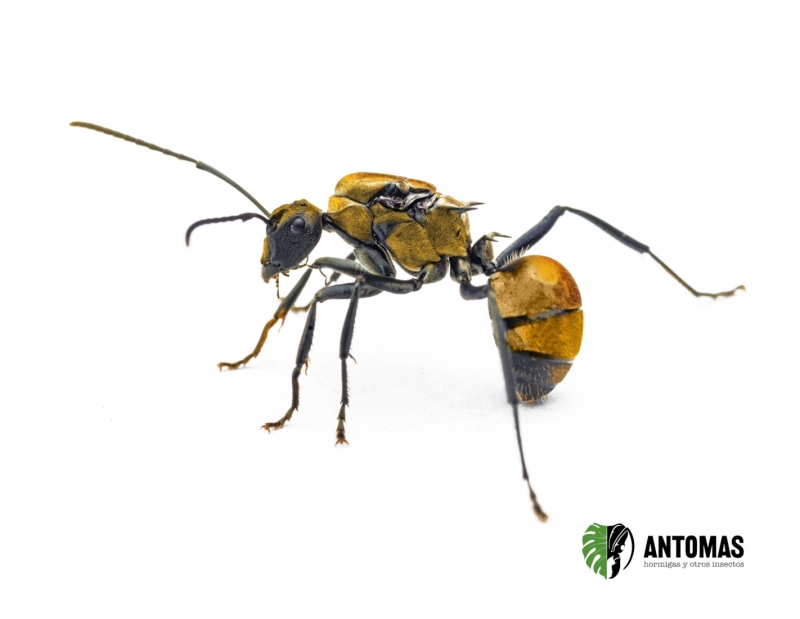
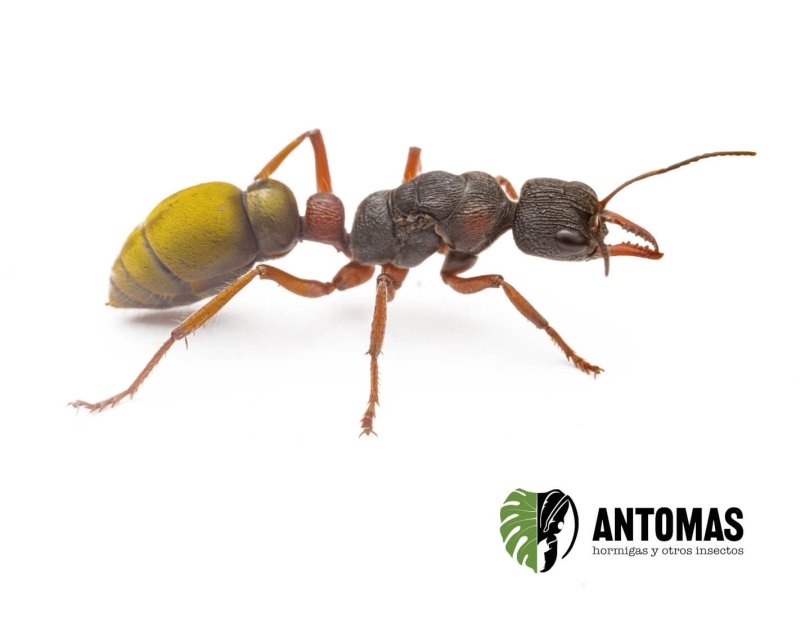
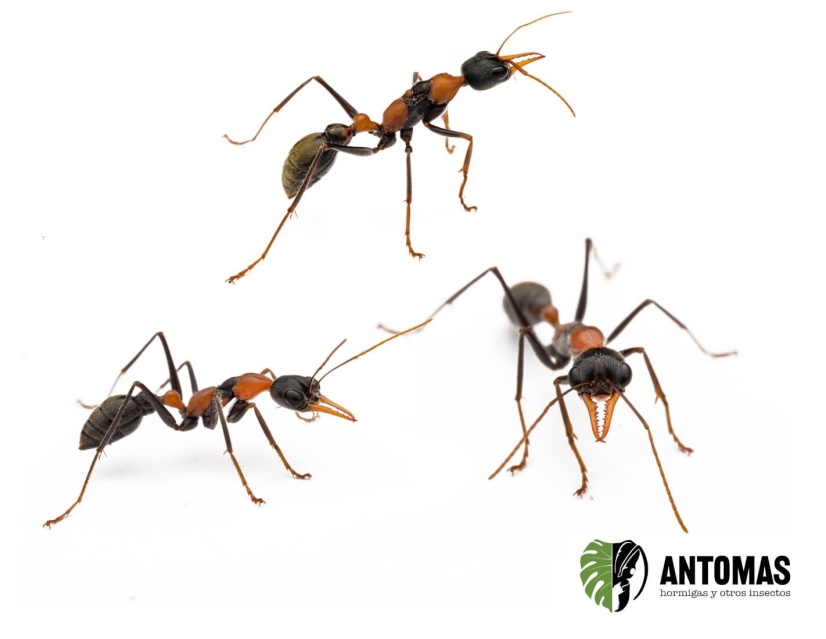
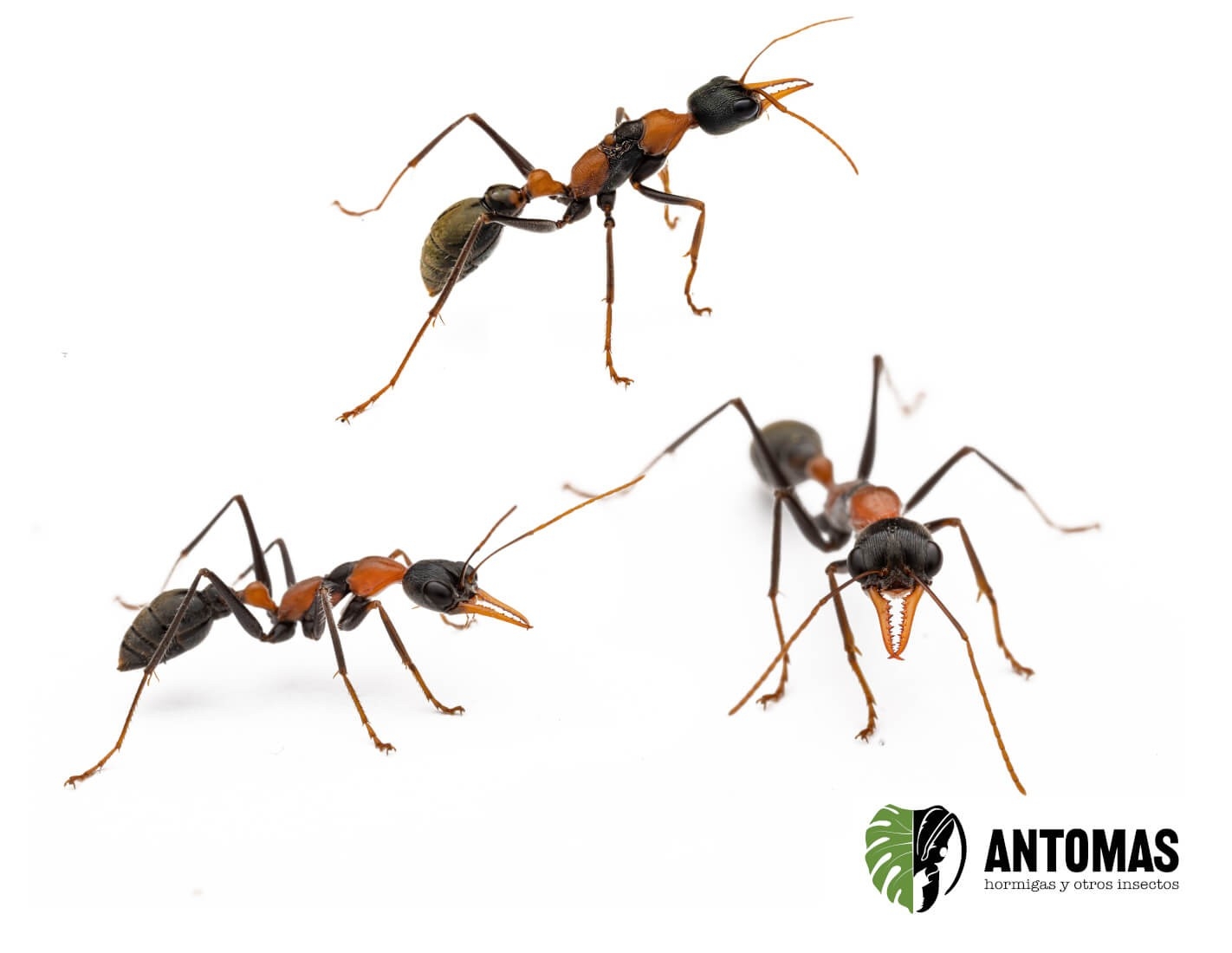
Myrmecia nigrocincta is a species typical of Western Australia, and one of the few Myrmecia species adapted to tropical climates, also occurring in northwestern Australia. Its striking coloration, combining black and orange patterns, gives it a highly distinctive appearance and is the origin of its scientific name.
Beyond its visual appeal, it stands out for its great agility. It moves easily through vegetation, trees, and branches, and is capable of jumping, making it a particularly interesting species from an observational perspective.
It is a diurnal species that relies on its excellent vision to orient itself, detect prey, and hunt. As is characteristic of the genus, it displays an individual hunting strategy, supported by its long mandibles and a highly effective stinger against small invertebrates.
It is a monogynous species and, unlike many other Myrmecia, it does not undergo diapause, remaining active throughout the year under favorable conditions. Colony size is not well documented, although it is estimated that colonies rarely exceed a few thousand individuals.
Colony founding is semi-claustral, meaning that the queen must leave the nest to hunt during the early stages in order to feed the brood.
Size and Morphology
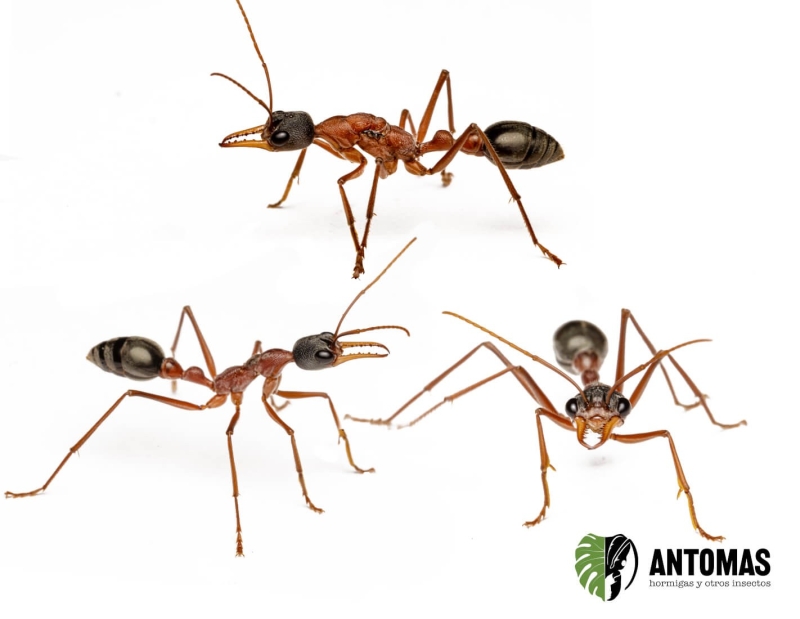
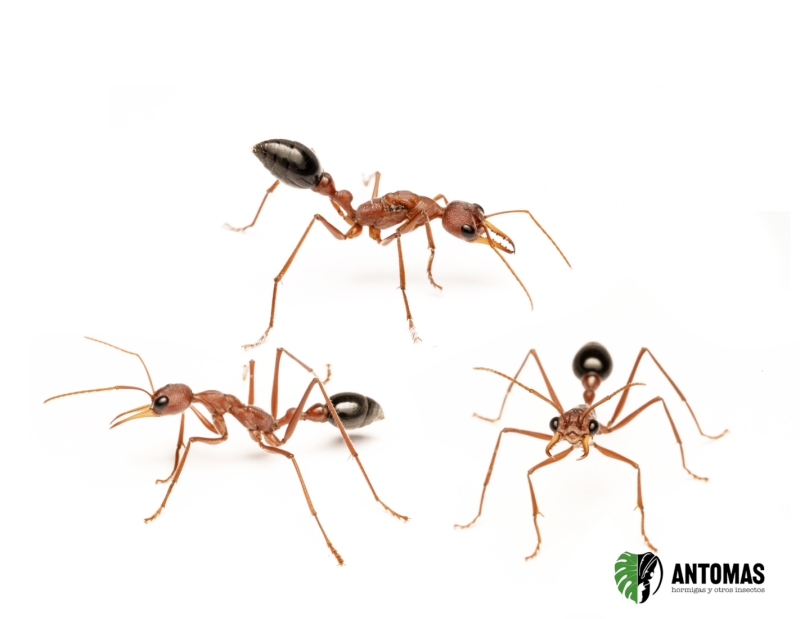
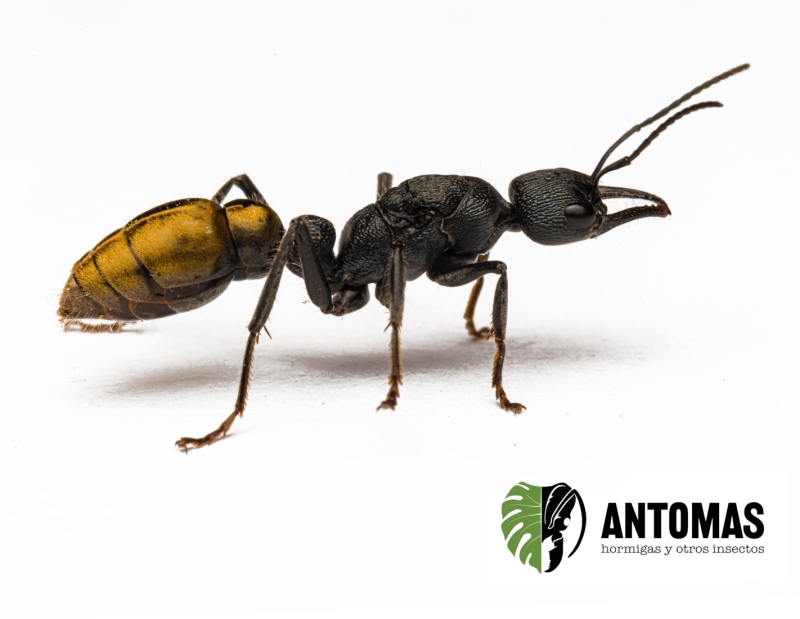
It is a slender and streamlined ant, with long legs that provide excellent mobility and jumping ability. Its size can be considered medium within the genus Myrmecia.
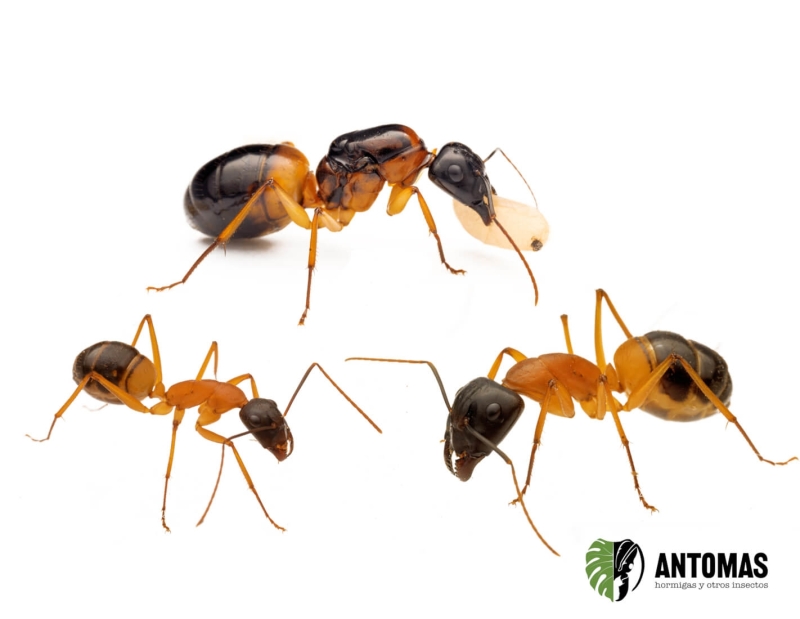
The coloration combines black and orange tones, creating a highly contrasting and easily recognizable pattern.
The compound eyes are highly developed, reflecting its strong dependence on vision. In captivity, it is especially striking how the workers seem to follow external movements, reacting rapidly to any stimulus. This behavior is usually associated with an immediate defensive response.
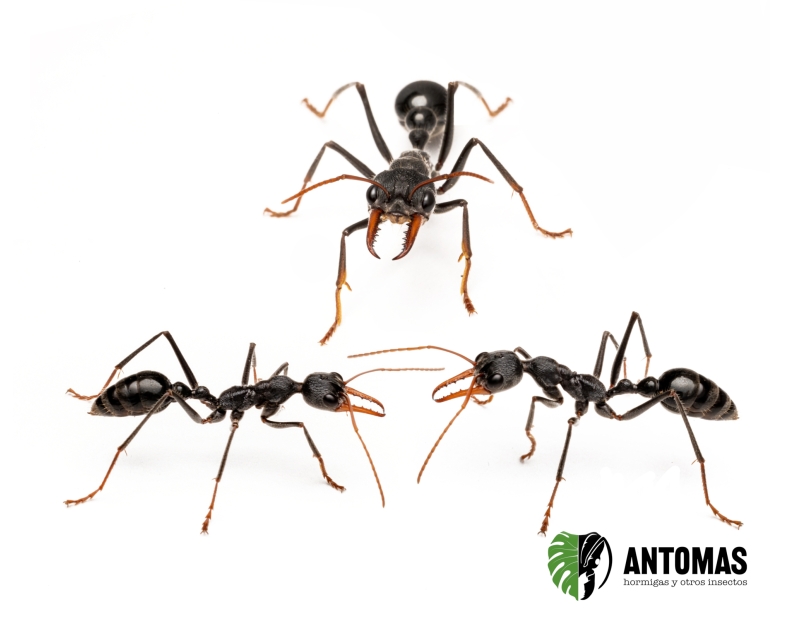
The mandibles are long and toothed, adapted for gripping prey, and the stinger is fully developed, being essential both for hunting and defense.
Approximate measurements
Workers: 13–16 mm
Queen: 17–19 mm
Captive Care
Myrmecia nigrocincta is considered an intermediate difficulty species within the genus. Colony founding can be challenging, and larval cocoon-spinning problems are relatively common if conditions are not adequate.
Recommended conditions:
Temperature: 24–27 °C
Humidity: 50–70 %
Nests: use of natural materials with mixed substrates (coconut fiber, fine sand, clay, or blonde peat), with large chambers that allow proper larval development and favor the cocoon-spinning process
It is essential to establish a humidity gradient within the nest, with more humid areas intended for eggs and larvae, and drier areas for the pupae, avoiding problems during metamorphosis.
Feeding should be structured around two pillars:
Carbohydrates: sugary liquids or nectars offered continuously (ad libitum)
Proteins: small prey such as flies, crickets, or cockroaches (runner). They often show greater interest in protein-rich food when larvae are present in the nest. Unlike other Myrmecia, this species usually accepts previously killed insects, which makes its maintenance easier
Its speed and jumping ability require extreme caution during handling. In addition, it climbs smooth surfaces easily and, due to its relatively smaller size, it is important to secure enclosures properly to prevent escapes.
As this is an aggressive species with a painful sting, direct handling is not recommended under any circumstances, and entomological tools should always be used.