This website uses its own and third-party cookies to improve our services and show you advertising related to your preferences by analyzing your browsing habits. To give your consent to its use, press the Accept button.
Functional cookies are strictly necessary to provide the services of the shop, as well as for its proper functioning, so it is not possible to refuse their use. They allow the user to browse through our website and use the different options or services that exist on it.
Cookie
Provider
Purpose
Expiry
PHP_SESSID
antomas.es
The PHPSESSID cookie is native to PHP and allows websites to store serialised status data. On the website it is used to establish a user session and to pass state data through a temporary cookie, which is commonly known as a session cookie. These Cookies will only remain on your computer until you close your browser.
Session
PrestaShop-#
antomas.es
This is a cookie used by Prestashop to store information and keep the user's session open. It stores information such as currency, language, customer ID, among other data necessary for the proper functioning of the shop.
These are cookies that collect information about the advertisements shown to users of the website. They can be anonymous, if they only collect information about the advertising spaces shown without identifying the user, or personalised, if they collect personal information about the user of the shop by a third party, for the personalisation of these advertising spaces.
Collect information about the user's browsing experience in the shop, usually anonymously, although sometimes they also allow the user to be uniquely and unequivocally identified in order to obtain reports on the user's interests in the products or services offered by the shop.
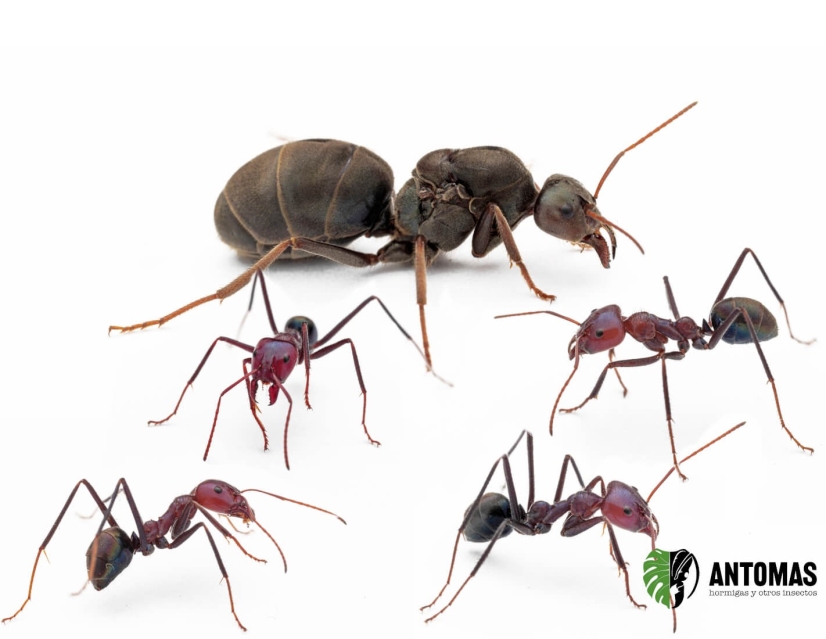
Iridomyrmex purpureus is one of the most iconic and dominant ants in Australia. Its distribution covers much of the continent, where it occupies a wide range of habitats, from open forests and grasslands to semi-arid environments.
It is an extremely adaptable and opportunistic ant. Its diet includes nectar, sugary liquids, honeydew produced by hemipterans, dead insects, carrion, and a wide variety of animal or plant remains available in its environment.
Activity is markedly diurnal. Thousands of workers continuously patrol the territory in search of food, maintaining an extensive network of permanent trails between nests, satellite nests, and resource areas.
Despite being native to Australia, Iridomyrmex purpureus does not remain constantly active throughout the year. Colonies can undergo a clear seasonal slowdown during the colder months, reducing foraging activity and brood development.
Colonies can reach impressive sizes, with several thousand workers and extensive networks of connected underground galleries. Under favorable conditions, they may form very large and long-lived colony systems.
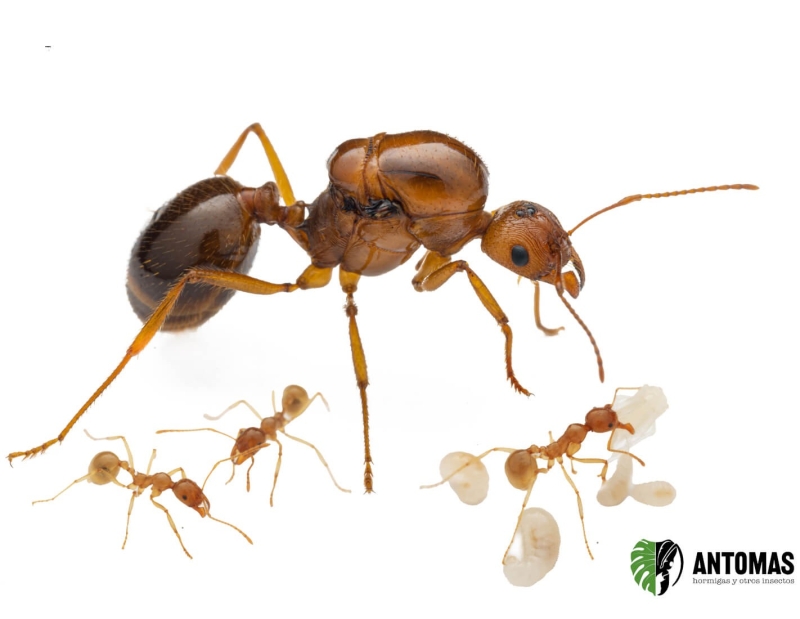
One of the most interesting aspects of this species is its social organization. Iridomyrmex purpureus often shows polygyny, with several functional queens within the same colony, which favors rapid growth and long-term stability.
They are also notable for their complex territorial disputes. Borders between colonies are usually clearly defined and can be maintained through ritualized confrontations involving large numbers of workers.
Founding is claustral, allowing the queen to establish a new colony using only her body reserves during the first stages.
The combination of large populations, multiple queens, extraordinary adaptability, and complex territorial organization makes this species one of the most representative and fascinating ants of the Australian fauna.
Size and Morphology
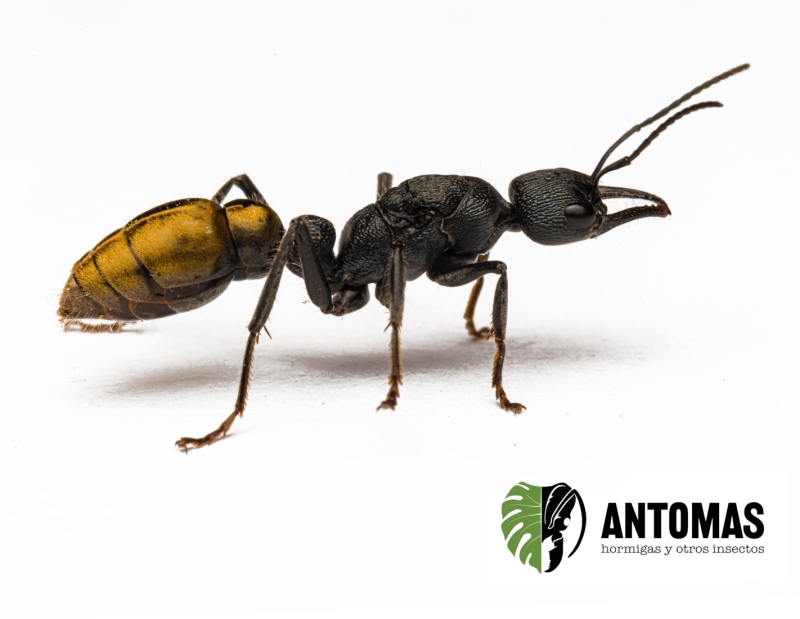
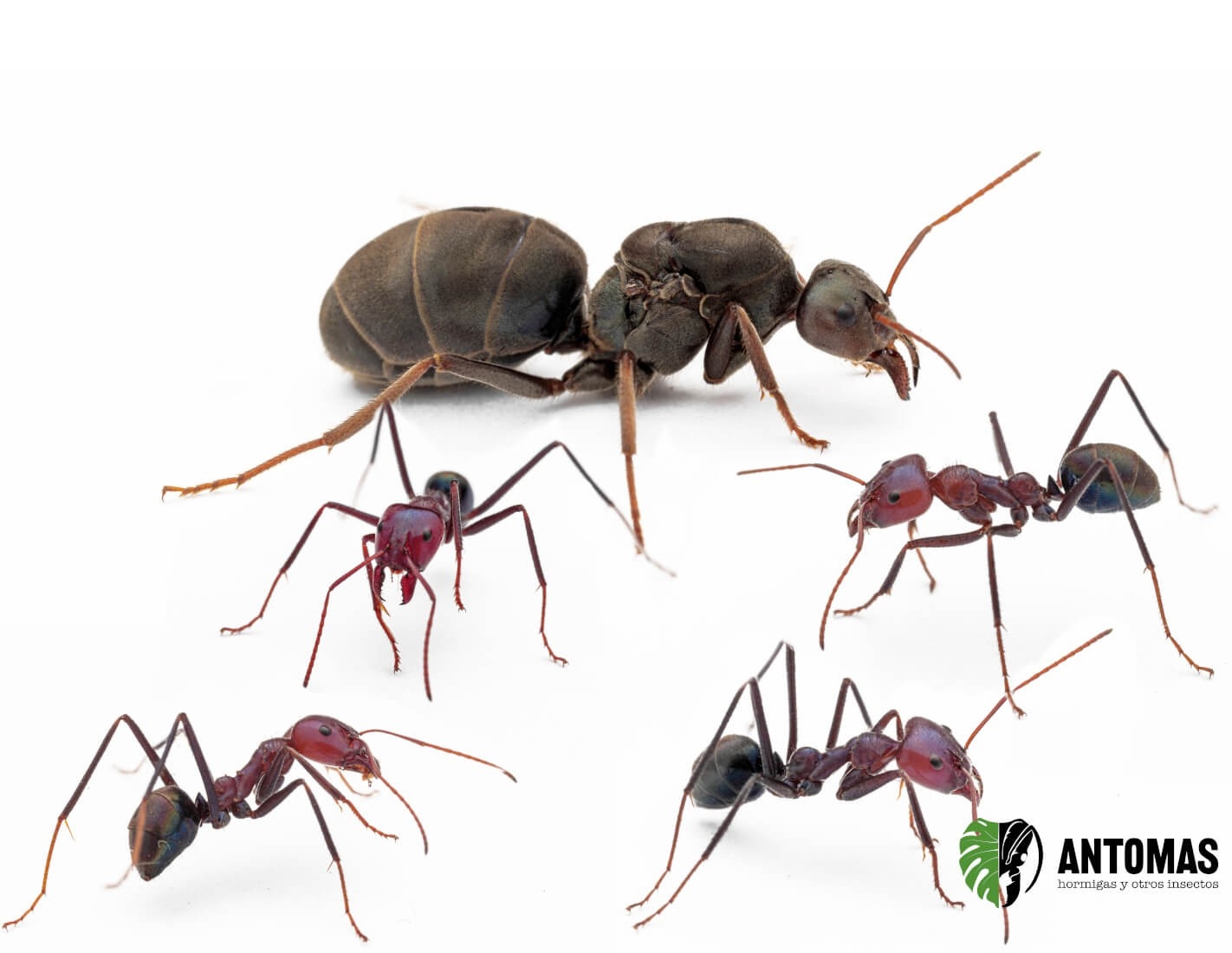
Iridomyrmex purpureus has robust mandibles that are surprisingly powerful for an ant of its size. In addition to being used for food manipulation, they play an important role in defense and territorial interactions.
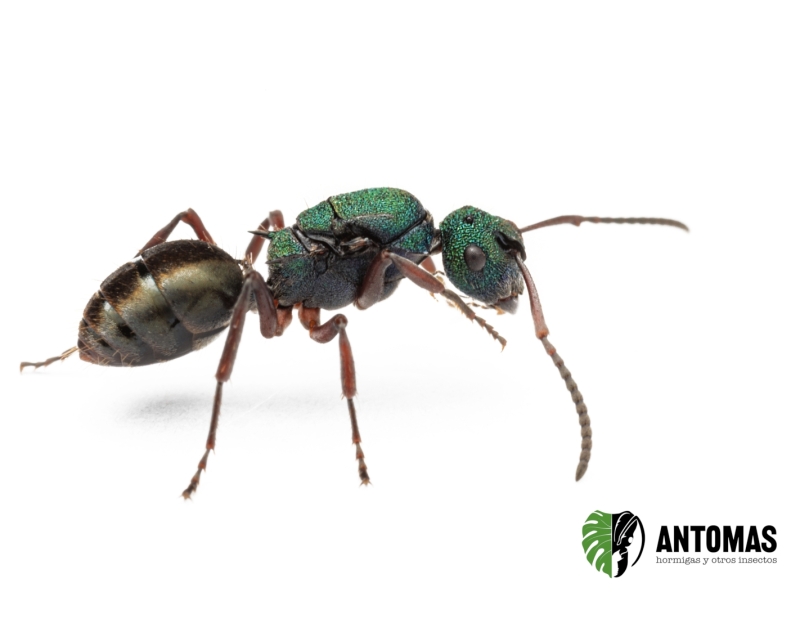
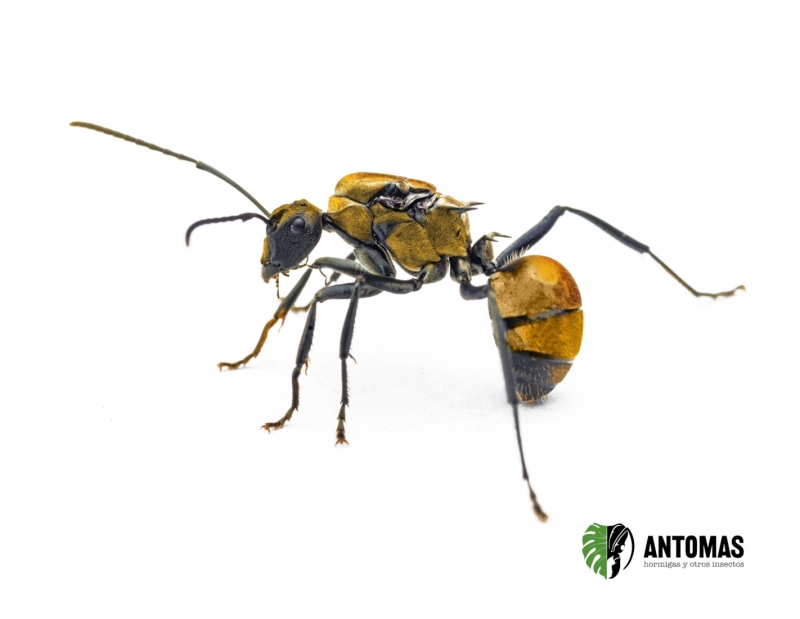
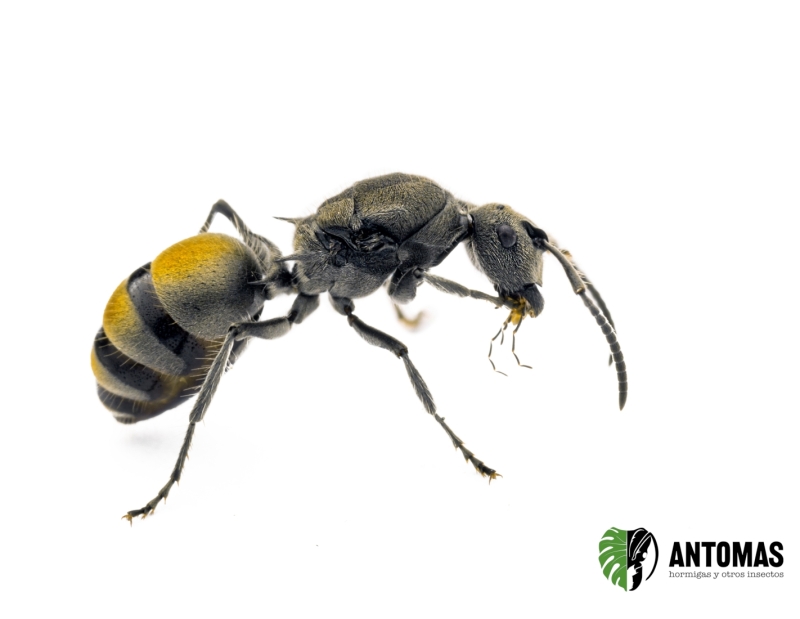
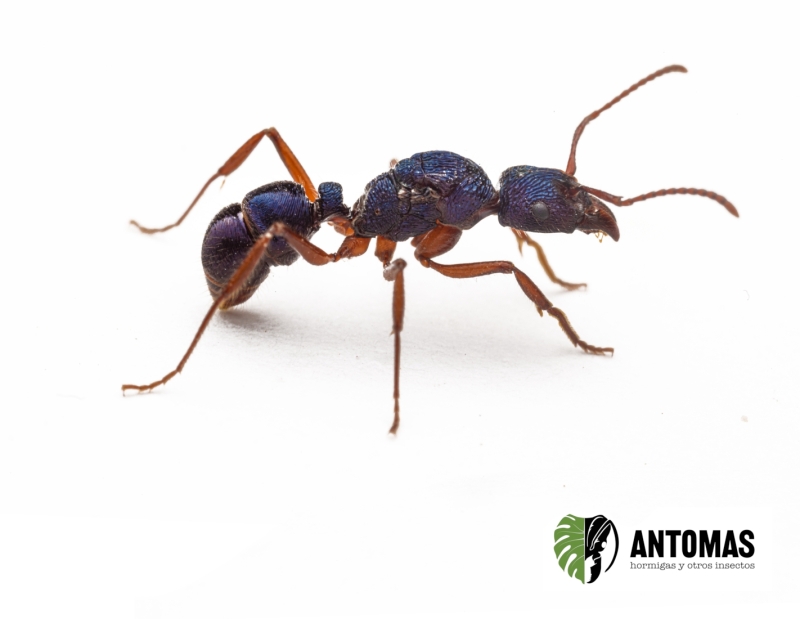
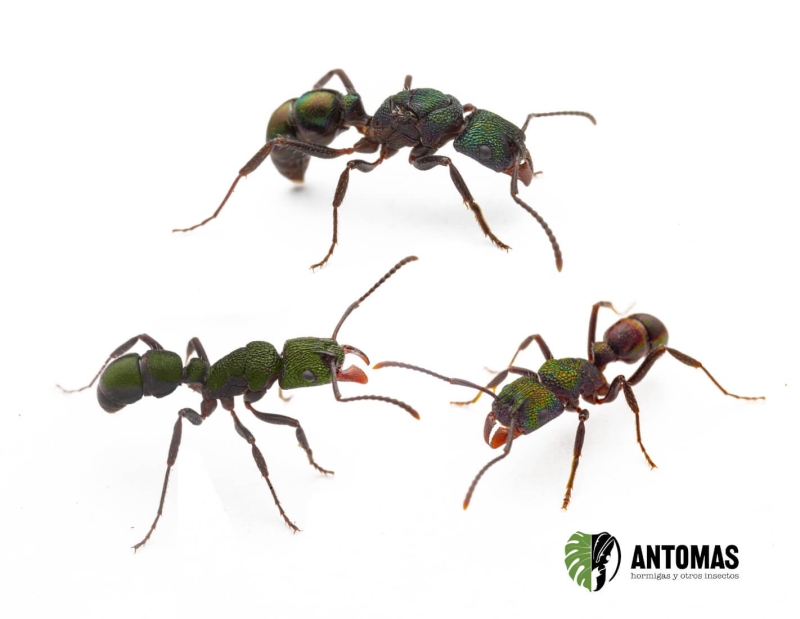
Coloration is one of its most attractive features. Depending on the population and the angle of light, it may display metallic reflections in purple, blue, green, copper, or reddish tones.
It is a monomorphic species, with no clearly differentiated soldier castes. However, workers show some size variation within the colony.
The eyes are well developed and contribute to orientation during diurnal foraging. They have long legs, making this a very fast and agile species.
Unlike many Australian ants, it lacks a functional sting.
Approximate measurements:
Workers: 6 – 8 mm
Queen: 12 – 15 mm
Captive Care
Iridomyrmex purpureus is usually considered a species of intermediate-low difficulty, making it an excellent option for keepers who want to maintain an active, fast-growing, and highly visible Australian ant.
Its great adaptability allows it to be kept relatively easily as long as it has enough space to develop its natural foraging behavior.
Recommended parameters
Annual temperature: 22–28 °C
Humidity: 40–60 %
Nest type: mineral or naturalistic nests, with dry areas and a moderate humidity gradient.
It benefits from a moderate humidity gradient, although it usually tolerates drier conditions than many other Australian species.
Feeding
Carbohydrates
Artificial nectars
Sugar water
Diluted honey
Specific syrups for ants
Proteins
Flies
Crickets
Cockroaches
Mealworms
Frozen or freshly killed insects
Turkey or cooked chicken as an occasional supplement
It is a very non-selective species with an excellent appetite, especially when developing larvae are present.
Diapause: A mild winter rest of 3 to 4 months is recommended. In its natural range, temperatures drop seasonally and the species reduces its activity without entering a strict diapause.
Behavior in captivity
Growth is usually rapid once the founding stage has been overcome.
They are extremely active and visible ants, making them especially interesting for observation. They rarely remain hidden for long periods and actively explore the foraging area.
They have a strong climbing ability and a notable capacity to detect small escape routes. For this reason, effective escape barriers and well-sealed enclosures are essential.
They stand out for strong individual aggression, and above all their collective behavior can become very intense when the colony is large.
Handling
Although they lack a sting, their mandibles can cause minor discomfort if they feel threatened.
They do not usually represent a significant risk to the keeper, but due to their speed and aggression, any intervention should be carried out calmly and using appropriate entomological tools.
For many enthusiasts, Iridomyrmex purpureus represents one of the best ways to discover the behavior of large, active, and socially complex Australian ants.