Difficulty: 1/5 – Beginner
An African assassin bug of about 3.5 cm, hardy and easy to breed. A dry, well-ventilated enclosure at 24–30 °C, with cork bark for moulting and a damp corner for egg-laying, and a varied diet of prey. Not for handling: its bite is painful, so always use a cup and long tweezers.
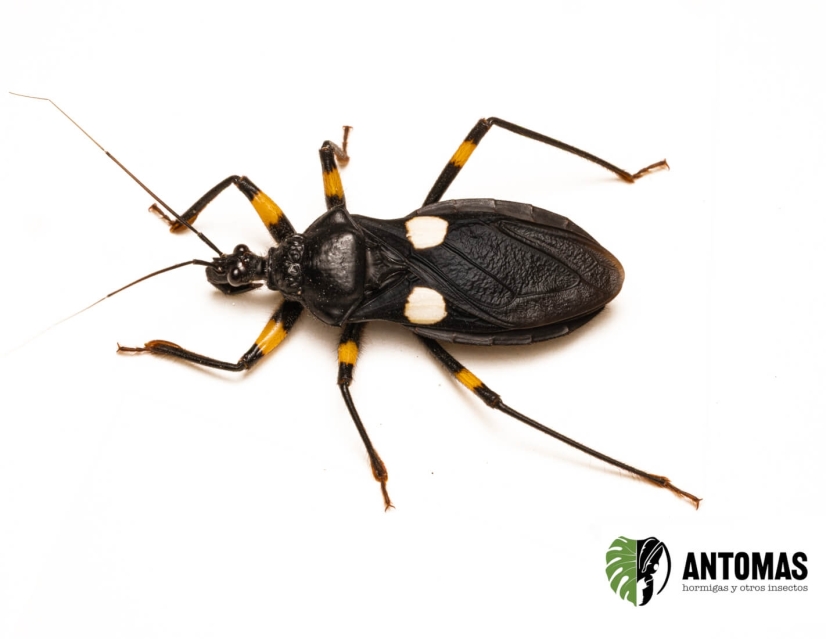
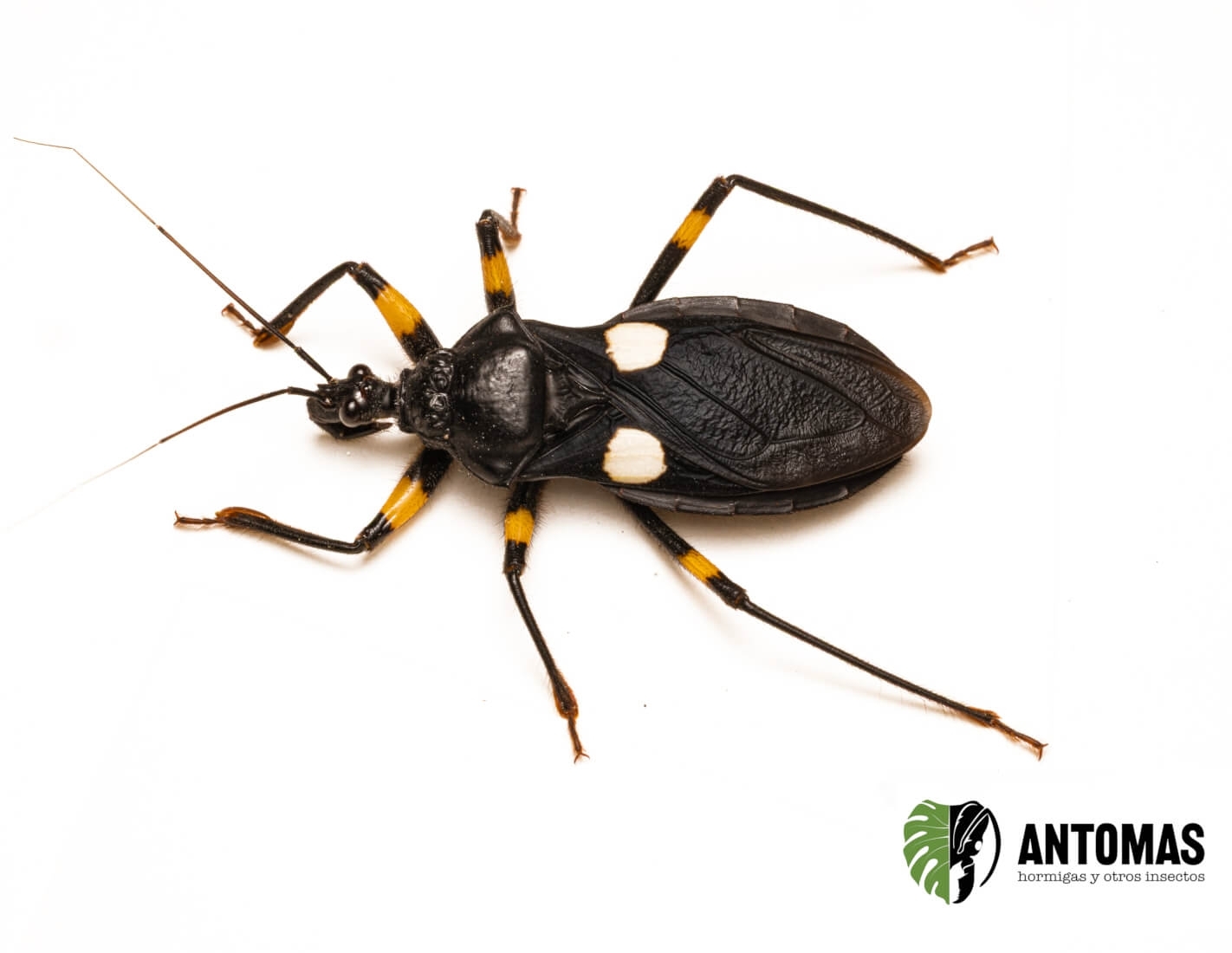
Platymeris biguttatus (Linnaeus, 1767), the two-spotted assassin bug, is a predatory true bug of the family Reduviidae that lives in continental tropical Africa, mainly in open savannah, and one of the most widely kept reduviids.
Biology
It digests its prey from the outside
It hunts mainly at night: it grips the prey with its front legs and drives in the stylets of its rostrum. Venom from its posterior main salivary gland paralyses the prey and, with its proteases, dissolves it from within. This is extra-oral digestion: the bug sucks up the liquefied contents and leaves the empty exoskeleton behind.
On video: the insect dementor
In this short video by MacroArtist you can watch it hunt and suck out its prey:

Platymeris biguttatus mid-hunt (MacroArtist).
Bite and projected venom
When disturbed with tweezers, a droplet of saliva usually appears at the tip of its rostrum, and if it is held, it bites. Assassin bug bites cause intense local pain and swelling, which keepers say lasts a few days.
Its relative P. rhadamanthus projects its venom in jets of up to about 30 cm: it has no effect on skin, but in the eyes and mucous membranes it causes intense pain. In P. biguttatus this is reported by keepers and zoos, but no study has described it. It is uncommon: simply keep your face away.
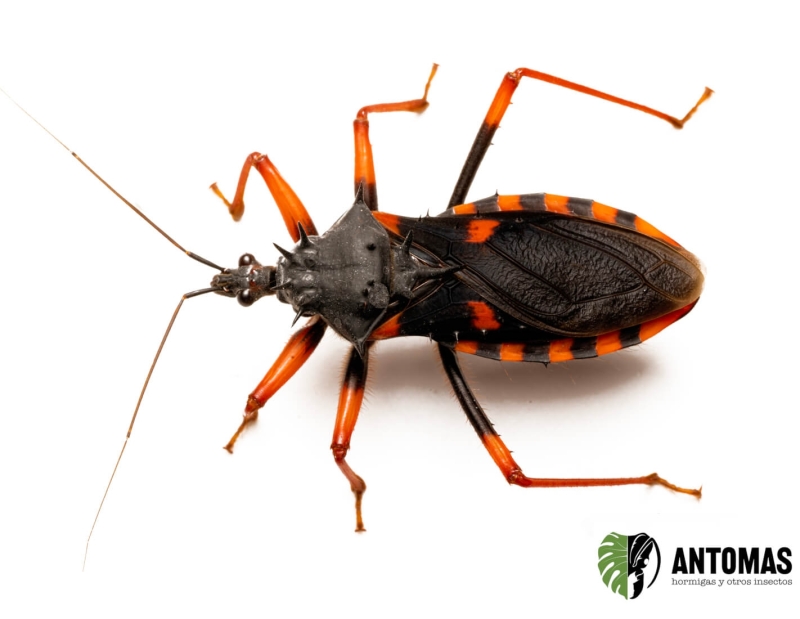
Red after moulting, black within two days
After moulting, the final-instar nymph and the adult emerge bright red and turn black in about 18 and 48 hours respectively; the spots stay white.
Size and morphology
A glossy black body with two whitish spots at the base of the hemelytra, a yellow band on the femora and a black connexivum: the three features that set it apart from the other Platymeris. Nymphs go through five instars; the newly hatched nymph has a red abdomen with black plates.
Approximate measurements
- Males: 32.5–32.6 mm; females: 34.1–34.8 mm (Li et al. 2010)
- Newly hatched nymphs (instar I): 7.2–7.5 mm (Chłond et al. 2015)
- Final-instar nymphs (V): 26.5–28.2 mm (Chłond et al. 2015)
Care in captivity
Recommended parameters
- Temperature: 24–30 °C. If needed, a heat mat on one side with a thermostat, never under the whole base.
- Humidity: fairly dry and very well ventilated, around 50–60%, with a damp corner of substrate for egg-laying.
- Water: they get almost all of it from their prey. Lightly mist the cork bark 1–2 times a week.
Recommended enclosure
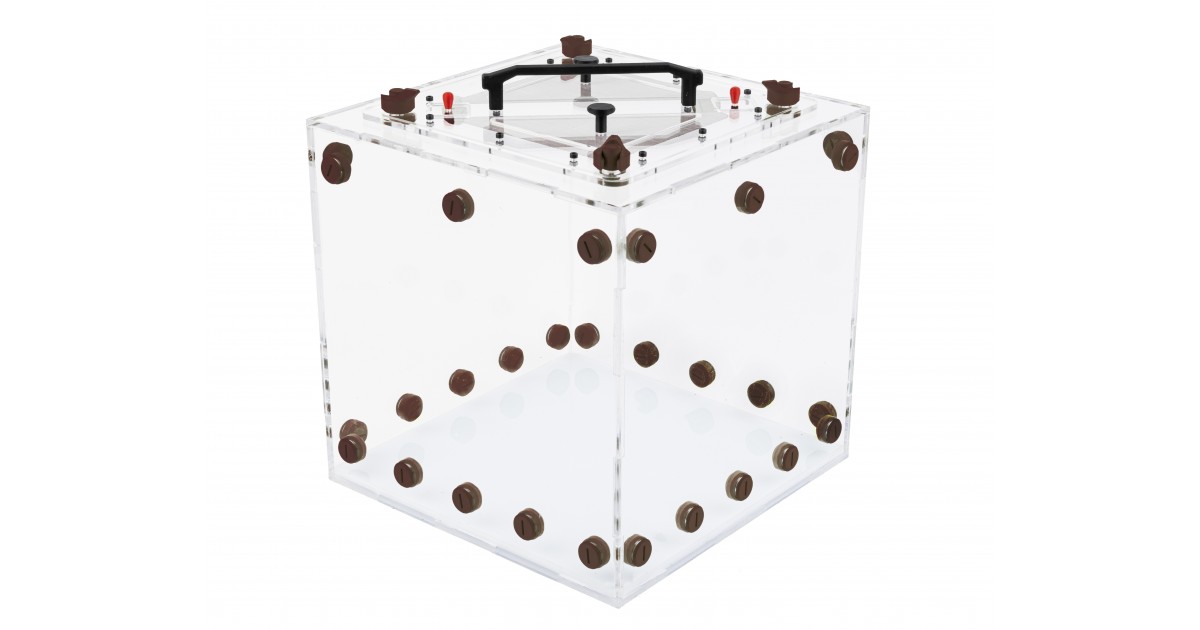
For a group of up to about five adults, at Antomas we recommend Anthouse’s Gaia Oasis: it locks with latches, has mini hatches for feeding without opening the main lid, and adjustable ventilation; not even the nymphs can get out through its vents.
For about ten adults, the Gaia Explorer. Inside:
- Substrate: a thin layer; almost any will do, such as sand or coco fibre, which is the most common choice. Eggs are laid singly in the substrate.
- Cork and egg cartons: bark set diagonally with space underneath for hanging to moult, and hides for every bug.
- Lid closed: adults can fly.
Feeding
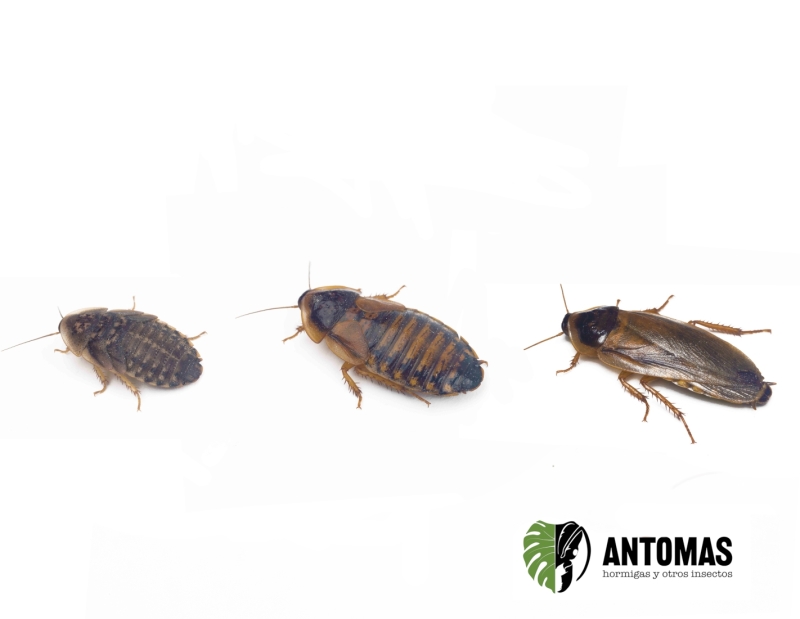
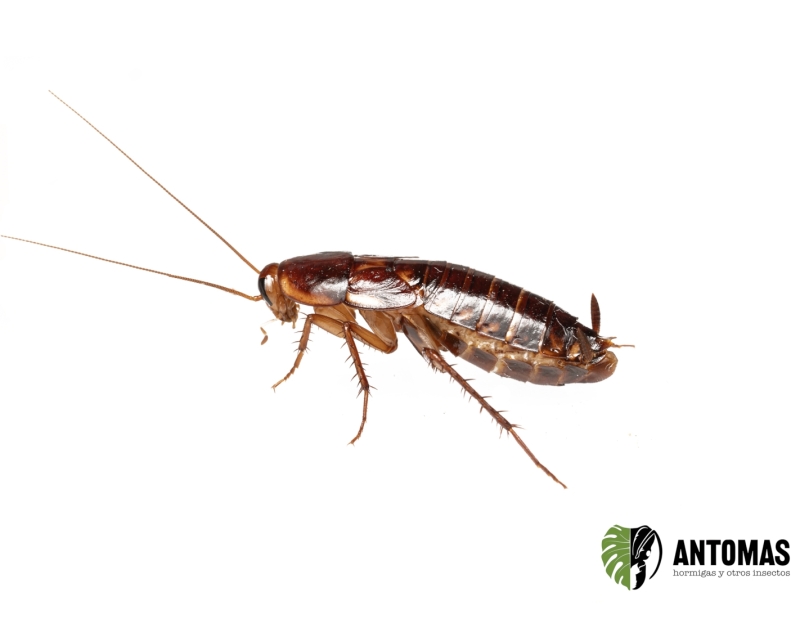
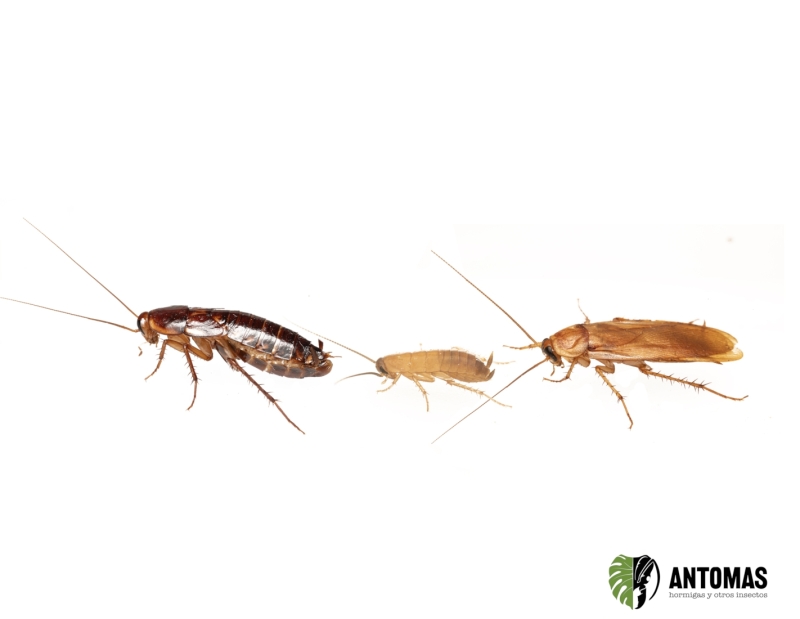
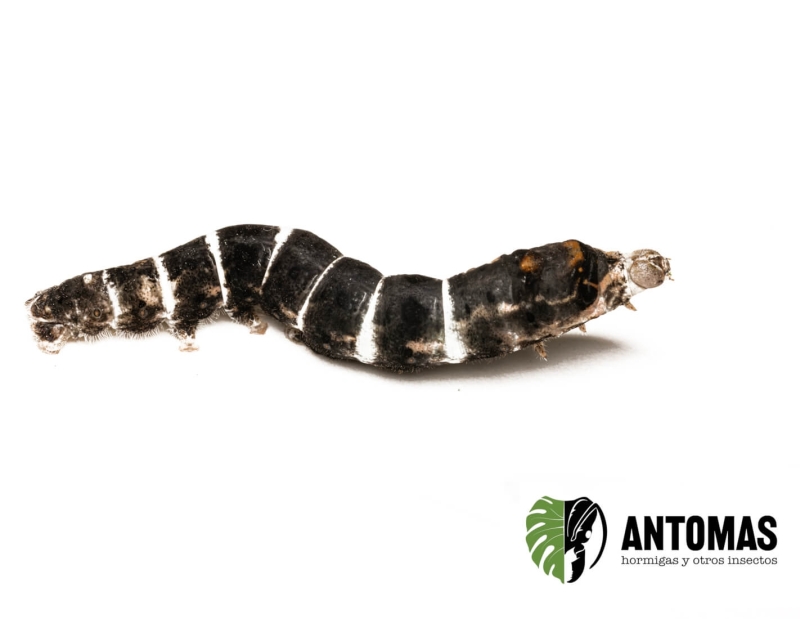
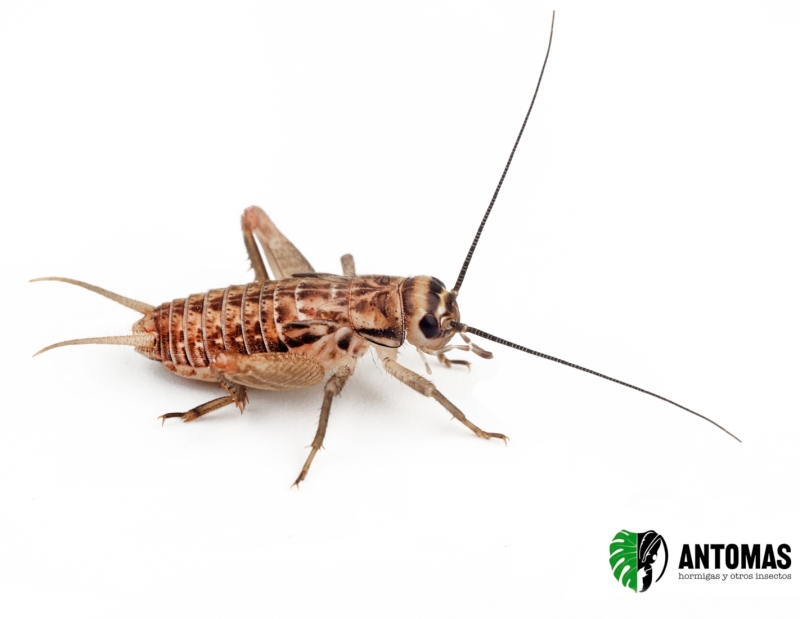
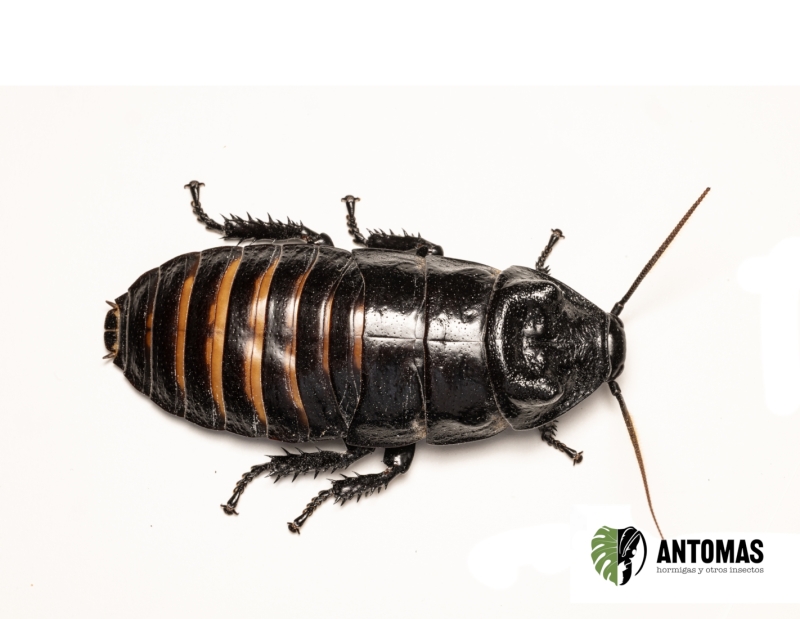
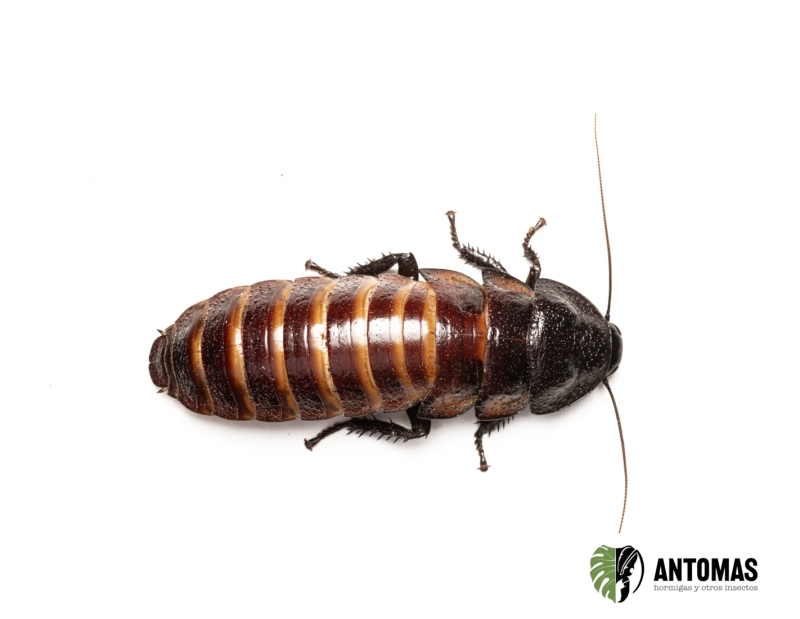
Prey their own size or slightly smaller: crickets, dubia or red runner roaches and mealworms. Switch insects every week: in a trial at 25 °C, nymphs on a mixed diet reached adulthood sooner, and the cockroach was the best single prey.
- Frequency: at Antomas, every 3–4 days. The more they eat, the better, although they cope well without food; a flat abdomen means it is time.
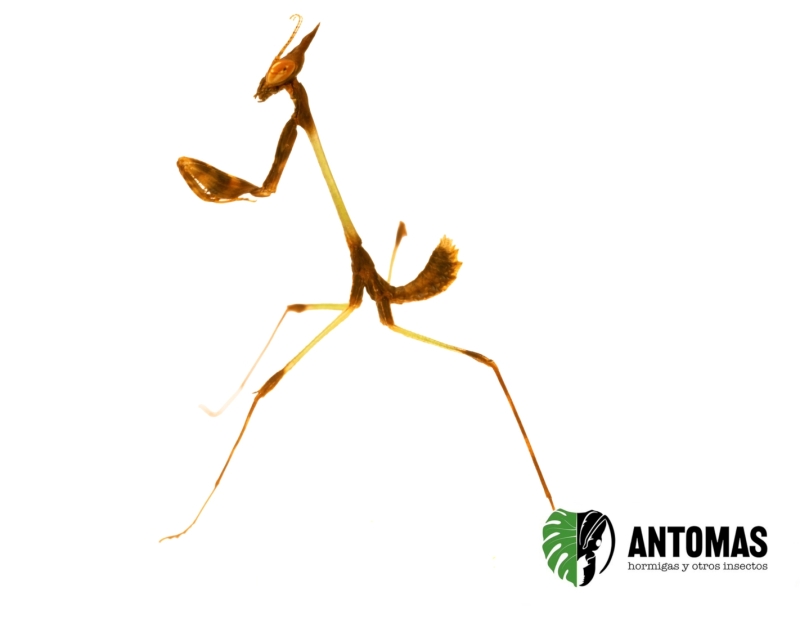
- Newly hatched nymphs: at Antomas we give them cut-up crickets, mealworms and superworms (Zophobas); several can share one prey item.
- Leftovers: remove empty exoskeletons and, the next day, any prey still alive.
Group living, moulting and breeding
It is not a social insect and does not form colonies, but it lives well in groups. At Antomas we usually keep them that way: with plenty of food, cannibalism is rare. When it does happen, it is mostly among hungry or freshly moulted nymphs.
- Eggs: they do not develop until the substrate is damp; at 25 °C they hatch in about three weeks.
- Development: 8 to 12 months from egg to adult at 25 °C, depending on diet.
- Moults: they hang upside down and stop eating beforehand; on those days, no live prey. Never help them out of the exuvia.
Handling and safety
- Never by hand: to move one, use a cup with a card underneath or long tweezers.
- Feed with long tweezers.
- If venom gets into the eyes, rinse them with plenty of water; if bitten, wash the area and apply something cold.
What not to do
- Picking it up by hand or bringing your face close to the open enclosure.
- Keeping it with moss or wet substrate: it brings mites, mould and failed moults.
- Letting the egg-laying corner dry out completely.
- Always offering the same insect, or prey much larger than the bug.
- Skimping on food for a group: that is what leads to cannibalism.
- Leaving surplus live prey when nymphs are moulting.
- Housing it with other assassin bugs.
- Throwing out old substrate without freezing it first: it may contain eggs.
- Releasing it: it is an exotic species.
Scientific sources
This care sheet is based on the scientific literature on Platymeris biguttatus and its relative P. rhadamanthus, and on keepers’ practice. Main references:
- Edwards, J. S. (1961). The action and composition of the saliva of an assassin bug Platymeris rhadamanthus Gaerst. (Hemiptera, Reduviidae). Journal of Experimental Biology 38: 61–77. doi:10.1242/jeb.38.1.61
- Li, H., Zhao, G., Cao, L., Xu, K. & Cai, W. (2010). Taxonomic and bionomic notes on the white spot assassin bug Platymeris biguttatus (Linnaeus) (Hemiptera: Reduviidae: Reduviinae). Zootaxa 2644: 47–56. doi:10.11646/zootaxa.2644.1.3
- Chłond, D., Bugaj-Nawrocka, A. & Junkiert, Ł. (2015). Current and potential geographical distribution of Platymeris biguttatus (Linnaeus, 1767) with description of nymphs. Zoological Studies 54: 9. doi:10.1186/s40555-014-0092-5
- Walker, A. A., Robinson, S. D., Undheim, E. A. B., Jin, J., Han, X., Fry, B. G., Vetter, I. & King, G. F. (2019). Missiles of mass disruption: composition and glandular origin of venom used as a projectile defensive weapon by the assassin bug Platymeris rhadamanthus. Toxins 11: 673. doi:10.3390/toxins11110673
- Zhang, Y., Li, H., Du, J., Zhang, J., Shen, J. & Cai, W. (2019). Three melanin pathway genes, TH, yellow, and aaNAT, regulate pigmentation in the twin-spotted assassin bug, Platymeris biguttatus (Linnaeus). International Journal of Molecular Sciences 20: 2728. doi:10.3390/ijms20112728
- Fischer, M. L., Wielsch, N., Heckel, D. G., Vilcinskas, A. & Vogel, H. (2020). Context-dependent venom deployment and protein composition in two assassin bugs. Ecology and Evolution 10: 9932–9947. doi:10.1002/ece3.6652
- Holmes, M. (2020). Diet matters in the growth of captive African white spotted assassin bug Platymeris biguttatus (Hemiptera: Reduviidae). MSc thesis, Colorado State University. doi:10.25675/3.02817
- Gao, F., Tian, L., Li, X., Zhang, Y., Wang, T., Ma, L., Song, F., Cai, W. & Li, H. (2022). Proteotranscriptomic analysis and toxicity assay suggest the functional distinction between venom gland chambers in twin-spotted assassin bug, Platymeris biguttatus. Biology 11: 464. doi:10.3390/biology11030464