Gusano de Seda Tigre - Bombyx Mori

Gusano de Seda Tigre - Bombyx Mori

€4.99
VAT included
Eggs


Silkworms - Bombyx mori

Biology

The domestic silkworm, Bombyx mori, is a lepidopteran that has been fully domesticated for thousands of years, historically bred by humans for silk production. Functional wild populations no longer exist, as the species has lost much of its natural survival abilities, including flight in the adult stage.

Its biological cycle consists of four clearly differentiated phases: egg, larva, pupa, and moth. The larval stage is by far the longest and most active phase, during which the animal feeds intensively in order to accumulate reserves and produce the characteristic silk cocoon.

The larvae display extremely rapid growth, undergoing several consecutive molts (larval stages or “instars”) before beginning the spinning process. During this final phase, they secrete fibroin and sericin fibers through specialized glands, forming a continuous cocoon that may exceed one kilometer of silk thread in some selectively bred lines.

The diet is highly specialized and based almost exclusively on mulberry leaves (Morus alba and other species of the genus Morus). This dependency means that larval development is closely linked to the budding cycles of the host plant.

There are different lines and varieties classified according to their number of annual generations:

  • Univoltine: produce a single generation per year and require obligatory egg diapause.
  • Bivoltine: produce two annual generations, combining phases with and without diapause.
  • Polyvoltine: can breed continuously under warm conditions without the need for prolonged dormancy.

Univoltine varieties are usually the most common in Europe, especially among hobbyists and traditional breeders.

In addition to their historical importance in sericulture, silkworms are currently used as food for reptiles and invertebrates, in biological research, and as an educational tool for studying complete metamorphosis.

Size and Morphology

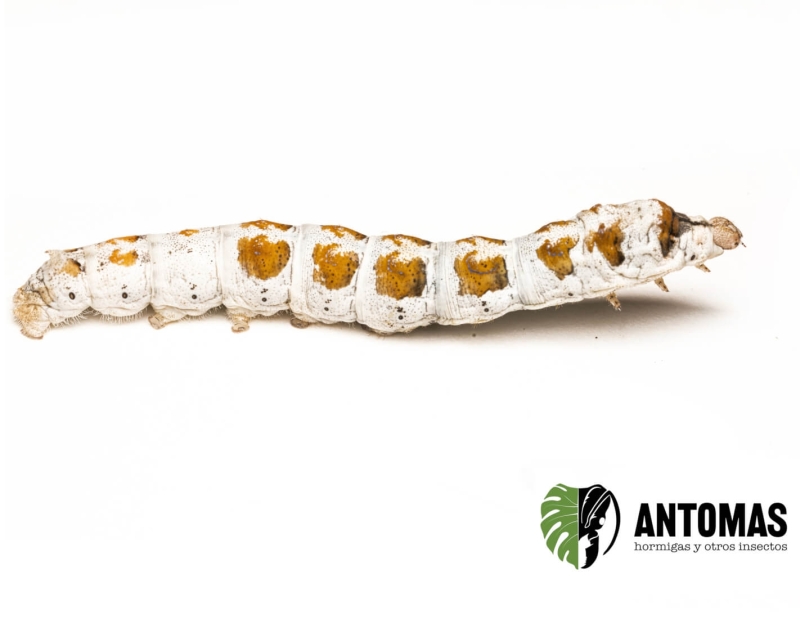
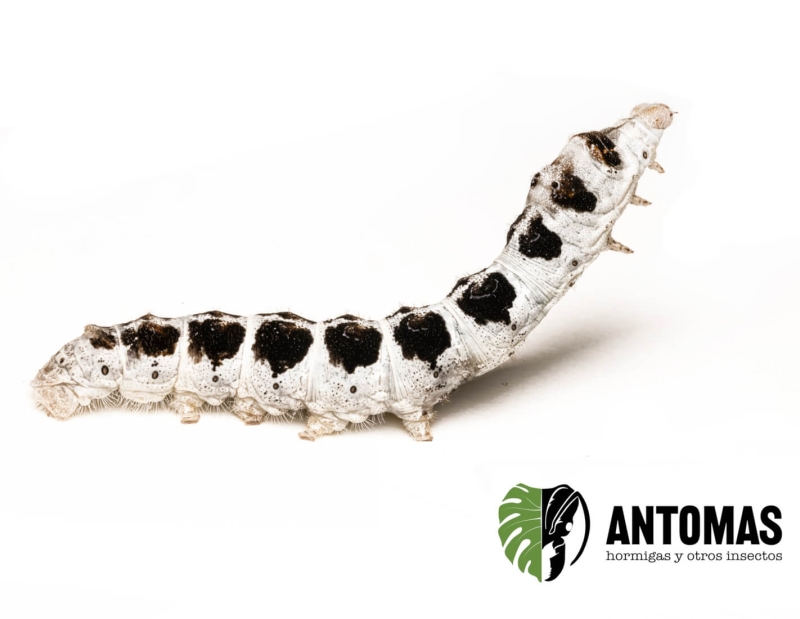
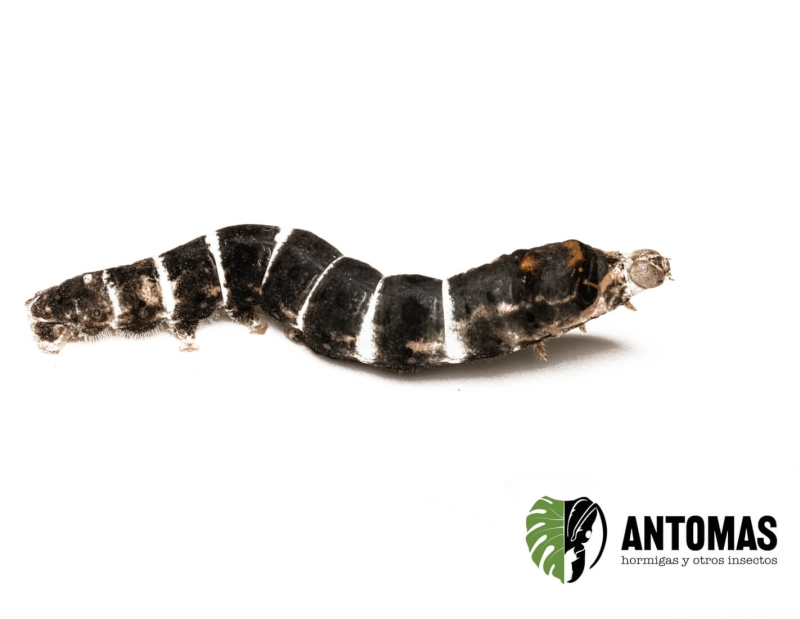
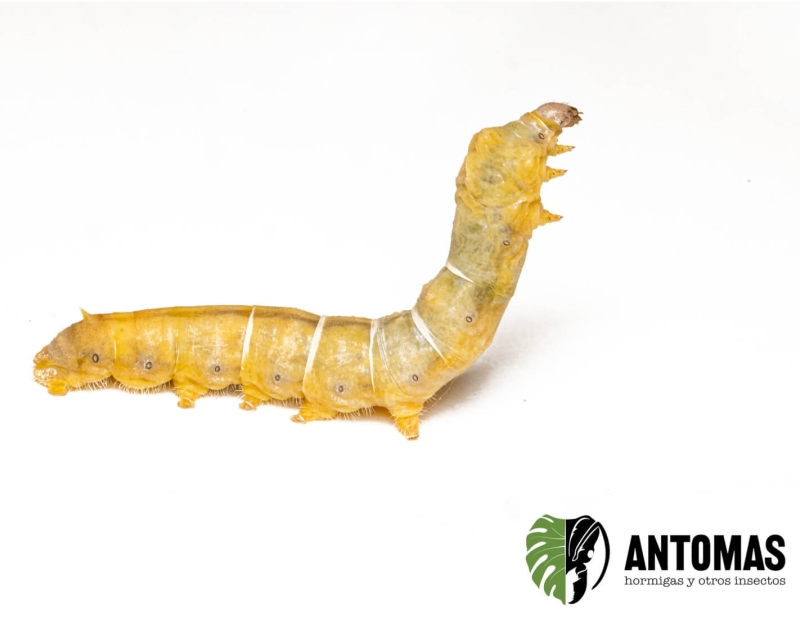
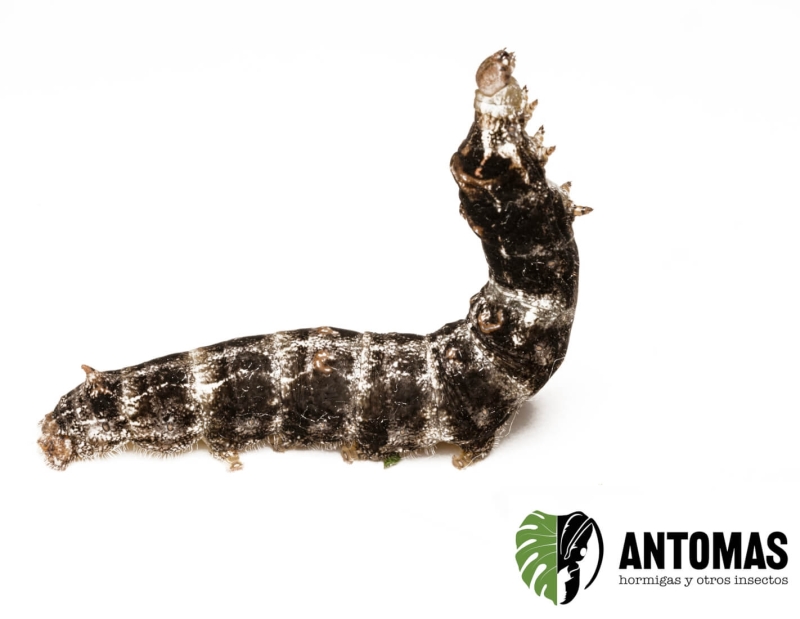
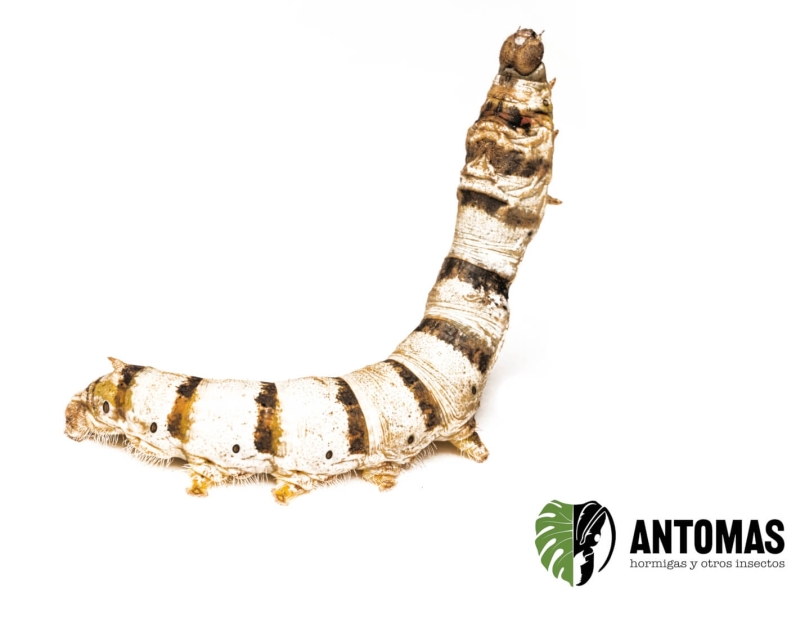
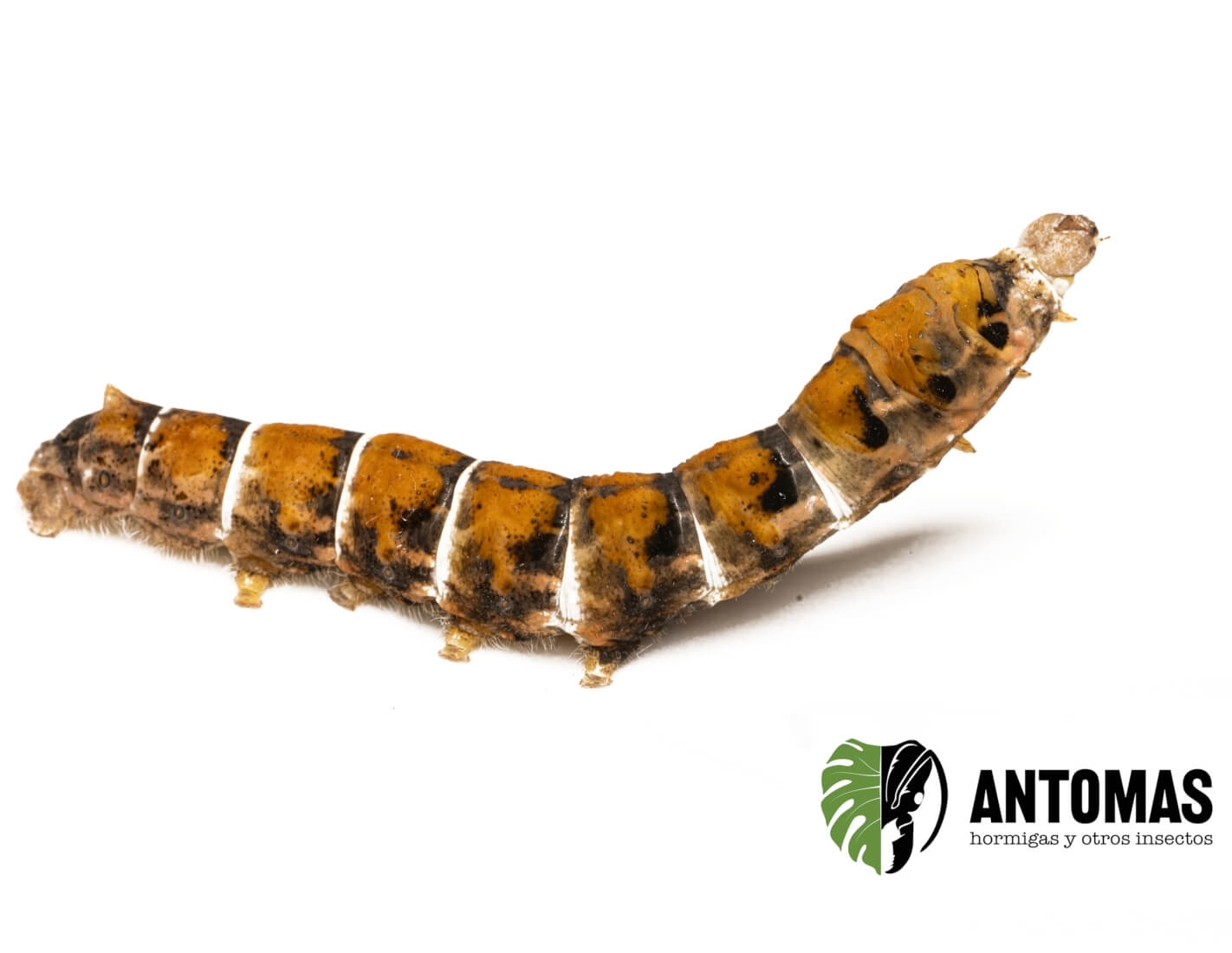
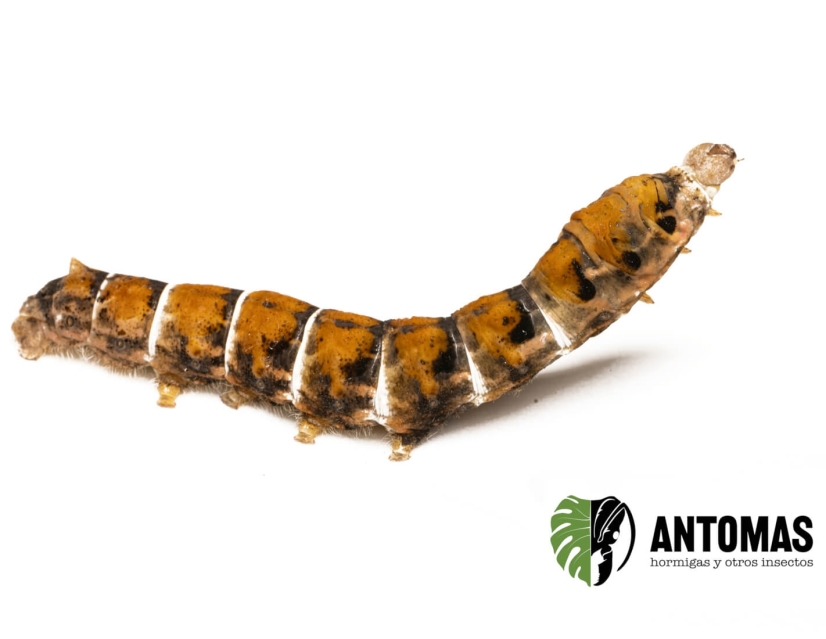
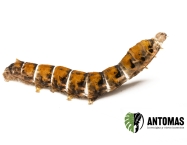
The larvae possess a soft, segmented body with highly variable coloration depending on the genetic line. There are completely white, striped, dark, and even mottled varieties.

The final size generally ranges between 6 and 9 cm during the last larval stages, displaying a robust appearance and an extremely high appetite.

The head is hardened and equipped with powerful mandibles adapted for the constant consumption of leaves. As they grow, the larvae increase significantly in body thickness before beginning the spinning process.

The cocoon may display white, yellow, or golden tones depending on the genetic variety.

The adult moths are light-colored, with thick bodies and relatively small wings. They do not fly and live only a few days, dedicating themselves exclusively to reproduction.

Approximate measurements:

  • Newly hatched larvae: 2 – 3 mm
  • Adult larvae: 6 – 9 cm
  • Moths: 3 – 5 cm wingspan

Captive Care

Bombyx mori is an extremely easy species to keep, making it ideal for beginners, educational projects, or large-scale production.

Recommended conditions

  • Temperature: 22 – 28 °C
  • Humidity: 50 – 70 %
  • Ventilation: high, avoiding condensation and moisture accumulation.
  • Containers: ventilated boxes, wide trays, or stackable systems that are easy to clean.

Poor ventilation is one of the main mortality factors, especially during advanced stages.

Feeding

The diet should be mainly based on:

  • Fresh mulberry leaves (Morus alba preferably)
  • Artificial feed specifically designed for silkworms (in the temporary absence of mulberry leaves)

It is essential to use clean leaves free from pesticides or contaminants.

Small larvae require tender leaves and young shoots, while larger larvae can consume mature leaves in great quantities.

Synchronization of Egg Hatching and Mulberry Budding

One of the most important aspects of silkworm breeding is synchronizing egg hatching with the spring budding of mulberry trees.

Neonate larvae depend on tender and fresh leaves to survive properly, so poor synchronization may lead to high mortality or deficient development.

For this reason, egg batches are usually kept refrigerated during winter in order to delay embryonic development.

Refrigerated Egg Storage

Egg batches can be safely stored in a refrigerator for several months in order to simulate winter diapause.

Recommendations:

  • Stable temperature between 4 and 8 °C
  • Keep eggs dry and ventilated
  • Avoid condensation
  • Do not freeze
  • Use breathable containers or perforated bags

Incorrect humidity management may encourage fungal growth or render the eggs nonviable.

Before incubation, the eggs should gradually acclimate to room temperature over several days.

Spinning and Metamorphosis

When the larvae reach the final instar, they stop feeding and begin searching for a suitable place to spin their cocoon.

It is recommended to provide:

  • Honeycomb cardboard
  • Egg cartons
  • Dry twigs
  • Vertical structures with spacing

Once the cocoon is formed, the larva transforms into a pupa inside it.

If genetic continuity of the line is desired, the cocoon should not be excessively handled or exposed to high humidity.

General Observations

Silkworms are completely harmless and highly tolerant of handling, although they are sensitive to:

  • High temperatures
  • Poor ventilation
  • Excessive humidity
  • Decomposing food remains

Frequent cleaning and a constant supply of fresh food are key to maintaining healthy colonies.

Thanks to their ease of care, rapid growth, and enormous biological interest, Bombyx mori remains one of the most fascinating and accessible species for those beginning in insect breeding.

No reviews

11 other products in the same category: