This website uses its own and third-party cookies to improve our services and show you advertising related to your preferences by analyzing your browsing habits. To give your consent to its use, press the Accept button.
Cookie preferences
| Cookie | Provider | Purpose | Expiry |
|---|---|---|---|
| PHP_SESSID | antomas.es | The PHPSESSID cookie is native to PHP and allows websites to store serialised status data. On the website it is used to establish a user session and to pass state data through a temporary cookie, which is commonly known as a session cookie. These Cookies will only remain on your computer until you close your browser. | Session |
| PrestaShop-# | antomas.es | This is a cookie used by Prestashop to store information and keep the user's session open. It stores information such as currency, language, customer ID, among other data necessary for the proper functioning of the shop. | 480 hours |
| rc::a | It is used to read and filter bot requests. | Persistent | |
| rc::c | It is used to read and filter bot requests. | Persistent |
| Cookie | Provider | Purpose | Expiry |
|---|---|---|---|
| _ga | Registers a unique ID that is used to generate statistical data on how the visitor uses the website. | 2 years | |
| _gat | Used by Google Analytics to throttle request rate | 1 day | |
| _gat_gtag_UA_# | Used to throttle request rate. | 1 minute | |
| _gd# | This is a Google Analytics Session cookie used to generate statistical data on how you use the website which is removed when you quit your browser. | Session | |
| _gid | Registers a unique ID that is used to generate statistical data on how the visitor uses the website. | 1 day |
Platymeris biguttatus – Two-Spotted Assassin Bug
Biology
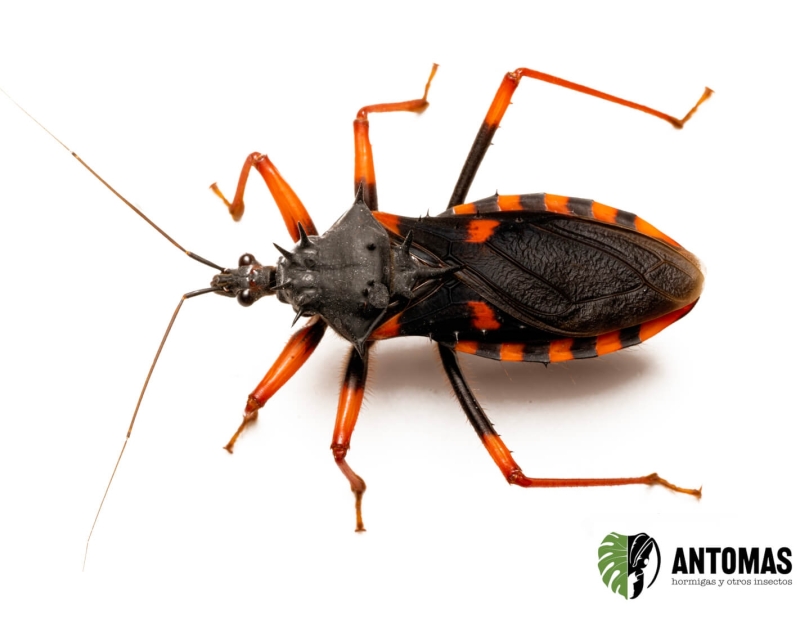
Platymeris biguttatus is an African assassin bug species belonging to the family Reduviidae, widely known for its predatory behavior and extraordinary hunting efficiency. It primarily inhabits tropical and subtropical regions of Africa, occupying warm areas with abundant small invertebrates.
It is an opportunistic and highly aggressive predator, capable of capturing a wide variety of prey through extremely rapid attacks. Unlike phytophagous hemipterans, Reduviidae possess piercing-sucking mouthparts exclusively adapted for predation.
Prey capture is carried out using a robust piercing rostrum, through which they inject digestive saliva and toxic compounds into the prey. These fluids begin to internally liquefy the tissues of the captured animal, allowing the resulting fluids to be sucked out afterward. After feeding, it is common to find only the empty and completely dried exoskeleton of the prey.
It is primarily a nocturnal or crepuscular species, although it may also become active during the day if food or disturbances are detected.
Despite its predatory nature, it generally tolerates coexistence with other individuals of the same species relatively well when sufficient space and food are available, allowing maintenance in small groups or colonies.
Reproduction in captivity is relatively straightforward. Females regularly lay eggs on substrate or protected surfaces, from which highly active and fully functional nymphs emerge from the earliest stages.
As a defensive mechanism, in addition to its bite, it can spray corrosive fluids through its proboscis at potential threats. These fluids are dangerous if they come into contact with the eyes or mucous membranes.
Size and Morphology
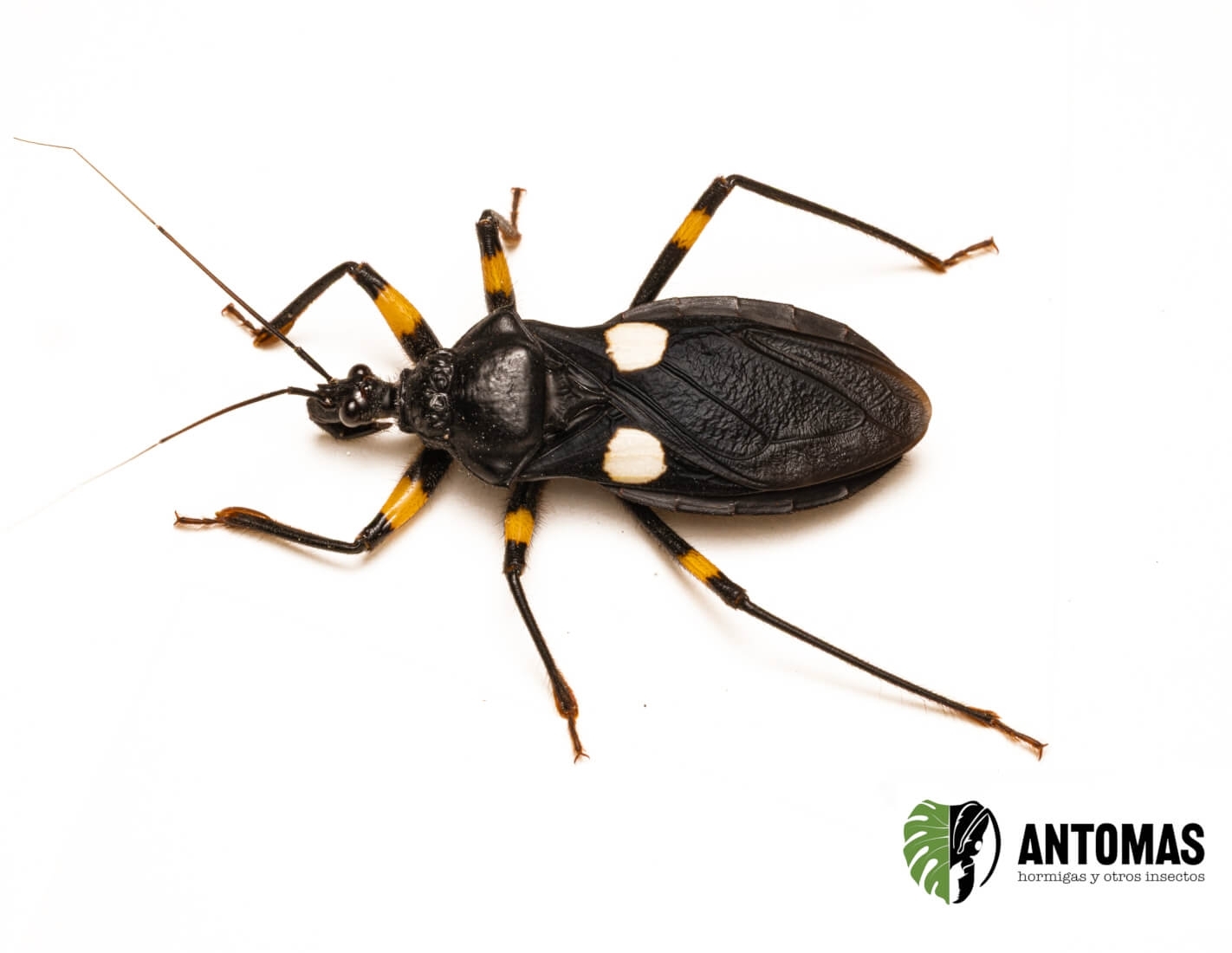
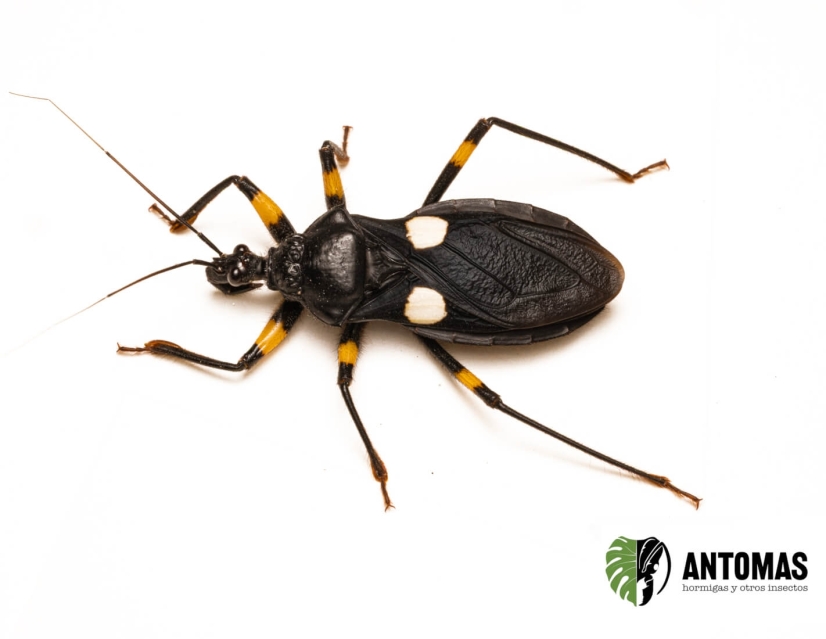
Platymeris biguttatus has a robust and elongated body with a clearly predatory appearance.
The coloration is predominantly black, contrasting with two very characteristic white spots on the wings, which are responsible for its common name.
The legs are long and powerful, allowing it to grasp prey very effectively. The piercing rostrum remains folded beneath the head when not in use.
Nymphs display striking reddish and black patterns, gradually acquiring the definitive coloration after successive molts.
Approximate measurements:
- Newly hatched nymphs: 4 – 6 mm
- Adults: 18 – 24 mm
Captive Care
Platymeris biguttatus is a very hardy and easy-to-maintain species, making it one of the most recommended options for beginners interested in keeping Reduviidae.
Recommended parameters
- Temperature: 24 – 30 °C
- Humidity: 50 – 70 %
- Ventilation: medium to high
- Terrarium: dry or slightly humid, with shelters and vertical surfaces.
It does not require extremely specific conditions, although it benefits from a certain degree of thermal stability.
Alimentación
It feeds exclusively on live or freshly killed prey.
In captivity, it readily accepts:
- Crickets
- Cockroaches
- Flies
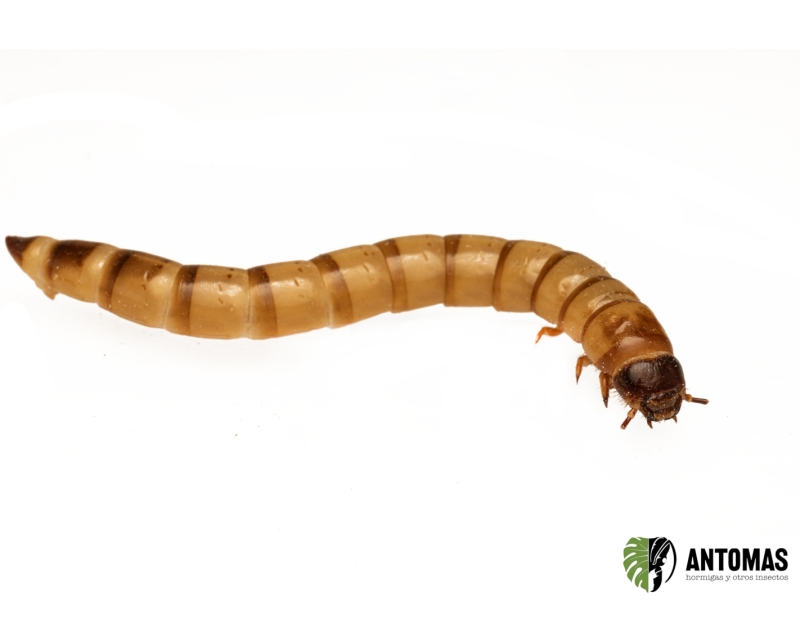
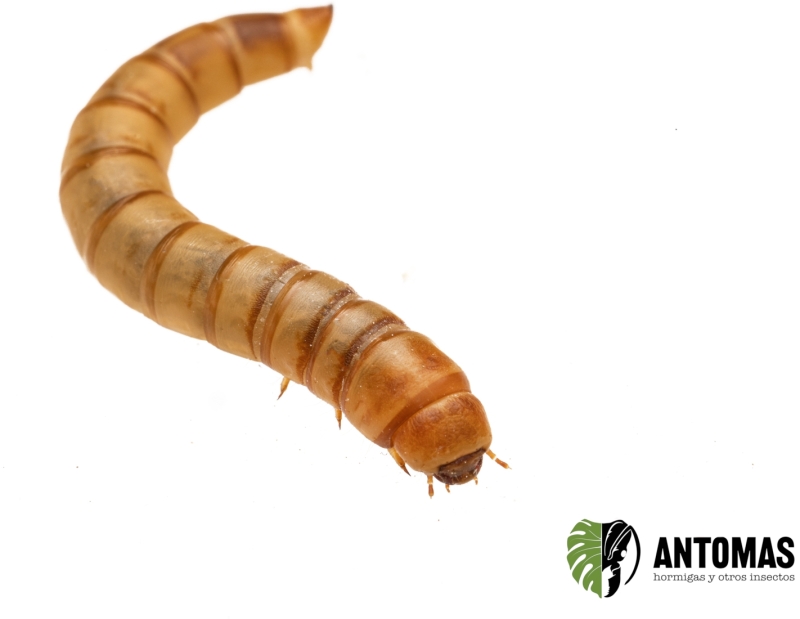
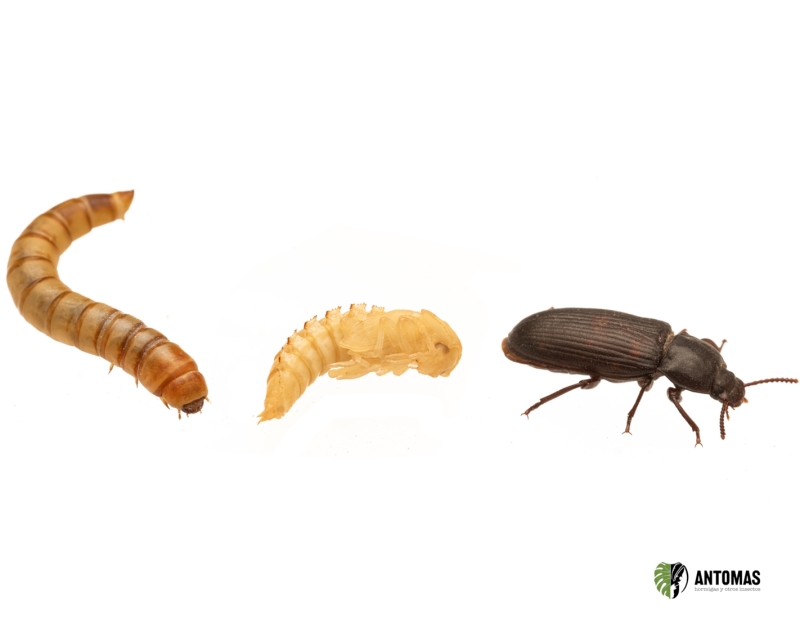
- Mealworm larvae
- Small locusts
Nymphs require prey proportionate to their size.
It is a voracious species with a strong feeding response, rapidly attacking virtually any moving prey.
Behavior and Handling
It is a fast and reactive species, especially during nighttime hours.
It can be maintained in groups if sufficient food is available, although cannibalism may occur under conditions of stress, overcrowding, or resource scarcity.
It does not climb particularly well on completely smooth surfaces, although it can easily use rough elements.
Under no circumstances should it be handled directly. Due to its ability to spray defensive digestive fluids through its stylet, handling should always be carried out indirectly, using pieces of bark, auxiliary containers, or surfaces on which the animal can safely move by itself.