This website uses its own and third-party cookies to improve our services and show you advertising related to your preferences by analyzing your browsing habits. To give your consent to its use, press the Accept button.
Cookie preferences
| Cookie | Provider | Purpose | Expiry |
|---|---|---|---|
| PHP_SESSID | antomas.es | The PHPSESSID cookie is native to PHP and allows websites to store serialised status data. On the website it is used to establish a user session and to pass state data through a temporary cookie, which is commonly known as a session cookie. These Cookies will only remain on your computer until you close your browser. | Session |
| PrestaShop-# | antomas.es | This is a cookie used by Prestashop to store information and keep the user's session open. It stores information such as currency, language, customer ID, among other data necessary for the proper functioning of the shop. | 480 hours |
Odontomachus banksi
Biology
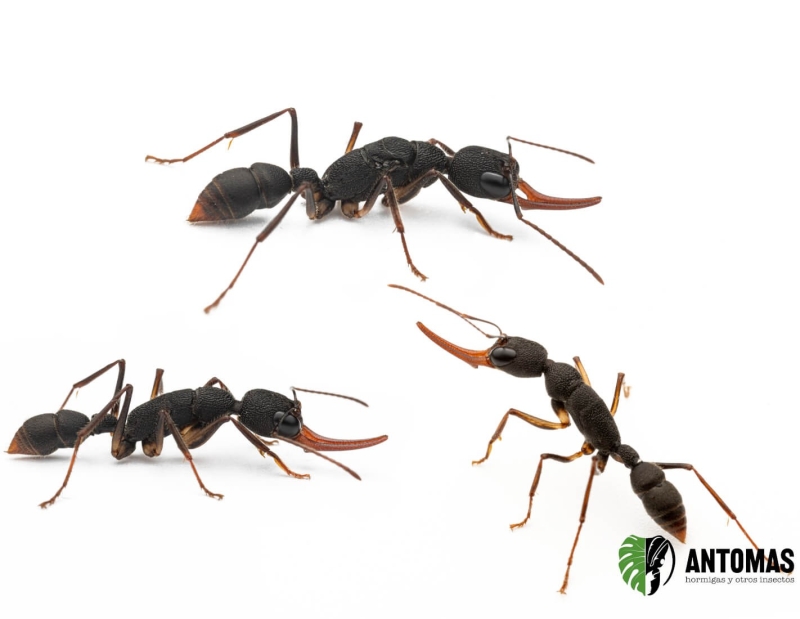
Odontomachus banksi is a large species belonging to the infandus group, endemic to the Philippines. It mainly inhabits dipterocarp rainforests, a dense and humid ecosystem highly characteristic of the region.
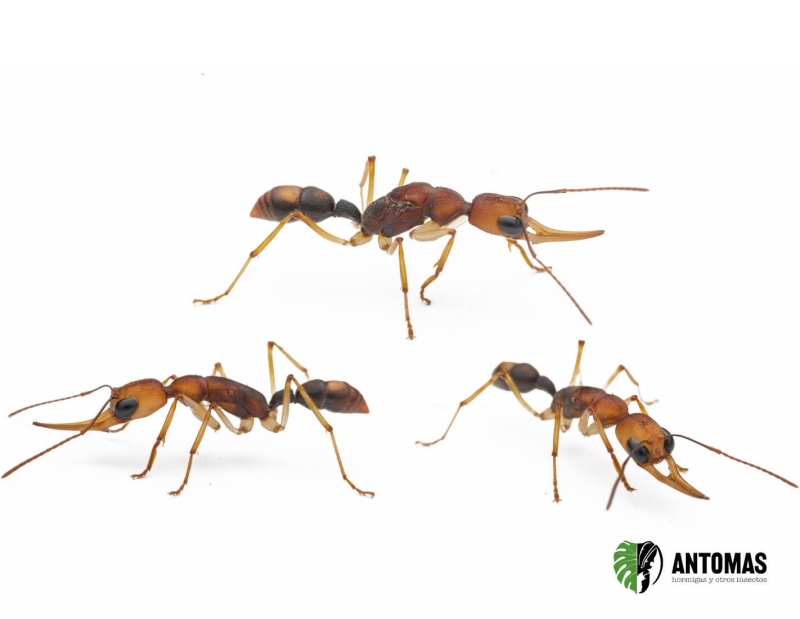
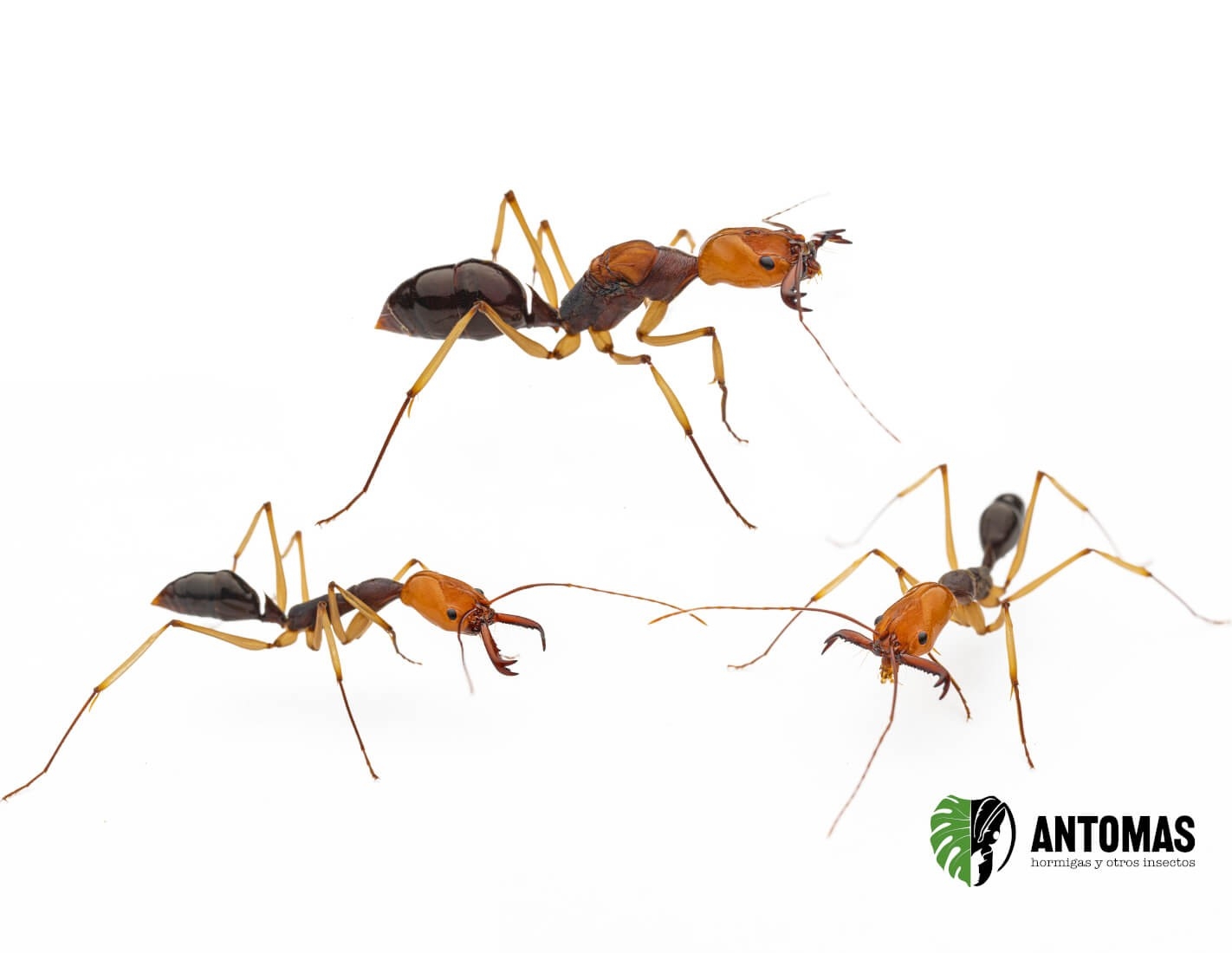
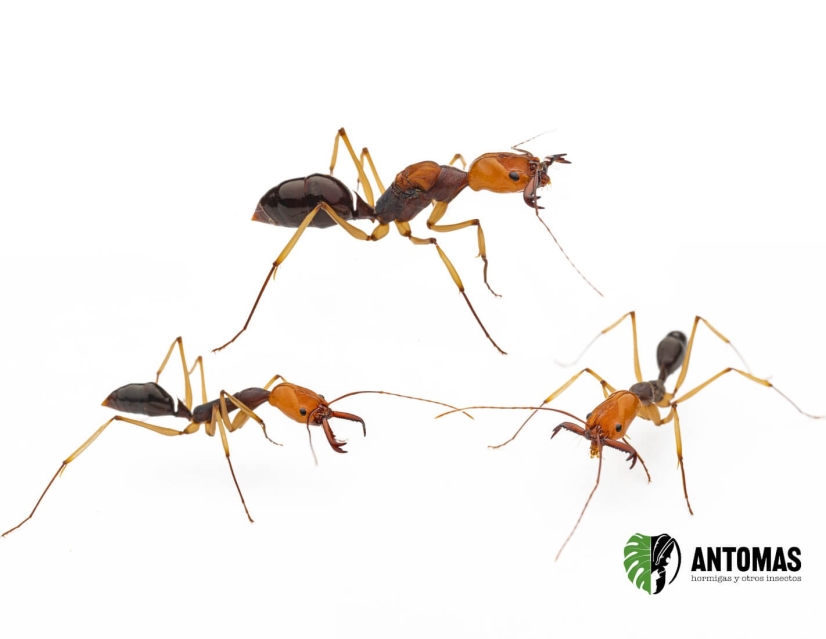
It stands out for its spectacular appearance: a reddish head, yellowish legs, and a slender body that gives it an appearance both elegant and threatening.
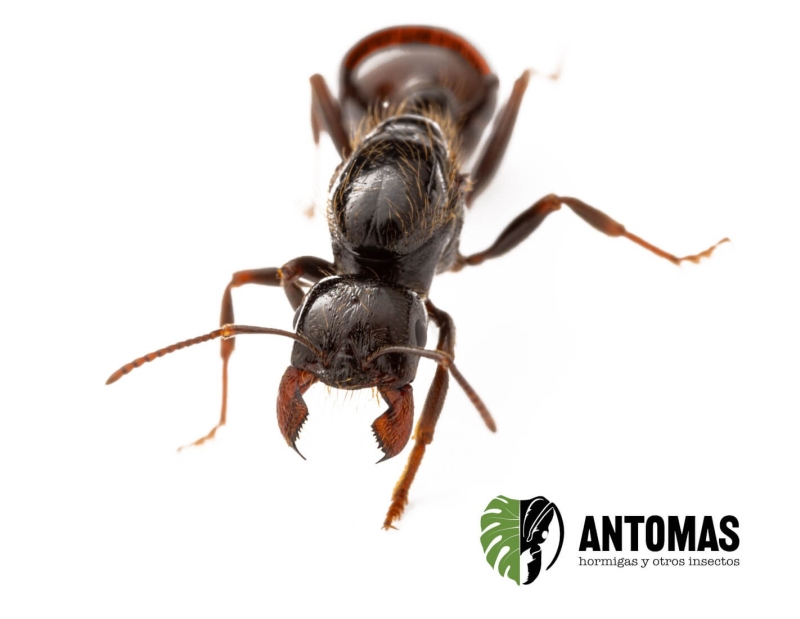
It is a highly specialized predator. It possesses a powerful functional stinger and trap-jaw mandibles capable of closing at extreme speeds (around 230 km/h). These mandibles are triggered when their sensilla (sensory hairs) detect contact, causing an instantaneous closure capable of disabling prey without the need to use the stinger. The venom is therefore used mainly for defense, although it also plays a role in predation when necessary.
The mandibular strike produces an audible snap and may also be used as an escape mechanism: the ant is capable of propelling itself in the opposite direction of the impact, performing jumps that allow it to flee rapidly from predators.
From a trophic perspective, it displays a very varied diet. It may feed on nectar, sugary liquids, fruits, carrion, seeds with accessible elaiosomes, and a wide variety of insects, both through active and opportunistic predation.
Its activity pattern is not completely defined, although several observations suggest that it may display crepuscular or nocturnal habits, taking advantage of periods with lower solar radiation and milder temperatures for foraging.
Colonies are mainly monogynous and, although not well studied, are estimated to exceed one thousand individuals, which is especially remarkable given the size of the workers.
Size and Morphology
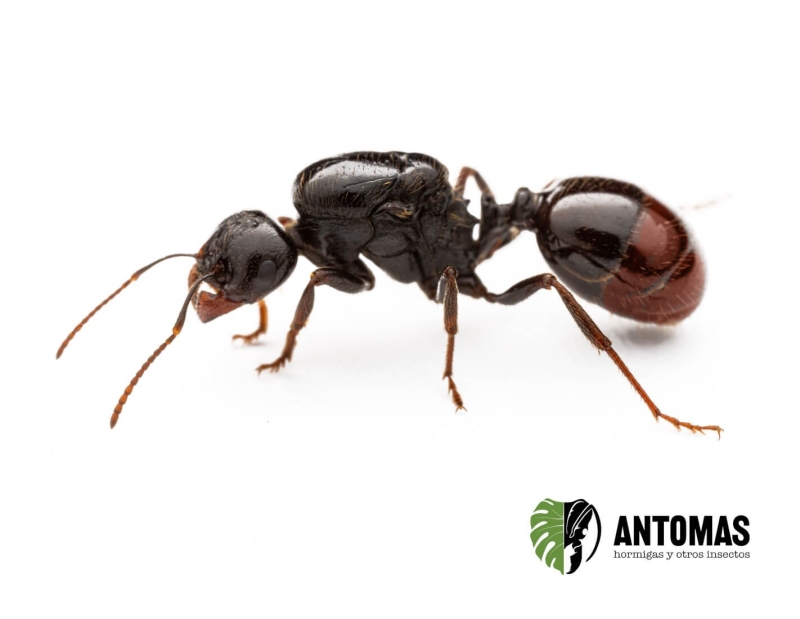
It possesses a slender and elongated morphology, with a large and prominent reddish head. The mandibles are long, robust, and toothed, clearly adapted to the rapid-closing mechanism characteristic of the genus.
The legs are long and yellowish in coloration, contributing to its great agility. Queens also tend to display reddish tones on the thorax, maintaining an appearance consistent with the workers.
The stinger is fully developed and functional, serving as a key tool both in defense and prey capture.
Approximate measurements
- Workers: 13–16 mm
- Queen: 15–17 mm
Captive Care
Odontomachus banksii is a demanding species that requires stable conditions, especially regarding humidity and temperature.
Recommended parameters:
- Temperature: 24–26 °C
- Humidity: 70–80 %
The use of nests made from natural materials that retain moisture well is recommended, together with a substrate mix (coconut fiber, sand, peat, etc.) that facilitates larval development and the cocoon-spinning process.
It is important to maintain high and constant humidity, as this species is native to tropical environments.
Feeding:
- Carbohydrates: nectars and sugary liquids. Due to the morphology of their mandibles, it is important to adapt feeding systems, as they cannot always access conventional feeders comfortably.
- Proteins: both live and dead insects (crickets, cockroaches, flies, etc.), showing little selectivity in this regard.
Its predatory behavior, combined with the power of its mandibles and stinger, makes it a species that should be handled with caution.
Direct handling is not recommended under any circumstances, and the use of entomological tools is essential for any intervention.