Harpegnathos venator - Hormiga Dientes de Sable

Harpegnathos venator - Hormiga Dientes de Sable

€69.99
VAT included
Colony


Harpegnathos venator

Biology

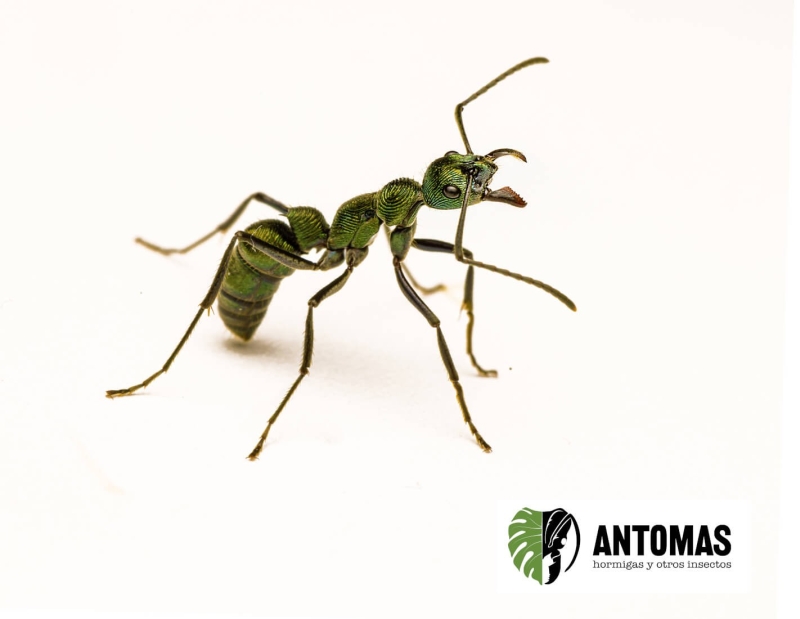
Harpegnathos venator is one of the most specialized solitary hunters within the ant world. It possesses an exceptionally developed visual system, uncommon among ants, which allows it to locate, track, and actively stalk its prey before launching itself with remarkable precision.

In the moments prior to the attack, an excited movement of the gaster can be observed, whose exact meaning is not clearly understood, but which is especially striking during the stalking phase, evoking the image of a sniper calibrating its target before firing.

The prey is captured using its long and robust mandibles, with which it immobilizes the victim before injecting a paralyzing venom through a fine stinger. Unlike the venom of many other species, this does not cause immediate death, but rather a prolonged state of paralysis, keeping the prey alive. This behavior allows the colony to have access to “fresh” food for a longer period of time. For this reason, supplying only dead prey in captivity is usually ineffective and may even be harmful to the colony’s health.

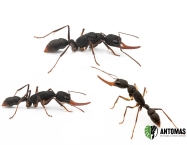
This is a ponerine ant originating from Southeast Asia, closely associated with humid tropical forests. Its colonies are small and display a weakly hierarchical social organization. Both in captivity and under natural conditions, polygynous colonies with several functional queens can be observed, as well as the presence of reproductive workers (gamergates).

Its hunting strategy based on stalking resembles that of a vertebrate predator more than that of a conventional ant, making it a particularly fascinating species for observation.

Size and Morphology

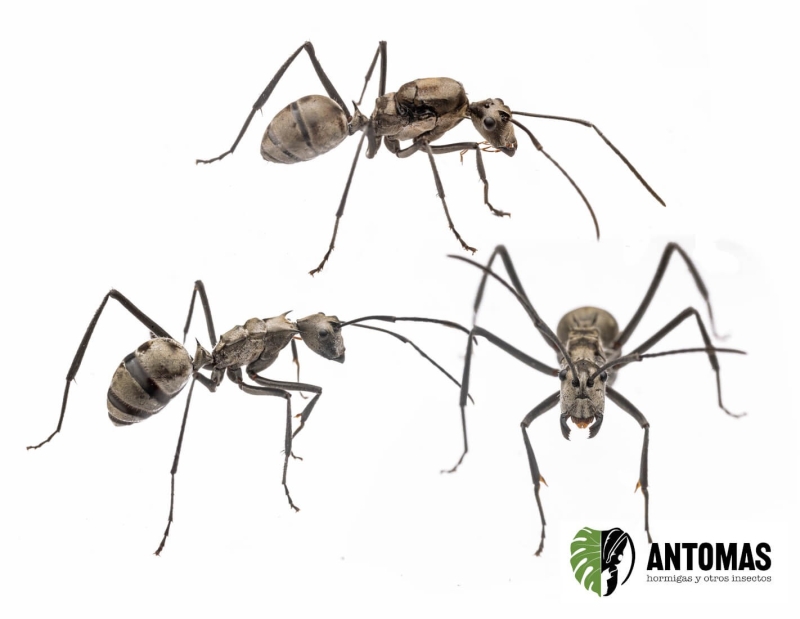
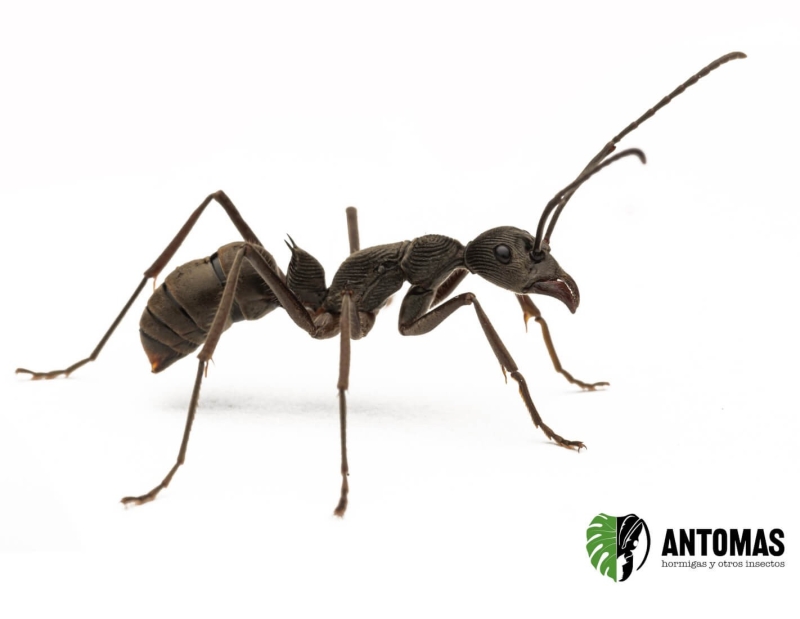
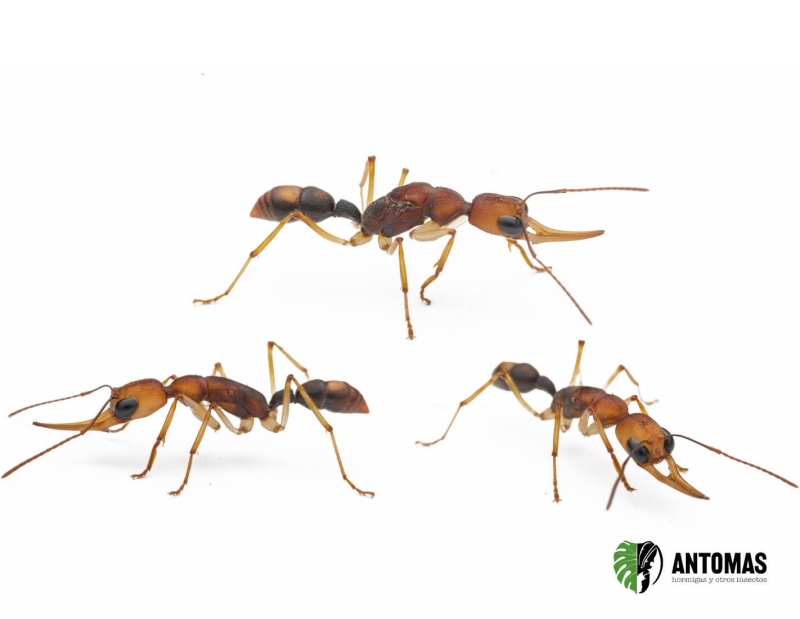
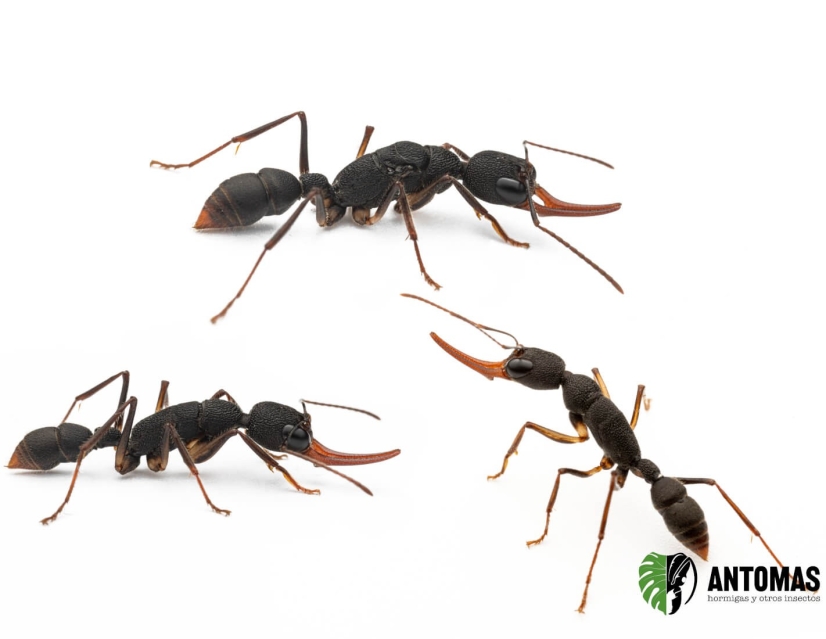
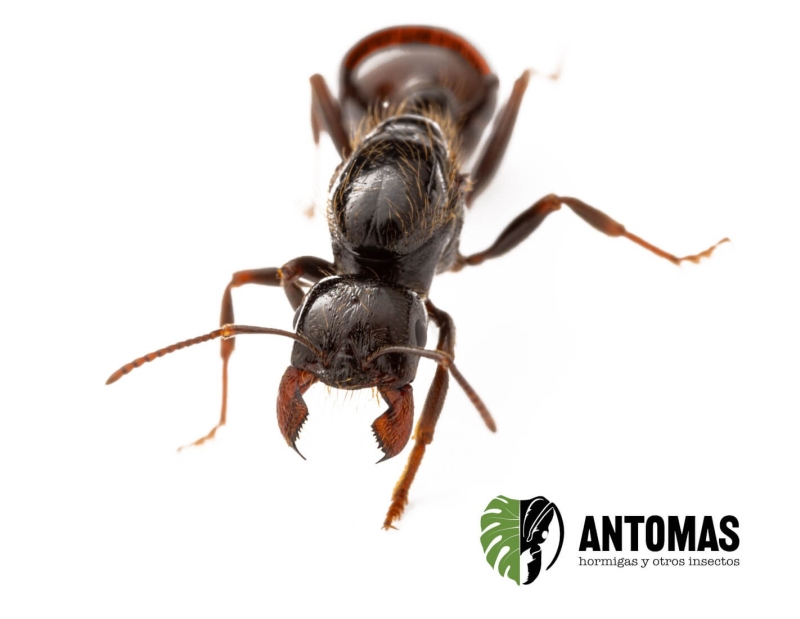
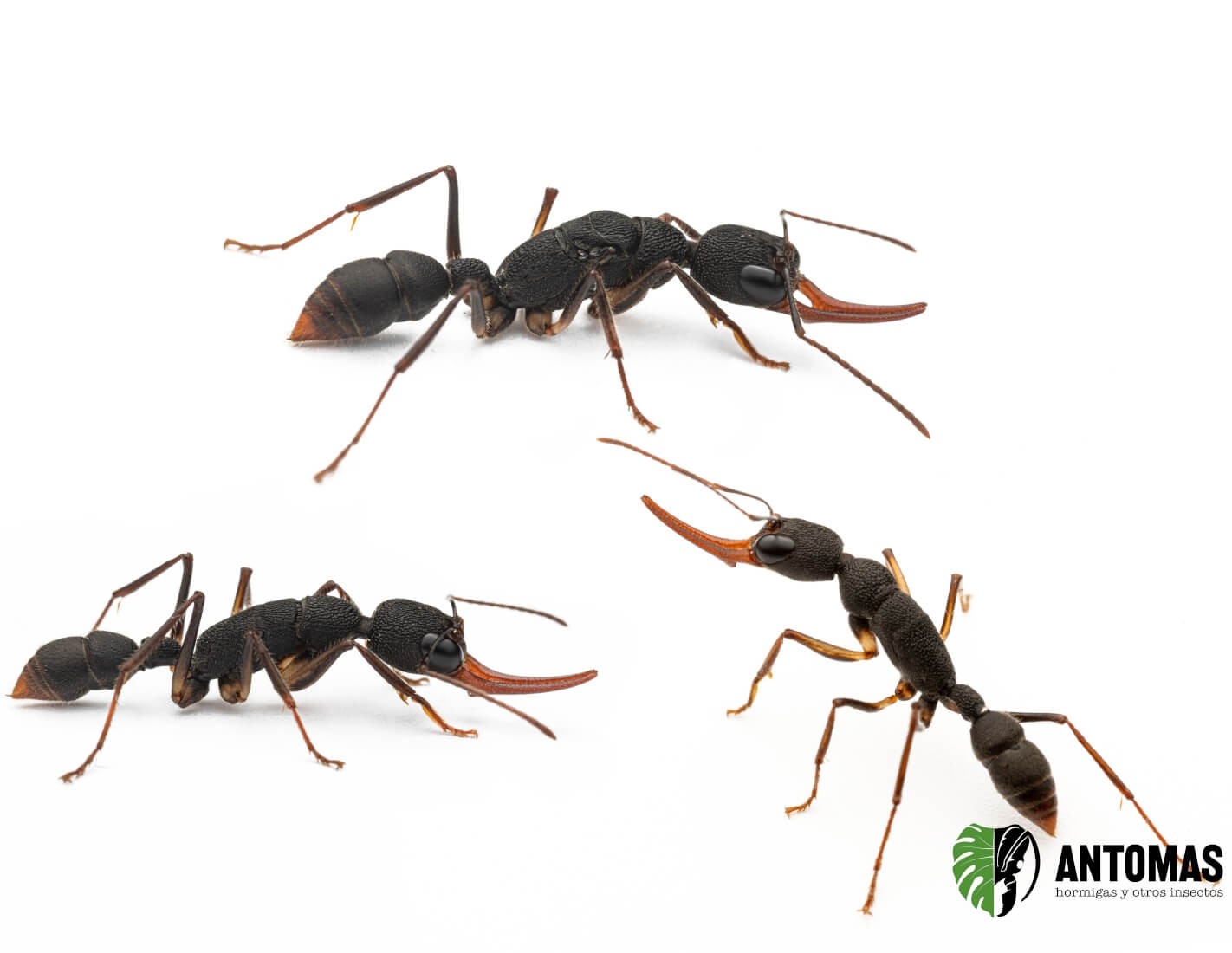
Large ant species with predominantly black coloration. It stands out for its long rust-brown mandibles, a feature that gives rise to its common name, “sabre-toothed ant”. In addition to their offensive function, these mandibles allow precise manipulation of eggs and larvae within the nest.

It possesses highly developed compound eyes, large in proportion to the size of the head, giving it exceptional visual abilities within the ant world, especially relevant for the active pursuit and capture of prey.

  • Queen size: 18–20 mm
  • Worker size: 15–18 mm

Captive Care

For proper maintenance it is essential to keep stable environmental parameters, as this species is sensitive to sudden variations.

  • Temperature: 24–26 °C
  • Humidity: 60–80 %

It requires ant nests made from natural materials, preferably plaster-based, that allow proper moisture retention and distribution. It is not a suitable species for dry nests or acrylic structures without an efficient hydration system.

Feeding should be carried out 3–4 times per week, based mainly on live prey, which is essential to stimulate its natural predatory behavior:

  • Crickets
  • Cockroaches
  • Flies

The use of runner roaches (Shelfordella lateralis) is especially recommended, as they present a lower risk of mite proliferation compared to other commonly used prey, an important factor considering that H. venator may be affected by these parasites.

It is recommended to always handle them using entomological tools, avoiding direct contact with the hands.

No reviews

16 other products in the same category: