This website uses its own and third-party cookies to improve our services and show you advertising related to your preferences by analyzing your browsing habits. To give your consent to its use, press the Accept button.
Cookie preferences
| Cookie | Provider | Purpose | Expiry |
|---|---|---|---|
| PHP_SESSID | antomas.es | The PHPSESSID cookie is native to PHP and allows websites to store serialised status data. On the website it is used to establish a user session and to pass state data through a temporary cookie, which is commonly known as a session cookie. These Cookies will only remain on your computer until you close your browser. | Session |
| PrestaShop-# | antomas.es | This is a cookie used by Prestashop to store information and keep the user's session open. It stores information such as currency, language, customer ID, among other data necessary for the proper functioning of the shop. | 480 hours |
| rc::a | It is used to read and filter bot requests. | Persistent | |
| rc::c | It is used to read and filter bot requests. | Persistent |
| Cookie | Provider | Purpose | Expiry |
|---|---|---|---|
| _ga | Registers a unique ID that is used to generate statistical data on how the visitor uses the website. | 2 years | |
| _gat | Used by Google Analytics to throttle request rate | 1 day | |
| _gat_gtag_UA_# | Used to throttle request rate. | 1 minute | |
| _gd# | This is a Google Analytics Session cookie used to generate statistical data on how you use the website which is removed when you quit your browser. | Session | |
| _gid | Registers a unique ID that is used to generate statistical data on how the visitor uses the website. | 1 day |
Myrmecocystus placodops – Red-Headed Honeypot Ant
Biology
Myrmecocystus placodops is a large North American honeypot ant distributed from the plains of western and southern Texas through New Mexico and Arizona to several regions of northern Mexico.
It inhabits a wide variety of arid and semi-arid environments: dry grasslands, mesquite and acacia savannas, creosote-bush scrub, stony plains, and desert areas with sparse vegetation. Its nests are usually built in compact, well-drained soils.
Unlike Myrmecocystus mexicanus, whose activity is concentrated mainly at night, M. placodops is distinctly diurnal. Workers perform most of their foraging in daylight, even at relatively high temperatures.
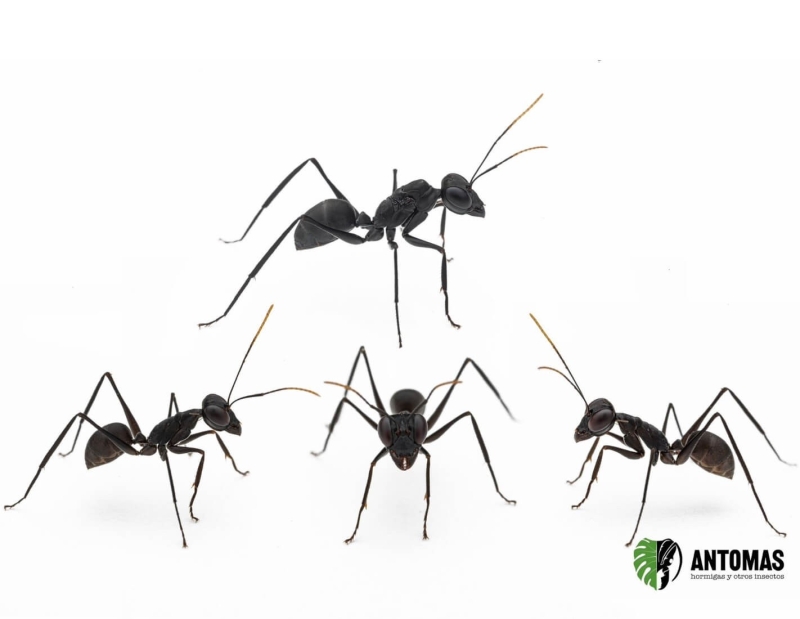
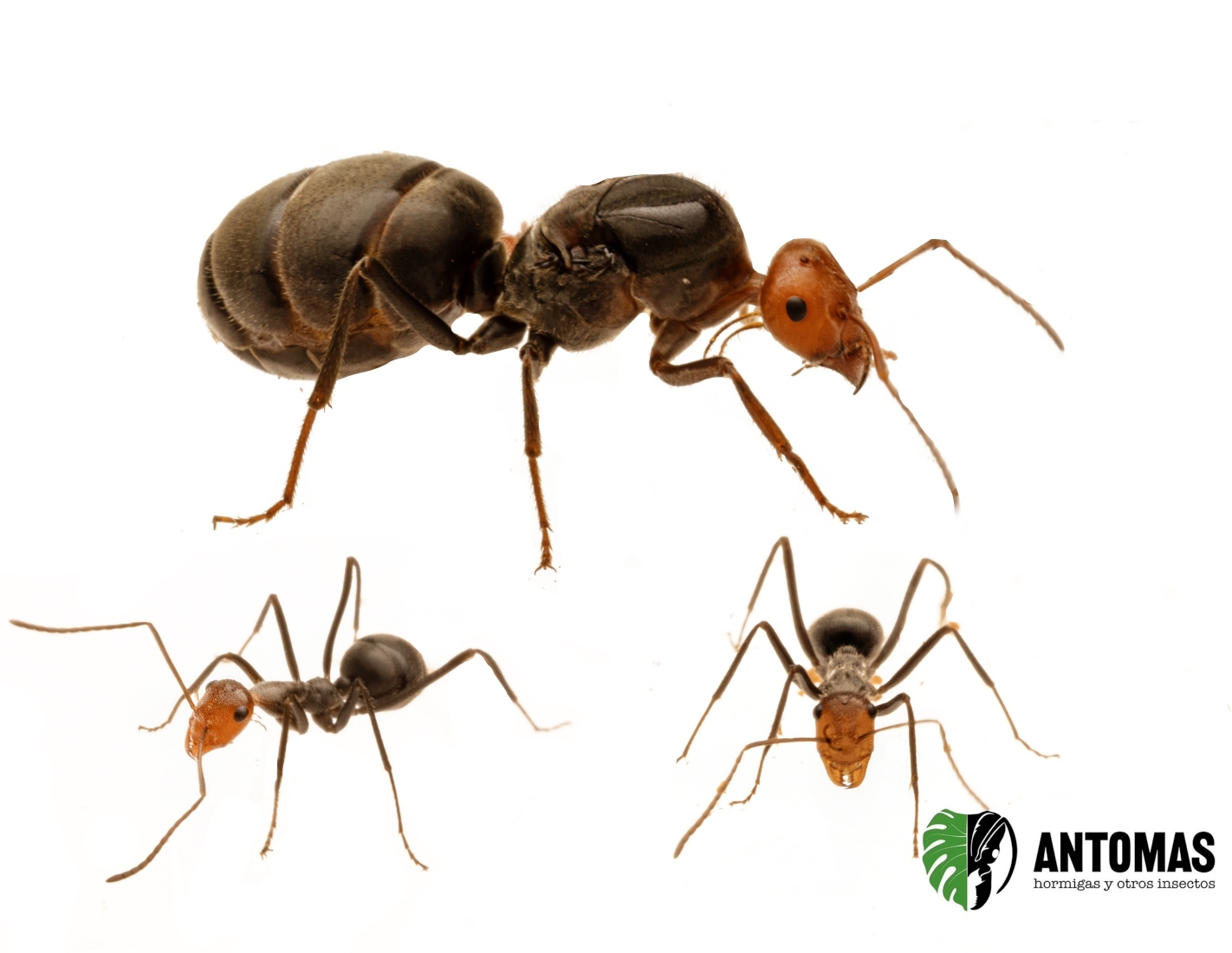
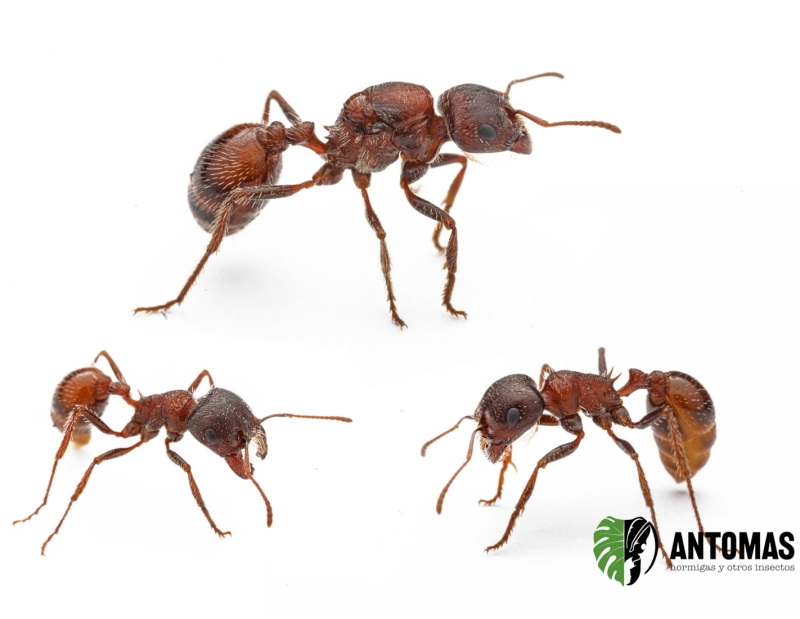
This appearance is very striking: from a distance, workers resemble tiny drops of metal moving rapidly over the ground, while closer inspection reveals the strong contrast between the reddish head and the rest of the body.
It is also notable for its predatory and scavenging behavior. It captures small arthropods, collects dead insects, and exploits any accessible protein source around the nest.
Workers visit flowers and other plant structures to obtain nectar. They also use honeydew, fruit juices, and sweet secretions produced by different desert plants.
Repletes: living reserves
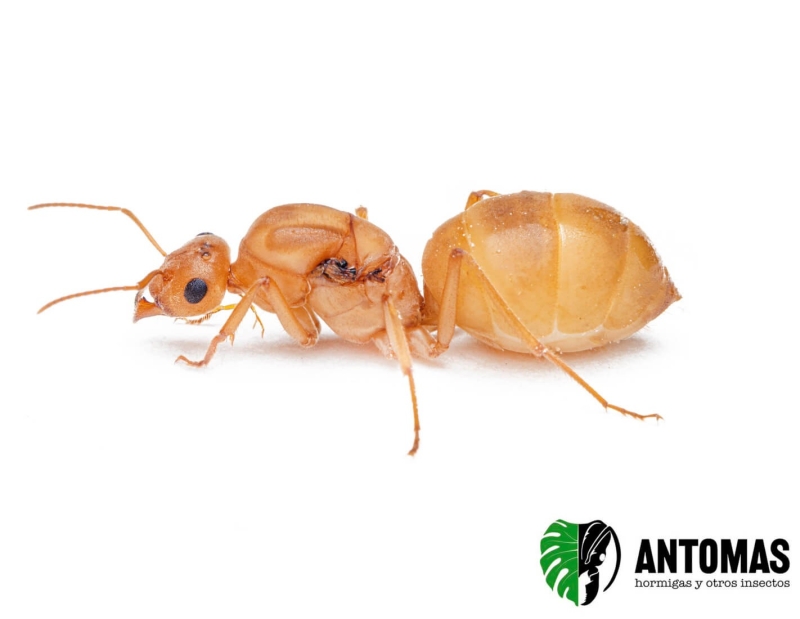
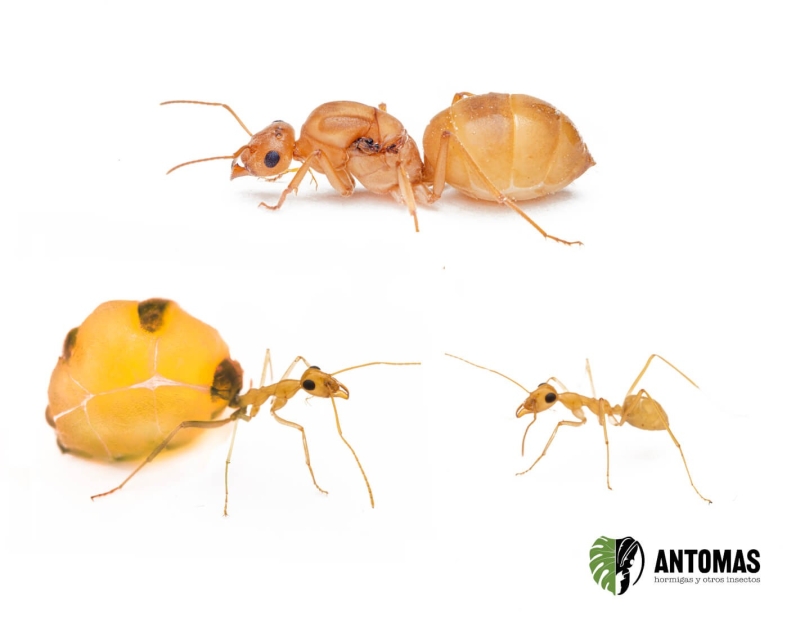
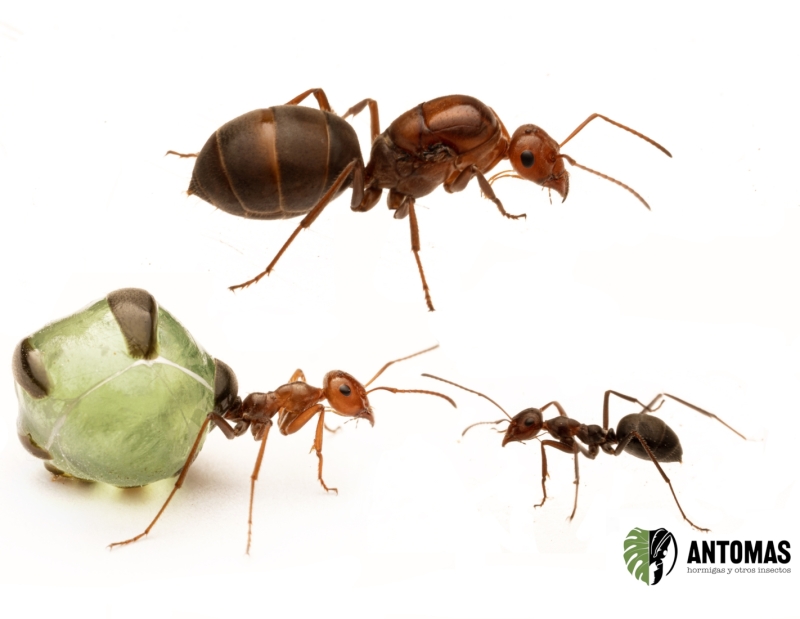
Like other honeypot ants, M. placodops produces repletes, workers that store large quantities of liquid in their social crop until the gaster becomes a huge translucent food reservoir.
These workers remain suspended from the ceilings or walls of deep chambers. When nectar and other nutritious liquids are abundant, foragers feed them through trophallaxis; during scarcity, the stored liquid is returned to the colony.
They function as a communal pantry made up of living individuals: they not only store food, but also distribute it exactly when another worker, a larva, or the queen needs it.
Repletes are not necessarily born destined for this role. Certain workers, usually large and still young, begin to be overfed until their gaster becomes distended.
The stored liquid may be transparent, yellow, orange, reddish, or brown depending on the food source. Repletes of different colors can occur within the same colony.
A nest of extraordinary dimensions
Natural nests of M. placodops can reach remarkable depths. Colonies have been excavated more than three metres below ground, and one nest near Tucson extended even deeper.
The first galleries pass through layers of gravel or compact soil. Lower down, after reaching softer and more stable strata, the ants construct broad, low chambers where repletes remain suspended.
In one such excavation, more than 1,500 repletes were recovered, along with several hundred normal workers. This showed that the species can form enormous food-storage systems.
Its architecture resembles a city built downward: workers operate near the surface, while the most valuable reserves remain protected in deep storage chambers.
This enormous depth cannot be reproduced literally in captivity, but its logic can be imitated: broad chambers, rough ceilings, dry areas for repletes, and a clear humidity gradient.
Colonies should be considered monogynous in captivity. Queens from different flights, localities, or colonies should not be combined, as there is no guarantee of acceptance.
Founding is managed as claustral. The queen can remain in a test tube using her body reserves to produce the first workers. During this stage, routine feeding is unnecessary.
Size and Morphology
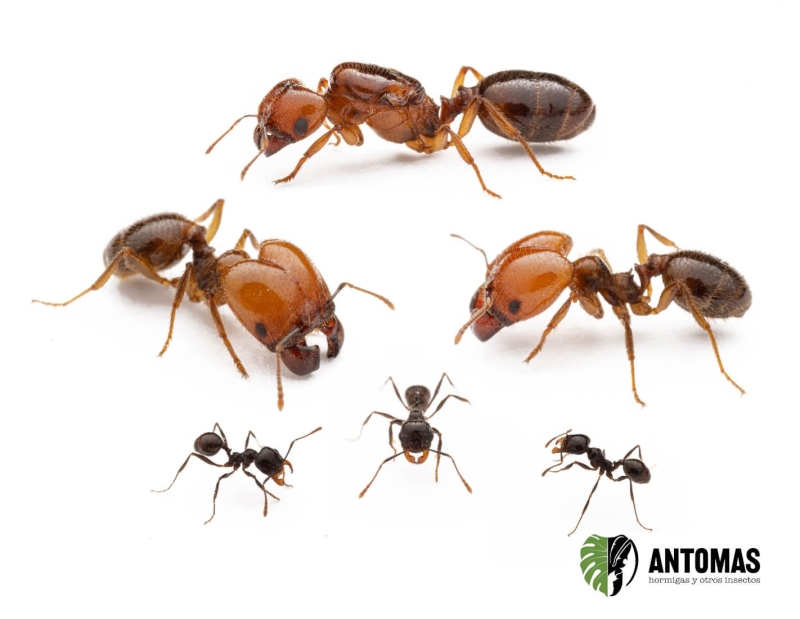
Myrmecocystus placodops is one of the largest North American honeypot ants. It shows continuous polymorphism, with small, medium, and large workers, but no distinct soldier caste.
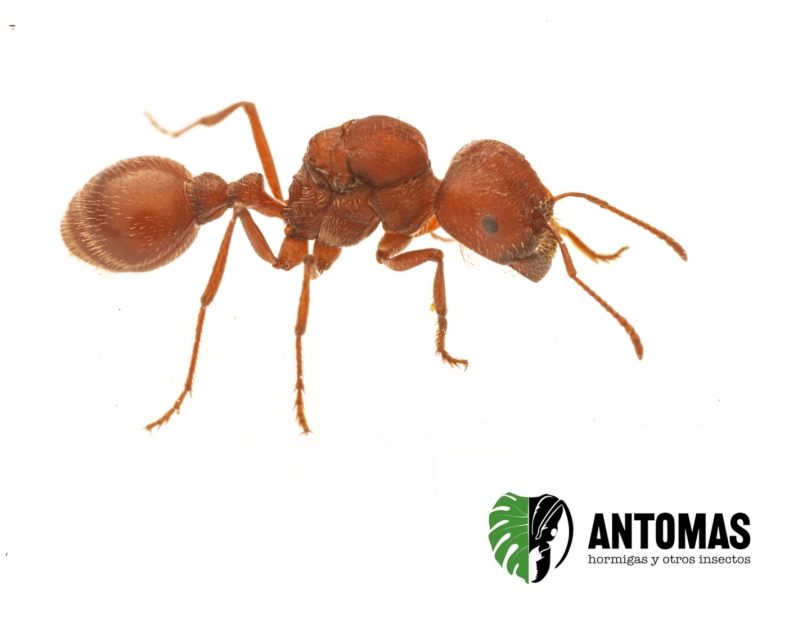
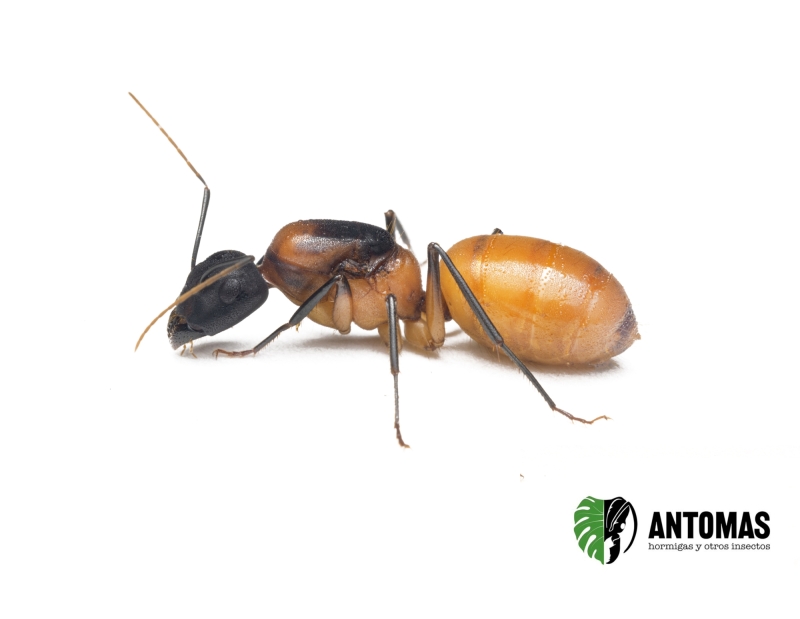
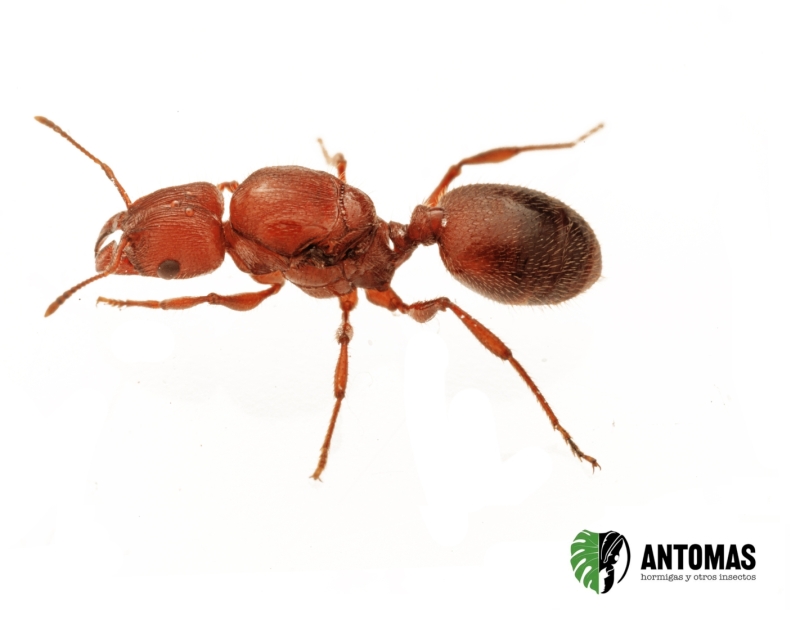
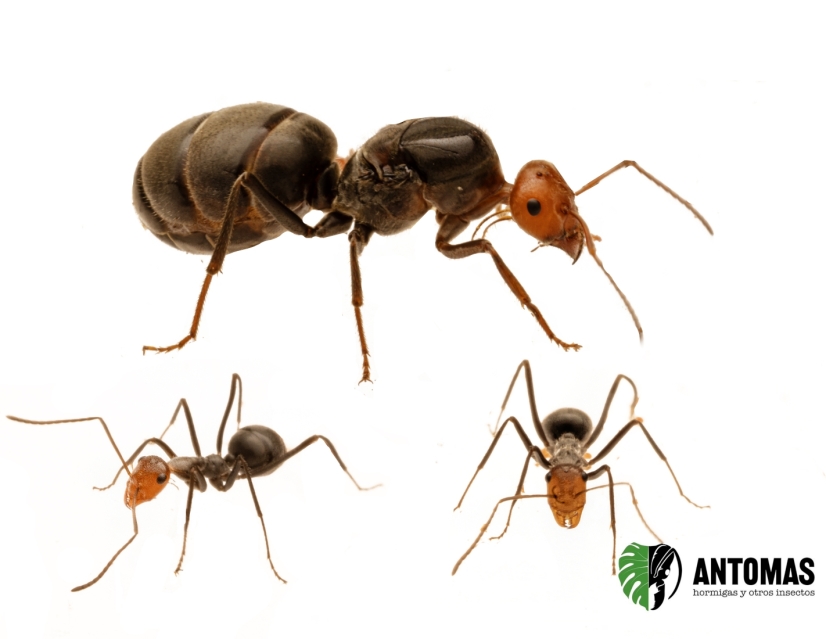
Workers have reddish, ferruginous, or chestnut heads and mesosomes. The gaster is usually very dark brown or black, creating a highly characteristic bicolored appearance.
The legs and antennae may vary from brown and dark red to almost black. In smaller workers, the mesosoma and extremities tend to appear darker.
Large workers have a very broad, rounded head, almost circular when viewed from the front. This orbicular shape is one of the species’ most representative features.
Although the head may resemble that of a soldier, these large workers remain part of a gradual size series. They may participate in defense, prey capture, and food storage.
The queen has a ferruginous or reddish head, a reddish-brown mesosoma, and a dark, bulky gaster. This coloration explains the commercial name Red-Headed Honeypot Ant.
Approximate measurements
- Workers: approximately 6–11 mm
- Queen: around 14–16 mm
- Repletes: worker-sized body with a greatly enlarged gaster
These measurements should be considered approximate, as there is considerable variation among worker sizes, populations, and captive lines.
As a member of the subfamily Formicinae, it lacks a sting. It can defend itself with its mandibles and by releasing formic acid from the tip of the gaster.
CAPTIVE CARE
Myrmecocystus placodops is recommended exclusively for expert keepers.
Founding can be difficult, and colonies may not stabilize until after two years, once they exceed 100 individuals. Repletes are extremely delicate.
Recommended parameters
- Development temperature: 25–29 °C
- Localized warm spot: 28–30 °C
- Night temperature: may drop moderately
- Nest humidity: localized
- Replete chambers: dry and well ventilated
The colony needs a clear gradient. Eggs and larvae require a hydrated area, while repletes need dry, stable surfaces without condensation.
The entire nest should not be heated equally. The colony must be able to move the brood away from the warm spot whenever necessary.
Founding and nectar control
The queen should remain in a test tube with a water reservoir, protected from light and vibrations.
Because founding is claustral, she does not need continuous feeding before the first workers appear. An occasional microdrop would only make sense if founding becomes unusually prolonged.
After the first workers emerge, carbohydrate intake should be limited and controlled. A full nectar feeder should not be installed immediately.
In an overfed founding colony or mini-colony, the queen herself may accumulate too much liquid and distend her gaster, temporarily assuming a replete-like role.
During the first generations, microdrops should be offered in amounts that can be consumed quickly, without creating large reserves.
It is advisable to wait until the second or third worker generation before installing continuous feeders. At that point, workers suitable for becoming repletes begin to appear.
The goal is not to fill the colony quickly, but to allow specialization to develop gradually.
RECOMMENDED FORMICARIA
Anthouse vertical nests are not recommended for founding queens or mini-colonies. This type of nest is more suitable once the colony already has numerous repletes and a stable population.
During the first stages, the following is recommended:
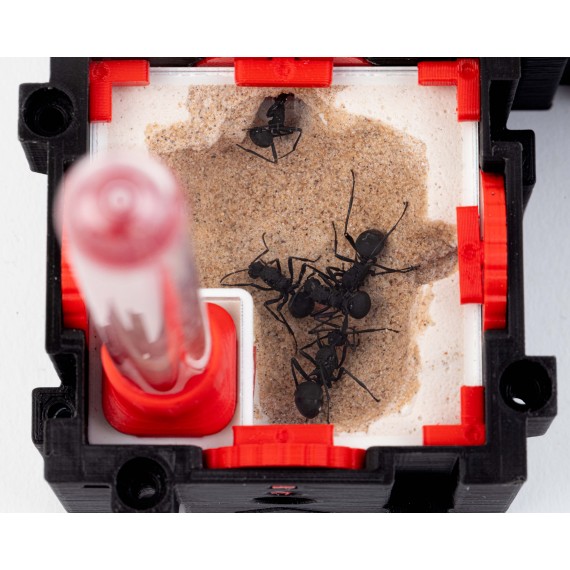
The Wild One chambers are high enough for the first repletes to hang from the walls and ceiling without moving the colony prematurely to a large vertical nest.
It also provides a comfortable horizontal surface for the queen, brood, and normal workers, allowing visual monitoring of the first repletes.
Expansion should be gradual. A much larger nest should not be connected until the colony has truly occupied the initial module.
For large colonies, the following is recommended:
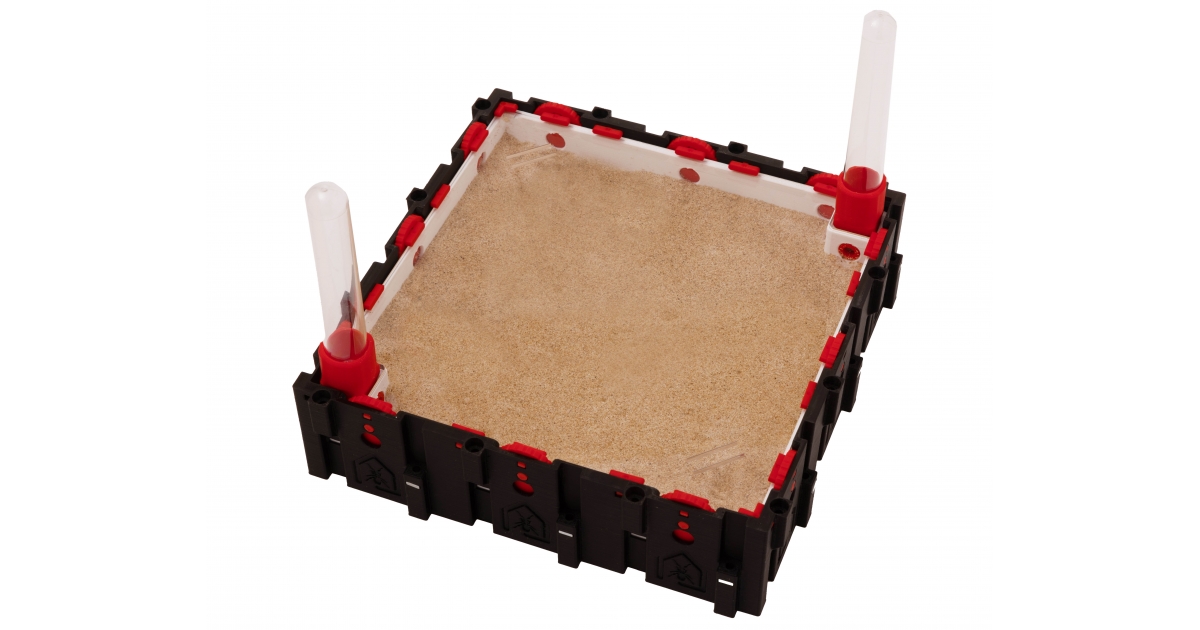
The chamberless Nona Wild allows the colony to excavate and organize its own network of galleries. Despite the enormous difference in depth, it reproduces the natural layout relatively faithfully.
A compact substrate capable of maintaining stable ceilings must be used. Humidity should be applied locally, avoiding saturation of replete chambers.
This setup is reserved for mature colonies. In a small colony, it would make queen control, feeding, and formation of the first repletes more difficult.
Feeding
Carbohydrates
- Ant-specific nectar
- Sugar water
- Diluted honey
- Balanced syrups
- Small portions of ripe fruit
- Natural juices without preservatives
In developed colonies, carbohydrates may be offered more regularly, adjusting the volume to the number of workers and repletes.
Feeders must be safe and protected against drowning. There must also always be an independent source of clean water.
Proteins
- Fruit flies
- Flies
- Crickets
- Feeder cockroaches
- Moths
- Chopped mealworm
- Other safe, well-fed insects
M. placodops shows an especially strong predatory response and can efficiently capture small live prey.
Founding colonies and small colonies should receive killed or cut insects. Once established, appropriately sized live prey may be offered to observe hunting behavior.
Protein is essential for growth. Repletes store liquids, but they do not replace the need for nutrients required for larval development.
There are old observations of workers carrying seeds, but this behavior is not sufficiently confirmed to consider seeds an essential part of the diet.
Diapause
Myrmecocystus placodops inhabits regions with relatively mild winters, although clearly cooler than summer. In Tucson, one of its best documented localities, January nights can be cold.
However, natural nests reach several metres deep, so the chambers occupied by the queen and repletes experience much smaller temperature changes than the surface.
A mild or moderate diapause of approximately 10–12 weeks at 14 to 18 °C is recommended.
Intense cooling should not be applied automatically. Temperatures below 12 °C should only be considered when the exact origin is known to experience cold winters.
During diapause, egg laying, brood development, and external activity decrease. Access to water must always be maintained.
A small amount of carbohydrates may be offered if workers remain active, but repletes should not be constantly refilled. Protein may be reduced considerably when active larvae disappear.
Cooling and warming should be gradual.
Behavior in Captivity
Young colonies may remain hidden for long periods, but M. placodops becomes very active as the population increases.
Unlike many nocturnal honeypot ants, it can be observed foraging during the day. Workers move rapidly through the foraging area and respond immediately to prey.
The appearance of the first repletes should be considered the point at which the colony begins to require a permanent setup. Once fully distended, these individuals should not be moved unnecessarily.
Grip surfaces should be checked periodically. A wall that is too smooth, wet, or covered in condensation can cause falls.
Handling and Safety
Myrmecocystus placodops has no sting.
Workers can bite and use formic acid when trapped or when the nest is directly disturbed.
All interventions should be planned in advance and carried out using tubes, auxiliary containers, and entomological tools.