
Pogonomyrmex rugosus | Buy & Care Guide

Pogonomyrmex rugosus - Rough Harvester Ant

€64.99
VAT included

Please inquire before purchasing to find out which morph is currently available and request current photos if color is an important factor in your selection.

Contact us via Chat on WhatsApp

Colony


Pogonomyrmex rugosus – Rough Harvester Ant

Biology

Pogonomyrmex rugosus, commonly known as the Rough Harvester Ant, is a large seed-harvesting ant native to the arid regions of southwestern North America. Its distribution covers the southwestern United States and northern Mexico, including populations associated with the Mojave, Sonoran, and Chihuahuan Deserts.

It inhabits open, warm, and generally dry environments such as deserts, arid grasslands, scrublands, and plains with sandy, rocky, or clay-rich soils. Its colonies build large underground nests that are easily recognized by the cleared area surrounding the nest entrance.

Workers remove plants, stones, and accumulated debris from around the nest, creating a kind of open plaza from which their foraging routes begin. This cleaning facilitates movement, reduces root growth above the tunnels, and allows the colony to detect nearby movement more quickly.

Its diet is based primarily on seeds, especially those produced by grasses and herbaceous plants found in desert environments. Workers collect, transport, and store them in dry chambers located inside the nest.

This ability to store food allows the colony to maintain reserves during periods of scarcity. Its organization resembles that of a human society stocking warehouses before an unfavorable season: each forager contributes a small load, but together they create enormous food reserves.

It is not exclusively granivorous. It also scavenges dead insects and may capture small invertebrates, especially when the colony has many larvae. Animal proteins complement the diet and promote healthy brood development.

One of its most attractive behaviors is collective foraging. When an abundant seed source appears, workers may establish permanent or semi-permanent routes between the food and the nest. These routes act like real highways: some workers leave empty, others return loaded, and the flow continues as long as the resource remains profitable.

Mature colonies can reach several thousand to more than 10,000 workers. Despite their large population size, workers are monomorphic: there are no soldiers as a clearly differentiated caste, although gradual size variation can be observed.

The division of labor depends largely on age. Young workers care for the queen, eggs, and larvae inside the nest, while older workers gradually move on to riskier external tasks such as foraging and defense.

Colonies are usually monogynous, led by a single queen. However, the queen may mate with several males during the nuptial flight, increasing the genetic diversity of the colony.

Nuptial flights are closely associated with rainfall. Moisture softens the soil and allows new queens to dig their founding chamber more easily.

Founding is fully claustral. After mating, the queen seals herself inside a chamber and produces her first workers using the reserves stored in her body.

The first workers are nanitics and noticeably smaller than later generations. Once they begin collecting seeds and proteins, the colony enters a more stable growth phase.

Size and Morphology

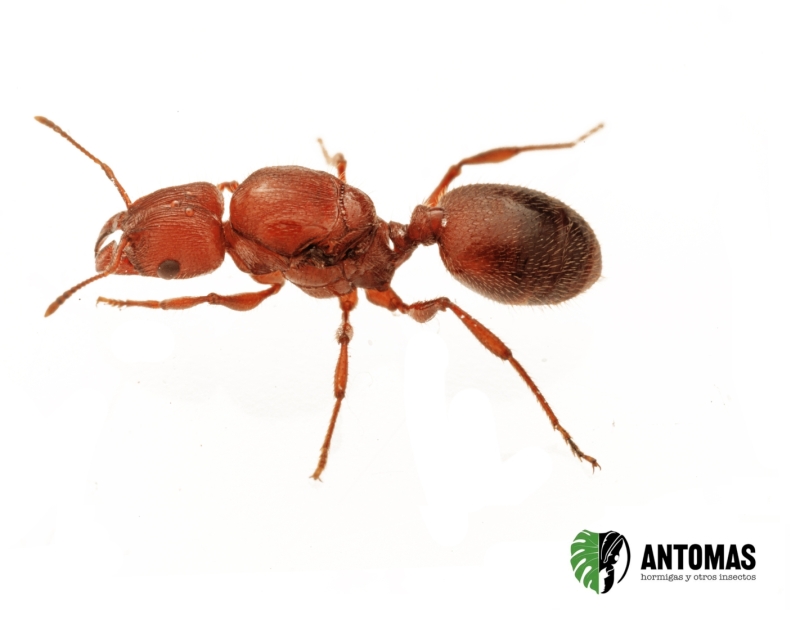
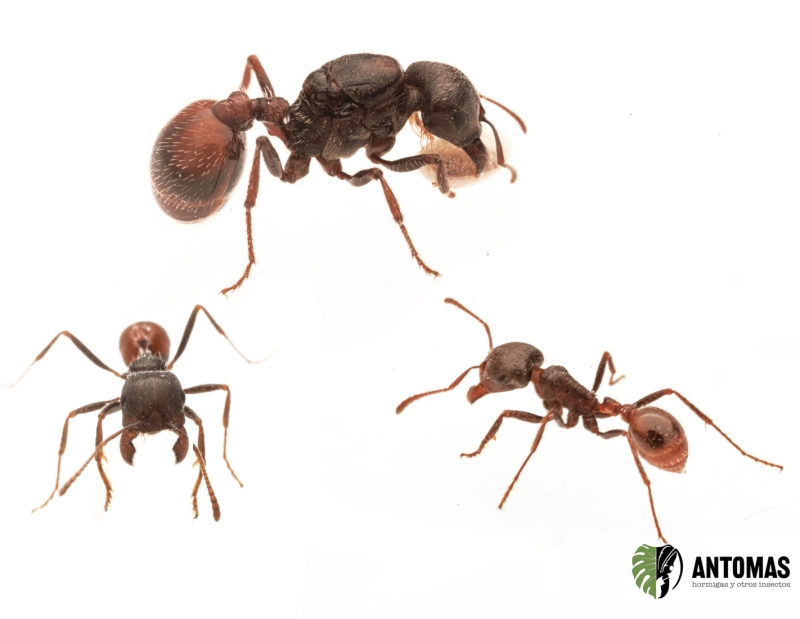
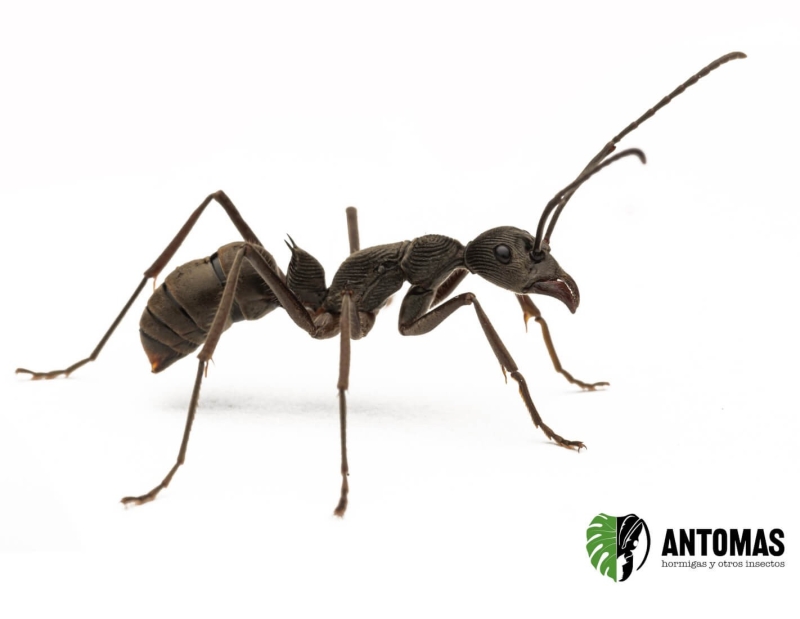
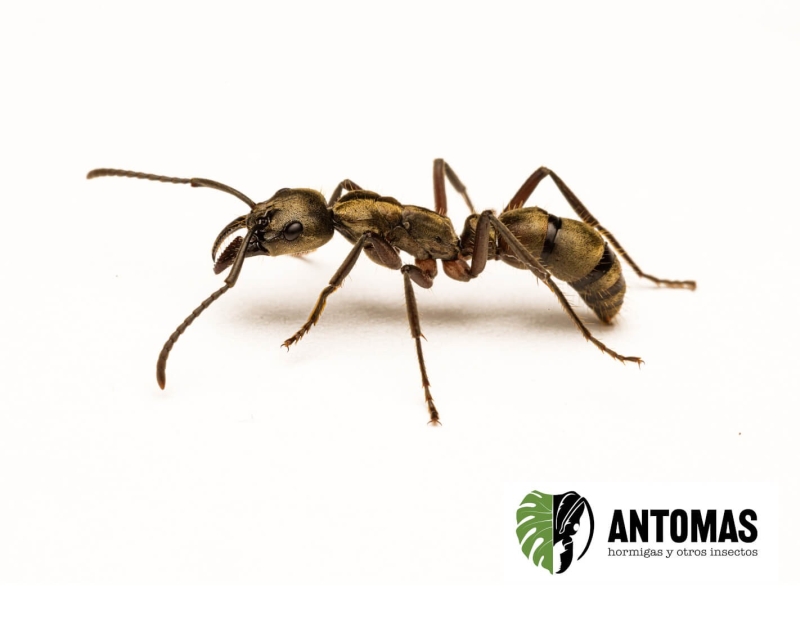
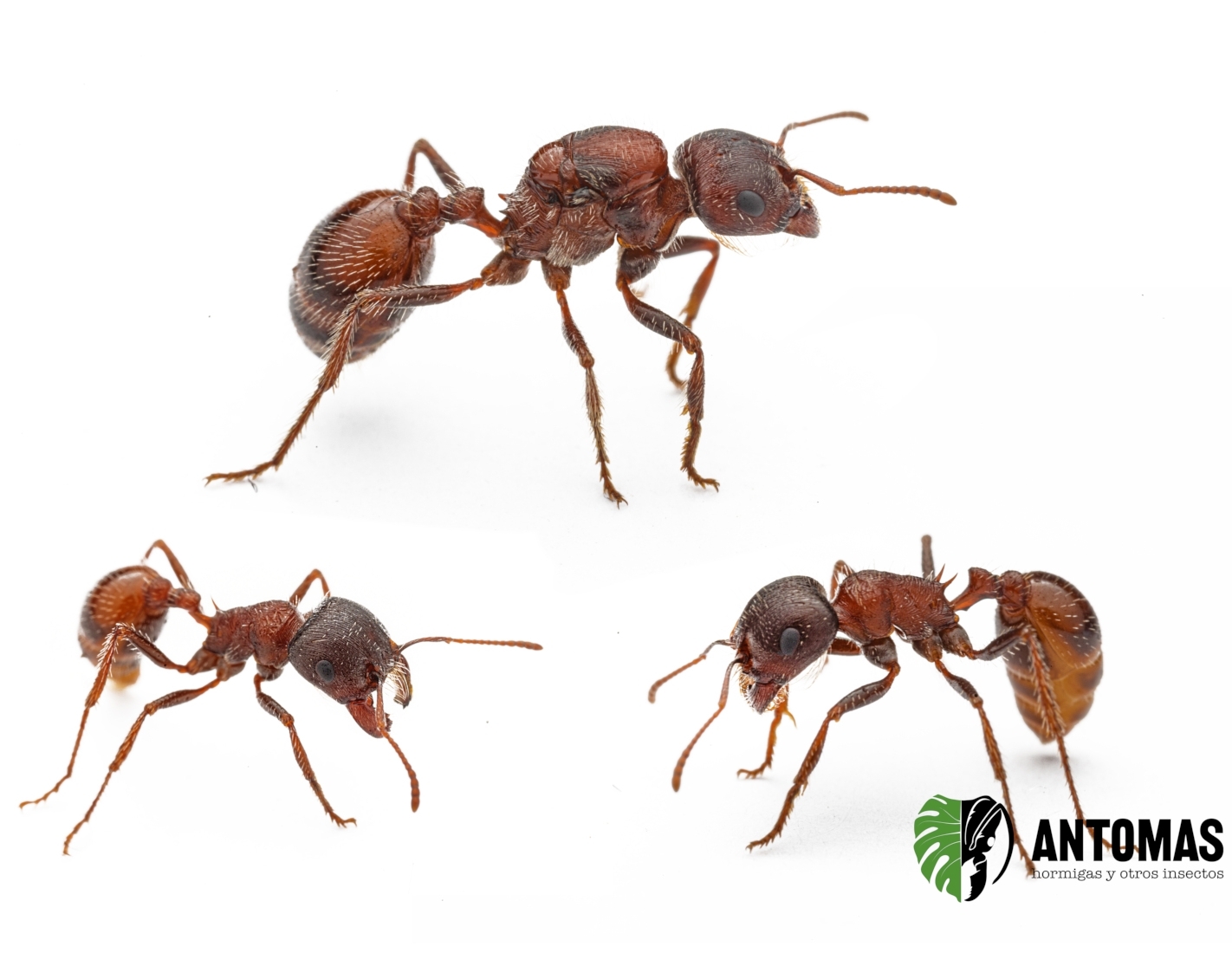
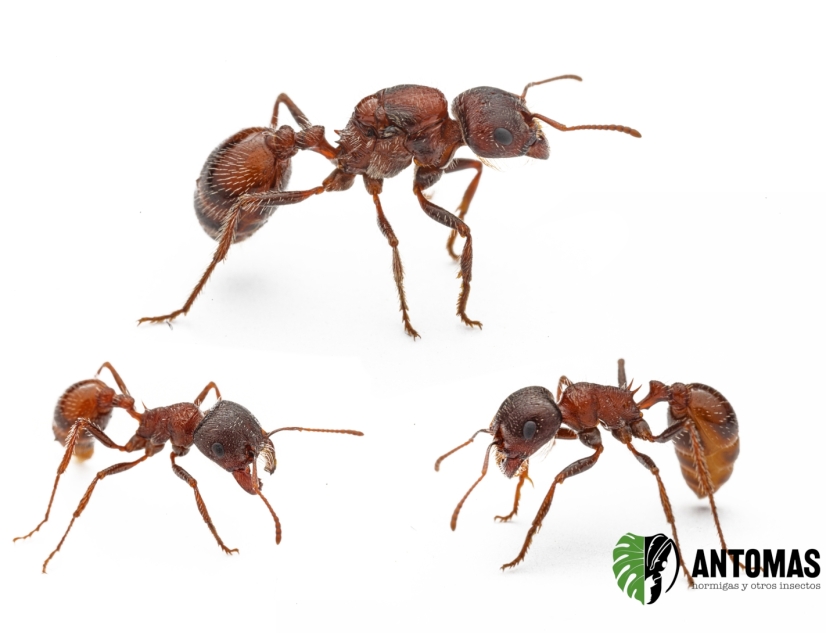
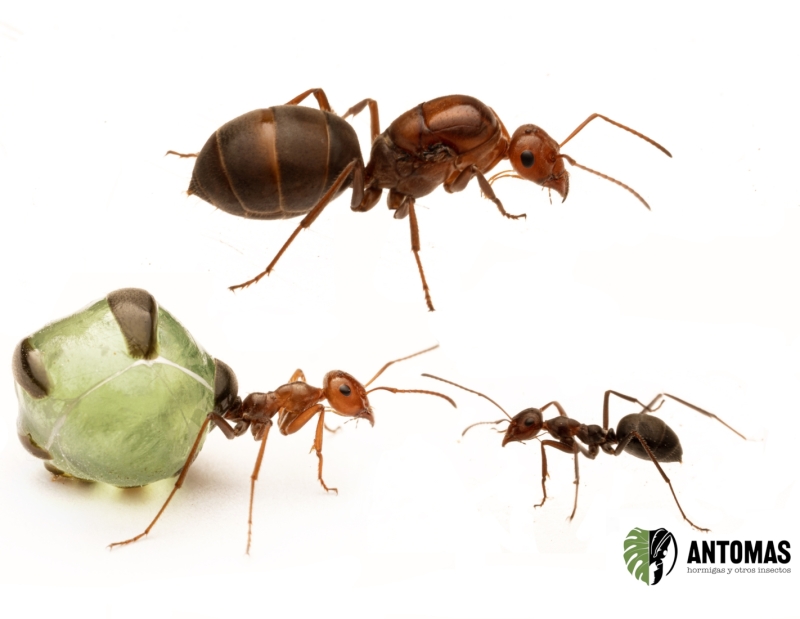
Pogonomyrmex rugosus is a large, robust ant with relatively long legs. The head is broad, the mandibles are well developed, and the body surface is strongly sculptured.

Its specific name, rugosus, refers precisely to this rough exoskeleton, covered with grooves and raised textures that are especially visible on the head and mesosoma.

Under the head it has a psammophore, formed by a series of long, curved hairs. Its main function is to help transport soil particles, sand, and seeds.

It has no soldier caste. Workers maintain a generally uniform morphology, although individuals in a mature colony are often clearly larger than the first workers produced.

Color variation and morphs

The coloration of P. rugosus is highly variable. Specimens may be found in the following forms:

  • reddish;
  • dark brown;
  • almost completely black;
  • bicolored, with reddish head or mesosoma and black gaster;
  • with different intermediate tones depending on population.

The morph available at Antomas may vary depending on the year of import, region of origin, and collected population. Coloration should therefore not be considered fixed.

For this reason, it is recommended to check before purchasing to know the morph available at that time and request current photographs when necessary.

Approximate measurements

  • Workers: 7–10 mm
  • Queen: 12–14 mm

Queens are considerably bulkier than workers, with a mesosoma developed by the original flight muscles and a gaster prepared to support high egg production.

The species has a functional sting. Workers can hold on with their mandibles and sting when trapped, pressed, or when the colony is disturbed.

CAPTIVE CARE

The difficulty of Pogonomyrmex rugosus can be considered intermediate.

It is a hardy species, easy to feed and observe, but its future population size, seed management, humidity control, and sting require responsible handling.

Recommended parameters

  • Active temperature: 24–29 °C
  • Warm spot: 28–30 °C
  • Brood area: moderately humid
  • Seed storage area: dry
  • Nest: ventilated, secure, and with a humidity gradient

Although it comes from desert regions, the queen, eggs, and larvae should not be kept in completely dry conditions. Natural nests reach deeper layers where humidity is more stable.

There should be a humidity gradient: a moderately humid area for the brood and dry chambers where workers can store seeds.

Humidity must not spread throughout the entire nest. If seeds are stored in humid chambers, they may germinate, ferment, or develop mold.

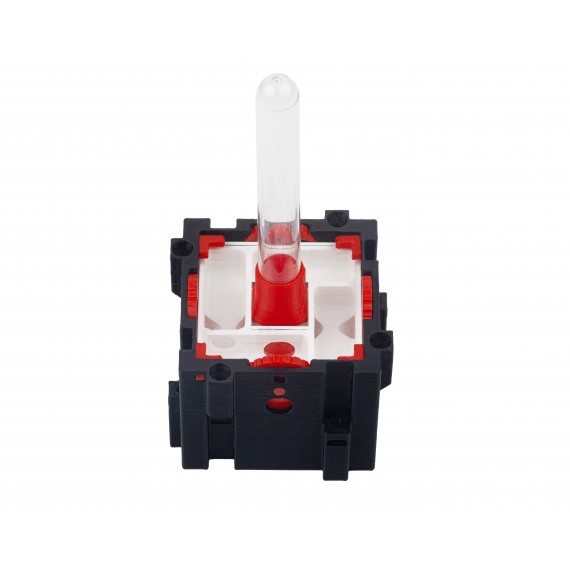
Medium galleries are suitable for young colonies and make better use of space. Large galleries offer greater comfort when the number of workers increases and the colony needs larger storage areas.

For this species, the use of loose substrates is discouraged, both inside the nest and in the foraging area. PLA and acrylic setups provide much better control.

  • they allow the queen, brood, and granaries to be observed;
  • they make it easier to separate humid and dry chambers;
  • they prevent seeds from becoming buried or lost;
  • they simplify cleaning and escape control.

A naturalistic setup may look attractive, but it makes managing a granivorous colony that stores large amounts of food more difficult. For P. rugosus, control and hygiene are more important than decoration.

Expansion should be carried out progressively. It is not advisable to provide an excessively large system from the beginning, as the colony may use unused chambers as dumping areas or poorly controlled granaries.

Feeding

Seeds

Seeds should form the basis of the diet:

  • canary grass seed;
  • different varieties of millet;
  • grass seeds;
  • poppy;
  • dandelion;
  • chia and quinoa;
  • small commercial mixes for harvester ants.

It is advisable to offer a varied mix, as the colony will select seeds according to size, hardness, and need.

Seeds must be free of salt, pesticides, preservatives, and agricultural treatments. Excessive quantities should also be avoided if the colony is still small.

Workers can store large reserves, so granaries should be checked periodically and any germinated, damp, or moldy seeds should be removed.

Proteins

The diet should be supplemented with insects:

  • flies;
  • crickets;
  • cockroaches;
  • moths;
  • chopped mealworm;
  • other safe feeder insects.

Young colonies should receive small portions of killed insects. Large colonies can subdue live prey of suitable size.

Protein consumption increases when larvae are present. During periods without larval development, interest in insects may decrease considerably.

Water and carbohydrates

There should always be a source of clean and safe water.

Sugary liquids can be offered occasionally in small amounts, but they do not need to form the energy base of a species adapted mainly to seeds.

Drops should be small or presented in suitable feeders to prevent workers from becoming trapped.

Seasonal rest

Pogonomyrmex rugosus occupies regions with variable winters, so the intensity of the rest period should be adjusted to the colony’s specific origin.

As a general guideline, a slowdown of approximately 8–12 weeks between 12 and 18 °C can be provided. Populations from colder areas may benefit from a cooler rest.

The temperature drop should be gradual. During this period, external activity, protein consumption, and brood production decrease.

The colony should keep access to water and its seed reserves. It is not necessary to reproduce frosts or extreme temperatures.

Behavior in Captivity

Young colonies may show moderate growth during their first generations. Once the population increases, brood production accelerates and the demand for seeds and space becomes greater.

Workers organize clearly differentiated areas for brood, granaries, and waste. This separation is especially easy to observe in nests with good visibility.

An established colony maintains intense activity in the foraging area. Workers transport seeds, water, insects, and debris, and may establish persistent routes.

Walls, connections, and lids should be checked periodically. Although it is not especially known for climbing completely smooth surfaces, it can exploit joints, cables, and small irregularities.

Handling and Safety

Pogonomyrmex rugosus can sting when it feels threatened, especially if a worker is trapped against the skin or handled directly.

It should not be handled with bare hands. Transfers and maintenance tasks should be carried out using long tweezers, tubes, auxiliary containers, and escape barriers.

The purpose of these precautions is not to alarm, but to avoid escapes and unnecessary contact. With a properly closed nest and a careful maintenance routine, the species can be kept safely.

During any opening, it is advisable to check that no workers are positioned on the lid, connection ports, or edge of the foraging area.

No reviews

16 other products in the same category: