This website uses its own and third-party cookies to improve our services and show you advertising related to your preferences by analyzing your browsing habits. To give your consent to its use, press the Accept button.
Functional cookies are strictly necessary to provide the services of the shop, as well as for its proper functioning, so it is not possible to refuse their use. They allow the user to browse through our website and use the different options or services that exist on it.
Cookie
Provider
Purpose
Expiry
PHP_SESSID
antomas.es
The PHPSESSID cookie is native to PHP and allows websites to store serialised status data. On the website it is used to establish a user session and to pass state data through a temporary cookie, which is commonly known as a session cookie. These Cookies will only remain on your computer until you close your browser.
Session
PrestaShop-#
antomas.es
This is a cookie used by Prestashop to store information and keep the user's session open. It stores information such as currency, language, customer ID, among other data necessary for the proper functioning of the shop.
These are cookies that collect information about the advertisements shown to users of the website. They can be anonymous, if they only collect information about the advertising spaces shown without identifying the user, or personalised, if they collect personal information about the user of the shop by a third party, for the personalisation of these advertising spaces.
Collect information about the user's browsing experience in the shop, usually anonymously, although sometimes they also allow the user to be uniquely and unequivocally identified in order to obtain reports on the user's interests in the products or services offered by the shop.
Myrmecocystus mexicanus is one of the most representative honeypot ants of North America. It is distributed across the arid and semi-arid regions of the southwestern United States and northern Mexico.
In Colorado, colonies have been found on ridges, mesas, and elevations of approximately 1,700 to 2,200 metres. Nest entrances are usually located in open spaces with sparse vegetation and well-drained soils.
It is mainly a nocturnal species. Workers begin to emerge when light and temperature decrease, avoiding the harshest hours of the day.
Its natural diet is based mainly on sugary liquids. It collects floral nectar, extrafloral secretions, juices from damaged fruit, and honeydew produced by aphids and other hemipterans.
It also requires animal protein. It collects dead arthropods, captures small soft-bodied insects, and takes advantage of any prey found near the nest. At certain times, workers may also prey on termites and other small invertebrates.
The repletes: living pantries
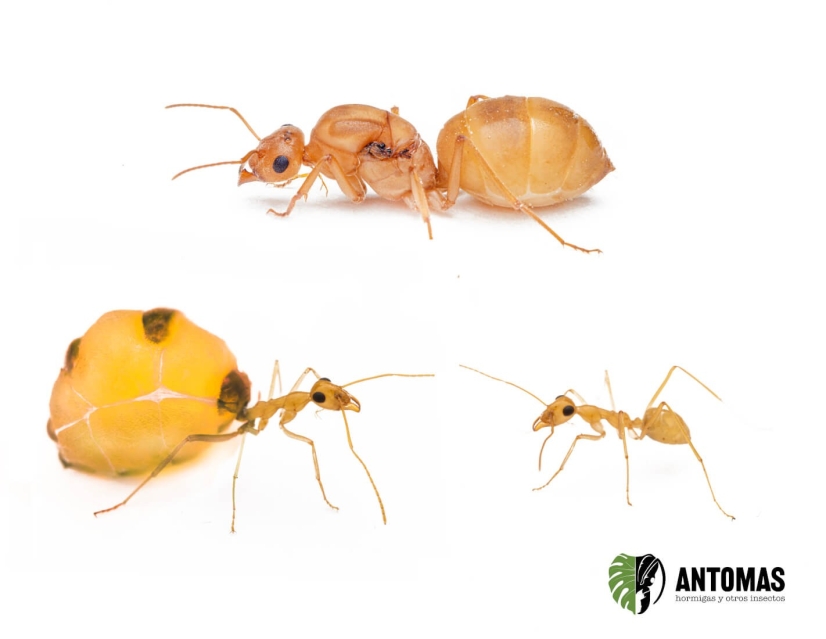
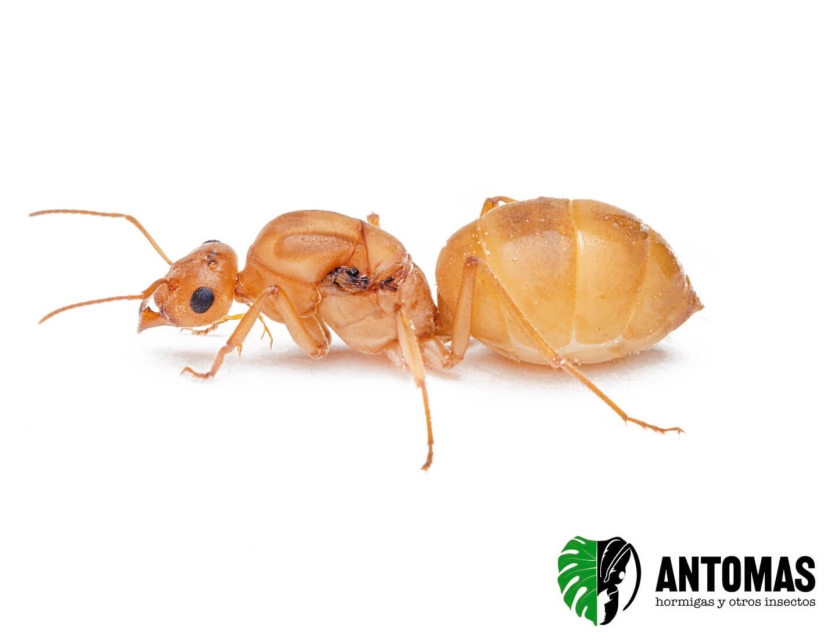
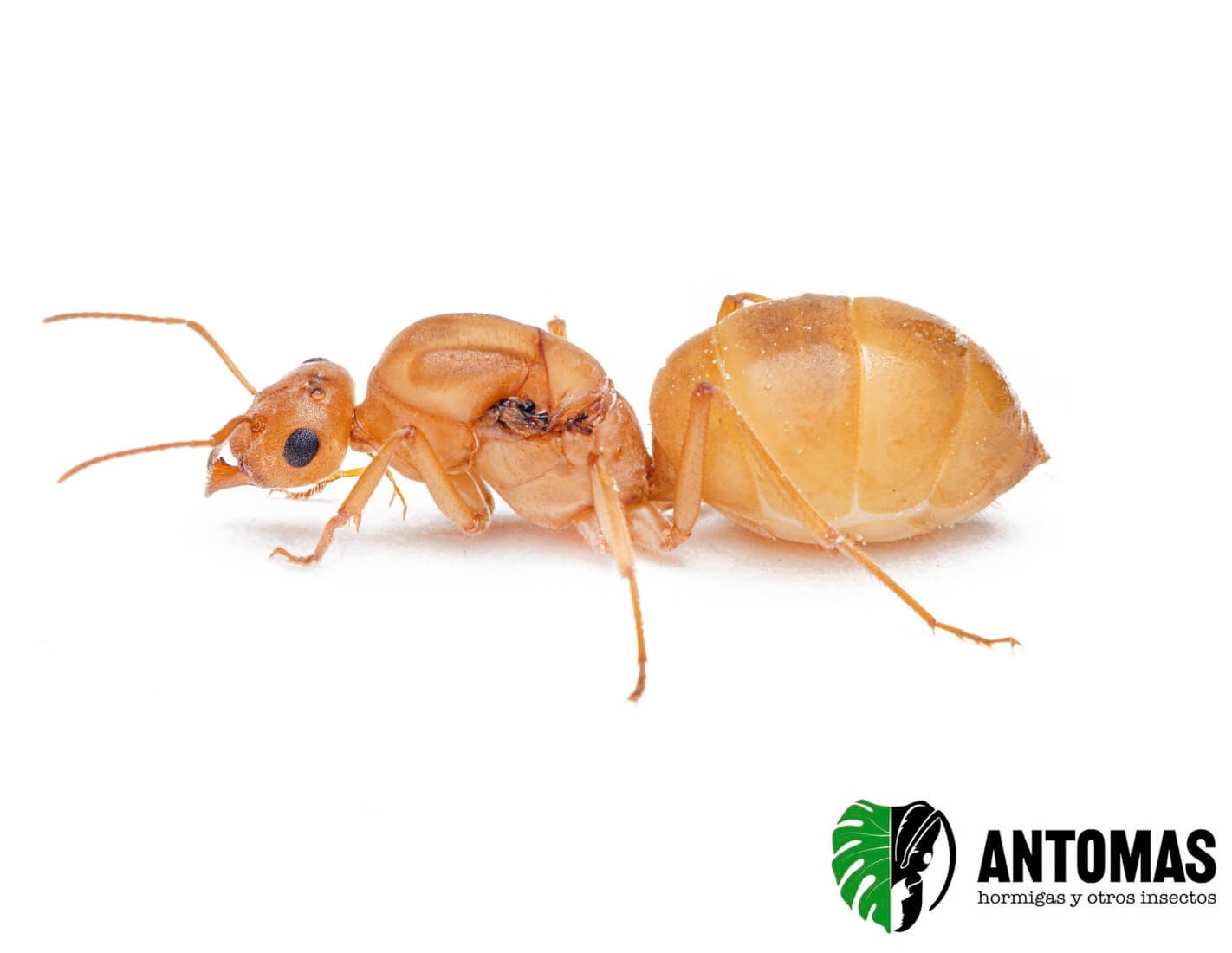
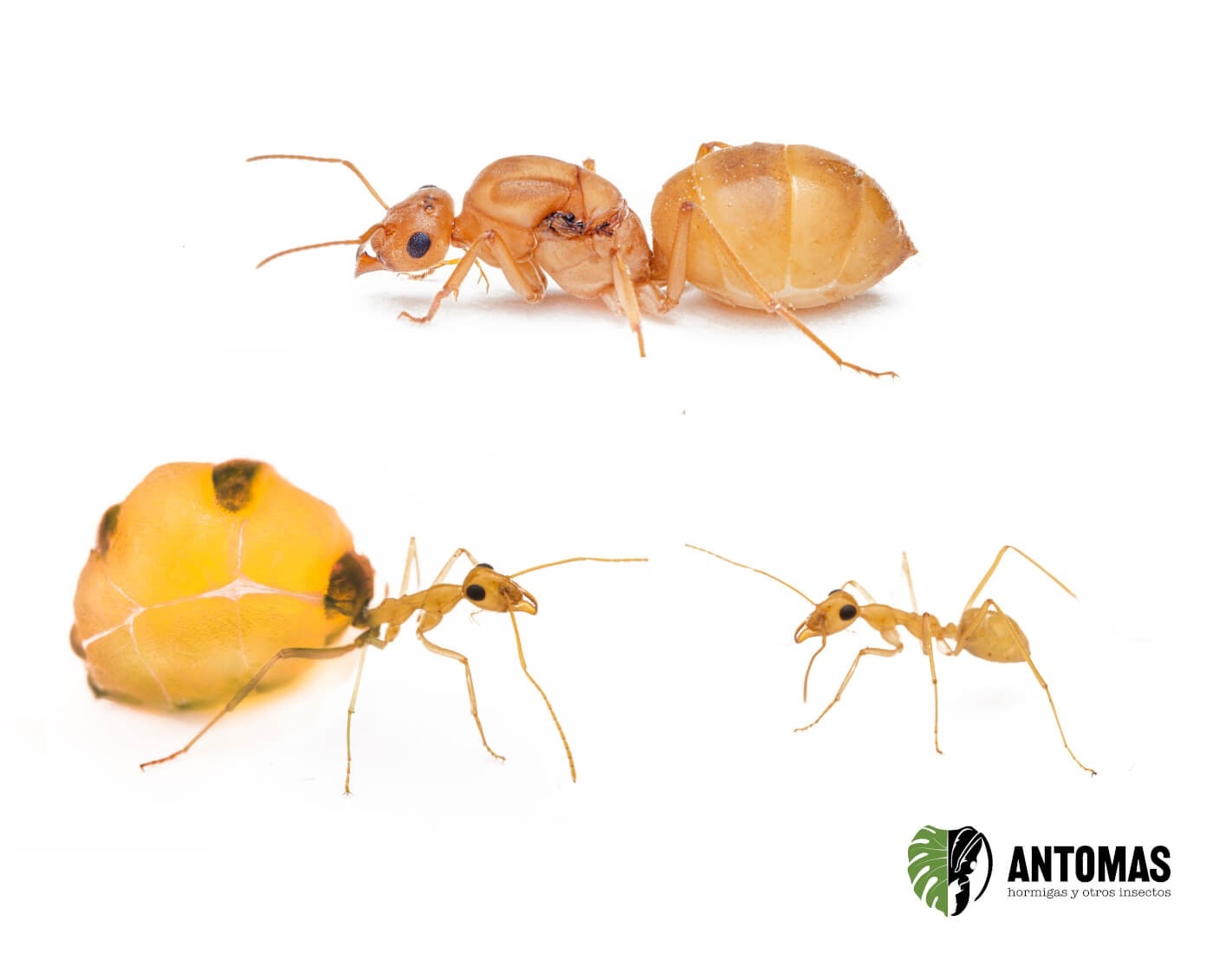
The main attraction of the species is its repletes, workers whose social crop expands until the gaster becomes a large translucent sphere filled with liquid food.
These workers remain hanging from the walls and ceilings of specially prepared chambers. When nectar is abundant, other workers feed them through trophallaxis; during scarcity, the stored liquid is returned to the colony.
Their function can be compared to a communal pantry that, instead of using shelves and containers, is made up of living members of the society itself.
Repletes are not a completely independent caste from birth. In M. mexicanus, larger workers are more likely to assume this role when food is abundant and suitable chambers are available.
The colour of their reserves may range from transparent and yellow to amber and dark brown. These differences depend on the composition of the stored liquid and may allow several types of resource to be kept simultaneously.
In some colonies excavated in Colorado, approximately 22 to 25% of the population showed some degree of abdominal distension. This should not be interpreted as a fixed proportion for all colonies.
Nest architecture
Natural nests have an especially complex structure. Near the surface there is a network of small galleries and chambers, from which a main shaft descends to deeper levels.
These chambers are broad, low, and vaulted. Their walls may be relatively smooth, while the ceiling retains a rough texture that allows repletes to hang securely.
In Colorado, nests between 1 and 1.8 metres deep have been excavated, with replete chambers located from about 20–35 centimetres below the surface. The largest chambers could hold hundreds of individuals.
This arrangement explains why excessively narrow or purely vertical nests are not necessarily the best option for a small colony. The species needs horizontal space, varied chamber heights, and stable attachment surfaces.
Mature colonies may contain several thousand individuals. Two colonies studied in Colorado held around 5,000 ants each, with hundreds of repletes distributed among multiple chambers.
Founding is claustral. The queen seals herself inside a chamber and uses her body reserves and wing musculature to raise the first generation. She does not need routine feeding during this stage.
The first workers are small and initial colony growth is slow. True repletes begin to appear once the population is large enough to separate foraging, brood care, and food-storage functions.
Size and Morphology
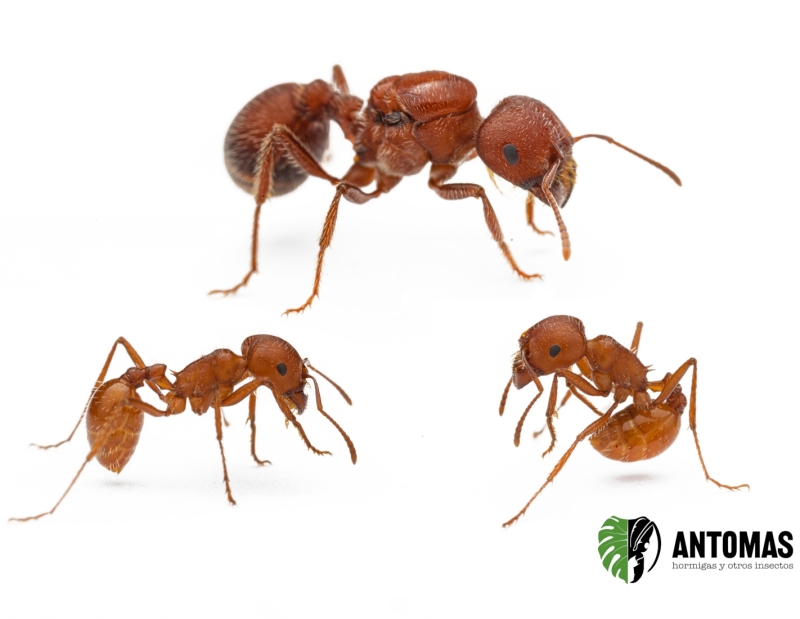
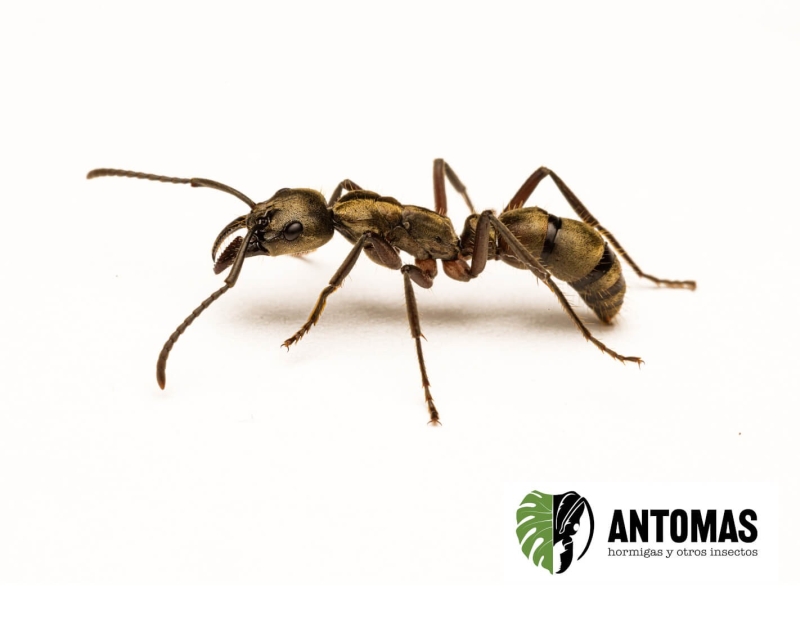
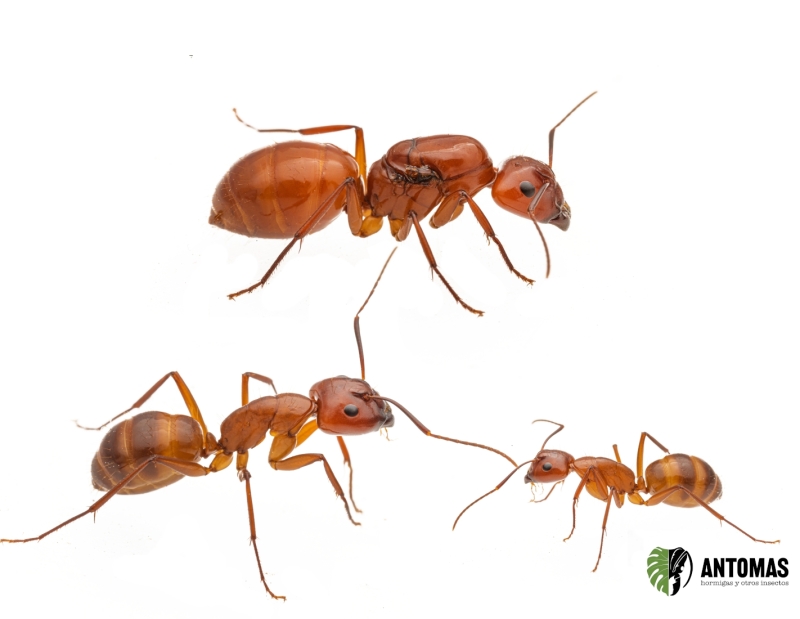
Myrmecocystus mexicanus has a slender build, long legs, and warm coloration ranging from yellow and orange to chestnut and reddish-brown.
The head is usually somewhat darker than the mesosoma and legs. The mandibles are brown or black, while the gaster of normal workers is greyish, brown, or slightly translucent.
Workers show gradual size variation, but there is no differentiated soldier caste. Larger workers are especially important because they have greater storage capacity and are more likely to become repletes.
The queen has a bulkier mesosoma and a gaster adapted for reproduction. During founding, she may become visibly distended if she receives excessive sugary liquids.
Approximate measurements
Workers: approximately 4–12 mm
Queen: around 15–18 mm
Repletes: body length similar to workers, but with a greatly enlarged gaster
As a member of the subfamily Formicinae, it lacks a sting. It can defend itself with its mandibles and by releasing formic acid from the tip of the gaster.
CAPTIVE CARE
Myrmecocystus mexicanus should be considered an expert-level species.
Claustral founding is not especially complex by itself, but correct replete formation, nectar management, nest selection, localized hydration, and seasonal rest require considerable experience.
An error that would barely affect a conventional ant may cause a replete to fall or rupture, result in the loss of reserves, or interrupt colony growth for a prolonged period.
Recommended parameters
Growth temperature: 24–29 °C
Localized warm spot: 28–30 °C
Nest humidity: localized
Replete chambers: dry and well ventilated
Ventilation: very good
Although it comes from arid environments, it should not be kept completely dry. Eggs and larvae need access to a hydrated area, while repletes require dry, stable chambers.
The nest must provide a humidity gradient, but a chamber occupied by repletes must never be wetted directly. Condensation droplets and damp surfaces are dangerous for these workers.
Founding and nectar control
The queen should found in a quiet, dark test tube with a properly isolated water reservoir.
Routine feeding during claustral founding is not recommended. A continuous nectar feeder should also not be installed immediately after the first workers appear.
According to Antomas breeding experience, a queen or mini-colony overfed with sugary liquids may accumulate excessive reserves. The queen herself may become abnormally distended.
Small colonies should receive controlled microdrops, allowing them to consume the food before more is added. The goal during the first generations is steady growth, not maximum storage.
It is recommended to wait until the second or third worker generation before installing larger or continuous nectar feeders. At that point, the colony can begin distributing food among suitable workers.
A queen with a distended gaster should not receive more nectar until her reserves decrease and normal reproductive activity resumes.
RECOMMENDED FORMICARIA
Narrow vertical nests are not recommended for founding colonies and small colonies. Although visually attractive for observing repletes, they make organization and safe movement more difficult.
The most suitable system during the early stages is:
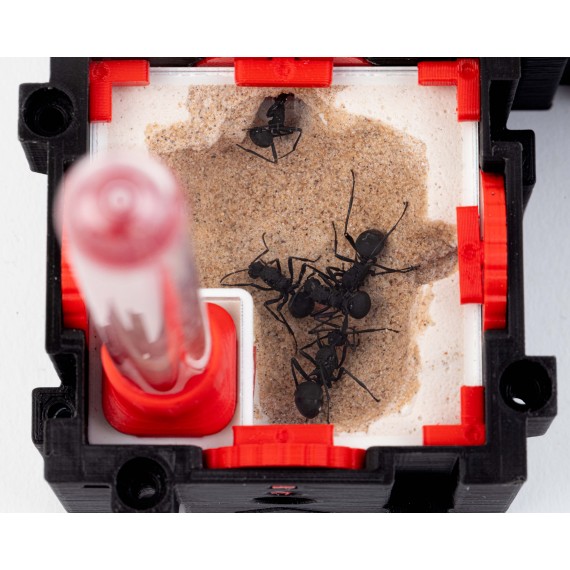
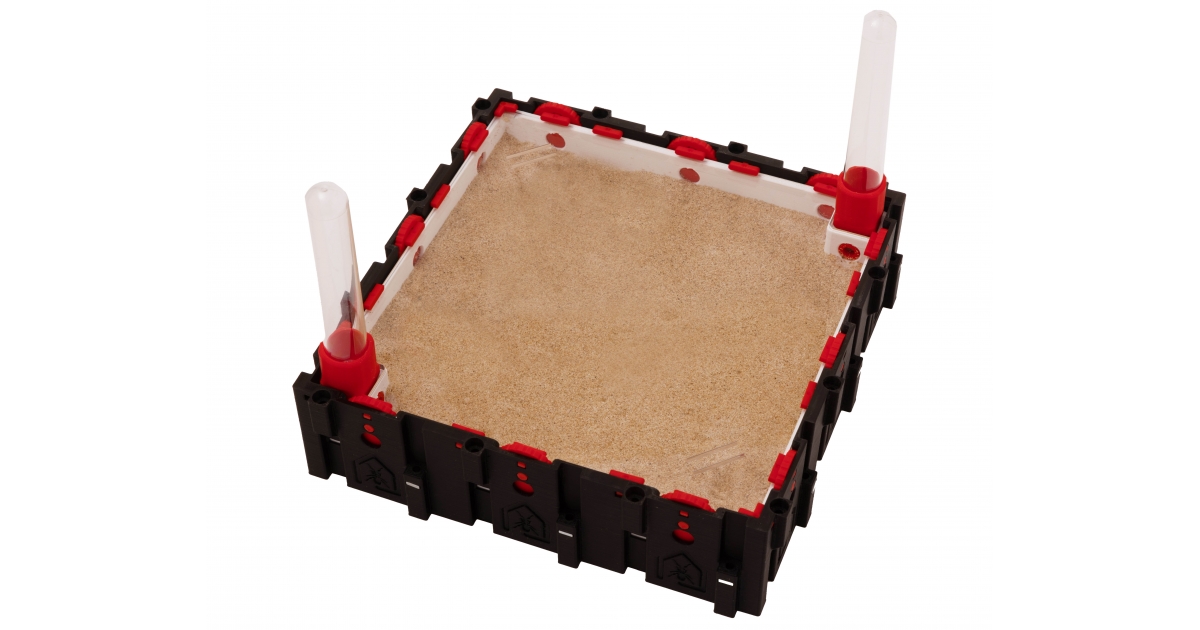
Wild One nests offer chambers high enough for the first repletes to hang from both ceiling and walls. At the same time, they maintain a sufficiently broad horizontal surface.
Their height is sufficient to allow gaster expansion without forcing the colony into a large vertical nest.
For mature colonies, a vertical formicarium may be used if it has spacious chambers, suitable gripping surfaces, and enough room for repletes to hang without touching the floor.
For large colonies, the following is especially recommended:
The chamberless Nona Wild allows the colony to organize and excavate its own space. Despite the difference in depth, it reproduces the natural layout relatively faithfully.
For it to work correctly, a compact and stable substrate capable of maintaining chambers without collapsing must be used. Humidity should be applied from specific points and never directly onto replete chambers.
This type of setup should be reserved for large colonies. In a small colony, it would make observation, food control, and queen location more difficult.
Feeding
Carbohydrates
Ant-specific nectar
Sugar water
Highly diluted honey
Balanced carbohydrate syrups
Small portions of ripe fruit
The quantity must be adjusted to the population. Mini-colonies should not have unlimited access to nectar.
Once true repletes appear and the colony has several worker generations, the supply may be increased gradually. Feeders must be safe and must not allow workers to drown.
Proteins
Fruit flies
Flies
Micro crickets
Small or chopped cockroaches
Moths
Cut mealworm
Other safe feeder insects
Small colonies should receive reduced portions and killed prey. Demand increases when large larvae are present.
Although nectar is visually prominent, protein is essential for producing new workers. A colony full of sugary reserves but lacking protein will not develop properly.
There must always be an independent source of clean water, as nectar does not completely replace its water requirements.
Diapause
The intensity of diapause depends on origin.
Populations from Colorado, high elevations, and inland regions experience cold winters and a clear seasonal stop. These colonies should receive a marked diapause.
Populations from southern Arizona, New Mexico, or warmer regions of Mexico may receive a more moderate diapause, approximately between 12 and 17 °C.
Cooling and warming should be gradual. During this phase, the queen reduces or stops laying, most external activity disappears, and protein consumption drops.
Access to water must be maintained. Carbohydrates should only be offered if workers remain active, avoiding constant refilling of repletes. Protein may be reduced.
Whenever possible, the colony’s exact origin should be checked before setting its diapause temperature.
Behavior in Captivity
Young colonies are discreet and may keep very few workers outside. Activity increases at dusk and when room lighting is reduced.
Workers explore individually and, when they find a stable resource, may establish regular routes toward it.
The appearance of the first repletes marks an important change in colony organization. From that moment, unnecessary transfers should be avoided.
Fully distended repletes can barely walk. If they detach, they may become immobilized on the floor, suffer injuries, or rupture the abdominal membrane.
Handling and Safety
Myrmecocystus mexicanus has no sting.
Workers can bite and release formic acid when trapped or threatened. They should not be handled directly with bare hands.
The main maintenance risk is not worker defence, but the fragility of the repletes and the possibility that a poorly prepared opening may cause escapes or falls.
All interventions should be planned in advance and carried out using tubes, auxiliary containers, and entomological tools.