Pogonomyrmex barbatus - Hormiga Cosechadora  Roja

Pogonomyrmex barbatus - Hormiga Cosechadora  Roja

€64.99
VAT included
Colony


Pogonomyrmex barbatus – Red Harvester Ant

Biology

Pogonomyrmex barbatus, known as the Red Harvester Ant, is one of the most representative seed-harvesting ants of North America. Its distribution extends across the arid and semi-arid regions of the southern and southwestern United States and northern Mexico.

It mainly inhabits deserts, dry grasslands, scrublands, chaparral, and open woodlands, where it builds large underground nests in open areas with excellent sun exposure.

Mature colonies carefully maintain the area around the nest entrance, removing plants, plant debris, and other obstacles. The result is a characteristic circular patch of bare ground, often covered with gravel and small stones.

This cleared surface works as if the colony maintained a plaza in front of its underground city: it facilitates the circulation of thousands of workers, prevents roots from invading the galleries, and allows predators, competitors, and potential food sources to be detected more quickly.

Its diet is based mainly on seeds, especially those produced by grasses and other herbaceous plants. Workers travel through the surroundings collecting seeds, which they carry to underground chambers used as storage rooms.

The colony can preserve these resources for long periods, allowing it to survive dry seasons and times when food availability outside decreases. However, it is not an exclusively granivorous species: it also captures small arthropods and uses insect carcasses when available.

The foraging behavior of P. barbatus is one of the best-studied systems of collective organization among ants. Workers may act individually, form small groups, or establish extensive routes between the nest and areas with greater seed availability.

When a scout discovers a particularly abundant resource, she may return to the nest while depositing a chemical signal that guides other workers. From that moment on, an organized traffic route forms, with individuals leaving, returning loaded, and transmitting information through brief antennal contacts.

The colony has no chief giving orders. Its activity is regulated through thousands of simple interactions: when foragers return with food at a high rate, more workers leave; when returns decrease, external activity is reduced.

Environmental humidity plays a fundamental role in this decision. In desert environments, each trip involves water loss for the worker. For this reason, the colony can reduce its foraging activity when conditions are too dry or risky.

Its activity schedule changes with the season. During mild periods it may forage for much of the day, while in summer it concentrates activity during the coolest hours.

Internal organization is also especially complex. Although workers do not form clearly separated morphological castes, they can specialize in different tasks according to age and colony needs.

  • nest maintenance and excavation
  • care of the queen and brood
  • patrolling around the entrance
  • seed collection
  • waste removal

Young workers usually remain in the internal chambers performing relatively safe tasks. As they age, they move on to external and riskier functions such as foraging or defense.

Colonies are monogynous, led by a single reproductive queen. She may mate with several males during the nuptial flight, which increases the genetic diversity of the colony.

Mature colonies can exceed 10,000 workers, while the queen can live for several decades. Natural nests reach considerable depth and consist of numerous chambers connected by vertical and horizontal galleries.

Nuptial flights usually occur during summer and are closely linked to rainfall. Soil moisture makes it easier for new queens to dig and successfully start the founding phase.

Founding is normally claustral. After mating, the queen digs a chamber, seals herself inside, and uses her body reserves to raise the first generation of workers.

The first workers are smaller than later generations. Once they begin foraging, they bring seeds and proteins into the nest, allowing the queen to increase egg production.

Size and Morphology

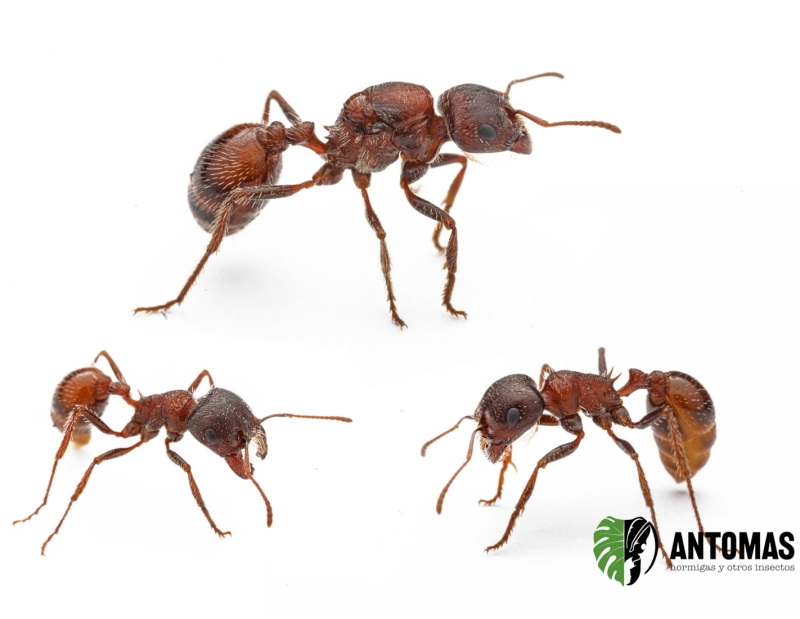
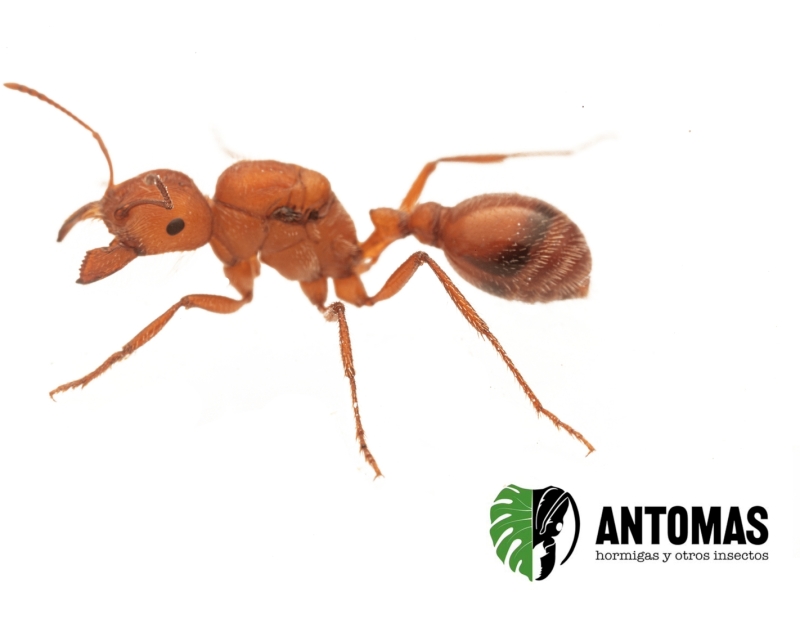
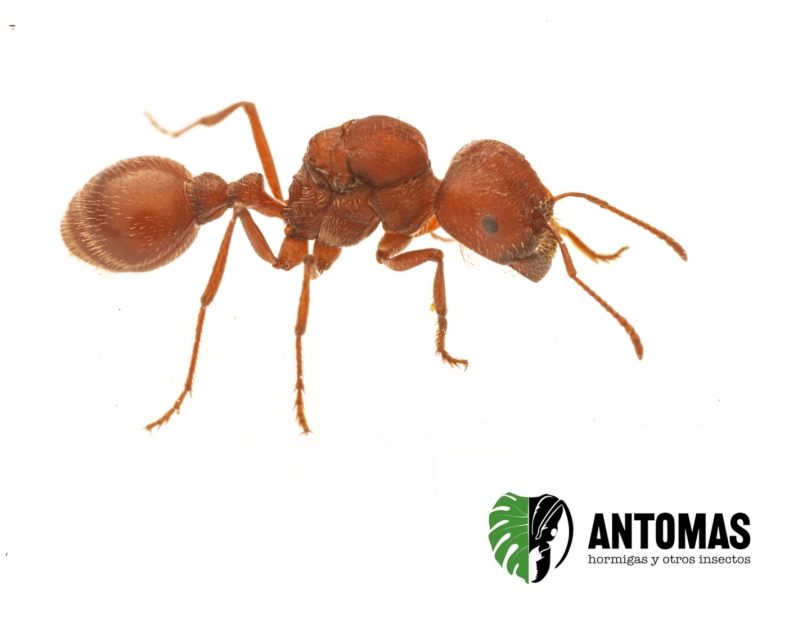
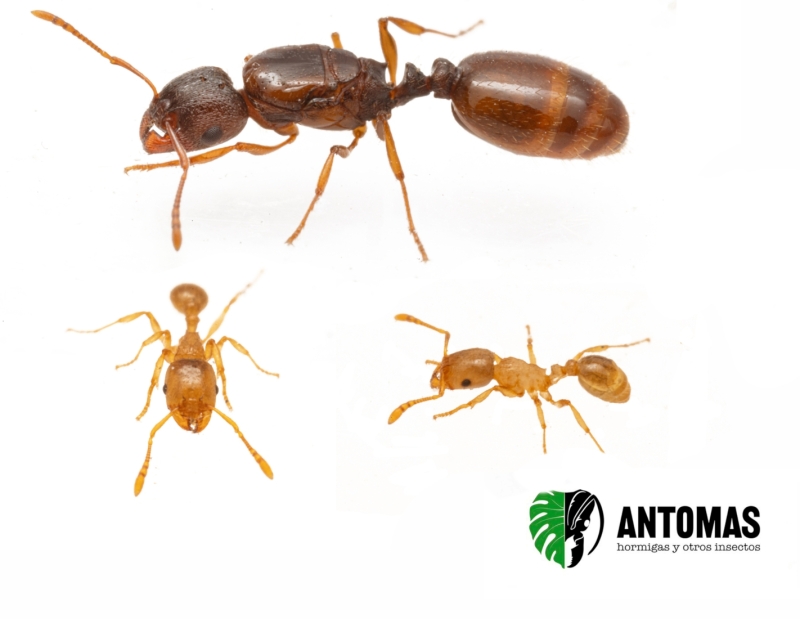
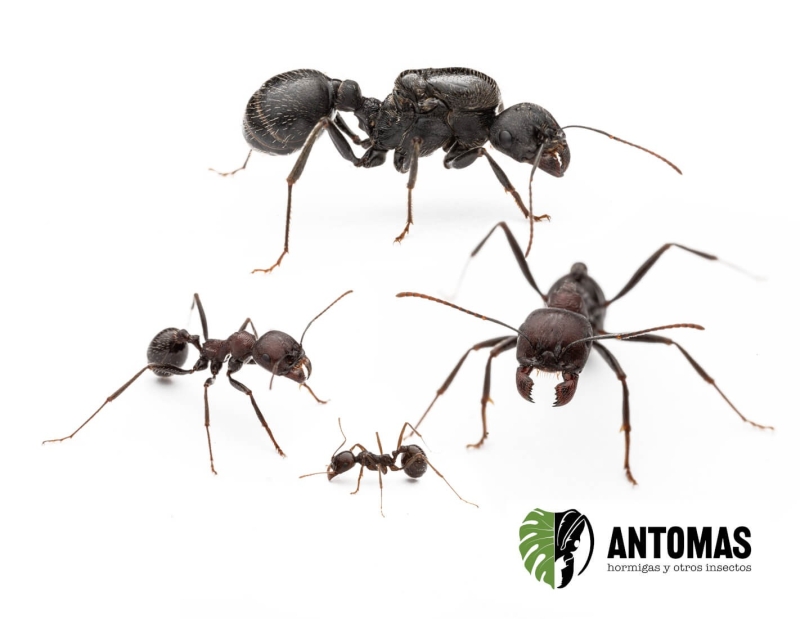
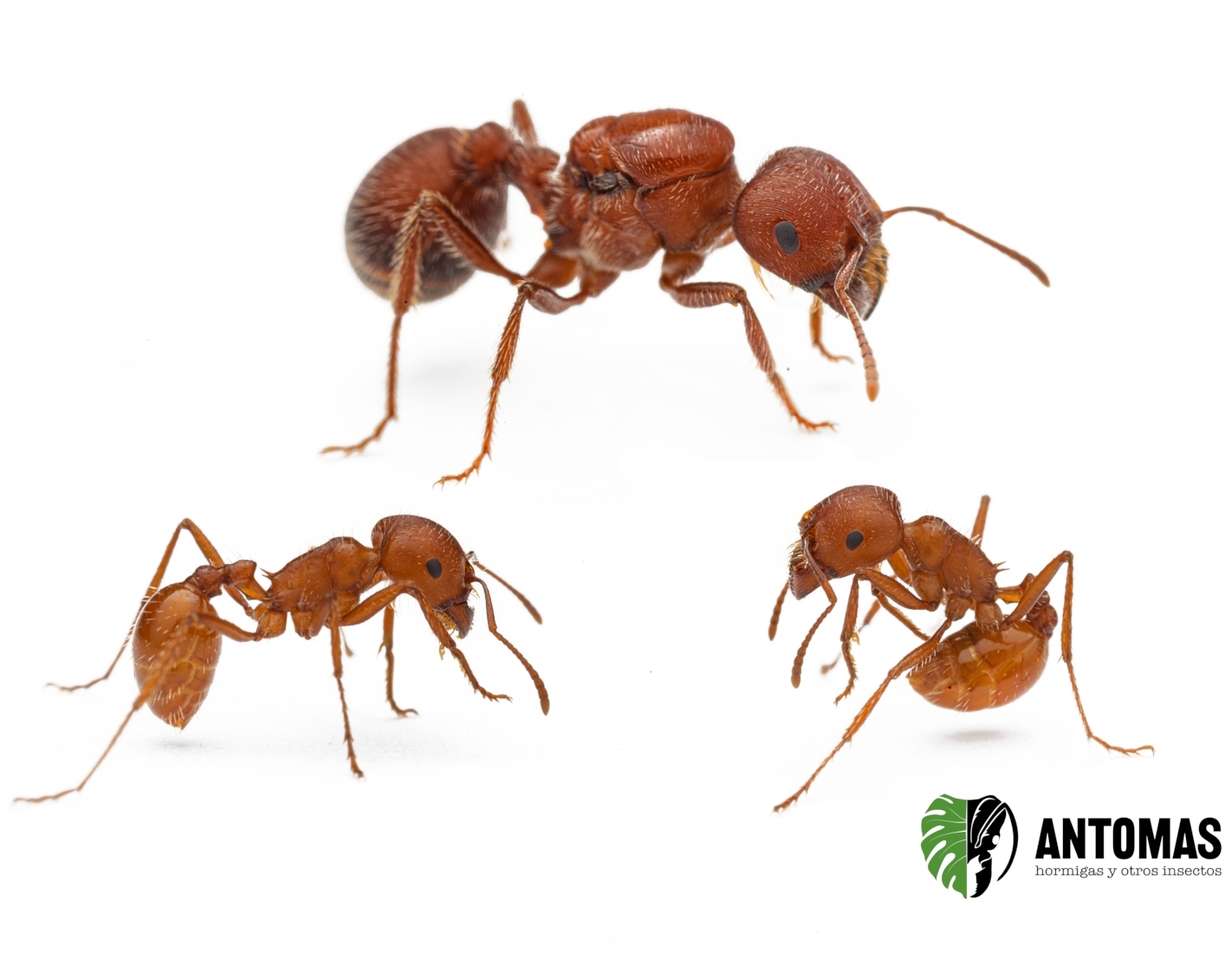
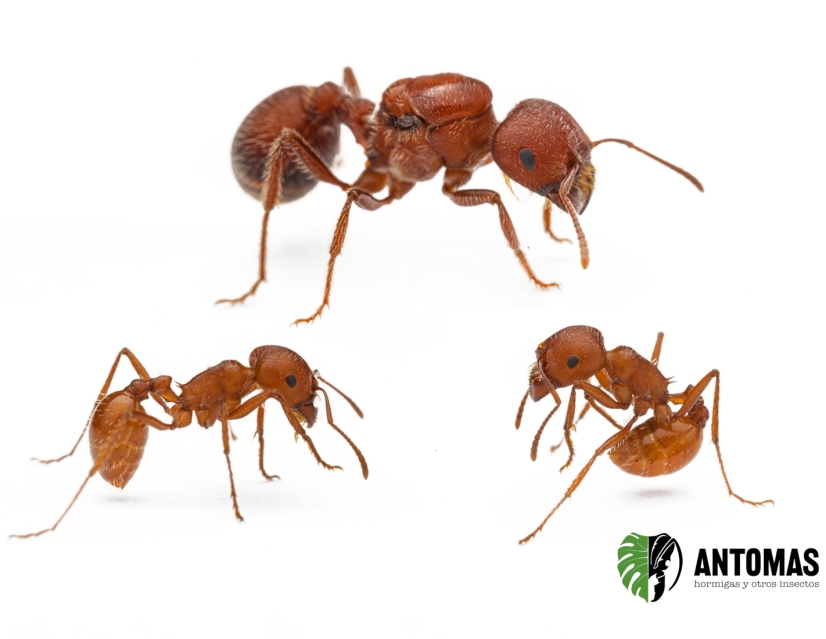
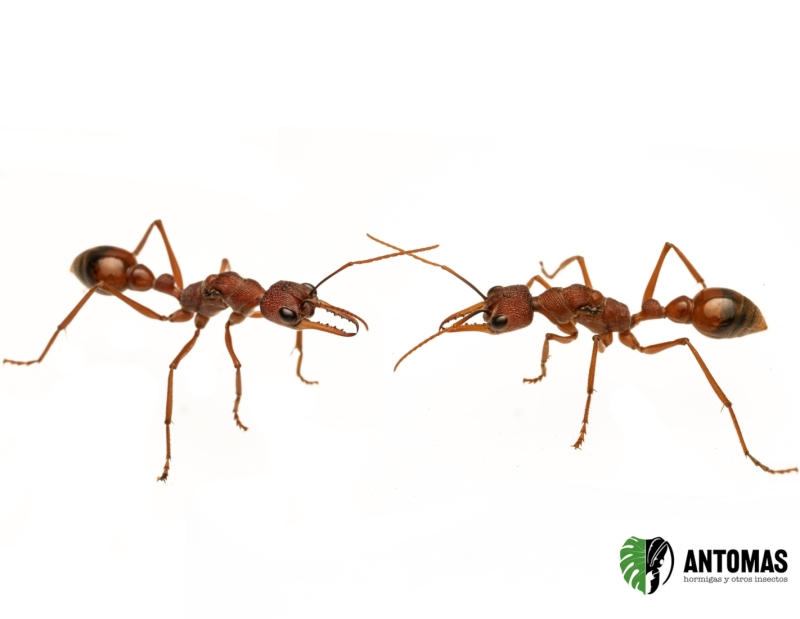
Pogonomyrmex barbatus is a robustly built ant with relatively long legs and coloration that can vary from orange-red to dark red or reddish-brown.

The head is broad and has sculpturing formed by numerous fine grooves. These lines produce a texture similar to fingerprint marks and reinforce the head capsule.

The mesosoma is strong and compact. At the rear it has two clearly visible propodeal spines, while the petiole and postpetiole form distinct nodes between the mesosoma and gaster.

Under the head it has a structure formed by long hairs known as a psammophore. This “beard” is used to manipulate and transport small particles of soil, sand, and seeds.

Its function can be compared to a small basket located under the head: the mandibles hold the main load while the hairs help stabilize the material.

It does not have a differentiated soldier caste. Workers show some gradual size variation, but they maintain a relatively uniform morphology.

Approximate measurements

  • Workers: approximately 6–10 mm
  • Queen: approximately 11–13 mm

The mandibles are strong and adapted for carrying seeds, digging, and defending the nest. In addition, the species has a fully functional sting connected to powerful venom glands.

Its sting is intense and painful. The worker can hold on with its mandibles, curve the gaster, and inject venom repeatedly if it cannot free itself.

CAPTIVE CARE

The difficulty of Pogonomyrmex barbatus can be considered medium-high.

Recommended parameters

  • Active temperature: 24–29 °C
  • Warm spot: approximately 28–30 °C
  • Brood-area humidity: moderate
  • Nest: dry, ventilated, and with a well-defined humidity gradient

RECOMMENDED FORMICARIA

Although it comes from arid environments, it should not be kept completely dry. In nature, deeper chambers retain more moisture than the surface and allow the brood to develop properly.

The formicarium must provide a clearly defined humidity gradient. The brood needs a moderately humid area, while the seed stores should remain in drier chambers.

This point is especially important: a soaked nest can quickly turn seed stores into a source of mold.

During founding, a test tube with a water reservoir can work correctly. The queen should remain in darkness, undisturbed, and without unnecessary handling.

Food should not be offered routinely during claustral founding. Frequent opening of the tube and the presence of organic remains create more risks than benefits.

Once the first workers appear, the tube should be connected to a small foraging area and small seeds and small portions of protein should begin to be offered.

Feeding

Seeds

The basis of the diet should consist of a varied seed mix:

  • canary grass seed;
  • millet;
  • grass seeds;
  • chia and poppy seeds;
  • quinoa;

The seeds must be free of pesticides, preservatives, salt, and other treatments. It is advisable to offer different sizes so the workers can select the most suitable ones.

A large colony can store more seeds than it immediately consumes. The appearance of moisture, germination, or mold inside the granaries should be monitored.

Proteins

Although seeds are its main resource, animal proteins greatly accelerate colony development.

  • flies;
  • crickets;
  • cockroaches;
  • moths;
  • chopped mealworm;
  • other safe feeder insects.

Small colonies should receive killed or chopped prey. When the population increases, they can immobilize live insects of suitable size, but excessive risk should be avoided.

Insect consumption increases when large larvae are present. During periods with little brood, the colony may show much less interest in protein.

Carbohydrates and water

Sugary liquids do not need to form the basis of the diet, but they can be offered occasionally in small amounts.

Access to clean water must be permanent, even in species adapted to desert regions. Dehydration can compromise the entire colony.

Diapause

The intensity of the rest period depends on geographic origin.

Populations from Arizona, New Mexico, Oklahoma, northern Texas, and other temperate regions practically stop external activity during winter.

It is recommended to keep them for approximately 10–14 weeks at 10 to 15 °C, lowering and raising the temperature gradually.

Populations from warm regions of Mexico may maintain some activity throughout winter. In these cases, a milder rest with slightly higher temperatures is more appropriate.

During wintering, access to water and seed reserves should be maintained. Protein can be greatly reduced when the colony stops maintaining larvae.

It is not necessary to reproduce frosts or extreme temperatures. Natural nests are deep and buffer the fluctuations that occur at the surface.

Behavior in Captivity

A young colony may grow moderately during the first year. After the first generations are established, worker production increases and the need for space and food becomes greater.

Established colonies show high external activity. They organize routes toward seeds, move substrate particles, and create distinct areas for feeding, storage, and waste.

It is advisable to provide a spacious foraging area, because much of the species’ appeal lies in observing its columns of seed collectors and transport behavior.

Although it is not an especially skilled climbing ant, it can use silicone joints, rough surfaces, cables, and small irregularities. The enclosure must be secure.

Seed remains, carcasses, and waste usually accumulate in specific places. This behavior makes cleaning easier, but the refuse pile should be removed regularly.

Handling and Safety

Pogonomyrmex barbatus has a painful sting and should not be handled directly.

Workers can react quickly to vibrations, sudden openings, or disturbances to the nest. A large colony can mobilize numerous individuals in a few seconds.

All interventions should be carried out using long tweezers, auxiliary containers, and escape-prevention measures. It is advisable to work in a clear area with no possible hiding places.

This species is not recommended for children, inexperienced keepers, or setups that need to be opened continuously.

No reviews

16 other products in the same category: