Camponotus consbrinus - Hormiga Bandeada Gigante

Camponotus consbrinus - Hormiga Bandeada Gigante

Out-of-Stock
€19.99
VAT included


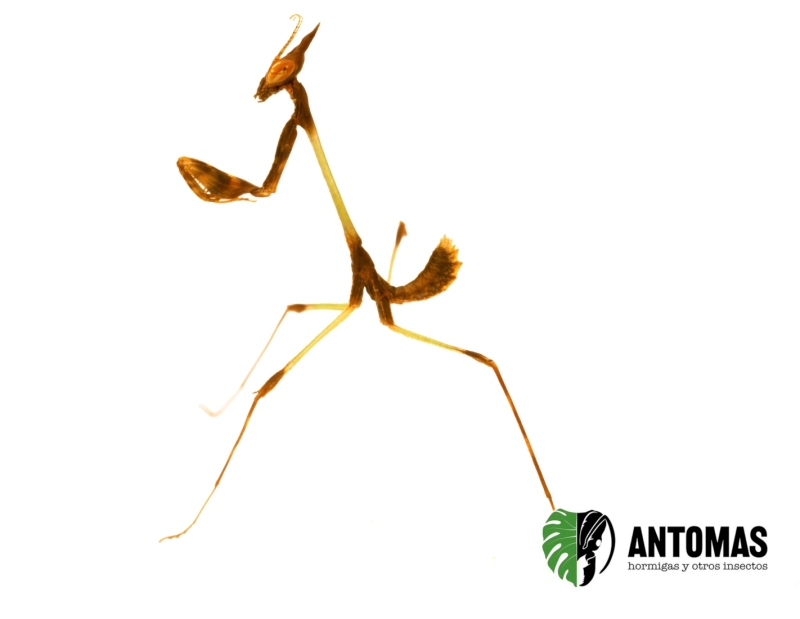
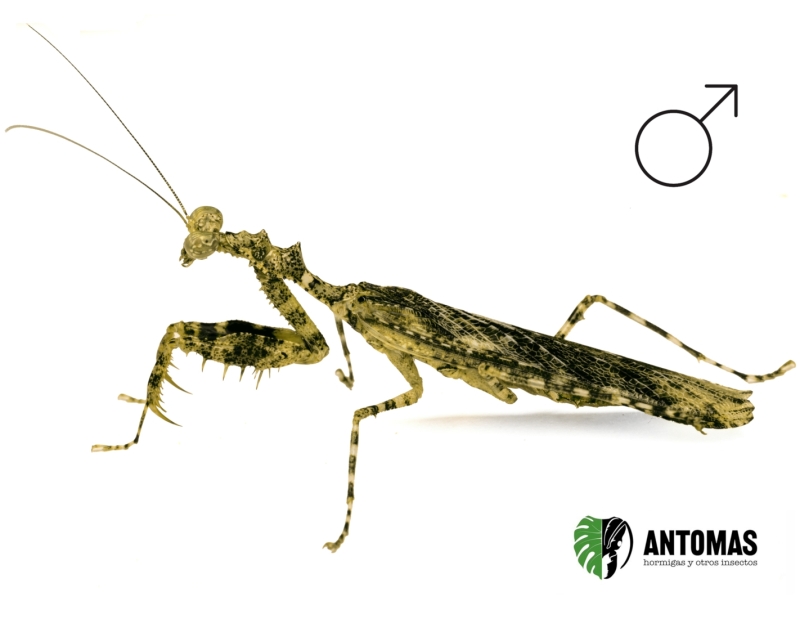
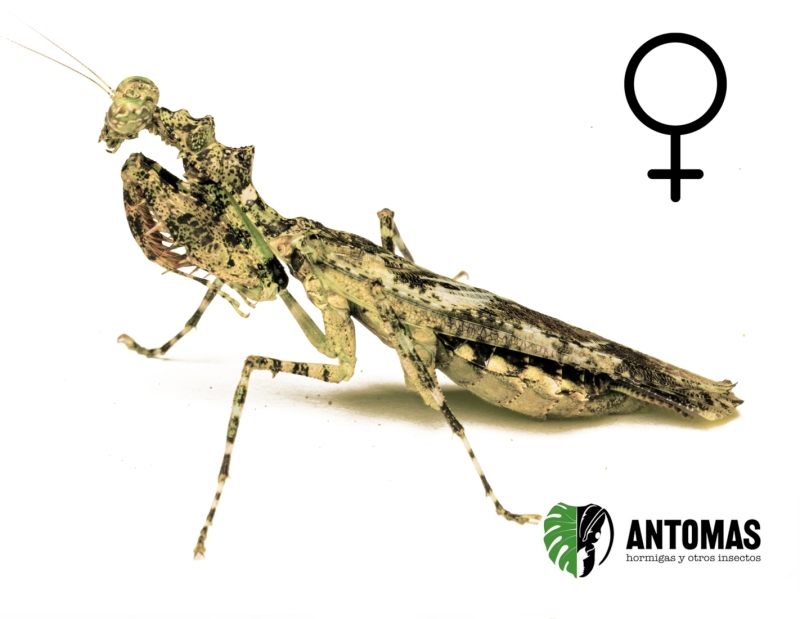
Phyllocrania paradoxa – Ghost Mantis

Biology

Phyllocrania paradoxa is a small African mantis widely known for its extraordinary camouflage ability. It inhabits warm and relatively dry regions of the African continent, where it lives among shrubs, dry branches, and accumulations of dead leaves.

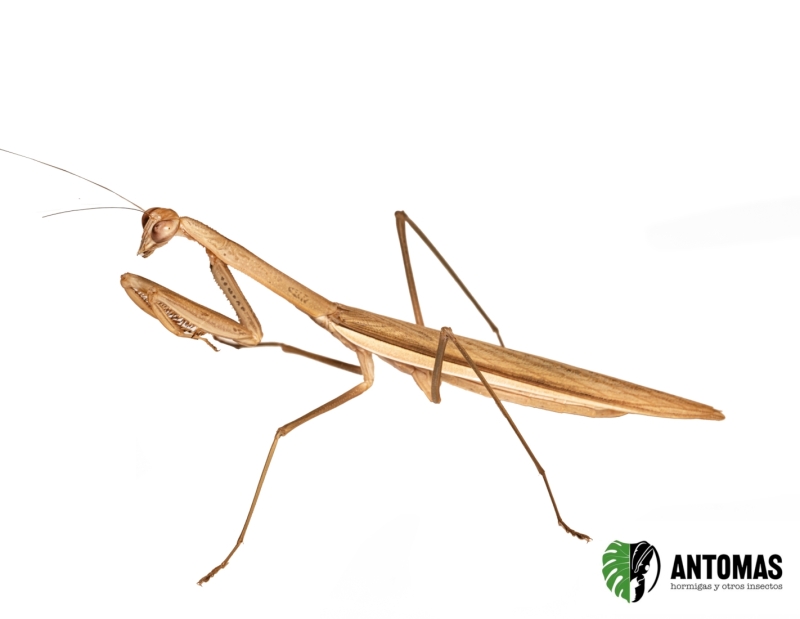
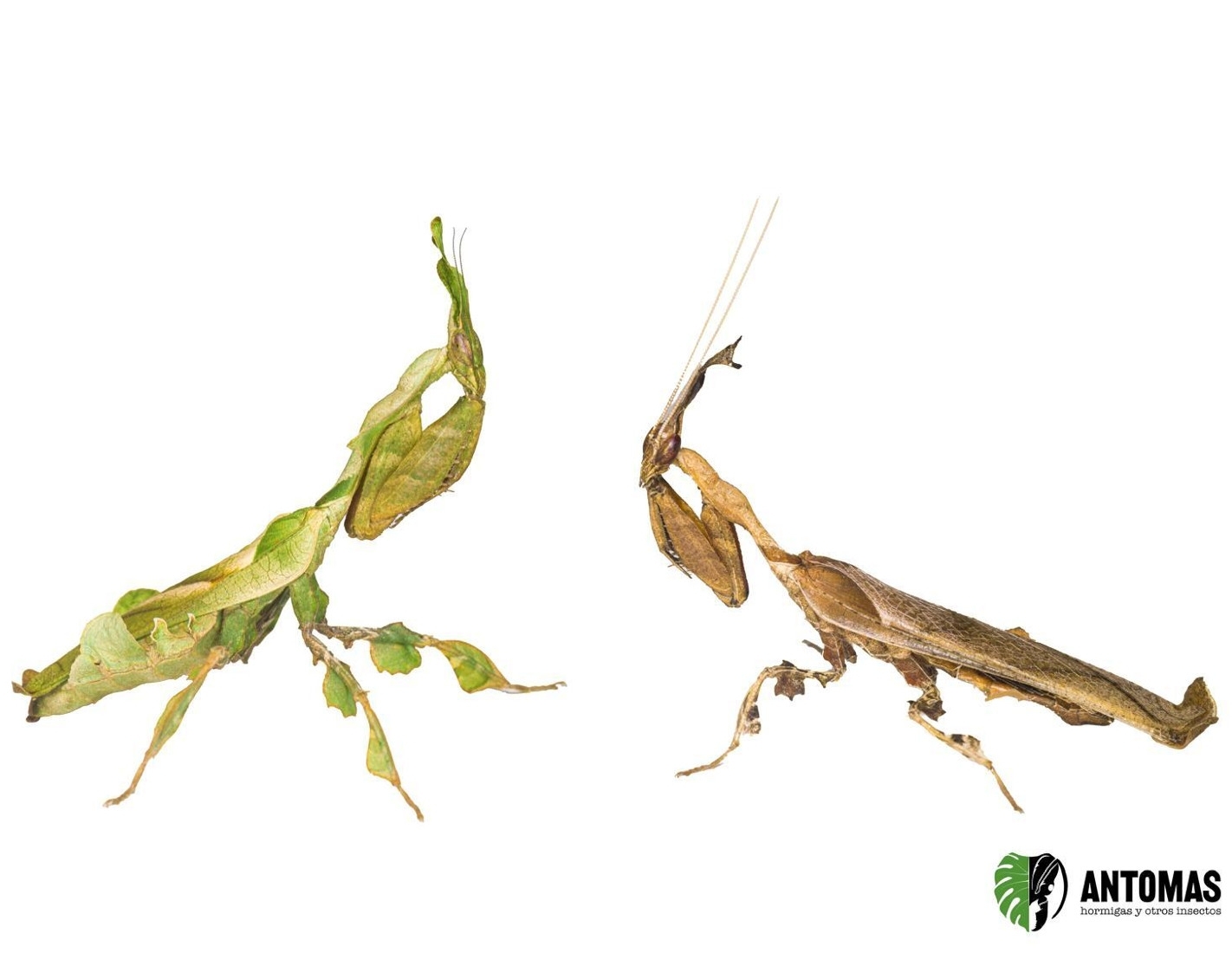
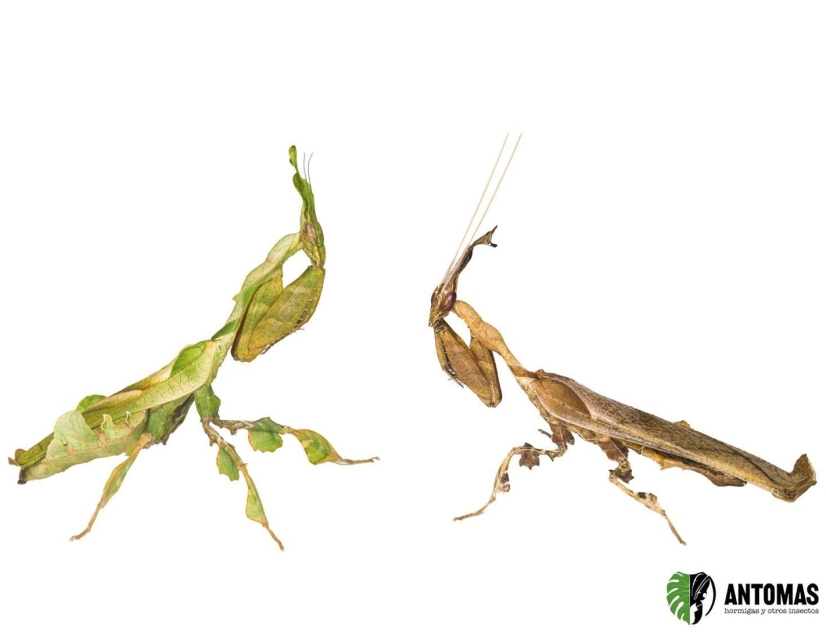
Its appearance strikingly mimics a dry or withered leaf, allowing it to remain virtually unnoticed by both predators and potential prey. This camouflage is its main defensive mechanism and one of the most characteristic traits of the species.

It is an ambush-predator mantis. It remains motionless for long periods, waiting for small insects to approach, which it captures by rapidly closing its raptorial forelegs.

It has mainly crepuscular and nocturnal habits, although it may show activity during the day in calm environments or while feeding.

Unlike other more territorial or aggressive mantises, Phyllocrania paradoxa shows a certain degree of intraspecific tolerance, especially during juvenile stages and when food is abundant. This allows small groups to be kept with relative stability under certain conditions.

Females produce relatively small oothecae, from which numerous very slender and agile nymphs emerge.

It is a highly valued species in terrarium keeping due to its unique appearance, calm behavior, and relative ease of maintenance.

Size and Morphology

Phyllocrania paradoxa has an extremely slender morphology specialized in plant mimicry.

The body has irregular projections and lobes that imitate the dry, fragmented edges of withered leaves. The head features a very characteristic prominent leaf-like expansion.

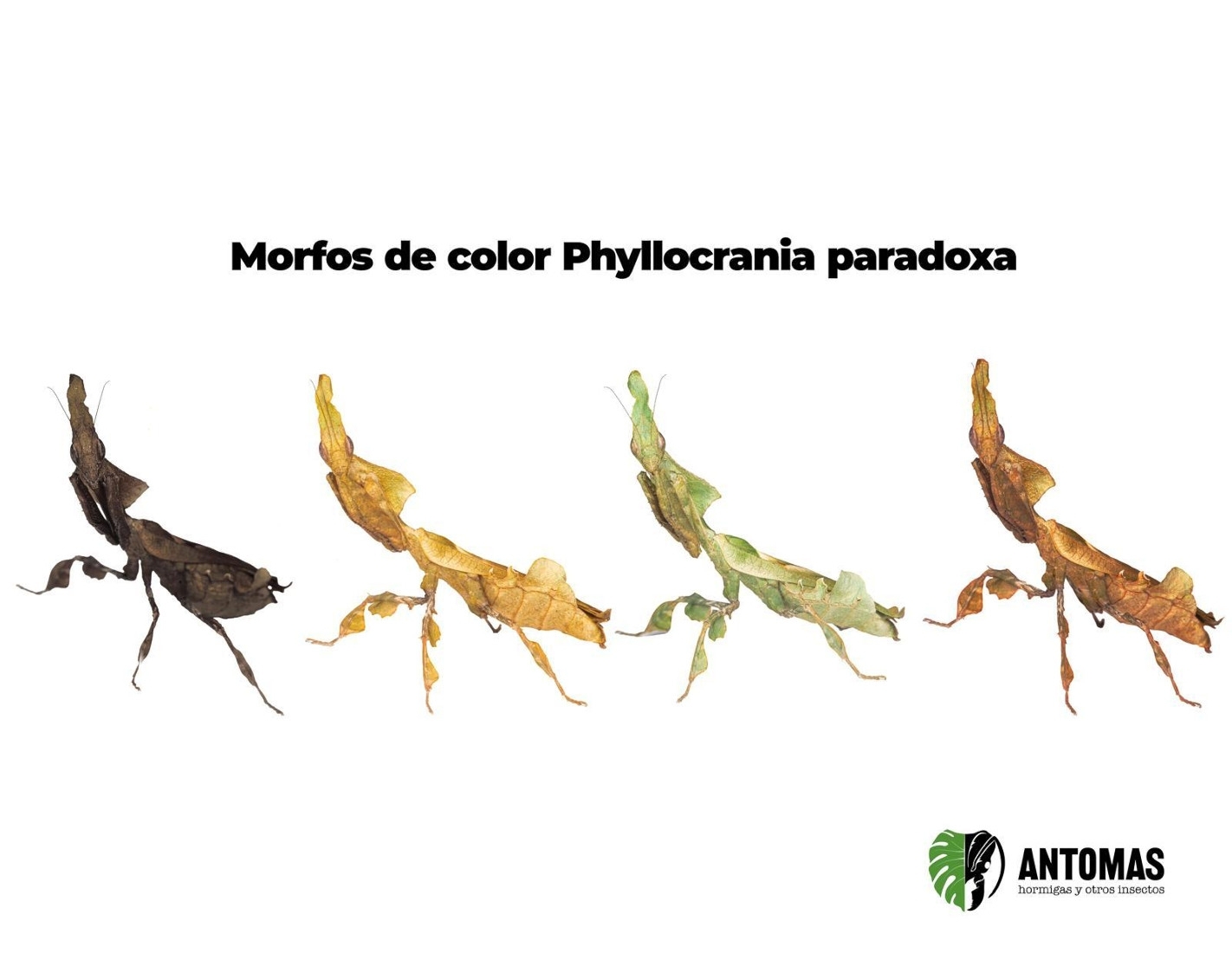
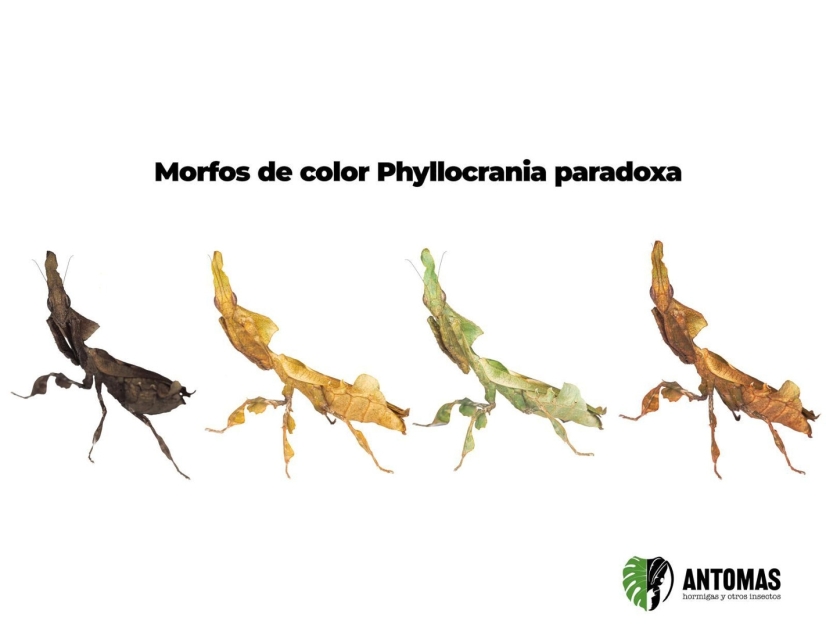
Coloration varies greatly between individuals, ranging from brown, gray, and beige tones to even greenish shades depending on environmental humidity, genetics, and molting stage.

The legs are long and slender, favoring slow, swaying movements that reinforce the camouflage effect.

Males are smaller, slimmer, and more active, with proportionally longer wings. Females are more robust and heavier.

Approximate measurements:

  • Males: 4 - 5 cm
  • Females: 5 - 6 cm

Captive Care

Phyllocrania paradoxa is a relatively easy mantis species to keep, making it an excellent choice for those beginning with exotic mantid husbandry.

Recommended Parameters

  • Temperature: 22–28 °C
  • Humidity: 50–70 %
  • Ventilation: very high
  • Terrarium: vertical, well-ventilated, and equipped with abundant thin branches

Ventilation is particularly important to prevent molting problems and reduce the risk of fungal infections.

Enclosure Setup

The terrarium should provide multiple climbing surfaces and elevated areas where individuals can hang properly during molting.

The use of the following is recommended:

  • Thin branches
  • Bark
  • Dried plants
  • Light natural decorations

The height of the enclosure is essential, as mantises require sufficient vertical space to complete the molting process successfully.

Feeding

It feeds on small live insects.

It readily accepts:

  • Flies
  • Fruit flies (Drosophila)
  • Micro crickets
  • Small moths
  • Small-sized cockroaches

Young nymphs usually prefer flying or highly mobile prey.

It is important to avoid overfeeding, especially in adult females.

Behavior and Cohabitation

This is a relatively calm species and less aggressive than many other mantises.

It can be kept in small groups under certain conditions:

  • Plenty of space
  • Numerous hiding places
  • Frequent feeding

Nevertheless, cannibalism remains possible, especially after molting or during periods of food scarcity.

Males are quite active and usually move constantly in search of females once they reach sexual maturity.

Handling

It is a physically delicate species due to its extremely lightweight body structure.

It rarely shows aggression toward the keeper and seldom attempts to bite.

Even so, it is recommended to minimize direct handling and always encourage the animal to move voluntarily onto other surfaces or containers in order to avoid accidental damage to its legs or wings.

No reviews

13 other products in the same category: