This website uses its own and third-party cookies to improve our services and show you advertising related to your preferences by analyzing your browsing habits. To give your consent to its use, press the Accept button.
Cookie preferences
| Cookie | Provider | Purpose | Expiry |
|---|---|---|---|
| PHP_SESSID | antomas.es | The PHPSESSID cookie is native to PHP and allows websites to store serialised status data. On the website it is used to establish a user session and to pass state data through a temporary cookie, which is commonly known as a session cookie. These Cookies will only remain on your computer until you close your browser. | Session |
| PrestaShop-# | antomas.es | This is a cookie used by Prestashop to store information and keep the user's session open. It stores information such as currency, language, customer ID, among other data necessary for the proper functioning of the shop. | 480 hours |
| rc::a | It is used to read and filter bot requests. | Persistent | |
| rc::c | It is used to read and filter bot requests. | Persistent |
| Cookie | Provider | Purpose | Expiry |
|---|---|---|---|
| _ga | Registers a unique ID that is used to generate statistical data on how the visitor uses the website. | 2 years | |
| _gat | Used by Google Analytics to throttle request rate | 1 day | |
| _gat_gtag_UA_# | Used to throttle request rate. | 1 minute | |
| _gd# | This is a Google Analytics Session cookie used to generate statistical data on how you use the website which is removed when you quit your browser. | Session | |
| _gid | Registers a unique ID that is used to generate statistical data on how the visitor uses the website. | 1 day |
Elliptorhina javanica
Biology
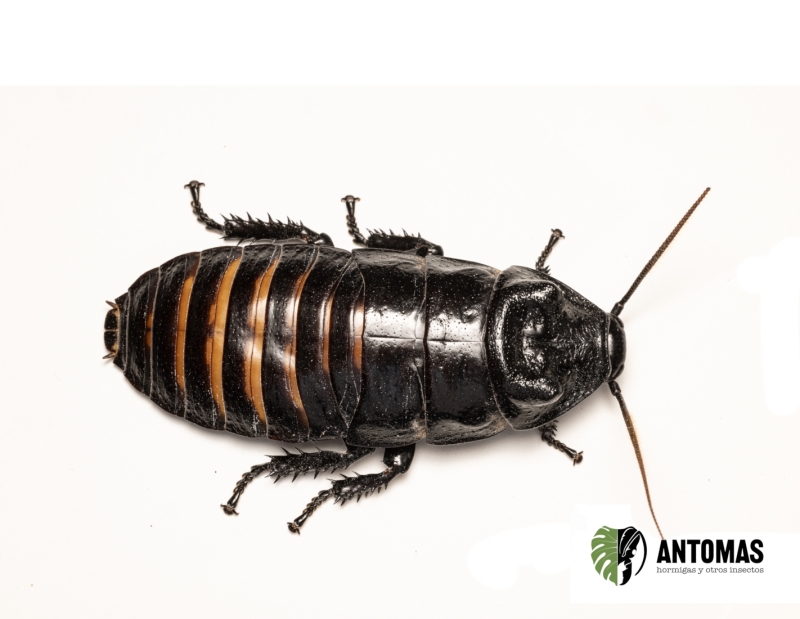
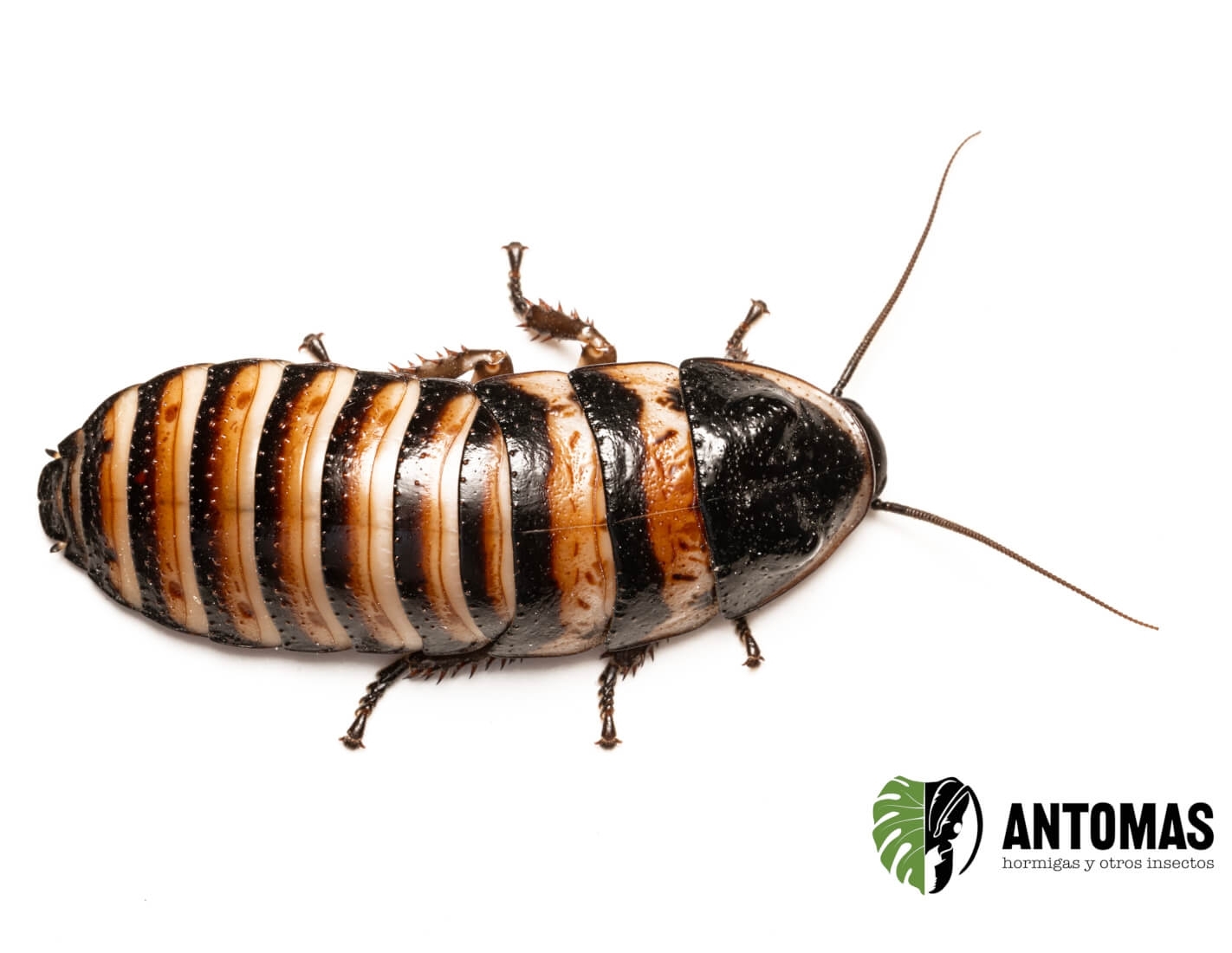
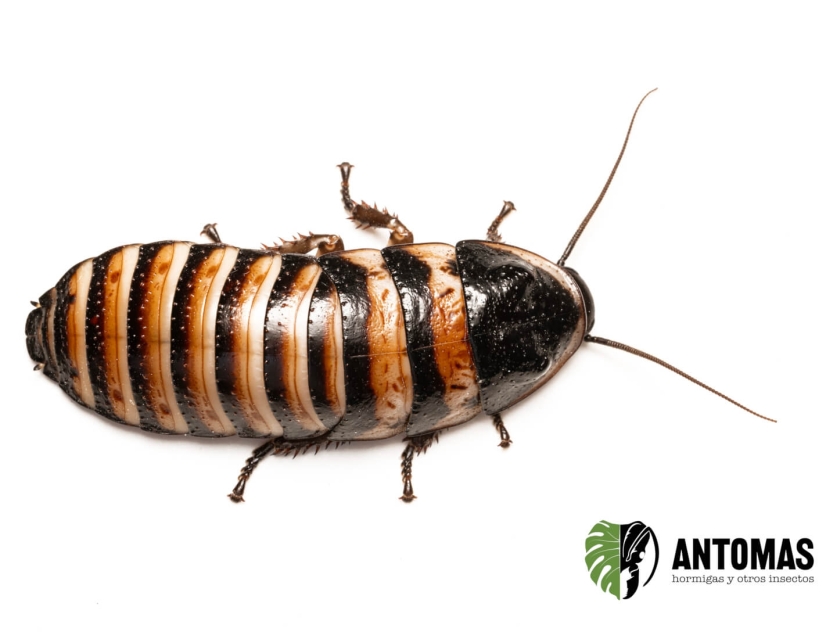
Elliptorhina javanica is a species of giant cockroach native to Madagascar, belonging to the group commonly known as "hissing cockroaches." It primarily inhabits rainforest environments and humid forests, where it lives associated with the forest floor, decaying logs, and accumulations of plant matter.
It is a saprophagous and opportunistic species, feeding mainly on ripe fruit, plant debris, fallen flowers, and decomposing organic matter. In captivity, it readily accepts a wide variety of foods and exhibits highly active feeding behavior.
One of its most characteristic traits is its ability to produce sounds by forcibly expelling air through its abdominal spiracles. This "hissing" serves defensive, territorial, and reproductive functions and is especially common during interactions between males or in stressful situations.
Unlike many other cockroach species, Elliptorhina javanica lacks functional wings in both males and females, giving it a robust and compact appearance.
It is primarily nocturnal, although in captivity it may also become active during the day, particularly in the presence of food.
It is an ovoviviparous species: females incubate the ootheca internally and give birth directly to fully developed nymphs. The offspring remain grouped together during their first days and show relatively rapid growth under favorable conditions.
Its behavior is calm and non-aggressive, making it one of the most popular cockroach species both in terrarium keeping and educational projects.
Size and Morphology
Elliptorhina javanica has a broad, robust, and heavily sclerotized body.
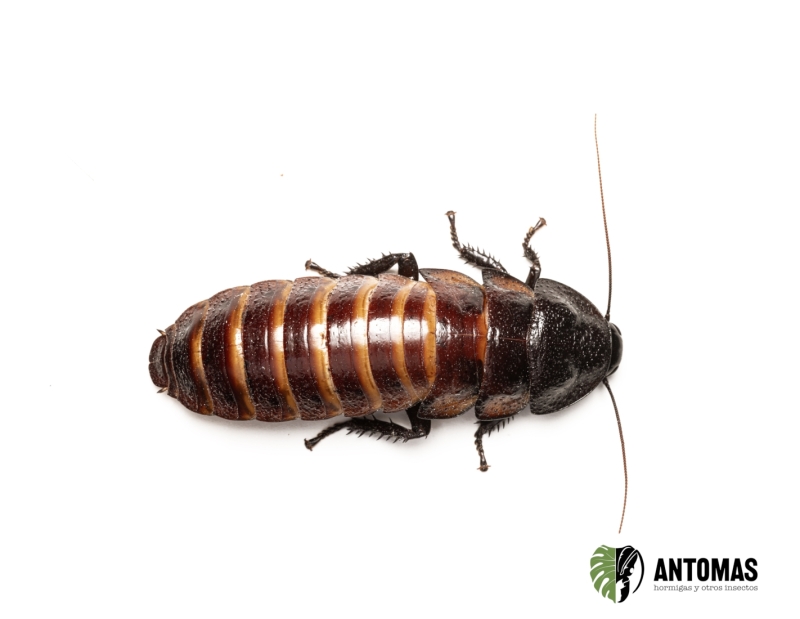
The general coloration varies between black, dark brown, and reddish tones, with selectively bred lines displaying particularly contrasting patterns. Some varieties exhibit striking orange margins or light-colored bands.
Males possess prominent cephalic horns on the pronotum, which are used during territorial disputes. They also tend to have a slightly more slender body and display more active behavior than females.
Females are broader and heavier, with a more compact body shape.
Nymphs display lighter coloration after molting, gradually darkening as the exoskeleton hardens.
Approximate measurements:
- Newly hatched nymphs: 5 – 8 mm
- Adults: 5 – 7 cm
Captive Care
Elliptorhina javanica is an extremely hardy and easy-to-maintain species, making it ideal for beginners, ornamental keeping, or feeder production.
Recommended parameters
- Temperature: 24 – 30 °C
- Humidity: 60 – 80 %
- Ventilation: medium to high.
- Terrarium: spacious, with vertical shelters and abundant usable surface area.
It tolerates minor environmental fluctuations, although excessive stagnant humidity may promote the growth of fungi or mites.
Enclosure and Substrate
It is recommended to use:
- Coconut fiber
- Leaf litter
- Bark
- Decaying wood
- Egg cartons or vertical shelters
They appreciate structured enclosures with numerous hiding places and good ventilation.
Although they do not climb particularly well on completely clean glass, they can easily climb rough surfaces and silicone, making the use of escape barriers advisable.
Feeding
The diet should be varied and rich in plant matter.
They readily accept:
- Fruits
- Vegetables
- Insect feed
- Leaf litter
- Pollen
- Fish food or cat food as an occasional protein supplement
It is important to remove fresh food remains before they ferment or develop mold.
Constant access to water in the form of gel, hydrated crystals, or fresh foods is highly recommended.
Behavior and Reproduction
It is a gregarious species and highly tolerant of group living.
Males may engage in minor territorial disputes using their cephalic horns, although these rarely result in actual injuries.
Females produce relatively large broods, and population growth can be rapid under high temperatures and abundant food availability.
During molting, nymphs display a completely white and soft exoskeleton for several hours before it gradually hardens.
Handling
It is a completely harmless species and very easy to handle.
It does not bite, lacks a stinger, and rarely displays defensive behaviors beyond its characteristic hissing.
Even so, it is advisable to handle them gently in order to avoid damage to the legs or antennae, especially during molts or in recently hardened specimens.