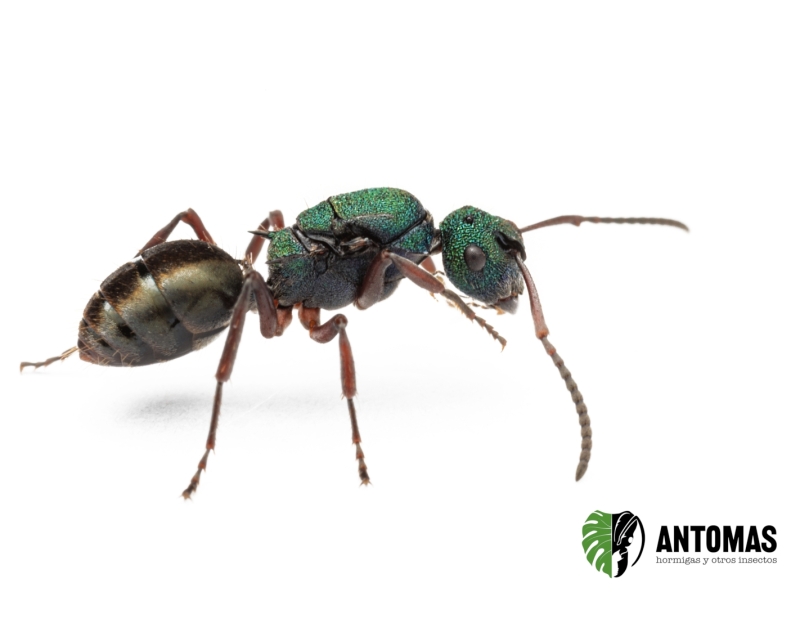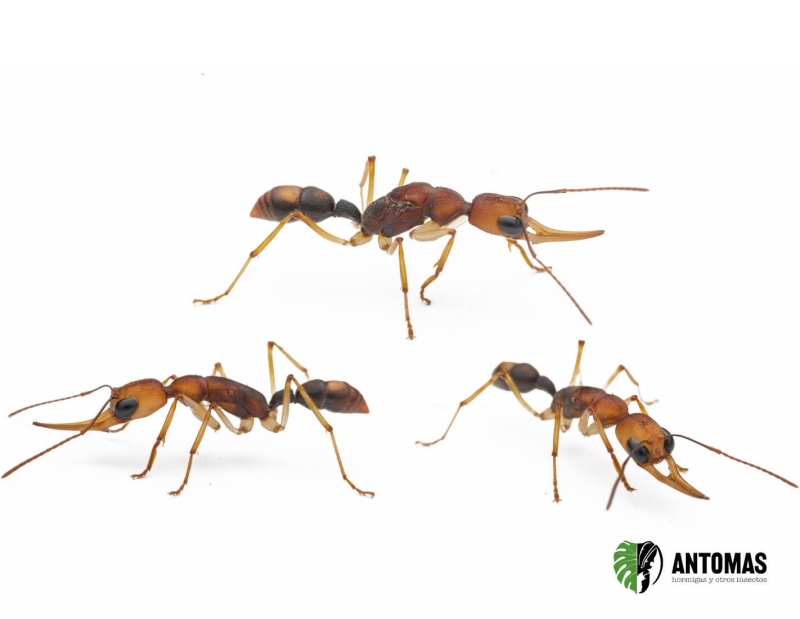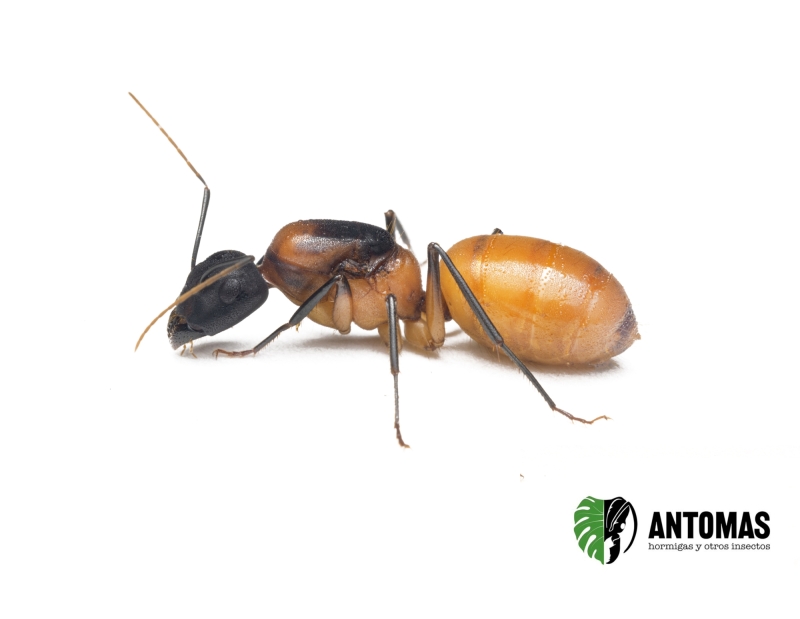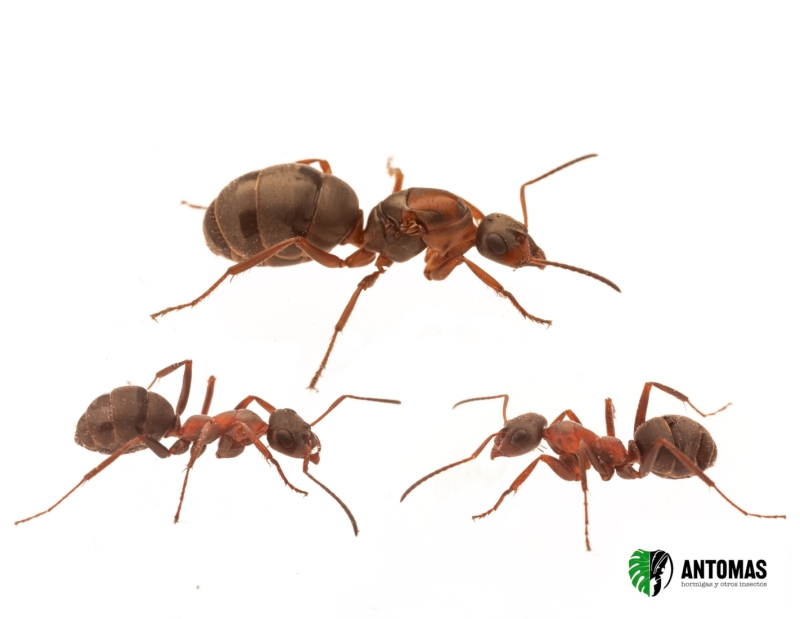
Myrmecia gulosa
Myrmecia gulosa

Myrmecia gulosa

€499.99
VAT included
Colony


Myrmecia gulosa– Red Bulldog Ant

BIOLOGY

Myrmecia gulosa is one of the large Australian bulldog ants and the species that gives its name to the gulosa group. It was described as early as 1775 and is also one of the Myrmecia whose social biology has been studied in greatest detail.

Its known distribution is concentrated in eastern Australia, with reliable records in Queensland, New South Wales and the Australian Capital Territory, as well as the Murray–Darling Basin. It occurs especially in sandstone terrain, sandstone scrub, dry sclerophyll forest and open eucalyptus woodland.

It is not a tropical species despite tolerating heat well. A large part of its populations live in regions with warm summers but clear winter seasonality, something that is fundamental to understanding its brood cycle.

Natural nests can be very large. Low, bare mounds approximately 70–90 cm in diameter and 10–40 cm high have been described, normally with one or two entrances of around 2 cm near the upper area. Beneath them lies a branched network of galleries and chambers that can approach one metre in depth.

An excavation carried out in Jannali recovered 2,284 workers without even completing the nest, while another nest in the Sutherland area contained 1,586. Colonies studied experimentally usually contain around one thousand workers, so M. gulosa should be regarded as a species capable of forming a fairly large society for a Myrmecia.

The colony is normally monogynous, with a single reproductive queen.

One of the most active Myrmecia

In captivity, M. gulosa stands out as one of the most active and visible large Myrmecia.

Unlike the markedly nocturnal M. pyriformis, this species shows very intense diurnal activity. Workers forage throughout the day and can also remain active at dusk and during the early hours of the night if the temperature is suitable.

They are extremely visual animals. They detect movement outside the enclosure, follow the keeper with their gaze and quickly learn the position of food, access points and habitual routes.

In a large foraging area, the activity of an established colony can be spectacular: dozens of workers explore simultaneously, climb branches, inspect crevices and transport prey individually back to the nest.

Despite this intense activity, foraging remains largely solitary. They do not form dense recruitment trails like many other ants.

Foraging and diet in nature

Adult workers mainly obtain their energy from carbohydrate-rich liquids, especially honeydew produced by hemipterans and plant secretions.

Animal prey is primarily destined for the larvae. Workers capture a wide variety of arthropods, which they carry individually to the nest.

Their large mandibles, excellent vision and functional sting make them highly effective hunters.

When prey is detected, the worker approaches rapidly, grasps it with the mandibles and can use the sting repeatedly to immobilise it.

In nature they hunt both on the ground and on vegetation, and can travel considerable distances from the nest during their foraging trips.

But the most striking feature of its feeding behaviour appears when food has to be distributed inside the nest.

In M. gulosa, the classic mouth-to-mouth trophallaxis seen in many ants is not the main mechanism for distributing liquid food. Workers can use trophic eggs as a means of transferring nutrients.

These eggs are not intended to develop. They function as food packages that can be consumed by larvae, workers or the queen.

This system is especially relevant because it allows nutrients obtained by foragers to be redistributed among individuals that remain inside the nest.

The larvae also play an important role in processing solid animal food. Workers bring pieces of prey to them, and the larvae can digest material that adult ants are unable to process directly in the same way.

This makes the presence of larvae particularly important in the nutritional dynamics of the colony.

Colony structure and division of labour

Myrmecia gulosa colonies show a clear division of labour associated with worker size.

The larger workers are mainly responsible for outside tasks: foraging, hunting and defence.

Smaller workers are concentrated inside the nest, where they care for the brood, queen and internal chambers.

The queen does not merely lay eggs. Her presence strongly influences the reproductive physiology of the workers.

When the queen is present, the workers mainly produce trophic eggs and their reproductive activity remains regulated.

If the queen disappears, some workers can develop their ovaries further and begin laying reproductive eggs.

As in other ants, unfertilised eggs can give rise to males.

This capacity does not mean that a queenless colony can normally replace the queen by producing new female workers, but it does show that the reproductive system of the workers remains physiologically active.

The queen therefore acts as a central element in maintaining the reproductive organisation of the colony.

Reproduction and nuptial flights

Reproduction in Myrmecia gulosa is strongly seasonal.

Winged males and females are produced during the warm period, and nuptial flights take place when environmental conditions are favourable.

After mating, the young queen loses her wings and begins the founding phase alone.

In contrast to species such as M. pyriformis, which can concentrate much of their activity around twilight or at night, M. gulosa usually takes advantage of the daylight hours for reproduction.

After mating, the young queens descend to the ground, shed their wings and search for a suitable place to begin founding the colony.

Foundation

The foundation is semi-claustral.

The queen does not remain permanently enclosed relying only on her body reserves. She needs to leave the nest to feed during the founding process.

This means that in captivity she must have access from the beginning to a small, secure foraging area.

Carbohydrates should be available regularly, and once larvae are present, small portions of animal protein should also be offered.

The queen is an active hunter and can capture small prey herself, although in captivity it is not necessary to force her to hunt live prey constantly.

Freshly killed insects or suitably opened prey are usually accepted well and reduce unnecessary risk during this delicate stage.

The founding setup should provide tranquillity, a humidity gradient, good ventilation and enough loose substrate for the larvae to spin their cocoons correctly.

Workers

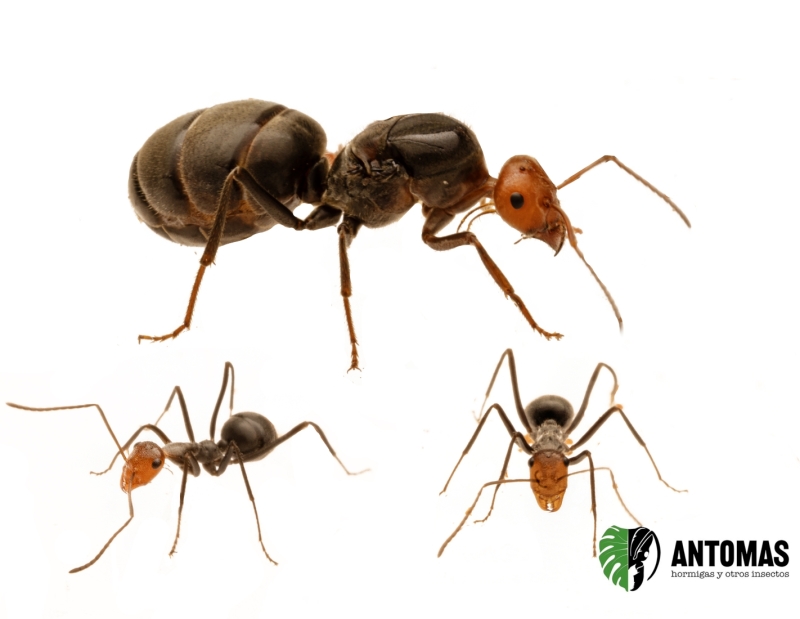
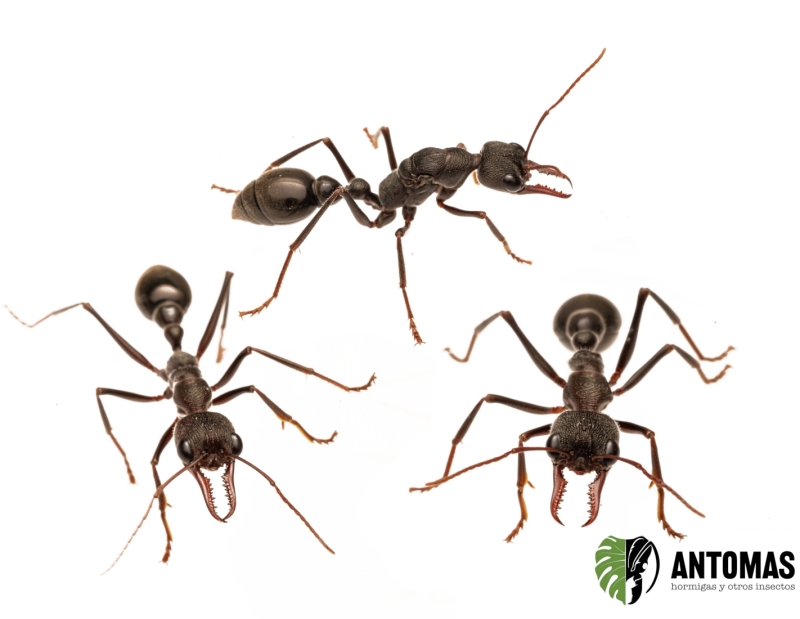
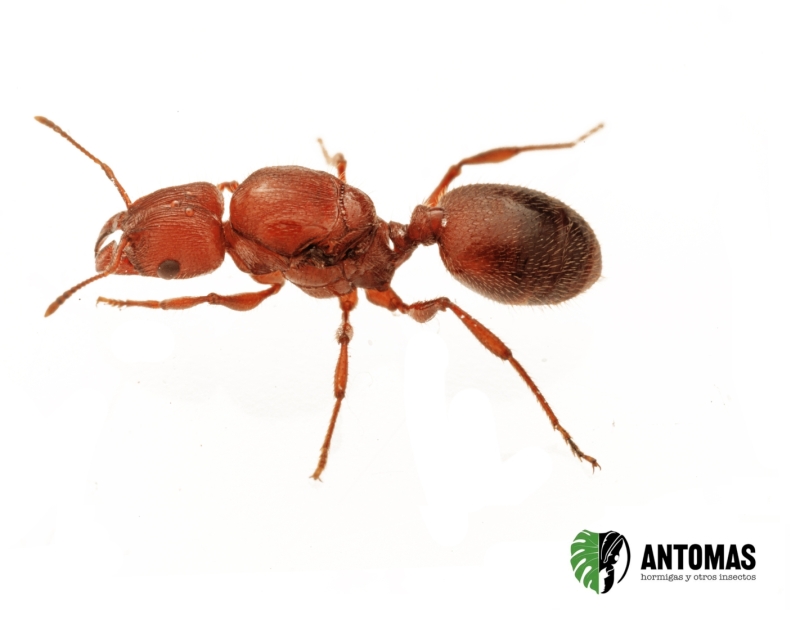
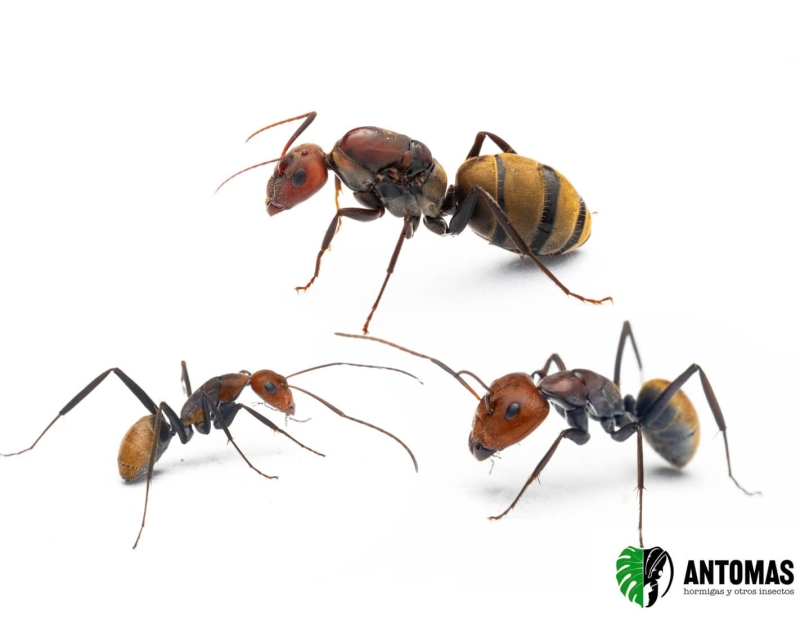
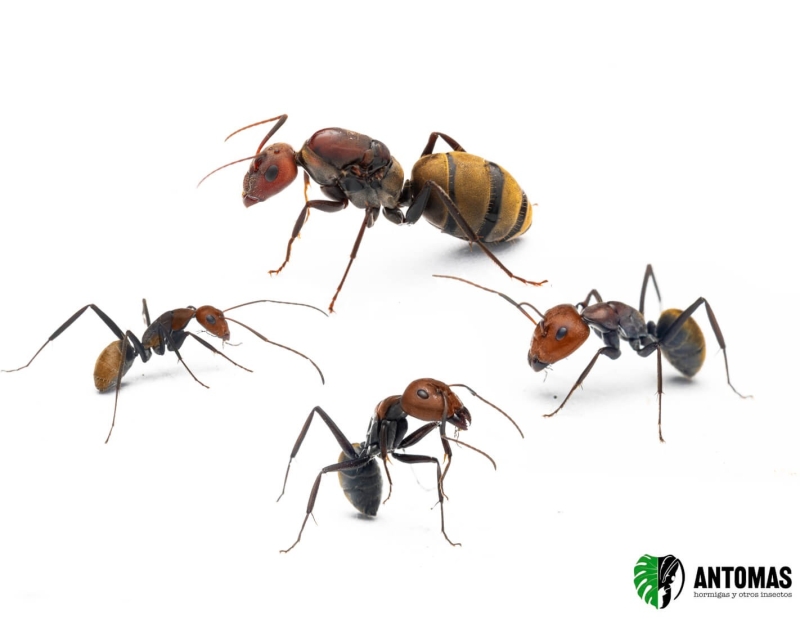
Worker size is highly variable.

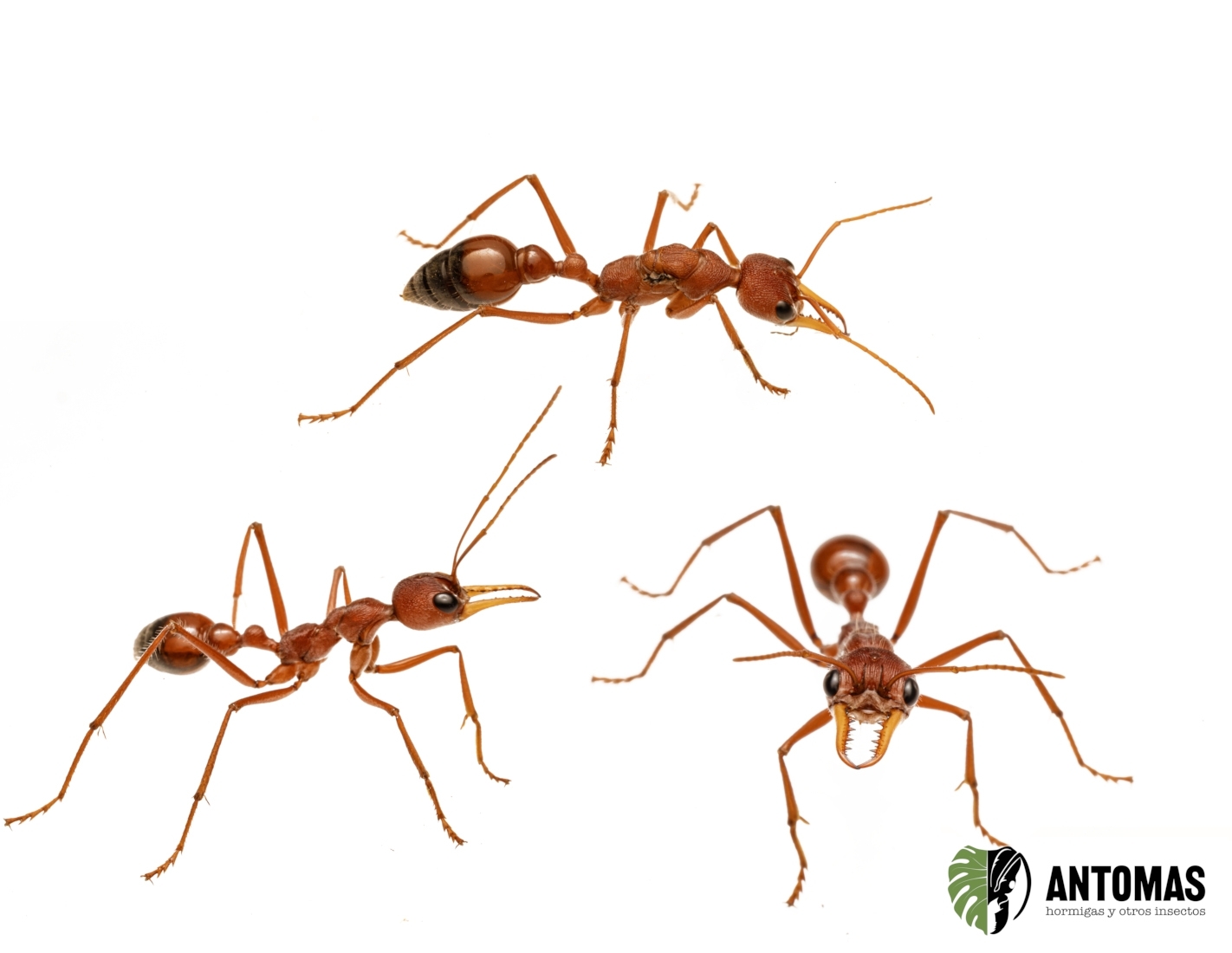
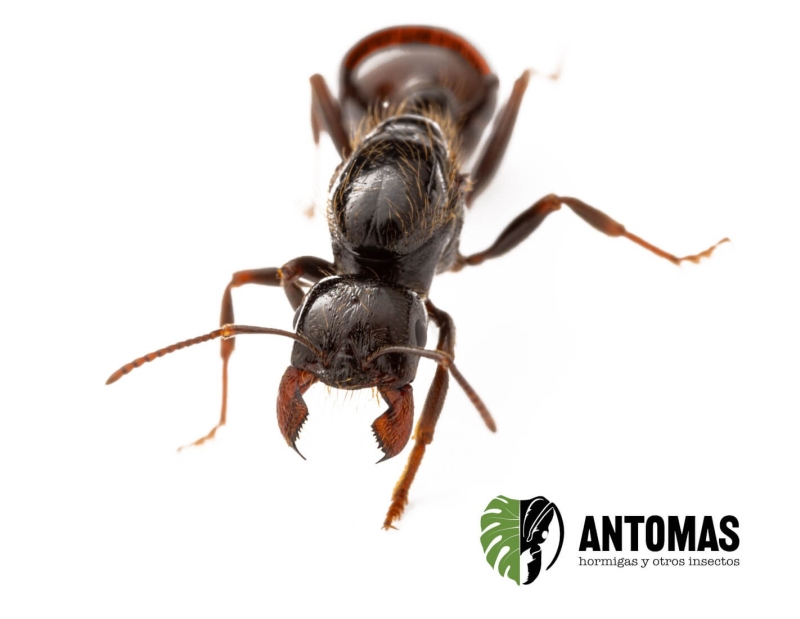
The smallest workers can be around 10–12 mm, while the largest can reach approximately 20–25 mm.

This variation is not continuous. As mentioned above, the colony tends to produce two clearly differentiated size groups, giving rise to the characteristic bimodal distribution.

Small workers are mainly associated with internal tasks, while large workers dominate foraging and defence.

Despite the difference in size, there is no morphologically specialised soldier caste.

Queen

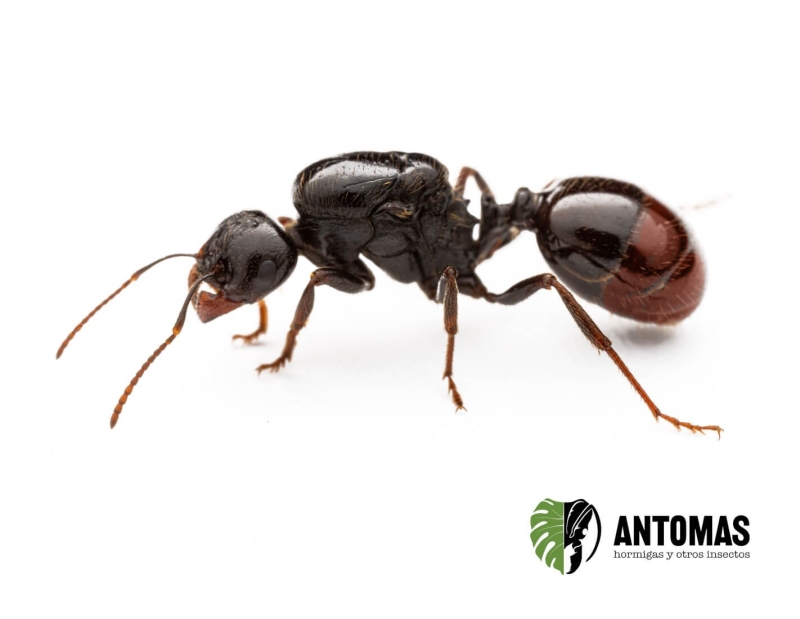
The queen is approximately 22–26 mm long and may be surprisingly similar in size to the largest workers.

The main differences are found in the mesosoma, which is more robust because of the development of the flight musculature, and in the reproductive anatomy.

After the nuptial flight and mating, the queen sheds her wings, leaving the characteristic wing scars on the mesosoma.

Recommended parameters

  • Warm area: 25–28 °C
  • Rest of the nest: approximately 21–24 °C
  • Larvae and cocoon-spinning area: preferably 23–26 °C
  • Humidity: clear gradient, from humid chambers to considerably drier areas
  • Foraging area: dry and well ventilated

Temperature

This is a species that tolerates heat better than other large Myrmecia from cooler areas.

During the active season, established colonies perform very well with a warm area at around 25–28 °C.

This does not mean that the entire nest should be kept at that temperature.

A thermal gradient is always preferable, allowing the workers to move eggs, larvae and cocoons according to their needs.

Large larvae preparing to spin should preferably have access to slightly cooler areas, around 23–26 °C.

Although M. gulosa tolerates warmth well, prolonged excessive temperatures combined with high humidity and poor ventilation can cause problems during pupation.

Humidity and ventilation

A more sensible range for this phase is 23–27 °C, always allowing the workers to choose cooler areas if necessary.

Humidity and ventilation

Myrmecia gulosa does not require a saturated nest.

Moderate humidity is sufficient, with a clear gradient between the more humid larval area and the slightly drier cocoon area.

Ventilation is especially important in the pupation area.

Excessive moisture combined with stagnant air can hinder proper cocoon formation and favour fungal growth.

The foraging area should remain dry or only slightly humid.

Substrate for cocoon spinning

As with other large Myrmecia, mature larvae need loose material to help them spin their cocoons correctly.

A mixture of fine sand, small mineral particles, fragments of soil and other clean loose materials works well.

Foundation

The foundation of Myrmecia gulosa is semi-claustral.

The queen needs to leave the nest to forage and feed during the founding stage.

It is therefore advisable to provide a small, secure foraging area from the beginning, connected to the founding chamber.

The queen should have permanent access to water and carbohydrates.

Once larvae appear, the protein supply should be increased progressively.

Small freshly killed prey or suitably opened insects are usually preferable to large live prey, especially during the earliest stages.

This reduces the risk of injury to the queen and prevents prey from disturbing or damaging eggs and larvae.

The founding chamber should have a humidity gradient and enough loose substrate for the larvae to spin their cocoons.

Excessive disturbance should be avoided, especially during the first weeks after egg laying.

Founding and young colonies

For queens and very young colonies, we recommend a compact nest with large galleries and a small connected foraging area.

A humidity gradient should be maintained, leaving part of the nest more humid and another part noticeably drier.

Loose substrate should also be available so that mature larvae can use it when spinning their cocoons.

The foraging area does not need to be very large at this stage, but it must be secure and allow feeding and cleaning without disturbing the nesting chamber.

Established colonies

As the number of workers increases, Myrmecia gulosa requires considerably more space.

Large chambers, good ventilation and the possibility of creating different humidity and temperature zones are particularly important.

In this type of setup, the colony can excavate and modify the internal structure according to its own needs.

This allows the workers to create chambers of different sizes, relocate brood and adjust the depth of the occupied areas.

A substrate with sufficient structural consistency should be used so that galleries remain stable while still allowing excavation.

A mixture containing soil, sand and a moderate clay fraction works especially well.

It is also advisable to maintain a humidity gradient within the substrate, with deeper or lateral areas somewhat more humid than the rest.

Foraging area

Myrmecia gulosa is a very active species and established colonies need a spacious foraging area.

The workers make extensive use of the available surface and readily climb branches, bark and other structures.

Providing a structurally varied environment encourages natural exploration and makes the colony considerably more interesting to observe.

The enclosure must have a reliable anti-escape system and secure access points for feeding and maintenance.

The protein supply can be based on:

  • cockroaches;
  • crickets;
  • flies;
  • moths;
  • locusts;
  • other safe feeder insects.

Established colonies can hunt live prey without difficulty.

Even so, they also accept freshly killed prey very well, which makes feeding easier and reduces unnecessary risks.

During periods with many larvae, the demand for protein increases considerably.

When the colony has little brood or enters its seasonal slowdown, protein consumption decreases.

Diapause / winter rest

Myrmecia gulosa should experience a clear seasonal winter slowdown.

Although it tolerates heat well during the active season, its natural distribution includes regions with cool winters and marked seasonality.

In captivity, the temperature should therefore be reduced progressively during autumn rather than maintaining summer conditions throughout the year.

The larvae continue growing during summer and by the end of the season many of them have reached advanced stages.

When temperatures begin to fall, development slows markedly and the colony enters its winter resting period.

During this period, a large part of the brood remains in the larval stage.

Pupation and the emergence of new workers are concentrated again when favourable conditions return.

This seasonal rhythm should not be eliminated in captivity by maintaining high temperatures throughout the year.

For established colonies, a winter period of approximately 10–14 °C is appropriate for populations originating from cooler areas, while somewhat milder conditions can be used for colonies from warmer regions.

The reduction in temperature should always be gradual.

During diapause, protein consumption decreases considerably, although water must remain permanently available and small amounts of carbohydrates can continue to be offered.

The return to active-season temperatures should also be progressive.

Brood during diapause

For captive maintenance, we recommend approximately:

  • 15–18 °C for colonies from the Sydney / coastal New South Wales area;
  • 12–16 °C for populations from cooler inland or higher-altitude areas.

The cooling period can last approximately 8–12 weeks.

It is not necessary to reproduce the absolute outdoor minimum temperatures, because natural nests buffer thermal fluctuations considerably.

The reduction should be gradual, just like the return to active-season temperatures.

During this period, the colony should not be forced to maintain high activity through artificial heating.

Water must remain available, while carbohydrates can be offered in small amounts and protein adjusted to the very low activity of the overwintering larvae.

Behaviour in captivity

Myrmecia gulosa is one of the most visually striking species to observe in a large setup.

The workers are highly active during the day and make extensive use of the foraging area.

Myrmecia gulosa is one of the most spectacular species to observe when the colony is active.

Workers spend a large part of the day outside the nest, exploring the foraging area and reacting immediately to movement around them.

Their excellent vision allows them to follow the keeper with their gaze and rapidly learn the location of food, access points and frequently used routes.

Foraging is mainly individual, although many workers may be active simultaneously in a large colony.

They readily climb branches, bark and other structures, so a three-dimensional foraging area greatly enriches their behaviour.

Unlike more nocturnal species, good ambient lighting during the day encourages natural activity and makes observation especially interesting.

A regular photoperiod is advisable, avoiding permanent lighting or abrupt changes between day and night.

Handling and safety

Myrmecia gulosa has a functional sting and should never be handled directly.

The workers are fast, highly visual and capable of reacting immediately when the enclosure is opened.

Its sting can be very painful.

For this reason, direct handling should be avoided completely.

Maintenance should be carried out with long tweezers and suitable tools, keeping hands away from the workers whenever possible.

The foraging area must have an effective anti-escape system and secure closures.

Special caution is required for people with a history of severe reactions to insect stings or known allergies to hymenopteran venom.

A well-designed setup allows this spectacular and highly active species to be observed safely while minimising unnecessary disturbance to the colony and risk to the keeper.

Dificultad
Experienced
No reviews

16 other products in the same category: