Camponotus vestitus | Buy & Care Guide | Antomas

Camponotus vestitus

€82.09
VAT included
Colony


Camponotus vestitus – Banded Golden Ant

Biology

Camponotus vestitus is a striking African ant belonging to the subfamily Formicinae and traditionally included within the subgenus Myrmosericus.

Material historically identified as C. vestitus has been recorded in different regions of sub-Saharan Africa, including populations from the south, east and west of the continent. Records are known from very different environments, ranging from savannas and grasslands to forest formations, suggesting an ant with a considerable capacity for adaptation.

In Botswana, for example, a colony has been found beneath a log, while different surveys in southern Africa have recorded forms attributed to C. vestitus in savanna, grassland and forest habitats.

This versatility is also clearly apparent in captivity. It is a species that readily adapts to different types of ant nests and does not require particularly delicate conditions, provided it has warmth, a moderately humid area and abundant food.

For this reason, at Antomas we consider it a species with a difficulty level of 2/5, perfectly suitable for beginners who want to start with a tropical or African Camponotus.

One of its main attractions is its rapid growth. At suitable temperatures and with frequent access to protein, colonies can maintain several generations of brood simultaneously and increase their population considerably faster than many European Camponotus.

It is therefore not one of those carpenter ants in which you have to wait months to notice significant changes. A well-established young colony can quickly develop into an active society with workers of different sizes.

An extremely fast Camponotus

Camponotus vestitus is a very fast species.

The workers move quickly through the foraging area and can react immediately to any disturbance. When the colony is active, opening the setup without an effective anti-escape system can turn a routine task into a rather entertaining situation.

This speed is especially noticeable in medium and large colonies, where several workers can simultaneously leave the nest to inspect any new element or food source.

Despite their speed, they are not especially aggressive ants towards the keeper. Their first reaction is usually to run and seek shelter, although larger workers can defend themselves if they feel trapped.

Golden bands and variable coloration

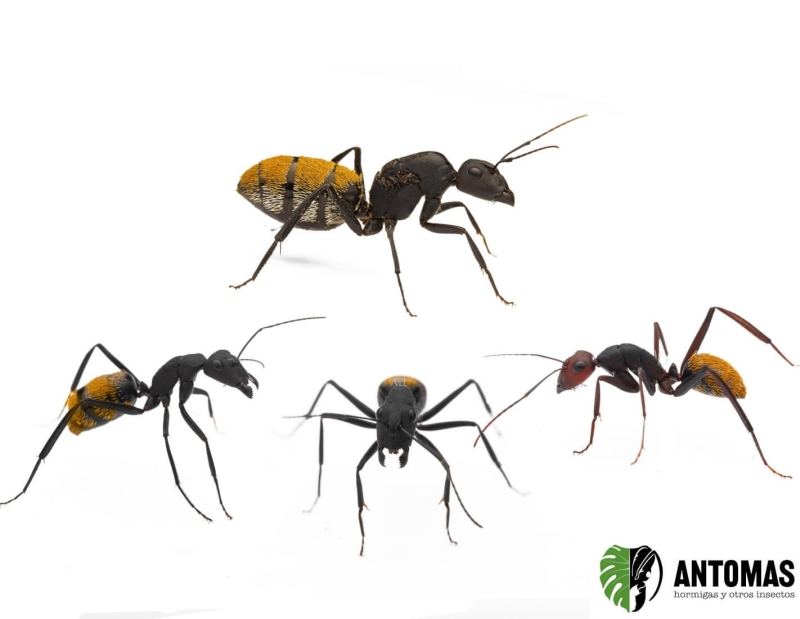
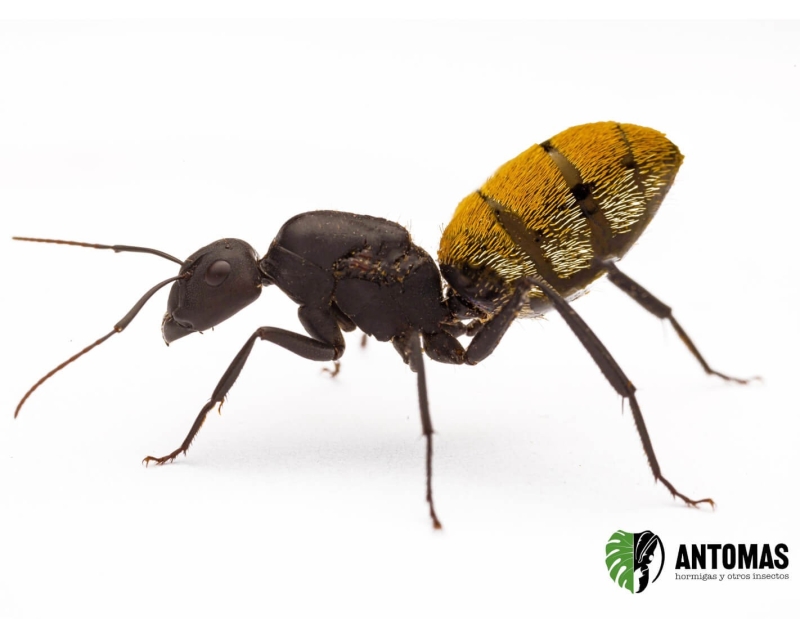
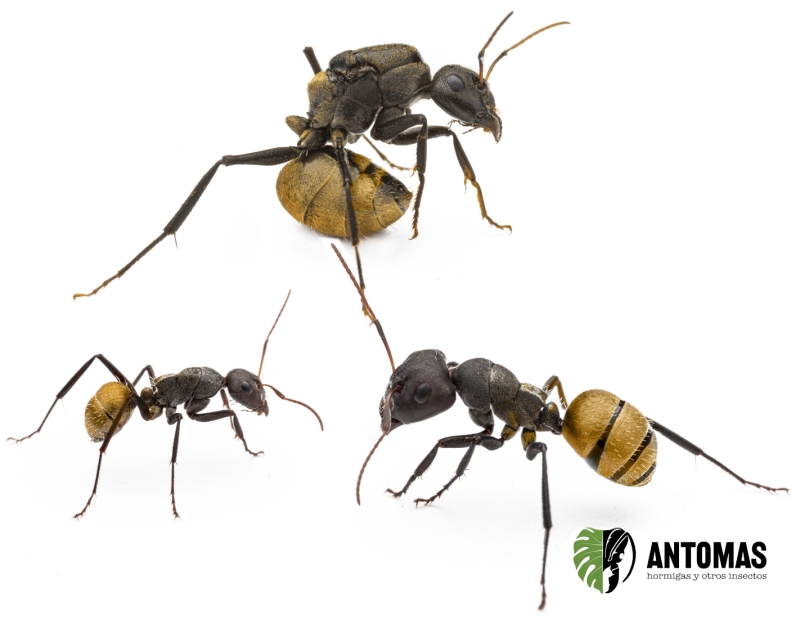
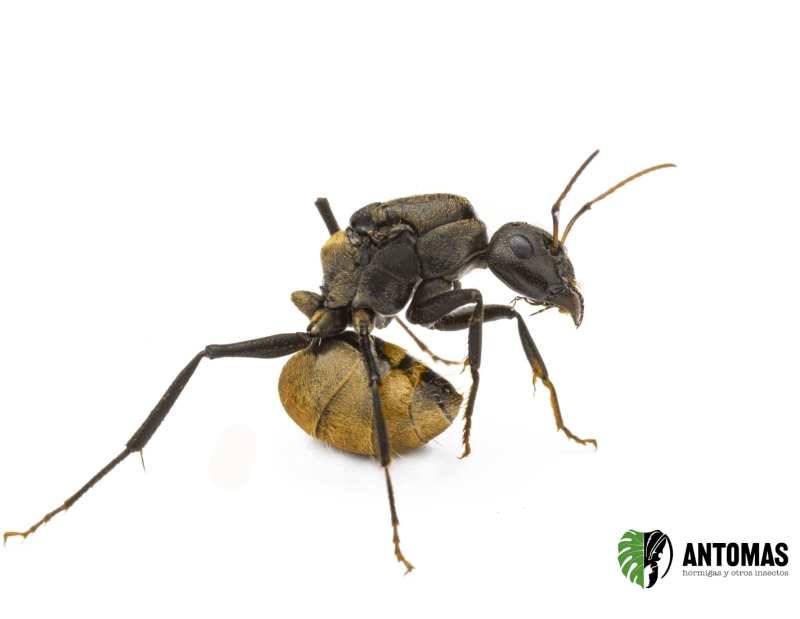
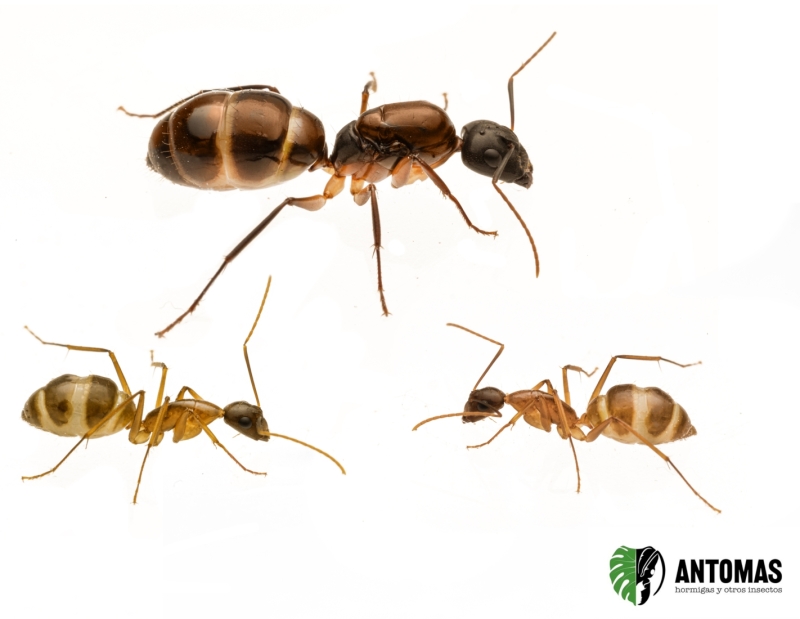
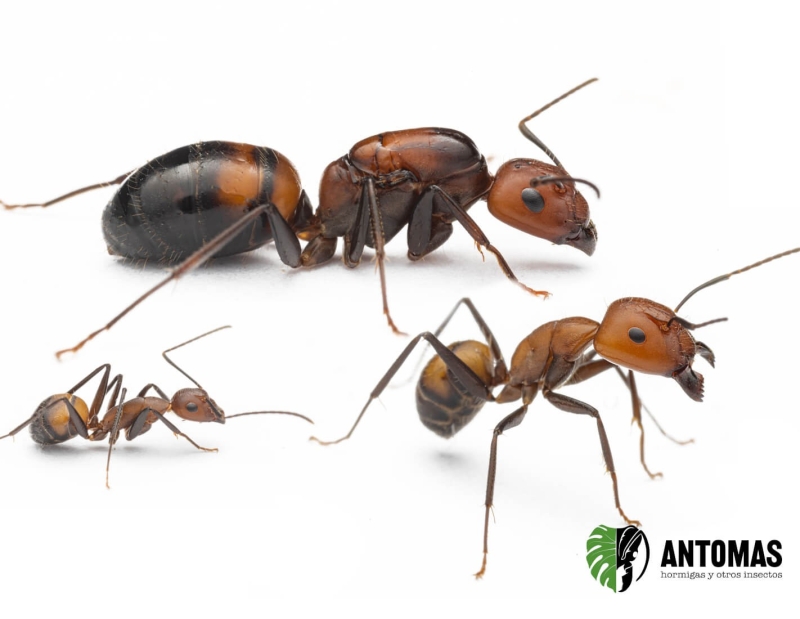
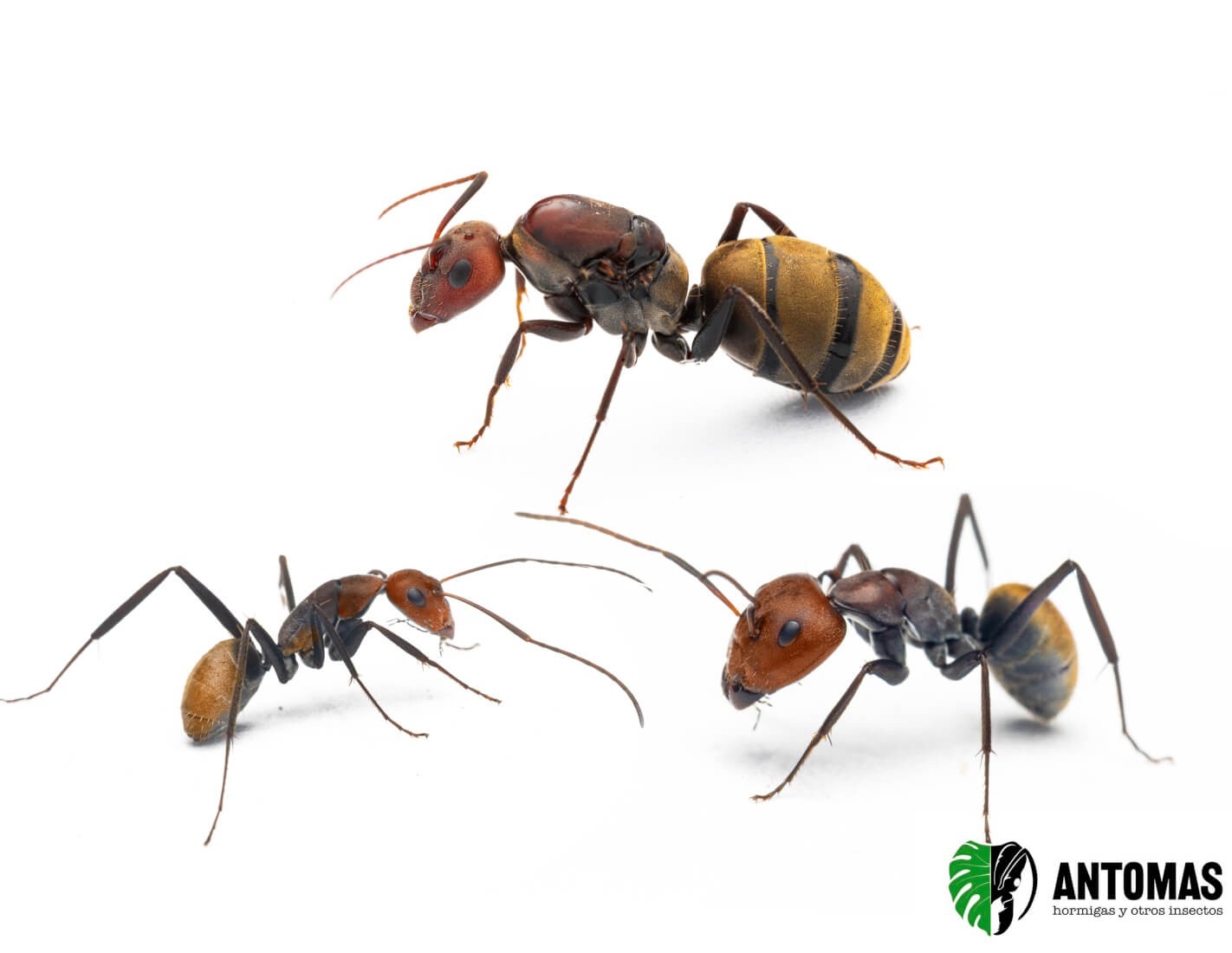
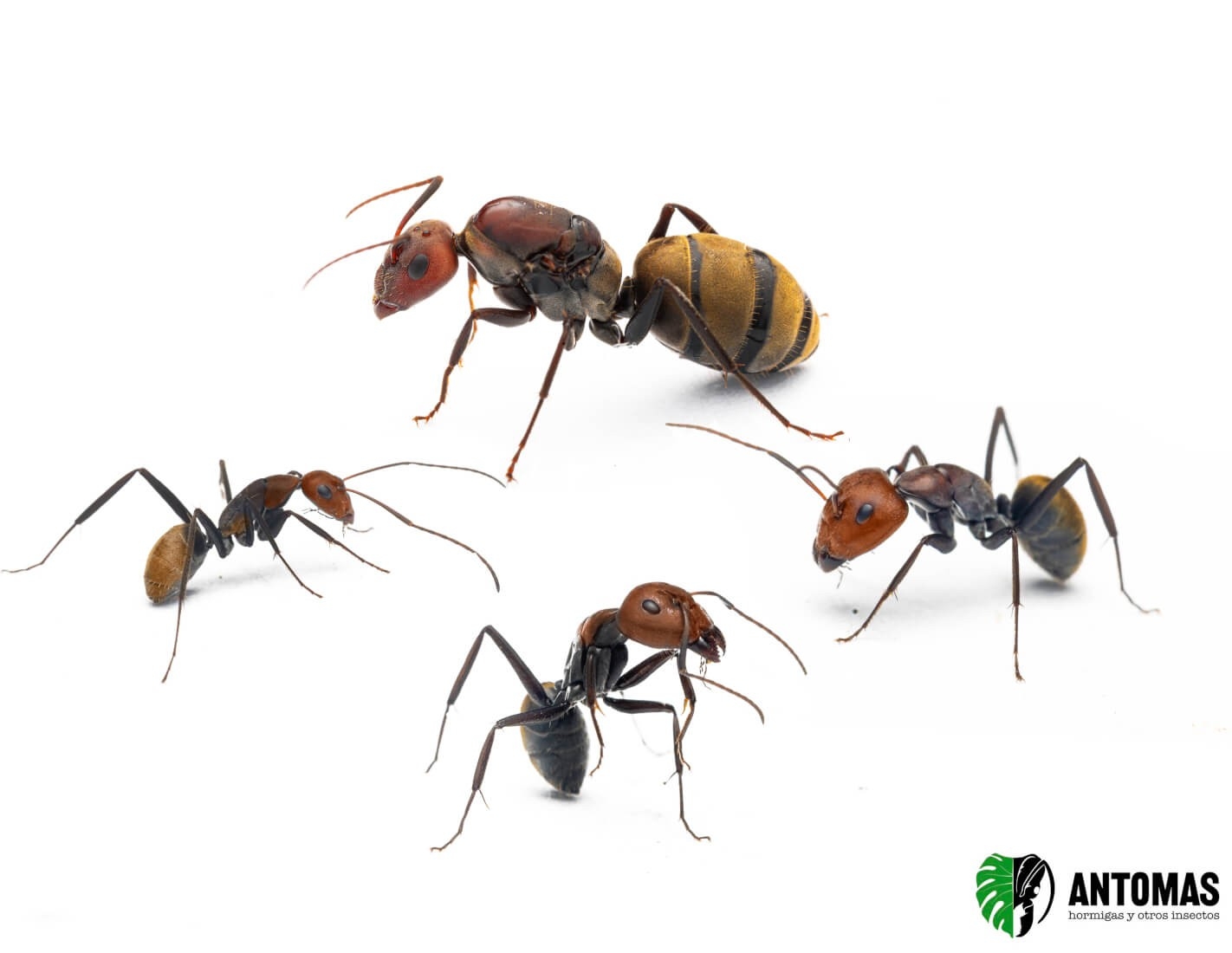
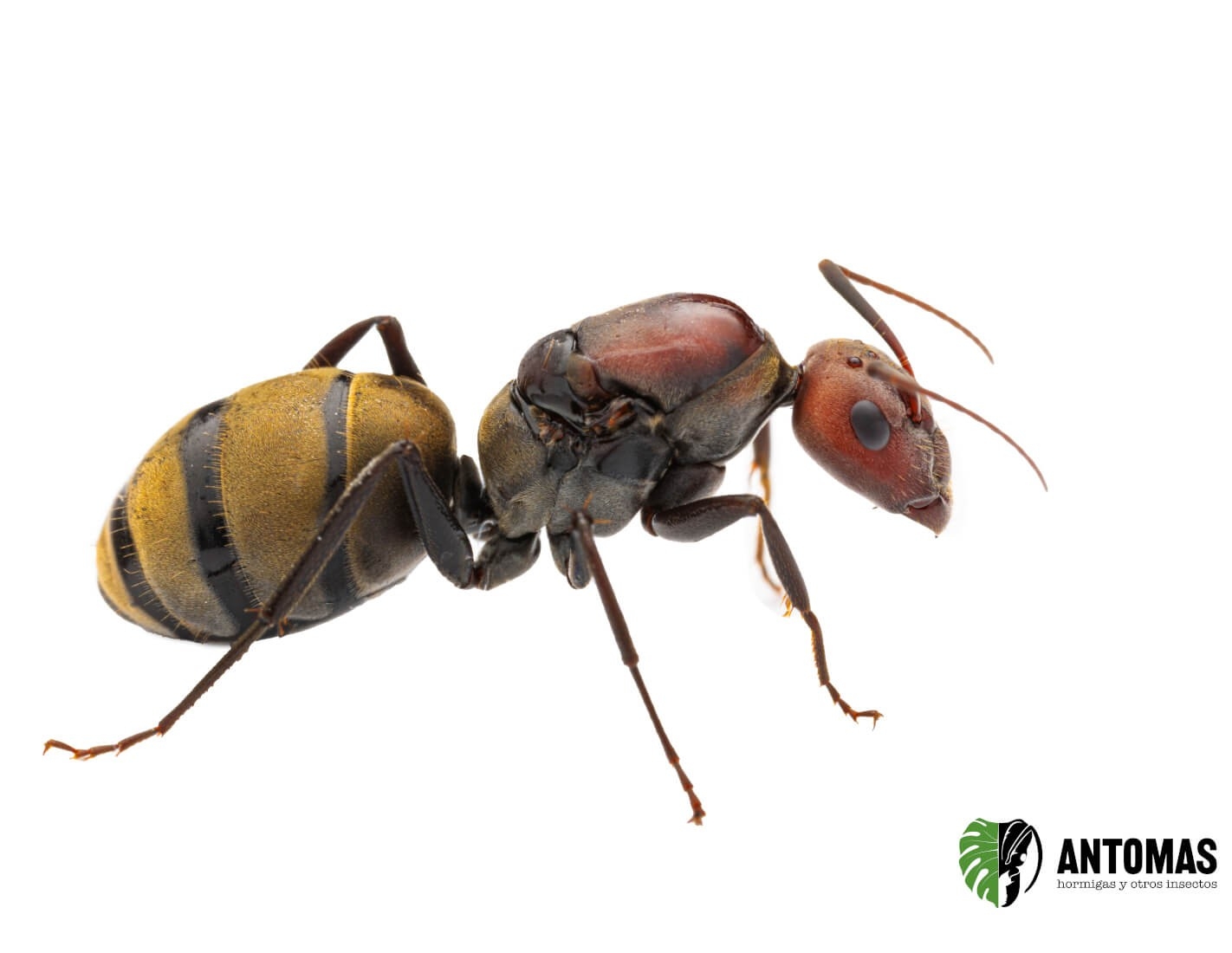
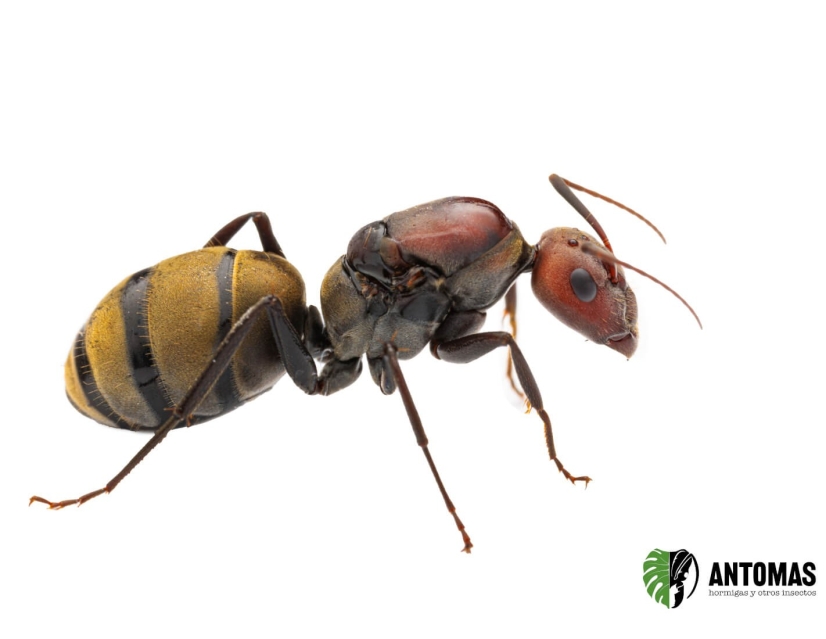
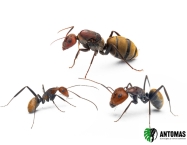
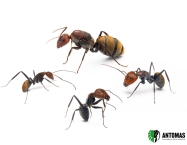
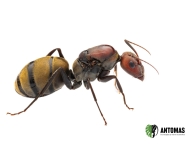
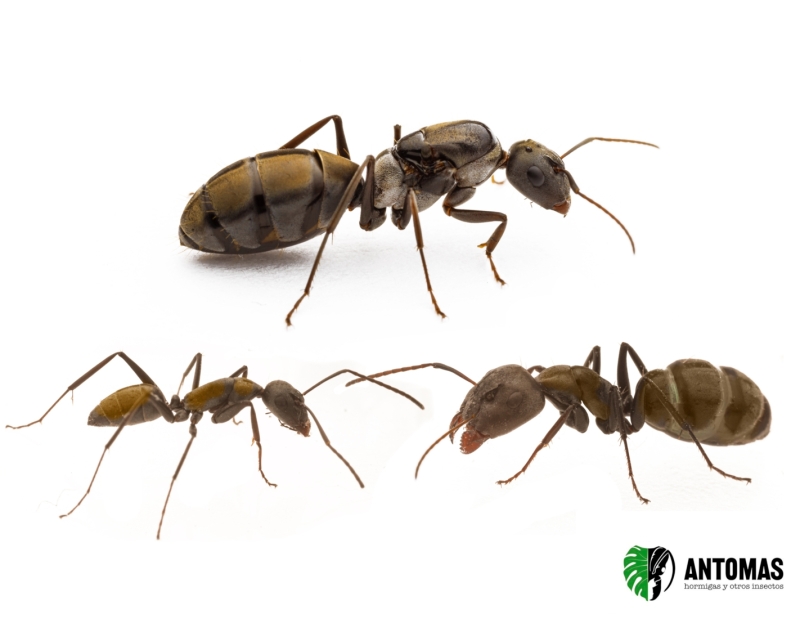
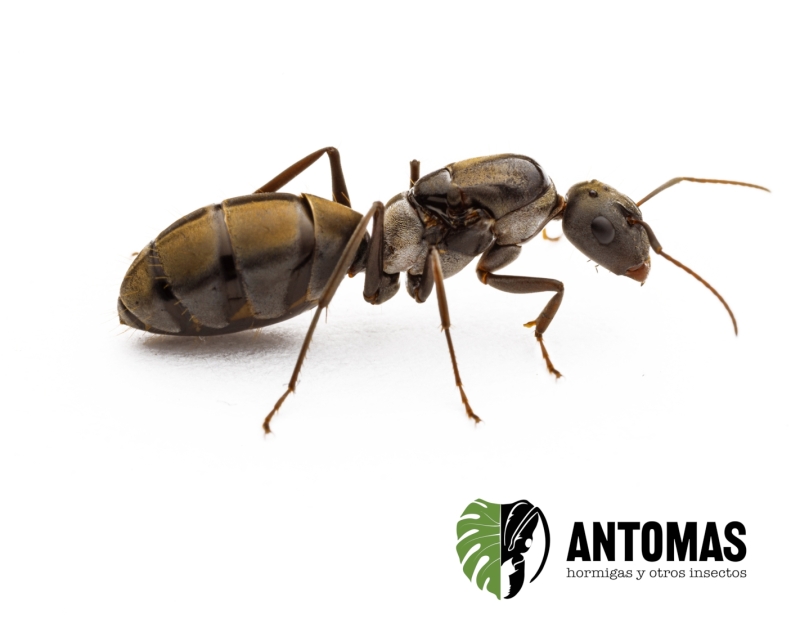
The most characteristic feature of C. vestitus is the presence of golden or yellowish pubescence on the gaster, which creates very visible transverse bands between the abdominal segments.

Depending on the lighting, these bands can appear bright gold, yellowish or even slightly silvery.

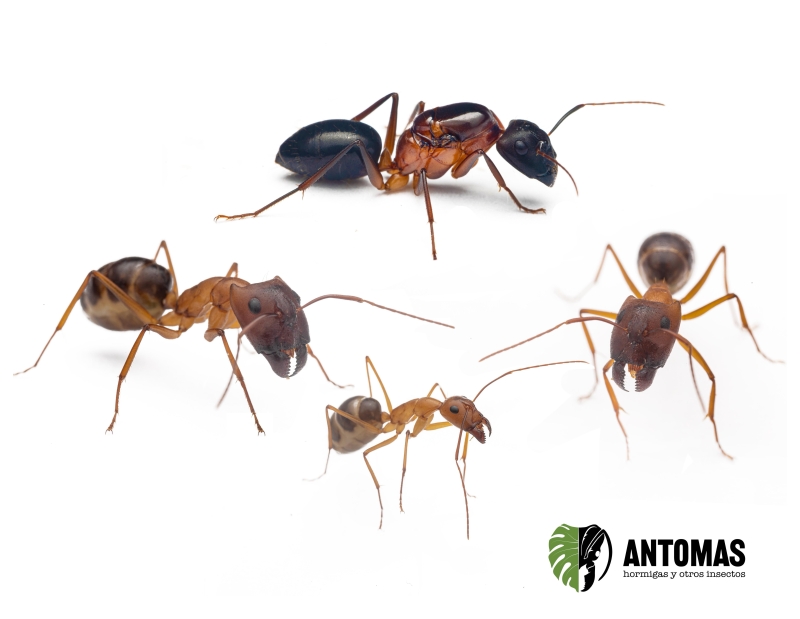
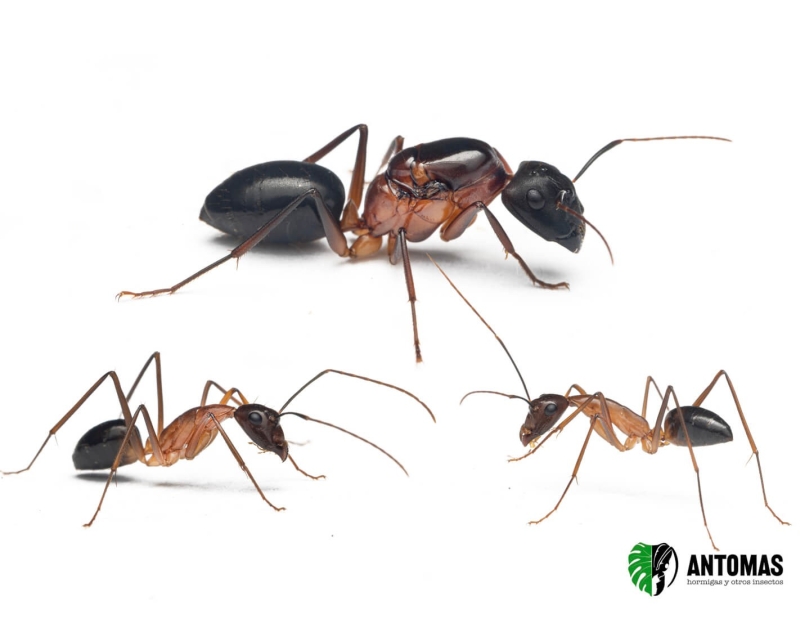
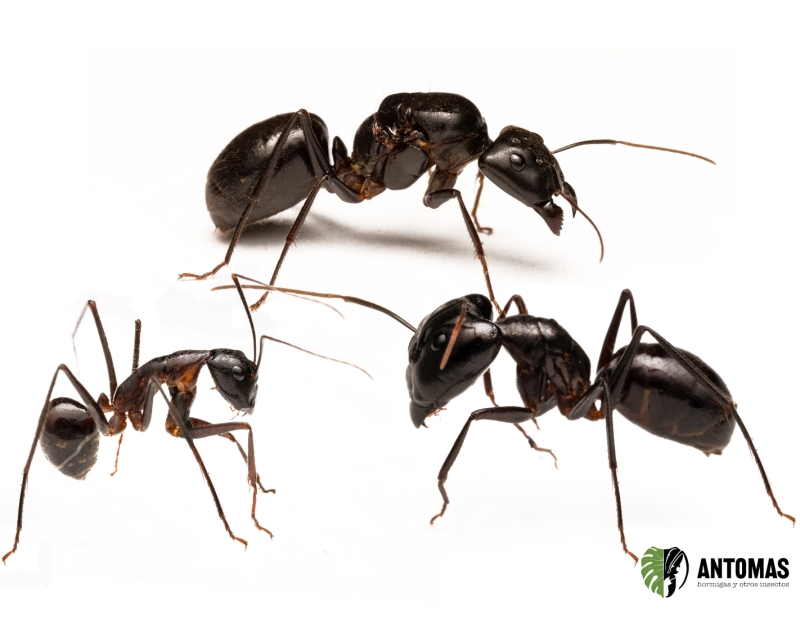
The rest of the body can vary considerably in colour. Some forms are predominantly dark brown or black, while others show reddish or lighter brown tones on the head, mesosoma or legs.

This variability means that two colonies of the same species may look surprisingly different at first glance.

However, the combination of a robust Camponotus body, abundant pubescence and the characteristic banded appearance of the gaster gives the species a very distinctive appearance.

Nesting and colony structure

In the wild, Camponotus vestitus can nest in soil and protected cavities, taking advantage of spaces beneath logs, stones or other elements that provide stable conditions.

The nest can extend through a system of galleries and chambers where the colony distributes the queen, brood and workers according to temperature and humidity conditions.

As in many tropical Camponotus, the colony benefits from having access to areas with different microclimates rather than a completely uniform nest.

The most humid chambers can be used for eggs and young larvae, while pupae and adult workers can occupy somewhat drier areas.

This behaviour is easily reproduced in captivity by providing a humidity gradient within the nest.

Colony growth

One of the most interesting characteristics of this species is the speed at which a well-fed colony can develop.

With warm temperatures and a regular supply of protein, the queen can maintain continuous egg production and several stages of brood can coexist simultaneously.

The appearance of the first majors is usually one of the most striking moments in the development of the colony, as the difference in size and head proportions compared with minor workers can be considerable.

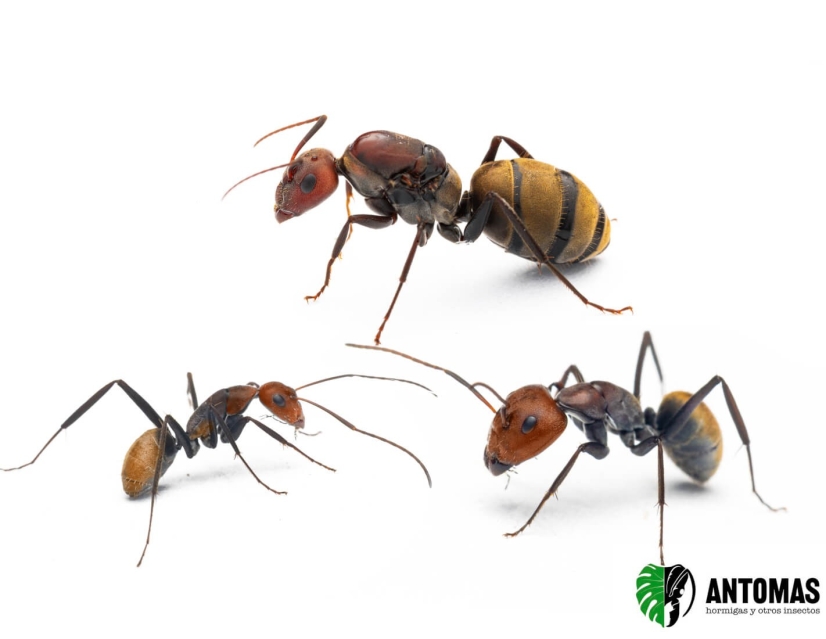
In larger workers, the contrast between the reddish head, dark mesosoma and golden gaster is especially striking.

The body is covered with numerous long, erect hairs, particularly visible on the gaster and legs.

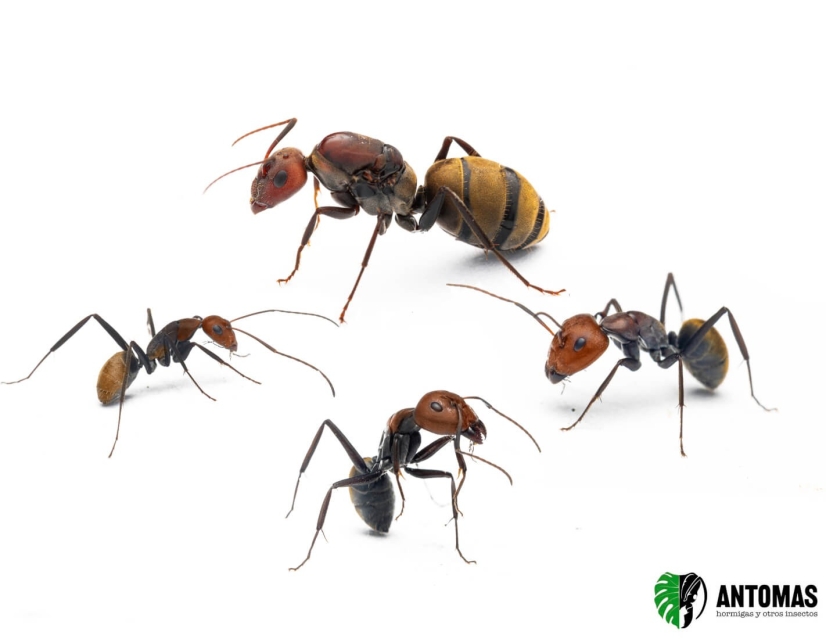
The workers show clear size polymorphism. The smallest workers are slender and light, while the largest majors develop a much broader head and more powerful mandibles.

This gradual transition between sizes gives mature colonies a very varied appearance.

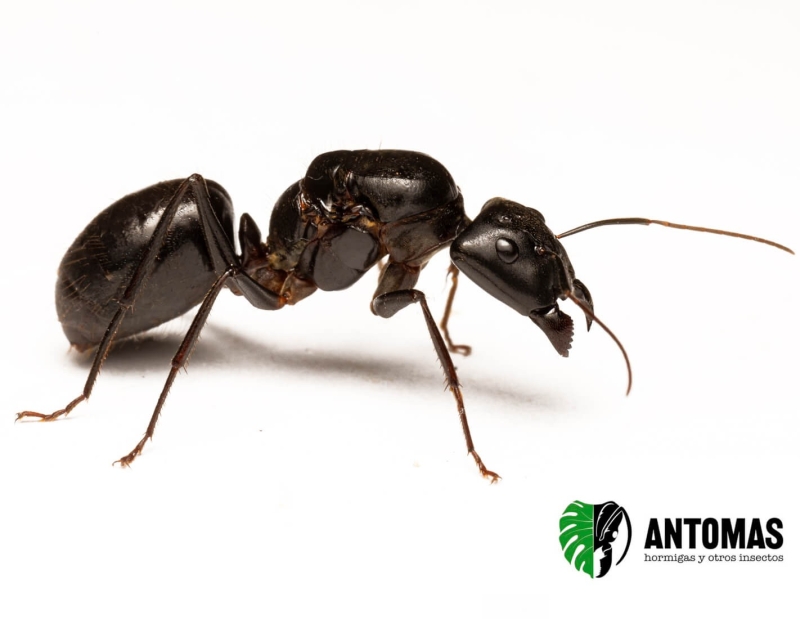
The queen is considerably larger and more robust than the workers, with a strongly developed mesosoma and the same characteristic golden pubescence on the gaster.

CAPTIVE CARE

Camponotus vestitus is a relatively easy species to keep provided that adequate temperature, hydration and food are maintained.

Its rapid growth and high activity make it advisable to plan the setup with some room for expansion from the beginning.

It is not necessary to provide an enormous nest to a small colony, but it is useful to use a modular system that can be expanded progressively.

The most important practical consideration is its speed: the foraging area must have a reliable anti-escape barrier before the colony reaches a significant size.

Its basic care is straightforward: warm temperatures, moderate humidity, regular carbohydrates and a good supply of protein when larvae are present.

The main challenge is not its biological requirements, but its speed. The workers can move extremely quickly when the foraging area is opened, so it is essential to have all food and tools prepared beforehand.

A reliable anti-escape barrier is highly recommended, especially as the colony grows.

Recommended parameters

  • Temperature: 24–28 °C
  • Warm spot: 28–30 °C
  • Nest humidity: moderate, with a clearly humid area
  • Foraging area: drier and well ventilated

The colony benefits greatly from a thermal gradient. Heating only one part of the nest allows the ants to choose the most suitable temperature for each stage of brood development.

It is not advisable to heat the entire nest uniformly.

Humidity

Camponotus vestitus does not require an excessively humid nest.

The best option is to maintain a humidity gradient, keeping one area hydrated while the rest remains progressively drier.

This system allows the queen to remain in contact with soil or natural substrate, reproducing conditions closer to those she would find in nature.

During the claustral founding stage, the queen can produce her first workers using her own reserves.

It is therefore not necessary to feed her continuously before the first workers emerge, although permanent access to water must always be ensured.

Once the first workers appear, small amounts of carbohydrates and protein can begin to be offered.

The colony should be kept in a quiet place, avoiding unnecessary vibrations and excessive checks during this initial stage.

Recommended ant nests

Once the colony has several workers, it can be transferred progressively to a larger nest.

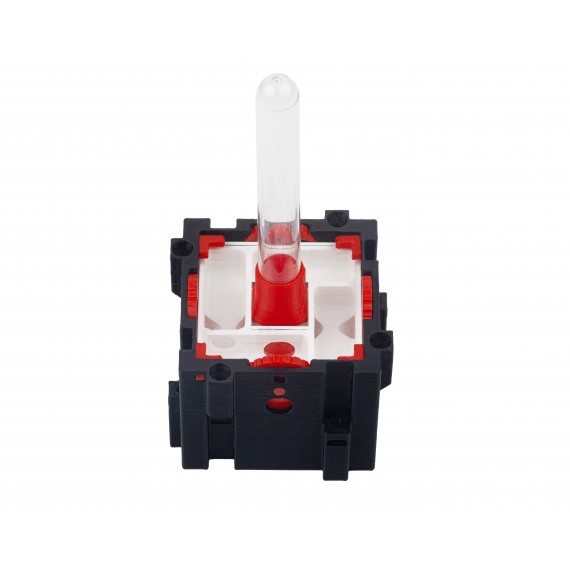
For small and medium-sized colonies, the Qbik Wild systems are especially suitable, as they combine controlled hydration with the possibility of using natural substrate.

Medium or large galleries are preferable because the colony will eventually produce workers of very different sizes, including majors with broad heads.

As the colony grows, additional modules can be connected without having to move the ants to a completely new setup.

For larger colonies, the Qbik Alpha line provides greater capacity and makes it possible to combine several nesting modules with spacious foraging areas.

The progressive expansion of the nest is particularly useful for this species because of its rapid growth.

It is preferable to add space as the colony needs it rather than offer an excessively large nest from the beginning.

Feeding

Carbohydrates

Carbohydrates are essential for maintaining the high activity level of the workers.

The following can be offered:

  • nectar specifically formulated for ants;
  • sugar water;
  • very diluted honey;
  • small amounts of sweet fruit.

Established colonies can consume considerable quantities of sugary liquids, so a permanent nectar feeder is especially practical.

The colony should always have access to clean water independently of sugary liquids.

Protein

Protein is especially important for this species because its rapid growth requires a constant supply of nutrients for the larvae.

The following can be offered:

  • small crickets;
  • cockroaches;
  • mealworms;
  • flies;
  • other appropriately sized feeder insects.

When many larvae are present, protein can be offered several times a week.

As the colony grows, the amount of food must increase considerably.

Food remains should be removed before they deteriorate, especially in warm and humid conditions.

Diapause

Camponotus vestitus does not require a cold winter diapause.

It is not necessary to reduce the temperature drastically during winter.

If desired, a slight seasonal reduction in temperature and feeding can be applied, but without subjecting the colony to a true cold diapause.

Maintaining stable temperatures throughout the year allows the colony to continue developing continuously.

Behaviour in captivity

In captivity, Camponotus vestitus stands out above all for its speed and intense activity.

The workers quickly explore the foraging area and react almost immediately when food or a new object is introduced.

As the colony grows, it becomes increasingly common to see several workers outside the nest simultaneously.

They are excellent climbers and can move easily across smooth surfaces, so an effective anti-escape system is essential.

Despite their nervous behaviour, they are not usually excessively aggressive towards the keeper.

When disturbed, their first response is generally to flee, although larger workers can defend themselves if they are cornered.

Once the colony is established, the foraging area can be permanently connected to the nest and maintained with an effective anti-escape barrier.

They are excellent climbers and can move quickly across vertical surfaces.

Large colonies show constant activity, with workers continuously entering and leaving the nest.

The presence of workers of different sizes, together with their reddish and golden coloration, makes mature colonies especially attractive to observe.

Handling and safety

Direct handling with bare hands is not recommended.

Although they are not particularly dangerous ants, large workers can bite and, like other Camponotus, can defend themselves by spraying formic acid.

With a secure setup, a good anti-escape barrier and basic precautions during maintenance, Camponotus vestitus is an easy, fast-growing and spectacular species, particularly suitable for anyone looking for an active African Camponotus.

Dificultad
Novice
No reviews

9 other products in the same category:

Customers who bought this product also bought:

Customers who bought this product also bought: