This website uses its own and third-party cookies to improve our services and show you advertising related to your preferences by analyzing your browsing habits. To give your consent to its use, press the Accept button.
Cookie preferences
| Cookie | Provider | Purpose | Expiry |
|---|---|---|---|
| PHP_SESSID | antomas.es | The PHPSESSID cookie is native to PHP and allows websites to store serialised status data. On the website it is used to establish a user session and to pass state data through a temporary cookie, which is commonly known as a session cookie. These Cookies will only remain on your computer until you close your browser. | Session |
| PrestaShop-# | antomas.es | This is a cookie used by Prestashop to store information and keep the user's session open. It stores information such as currency, language, customer ID, among other data necessary for the proper functioning of the shop. | 480 hours |
| rc::a | It is used to read and filter bot requests. | Persistent | |
| rc::c | It is used to read and filter bot requests. | Persistent |
| Cookie | Provider | Purpose | Expiry |
|---|---|---|---|
| _ga | Registers a unique ID that is used to generate statistical data on how the visitor uses the website. | 2 years | |
| _gat | Used by Google Analytics to throttle request rate | 1 day | |
| _gat_gtag_UA_# | Used to throttle request rate. | 1 minute | |
| _gd# | This is a Google Analytics Session cookie used to generate statistical data on how you use the website which is removed when you quit your browser. | Session | |
| _gid | Registers a unique ID that is used to generate statistical data on how the visitor uses the website. | 1 day |
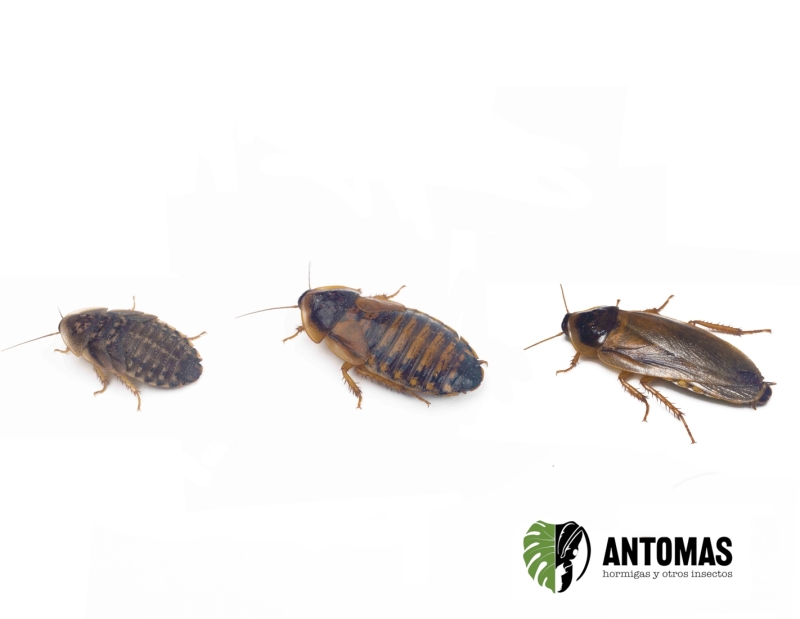
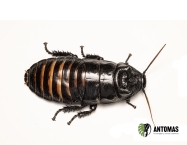
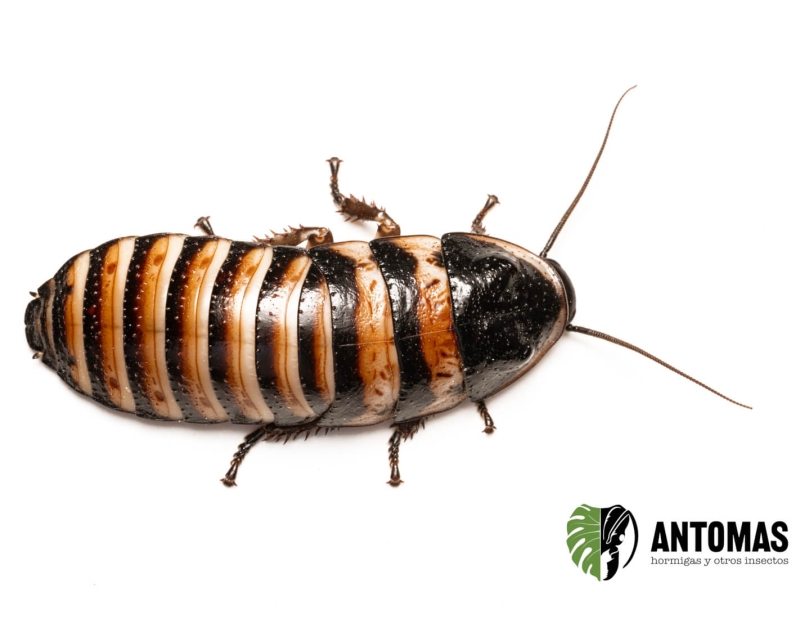
Gromphadorhina portentosa – Cucaracha Gigante Silbadora de Madagascar
Gromphadorhina portentosa – Madagascar Giant Hissing Cockroach
Biology
It is one of the largest and best-known cockroach species in the world, native to Madagascar. It mainly inhabits humid tropical forests, where it lives among fallen logs, leaf litter accumulations, and decomposing plant matter.
It is a saprophagous and opportunistic species, specialized in consuming plant organic matter at different stages of decomposition. In the wild, it feeds on fallen fruit, plant remains, flowers, bark, and other resources available on the forest floor.
Like other Malagasy hissing cockroaches, it can produce sounds by forcibly expelling air through its spiracles. This hissing serves defensive, territorial, and reproductive functions.
It is a completely wingless species, lacking functional wings in any adult stage. This absence of wings, together with its large size and robustness, gives it a very distinctive appearance.
It is mainly nocturnal, although in captivity it may remain active for much of the day if conditions are calm.
Reproduction is ovoviviparous. Females retain the ootheca internally until the nymphs are born, producing fully formed and active offspring from the very beginning.
It is an extremely gregarious species, tolerating relatively high densities as long as sufficient space, ventilation, and abundant food are available.
Size and Morphology
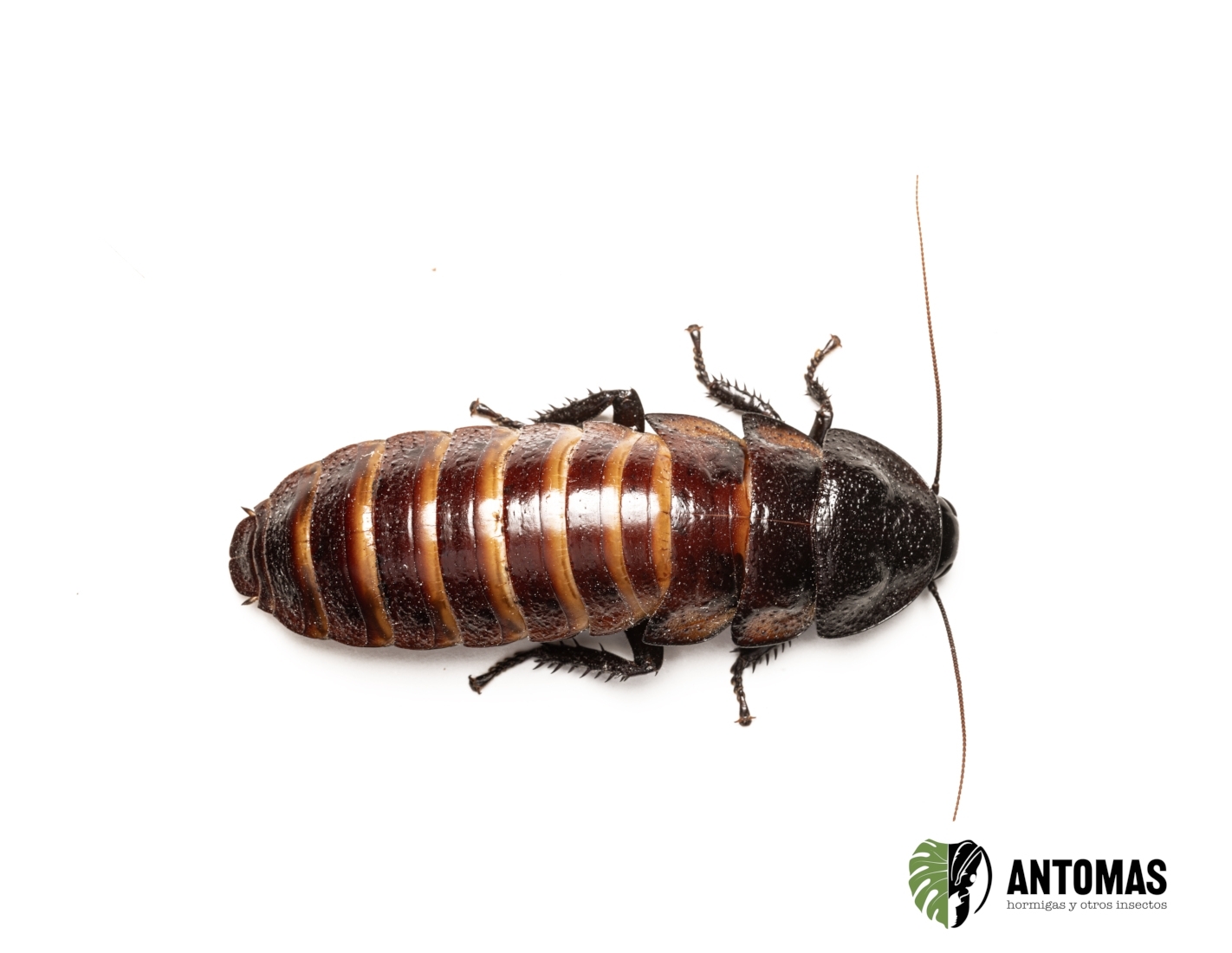
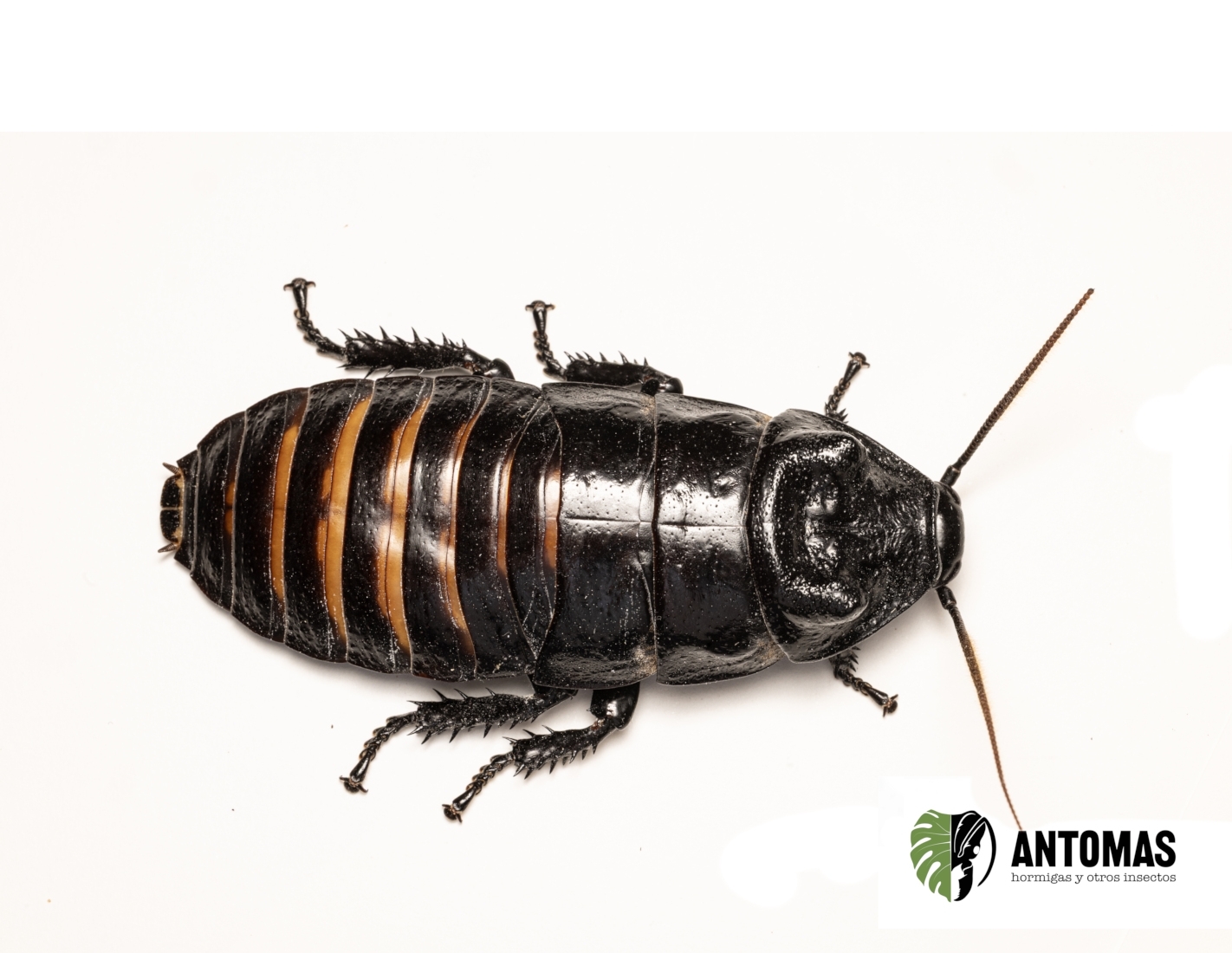
Gromphadorhina portentosa stands out for its large size and extremely robust body, being one of the most massive cockroaches commonly kept in captivity.
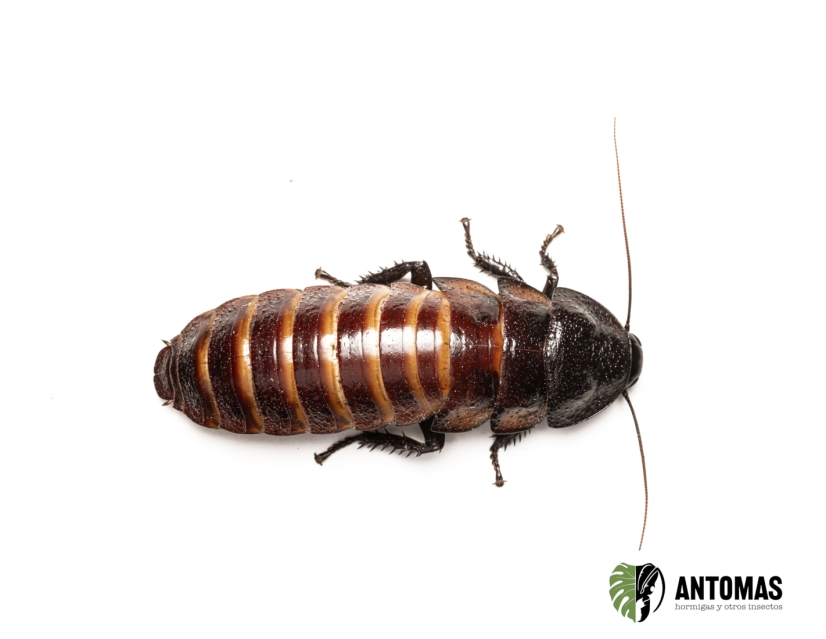
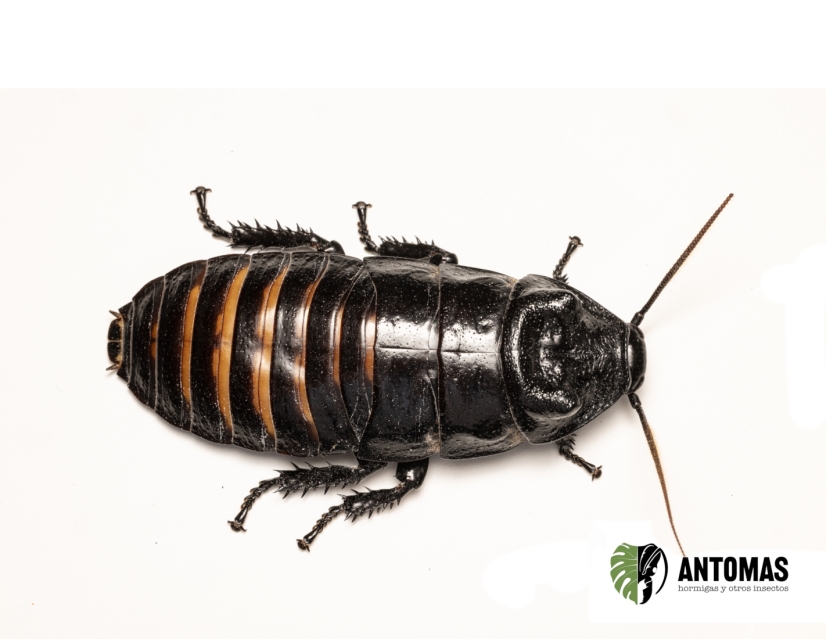
General coloration ranges from dark brown, black, and mahogany tones, with lighter abdominal segments in some specimens.
Males possess pronounced cephalic protuberances on the pronotum, used during ritualized confrontations. They also tend to be more active and territorial.
Females have a broader, heavier, and more compact body.
The legs are adapted to climb efficiently on bark, wood, and rough surfaces thanks to well-developed adhesive structures.
Freshly molted nymphs display an intense white coloration that gradually darkens as the exoskeleton hardens.
Approximate measurements:
- Newly hatched nymphs: 6 – 8 mm
- Adults: 6 – 9 cm
Some especially well-fed specimens may reach even larger sizes.
Captive Care
Gromphadorhina portentosa is an extremely hardy and easy-to-keep species, probably one of the best giant cockroaches for beginners.
Recommended Parameters
- Temperature: 24–30 °C
- Humidity: 60–80 %
- Ventilation: medium to high
- Terrarium: spacious, with abundant shelters and good usable surface area.
It tolerates minor environmental fluctuations relatively well, although excessive humidity without ventilation can cause fungal or mite proliferation.
Setup and Substrate
The following are recommended:
- Coconut fiber
- Leaf litter
- Cork bark
- Egg cartons or vertical shelters
It benefits from enclosures with abundant hiding places and dark areas.
It climbs very well on rough surfaces, silicone, and some textured plastics, so appropriate escape barriers are essential.
Feeding
It accepts an enormous variety of foods:
- Fruits
- Vegetables
- Insect feeds
- Occasional protein-rich foods
Colonies show great voracity, especially at high temperatures.
It is important to remove fresh food remains before they ferment or develop mold.
Behavior and Reproduction
It is a very gregarious and socially tolerant species.
Males perform pushing and small ritualized fights using their cephalic protuberances, although serious injuries rarely occur.
Females can produce numerous broods, and population growth can be rapid under optimal conditions.
Nymphs go through multiple molts before reaching adulthood, requiring adequate humidity to complete the process correctly.
Handling
It is a completely harmless species and very tolerant of handling.
It does not bite and has no dangerous defensive mechanisms beyond its characteristic hissing.
Even so, handling freshly molted specimens or forcing grips on legs and antennae should be avoided, as they may be injured.