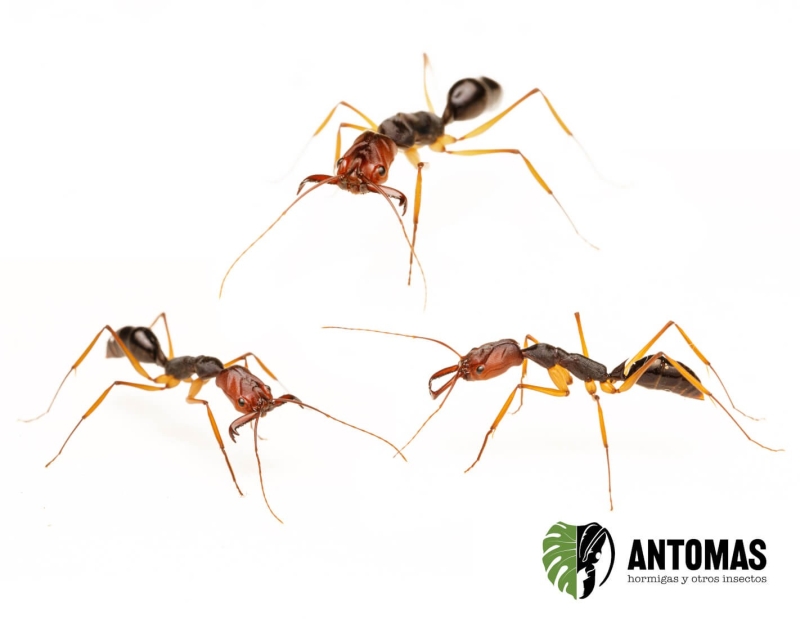
Myrmecia Pyriformis
Myrmecia Pyriformis

Myrmecia Pyriformis

Last items in stock
€249.99
VAT included
Colony


Myrmecia pyriformis – Giant Black Bulldog Ant

Biology

Myrmecia pyriformis is one of the largest and most imposing ants in Australia. It belongs to the genus Myrmecia, commonly known as bulldog ants or bull ants, a group characterised by excellent vision, large mandibles, solitary hunting behaviour and a powerful sting.

This species is mainly distributed in southeastern Australia, especially in regions of Victoria, South Australia and New South Wales.

It inhabits open forests, eucalyptus woodlands, scrubland and other relatively dry environments, where colonies build underground nests with entrances that may be surrounded by soil and plant debris.

Workers forage individually and rely heavily on vision to orient themselves, detect prey and identify threats.

Unlike many ants that organise large pheromone trails, Myrmecia pyriformis workers usually hunt alone and can travel considerable distances from the nest.

Their diet is based on a combination of animal protein and sugary liquids. Workers capture a wide variety of arthropods to feed the larvae and also consume nectar and other carbohydrate sources.

The species is mainly active during the warmer months, while in winter its activity decreases considerably.

Exceptional vision

Its activity is closely linked to changes in ambient light at dusk. Workers begin leaving the nest around sunset, using the remaining twilight as a visual reference to orient themselves towards familiar trees and foraging routes.

During the night they continue foraging, but the transition between daylight and darkness plays a fundamental role in the start of their activity.

This dependence on visual information is especially remarkable in a nocturnal ant. Its large compound eyes and well-developed ocelli allow it to make use of extremely low light levels.

Workers can memorise silhouettes of trees, the skyline and other visual landmarks around the nest, using them to navigate even under very dim conditions.

This means that abrupt changes in the visual environment around a captive colony can temporarily disorient the workers.

Individual foraging and hunting

Like other Myrmecia, M. pyriformis does not organise large recruitment trails to exploit food sources. Each worker leaves the nest alone and follows its own route.

Foragers climb trees and vegetation in search of sugary liquids and animal prey. Their movements are deliberate and highly visual: they stop frequently, scan their surroundings and react quickly to movement.

When they detect prey, they approach and capture it using their powerful mandibles. The sting can then be used to subdue prey that is difficult to control.

The captured arthropods are transported back to the nest and are mainly intended for the larvae, while adult workers obtain much of their energy from carbohydrate-rich liquids.

The larvae, however, require animal protein. Workers capture or collect arthropods and transport them to the nest, where they are used to feed the brood.

This separation between the diet of adults and larvae is very important in captivity: sugary liquids maintain the activity of the workers, while a regular supply of insects is essential for brood development.

Natural prey can be varied and depends on availability. As solitary predators, the workers do not need to organise collective hunting to capture small and medium-sized arthropods.

The combination of large mandibles, good vision and a functional sting makes each forager an efficient independent hunter.

Colony structure

Myrmecia pyriformis colonies are normally headed by a queen and can reach several hundred workers, with exceptional mature nests exceeding one thousand individuals.

The queen remains in the deeper areas of the nest, while workers are distributed through different chambers according to their size and function.

The brood is concentrated mainly in deeper chambers, where environmental conditions are more stable.

Smaller workers tend to remain in these internal areas caring for eggs, larvae and pupae, while larger workers are more common in the upper galleries and among the foraging force.

This spatial organisation reflects a division of labour in which worker size is associated, at least in part, with the tasks performed inside and outside the nest.

Larvae as the digestive centre of the colony

One of the most fascinating aspects of Myrmecia biology is the importance of the larvae in food processing.

Adult workers have a very narrow connection between the crop and the midgut, which greatly limits the passage of solid particles. For this reason, much of the solid animal food brought into the nest is given to the larvae.

The larvae can ingest and digest pieces of prey and subsequently provide the adults with liquid nutrients.

This means that the brood is not simply a passive group that needs to be fed: it also participates actively in the nutritional functioning of the colony.

In captivity, this makes a continuous supply of suitable protein especially important whenever larvae are present.

Reproduction and colony cycle

The queen is the principal reproductive individual in a normal colony and remains protected in the deeper parts of the nest.

Egg production and brood development are strongly seasonal and are linked to temperature and the natural annual cycle of southeastern Australia.

During the warm season the colony becomes much more active, foraging increases and brood development accelerates.

Myrmecia pyriformis has another fascinating reproductive peculiarity: the presence of gamergates, workers capable of mating and reproducing.

This means that, under certain circumstances, reproduction does not depend exclusively on a morphologically differentiated queen.

Gamergates retain the external appearance of workers but possess functional ovaries and can mate with males.

Once inseminated, they can lay fertilised eggs from which female offspring develop.

This reproductive capacity provides the colony with an alternative route for maintaining reproduction if the queen disappears, although it should not be interpreted as meaning that every worker can automatically replace her.

The existence of gamergates is one of the characteristics that makes the social biology of Myrmecia especially interesting from an evolutionary perspective.

Size and morphology

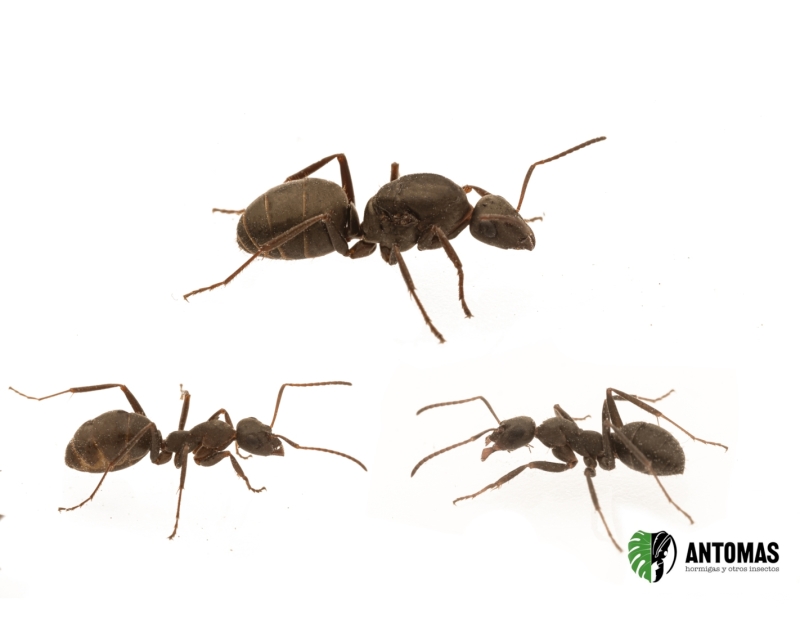
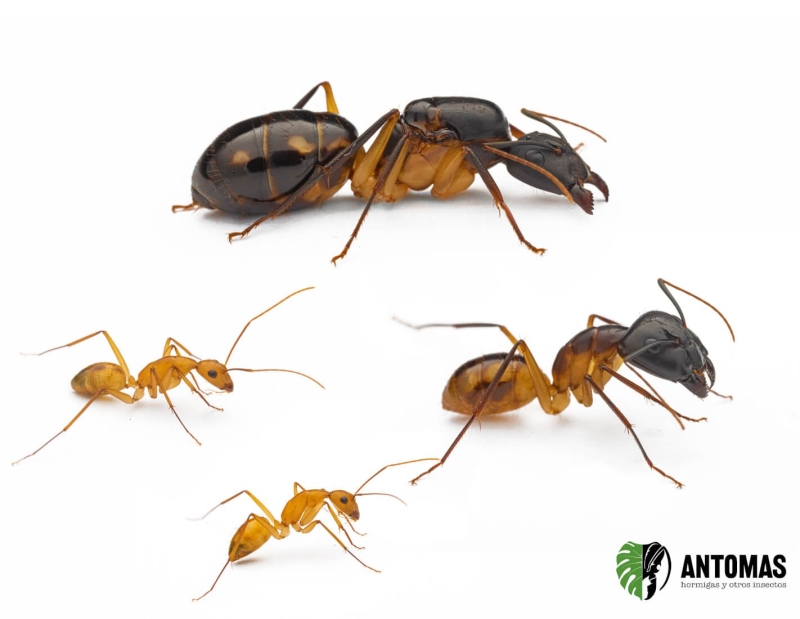
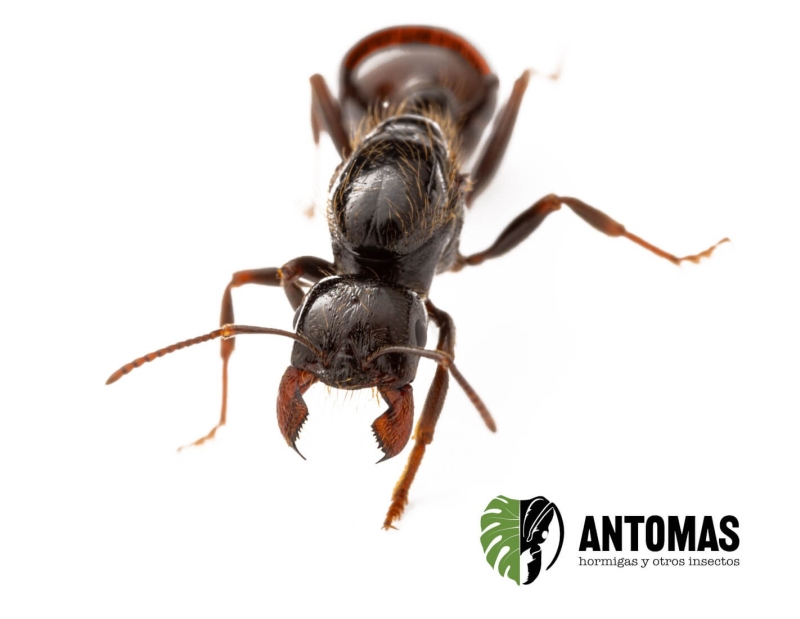
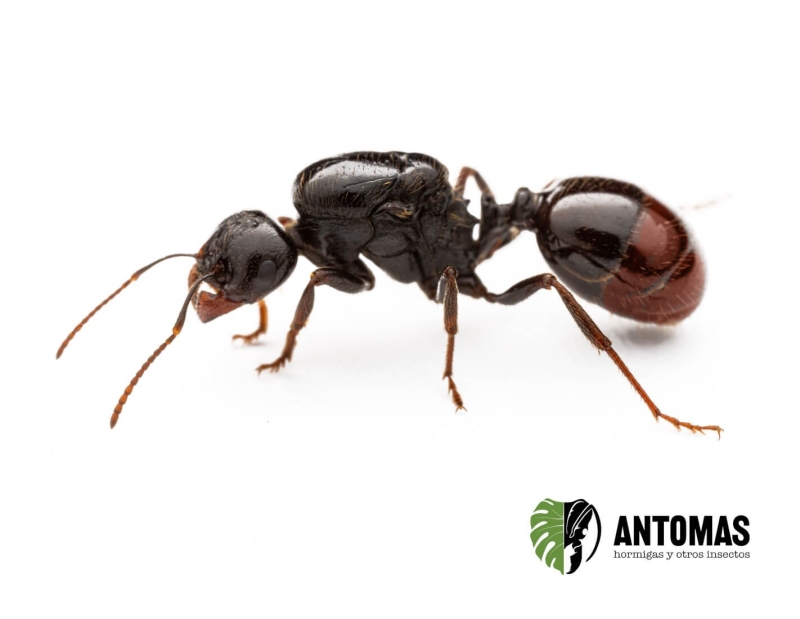
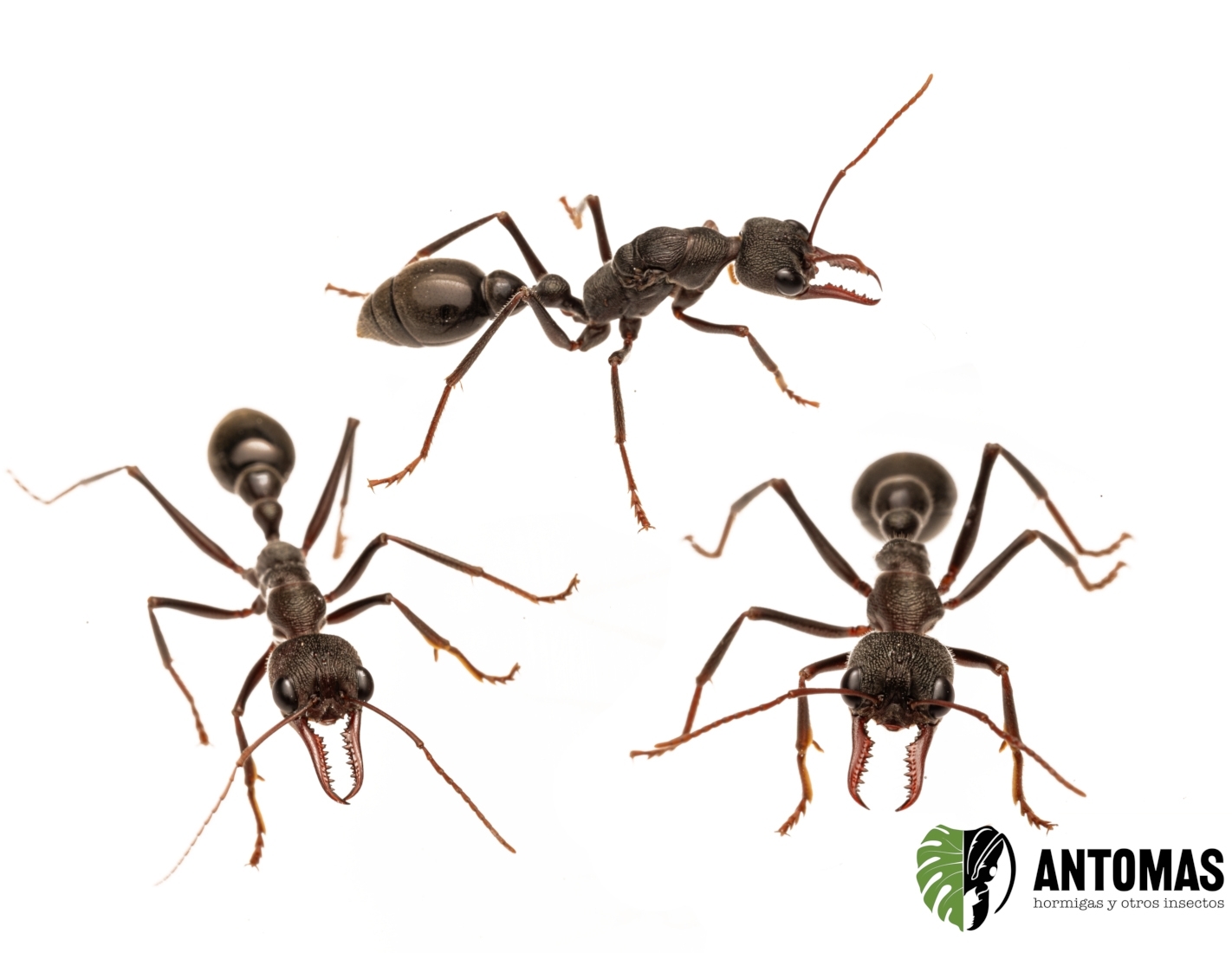
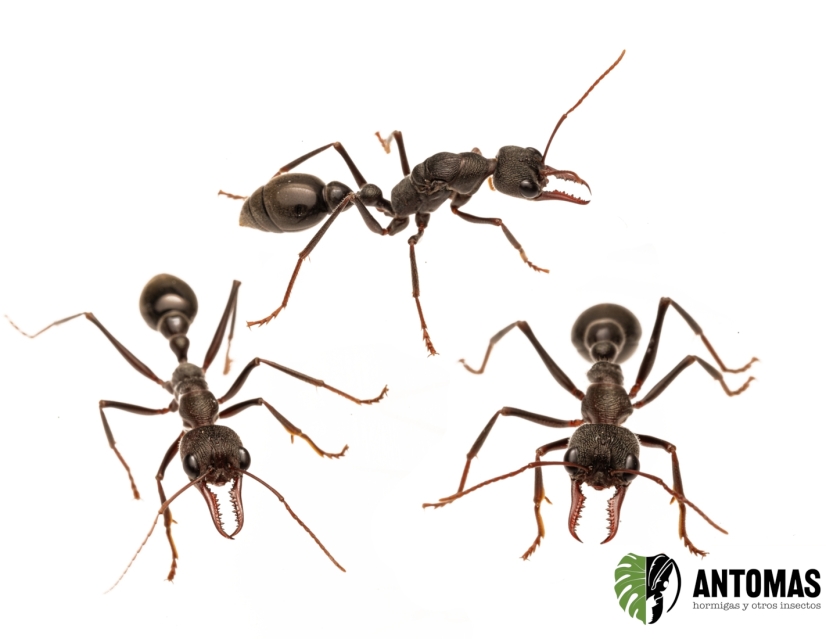
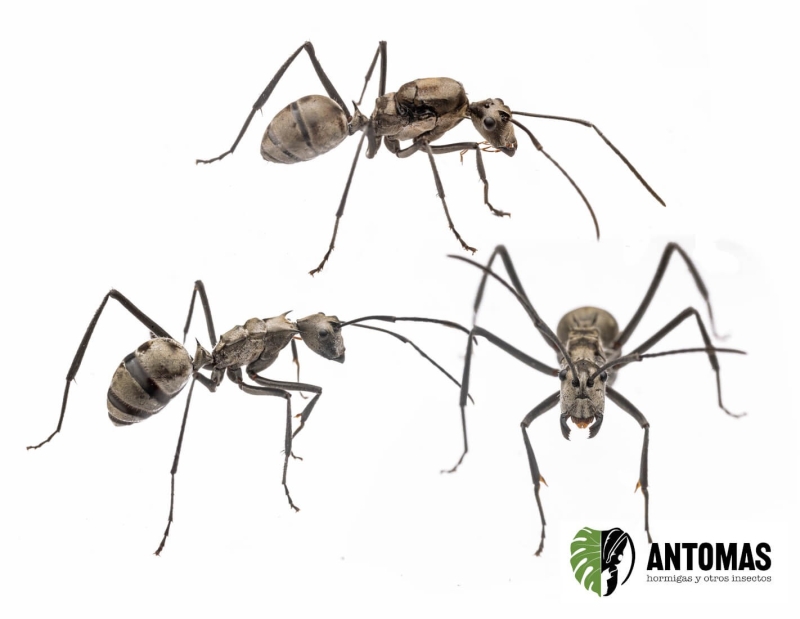
Myrmecia pyriformis is a large, robust ant with an unmistakable appearance.

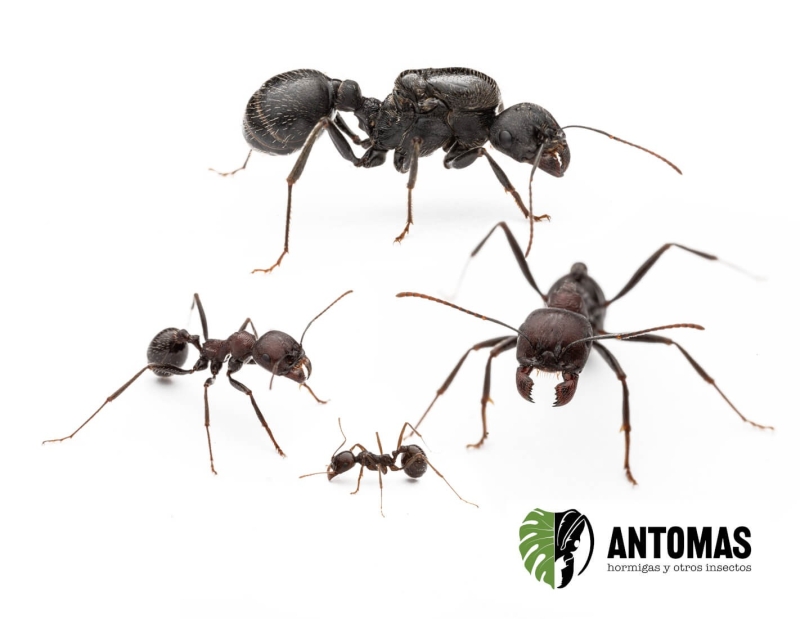
Workers show considerable variation in size, associated in part with the division of labour within the colony.

The largest workers predominate among the foragers and in the upper areas of the nest, while smaller individuals are more frequent in the deeper chambers and in brood-care tasks.

Queen: approximately 24–28 mm.

Workers: approximately 14–22 mm, with considerable variation within the same colony.

Males: generally more slender than the females, with morphology adapted for flight.

The general colour is very dark, predominantly black, although some areas may show brownish or reddish tones depending on the individual and lighting.

The head is large and equipped with long, powerful mandibles. The eyes are highly developed, as expected in a species that depends heavily on visual navigation.

The body is robust and the legs are long, allowing workers to move rapidly over the ground and climb vegetation during foraging.

The sting is functional and connected to a potent venom apparatus.

Differences between queen and workers

The queen is generally larger and more robust, especially in the mesosoma, which is developed to house the flight muscles before dealation.

Workers are more slender and show substantial size variation, from relatively small individuals associated mainly with internal nest tasks to large foragers active outside the colony.

Myrmecia pyriformis should be considered a species for experienced keepers.

Its maintenance is not especially difficult because of environmental requirements alone, but because it combines:

  • large size;
  • excellent vision;
  • rapid reactions;
  • powerful mandibles;
  • a functional sting;
  • and a medically significant venom.

It is therefore essential to work with a secure setup that minimises the need for direct intervention inside the foraging area.

Temperature

This species comes from temperate regions of southeastern Australia and should not be kept permanently at tropical temperatures.

During the active season, a suitable range is approximately 20–26 °C, with a warmer area that can reach around 26–28 °C.

It is preferable to provide a thermal gradient rather than heating the entire nest uniformly.

The ants can then choose the most suitable area for the brood and for their own activity.

Excessive and constant heat should be avoided, especially if the colony cannot move to cooler areas.

Temperature and development of the brood

Temperature is especially important during larval development.

Large larvae and the cocoon-spinning stage should preferably be kept within a moderate range, avoiding excessive heat.

A practical target is around 23–26 °C in the brood area during this phase.

Prolonged exposure to temperatures above 28 °C is not recommended.

The objective is not to maintain the entire nest at exactly the same temperature, but to provide several microclimates so that the workers can relocate the brood.

Humidity and ventilation

The nest should have a humidity gradient.

The larval area can be slightly more humid, while the area used for cocoons should remain moderately humid but especially well ventilated.

Excess moisture combined with poor ventilation can cause problems with cocoon formation and favour fungal growth.

It is advisable to provide small amounts of loose material such as fine sand, mineral particles, small fragments of substrate or similar materials that the larvae can use as support.

These materials should be clean and should not retain excessive moisture.

The objective is to allow the larvae to anchor the silk and construct the cocoon normally.

Foundation

The foundation of Myrmecia pyriformis should be treated as semi-claustral.

The queen needs access to food during the founding stage and should be provided with a small, secure foraging area.

It is advisable to offer sugary liquids regularly and small protein prey according to the presence and development of larvae.

Because the queen is large, highly visual and capable of stinging, the founding setup must be especially secure and should allow feeding with minimal disturbance.

A simple setup can consist of a humid nesting chamber connected to a small foraging box with an effective anti-escape system.

The queen should have access to both a humid area and a drier area, avoiding a completely saturated environment.

Do not leave large prey alive with the queen for long periods, especially crickets, which can damage eggs or larvae.

During foundation it is especially important to provide the queen with:

  • a dark refuge;
  • a humid area;
  • a drier area;
  • substrate particles for cocoon spinning;
  • a small foraging area.

Recommended ant nests

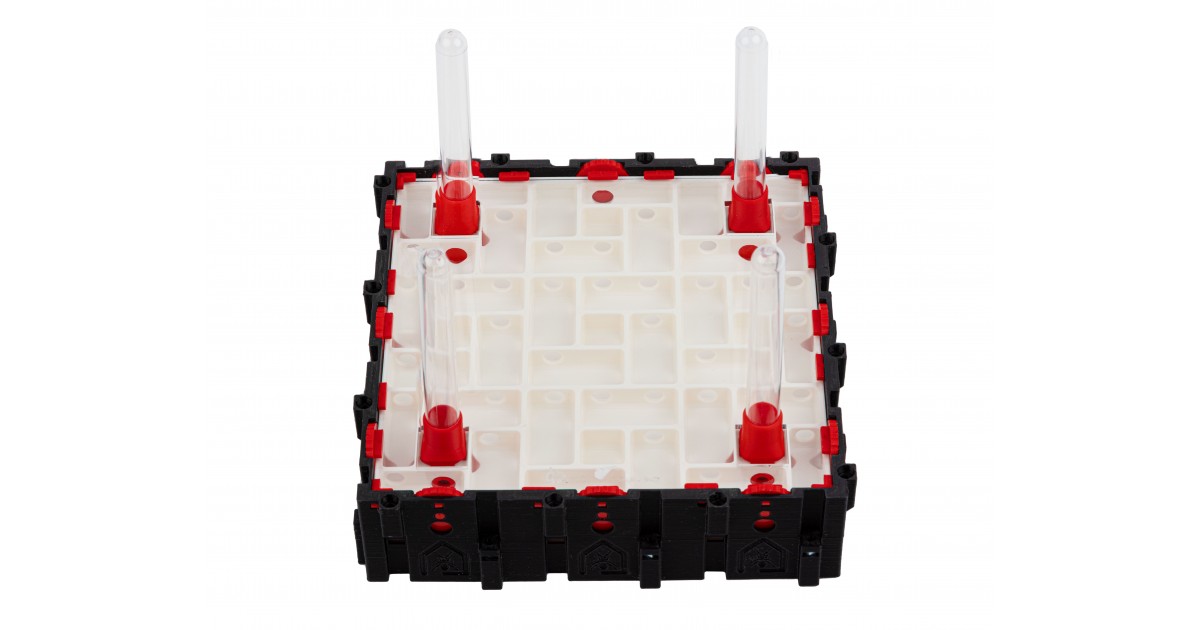
For Myrmecia pyriformis, we recommend systems that combine:

  • spacious chambers;
  • a humidity gradient;
  • good ventilation;
  • the possibility of expansion;
  • and a large, secure foraging area.

Very small nests or nests with narrow galleries are not suitable for a species of this size.

The chambers should allow the queen and large workers to turn around comfortably and manipulate prey without difficulty.

As the colony grows, modular systems are especially useful because they allow the nesting area to be expanded without completely dismantling the setup.

Foraging area

The large galleries are especially important because Myrmecia pyriformis is a very large species and needs enough space to turn around, manipulate prey and organise the brood.

It is advisable to connect the nest to a small but secure foraging area from the beginning.

The queen must be able to leave the nesting chamber to feed without requiring the keeper to open the nest directly.

As the first workers appear, the available foraging area can be progressively increased.

Nest for established colonies

For larger colonies, the setup must be expanded considerably.

We recommend modular nests with large chambers, good ventilation and a clear humidity gradient.

The system should allow new modules to be connected without having to dismantle the occupied nest.

Because mature colonies can contain hundreds of workers, it is important to plan the possibility of expansion from the beginning.

  • excavate their own galleries;
  • create chambers of different sizes;
  • modify the nest according to the growth of the colony;
  • choose the depth and humidity of each area;
  • and organise the brood in a much more natural way.

This type of setup also makes it possible to reproduce the vertical complexity that characterises natural nests.

The substrate should allow excavation while maintaining sufficient structural stability to prevent constant collapses.

It is advisable to provide a mixture with different particle sizes and a moderate clay component so that the ants can construct stable galleries.

The humidity should not be uniform throughout the entire substrate. A deeper or lateral area can be kept more humid, while other zones remain drier.

This allows the colony to select the most suitable microclimate for eggs, larvae and cocoons.

Foraging area for large colonies

The foraging area must grow together with the colony.

Large workers need enough space to move naturally, explore and hunt without constantly encountering the walls of the enclosure.

For an established colony, a spacious and well-ventilated arena is preferable, with secure access points for feeding and maintenance.

Diapause / winter rest

Myrmecia pyriformis comes from temperate regions and should experience a clear seasonal slowdown.

In nature, activity decreases markedly during the coldest months, although some workers may continue to forage on milder nights.

In captivity, we recommend progressively reducing the temperature during autumn rather than moving the colony abruptly from warm to cold conditions.

During the winter period, temperatures can be allowed to fall to approximately 10–15 °C, provided that the colony remains protected from frost and excessive condensation.

Food consumption decreases considerably during this period, especially the demand for protein when there are no developing larvae.

Even so, clean water should always remain available and small amounts of carbohydrates can be offered periodically.

The return to spring temperatures should also be gradual.

As temperatures rise, worker activity increases again and the queen may resume egg laying if she had stopped during winter.

Behaviour in captivity

Do not move a colony directly from 25 °C to 12 °C.

A gradual reduction over several days or weeks is much safer and better reproduces the natural transition between seasons.

During the cold period, the colony may drastically reduce its activity, brood development and food consumption.

Water must remain permanently available.

Carbohydrates can continue to be offered in small quantities, while protein should be adjusted to the actual presence of larvae and the level of colony activity.

It is normal for a young colony or a recently mated queen to spend much of the winter with very little or even no visible brood.

The return to warmer temperatures should also be progressive, allowing the colony to resume activity naturally.

Behaviour in captivity

Myrmecia pyriformis is an extremely visual, alert and reactive ant.

Workers quickly detect movement outside the enclosure and may orient their bodies and heads directly towards the observer.

  • a recently mated queen, which may overwinter without brood;
  • a young colony, which may greatly reduce or even stop brood development;
  • an established colony, which may retain larvae or other brood stages in deeper chambers.

The important thing is not to force the colony to maintain active brood throughout winter by means of excessive artificial heating.

Behaviour in captivity

Myrmecia pyriformis is an extraordinarily visual ant.

Workers quickly notice movement outside the enclosure and may turn towards the keeper, following their movements with the head and body.

They are active, fast and highly alert animals, especially when they are outside the nest.

Foraging is mainly individual. Workers explore the arena alone and do not normally form the dense recruitment trails typical of many other ant genera.

In a sufficiently large enclosure, it is possible to observe how individual workers establish habitual routes and repeatedly use the same visual landmarks.

They can also remain motionless for short periods, observing their surroundings before continuing to move.

This behaviour makes a structurally varied foraging area especially interesting, with branches, bark, stones and other elements that provide visual references.

Handling and safety

Myrmecia pyriformis possesses a functional sting and a venom of medical importance.

Direct handling should therefore be avoided completely.

Maintenance should be carried out using long tweezers, feeding tools and, whenever possible, access systems that allow food and water to be replaced without placing hands inside the foraging area.

The enclosure must have an effective anti-escape system and secure closures. Given the size, speed and visual capacity of the workers, any escape can be difficult to manage.

Special caution is required in people with a history of severe reactions to insect stings or known allergies to hymenopteran venom.

A well-designed setup allows this spectacular species to be observed safely while minimising unnecessary disturbance to the colony and risk to the keeper.

Dificultad
Advanced
No reviews

16 other products in the same category: