• New
Myrmecocistus mimicus- Hormiga Mielera Bicolor

Myrmecocistus mimicus- Hormiga Mielera Bicolor

Last items in stock
€79.99
VAT included
Colony


Myrmecocystus mimicus – Bicolored Honeypot Ant

Biology

Myrmecocystus mimicus is a North American honeypot ant widely distributed across the arid and semi-arid regions of the western and central United States, from California to Kansas and Texas, also extending into northern Mexico.

It inhabits deserts, dry grasslands, mesquite and acacia scrub, and other open habitats exposed to intense sunlight. Its colonies excavate underground nests that provide a much more stable environment than the surface.

Unlike mainly nocturnal species such as Myrmecocystus mexicanus, M. mimicus carries out much of its activity during the day. Workers may forage intensively in the early morning and late afternoon, reducing activity only when surface heat becomes extreme.

Its diet combines sugary liquids with a strong dependence on arthropods. It collects floral nectar, plant secretions, honeydew produced by hemipterans, and fruit juices, but also acts as an active predator and scavenger of small insects.

Observations in Arizona and New Mexico revealed a marked specialization in termites. During surveys, these were by far the most frequently transported solid prey brought back to the nest.

Territorial tournaments

One of the most extraordinary behaviors of M. mimicus is its ritualized tournaments between neighboring colonies.

When two societies exploit the same food source, hundreds of workers may gather along the territorial boundary. However, these encounters rarely begin as fights to the death.

Larger workers usually take the leading role. Their size acts as a signal of the colony’s strength and maturity, much like two armies displaying their forces before deciding whether to fight.

When both colonies have similar strength, the tournament may continue for days. If one demonstrates clear superiority, the confrontation may end with the retreat of the weaker colony.

Raids and adoption of the rival colony

When the difference in strength is very large, the dominant colony may invade the rival nest. During these attacks, the resident queen may be expelled or killed, and the invaders carry off brood and repletes.

Much of the captured brood later completes development inside the victorious colony and becomes part of its workforce. This is a form of temporary social parasitism or slave-making behavior.

Stolen repletes may also be incorporated. In other words, the victorious colony conquers not only future workers, but also the living pantries of its rival.

These raids often target young colonies. A founding queen located too close to a mature society faces a high risk of being discovered before she has enough workers to defend herself.

Cooperative founding and number of queens

Founding in M. mimicus is especially interesting. Newly mated queens may start nests individually, but in nature several often settle together in the same chamber.

This strategy is called pleometrosis. By cooperating, queens produce a larger first generation and increase their chances of resisting attack by neighboring colonies.

However, this cooperation does not usually remain peaceful indefinitely. After the first workers emerge, they may progressively eliminate queens until only one or a small number remains.

Later genetic studies have also found facultatively polygynous mature colonies, so social organization does not appear identical in all populations. Even so, keeping several queens together remains risky.

The safest option is to keep one queen per colony, unless an already formed and established pleometrotic association is acquired. Even then, queen reduction must be expected.

Founding is claustral. Queens remain sealed inside and use their body reserves to produce the first generation without needing to forage.

Repletes

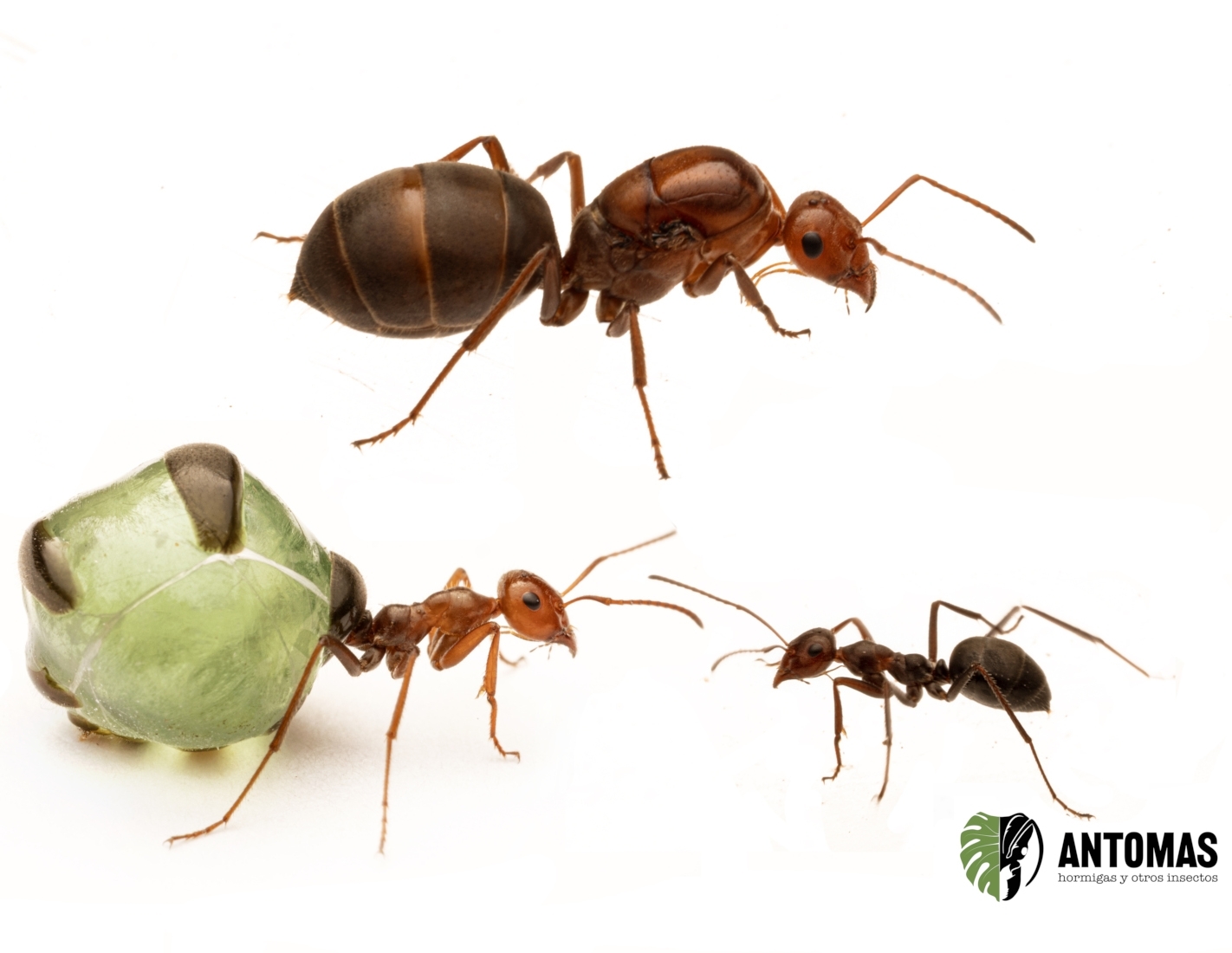
Like other honeypot ants, M. mimicus produces specialized workers called repletes. They store large quantities of liquid in the social crop until the gaster becomes enormously enlarged.

A fully developed replete may reach a volume similar to a pea. It remains suspended from the nest ceiling or walls and supplies food to the rest of the colony.

The stored contents consist mainly of sugars such as fructose and glucose, although composition and color vary with the food source. Thus, several differently colored repletes may occur in the same colony.

Mature colonies may contain hundreds of repletes and several thousand workers. Initial growth is not usually explosive, but a well-established, warm, and properly fed colony can expand rapidly.

Size and Morphology

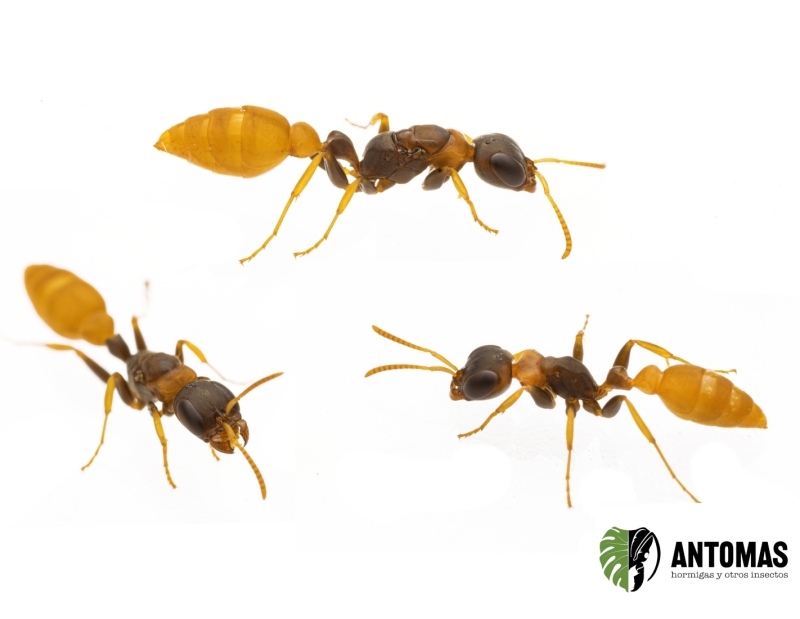
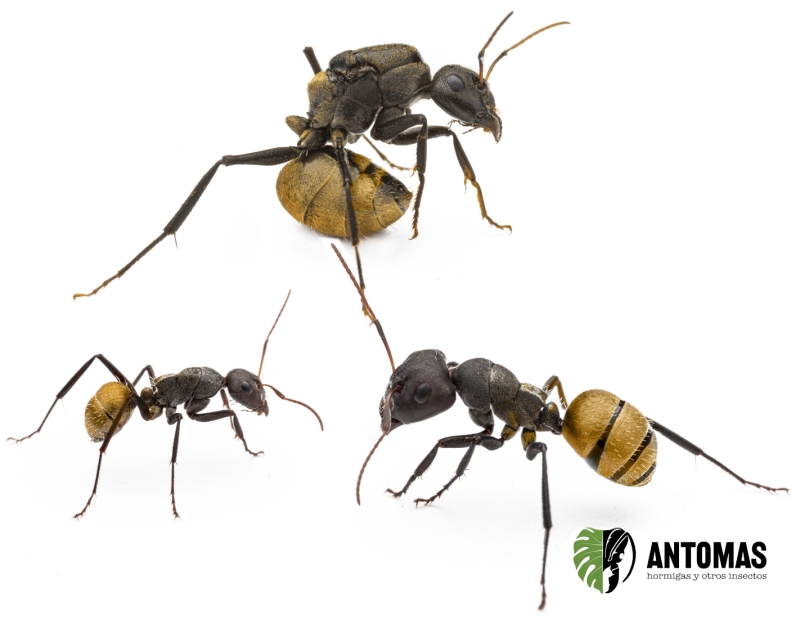
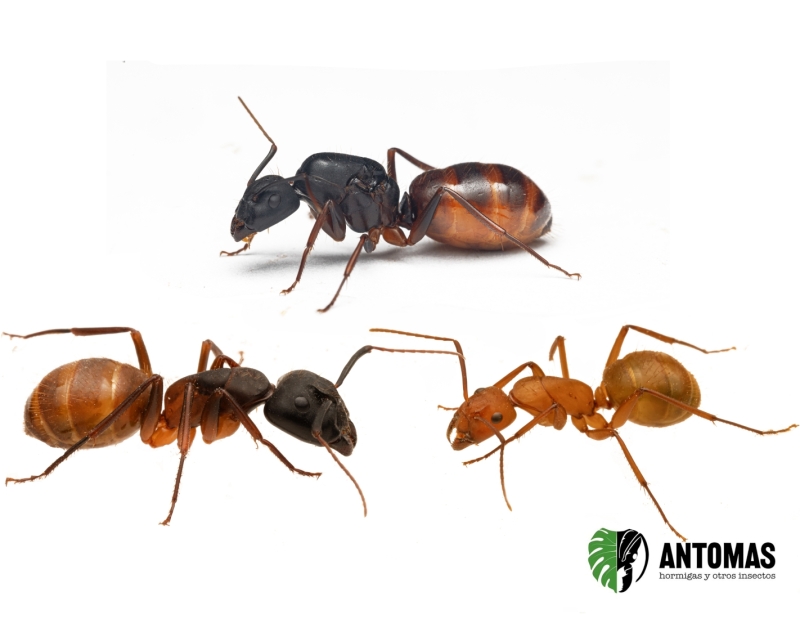
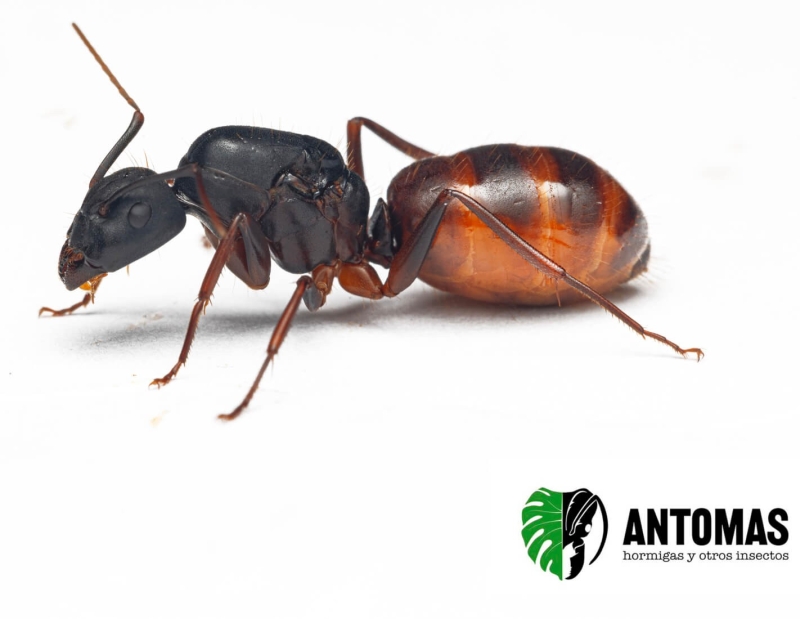
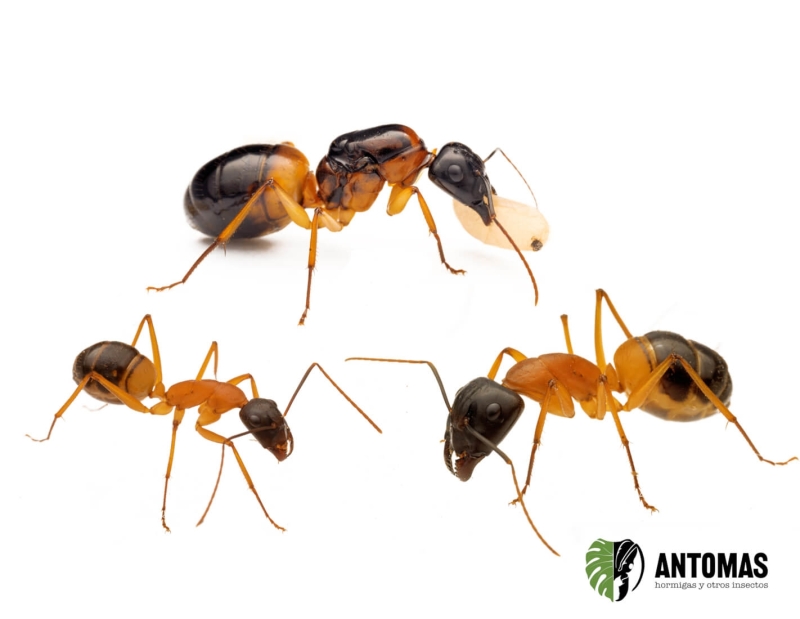
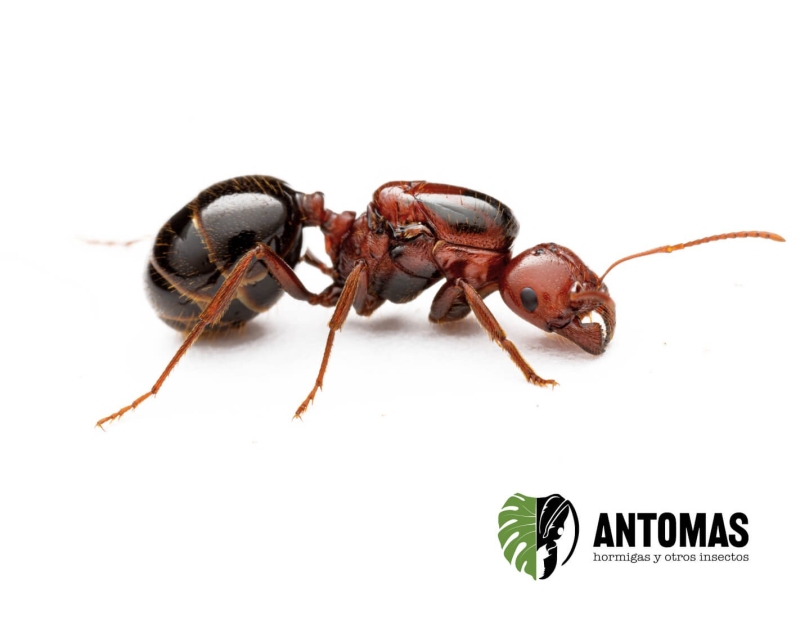
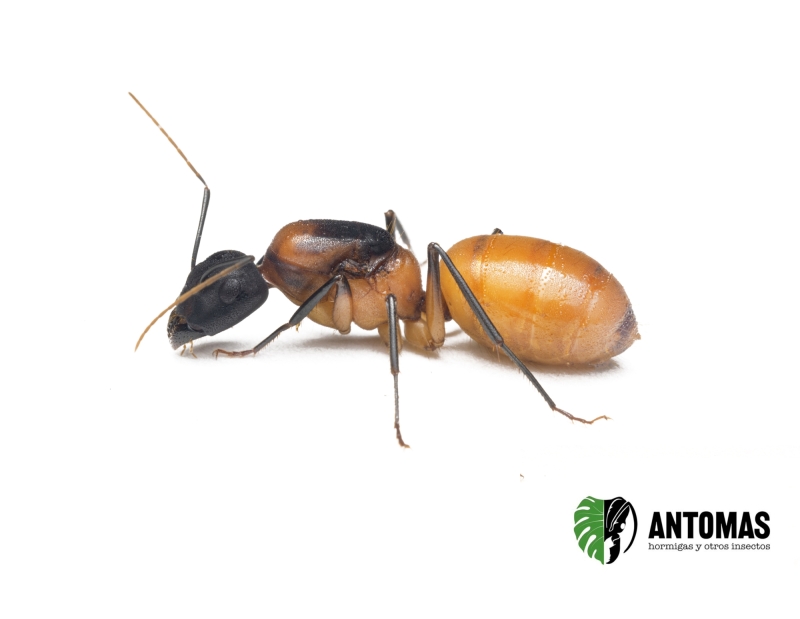
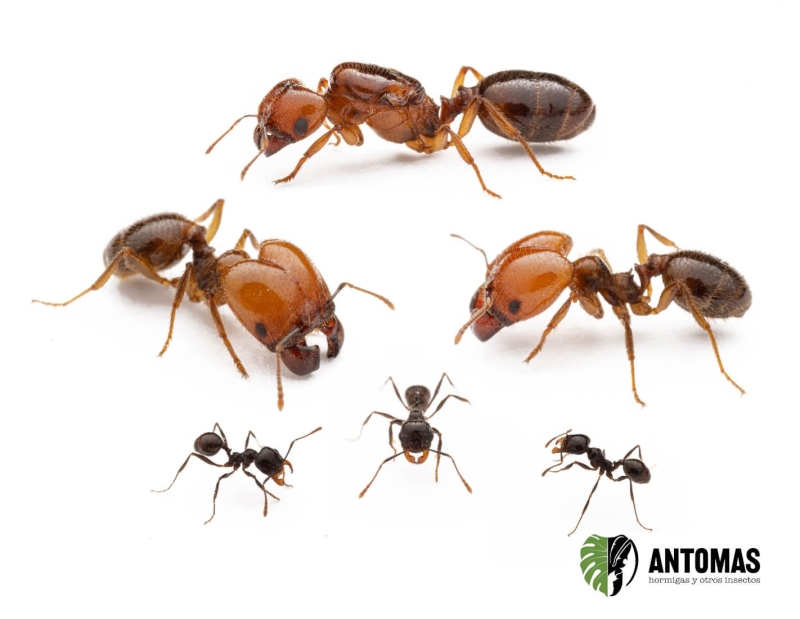
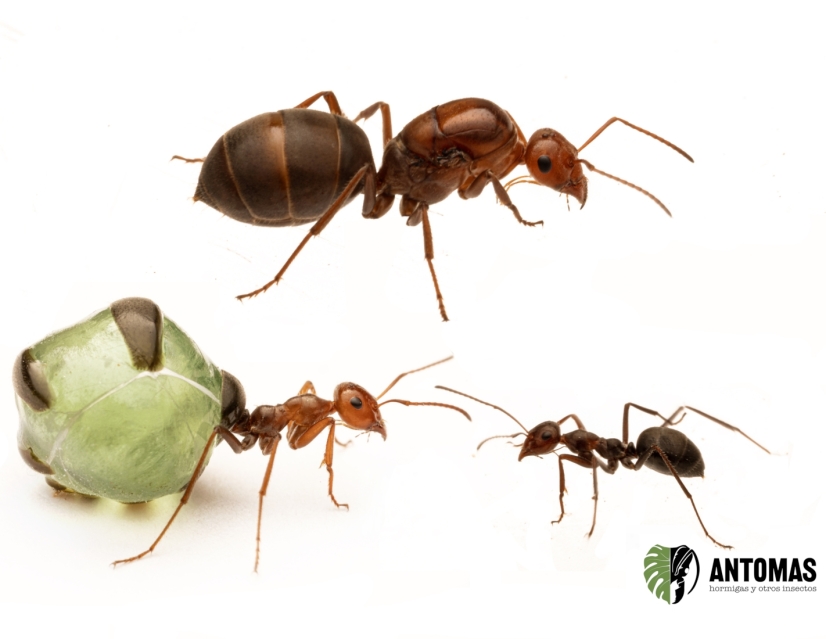
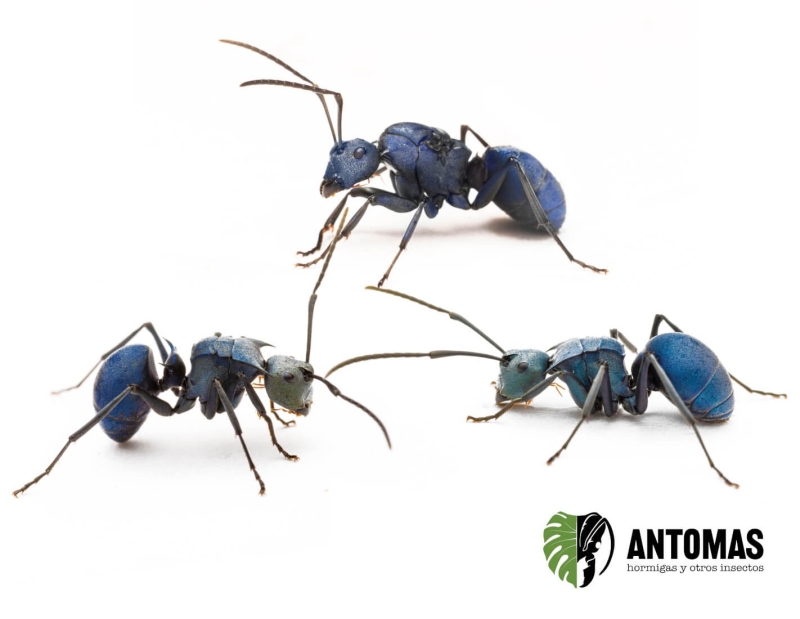
Myrmecocystus mimicus has a characteristic bicolored appearance, although geographical variation exists among populations.

The head and mesosoma usually show yellowish, orange, reddish, or chestnut tones. The gaster is generally much darker, ranging from deep brown to almost black.

This contrast creates the impression that the ant consists of two distinct halves: a warm, copper-colored front followed by a dark, shiny gaster.

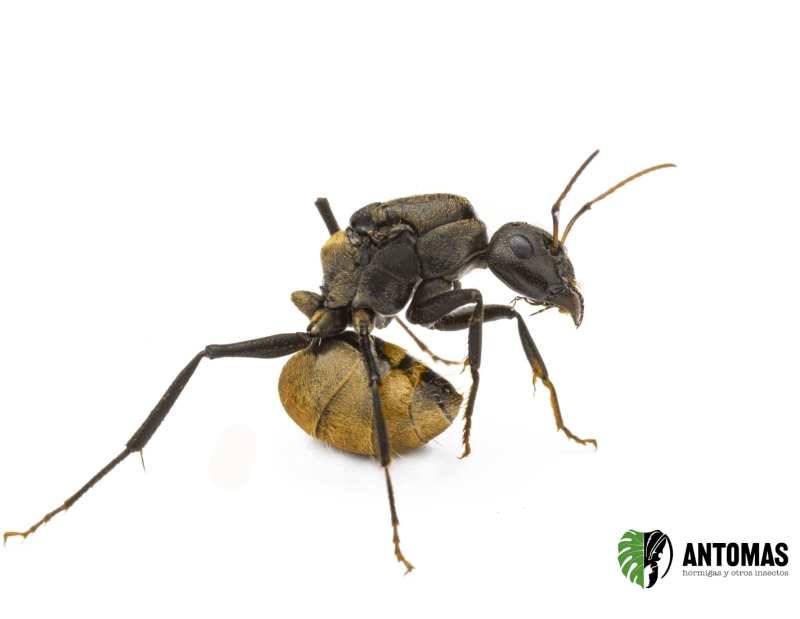
The legs are very long and raise the body above the hot ground. This morphology allows rapid movement and reduces direct contact with the surface, functioning like small stilts.

Workers show gradual polymorphism. There is no separate soldier caste, but mature colonies produce workers considerably larger than the first nanitics.

Larger workers are more prominent in territorial tournaments and are also good candidates for becoming repletes. Smaller workers perform much of the brood care and internal maintenance.

Approximate measurements

  • Workers: approximately 4–10 mm
  • Queen: around 8–10 mm
  • Repletes: body equivalent to a medium or large worker, with a massively enlarged gaster

The queen may appear small compared with some giant species of the genus. Her mesosoma is robust and the gaster dark, but she does not reach the dimensions of the largest honeypot ant queens.

As a member of the subfamily Formicinae, it lacks a sting. It can use its mandibles and release formic acid from the acidopore when trapped or threatened.

CAPTIVE CARE

Myrmecocystus mimicus should be considered a species only for expert keepers.

Founding can be difficult, and colonies may not stabilize until after two years, once they exceed 100 individuals. Repletes are extremely delicate.

Recommended parameters

  • Growth temperature: 25–29 °C
  • Brood-area humidity: moderate and localized
  • Replete chambers: dry and well ventilated
  • Foraging area: dry

Although it comes from desert environments, eggs and larvae must not remain completely dry. Natural nests provide underground moisture and more stable temperatures than the surface.

A humidity gradient is necessary, with a hydrated area for brood and drier chambers for repletes. Condensation must never form on the workers or attachment surfaces.

Founding and nectar control

A solitary queen should be kept in a quiet, dark test tube with a secure water reservoir. Because founding is claustral, she does not require continuous feeding before the first workers emerge.

Although the species may found through pleometrosis, combining unfamiliar queens is not recommended. Natural associations form immediately after the flight and may later end in queen elimination.

After the first workers appear, carbohydrates should be administered as controlled microdrops. A large or continuous nectar feeder should not be installed immediately.

In founding colonies and mini-colonies, excessive nectar intake may cause the queen herself to accumulate large reserves and distend her gaster, temporarily assuming a replete-like function.

It is usually advisable to wait until the second or third worker generation before installing continuous feeders. At that point, larger workers capable of becoming repletes begin to appear.

The initial goal should be to keep the colony nourished, not to obtain repletes as quickly as possible.

RECOMMENDED FORMICARIA

Anthouse vertical nests should be reserved for large, established colonies. In a founding colony or mini-colony, they provide too much space and make food control, queen location, and humidity management more difficult.

During the early stages, the following is recommended:

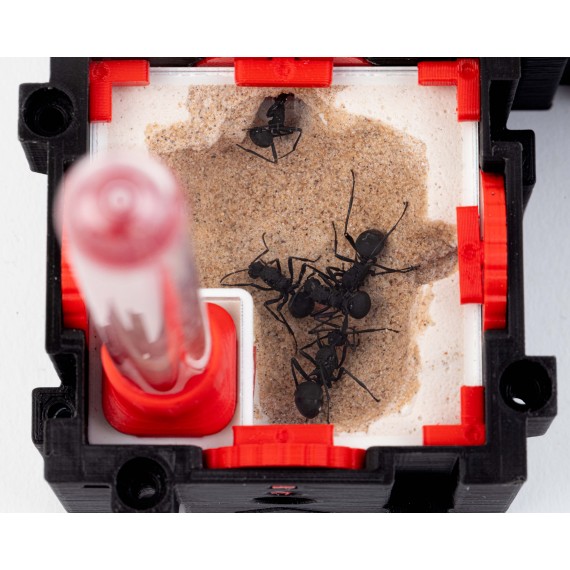
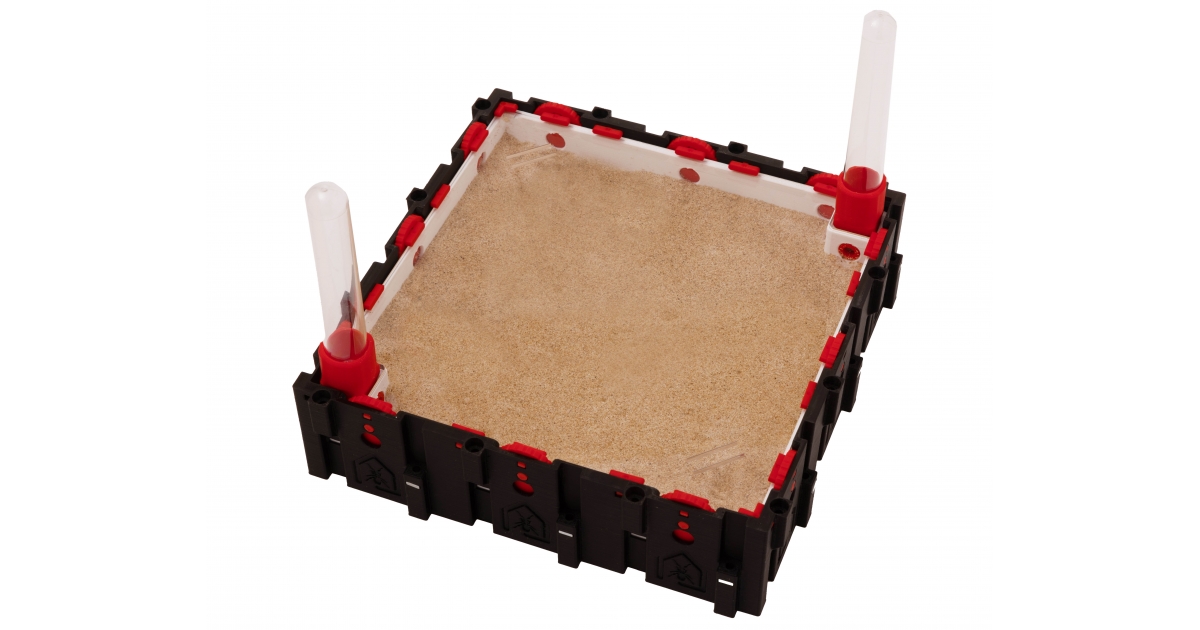
Wild One nests are high enough for the first repletes to hang from the ceiling or walls. At the same time, they provide a proportionate horizontal surface for the queen, brood, and normal workers.

There is no need to move a small colony prematurely into a vertical system. The height of the Wild One allows the first repletes to develop correctly while the colony remains easy to monitor.

For mature colonies, the following may be recommended:

The chamberless Nona Wild allows workers to excavate a network adapted to their needs. Despite the enormous difference in depth, it reproduces the logic of a natural nest better than a rigid prefabricated structure.

A compact, stable substrate that will not collapse onto the repletes must be used. Hydration must be localized and should never saturate the entire volume.

This setup is only appropriate for large colonies. In a mini-colony, it would make observation, feeding, and health control excessively difficult.

Feeding

Carbohydrates

  • Ant-specific nectar
  • Sugar water
  • Diluted honey

Quantities must be strictly adapted to colony size. During the first generations, microdrops that can be consumed quickly should be offered.

Once the first repletes appear, the volume can be increased gradually. Feeders must be safe and must not allow workers to become trapped in the liquid.

Nectar does not replace permanent access to clean water.

Proteins

  • Safely cultured termites, when available
  • Fruit flies
  • Flies
  • Micro crickets
  • Small or chopped cockroaches
  • Moths
  • Cut mealworm

Its strong natural relationship with termites shows that it is not exclusively nectar-feeding. Protein is essential for producing new workers and maintaining steady growth.

Small colonies should receive killed or pre-opened prey. Mature colonies can capture small live insects and recruit many workers toward abundant sources.

Consumption increases when large larvae are present. During diapause or in the absence of larval development, it may decrease considerably.

Diapause

The intensity of diapause should be adapted to the colony’s origin. M. mimicus has a very broad range, from warm deserts to cold inland regions.

As a general guideline, a moderate diapause of approximately 8–12 weeks at 12 to 17 °C may be provided, with gradual cooling and warming.

Populations from Kansas, Colorado, New Mexico, or high elevations may require temperatures near the lower end of the range. Those from warm areas of Arizona, California, Texas, or Mexico may need milder conditions.

During this period, egg laying, brood development, and foraging decrease. Repletes allow the colony to depend partly on reserves accumulated during the active season.

Each captive colony should be observed: if it retains only larvae whose growth has stopped, they may remain during diapause; if it continues producing eggs and developing normally, cooling should be more moderate.

Access to water must be maintained. Carbohydrates should be offered only in small quantities if workers remain active, and repletes should not be constantly refilled. Protein may be reduced.

Behavior in Captivity

It is an active, fast, and mainly diurnal species. A developed colony can mobilize many workers toward prey or an abundant food source.

Larger workers may perform ritualized postures when they detect strangers or face disturbance. Captive colonies should never be deliberately confronted.

Fully distended repletes can barely walk and depend on remaining suspended. They should never be removed with forceps or detached by hand.

Moves should be avoided whenever possible. When essential, both nests should be connected and a slow voluntary migration allowed.

Handling and Safety

Myrmecocystus mimicus has no sting.

Workers can bite and use formic acid if trapped. They should not be handled directly with bare hands.

The main maintenance risk is causing escapes or damaging repletes through impacts, condensation, or sudden changes in position.

All interventions should be prepared in advance and carried out using tubes, auxiliary containers, and entomological tools.

No reviews

16 other products in the same category: