• New
Novomessor cockerelli

Novomessor cockerelli

€64.99
VAT included
Colony


Novomessor cockerelli – Long-Legged Desert Ant

Biology

Novomessor cockerelli is a large desert ant distributed across the southwestern United States and northern Mexico. It is found mainly in Arizona, New Mexico, Texas, nearby areas of California and Nevada, and several arid regions of Mexico.

It inhabits deserts, dry grasslands, mesquite and creosote-bush scrub, stony plains, and open terrain with sparse vegetation. Its colonies build underground nests, usually in mineral, sandy, or gravel-covered soils.

Nest entrances are often surrounded by small pebbles, plant debris, and excavated material. Developed colonies may have several openings or socially connected secondary nests, although the entire society remains under a single queen.

This organization is known as polydomy: a single colony may be distributed among different nearby sectors or nests. It resembles a company with several branches; not all workers stay beside the queen, but they still belong to the same society and cooperate.

Its diet is omnivorous, with a much greater dependence on animal protein than its occasional description as a harvester ant might suggest. It gathers seeds and plant tissues, but also captures small arthropods and efficiently exploits dead insects.

Field studies found that insects and their fragments could represent almost half of the resources carried by N. cockerelli. This distinguishes it from related species that depend more heavily on seeds and explains its strong response to flies, cockroaches, crickets, and other prey in captivity.

Outdoor activity is concentrated mainly in the morning and late afternoon. It avoids both the hottest central hours, when the ground reaches extreme temperatures, and the coldest period before dawn. In winter, activity may extend toward midday.

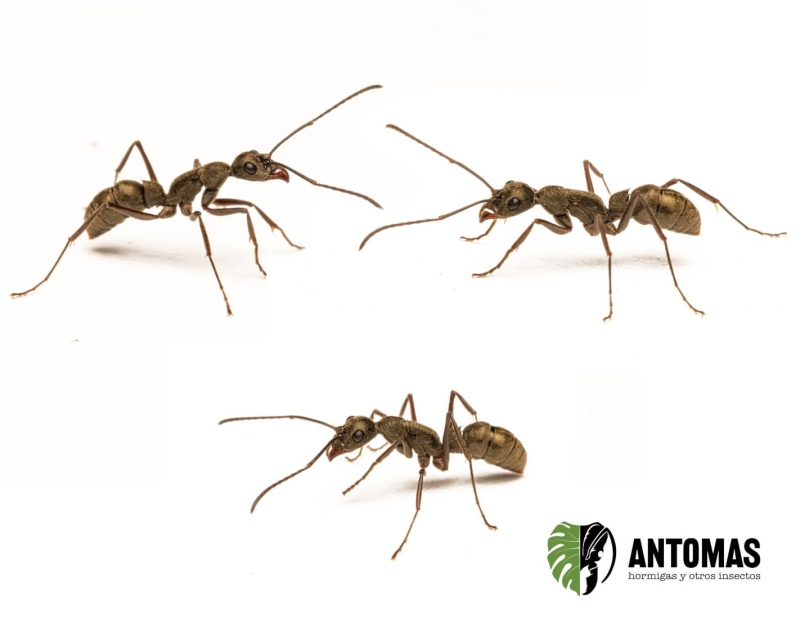
Its extremely long legs keep the body elevated above the ground and allow rapid movement. This adaptation is like walking on small stilts: it increases the distance from the hot surface and helps transport food without remaining exposed for too long.

Recruitment and cooperative transport

Although it was long considered a solitary forager, N. cockerelli has a particularly developed recruitment system.

When a scout finds food that it cannot carry alone, it first releases a chemical signal that attracts nearby workers. If that help is insufficient, it may return to the nest to recruit a much larger group.

Several workers then cooperate to lift and transport the load. Three to five workers may coordinate to move prey considerably larger than any one of them.

The system works like a two-level emergency call: nearby workers are alerted first and, if more help is needed, the problem is communicated to the rest of the colony.

In addition to chemical signals, workers can produce vibrations through stridulation while handling food. The combination of scent, contact, and vibration allows them to coordinate especially large loads.

Sabotage between colonies

One of the most surprising behaviors of N. cockerelli appears when it shares territory with Pogonomyrmex barbatus.

Both species compete for some resources, especially seeds. Before rival colonies begin activity, N. cockerelli workers may visit their entrances and deposit small pebbles that temporarily hinder emergence.

The obstacle does not destroy the rival colony, but it can delay its emergence by one to three hours. It is a highly sophisticated form of competition: instead of confronting the rival directly, it simply reduces the time available for foraging.

Social organization and founding

Colonies are monogynous, with a single reproductive queen. Queens from different flights, captures, or colonies should not be combined.

Nuptial flights have been observed in July in the Chihuahuan Desert, usually at dusk and associated with the rainy season.

Founding is claustral and independent. The queen excavates a chamber, seals herself in, and produces the first generation using her body reserves. In recorded studies, queens did not require external food during this stage.

Keeping several queens together does not improve founding. Although some may coexist temporarily, antagonistic behavior appears and, after the first workers emerge, only one queen usually remains.

An unusual social feeding system

In N. cockerelli, the usual exchange of liquid food by regurgitation (trophallaxis) between adults, common in many other ants, has not been observed.

Young workers produce trophic eggs, non-reproductive eggs used as food for the queen, larvae, and occasionally other workers.

Larvae also receive fragments of prey introduced into the nest directly. Therefore, in captivity, sugary liquids alone are insufficient: a regular supply of insect protein is required.

Mature colonies may reach several thousand workers. Growth can be rapid when warmth and abundant protein are available, so they need a modular system and a spacious foraging area.

Size and Morphology

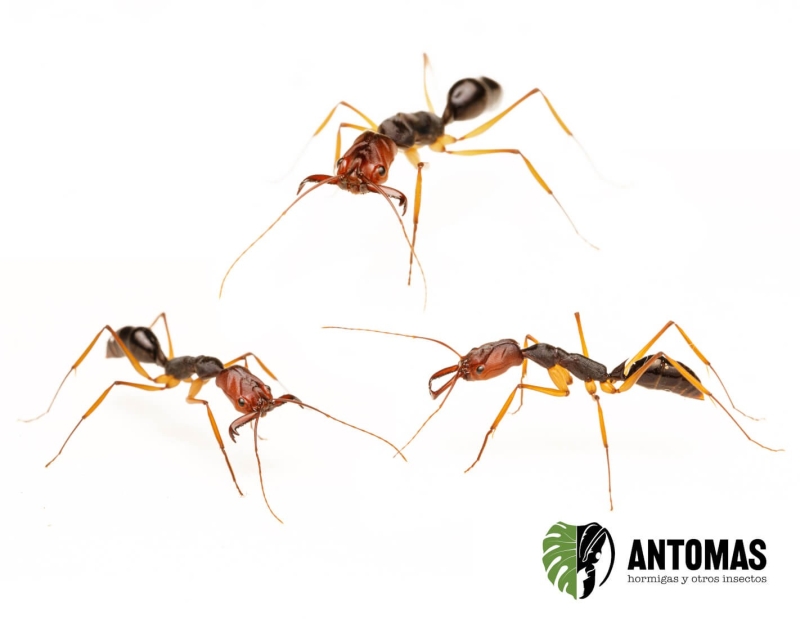
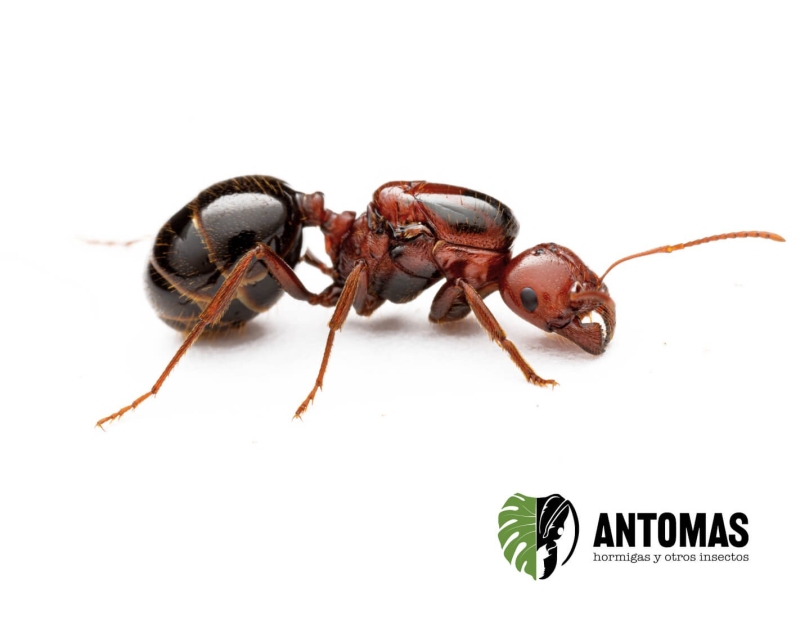
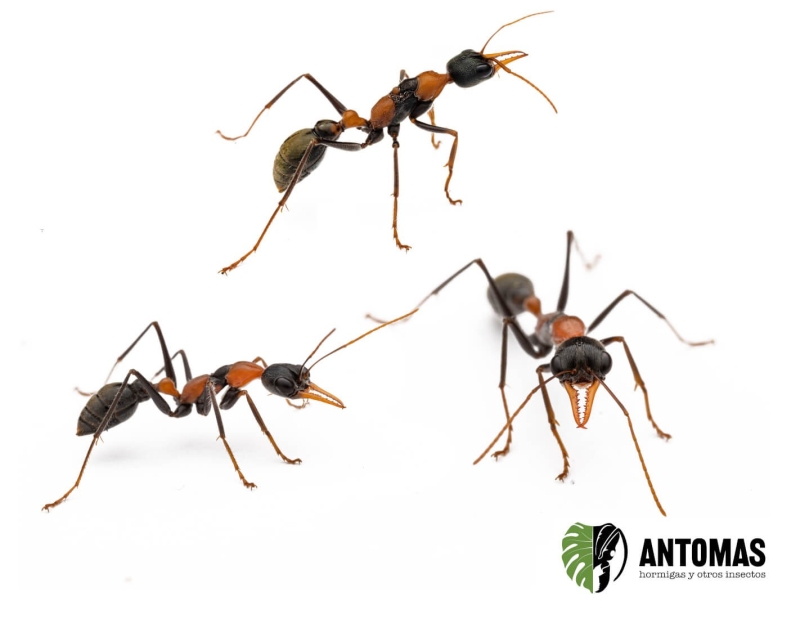
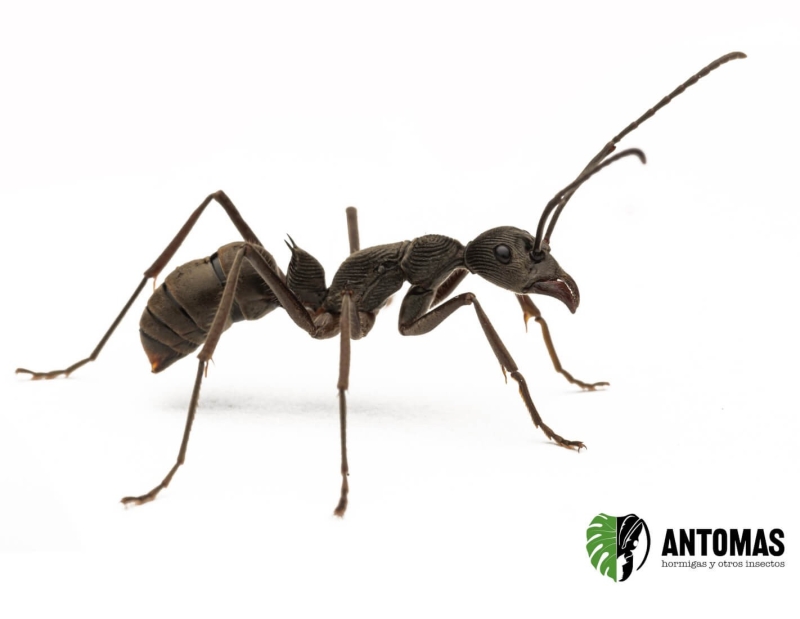
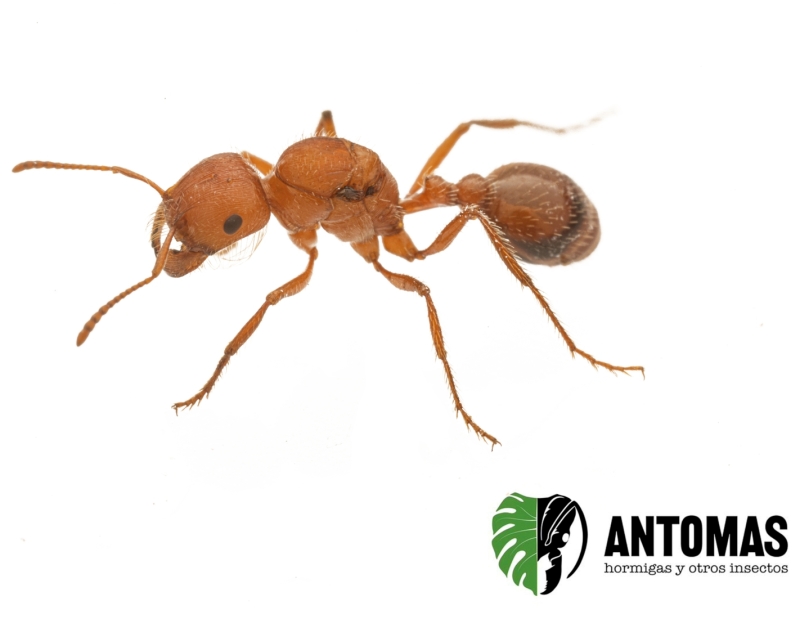
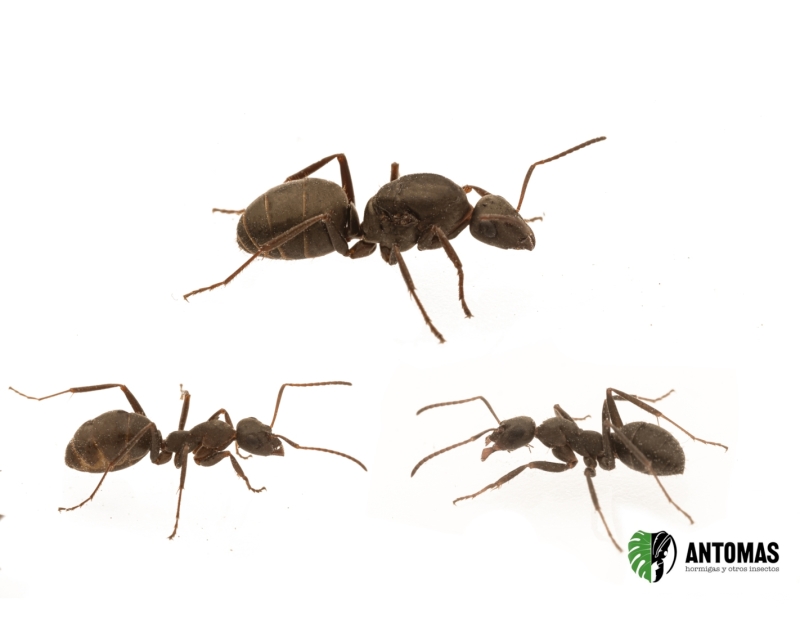
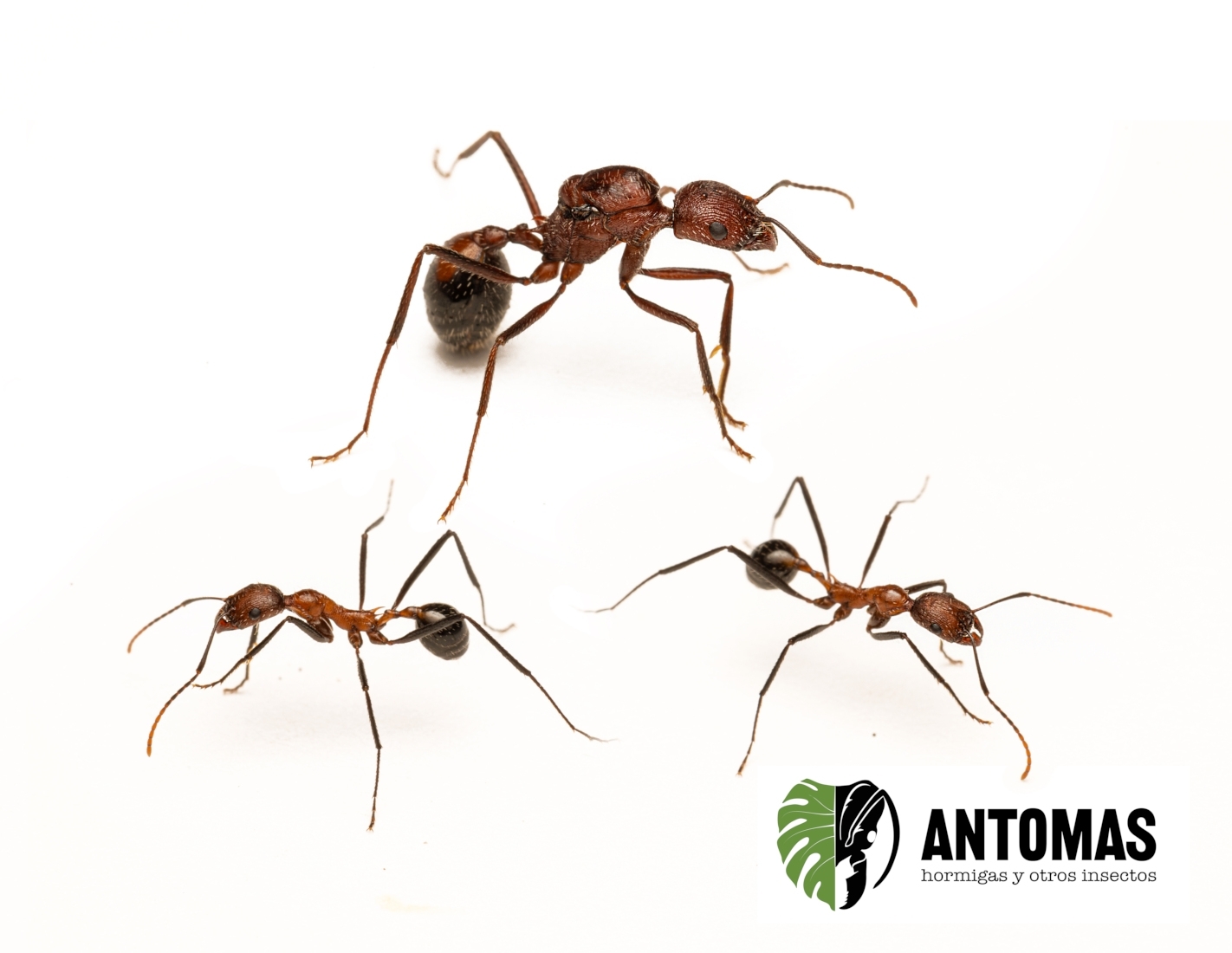
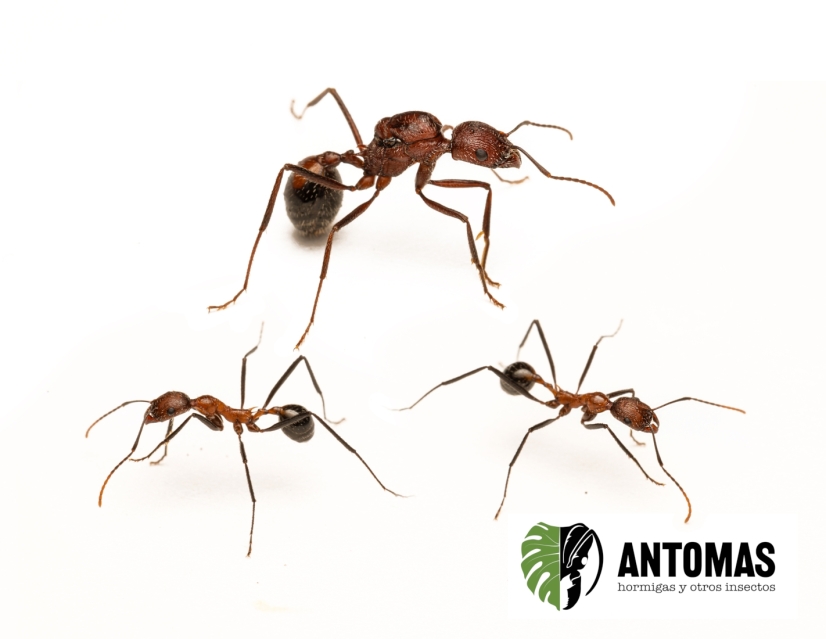
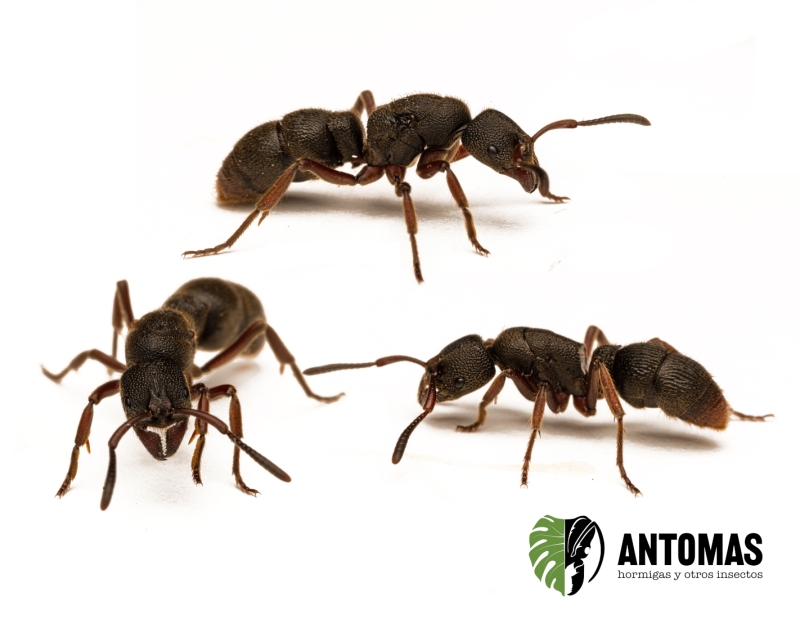
Novomessor cockerelli has an unmistakable silhouette: elongated body, narrow waist, and legs that appear disproportionately long relative to the rest of the animal.

The head and mesosoma usually show reddish, burgundy, or dark brown tones. The gaster is generally darker, from deep brown to almost black, creating a marked bicolored appearance.

The head is elongated and noticeably longer than wide. The mandibles are narrow, strong, and suitable for holding insects, carrying food fragments, and manipulating soil particles.

The propodeum ends in two clearly visible spines. These structures, together with the long legs and elevated petiole, reinforce its slender appearance.

Workers show some gradual size variation, but there is no differentiated soldier caste. Larger workers are stronger, although they retain the same general proportions.

The pupae are naked and not protected by a cocoon. During this stage, the legs, antennae, and different parts of the future adult can be observed directly as development progresses.

Approximate measurements

  • Workers: approximately 7–10 mm
  • Queen: around 11–14 mm

Worker size is supported by taxonomic revisions. Queen measurements should be considered approximate because less biometric information has been published and differences may exist among populations.

The species has no functional sting. Its defense relies mainly on fast mandibles and various chemical secretions.

CAPTIVE CARE

The difficulty of Novomessor cockerelli can be considered easy, suitable for beginner keepers.

It is hardy and grows well, but needs abundant protein, warm temperatures, spacious chambers for introducing prey, and a secure installation for a fast, active colony.

Recommended parameters

  • Growth temperature: 24–29 °C
  • Brood-area humidity: moderate and localized.
  • Foraging area: dry and well ventilated.

Although it lives in desert regions, eggs and larvae should not be kept completely dry. Natural nests buffer extreme surface conditions and retain moisture at depth.

A humidity gradient should be provided by hydrating one part of the formicarium while leaving other chambers drier. The colony will move the brood according to stage and environmental conditions.

The entire nest should not be saturated. Heat, insect remains, and excessive humidity together can encourage fungi and mites.

Founding

The queen should found in a test tube with a water reservoir, protected from light and vibrations.

Founding is claustral, so routine feeding before the first workers emerge is unnecessary. Constantly opening the tube or introducing prey can cause stress and contamination.

After the first nanitics appear, the tube may be connected to a small foraging area. From that point onward, carbohydrates and small portions of insects should be offered.

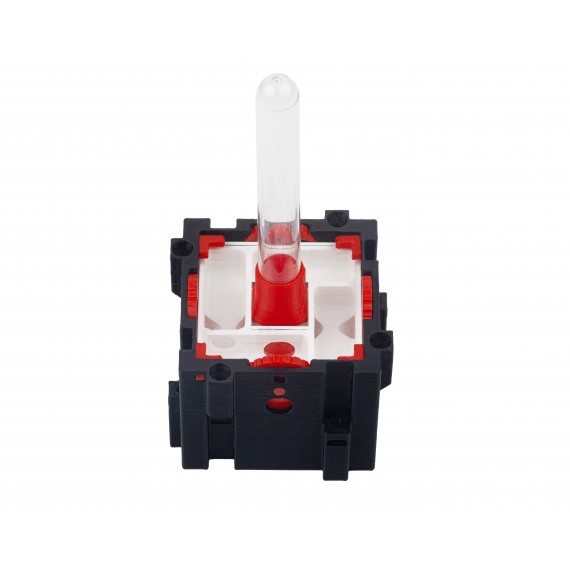
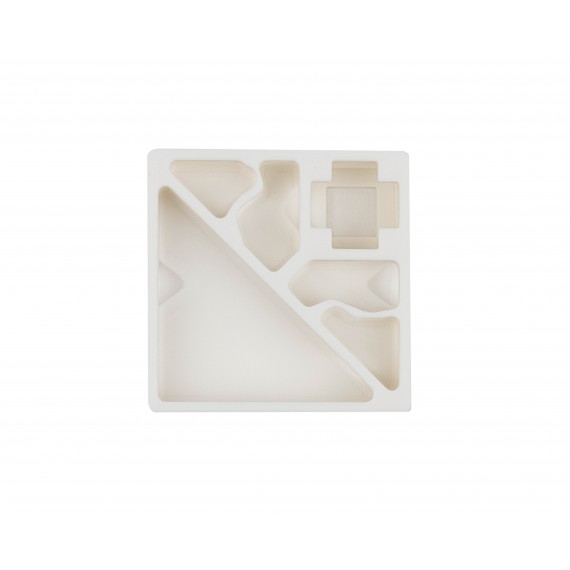
RECOMMENDED FORMICARIUM

For established colonies, the following is suitable:

Medium chambers provide enough space for the queen, brood, and insect fragments without leaving excessive volume around a young colony.

As the population increases, new modules or larger galleries can be connected. Expansion should be gradual to prevent empty chambers from becoming waste areas.

The foraging area should be relatively spacious. Much of the species’ appeal lies in observing recruitment, worker coordination, and cooperative transport.

A very thin layer of sand or gravel may be added to allow material manipulation. It should not accumulate near walls, as workers may use it to build bridges over escape barriers.

Nest entrances should not be too narrow. Because prey is delivered directly to larvae, workers need to bring solid fragments inside without becoming blocked at the access points.

Feeding

Proteins

Protein should play a central role:

  • flies;
  • cockroaches;
  • crickets;
  • moths;
  • chopped mealworm;
  • small grasshoppers;
  • other safe feeder insects.

Larvae can feed directly on fragments introduced into the nest. Prey should therefore be opened or chopped when its size makes transport difficult.

Colonies with abundant larvae show very high protein demand. A sudden decrease in consumption may coincide with a reduction in active brood.

Carbohydrates

  • ant-specific nectar;
  • sugar water;
  • diluted honey;
  • balanced syrups;

Carbohydrates provide energy for adult workers, but they do not replace the protein needed to produce new generations.

There must always be an independent source of clean water.

Seeds

It may accept small, soft seeds, especially:

  • grass seeds;
  • poppy;
  • amaranth;
  • quinoa;
  • small millet;

However, seeds should not form the exclusive basis of the diet. N. cockerelli is much more insectivorous and scavenging than true specialized harvesters.

Diapause

Within its range it withstands cold winters, with nights sometimes below 0 °C, but underground nests buffer these temperatures. Workers may also remain active on mild winter days.

When a colony spontaneously reduces egg laying and activity, a mild diapause of approximately 8–10 weeks at 16 to 20 °C may be provided.

Access to water and small amounts of carbohydrates should be maintained. Protein should be adjusted to the presence of active larvae.

As a practical criterion, a colony that retains eggs, pupae, and continuous development has probably not entered a complete stop and should not be cooled further. If eggs disappear and activity drops clearly, a mild slowdown is appropriate.

Behavior in Captivity

It is a fast, active species with a remarkable ability to reorganize its environment.

It can carry gravel, food remains, and substrate material toward connections. Entrances and ports should be checked to prevent blockages or accumulations that affect ventilation.

Recruitment is especially visible when large prey is offered. A first scout may attract several nestmates and trigger highly coordinated collective transport.

Workers can climb joints, rough surfaces, and decorative elements. The foraging area must have a well-maintained escape barrier and a secure lid.

Handling and Safety

Novomessor cockerelli has no functional sting, but it can bite when trapped or when the nest is directly disturbed.

Transfers and maintenance should be performed using tubes, auxiliary containers, long tweezers, and suitable escape-prevention measures.

Its speed requires every intervention to be prepared before opening the enclosure. With a properly closed installation and orderly routine, it presents no special safety difficulties.

No reviews

16 other products in the same category: