Camponotus baldacci
Camponotus baldacci

Camponotus baldacci

Last items in stock
€65.55
VAT included
Colony


Camponotus baldaccii

BIOLOGY

Camponotus baldaccii is a thermophilic Camponotus of the subgenus Tanaemyrmex, distributed throughout the eastern Mediterranean and nearby regions of western Asia. It is especially well documented in Greece, including Crete and numerous islands of the Aegean and Dodecanese, as well as Turkey, Israel and Saudi Arabia. Its type locality is precisely Crete.

It is a species strongly associated with open, warm and sunny environments. It occurs in grasslands with scrub, rocky slopes with sparse vegetation, low Mediterranean formations, seasonal watercourses, limestone ravines and roadsides, although it also appears in olive groves, pine forests and open woodland. Most records are concentrated at low and medium altitudes, especially below 500 metres, although in Crete it has exceptionally been found up to around 1,800 metres.

In Turkey, nests have been found under stones, in the soil at the base of trees and even in garden walls, and it has also been collected in olive groves and Calabrian pine forests (Pinus brutia). It is therefore not a carpenter ant strictly associated with wood: warm soil protected by a stone seems to be one of its most common refuges.

A particularly interesting ecological detail can be seen in Mediterranean villages and tourist areas. Workers have been observed climbing fig trees (Ficus carica) to exploit honeydew from aphids and scale insects. This describes its feeding strategy quite well: an important part of the adults’ energy comes from sugary liquids produced by plants or hemipterans, while insects provide the protein required for larval development.

It is a polymorphic ant, with minors, intermediate workers and majors. The transition between sizes is gradual and there is no completely independent soldier caste. As the colony matures, majors with a much broader and more muscular head begin to appear.

Foraging is opportunistic. Workers roam the ground and vegetation in search of nectar, honeydew and small arthropods. In captivity it readily accepts flies, crickets, cockroaches, moths and other common insects, and developed colonies show fairly constant activity outside the nest when provided with warmth.

The social structure of C. baldaccii has not been studied in sufficient detail to consider some figures circulating in commercial care sheets reliable. For captive maintenance, we recommend treating it as monogynous and not combining queens from different founding colonies.

Foundation is managed as claustral, as in many large Camponotus: the queen can raise the first nanitics using her body reserves and does not require continuous feeding as long as she remains in good condition.

Nuptial flights

Flight data are scarcer than for other Mediterranean species.

A phenological study compiling observations from Turkey recorded two events of C. baldaccii with a median date around day 174 of the year, approximately late June.

In addition, males have been collected in Turkey during August.

As a precaution, the window we would use is approximately late June to August, although it can vary considerably depending on locality, altitude and weather conditions.

Flights should be expected during the warm season, when nights and the ground already maintain high temperatures.

SIZE AND MORPHOLOGY

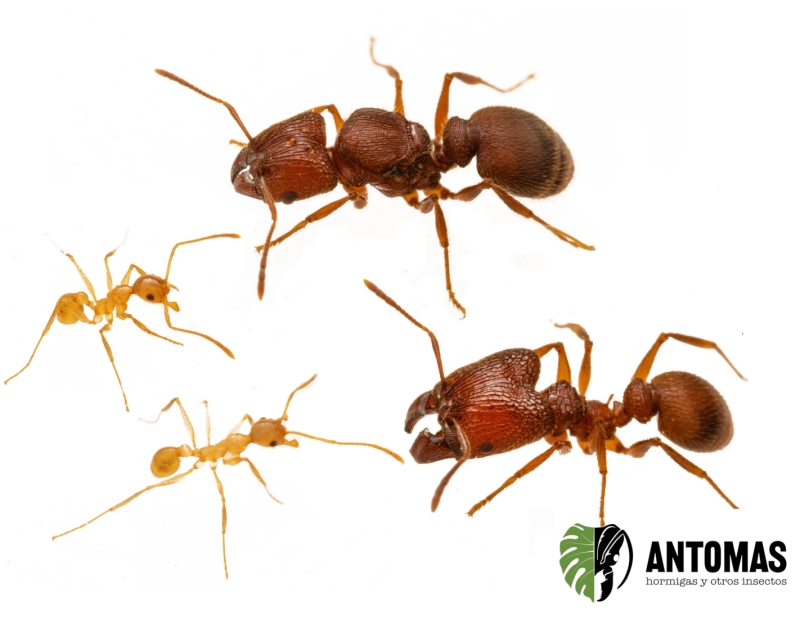
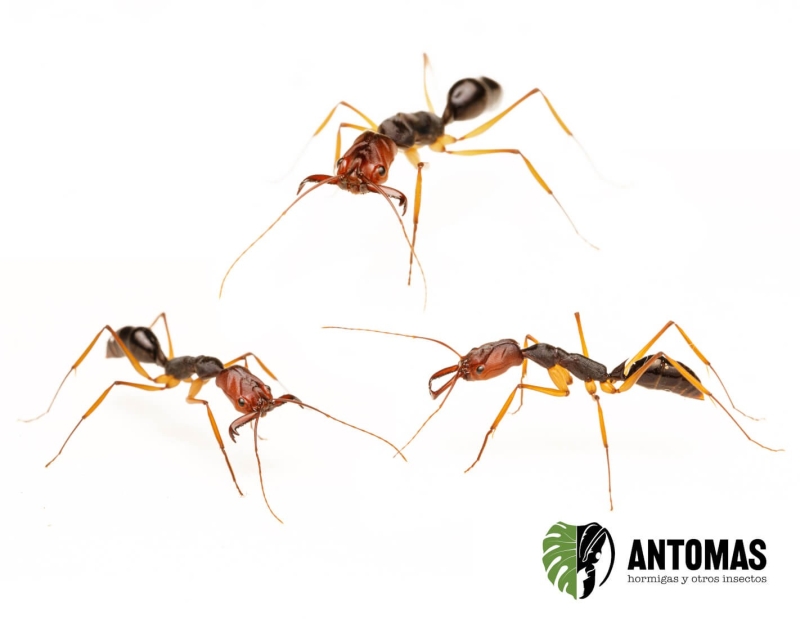
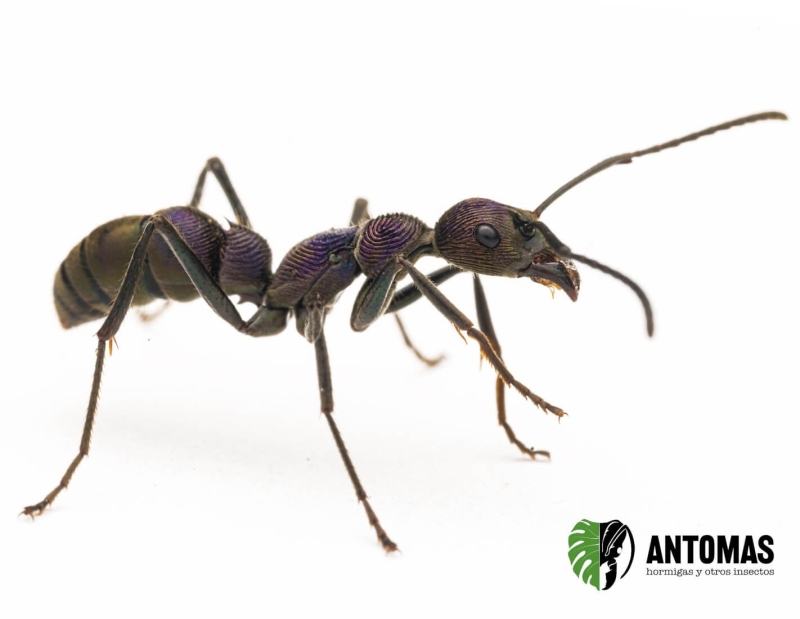
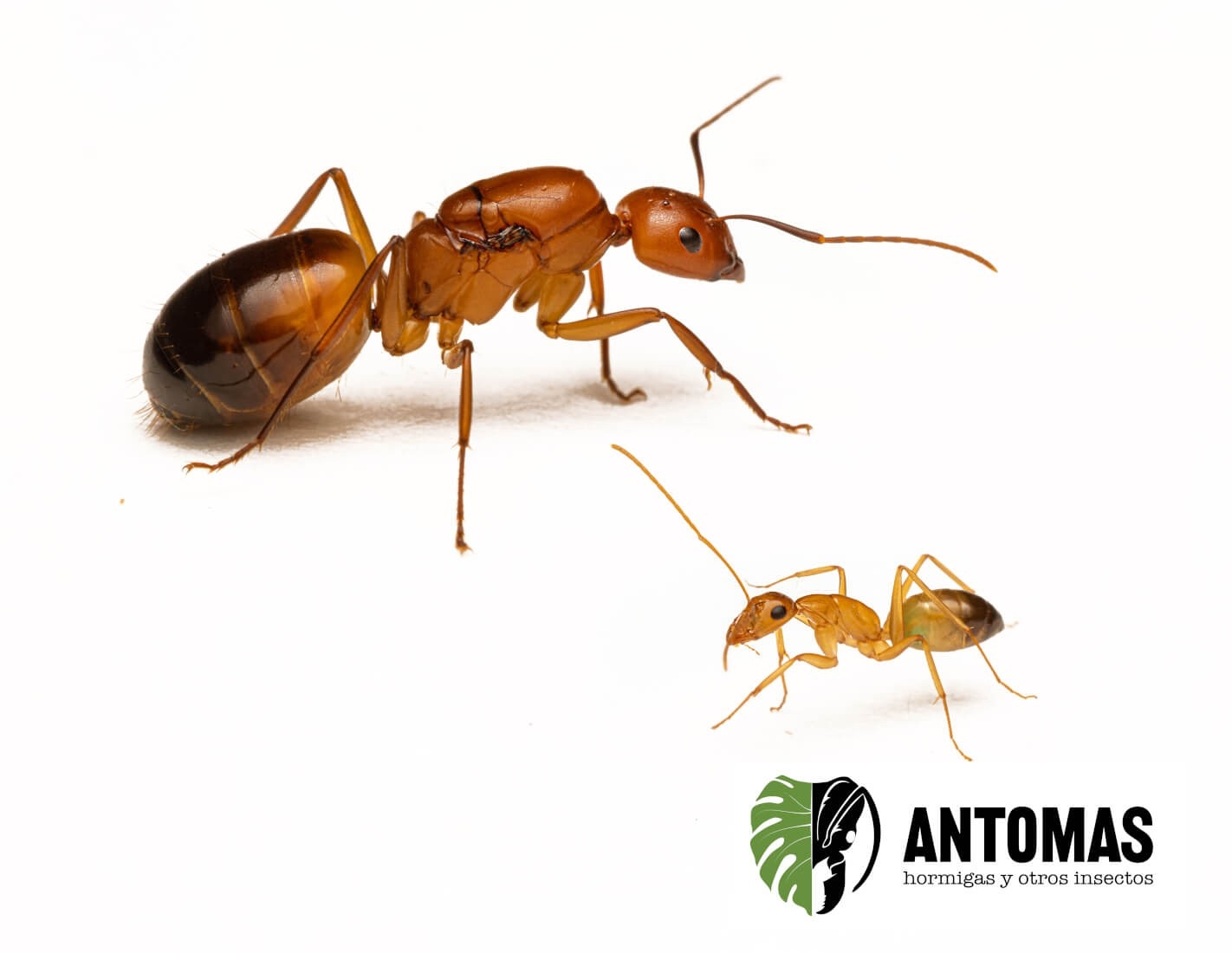
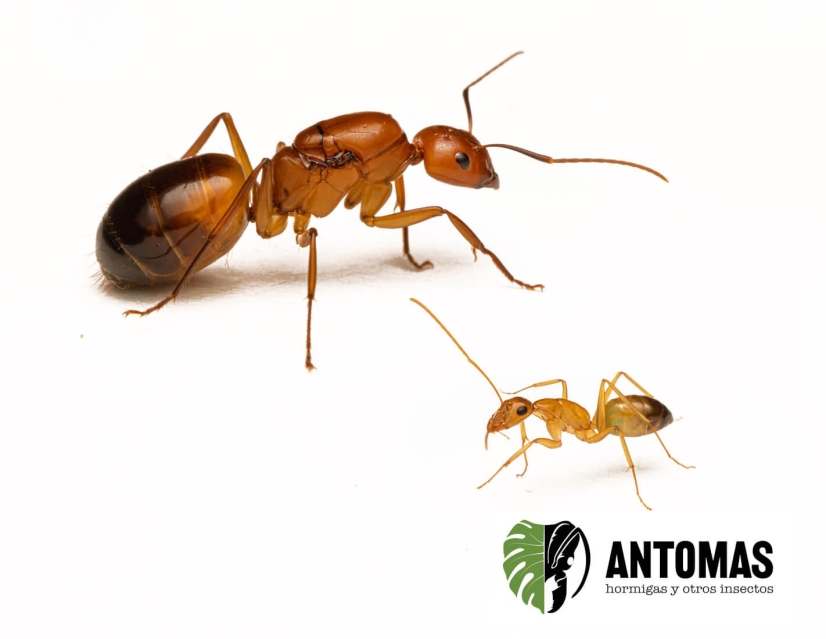
One of the main attractions of Camponotus baldaccii is that its colouration changes considerably according to worker size.

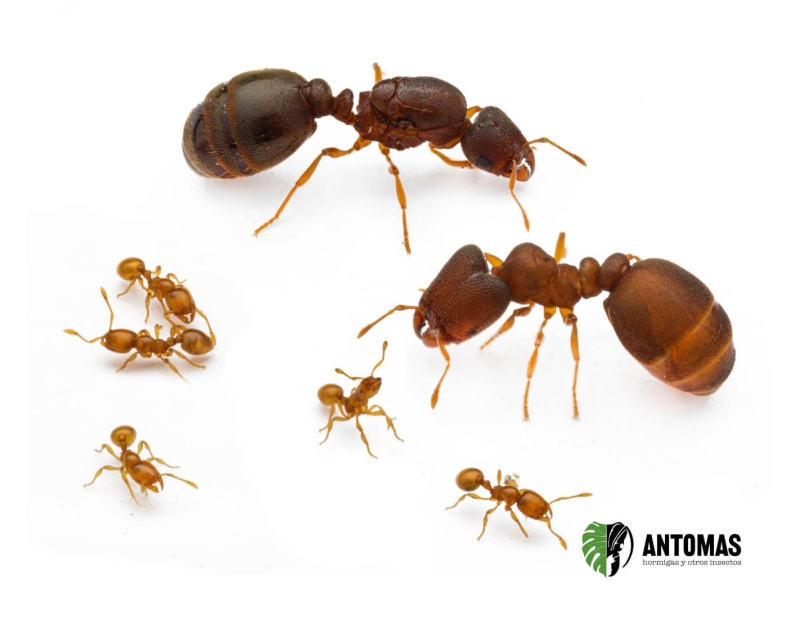
Minors are very light coloured. The head, mesosoma, petiole, antennae and legs may appear yellow, amber yellow or slightly reddish yellow. The gaster is clearly bicoloured: the anterior area is yellow or golden, while the posterior tergites progressively become dark brown or black.

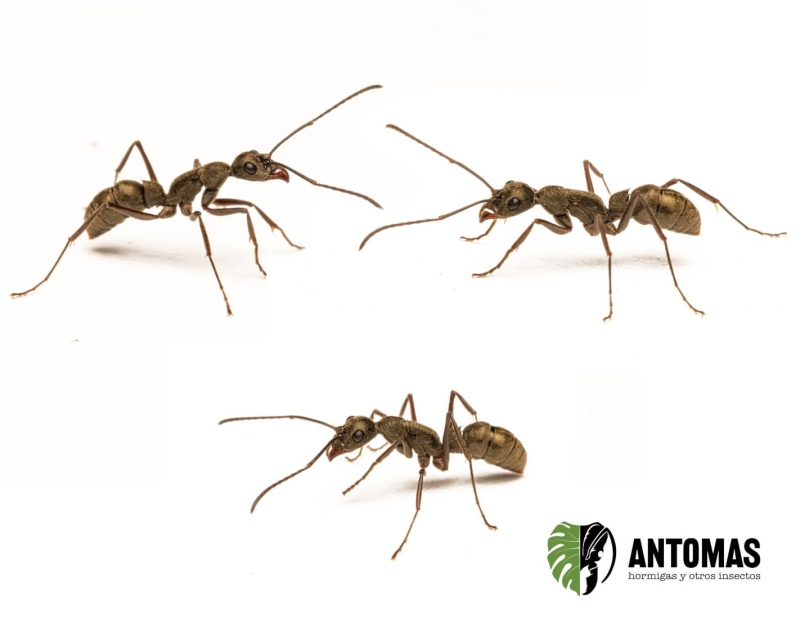
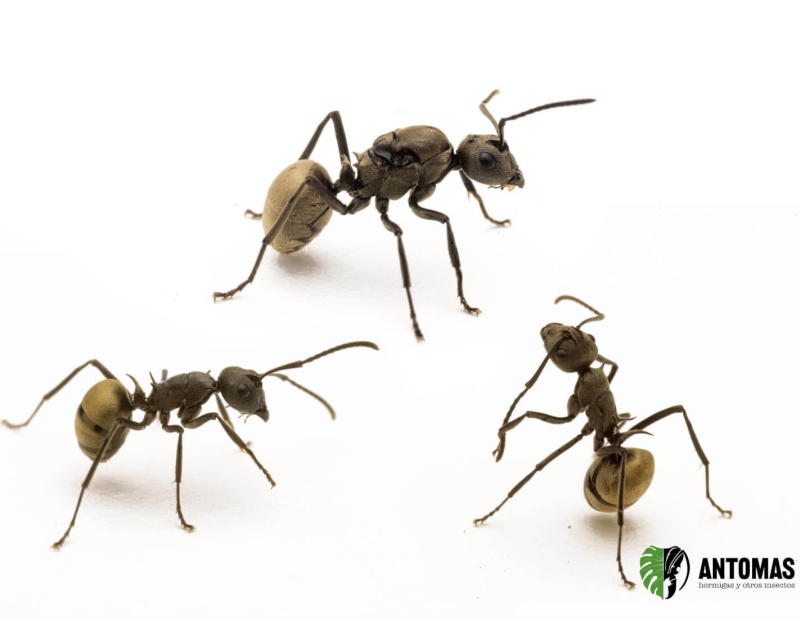
In intermediate workers the change begins to become evident. As size increases, the head changes from yellowish to rusty yellow, reddish brown or brown, while the mesosoma acquires warmer and darker tones.

This colour gradient between castes is one of the most useful visual features for recognising a mature colony. A group with many minors can appear almost yellow at first glance, while the presence of majors makes the colony look much darker.

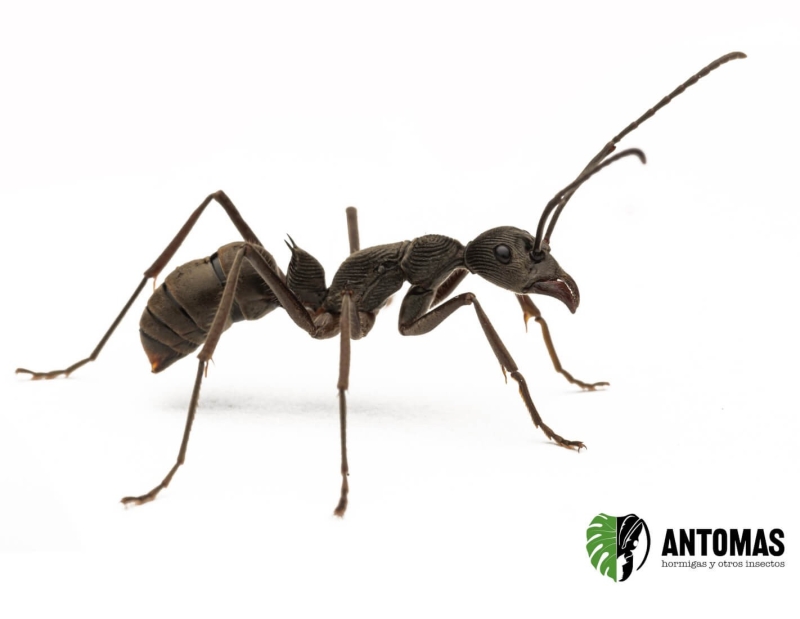
The body has the elongated and elegant appearance typical of Tanaemyrmex. The legs and antennal scapes are long, the mesosoma is relatively slender and the gaster is oval.

The integument is generally smooth and somewhat shiny, especially compared with more strongly sculptured Camponotus.

Workers

Workers are polymorphic, with a continuous transition from minors to majors.

Minors are slender and light coloured, while majors develop a much broader head and more powerful mandibles.

The intermediate forms make the transition between both extremes especially evident.

Queen

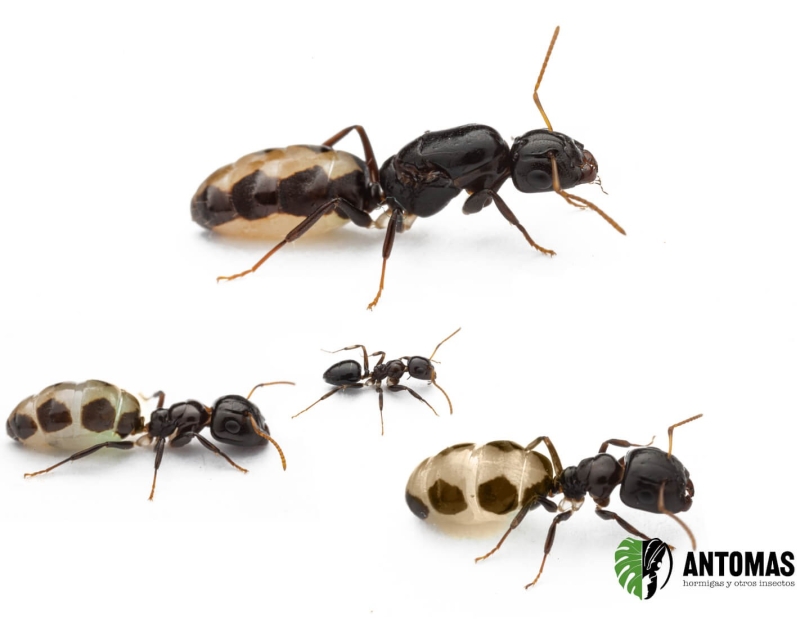
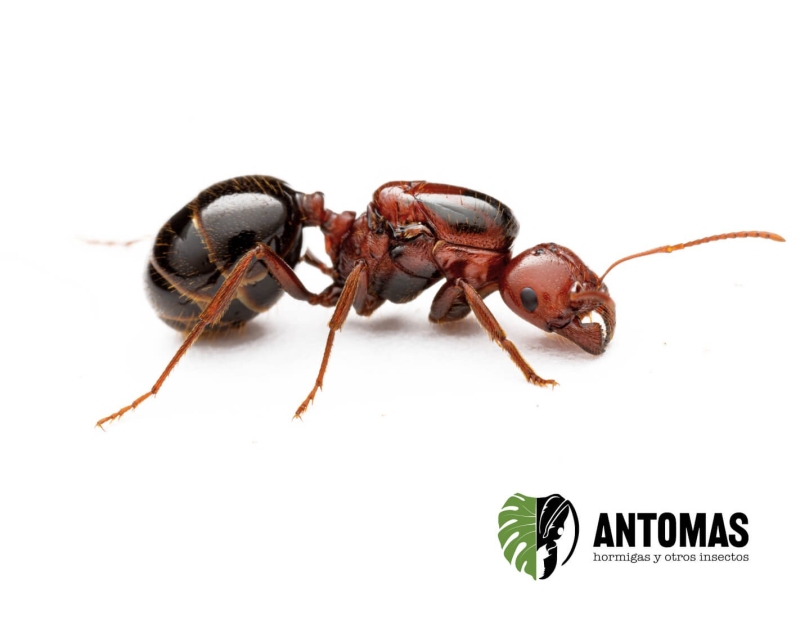
The queen is clearly larger than the workers, with a voluminous mesosoma corresponding to the flight musculature and a large gaster.

Her colouration follows the darker end of the worker spectrum, with the head and much of the body in brown to dark tones, although lighter reddish or yellowish areas may remain.

Difficulty: 2/5 – Beginner

Camponotus baldaccii is a very suitable species for keepers who want to start with a medium-to-large Mediterranean Camponotus.

It is hardy, accepts common foods well and does not require particularly complex nest systems.

The main points are to provide warmth during the active season, maintain a humidity gradient rather than soaking the entire nest and respect its seasonal winter slowdown.

Temperature

During the active period, approximately 24–28 °C is a suitable general range.

A local warm point can be maintained at around 28–30 °C, especially when the colony has abundant brood.

It is preferable to heat only part of the nest, leaving cooler areas available so the workers can move the brood according to its needs.

At lower room temperatures, development slows considerably.

Humidity

For a founding queen, a test tube with a water reservoir is sufficient until the first workers appear.

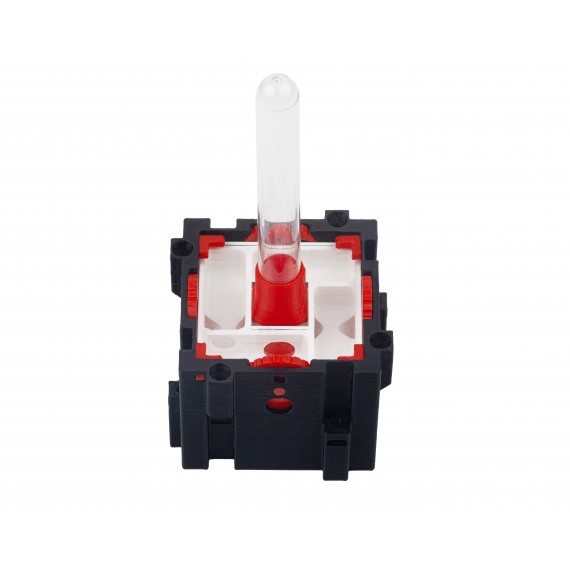
Once the colony begins to grow, it can be moved to a small nest with medium-sized galleries.

It is important not to provide an excessively large nest too early, as unused chambers tend to become waste areas.

Naturalistic setups with mineral substrate, stones and dry Mediterranean decoration are also very suitable for this species.

The foraging area can be relatively dry and should offer enough vertical structure for the workers to climb and explore.

Feeding

Adult workers obtain most of their energy from carbohydrates.

Ant nectar, sugar water, diluted honey or balanced syrups can be offered continuously.

Small amounts of ripe fruit can also be accepted, although they should not replace a stable liquid carbohydrate source.

  • ant nectar;
  • sugar water;
  • diluted honey;
  • balanced syrups;
  • small amounts of ripe fruit.

Protein should be supplied according to the amount of brood.

Suitable prey includes:

  • fruit flies;
  • flies;
  • crickets;
  • small cockroaches;
  • moths;
  • mealworms cut into pieces;
  • other safe feeder insects.

Freshly killed insects are perfectly suitable and make feeding easier, especially in small colonies.

As the number of larvae increases, protein consumption rises noticeably.

Clean water should always remain available independently of sugary liquids.

DIAPAUSE

Camponotus baldaccii is a Mediterranean species and should be given a seasonal winter slowdown.

This does not need to be an extremely cold diapause.

A practical range for winter rest is approximately 15–18 °C.

At these temperatures activity decreases considerably, brood development slows or stops and food consumption is reduced.

The cooling period can last approximately 8–12 weeks.

The reduction in temperature should be gradual, just like the return to active-season temperatures.

During this period, water should remain available and small amounts of carbohydrates can continue to be offered, while protein can be greatly reduced if there are no actively developing larvae.

It is not necessary to expose the colony to temperatures close to freezing.

Behaviour in captivity

Camponotus baldaccii is an active and visually attractive species, especially once the colony contains workers of different sizes.

The contrast between the light minors and the darker majors becomes increasingly evident as the colony grows.

Workers readily explore the foraging area and make good use of branches, stones and other structures.

As the colony grows, the difference between worker sizes becomes increasingly striking.

The light-coloured minors are very active in routine exploration, while the larger workers stand out because of their darker head and more robust build.

They make good use of the vertical space in the foraging area and readily climb branches, stones and decorative elements.

A secure anti-escape barrier is advisable, especially once the colony has many active workers.

Handling and safety

Camponotus baldaccii does not possess a functional sting.

Workers can defend themselves with their mandibles and by releasing formic acid through the acidopore.

Direct handling should therefore be avoided. Routine maintenance is easily carried out with tweezers, secure connections between modules and an effective anti-escape barrier.

Dificultad
Beginner
No reviews

16 other products in the same category: